Related Posts



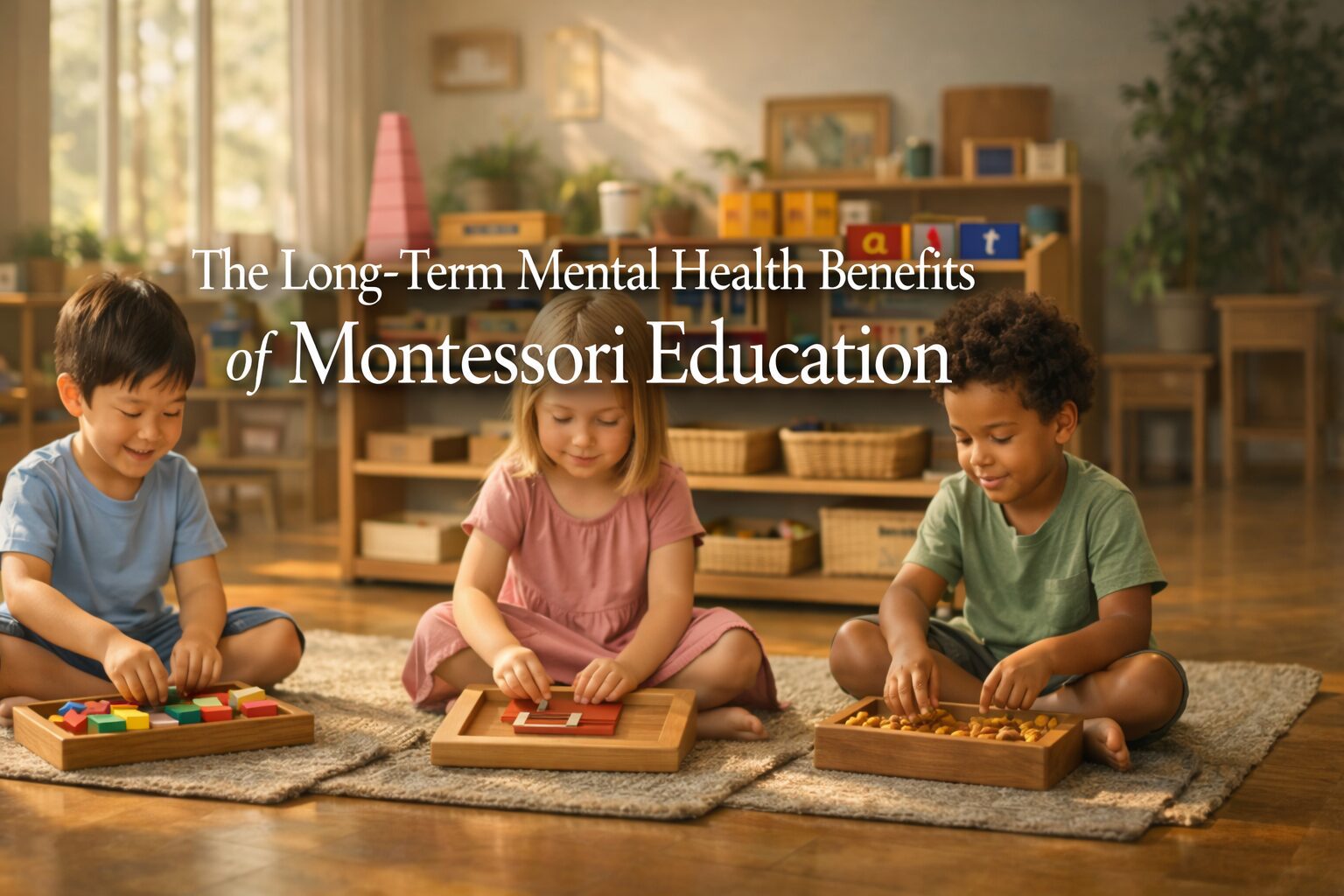
Every parent wants to raise a child who is not only intelligent but also emotionally resilient and truly at peace with themselves. Yet, as classrooms around the world become more pressurized and competitive, anxiety, depression, and burnout are showing up earlier than ever. Parents are starting to ask challenging questions: Does the traditional school system really nurture mental wellness—or does it quietly erode it over time?
This is where the Montessori approach earns serious attention. Designed over a century ago by Dr. Maria Montessori, this educational model has been steadily gaining relevance in a world that often prioritizes test scores over mental stability. Montessori education doesn’t just prepare children for exams—it helps them grow into grounded, emotionally balanced individuals. By understanding how this system shapes mental well-being across a lifetime, parents can make wiser choices about their children’s development, both in and beyond the classroom.
Beyond Academics: Why Mental Health Begins in the Classroom
The classroom is often the first structured social environment a child experiences. How children are guided, corrected, and encouraged during these early years sets the tone for how they’ll see themselves—and how they’ll relate to others—for decades to come. Montessori classrooms differ radically from traditional ones in that they are designed around intrinsic motivation rather than external rewards. Children don’t earn gold stars; they earn satisfaction from mastery.
What most people don’t realize is that this shift can deeply affect emotional regulation. A child who learns to take pride in effort rather than in outcomes develops greater internal confidence. They’re less susceptible to perfectionism, social comparison, and chronic stress later in life. In other words, the mental habits formed in Montessori classrooms often echo well into adulthood.
The Philosophical Roots of Emotional Independence
Montessori education rests on a deceptively simple idea: children are naturally curious and capable of self-directed growth when given the right environment. The teacher’s role isn’t to fill a child with knowledge but to prepare the space where learning can unfold naturally. This respect for autonomy builds emotional strength.
Children in Montessori classrooms choose tasks based on interest and readiness. They work independently, repeat activities as they wish, and experience the full cycle of concentration and satisfaction. Over time, this nurtures three psychological cornerstones of mental health: focus, self-efficacy, and calm persistence.
Here’s where things often go wrong in more conventional settings. When adults constantly intervene—checking progress, setting strict time limits, or offering constant praise—they unintentionally weaken the child’s belief in their own inner compass. Montessori educators, on the other hand, learn to step back and trust the child’s process, which preserves that vital internal sense of agency.
Emotional Safety as a Learning Foundation
In most traditional classrooms, emotional safety is still secondary to academic performance. Montessori environments reverse that order. Everything—from soft tones of voice to specially designed furniture—is intended to reduce stress and help children feel respected. Emotional safety, in this setting, isn’t a side benefit; it’s the starting point for all learning.
Children are encouraged to express emotions openly and respectfully. Conflicts are often resolved through a peace table or dialogue rather than adult-imposed punishment. The effect may seem subtle day-to-day, but over the years it helps children develop emotional literacy—the ability to name and manage feelings without repression or outburst.
This kind of psychological grounding often shows up much later, during adolescence or adulthood, when peers are struggling with identity crises or relational instability. Montessori alumni often describe themselves as more self-aware and emotionally steady. That’s not by accident—it’s the natural result of being raised in an environment where feelings are acknowledged, not ignored or rushed through.
Six Long-Term Mental Health Benefits of Montessori Education
What truly distinguishes Montessori isn’t just its academic outcomes — it’s how deeply it fortifies a child’s inner landscape. The following six benefits show how early independence, respect, and emotional awareness ripple forward into lifelong mental well-being.
1. Greater Emotional Regulation
Because Montessori learning emphasizes freedom of choice and self-pacing, children regularly encounter moments of challenge and frustration. Instead of being shielded from difficulty, they learn to face it with patience and creativity. Whether re-threading a bead, reworking a puzzle, or revisiting a math material, the process itself teaches emotional balance — that mastery comes from calm persistence, not avoidance.
Over time, this repeated exposure to manageable frustration strengthens emotional regulation: the ability to stay centered under pressure. Montessori children learn to pause, reflect, and try again rather than react impulsively. As adults, that same adaptive stability helps them navigate stressful work environments and complex relationships with resilience and a clear head, not panic.
2. Stronger Sense of Self and Purpose
Montessori students spend years exploring subjects that genuinely spark their curiosity instead of being confined to rigid lesson plans. This sustained freedom to choose builds self-direction and clarity about personal interests — what psychologists might call the foundation of intrinsic purpose. They are constantly asked: What do you want to learn next? That question builds internal guidance instead of dependence on external approval.
As a result, these children grow into adults who trust their instincts and pursue goals aligned with their values. They tend to make career and lifestyle choices that feel authentic rather than performative. This internal compass reduces the lifelong friction of identity confusion, promoting emotional steadiness and a true sense of meaning.
3. Reduced Anxiety from Non-Competitive Learning
One of the subtle drivers of childhood anxiety is relentless comparison — report cards, awards, “best student” labels. Montessori classrooms dismantle this dynamic entirely. By removing traditional grades and ranking systems, they shift the focus from outperforming others to improving oneself. Collaboration becomes the norm: older students guide younger peers, reinforcing kindness, mastery, and leadership in organic ways.
This non-competitive culture allows students to feel safe exploring without judgment. Without the constant noise of “who’s ahead,” children stay internally relaxed, curious, and self-assured. As they mature, this early conditioning turns into a naturally balanced relationship with achievement — one that values growth and effort over external validation, dramatically reducing long-term anxiety.
4. Lifelong Intrinsic Motivation
Montessori’s approach develops a kind of motivation that doesn’t depend on gold stars or praise. Each task — pouring water, polishing wood, tracing letters in sand — serves a practical purpose and offers sensory satisfaction. Children see the immediate outcomes of their actions, which makes learning meaningful in itself. The adult’s role is simply to facilitate, not reward, discovery.
That deep connection between curiosity and competence becomes self-reinforcing. Children who learn this way internalize the joy of mastery and grow into adults who learn, work, and create because they want to, not because they have to. Intrinsic motivation anchors emotional well-being by reducing stress, fostering perseverance, and protecting against burnout driven by external pressure.
5. Enhanced Social Connection and Empathy
Montessori classrooms are social laboratories built on respect and community. Mixed-age groups allow younger children to learn through observation while older ones practice mentoring — both sides benefiting in empathy and confidence. Conflicts are resolved through conversation, not punishment, reinforcing the idea that relationships thrive on understanding rather than authority.
That repeated practice of empathy in daily life leaves a lasting imprint. Students grow up comfortable expressing emotions, listening to others, and finding common ground. As adults, this interpersonal intelligence becomes a cornerstone of mental health — reducing loneliness, strengthening collaboration, and equipping them to sustain healthy, emotionally balanced relationships.
6. Greater Resistance to Perfectionism and Burnout
A quietly radical element of Montessori education is how it celebrates imperfection as part of learning. Teachers don’t correct every misstep or rush to help; instead, they invite children to notice what went wrong and adjust independently. A spilled pitcher isn’t a failure — it’s a sensory lesson in control, awareness, and patience.
That subtle shift changes everything. Children realize that mistakes are information, not identity. They associate effort with progress, not judgment. Later in life, these same individuals are more likely to bounce back from professional setbacks or creative risks without collapsing into self-criticism. In a world that often glorifies flawless output, Montessori graduates carry a grounded sense of balance — knowing when to push, when to pause, and when “good enough” truly is.
Challenges and Modern Adaptations
It’s important to acknowledge that Montessori education is not without practical challenges. Parents sometimes expect instant calm or academic precocity from the method, misunderstanding that its benefits unfold slowly and cumulatively. The real transformation happens over years of consistent, freedom-within-limits practice.
Another trade-off is logistical. True Montessori implementation requires specially trained teachers and carefully prepared materials. In adapting the model to modern contexts, some schools dilute core principles—over-scripting activities, limiting freedom, or layering on digital distractions. This dilution weakens many of the long-term mental health benefits.
For parents considering Montessori education, the key is alignment rather than perfection. Look for schools that emphasize authentic Montessori elements: uninterrupted work cycles, mixed-age classes, and trained guides who observe more than they intervene. At home, parents can extend this philosophy by giving children real responsibilities—watering plants, setting the table, or planning simple activities. What matters most is consistency in treating the child as capable and worthy of trust.
Final Thoughts
The long-term mental health benefits of Montessori education don’t come from any single technique. They arise from a coherent philosophy that prioritizes self-direction, respect, and emotional safety. Children raised in this environment learn early that their thoughts, feelings, and actions hold meaning. Over time, that understanding builds adulthood characterized by calmness, confidence, and authentic purpose.
For parents and advocates, the message is simple but profound: nurturing mental wellness begins long before therapy or mindfulness apps. It starts at the classroom level—where curiosity is honored, independence is trusted, and emotional growth is treated as the true measure of success.
Author Bio
Stacy Bryant is a mental health advocate and seasoned content writer passionate about raising awareness on mental well-being. She has written for several websites and currently contributes to EmpowHer Psychiatry and Wellness, a blog focused on helping individuals navigate mental health challenges. Alongside this, she collaborates with Springhive as a content creator for their Mental Health Care clients, crafting SEO-friendly content to enhance their online presence. Outside of her professional work, Stacy enjoys reading, writing, and practicing activities that maintain her mental health.