Related Posts
The Prepared Environment at Home
In Montessori circles, you’ll often hear about the “prepared environment at home”. It sounds simple enough, perhaps a bit vague at first. However, when you pay close attention to how children experience their surroundings, like with the things they use or avoid, and how frequently they ask for help, the concept becomes much clearer. This type of environment is defined by how the living space is prepared, not by turning your home into a classroom, which is a common mistake some parents make.
So, how is a prepared environment created at home? Honestly, the first thing is just to get on their level, see what’s really in their way. They need to be able to grab a snack or a toy without having to look for you every five minutes. And creating opportunities for them to make choices independently as much as possible. More recent research has further proven this educational philosophy true. American Institute for Research researchers studied over 400 Public Montessori schools in the United States from 2018 to 2023 (Karen Manship et al., 2019). The research revealed that children in these types of learning settings tend to excel academically while also improving in social development and other aspects of their cognitive skills, including focus and problem-solving. Much of this was attributed to the way children were given the freedom to choose their activities within a structured environment, rather than being directed at every step.
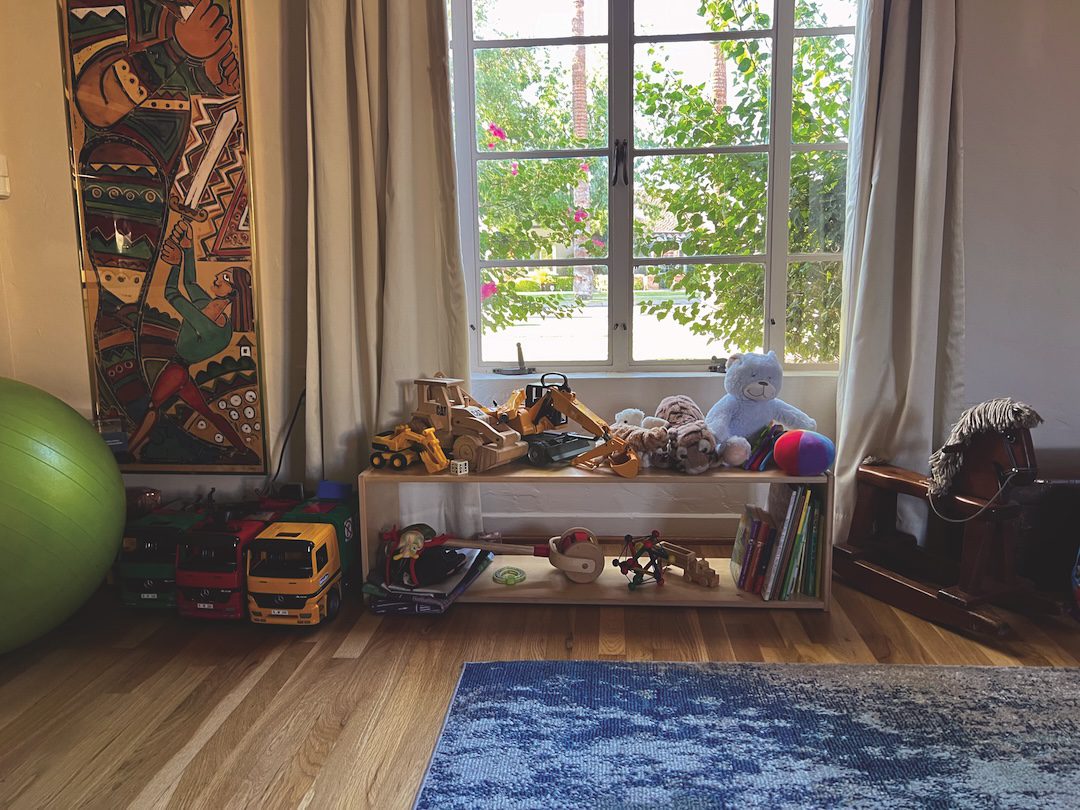
This type of preparation might manifest in a number of forms at home. It could mean having a lower shelf with fewer materials rather than a large box full of toys. It could be establishing a designated area where a child feels comfortable returning to an activity without having it moved or cleaned up immediately. In some instances, creating this sense of familiarity might simply involve placing a stool near the sink so the child can wash his/her hands alone. While none of these changes seem drastic individually, collectively, they transform how a child perceives their daily routine.
Why Our Surroundings Matter Way More Than We Think
It’s easy to assume that a child’s learning mostly comes down to what we, as adults, tell them. We focus so much on our “instruction”, what we’re saying, the way we correct them, or the materials we put out. But that’s only half the story. A 2023 study from the University of Continuing Education Krems in Austria actually examined how a child’s environment directly affects their stress levels and motivation. The researchers found a huge link: if the environment is off, stress goes up, and emotional stability takes a hit. Interestingly, their actual drive to learn was tied specifically to the quality of their individual workspace.
Basically, where a child is doesn’t just change what they do, it changes how they feel. I’m reminded of a parent who once watched their two kids playing. Her son, Tim, was struggling through a puzzle in the middle of a high-traffic, distracted area. His sister was working on the exact same puzzle, but she’d tucked herself into a quiet corner on her favorite rug. Same task, similar kids, but the results were night and day. It all came down to the space they were in. Montessori teachers have known this for a century. They don’t just organize classrooms to keep things tidy; they do it because that level of order is what actually lets a child’s concentration take root.
Dr. Angeline Lillard has spent the last twenty years proving this point. Her research shows that kids in these environments end up with much stronger “executive functions”, things like self-control, focus, and the ability to stay flexible when things get tough. The best part? These aren’t skills you teach from a textbook. Kids just pick them up naturally when they’re allowed to work, uninterrupted, in a space that was actually built for them.
Small Changes in Independence
Some of the biggest changes occur when a child can obtain what they need on their own. I remember working with a family whose 4-year-old boy refused to clean up after playing with his toys. We took a thorough look at their home space and at any possible behavioral issues. It turned out the main culprit was accessibility. The storage bins were too big and too heavy. He physically couldn’t get his toys back into the containers. So we switched them out for smaller ones (small baskets) and put them lower so he could reach them. One week later, he was more willing to clean up after himself. Of course, this is just one example of how not all “defiance” is defiance. Sometimes it is just a poor fit between the child and the world they are living in. Small changes can make a world of difference. This is why thinking ahead about how a certain activity might change as children get older can be helpful. Young children are interested in simple, repetitive movements such as pouring, sorting, and stacking. Older children are interested in more complex patterns and problem-solving.
The Role of Materials in the Prepared Environment
Too many choices can confuse a child and prevent them from choosing anything at all. This may occur when they quickly move from one material (toy) to another without really becoming engaged with either. Often this appears as if the child is bored, but it is actually them feeling overwhelmed. In Montessori schools, fewer materials are introduced at any given time, and each material is clearly labeled for its intended use. This allows for much greater opportunity for the child to engage more deeply. Rather than using something once and then leaving it, the child will return to the material repeatedly, refining their actions as they notice slight differences. Many parents find that introducing a few intentional, hands-on materials creates a totally different atmosphere in the home. For example, parents who previously spent a great deal of time dealing with clutter have told me that their children are able to focus more and stay focused a little better.
Creating Space for Focus & Calm
Another aspect of creating a prepared environment in your home is one that is very easy to miss: the emotional feel of the space. This is not something you can organize with shelves. Light, noise, predictability, and consistency create emotional tones. For instance, according to numerous studies conducted since 2000, including the earlier-mentioned study at Krems University in Austria (2023), environmental elements such as noise levels, cluttered spaces, undefined space, and lack of structure negatively affect a child’s ability to relax while learning and increase stress levels. Conversely, structuring a well-designed, calming environment supports both student motivation and self-regulation. This is probably why some children appear more relaxed in certain areas of the house than in others.
It doesn’t take a separate room to create a space for your child to focus. Creating a space for focus may be as simple as a small mat designated specifically for particular activities or a table that remains generally free of clutter. Having a place for your child to return items can be a powerful message. In addition, working within the prepared environment in your home means that over time, you can take some steps back while simultaneously moving forward. Research comparing Montessori educational models with traditional models (including research funded by organizations such as the American Montessori Society) and studies by researchers such as Dr. Angeline Lillard indicate that children in Montessori education show higher levels of independence, creativity, and intrinsic motivation. Unlike children in other educational systems, where students may complete tasks for external rewards, students in Montessori programs perform tasks because they enjoy them. When a child repeats a similar activity multiple times or persists through an activity that has some level of challenge, these can be considered subtle signs of success.
This typically does not happen quickly. A child may first show a sense of independence by consistently completing a routine task (such as pouring a glass of water without spilling) or by consistently storing items in the same location every day. Both of these tasks represent examples of independent action, which tends to increase children’s confidence in their ability, and that confidence builds upon itself.
Limiting The Complexity of The Environment
A common tendency for parents who want to develop a prepared environment in the comfort of their own homes is to overdo it. Parents may choose to completely reorganize the entire space. Purchase additional products. Develop systems and processes. Create an idealized setup. While developing a prepared environment at home can positively impact a child’s development, doing so should be done slowly and with restraint.
Start with only one area. Observe how you think your child will use it. Gradually make adjustments. Eliminate anything not being utilized. Only add those items you feel are necessary to achieve the desired outcome. What is most important is not creating a perfect environment, it is about creating an environment that responds appropriately to your child’s needs.
Lena Michaels wrote this article. She is with Alphabet Trains, which “offers research-based resources and materials that focus on how kids flourish in the right environments, while helping children develop a love for learning. With their focus on educational psychology, the team at Alphabet Trains is a big believer in those small daily changes that build real confidence.”