Related Posts



How shared decisions teach responsibility, cooperation, and respect
Snapshot
A family meeting is a short, regular time when everyone sits down together to talk about the week ahead, share what is going well, raise concerns, and solve problems. It gives children a real voice in family life while parents keep the final say on matters that need adult judgment. Along the way, children learn to listen, disagree respectfully, share the work of the household, and follow through on what they helped decide. It is one of the most practical ways to bring Montessori principles home.
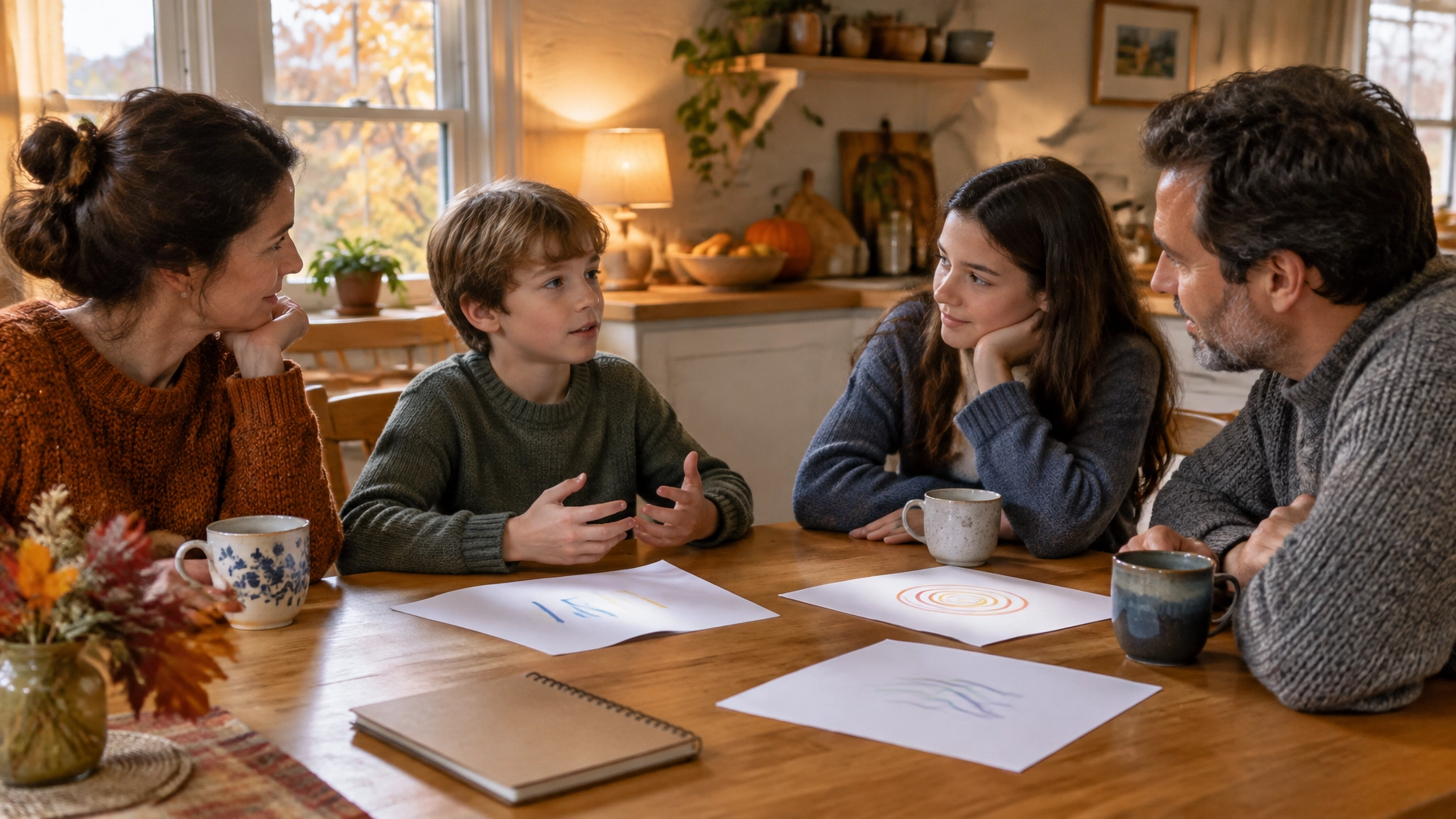
Imagine that it’s Sunday afternoon and your family is sitting around the kitchen table.
There’s nothing particularly formal about the occasion. Perhaps someone has brought a plate of cookies. A younger child is curled up beside a parent. An older child has a notebook.
You’re talking about the coming week.
Who needs to be where?
What needs to be done around the house?
Is there something the family would enjoy doing together next weekend?
Then one child raises a concern. “It’s not fair that I’m always the one who has to feed the dog.”
Another has an idea. “Could we have dinner outside on Friday?”
A parent brings up a problem that has been causing frustration. “We seem to be having trouble getting everyone ready to leave the house on time.”
And together, you begin talking about solutions.
This is a family meeting. It may sound simple, but I believe it can become one of the most valuable traditions a family develops.
Children Need to Feel That They Belong
Montessori education recognizes that children are not merely preparing to become members of society someday. They are already members of a community.
In a Montessori classroom, children learn that their actions affect others. They share responsibility for caring for the materials, maintaining the environment, helping younger classmates, and contributing to the well-being of the group.
A family is also a community, and children benefit from experiencing themselves as meaningful members of it.
This doesn’t mean that children and adults have the same responsibilities or the same authority. Parents remain responsible for decisions about safety, finances, health, and other matters that require adult judgment. But within appropriate boundaries, children can take part in decisions that affect their everyday lives. They can contribute ideas, express concerns, and help solve problems.
When their contributions are taken seriously, children begin to understand that belonging involves both rights and responsibilities.
Why Have a Family Meeting?
Most families already make decisions together informally. We talk during meals, in the car, or while doing household tasks. These conversations are important.
A family meeting offers something slightly different. It creates a regular opportunity for everyone to be heard.
Instead of discussing a problem only when someone is angry, we can address it when everyone is calm.
Instead of letting the loudest or oldest person dominate, we can make room for quieter voices.
Instead of parents solving every problem, children can help develop the solutions.
The meeting doesn’t have to be long. For families with young children, ten or fifteen minutes may be plenty. Older children and adolescents may be comfortable with longer conversations, especially when the subject is important to them.
The goal isn’t to create another obligation. It’s to establish a habit of cooperation.
Start With Something Positive
I would encourage families to begin each meeting by recognizing something that went well. Perhaps everyone enjoyed a recent outing. Perhaps a child helped prepare dinner. Perhaps someone noticed that the family has been doing a better job of keeping the kitchen organized. These observations don’t need to become elaborate praise. They simply set a positive tone.
Then invite family members to raise questions or concerns. Young children may need help putting their thoughts into words. An adult might ask:
“Is there anything you’d like us to do together this week?”
“Is there something at home that’s been bothering you?”
Older children may have more substantial issues to discuss. They may want more independence, different responsibilities, or a greater part in family decisions.
The important thing is to listen. Not every suggestion will be practical, and not every request can be granted. But every family member can be treated with respect.

Listening with care shows children their contributions are taken seriously.
Give Children Real Responsibilities
One of the most useful subjects for a family meeting is the work of maintaining a home. Every household takes effort. Meals must be prepared. Laundry needs attention. Pets need care. Rooms need cleaning. Groceries must be bought.
Children can take part in this work from an early age.
A toddler can help put napkins on the table.
A preschooler can water plants, sort laundry, or help prepare a snack.
Elementary children can gradually take on more substantial tasks.
Adolescents can contribute in ways that truly lighten the load for the adults in the family.
A family meeting helps everyone understand what needs to be done and how the responsibilities will be shared.
I would be careful, though, about turning every contribution into a transaction. Children shouldn’t necessarily expect payment every time they help with ordinary family responsibilities. There is value in learning that we contribute because we belong to a community. We all benefit from the work of others, and we all have something to offer.
Learning to Disagree Respectfully
Family meetings also give children a chance to practice disagreement.
One child wants to go hiking.
Another would rather visit a museum.
A parent would prefer to stay home and work in the garden.
These differences are normal. The question is how we respond to them. We can help children learn to listen without interrupting, explain their preferences, and consider the needs of others.
Sometimes the family can find a compromise.
Sometimes people can take turns choosing activities.
And sometimes parents will need to make the final decision.
The important thing is that children experience a process in which their perspectives are considered. They also learn that being heard doesn’t always mean getting their way. That is an important distinction. Respectful participation involves both expressing our own needs and recognizing that other people have needs, too.
What If the Meeting Becomes an Argument?
Family meetings are not magically free of conflict. Children may complain. Someone may interrupt. An older sibling may dismiss a younger child’s idea. A parent may become impatient.
When this happens, we have a chance to model the behavior we’re trying to teach. We can pause the conversation.
“We’re having trouble listening to one another. Let’s try again.”
“I think we’re all getting frustrated. We can come back to this later.”
There is no need to force a resolution to every issue. Some questions take time. And sometimes the most important lesson is that we can disagree without damaging our relationships.
If an issue is too emotionally charged, it may be better handled privately than in front of the whole family. The family meeting should never become a place where one child is publicly criticized or embarrassed. It should be a setting in which people feel safe contributing.
Let Children Help Plan Family Life
Family meetings don’t have to be mostly about problems and chores. They can also be enjoyable. Children might help plan a weekend outing, a family celebration, or a project around the house.
Suppose everyone wants to start a vegetable garden. The family could discuss what to plant, where the garden should go, what materials are needed, and who will help care for it.
A younger child might help choose the seeds.
An elementary child might research which plants will grow well.
An adolescent might work out a budget or help build raised beds.
Suddenly, the family meeting has become the beginning of a shared project.
Experiences like this give children opportunities to plan, organize, collaborate, and follow through. They also help children understand the connection between making a decision and accepting responsibility for it.

Planning together helps turn family ideas into shared projects.
Adolescents Need a Meaningful Voice
As children enter adolescence, family meetings can become especially valuable. Teenagers are developing a stronger sense of identity and a growing need for independence. They want more control over their time, activities, and relationships. Parents, understandably, remain concerned about safety, responsibilities, and good judgment.
These needs can seem to be in conflict. A family meeting provides a chance to discuss expectations before disagreements become crises.
An adolescent might propose a change in household responsibilities, transportation arrangements, or family schedules. Parents can explain the considerations behind their decisions. Together, they may be able to reach an agreement that recognizes both growing independence and continuing responsibility.
Not every issue is negotiable. But adolescents benefit from knowing which decisions they can influence and why some boundaries remain in place. They are more likely to develop sound judgment when they have meaningful opportunities to exercise it.

Adolescents can take part in serious conversations while parents remain responsible for adult decisions.
The Example We Set
Perhaps the most important feature of a family meeting is the example the adults provide. Children notice:
Whether we listen.
Whether we interrupt, dismiss ideas, or become defensive.
Whether we keep our promises.
Whether we’re willing to reconsider a decision when someone offers a thoughtful argument.
We don’t need to pretend that parents and children are equals in every respect. But we can demonstrate that authority and respect belong together. We can explain our decisions. We can acknowledge our mistakes. We can invite suggestions.
And we can show children that cooperation is not a sign of weakness. It is one of the ways a family becomes stronger.
A Small Tradition With Lasting Benefits
Not every family will want a formal weekly meeting. Some may prefer a brief conversation after Sunday dinner. Others may gather once or twice a month. What matters is establishing a reliable opportunity for children to take part in family life.
Over time, these conversations can become something children look forward to. They know they can raise concerns. They know their ideas matter. And they begin to understand that the family is something everyone helps create.
I believe this is one of the most practical ways to bring Montessori principles into the home. We are not simply teaching children to follow rules. We are helping them develop the skills they need to live with others: listening, cooperation, responsibility, judgment, and respect.
And perhaps, years from now, when our children are managing families, workplaces, and communities of their own, they will remember those ordinary conversations around the kitchen table. They will remember that their voices mattered.
And they may carry forward the understanding that a healthy community is not one in which everyone always agrees, but one in which people learn to listen, contribute, and work together.