Related Posts


Helping children develop initiative, responsibility, and consideration for others
Snapshot
It is one thing to teach children to complete tasks when adults ask them to. It is something quite different to help them become people who recognize what needs to be done and take the initiative to do it. Montessori offers a wonderful perspective on how children gradually develop this kind of awareness, responsibility, and consideration for the people with whom they share their lives.
Someone Will Take Care of It
Imagine coming into the family room and discovering that the dog has knocked over its water bowl.
There is a puddle on the floor. Several people have walked past it. Everyone has noticed it, but no one has done anything about it.
Perhaps each person assumed that someone else would take care of it.
Now imagine a child noticing the puddle, getting a towel, wiping up the water, and refilling the dog’s bowl.
No one asked. No reward was offered. No adult was standing nearby to supervise.
The child simply recognized something that needed to be done and took care of it.
Many parents would consider that a rather remarkable moment.
How do we help children become people who respond to the needs of others and their surroundings in this way?
Lessons Hidden in Everyday Life
Visitors to Montessori classrooms are often fascinated by the activities that children undertake.
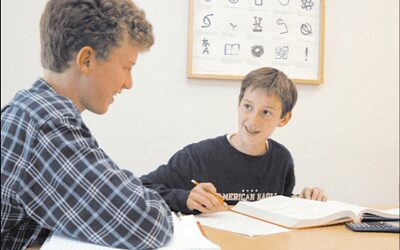
A four-year-old carefully washes a table. Another child waters the plants. Someone notices that a few pencils need sharpening. An older child helps a younger classmate return materials to a shelf.
These activities are part of what Montessori calls Practical Life.
At first glance, the children appear to be learning how to sweep, wash, polish, pour, or organize things.
But something much more significant is taking place.
They are learning that their actions affect the people and the environment around them. They are discovering that they have the ability to make things better.
Over time, the responsibility for caring for the classroom becomes something that the children increasingly share.
It is their classroom. They belong there. Taking care of it is part of being a member of that community.
The same idea can become part of life at home.

Practical Life offers children opportunities to contribute to their classroom community.
From Following Instructions to Taking Initiative
Many children become quite capable of performing household tasks when they are asked.
They can make their beds, put their clothes away, feed the cat, or bring their dishes to the kitchen.
But parents often find themselves having to repeat the same requests day after day.
Why don’t children simply notice what needs to be done?
Part of the answer is developmental. Children are still developing the abilities that allow them to remember responsibilities, organize their actions, and recognize situations that require attention.
However, another part of the answer may lie in how we organize family life.
When adults make every decision, identify every task, and direct every action, children have relatively little opportunity to practice noticing things for themselves.
We may be unintentionally training them to wait for instructions.
Perhaps we can gradually involve them in thinking about what needs to happen.
Instead of saying, “Pick up those shoes,” we might occasionally ask, “What do you notice about the hallway?”
Instead of announcing that everyone needs to help clean up after dinner, we might ask, “What needs to happen before the kitchen is ready for tomorrow morning?”
We are helping children develop the habit of looking around and thinking.
Feeling That We Belong
Children are more likely to take an interest in caring for something when they feel a sense of ownership and belonging.
This is one reason why Montessori classrooms are designed to belong to the children as much as to the adults.
Children have access to the things they need. They participate in age-appropriate decisions. They experience the satisfaction of contributing to their community’s life.
Our homes can offer similar experiences.
Rather than treating children as people who are occasionally expected to help the adults, we can invite them to become contributing members of the household.
Everyone who lives here has something to offer.
A toddler can bring a napkin to the table. A five-year-old can help care for a pet. A ten-year-old can prepare a simple meal. A teenager can take responsibility for an important aspect of family life.
These contributions should be reasonable and appropriate. Children should never be expected to carry adult burdens or be responsible for their parents’ emotional well-being.
But meaningful responsibility gives children a sense that their presence makes a difference.
Letting Children See Us Notice
Children learn a great deal from observing the adults around them.
They notice whether we return a shopping cart to its proper place. They see whether we offer assistance to someone who is struggling. They observe how we treat people who perform work that makes our own lives easier.
We can occasionally share what we are thinking.
“I noticed that our neighbor is having trouble carrying those groceries. I wonder if we could help.”
“The bird feeder is empty. The birds have been coming all morning.”
“Grandma has had a busy day. Perhaps we could make dinner for her.”
These are quiet lessons in awareness.
We are demonstrating that the world is filled with opportunities to be useful and considerate.

Children see us notice, and learn from the ways we respond.
Beyond Chores
Ultimately, this is not an article about getting children to do more housework.
It is about helping children develop a way of looking at the world.
We hope that they will become people who notice when someone is being excluded from a conversation, when a friend needs encouragement, when a shared space needs attention, or when something in their community could be improved.
These qualities grow through everyday experiences.
In the beginning, our children will need demonstrations, reminders, and considerable encouragement. Over time, we may find ourselves needing to say less and less.
And one day, we may walk into a room expecting to take care of something, only to discover that someone has already done it.
A child has noticed.
A child has cared.
A child has acted.
Something important is growing there.