Related Posts



Understanding the Path to Mastery
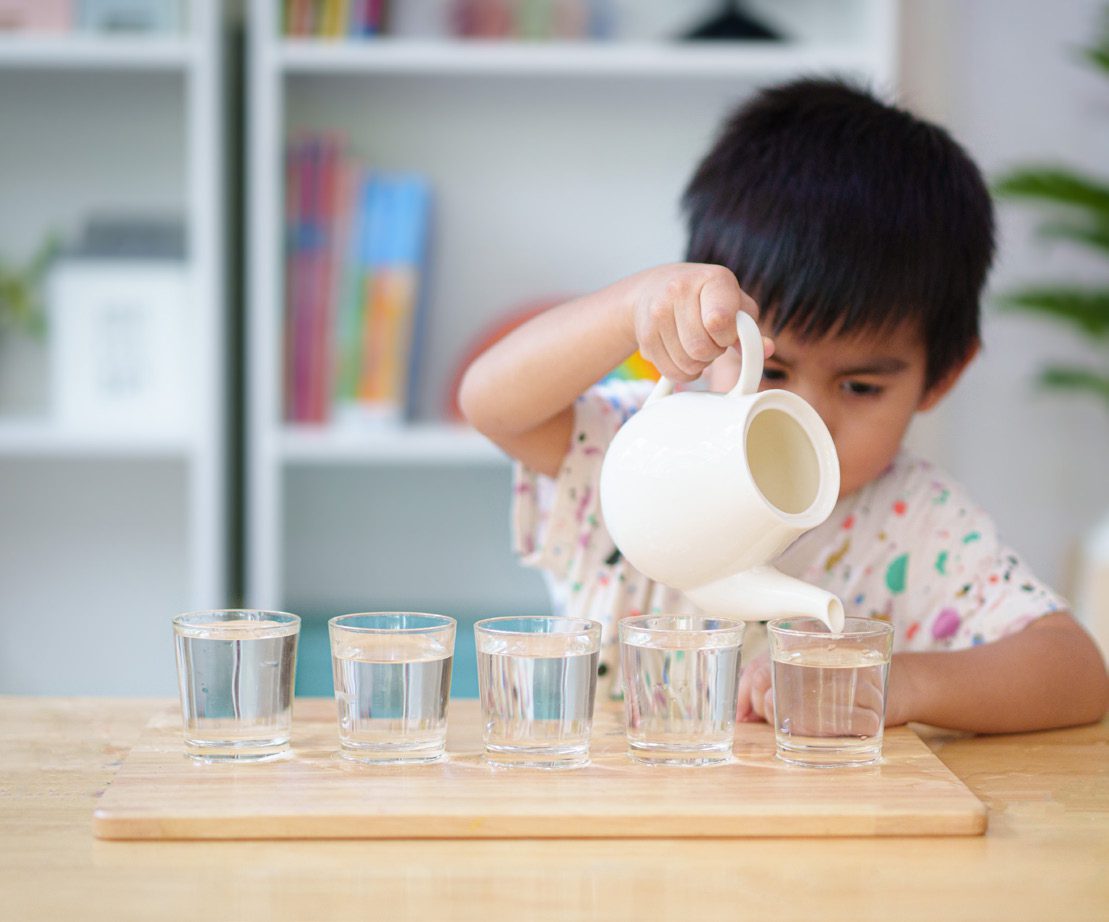
Few things puzzle Montessori parents more than repetition. You watch your child pour water for the tenth time, polish the same object day after day, or choose the same work every morning for weeks on end. A quiet worry creeps in: Are they bored? Shouldn’t they be moving on? Are they learning enough?
This mix of wonder and anxiety is entirely natural. From an adult perspective, repetition often signals monotony or lack of challenge. In Montessori, it signals something very different. Repetition is not stagnation. It is evidence that deep, important developmental work is underway.
To understand why, we need to look beneath the surface (past the visible activity) and into how young children actually learn.
What Adults See vs. What Children Are Doing
When adults repeat a task, we usually do so to become faster or more efficient. Once efficiency is achieved, we move on. Children, however, repeat for a different reason entirely. They repeat to construct understanding.
A three- or four-year-old pouring water is not simply practicing pouring. They are refining coordination, calibrating muscle
control, judging distance, managing impulse, and aligning intention with action. Each repetition integrates body and mind a little more tightly.
What looks the same to us is never the same to the child.
Repetition Is How the Brain Wires Itself
Early Childhood is a period of intense brain development. Neural connections are formed and strengthened through repeated experience. When children repeat an activity they have freely chosen, they are literally building and stabilizing neural pathways.
“Repetition is not stagnation. It
is evidence that deep, important developmental work is underway.”
This is why Montessori places such emphasis on uninterrupted work cycles. When children are allowed to repeat without interruption, distraction, or pressure to move on, concentration deepens. And when concentration deepens, learning becomes embodied rather than superficial.
Dr. Maria Montessori described this process as the child “normalizing”—not becoming compliant or quiet, but becoming centered, focused, and deeply engaged. Repetition is the doorway to this state.
Mastery Is Not About Speed or Novelty
In conventional thinking, mastery is often equated with speed: finishing quickly, checking the box, moving ahead. Montessori defines mastery differently. Mastery means the child has integrated a skill so fully that it becomes part of who they are.
This kind of mastery cannot be rushed. It requires time, repetition, and the freedom to practice until the inner need is satisfied. Children instinctively know when they are done. Adults often intervene too soon.
When a child repeats an activity day after day, it is because something inside them is still unfolding. When the work is complete, they move on—often suddenly and without prompting.
Repetition Builds Confidence and Inner Security
There is an emotional dimension to repetition that is easy to overlook. Repetition gives children a sense of control and predictability in a world that often feels large and overwhelming.
Each successful repetition reinforces a powerful internal message: I can do this. That confidence does not come from praise or external rewards. It comes from lived experience.
This is why Montessori classrooms are calm and purposeful. Children who are allowed to repeat freely are not anxious or restless. They are grounded. They know where they belong in the environment, and they trust their own abilities.
When Adults Interrupt the Process
Well-meaning adults sometimes interrupt repetition unintentionally. We suggest something “more challenging,” worry about wasted time, or redirect toward variety. While enrichment has its place, premature interruption can undermine the very process that leads to genuine growth.
3–6 Years | The Elementary Years
Children who are allowed to repeat freely are learning how to stay with a task, how to tolerate difficulty, and how to complete something thoroughly.
When children are pulled away from repetition too soon, they may comply, but the inner work remains unfinished. Over time, this can lead to shallow engagement, reduced concentration, and a constant search for external stimulation.
Maria Montessori’s quiet wisdom is to trust the child’s inner timetable.
Repetition and the Development of Will
One of Montessori’s most profound insights was that repetition strengthens the will. Each time a child chooses the same work again, they are exercising intention, persistence, and self-discipline.
This is not forced repetition. It is self-chosen. And that distinction matters.
Children who are allowed to repeat freely are learning how to stay with a task, how to tolerate difficulty, and how to complete something thoroughly. These capacities form the foundation for later academic learning, emotional regulation, and resilience.
How Parents Can Support This at Home
For parents, the takeaway is both simple and challenging: Allow space for repetition without rushing it or apologizing for it.
At home, this might mean:
- Letting your child help with the same household task repeatedly;
- Resisting the urge to rotate toys constantly;
- Valuing focus over novelty, and
- Allowing activities to unfold slowly.
When you notice yourself thinking, They already know this, pause and reframe the question: What might they still be
building?
Reassurance for Anxious Moments
It is understandable to worry whether your child is “doing enough.” Montessori reassures us that depth matters more than speed, and integration matters more than exposure.
Repetition is a sign of health. It tells us that the child feels safe, interested, and internally motivated. These are precisely the conditions under which meaningful learning occurs.
And when questions or concerns arise, your child’s Montessori guide is an invaluable partner. They observe patterns across days and weeks, understand developmental trajectories, and can help you see when repetition is serving growth—and when the child is ready for something new.
What looks like “again and again” from the outside is, for the child, a quiet journey toward mastery. Montessori invites us to trust that journey—and to marvel at how much is happening beneath the surface.