Related Posts
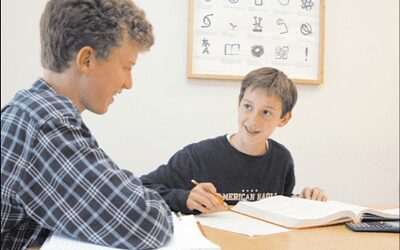
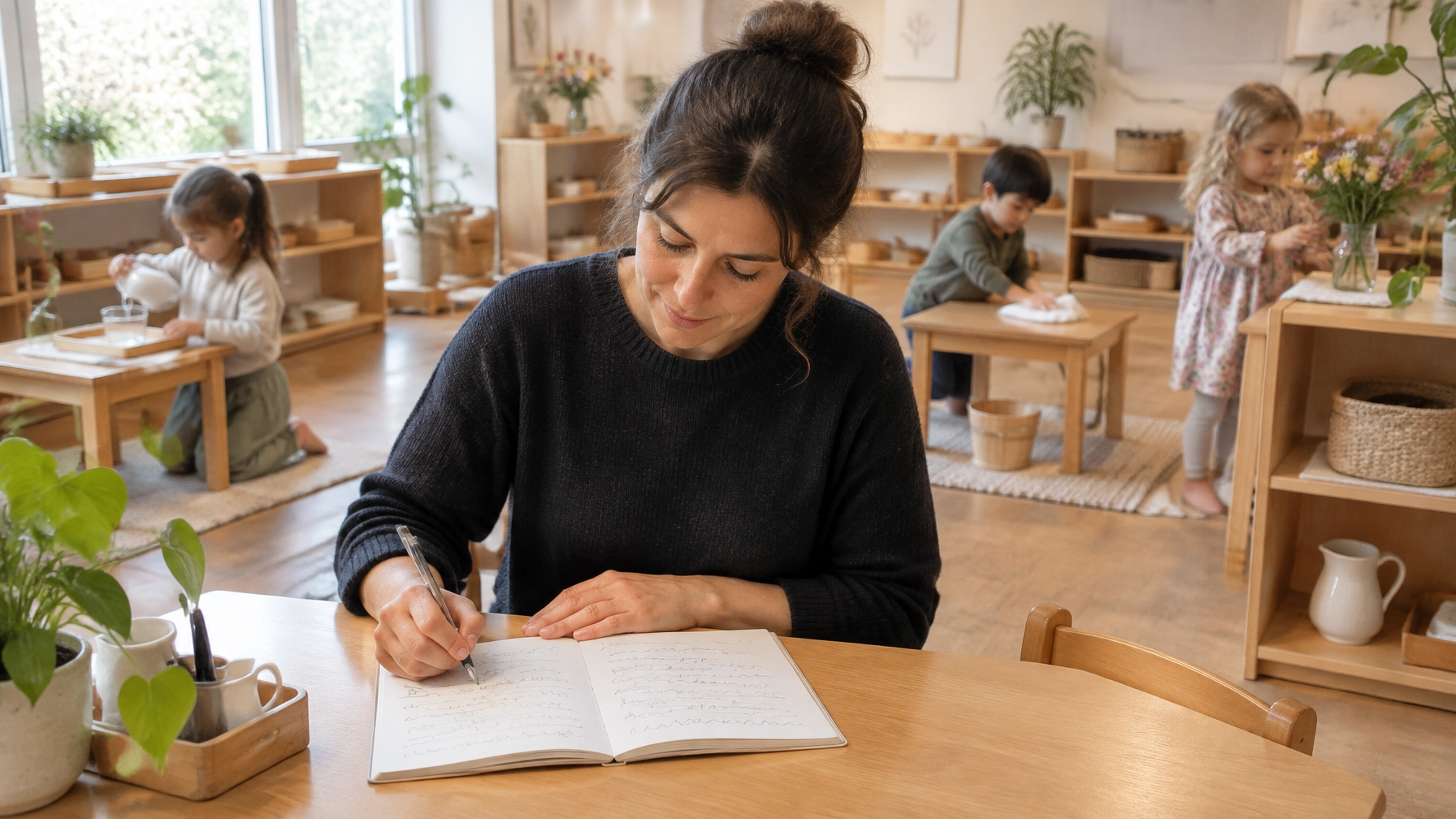
A teacher’s careful observations help bring a child’s developing story into view.
There was a time when some schools sent home progress reports that read almost like a letter from a teacher who truly knew your child.
This was never universal. The familiar American report card, with its list of subjects, its grades, and perhaps a sentence or two of comment, has been with us for generations. But some schools, particularly Montessori and independent schools, took a different approach. I remember it from my own childhood in the 1950s and 1960s. We knew the conventional report card, but at some of the schools I attended, teachers also wrote substantial narratives about each student. Those schools stood out.
A thoughtful narrative did more than tell parents whether their child was doing well academically. It described the child as a developing person: interests and accomplishments, struggles and relationships, work habits, emerging abilities, and areas that needed attention. At its best, the message to the family was simple: We know your child. We see your child. Here is what we have observed, how your child is growing, and where we believe that growth may lead next.
I believe schools should consider bringing this back, or, if they have never done it, consider beginning. The obstacle is obvious. Good narrative reports take time. But perhaps, for the first time, we have tools that can genuinely help.
The Record Is Evidence, Not the Narrative
Montessori schools have always kept records of children's work, and today those records can be extraordinarily detailed. A parent might receive a report showing that their child has worked with the Pink Tower, the Metal Insets, the Movable Alphabet, the Stamp Game, the Checkerboard, or the Timeline of Life, with notations indicating whether each lesson has been presented, practiced, or mastered.
That information has value. But imagine receiving it as a parent who has never taken Montessori teacher education. What does it mean? More importantly, what does it tell you about your child?
The same problem exists well beyond Montessori. A B+ in mathematics, or a note that a child is "meeting expectations," tells us something, but not very much. Records, grades, assessments, lesson lists, and checklists all provide data. They are evidence. They are not the narrative. The narrative is the story that evidence helps us understand.
Montessori Teachers Have a Remarkable Story to Tell
This distinction matters especially in Montessori, because observation lies at the heart of our work. A Montessori teacher is not simply delivering curriculum. The teacher is studying development.

Observation allows the teacher to notice development as it unfolds in ordinary classroom moments.
We observe what a child chooses and notice what they return to again and again. We watch concentration take root. We see frustration, and we see perseverance. We notice the day a child who once depended constantly on adults begins to say, "I can do it myself." We watch friendships form and change. We see humor, compassion, confidence, hesitation, leadership, curiosity, resilience, and independence. We recognize the moment when an apparently random interest becomes sustained intellectual curiosity, and the moment a child begins caring for the classroom not because an adult asked, but because it has become their community. And we catch the small breakthroughs that would be almost invisible to anyone who had not been watching this particular child over time.
These things matter enormously. They are often far closer to what parents hoped Montessori would nurture in their children than any list of completed lessons. Yet almost none of them fit in a checkbox. They require a story.
What Parents Really Want to Know
Parents certainly want to know whether their children are learning to read, write, calculate, investigate, reason, and communicate. But beneath those questions lie deeper ones. Who is my child becoming? Is she happy? Does he have friends? What captures her imagination? What happens when he meets something difficult? Is she becoming more independent? Does he contribute to the community? What do you see at school that I may not see at home? Where has my child grown, where is my child struggling, and what seems to be emerging next?
Underneath all of these is the question every parent quietly wants answered: Do you really know my child?
A thoughtful narrative can answer that question in a way no spreadsheet, grade, graph, or checklist ever could.
So why don't we write them?
The answer is not mysterious. Writing them well takes an enormous amount of time.
Picture a teacher responsible for twenty-five children, now asked to write twenty-five thoughtful narratives, each specific enough to describe only one child. All the while, that teacher is observing, presenting lessons, preparing the environment, keeping records, communicating with parents, attending meetings, supporting colleagues, and responding to the thousand unexpected things that happen in any classroom. Then report season arrives, and we ask them to sit down, usually at night or over a weekend, and reconstruct several months of a child's development from memory, lesson records, scattered notes, photographs, work samples, and anecdotes.
It is hardly surprising that narratives grew shorter. A few paragraphs replaced several pages. Checklists replaced paragraphs. Computerized lesson records became progress reports.
None of this happened because teachers stopped caring. It happened because we created a reporting system that demanded more time than most teachers could realistically give. That is the problem we need to solve.
What Would a Good Narrative Look Like?
A narrative report should not be a sentimental essay full of glowing generalities. Nor should it be six pages of educational jargon that parents must decipher. The goal is not more words. It is greater understanding.
A strong narrative might be organized around five deceptively simple questions. Who is this child right now, and what interests, dispositions, relationships, strengths, and challenges help us understand this child as a person? How has the child grown, and where do we see increasing independence, competence, concentration, confidence, responsibility, intellectual depth, or social maturity? What evidence illustrates that growth, and which observations, conversations, work samples, photographs, projects, choices, or classroom moments allow us to show rather than merely tell? What does the child think, when developmentally appropriate, about their own interests, accomplishments, difficulties, and goals? And what seems to be emerging next, in terms of what the teacher is watching for, preparing, encouraging, or planning to introduce?
The emphasis naturally shifts from infancy through adolescence. With infants and toddlers, we may be thinking about attachment, movement, language, routines, exploration, and early relationships. In an Early Childhood classroom, the focus might turn to independence, work choice, concentration, language, mathematics, grace and courtesy, problem-solving, and the child's growing connection to the prepared environment. At the Elementary level, the story widens to include imagination, intellectual interests, conceptual understanding, research, collaboration, organization, moral development, responsibility, perseverance, and self-reflection.
But the underlying question stays the same: What is the story of this child's development?
What If the Evidence Were Already There?
This is where technology becomes interesting.
Imagine that teachers no longer had to reconstruct a semester from memory. Throughout the year, they would naturally capture small pieces of evidence as they went: a brief observation, a photograph, something the child said, a work sample, a lesson record, a note about an emerging friendship, a short video, a moment of unusual concentration, a difficulty that keeps recurring, an accomplishment that represents months of effort, and the child's own reflection on their work.
Individually, these are fragments. Over six months, they can add up to a remarkably rich portrait of a child. The problem is that across an entire classroom, a teacher may accumulate hundreds or even thousands of them, far more than any person can hold in mind at once.
Artificial intelligence can. And that opens up some genuinely interesting possibilities.
AI Should Help the Teacher Observe, Not Pretend to Be the Teacher
The least interesting use of AI would be to type, "Write a progress report for Maya." We all know what would come back: several polished paragraphs about Maya's curiosity, her enthusiasm for learning, her growing confidence, and her bright future. Change the name to James, and most of it would work just as well. That is precisely what we do not want.
Instead, imagine AI working quietly alongside the teacher throughout the year, noticing gaps and patterns and raising questions such as these.
"We have several observations about Maya's mathematical development, but very little about her social relationships. What have you been noticing?"
"Earlier this year you noted that James often sought adult help when work became difficult. More recent observations suggest that may be changing. Have you seen that too?"
"You have several observations and photographs of Elena returning to the same work over six weeks. What have you noticed about her concentration and persistence?"
These are not questions for the AI to answer. They are questions it can help the teacher remember to ask.
Then, when report time comes, the teacher no longer faces the dreaded blank screen. The observations, lesson records, photographs and videos, previous goals, portfolio, and perhaps the child's own reflections are all already there. AI can help retrieve that material, organize it, point out possible patterns, and gather the relevant evidence around carefully designed developmental questions. Then it can help prepare a first draft.
Not the final report. A draft.
The teacher remains the professional observer, interpreter, and author. Reading the draft, the teacher might say, "Yes, that's exactly what I've been seeing." Or, "No, that isn't quite right." Or, "We've missed something important about his friendships." Or, "That sounds generic. Let me tell the story of what actually happened."
The finished report should not sound as though it were written by artificial intelligence. It should sound like this child's teacher writing about this child.
Making This Practical Again
This is part of the work I am now exploring with the team at Illumine.
Illumine has been developing technology for early childhood and Montessori schools for nearly a decade. Its platform is used by thousands of schools and centers worldwide and brings together many parts of school operations and classroom life: administration, parent communication, observations, Montessori records, photographs and videos, portfolios, assessments, and other documentation.

The strongest narrative begins with carefully gathered evidence from the child’s actual work and experience.
What interests me is not simply whether AI can write a better report. It is whether we can design the entire process more intelligently. With the Illumine team, I am thinking through how teachers can capture meaningful evidence without taking on yet another documentation burden; how portfolios can become richer representations of development rather than collections of attractive photographs; how thoughtful developmental questions can prompt teachers along the way; and, ultimately, how all of this evidence can come together into a substantial, deeply individualized narrative.
The objective is straightforward: help teachers accomplish much more without asking them to work many more hours.
That distinction matters. We should not bring back narrative reports by simply piling another large expectation onto teachers who are already stretched thin. If we want this kind of reporting, we need to build the infrastructure that makes it practical. That is where the thoughtful use of AI can make an enormous difference.
The Report Doesn't Have to Be Just Words
There is one more possibility the old narrative report could never offer: today's narrative can be illustrated.
Imagine reading about your child's developing concentration and seeing a photograph, or a thirty-second video, of exactly what the teacher means. Imagine reading about an Elementary student's research project and opening a picture of the finished work. Imagine seeing a sample of your child's writing from September beside one from February, or hearing your child describe, in their own voice, something that was once hard and what they can now do.
Used selectively, these artifacts are not decoration. They are evidence. They let parents see something of what the teacher sees.
Curation is essential. Parents do not need every photograph, lesson, observation, and piece of work. They need the right ones. The purpose is not to provide more information, but greater understanding.
Perhaps It Is Time
Narrative reports were never universal. Some schools used them, and many did not. But the schools and teachers who did them exceptionally well created something memorable. They gave families more than a report card. They gave them a portrait of their child.
For schools that once had this tradition, perhaps it is time to bring it back. For schools that never have, perhaps it is time to begin. Not because everything schools did fifty years ago was better, and certainly not because teachers need another burdensome task. Quite the opposite. We now have tools that earlier generations of educators could hardly have imagined. The real question is whether we can use them not to make education more mechanical, but to make something deeply human practical again.

A narrative report can help a family see more clearly the child their teacher has come to know.
At reasonable intervals in a child's education, we should be able to sit beside a family, literally or figuratively, and say: Here is the child we have come to know. Here is what we have seen. Here is how your child has grown. Here are a few moments that bring that growth to life. Here are some things we are still watching carefully. And here is where we believe the journey may be leading next.
For Montessori schools, this should feel familiar. Observation has always been one of our most essential tools. Perhaps a thoughtful use of artificial intelligence can help us turn those observations into stories once again.

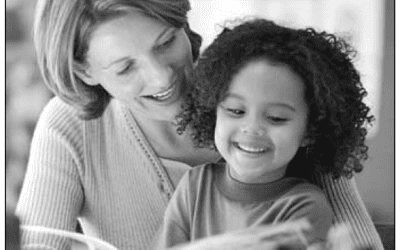
The narrative becomes most meaningful when teachers and families reflect together on a child’s growth.
Because in the end, the best progress report does more than report progress. It allows a family to see their child through the eyes of a teacher who truly knows them.