Related Posts
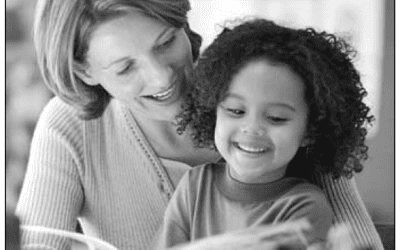

Why families choose to invest in their children's education, and why many stay the course through the elementary years and beyond
A family sits around the kitchen table with the household budget spread out in front of them. Another year of Montessori tuition will mean some real sacrifices. Perhaps they'll keep the car a few more years, take a shorter vacation, or put off the kitchen renovation they've been talking about. Eventually someone asks the question that every tuition-paying family asks at some point: “Is it really worth it?”
It's a fair question. Private school tuition is a significant expense, especially for families with more than one child, and when a tuition-free public school is close by, the difference can feel enormous. Yet every year, families across the country decide that it is worth it. Some have ample resources. Many others stretch their budgets, apply for financial aid, and make careful choices about what matters most.
Why do they do it? The answer usually has less to do with test scores and college admissions than people expect.
What Families Are Really Choosing
When parents first compare schools, they naturally look at the visible things: class size, teacher qualifications, facilities, academic programs, and activities. Those matter. But when you ask families why they chose their school, and especially why they stayed, they tend to describe something deeper. They want a school where their child is truly known and teachers notice when something isn't right; where children are treated with dignity and kindness is expected; where curiosity is encouraged rather than managed; where academic expectations are high without making a child's worth depend on outperforming classmates; and where the values of the school community are consistent with the values they are teaching at home.
In other words, families aren't simply paying for instruction. They are choosing the environment in which their child will spend a large part of childhood, and environments shape people.
Consider a family with two young children who could afford a larger house in a more expensive neighborhood. Instead, they stay in their modest home and put part of their income toward tuition. Friends are puzzled and ask why they would spend so much when public school is free. The parents explain that they've found a school where their children are happy, challenged, and respected, where they know and trust the teachers, and where the community reinforces what they're trying to teach about responsibility, independence, and caring for others. They aren't claiming that every other school is inferior. They're saying that this school offers something they value enough to give up other things for. To them, the smaller house is a good trade. (This family is a composite, but their reasoning is one we hear from parents again and again.)
Academic Quality: Look Beyond the Label
Parents certainly want their children to read and write well, reason mathematically, understand science and history, and think critically. Some choose an independent school because they believe its academic program is stronger or better suited to their child. Others are concerned about large classes, heavy emphasis on standardized testing, or a pace that is too fast for some children and too slow for others.
It's worth being honest here. A school is not automatically better because it charges tuition, and a school is not automatically excellent because it uses the word Montessori, a name that any school may legally adopt. When you evaluate a Montessori school, look at whether the lead teachers hold recognized Montessori credentials for the age level they teach; whether the classrooms are fully equipped and children have long, uninterrupted work periods; whether the school is accredited or affiliated with an established Montessori organization; how the school tracks and communicates each child's progress; and what children's actual work looks like and how it develops over time.
A strong Montessori school should be able to explain not only what children learn, but how their learning builds from one year to the next, and it should be able to show you the evidence.
The Education You Cannot Measure on a Test
Imagine a girl who is thriving academically. She reads confidently, enjoys mathematics, and is curious about almost everything. Her parents are pleased, but they also care about other questions. Does she know how to make and keep a friend? Can she work with someone who disagrees with her? Does she take responsibility for her mistakes, organize her own work, and show compassion toward younger children? Does she have the confidence to ask questions and the independence to think for herself?
These qualities aren't extras. They are part of becoming a capable, decent human being, and they sit at the heart of Montessori education. Maria Montessori designed her approach around the development of the whole child, which doesn't mean that academics are secondary. It means that intellectual growth, character, independence, emotional maturity, and social responsibility are meant to develop together rather than in separate compartments.
A Community Where Your Child Is Known
One of the strongest reasons families choose a particular school is the sense of belonging it offers. They want their children to be more than names on a class list, and they want teachers and school leaders who understand their children's personalities, interests, strengths, and struggles. They want to feel comfortable raising a concern, and they want their children to form lasting relationships.
Montessori's multi-age classrooms are designed to support exactly this. Children typically stay in the same classroom community for a three-year cycle, which gives teachers time to know them deeply. Older children help younger ones, younger children look up to older classmates, and every child has the experience of being both a beginner and a leader. That continuity helps school feel like a genuine community rather than a series of unrelated years.
Emotional and Social Safety
More and more, parents ask whether their child will feel safe at school, not only physically but emotionally and socially. They worry about bullying, exclusion, humiliation, and the intense peer pressures children face. They want a place where children can make mistakes without being embarrassed, where differences are respected, and where adults take children's feelings seriously while still holding clear expectations.
A well-run Montessori environment offers a great deal here. Children learn to work alongside classmates of different ages and abilities. They practice Grace and Courtesy, learn to resolve conflicts with words, and experience freedom within clear limits. Ideally, they come to understand that everyone in the community matters.
Still, no school can promise that children will never face teasing, conflict, or disappointment, and Montessori schools are not immune to bullying. The more meaningful question is how a school responds. When you visit, ask how adults notice social problems early, what happens when a child is hurt or excluded, how children are taught to repair relationships rather than just stop the behavior, and whether teachers and parents treat emotional safety as a shared responsibility.

Listening and communication help build a school community.
For many families, good answers to those questions are worth a great deal.
Why Many Families Stay Through Elementary School
Most parents first discover Montessori when their children are three or four. They fall in love with the beautiful classrooms, the hands-on materials, the independence, and the respect shown to young children. Then kindergarten approaches, and the question returns. Public school is available, tuition continues to rise, and friends are moving their children elsewhere. Should we stay?
This is a pivotal moment, because the kindergarten year is when the three-year Primary cycle comes to fruition. It is the year when children consolidate what they've been building, take on the role of classroom leaders, and often experience a burst of academic confidence. Leaving just before that year means missing much of what the earlier years were preparing for.

Practical Life work invites children to practice independence and care.
And Montessori doesn't end when children learn to read, write, and count. In many ways, the elementary years reveal the full power of the approach. The concentration, independence, and foundational understanding that young children have developed now become tools for far more ambitious work. Elementary children want to understand how the world works and why. How did life begin? Why do civilizations rise and fall? What makes a society fair? Montessori elementary classrooms invite them to pursue those questions through an integrated curriculum that connects history, geography, biology, mathematics, language, science, and the arts.

Children share ideas as they explore and learn together.
Children work independently and in small groups, learning to plan their time, conduct research, organize information, present their ideas, and take responsibility for increasingly complex projects. The goal isn't simply to finish assignments; it is to develop curious, capable, thoughtful learners. For families who value that kind of education, staying in Montessori through elementary school isn't a matter of extending preschool. It is a continuation of a developmental journey that is only beginning to show its results.
Middle School and Adolescence
The decision becomes even more significant as children approach adolescence. Young teens are wrestling with fundamental questions: Who am I? Where do I belong? What am I good at? What kind of person do I want to become? Friendships matter enormously, and adolescents develop a powerful sense of justice, a hunger for independence, and a growing desire to be taken seriously.
Montessori recognized that adolescents need meaningful work, real relationships, intellectual challenge, and opportunities to contribute to a community. Montessori middle school and high school programs, where they are available and well implemented, are built around those needs. Students may take on substantial interdisciplinary studies, run small businesses, care for land and animals, carry real responsibilities within the school, and connect their learning to adult life. The aim isn't to protect adolescents from every challenge but to help them develop the judgment, resilience, competence, and sense of belonging they need to meet challenges well.

Adolescents share ideas and contribute to meaningful work.
For some families, this is the stage when the values of Montessori education matter most.
The Family That Stayed the Course
Picture a boy who started Montessori at three. At five, he loved the materials and the freedom to choose his work. At eight, he became fascinated by ancient civilizations and spent weeks researching them. At eleven, he was organizing group projects and coordinating with classmates. By the time he reached adolescence, his parents noticed qualities they valued deeply. He spoke comfortably with adults, had friends of different ages, asked good questions, understood that real learning takes effort, cared about fairness, and was beginning to think seriously about the person he wanted to become.
His parents couldn't say precisely how much of this came from Montessori, how much from their family, and how much from his own temperament. Child development is never that tidy. But they were certain the school had been an important partner in raising him, and that was the return on their investment that mattered most to them.
Being Honest About the Cost
We should never pretend that tuition is easy for every family. For some, private school isn't financially possible, and others can manage it only with significant financial aid. No family should feel that loving their children requires taking on unsustainable debt or neglecting other essential responsibilities.
At the same time, families make major financial decisions based on their priorities all the time: where to live, what to drive, how much to spend on travel and home improvements, and how much to save. Education belongs in that conversation. It may be one of the largest investments a family makes, but it is also one of the few that shapes a child's daily experience right now, every day, while also shaping the years ahead.
The return can't be calculated as neatly as interest on a savings account, and no school can guarantee happiness, character, career success, or admission to a particular college. But families can reasonably ask whether the experience their child is having is worth the sacrifices it requires. If you're unsure, talk with the school about financial aid, payment plans, and sibling discounts before assuming the answer is no.
Questions to Ask Yourselves
Whether you're considering Montessori, another independent school, or a public school, these questions can help you decide. What kind of person do we hope our child will become? What does our child need academically, socially, and emotionally right now? Does this school's daily practice reflect the values it describes? Does our child feel known, respected, and appropriately challenged? Do we trust the teachers and the school's leadership? Is there a clear educational pathway through the next stage of our child's development? And can we make this financial commitment responsibly?
The best choice isn't the same for every child or every family.
The Investment That Lasts
We often think of education as preparation for the future, and of course it is. We want our children to have opportunities, to find meaningful work, and to have real choices as adults. But childhood isn't a waiting room for adulthood. Your child is living a significant part of life right now. The people around them matter. The way they're treated matters. Their daily chances to think, create, cooperate, struggle, succeed, and belong all matter.
That is why many families decide that a particular school is worth considerable sacrifice. Not because tuition guarantees a better education, and not because private education is always superior, but because they've found a community and an approach to learning that reflect their deepest hopes for their children. And when that school continues through elementary, middle school, or beyond, staying the course offers something rare: an educational philosophy that grows along with the child.
In the end, the question isn't only “What does this school cost?” It's also “What kind of childhood, and what kind of future, are we choosing to invest in?”