Related Posts


Snapshot
Children may not remember every gift, but they often remember what their families did together. Game nights, cooking, reading aloud, making decorations, neighborhood walks, and small rituals can become treasured traditions. Here are ways to create family experiences that include children of different ages without turning the holidays into another exhausting schedule.

Everyone has a place in a simple family game, and the joy comes from sharing it together.
What We Remember
Ask adults what they remember about childhood holidays. A few mention a special toy, but many describe something else: the smell of cookies baking, a grandmother reading a familiar story, a family card game, a walk after dinner, everyone laughing because Dad always lost at charades. These memories aren’t about expensive gifts or elaborate celebrations. They’re about belonging, and families create that sense of belonging through simple traditions repeated over time.
Traditions Don’t Have to Be Big
We sometimes imagine a tradition must be impressive: a special trip, a perfectly decorated home, a photo-worthy meal. But children often love repetition more than spectacle: the same pancakes every Saturday morning, the same story read aloud each December, the same walk after a holiday meal, the same game whenever the grandparents visit.
Familiar rituals give children something to look forward to and a sense of continuity. “This is what our family does.”
Try a Family Game Night
Choose an evening when everyone can be together. Put the phones away, bring out a game, and make popcorn. Keep expectations realistic; with young children, twenty or thirty minutes may be plenty. Good choices include matching games, dominoes, simple card games, cooperative board games, charades, and guessing games. Older children may want strategy games or more challenging cards. What matters is that everyone gets to take part.
Including Different Ages
A three-year-old can’t play every game that interests a twelve-year-old, but families can adapt. A younger child can roll the dice, move a shared game piece, match pictures, or help keep score. Older children can explain the rules or partner with younger players. Sometimes the family plays together, sometimes it splits into groups, and sometimes the adults play something harder with the older children after the little ones are in bed.
Don’t expect older children to spend every game night playing far below their level. Fairness doesn’t require identical experiences.
Let Children Help Plan
Traditions mean more when children help shape them. Ask, “What game should we play this week?” “What would you like to cook together?” “Should we make decorations or take a walk?” Older children can organize the evening, prepare snacks, teach a game, or make invitations. When children contribute to a tradition, it begins to belong to them.
Cook Something Together
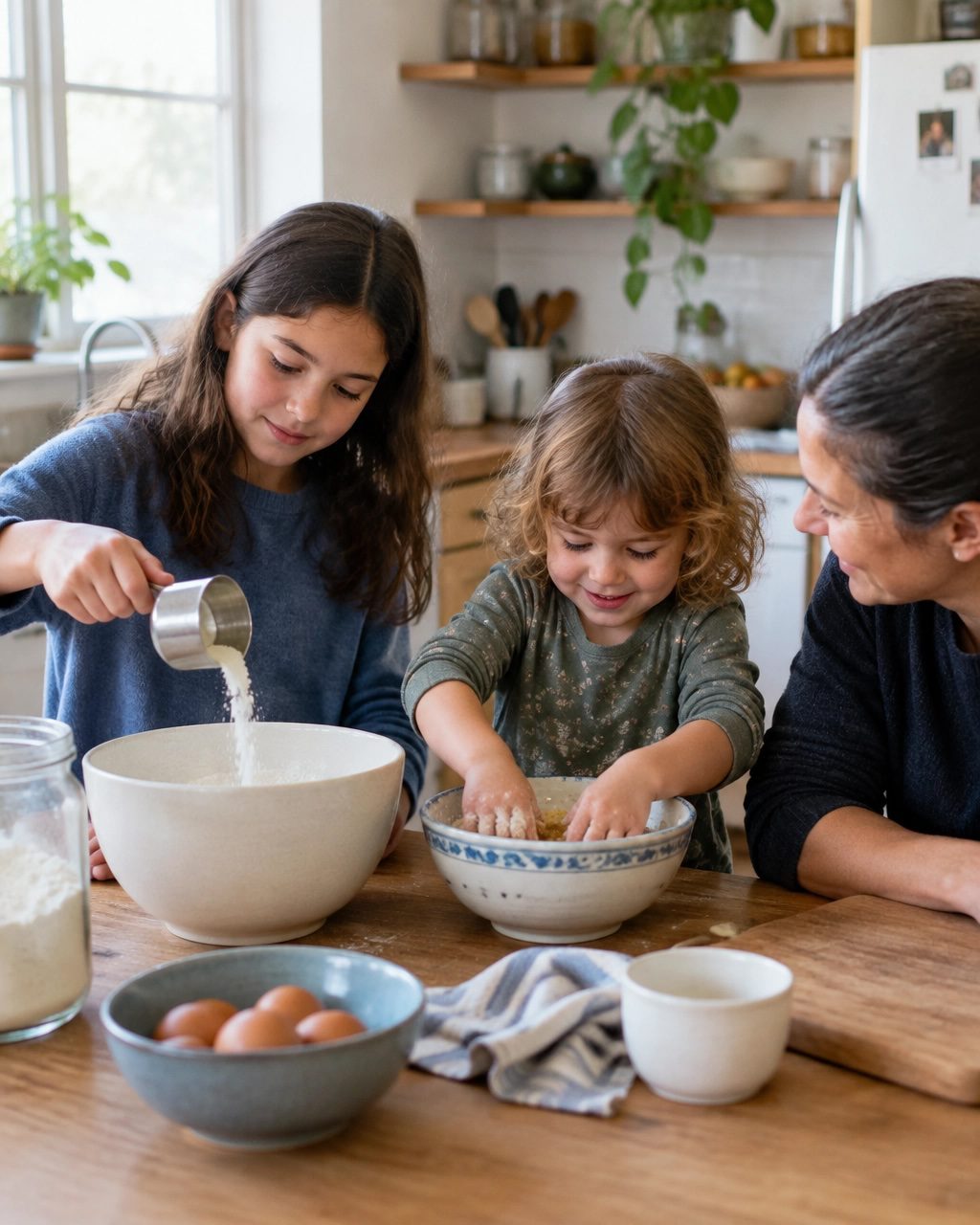
Food has a special way of becoming family memory. Perhaps you make soup on the first cold evening, bake bread, make applesauce, or prepare a dish from a grandparent’s childhood. There’s a job for every age. Young children can wash produce, stir, tear lettuce, arrange fruit, and set the table. Older children can measure, read recipes, prepare ingredients, and eventually take charge of whole dishes.

Cooking with children isn’t efficient, and it can be messy. But the shared experience often matters more than the finished meal.
Make Decorations Together
Children can make paper chains, ornaments, garlands, table centerpieces, cards, and simple gifts. Use natural and ordinary materials when you can: pinecones, leaves, twigs, dried flowers, fabric scraps, paper, and ribbon. The results don’t need to look professional. Years later, a family may treasure a crooked ornament made by a five-year-old far more than anything from a store.

Create a Tradition of Giving
Holiday traditions can also turn children’s attention outward. Your family might prepare a meal for a neighbor, make cards for people who live alone, donate books or collect warm clothing, help at a community garden, or choose a cause to support together. The goal isn’t to make children feel guilty about receiving. It’s to help them discover that giving can be just as satisfying.

Tell Family Stories
One of the simplest traditions needs no preparation at all. What were holidays like when you were young? What games did Grandma play? What was your first home like? What was the funniest thing that ever happened at a family celebration? Children love discovering that adults were once children, too. These stories connect generations and give children a sense of belonging to something larger than themselves.

Leave Room for Spontaneity
Not every memorable moment can be planned. Sometimes the best afternoon begins with a cardboard box, an unexpected walk, or a game a child invents on the spot. Traditions should add warmth to family life, not become obligations that leave everyone exhausted.

What Will They Remember?
Twenty years from now, your child probably won’t remember every present. But they may remember sitting around a table while everyone laughed, helping make a favorite recipe, or a story told every year. Those moments become part of a family’s identity. This season, consider starting one small tradition. Keep it simple, make room for everyone, and repeat it next year. The best family traditions aren’t the most impressive. They’re the ones children hope you’ll do again.
Snapshot
Children may not remember every gift, but they often remember what their families did together. Game nights, cooking, reading aloud, making decorations, neighborhood walks, and small rituals can become treasured traditions. Here are ways to create family experiences that include children of different ages without turning the holidays into another exhausting schedule.
What We Remember
Ask adults what they remember about childhood holidays. A few mention a special toy, but many describe something else: the smell of cookies baking, a grandmother reading a familiar story, a family card game, a walk after dinner, everyone laughing because Dad always lost at charades. These memories aren’t about expensive gifts or elaborate celebrations. They’re about belonging, and families create that sense of belonging through simple traditions repeated over time.
Traditions Don’t Have to Be Big
We sometimes imagine a tradition must be impressive: a special trip, a perfectly decorated home, a photo-worthy meal. But children often love repetition more than spectacle: the same pancakes every Saturday morning, the same story read aloud each December, the same walk after a holiday meal, the same game whenever the grandparents visit.
Familiar rituals give children something to look forward to and a sense of continuity. “This is what our family does.”
Try a Family Game Night
Choose an evening when everyone can be together. Put the phones away, bring out a game, and make popcorn. Keep expectations realistic; with young children, twenty or thirty minutes may be plenty. Good choices include matching games, dominoes, simple card games, cooperative board games, charades, and guessing games. Older children may want strategy games or more challenging cards. What matters is that everyone gets to take part.
Including Different Ages
A three-year-old can’t play every game that interests a twelve-year-old, but families can adapt. A younger child can roll the dice, move a shared game piece, match pictures, or help keep score. Older children can explain the rules or partner with younger players. Sometimes the family plays together, sometimes it splits into groups, and sometimes the adults play something harder with the older children after the little ones are in bed.
Don’t expect older children to spend every game night playing far below their level. Fairness doesn’t require identical experiences.
Let Children Help Plan
Traditions mean more when children help shape them. Ask, “What game should we play this week?” “What would you like to cook together?” “Should we make decorations or take a walk?” Older children can organize the evening, prepare snacks, teach a game, or make invitations. When children contribute to a tradition, it begins to belong to them.
Cook Something Together
Food has a special way of becoming family memory. Perhaps you make soup on the first cold evening, bake bread, make applesauce, or prepare a dish from a grandparent’s childhood. There’s a job for every age. Young children can wash produce, stir, tear lettuce, arrange fruit, and set the table. Older children can measure, read recipes, prepare ingredients, and eventually take charge of whole dishes.
Cooking with children isn’t efficient, and it can be messy. But the shared experience often matters more than the finished meal.
Make Decorations Together
Children can make paper chains, ornaments, garlands, table centerpieces, cards, and simple gifts. Use natural and ordinary materials when you can: pinecones, leaves, twigs, dried flowers, fabric scraps, paper, and ribbon. The results don’t need to look professional. Years later, a family may treasure a crooked ornament made by a five-year-old far more than anything from a store.
Create a Tradition of Giving
Holiday traditions can also turn children’s attention outward. Your family might prepare a meal for a neighbor, make cards for people who live alone, donate books or collect warm clothing, help at a community garden, or choose a cause to support together. The goal isn’t to make children feel guilty about receiving. It’s to help them discover that giving can be just as satisfying.
Tell Family Stories
One of the simplest traditions needs no preparation at all. What were holidays like when you were young? What games did Grandma play? What was your first home like? What was the funniest thing that ever happened at a family celebration? Children love discovering that adults were once children, too. These stories connect generations and give children a sense of belonging to something larger than themselves.
Leave Room for Spontaneity
Not every memorable moment can be planned. Sometimes the best afternoon begins with a cardboard box, an unexpected walk, or a game a child invents on the spot. Traditions should add warmth to family life, not become obligations that leave everyone exhausted.
What Will They Remember?
Twenty years from now, your child probably won’t remember every present. But they may remember sitting around a table while everyone laughed, helping make a favorite recipe, or a story told every year. Those moments become part of a family’s identity. This season, consider starting one small tradition. Keep it simple, make room for everyone, and repeat it next year. The best family traditions aren’t the most impressive. They’re the ones children hope you’ll do again.