Related Posts



All Ages
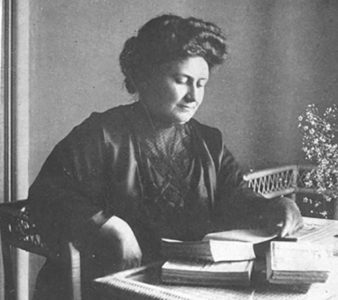
On January 6, 1907, Dr. Maria Montessori opened the first Casa dei Bambini—the Children’s House—in a poor tenement district of Rome. The children who entered that classroom were widely viewed as difficult, neglected, and incapable of learning. What Montessori observed there changed not only her career but the course of education itself.
When these children were given order, beauty, meaningful work, and freedom within clear limits, something remarkable happened. They became calmer, more focused, more independent, and more socially connected. Not because anyone trained them to behave differently, but because the obstacles blocking their natural development were removed.
That first classroom matters today not as a historical milestone, but because its purpose remains unchanged: creating the conditions that allow children to become fully themselves.
What Montessori Meant by
“Normalization”
Few Montessori terms are as important—or as misunderstood—as normalization.
Normalization does not mean conformity or compliance. It does not mean suppressing personality or producing unusually obedient children. Montessori used the term to describe something closer to psychological health: a child who can concentrate deeply, act independently, regulate their own behavior, and engage constructively with others.
Montessori observed that many behaviors adults assume are simply “how children are”—restlessness, short attention spans, defiance, withdrawal, or constant dependence—often emerge when children’s developmental needs are not being met. These behaviors are adaptations, not character traits.
When children experience constant interruption, a lack of meaningful work, chaotic or overly controlled environments, or excessive help paired with minimal responsibility, they adjust in ways that may appear to be temperament but are in fact signals of unmet needs.
When conditions are right, a different picture emerges. The normalized child shows sustained concentration, growing confidence, internal self-discipline, a love of order and purposeful activity, and genuine concern for others. Montessori observed this pattern repeatedly, across cultures and circumstances.
Why This Matters More than Ever
Montessori made these discoveries over a century ago, yet they feel strikingly relevant today. Many of the pressures that disrupt healthy development have intensified.
Modern childhood often includes constant stimulation, frequent interruptions, adult-paced schedules, limited opportunities for deep focus, and heavy screen exposure. Children are often given many choices but little meaningful responsibility, and adults—out of love—may step in too quickly, unintentionally undermining developing independence.
Even in caring homes, children can be pulled away from their natural developmental rhythm. When they cannot concentrate deeply, act independently, or contribute meaningfully, their behavior often reflects that imbalance. What we see as difficult behavior is often a message, not a flaw.
The Environment Is Key
Montessori’s approach began with observation, not theory. If children’s struggles were rooted in their environment, then changing the environment could support their return to balance.
The prepared environment supports normalization through a few essential elements.
Order and predictability help children orient themselves without constant adult direction. Meaningful work—real activities with purpose—focuses attention in a way entertainment never can. Freedom within clear, consistent limits allows self-regulation to develop. Beauty and simplicity calm rather than overstimulate. Respectful adults support independence rather than fostering dependence.
When children are given uninterrupted time to engage in purposeful work, concentration appears. With concentration comes calmer behavior, patience, self-control, and kindness. Montessori’s great insight was that discipline and social harmony need not be imposed; they emerge naturally when children are properly supported.
What This Means for Parents
January 6 reminds us that Montessori was never primarily about academic acceleration or achievement. From the beginning, it was about helping children reconnect with their natural developmental path.
That matters deeply today, as many families grapple with attention challenges, anxiety, impulsivity, and
social disconnection. Montessori’s promise re mains simple and profound: when we protect
what children genuinely need—order, meaningful work, freedom with limits, respect, and uninterrupted time—children tend to find their way back to themselves.
Normalization is not about perfection. Children will still have hard days, strong emotions, and moments of struggle. But this lens helps parents respond with clarity and compassion, understanding behavior as information rather than identity.
Living This Legacy at Home
Honoring Montessori’s legacy does not require dramatic changes. Often, it means small, intentional shifts.
Protect time for your child to work without rushing. Reduce interruptions when they are deeply engaged. Allow greater independence before intervening to help. Invite children into real household work, not as chores
0-6 Years | Early Childhood
to endure but as meaningful contributions. When behavior becomes difficult, look first at sleep, transitions, stimulation, and opportunities for responsibility before assuming a character problem.
These simple choices align home life more closely with children’s developmental needs.
Your Child’s Guide As Partner
If you are unsure what your child needs at present, your Montessori guide is an invaluable resource. Guides observe children over time within a carefully prepared
community and can interpret behavior through a developmental lens, distinguishing between typical challenges and signs of unmet needs.
Their goal is the same as Montessori’s in that first Children’s House: to help each child remain connected to their natural capacities for concentration, confidence, and joyful engagement.
This is Montessori’s enduring gift—not a method alone, but a vision of childhood rooted in trust, respect, and the belief that children flourish when we create the conditions they truly need.