Related Posts
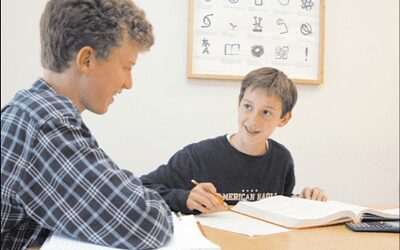
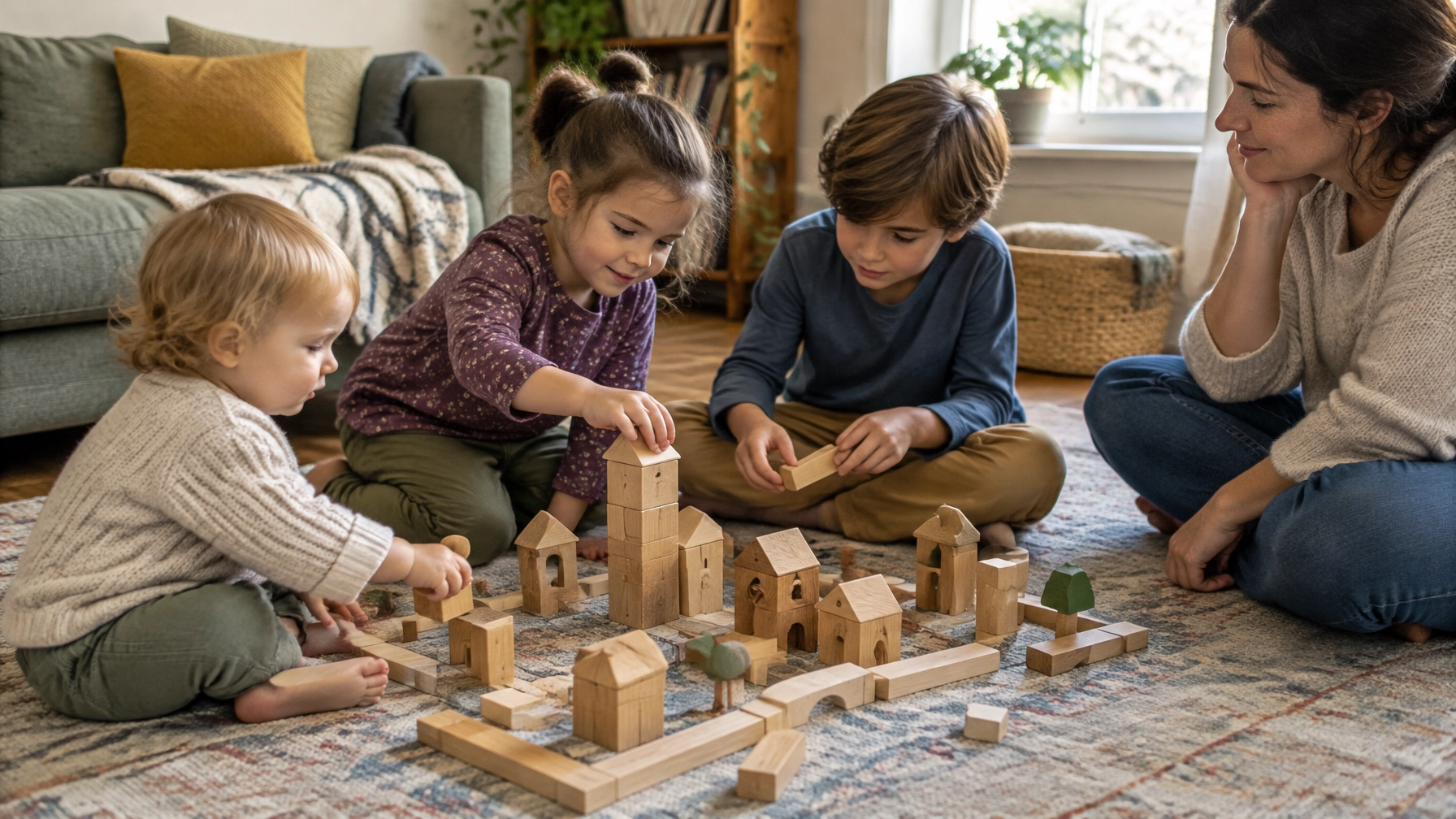
Children build together, each contributing in a way that works for them.
Snapshot
When siblings or friends play together, things don't always go smoothly. One child wants to build a castle; another wants to knock it down. Someone wants to be in charge, and someone feels left out. These moments are frustrating, but they are also how children learn to communicate, cooperate, and solve problems. Here's how to set up successful playdates and family gatherings without becoming the referee for every disagreement.
"He Won't Let Me Play!"
"She took my blocks!" "He's not doing it right!" If you've hosted a playdate or gathered young cousins for the holidays, you know how quickly cheerful play can turn into a dispute.
Our instinct is to organize everything: assign activities, explain the rules, settle arguments, decide who gets which toy. Sometimes that's exactly what children need. But when adults solve every problem, children lose the chance to build the skills that make friendships work.
Playing Together Is Learned
We often assume children naturally know how to play cooperatively. They don't. Young children are still learning to consider someone else's wishes, wait, negotiate, compromise, and handle disappointment. Consider how differently children approach play at different ages. A toddler may be perfectly content playing beside another child without really playing with them. A four-year-old may want a friend to follow an elaborate imaginary script. A seven-year-old may organize a complicated group game and still get upset when someone changes the rules.
These are developmental differences, not necessarily misbehavior. Our role is to provide an environment where children can gradually learn.
Prepare the Space Before Children Arrive
A little preparation prevents many unnecessary disagreements. Before guests come, ask yourself what activities these particular children can enjoy together given their ages, whether there are enough materials to go around, whether fragile or treasured possessions should be put away, and whether there is room for both active and quiet play.
If two young children are likely to want the same thing, a duplicate may help. But you don't need two of everything; learning to wait and negotiate is part of the experience. Aim for a few appealing possibilities without requiring everyone to do the same thing.
Building Together
Blocks and construction materials are wonderful for groups. Children might build a town, a zoo, a bridge, or an obstacle course for toy cars. Older children can plan; younger ones can contribute simpler parts. Sometimes everyone works on one project, and sometimes children build side by side. Both are valuable. Ask, "What are you planning to build?" rather than directing the project, then let the children work out how to proceed.
Pretend Play
A basket of fabric pieces, cardboard boxes, wooden animals, dolls, simple costumes, and household props can fuel hours of imaginary play: a restaurant, a veterinary clinic, a theater, a grocery store, an expedition. Pretend play is full of negotiation. Who will be the veterinarian? Who cares for the animals? What happens next? When disagreements arise, resist assigning every role yourself. Try asking, "How could you make a plan that works for both of you?" That question invites children to think.

Simple props leave room for children to imagine and negotiate their own play.
Activities With a Shared Purpose
Some of the best group activities involve making something together: preparing a fruit salad or decorating cookies, planting bulbs, painting a mural on a long roll of paper, building a bird feeder, and making holiday cards or care packages for neighbors.
A shared task gives children a reason to cooperate. One measures, another stirs, someone arranges the finished items, and together they feel the pleasure of contributing to something larger than their own project.

Working on a shared task gives children a natural reason to cooperate.
When in Doubt, Go Outside
When the house gets noisy and disagreements multiply, the best solution is often fresh air. A walk, a scavenger hunt, a ball game, an obstacle course, or simply exploring the yard can change the atmosphere entirely. Outdoors, children move more naturally between group play and independent exploration, and not everyone has to do the same thing at the same time.

Outdoor exploration lets children move between shared play and independent discovery.
When Children Argue
Disagreements are inevitable; what matters is how we respond. First, make sure everyone is safe. Physical aggression, intimidation, or repeated exclusion calls for adult intervention. But most disagreements are not emergencies.
Suppose two children both want to be the shopkeeper. Instead of deciding for them, try: "You both want the same role. What could you do?" They might take turns, open two shops, or invent a new role. If they're stuck, you can help them think of possibilities, which is very different from announcing the solution yourself.
Fair Doesn't Always Mean Identical
"That's not fair!" Sometimes children are right. But fairness doesn't always mean everyone gets exactly the same thing. A toddler may need more help than an eight-year-old. An older child may use materials that aren't safe for a younger sibling. One child may need quiet while another wants to keep playing. Part of growing up is learning that people have different needs and abilities, and we can acknowledge those differences without treating them as problems.
Give Children the Words
Young children often need language for social situations. Instead of grabbing or shoving, they can learn to say, "May I use that when you're finished?", "Can we take turns?", "I have another idea.", "I don't like that. Please stop.", and "Would you like to help?"
Montessori classrooms teach these skills through Grace and Courtesy lessons, short, friendly role-plays practiced when everyone is calm. Families can do the same at home, rehearsing before a playdate rather than only in the middle of an argument.
Don't Force Constant Togetherness
Sometimes a child needs a break. A visiting cousin may want to play nonstop while your child needs quiet. That's reasonable. Provide a place where a child can read, draw, or work alone. Respecting another person's need for space is a social skill, too.
The Real Goal
Successful play doesn't mean children never disagree. It means they gradually become more capable of handling the ordinary challenges of being together. Over time, they learn to listen and explain, negotiate, wait, and compromise, stand up for themselves, recognize another person's feelings, and apologize and begin again.
These skills don't develop through lectures. They develop through experience. This holiday season, give children room to create their own games and solve manageable problems. We aren't simply trying to keep the peace. We're helping children learn how to make peace themselves.