Related Posts

by V Narsimhan – Early Childhood Education Advocate and Marketer, Brixton House Montessori, Chennai, India
One of the most common phrases heard in homes with young children is: “Let me do it for you.”
Whether it is buttoning a shirt, pouring water, arranging toys, or carrying a school bag, parents often step in quickly — usually out of love, urgency, or the simple reality of a busy morning. It is one of the most natural impulses in parenting.
But what if these small, ordinary moments are actually opportunities for children to build confidence, responsibility, and independence? What if stepping back, just a little, is one of the most loving things a parent can do?
This is one of the core ideas behind the Montessori education approach at Brixtonhouse Montessori School in Purasawalkam, Chennai — and it begins much earlier than most parents expect.
Independence Begins Earlier Than We Think
Young children have a deep, almost urgent desire to do things on their own. You have probably heard it already: “I’ll do it.” “Let me try.” “I can do it myself.”
In Montessori philosophy, this is not stubbornness. It is a healthy and important developmental need — one that, when respected, helps children build self-confidence, problem-solving skills, focus, and emotional resilience. Most importantly, they begin to carry a quiet inner belief: “I am capable.”
What Makes Montessori Different?
In traditional settings, adults tend to instruct, correct, and guide children toward the right answer. Montessori classrooms work differently. Children are given child-sized furniture and tools, freedom within clear boundaries, and the time and space to repeat activities until they feel genuinely ready to move on.
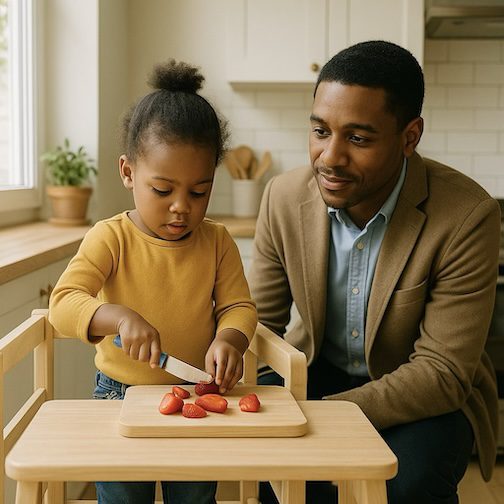
The adult’s role shifts from “doing for the child” to “guiding the child.” This subtle difference has a powerful emotional impact.
How Independence Shapes Emotional Development
When children complete even small tasks on their own, they experience something adults often underestimate: genuine pride. Pouring water, folding clothes, cleaning up after play, or putting on shoes independently — these build a confidence that reaches far beyond the task itself.
Over time, children develop patience, coordination, decision-making, and a quiet sense of accountability. Gradually, they become less dependent on constant adult approval — not because they need adults less, but because they are learning to trust themselves.
5 Montessori-Inspired Ways Parents Can Encourage Independence at Home
- Slow Down and Allow Time
Children need extra time to complete tasks on their own, and rushing almost always leads adults to take over. The next time you feel the urge to step in, try replacing “You’re too slow” with “Take your time — you can do it.” That small shift in words makes a large shift in what the child believes about themselves.
- Create Child-Friendly Spaces
Place everyday items within your child’s reach: their water bottle, favourite books, clothes for the day, a few toys they can put away themselves. Accessibility quietly teaches responsibility. When children can manage their own things, they begin to feel ownership over their world.
- Involve Children in Real-Life Activities
Young children do not just want to play — they want to participate in real life. Allow them to water plants, wipe down a table, arrange cushions, or help prepare a simple snack. These activities build both skill and a sense of purpose that play alone cannot provide.
- Avoid Over-Correcting
Perfection is not the goal. The process matters far more than the outcome. A child pouring water imperfectly is still practicing coordination, patience, and independence — every small spill is part of the learning. When adults resist the urge to correct every mistake, children feel trusted, and that trust becomes confidence.
- Trust Your Child’s Capability
Children often rise to meet the expectations we hold for them. When a child feels that their parents genuinely believe in their ability, confidence grows in ways that no lesson or class can fully replicate. Something as simple as “I know you can do this” can stay with a child far longer than we realize.
The Bigger Lesson
Montessori is not just about materials or academic methods. At its heart, it is about respecting the child as a naturally capable individual.
Independence in early childhood does not mean children stop needing adults. It means they begin developing trust in themselves — and that is a foundation that supports everything else they will learn and become.
Perhaps that is one of the greatest gifts parents can offer during these early years: not just knowledge, but the quiet, steady belief that their child is capable of trying, learning, and growing.
V. Narsimhan is an Early Childhood Education Advocate and Marketing Strategist at Brixton House Montessori, Chennai. Passionate about Montessori education and child development, he writes on topics related to early learning, parenting, and nurturing children’s natural curiosity and potential.