Related Posts
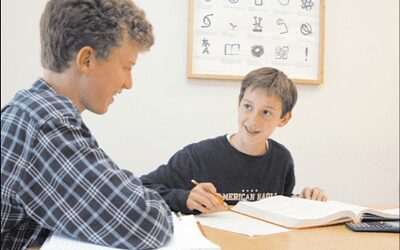



Somewhere between buying the (non-negotiable, apparently) labeled water bottle and frantically googling "is my 4-year-old emotionally ready for anything," it hits you with the subtlety of a falling brick: school is starting.
Whether your child is walking into their very first primary cycle or returning for another year of independent discovery, the end-of-summer transition can stir up a whirlwind of emotions. For parents, it is a delicate mix of excitement, relief, and low-key terror that you have forgotten a crucial immunization form.
At The Montessori Foundation, we talk to thousands of families every year who are navigating this exact rite of passage. Through our work with the Montessori Family Alliance, we know that preparing for the school year isn't about buying matching pastel stationery or turning your home into a rigid institution. It’s about building a bridge between home and the classroom , minus the panic.
Here is how to actually prepare your family for the Montessori school year, rooted in authentic montessori philosophy, foundational montessori basics, and a healthy dose of parental grace.
The Building Blocks of a Smooth Transition
In traditional education, preparation often means flashcards, workbook drills, and cramming academic milestones into the final weeks of August. But in authentic Montessori education, development happens from the inside out. Dr. Maria Montessori observed that children are naturally driven to master their world through action, repetition, and purposeful movement.
When we talk about the building blocks of a successful school transition, we aren't talking about long division or sight words. We are talking about the foundational life skills that foster true independence, emotional resilience, and confidence.
Let's break down how to set the stage for a thriving school year without losing your mind (or your coffee mug).
Step 1: Stop Trying to "Teach Them Everything" First

Every August, some well-meaning relative asks if your child knows their letters yet, or whether they can count to fifty in two languages.
Our advice? Ignore them entirely.
Montessori isn't about cramming academics into a reluctant four-year-old before day one. It’s about whether your kid can hang up a jacket without narrating a three-act tragedy about the injustice of gravity.
Instead of flashcards, practice the delightfully boring stuff now:
- Zipping and buttoning: The unsung heroes of classroom autonomy.
- Pouring water: Perfecting the art of pouring a glass without flooding the counter.
- Shoe management: Putting shoes on the correct feet (optional for toddlers, but a nice touch).
These are the actual, tangible practical life skills that make classroom mornings smooth and joyful. Nobody’s toddler has ever had an existential meltdown over long division. Plenty, however, have staged a full protest over a stuck coat zipper. Mastering these basics gives children the inner calm and confidence they need when entering their prepared environment.
Step 2: Practice "Independent Snack Time" at Home Like It's the Olympics
Montessori classrooms expect children to take charge of their own nourishment. Kids are taught to open their own containers, unwrap their own cloth napkins, pour their own water, and gently wipe up their own crumbs when snack time arrives.
If your child currently requires a specialized team of adults to open a single granola bar, you have some fun training ahead of you this week.
Give them a lunch container with a slightly-annoying-but-not-impossible lid. Hand it over, sit on your hands, and let them struggle for a minute before swooping in to rescue them. Yes, this will test your patience. Yes, you will want to take over when you see the dramatic sighs.
But remember: you are not raising a child who needs rescuing. You are raising a capable human being who Googles nothing and just gets the job done.
For more tips on fostering this kind of self-reliance at the dinner table and beyond, explore our guides at the Montessori Family Alliance.
Step 3: Talk About What Happens, Not How Fun It'll Be

When parents get nervous, we tend to overcompensate with aggressive cheerfulness. "You're going to have SO much fun!! Every single second is going to be magical!"
It sounds lovely in theory, but it often backfires spectacularly. Why? Because now your child has built up an internal expectation of a bounce house, a petting zoo, and an endless supply of stickers : only to arrive and discover a quiet, orderly classroom with wooden bead chains and silence rules.
Nervous systems love predictability way more than hype.
Instead of selling school like a theme park, try narrating the actual, grounded sequence of events:
"Tomorrow, you'll walk into your classroom, hang your bag on your designated hook, choose a work to start your morning, and later you'll have your independent snack and outdoor playtime."
Boring? To an adult, perhaps. Extremely comforting and grounding to a young child? Absolutely.
Step 4: Do a Trial Run of the Morning Chaos
A week before the big bell rings, do a full dress rehearsal. Set the alarm, wake up at the ungodly hour you'll need all year, make breakfast, get dressed, put on shoes, and walk out the front door.
You will likely discover, with mounting horror, that this entire sequence takes 45 minutes longer than your optimistic brain calculated. It is infinitely better to discover this flaw in your logistics on a Tuesday morning practice run than at 7:52 AM on the actual first day of school, while everyone in the household is crying : including, quite possibly, you.
At the same time, shift your child’s bedtime earlier gradually : pulling it back by 15 minutes each night : rather than yanking the schedule back all at once. Sudden bedtime shifts turn delightful children into small, furious raccoons. Protect everyone's sleep!
Step 5: Let Them Pick One Thing
Children thrive when they experience genuine autonomy. Because so much of a child's day is dictated by adults (when to sleep, what to eat, where to sit), starting school can feel like an avalanche of external control.
Give them one real, non-negotiable decision to make for themselves:
- The lunch box color or pattern.
- The first-day outfit (even if it clashes in ways that defy human comprehension).
- Which special stuffed animal gets to stay home and "guard" their bedroom while they are conquering the world at school.
Small amounts of sincere control go a remarkably long way toward inspiring big cooperation when it's time to head out the door.
Step 6: Lower Your Own Expectations for Day One

Let’s be entirely honest with one another: day one is rarely a cinematic masterpiece.
Some children will walk through those doors like they own the entire building, never looking back. Others will cry, cling to your kneecaps like a barnacle, or announce to the lead guide that they are officially "done with education" by 9:15 AM.
Both reactions are entirely normal. Neither one is a verdict on how the rest of the school year will unfold.
Bring tissues : but keep them for yourself, not your child. They will likely settle in and start exploring within five minutes of your departure. You, on the other hand, will be sitting alone in your parked car, eating a granola bar that you 100% could not open independently either. And that is okay.
Preparing Together: A Journey Worth Taking
Finding an authentic Montessori school and setting your child up for success is a collaborative journey. It requires patience, observation, and a willingness to step back so your child can step forward.
Remember, preparation isn’t about achieving a mythical state of perfection where nothing goes wrong. It’s about raising a child who has a rough idea of what to expect, supported by a parent who has mentally rehearsed the goodbye enough times to keep a brave face until they reach the carpool line.
To explore more resources on parenting the Montessori way, understanding child development stages, and connecting with a community of like-minded families, we invite you to visit the Montessori Family Alliance and discover how we can support your family's educational adventure every step of the way.