Related Posts



For busy parents of young children trying to raise kind, capable kids, the preschool years can feel like a daily tug-of-war between getting through the day and teaching bigger life skills. The challenge is that leadership can sound like something reserved for older kids, while real early childhood leadership development is already taking shape through child development milestones like independence, self-control, and social confidence. In these years, parental influence on leadership shows up in small moments: how choices are offered, how mistakes are handled, and what effort gets noticed. Fostering leadership skills in kids early on reinforces the importance of traits like initiative and responsibility before self-doubt has a chance to set in.
Teach Responsibility With Simple At-Home Leadership Jobs
Leadership starts looking a lot like everyday responsibility in the preschool years: small choices, simple follow-through, and plenty of chances to try again. These low-stakes “leadership jobs” help your child practice decision-making skills while you build confidence through choices.
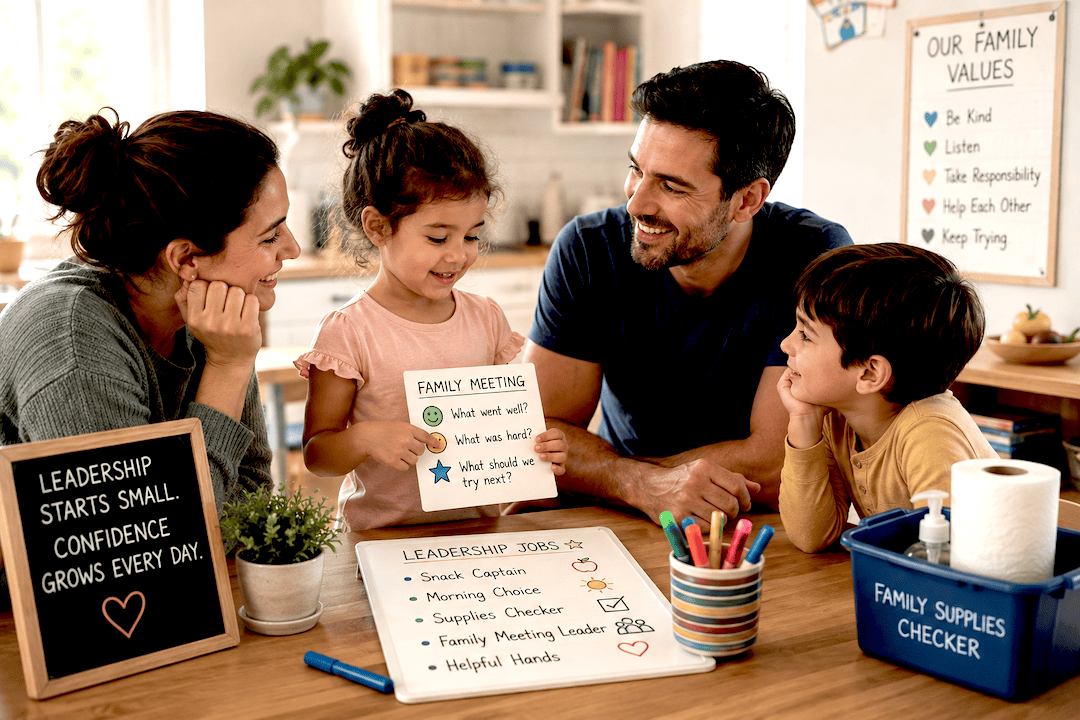
- Make Them the “Snack Captain”: Give your child one leadership task that repeats daily or a few times a week: choose and prepare a simple snack. Offer two parent-approved options (“apple slices or yogurt?”) so decision-making stays safe and doable, then let them do age-appropriate steps like rinsing fruit, setting out napkins, or pouring water. This works because it blends independence with clear boundaries, exactly what young kids need to feel capable without getting overwhelmed.
- Create a “Morning Choice Board” With Two Acceptable Paths: Instead of negotiating every step, set up a small routine where they choose the order of two tasks: “Get dressed first, then brush teeth, or teeth first, then get dressed.” Keep it to two choices, and keep the options equally acceptable to you. You’re encouraging responsibility in children by letting them own the plan, while still reinforcing the preschool milestone of following simple sequences.
- Assign a “Family Supplies Checker” Role Once a Week: Pick one area, paper towels, pet food, lunchbox items, or bathroom soap, and make your child responsible for noticing when it’s running low. Give them a simple rule like, “If it’s under this line, tell me,” using a piece of tape on the container as a visual marker. This is an age-appropriate leadership task because it teaches awareness and communication, not perfection; it also builds the habit of speaking up before a problem becomes urgent.
- Let Them Run a Mini “Family Meeting” With a Script: Once a week (5 minutes), let your child lead a quick check-in using three prompts: “What went well?”, “What was hard?” and “What should we try next?” Offer two choices for the “try next” item, such as “quiet reading after dinner or a short walk,” and have them pick. This builds decision-making skills in kids by practicing reflection, planning, and respectful turn-taking—core leadership muscles that begin to form early.
- Use Positive Reinforcement That Targets Effort and Follow-Through: Skip “You’re so smart” and name the specific behavior you want repeated: “You remembered the napkins without a reminder; that’s responsible.” Add a simple reward structure that doesn’t require buying anything, like earning one “leadership point” for completing the job without arguing, with five points trading for choosing the family game. Specific praise + predictable rewards teach kids that their choices have an impact, and that builds real confidence.
When kids get regular chances to lead in small ways, they learn that growth comes from practice, not perfection. The same message lands even deeper when they also see you setting goals, learning new skills, and following through alongside them.
Model Lifelong Learning: Let Your Kids Watch You Grow
Once your child is practicing responsibility at home, the next powerful lesson is seeing you take responsibility for your own growth, too. When kids watch a parent actively earn a degree, they learn that leadership isn’t just “being in charge”, it’s taking initiative, leaning into challenges, and sticking with long-term personal development even when life is busy.
The day-to-day persistence (showing up to class, studying after bedtime, and following through when motivation dips) quietly teaches a growth mindset: skills are built, not born. It also shows commitment in action, setting a meaningful goal and keeping it, step by step.
If nursing is part of your path, earning a master’s degree in nursing can open doors to nurse education, informatics, nurse administration, or advanced practice nursing options like a family nurse practitioner degree online. Online degree programs can make it easier to work while going to school at the same time, so your family routines stay steady while you keep moving forward.
Daily Habits That Grow Everyday Leadership
Leadership grows from what kids practice consistently, not occasional “big talks.” These habits create steady reps in communication, empathy, and follow-through, so your child builds confidence over time.
Two-Choice Leadership Questions
- What it is: Offer two acceptable options and let your child choose the plan.
- How often: Daily
- Why it helps: It builds decision-making and ownership without turning everything into a debate.
Family Mini-Huddle
- What it is: Do a five-minute check-in on schedules, needs, and one helpful request.
- How often: 3 times weekly
- Why it helps: Strong communication and collaboration improve how teams work together.
Feelings to Needs Script
- What it is: Name the feeling, name the need, then ask what could help.
- How often: Per conflict
- Why it helps: Practicing empathy in leadership teaches kids to consider others before acting.
Follow-Through Notebook
- What it is: Write one promise your child made and one next step.
- How often: Weekly
- Why it helps: It turns intentions into visible accountability and small wins.
Helpful-Hands Rotation
- What it is: Assign one rotating “helper role” that supports the whole household.
- How often: Weekly
- Why it helps: It normalizes service, responsibility, and contribution to the group.
Common Questions Parents Ask About Kids’ Leadership
Q: What does “leadership” look like for a young child, not a mini adult?
A: It often shows up as small, everyday behaviors: suggesting a game, taking turns, helping a sibling, or sticking with a simple job. Look for progress in self-control, empathy, and follow-through, not speeches or bossiness. Using age expectations can help, since behaviors 75 percent or more of children can be expected to exhibit at a certain age give you a realistic baseline.
Q: How can I support a shy kid without forcing them into the spotlight?
A: Leadership can be quiet. Offer low-pressure roles like timekeeper, greeter, or “idea collector,” then celebrate effort, not volume. Practice short scripts at home such as one question they can ask or one helpful request they can make.
Q: Why does my child act “bossy” when I try to encourage leadership?
A: Many kids confuse leading with controlling because they are still learning perspective-taking. Coach the difference: leaders make space for others, use respectful words, and listen first. Try role-playing: “Ask, don’t order” and “Offer two options, not one demand.”
Q: What should I do if perfectionism makes my child quit or melt down?
A: Treat mistakes as data, not failure. Set tiny goals with a clear “good enough” finish line, then debrief one thing that worked and one thing for next time. Model your own imperfect attempts out loud so they learn that recovery is part of competence.
Q: Can too much screen time get in the way of leadership skills?
A: It can when screens replace practice with real conversation, conflict-solving, and responsibility. Many parents who are worried about screen time are really noticing fewer chances to build those skills. Create one daily screen-free window for a chore, a chat, or a short decision your child gets to own.
Practice One Leadership Skill Weekly to Build Confidence and Character
It’s easy to worry that your child is too shy, too young, or too resistant to show “leadership,” especially when progress looks uneven. The steadier path is to focus on leadership development as a set of everyday choices: responsibility, empathy, decision-making, and follow-through, shaped by calm expectations and warm support. Over time, that consistent practice helps children trust themselves, handle setbacks, and contribute confidently in their own style. Leadership grows when kids feel trusted, guided, and allowed to try again.
Charlene Roth is the founder of Safetykid.info, a resource dedicated to helping parents and caregivers create safe, engaging, and skill-building environments for children. With a focus on practical advice and family-friendly projects, Charlene is passionate about fostering creativity and teamwork within the home while ensuring the well-being of every child.