Related Posts

Snapshot
When children learn to read on their own, many families quietly let go of reading aloud. That is a loss. Children can understand and enjoy stories far richer than the ones they can read by themselves, and a shared book gives parents and children something to wonder about and talk about together. From the elementary years through adolescence, reading together supports independence rather than undermining it, and it remains one of the simplest ways for a family to stay connected.
One of the great milestones of childhood comes when a child discovers that the mysterious marks on a page have meaning. Letters become words, words become sentences, and suddenly a whole new world begins to open.
For parents, watching this happen is tremendously exciting. We remember the early picture books, the familiar stories read again and again, and the moment our child first recognized a word without our help.
Then, almost without noticing, we change our routines. Our child can read independently now, so we assume that bedtime stories are no longer necessary. We encourage our child to read alone, and the familiar ritual of sitting together with a book gradually disappears.
I think that’s a loss. Learning to read independently is an important achievement, but it doesn’t mean children have outgrown the pleasure or the benefits of being read to. In fact, some of the most meaningful reading experiences a family shares can take place long after children have become capable readers.
Reading Is More Than Decoding Words
When children first learn to read, much of their attention goes to recognizing letters, connecting them with sounds, and putting words together. These are essential skills, but reading involves much more. It draws on language, imagination, memory, understanding, and the ability to connect ideas.
A child may be able to read every word in a sentence without fully grasping what the author is saying. And a child who is still building fluency may be able to understand stories and ideas far more sophisticated than anything in the books they can comfortably read alone.
This is one reason reading aloud remains so valuable. When we read to children, they can enjoy language and ideas without spending all their effort on decoding. They can become absorbed in a story, think about the characters’ choices, and explore unfamiliar places and experiences. They meet vocabulary and sentence structures beyond their current reading level, and they discover that books contain ideas worth thinking about and discussing.
The Pleasure of a Shared Story
Think back to a book that someone read to you when you were young. You may remember the story itself. But perhaps you also remember the voice of the person reading, the place where you sat together, or the feeling of anticipation as you waited to find out what would happen next.
These memories are about more than literacy. They are about relationships.
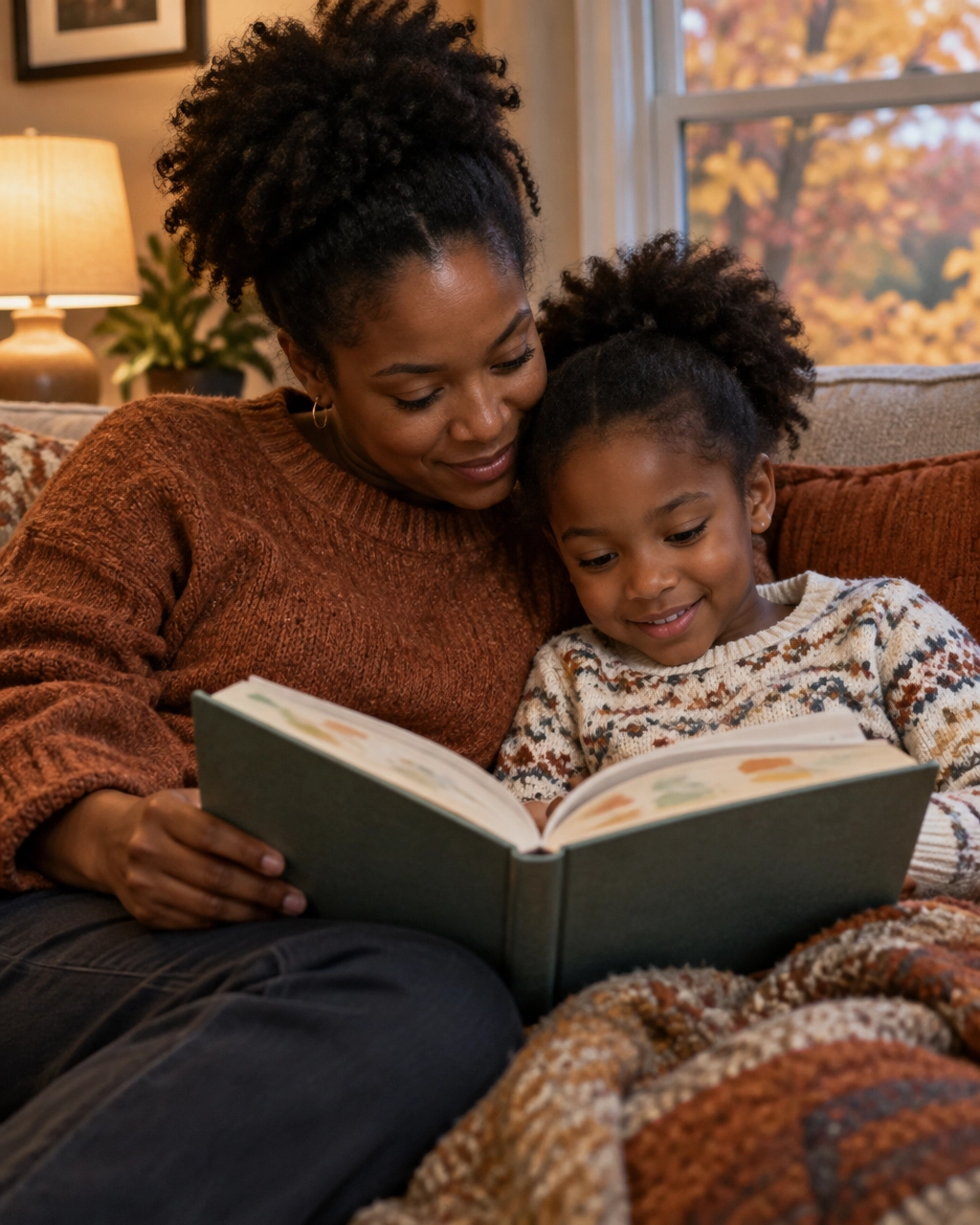
Reading together creates a small space in family life where adults and children can share an experience without the distractions and demands that fill so much of the day. We enter the same imaginary world, meet the same characters, and wonder about the same mysteries. And sometimes, without planning to, we begin talking about things that matter.
A character makes an unkind decision, and a child wonders why. Someone in the story feels frightened, and we find ourselves talking about courage. A family faces a difficult choice, and we consider what we might do in their place.
These conversations tend to arise naturally. They don’t need to become formal lessons. In fact, I think they are often more valuable when they don’t.
Reading Aloud and the Montessori Approach
Montessori education places great importance on language. Children develop spoken language through conversation, storytelling, songs, poetry, and rich experiences with the world around them. As they become ready, they begin exploring written language through carefully designed materials and activities, and reading eventually becomes a powerful tool for independent learning.
But Montessori’s emphasis on independence should never be confused with the idea that children must do everything alone. Independence means developing the ability to act, think, and learn with growing confidence and responsibility. It doesn’t mean that relationships become less important.
A child who reads independently can still enjoy listening to a wonderful story. An elementary student who can research a topic alone may still love discussing a book with a parent. And an adolescent who reads sophisticated literature may enjoy trading thoughts about an author or a challenging idea.
Reading together supports independence rather than interfering with it. It helps children discover the pleasure of literature and gives them the confidence to explore increasingly complex books on their own.
Books Help Children Understand Other People
One of the great gifts of literature is the chance to see the world through someone else’s eyes. In a story, children may meet people whose lives are very different from their own: characters who live in another country, speak another language, or face circumstances the child has never experienced. They may discover that someone they disliked at first has reasons for behaving as they do, and begin to understand that people can see the same situation differently.
Experiences like these can help children develop empathy and the ability to take another person’s perspective. Of course, reading a book does not automatically make anyone kinder or more understanding. But stories invite us to consider other people’s feelings, motives, and experiences, and when parents read with children, they can help deepen that understanding.
Sometimes all it takes is a simple question.
“I wonder why she did that.”
“Do you think he understood how his friend felt?”
“What would you have done?”
Then listen. Children often notice things that adults overlook, and their interpretations may surprise us.
Don’t Turn Every Book Into a Lesson
Because reading is so important, parents sometimes feel pressure to make every reading experience educational. We ask children to define unfamiliar words. We quiz them about what happened. We stop every few pages to check comprehension. We may even insist that they read a certain number of pages before they can do something else.
There are times when questions and discussion are useful. But I would encourage parents to protect the simple pleasure of reading. Not every story needs to be analyzed, and not every unfamiliar word needs an immediate explanation. Sometimes children simply want to hear what happens next, and the best thing a parent can do is keep reading.
When children associate books with warmth, pleasure, curiosity, and connection, they are more likely to see reading as something they want to do. That attitude matters. We want children to become capable readers, certainly. But we also hope they will become people who choose to read.
Reading With Elementary-Aged Children
The elementary years offer especially rich opportunities for shared reading. Children at this age have a growing appetite for stories, information, humor, mystery, and adventure. They are increasingly interested in questions of fairness, friendship, courage, and belonging, and they may become fascinated by history, science, mythology, or the lives of people who accomplished extraordinary things.
Reading aloud lets families explore books that are more complex than children would choose on their own. A parent might read a chapter each evening from a novel that takes several weeks to finish, and the story becomes part of family life. Children look forward to the next installment. They speculate about what might happen. They grow attached to the characters. Sometimes they beg for one more chapter.
I have always thought that this kind of anticipation is one of the great pleasures of childhood. And it is something families can create without expensive equipment, elaborate planning, or a complicated schedule. All we need is a good book and a little time together.

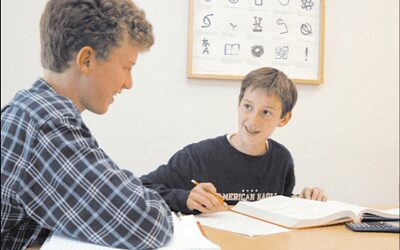
Reading independently and sharing a quiet moment can belong side by side.
Let Children Help Choose
As children grow, their interests become more and more their own. One child loves fantasy. Another prefers realistic stories about friendship and family. A third is fascinated by animals, inventions, history, or the natural world.
Rather than choosing every book ourselves, we can invite children to take part. Visit the library together and browse the shelves. Talk about books that sound interesting. Let children recommend something they would like the whole family to read.
We may not always share their enthusiasm for a particular subject, but taking their interests seriously communicates respect. And sometimes a book we would never have chosen becomes a family favorite.
What About Older Children and Teenagers?
Parents sometimes assume that adolescents are too old to enjoy sharing books. Certainly, teenagers need privacy and the freedom to make their own choices, and they may not want a parent reading to them every evening. But that doesn’t mean literature can no longer be a shared experience. A parent and teenager might:
Read the same novel independently and talk about it afterward.
Recommend books to one another.
Listen to an audiobook together on a long drive.
Talk about a memoir, a historical event, or a book that raises questions about relationships and the choices people make.
These conversations can be especially valuable because they let parents and adolescents approach difficult subjects indirectly. It is often easier to talk about a fictional character’s decisions than to begin with a direct conversation about our own lives. A book can open a door without making anyone feel interrogated.
Adolescents may also appreciate discovering that their parents are interested in ideas, literature, and learning, and not simply in monitoring their schoolwork.

A shared novel can open space for conversation without making it feel like an interview.
Make Reading Part of Family Life
There is no single correct way to build a family reading tradition. Some families read together at bedtime. Others enjoy books after dinner or on weekend afternoons. Some read aloud while children draw, build, or work quietly with their hands. Others listen to audiobooks in the car.
What matters is finding a rhythm that works for your family. A few suggestions:
If evenings are rushed, ten minutes together may be enough.
If your child is restless, try reading at a different time of day.
If children of different ages are listening, alternate between books that appeal to each of them.
And remember that reading aloud doesn’t have to be a performance. You don’t need dramatic voices or special talent. Children are usually quite happy to hear a familiar voice reading a good story.
Let Children See You Read
One of the strongest messages we send children about reading comes from our own behavior. When children see adults reading books, discussing ideas, visiting libraries, and enjoying literature, they begin to understand that reading is not simply a school assignment. It is something people do all their lives.
We can talk naturally about what we’re reading, share an interesting fact or an amusing passage, and tell children about the books we loved when we were young. We can let them see that adults are still learning.
A home in which books are valued doesn’t need to look like a library. It simply needs to be a place where reading is part of ordinary life.

Choosing and sharing books together can be part of ordinary family life.
The Stories That Stay With Us
As children grow, many of the routines we shared with them naturally change. They learn to dress themselves, prepare food, get around more independently, and manage more and more responsibility. We celebrate these developments because they are signs of growing capability.
But independence doesn’t require us to give up the experiences that bring us together. A child who can read alone still benefits from conversation, companionship, and the pleasure of sharing something beautiful. And a parent who keeps reading with an older child may find that the stories grow richer as the child’s understanding deepens. A book that once seemed like a simple adventure may lead to thoughtful conversations about courage, loyalty, loss, or the meaning of friendship.
We begin to see how our children think. We hear their questions. We discover what troubles them, what delights them, and what they find important. In this way, reading together becomes more than a way of building literacy. It becomes a way of staying connected.
So when your child announces, with understandable pride, “I can read it myself,” celebrate. Encourage that independence, and help them find books they can enjoy on their own.
But don’t assume that your days of reading together are over. There are still wonderful stories to share, fascinating ideas to explore, and conversations waiting to happen.
Your child may no longer need you to read the words. But they may still treasure the experience of discovering, together, what those words mean.