Related Posts



Montessori Is a Living Approach
Snapshot
Montessori educators sometimes disagree about what constitutes authentic Montessori practice. Some emphasize fidelity to traditional presentations and classroom structures, while others advocate adaptation and innovation. Both perspectives have something important to contribute. Montessori has fundamental principles that distinguish it from other educational approaches, but it also has room for cultural variation, professional judgment, and thoughtful innovation. The challenge is to understand the difference between adapting a practice and abandoning the principle behind it.
The Remarkable Diversity of Montessori Schools
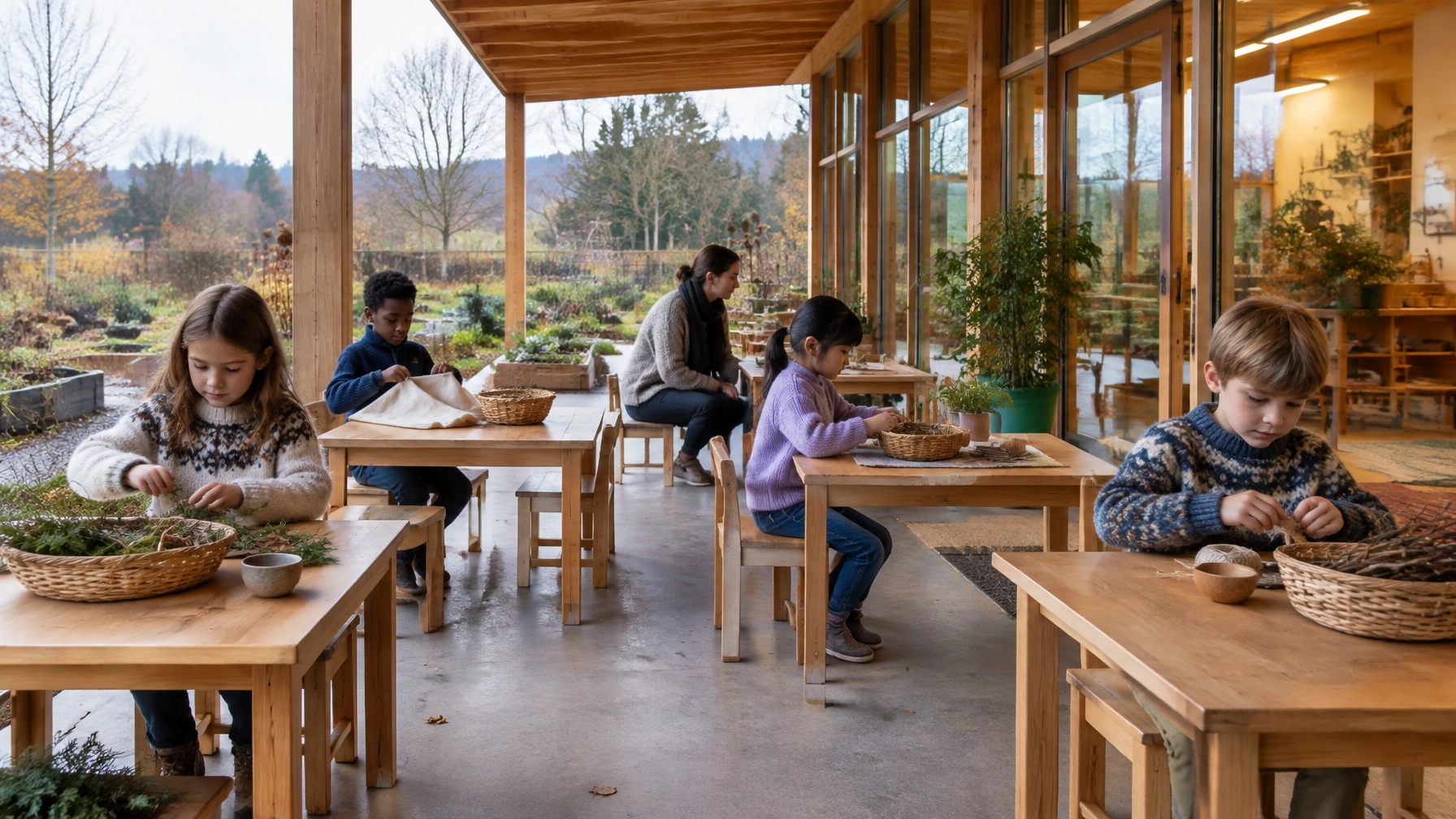
Over the years, I have visited Montessori schools in many parts of the world. Some occupy beautiful purpose-built campuses. Others operate in modest buildings with limited resources. Some serve affluent urban communities, while others work with families experiencing considerable economic hardship.
Their languages, cultures, physical environments, and educational systems vary enormously.
Nevertheless, in the strongest of these schools, the children’s experience has a recognizable quality.
Children demonstrate a sense of belonging. They are encouraged to make decisions, pursue interests, care for their surroundings, and participate in their community’s life. Their relationships with adults are characterized by mutual respect.
The physical details may differ, but the underlying educational philosophy is remarkably consistent.
This suggests that authenticity in Montessori cannot be determined by appearances alone.

A modest, carefully prepared classroom in East Africa.
Why Fidelity Matters
Montessori education is a comprehensive system. Its various elements work together to create conditions that support children’s development.
The multi-age community, extended work periods, carefully designed materials, individual and small-group presentations, freedom of movement and choice, and the trained educator’s role are not unrelated practices.
Each contributes to the effectiveness of the whole.
For example, a school might have a beautiful collection of Montessori materials but require every child to complete the same lesson at the same time. Another might encourage freedom of choice but provide insufficient guidance or structure.
Neither is necessarily offering children the educational experience that Montessori envisioned.
This is why established Montessori organizations identify core components and standards. They help schools preserve the integrity of an approach that can otherwise become diluted through a series of seemingly minor compromises.
Principles and Practices Are Not Quite the Same Thing
A useful distinction is between a fundamental principle and the particular way in which that principle is expressed.
Consider the Montessori emphasis on independence.
In one classroom, young children might learn to butter slices of bread. In another, they might prepare fruit, roll chapatis, or arrange vegetables for a shared meal.
The particular activity reflects local culture. The developmental purposes are similar: coordination, concentration, independence, confidence, and participation in community life.

Children prepare food together for a shared meal.
Similarly, the Montessori emphasis on connecting children with the natural world might be expressed through gardening, caring for animals, exploring a forest, studying an urban park, or observing the ecology of a coastal environment.
The principle remains intact even though the experience differs.
Not every Montessori practice is equally adaptable, however. Some materials and lesson sequences embody carefully developed mathematical, linguistic, or developmental concepts. Changing their design or presentation without understanding their purpose may undermine their educational value.
Professional judgment begins with understanding why a practice exists.
What Should We Be Reluctant to Compromise?
Although Montessori organizations differ somewhat in their standards, they broadly agree on several defining features.
Respect for the child as an active participant in their own development.
Educators with appropriate Montessori preparation and an understanding of human development.
Carefully prepared environments and a coherent developmental curriculum.
Meaningful freedom of choice within clear and consistent limits.
Extended periods for independent and collaborative engagement.
Multi-age learning communities.
Hands-on experiences that support increasingly abstract understanding.
Systematic observation and responsive teaching.
The development of independence, responsibility, social understanding, and intrinsic motivation.
The application of these principles changes as children mature. A Montessori adolescent community should not operate like a Children’s House for three- to six-year-olds.
Developmental responsiveness is itself a fundamental Montessori principle.
What Would Montessori Have Made of Today’s World?
Maria Montessori lived from 1870 to 1952. The world has changed dramatically since her lifetime.
Today, educators have access to an expanding body of knowledge about cognitive development, literacy, learning differences, emotional regulation, and the importance of relationships.
Our understanding of how to support children with different developmental profiles has also evolved.
It would be unreasonable to suggest that Montessori educators should disregard this knowledge simply because it was unavailable when Montessori developed her original materials.
At the same time, not every contemporary educational trend deserves a place in a Montessori classroom.
A new technology, teaching strategy, or intervention should be considered in light of its developmental appropriateness and educational purpose.
Does it complement Montessori principles? Does it address a genuine need? Does it produce observable benefits? What might children lose if we introduce it?
Innovation without thoughtful evaluation is no more scientific than unquestioning adherence to tradition.
When Flexibility Becomes Dilution
Schools sometimes modify Montessori practices for reasons that have little to do with children’s development.
They may shorten work periods to accommodate complicated schedules. They may separate children by age because it simplifies administration. They may introduce reward systems because adults find them convenient. They may replace individual instruction with whole-class teaching because teachers lack sufficient preparation or support.
These organizational pressures are understandable, but we should recognize the difference between responding to children’s needs and compromising their educational experience for adult convenience.
Sometimes adaptation is necessary. When that happens, educators should understand what is being compromised, minimize the impact, and work toward restoring stronger practice.
A Framework for Thoughtful Innovation
Before introducing a significant change, Montessori educators might consider five questions:
- What developmental or educational need are we addressing?
- What was the original purpose of the practice we are considering changing?
- Does the proposed change preserve or strengthen that purpose?
- What does credible research, professional experience, and observation suggest?
- How will we evaluate its effect on children’s experience over time?
Schools should also consider whether proposed changes are consistent with their accreditation, recognition, and teacher education commitments.
This approach encourages professional dialogue rather than disagreements based solely on personal preference or allegiance to a particular tradition.
Fidelity Without Fundamentalism
The Montessori community benefits from educators who protect the integrity of the method. It also benefits from thoughtful educators who ask questions, investigate new possibilities, and respond creatively to changing circumstances.
These need not be opposing groups.
Our greatest responsibility is neither to preserve every historical detail nor to modernize Montessori for its own sake.
It is to preserve the educational conditions that allow human potential to unfold.
Montessori remains relevant precisely because its understanding of children is so enduring. Its future depends on our ability to distinguish what is essential from what is incidental, and to approach both tradition and innovation with intelligence, humility, and respect for the child.