
Roam
I tell my children to get out!
In fact, I tell them all of the time to get out of my house and go away. Like the unforgettable and motivational lyrics from the song Roam, by the B52’s, I beg my children to “roam where you want to, roam around the world.” A simple song if anything, but the lyrics are truly profound, if not by design and invention, then definitely by divine intervention. This happy little song demands of its listener:
Roam if you want to Roam around the world
Roam if you want to Without wings, without wheels
Roam if you want to Roam around the world
Roam if you want to Without anything but the love we feel
So, it’s ok to roam physically and mentally without the need of anything else but simply “the love we feel.” It makes sense that we humans go to the places that we want to, and the impetus is usually the love we feel within our hearts about that person, place, or a thing that we want to see or know better. However, we can’t fall in love with what we don’t know exists, and we can’t feel what we cannot touch. That’s where the roaming part comes in. Children do not learn best just by simply listening; they need to experience things.
My fellow parents, it can only be an advantage to the human brain, and the human being, to have many different experiences in one’s life. Of course, we don’t have to do anything at all; you are fine just the way you are, as am I. However, I do believe that almost everyone will agree that being a student of the universe cannot possibly be a bad thing. There must be something of value in knowing something (anything) about different languages, religions, customs, cultures, cuisines, music, nations, histories, literature, governments, and people. All the aforementioned can be summarized under the umbrella of culture, which can be defined as all the manifestations of human achievement regarded collectively.
My children have huge dreams and aspirations for their own future, but they regard so much of their world through the lens of their immediate orbit, which may be quite large to them, but is rather small within the scheme of things. I used to take them everywhere I could when they were younger. We have traveled abroad and experienced many different cultures everywhere. At home, I expose them to my British roots, and their mother does the same with tales of her youth and South American customs. When it comes to making a citizen of the world, too much is never enough. So, I actively encourage my kids to continue to not only thirst for culture, but to drink it, and drink from it often.
Younger children need parents for them to move beyond their immediate surroundings. The acquisition of culture is best when directly experienced by the child. They need us to be able to get them there “without wings and without wheels.” The vast menu of cultural differences scattered throughout the planet are all right here for our consumption. We can find ethnic communities, local festivals, diverse food, virtual tours via the internet, and just good old-fashioned “read to me mommy and daddy,” which can obviously be an excellent time to bond and get closer.
Imagine the many questions, the awe and wonder, the breathtaking revelations that will come from the myriad cultural encounters to which our children will be drawn. You do it! Why must their first immersive cultural encounters come from future college experiences, their future date night, or a future friend from another global setting? I strongly suggest that you let the process begin with you! Provide a forward-thinking cultural narrative now for your children, while they are young, and allow them to be able to make global decisions later. Knowing something about the world other than our own can help our children to navigate better the changing times that are upon us.
KNOWING SOMETHING ABOUT THE WORLD OTHER THAN OUR OWN CAN HELP OUR CHILDREN TO NAVIGATE BETTER THE CHANGING TIMES THAT ARE UPON US.
And if you are thinking about providing a rich cultural experience for your children, trying to pick out the “Apex Culture’’ for this process will certainly be an exercise in futility, as every culture has what we may deem as moral highs and lows. No’sir-ee Bob! It looks like the most effective way is just to dive in the best way you can and pick a little bit of some of everything.
One of the outstanding lines echoed in the song is the sentiment that we should roam “without anything but the love we feel.” ‘What does this mean? Are you being asked to roam in the places you have already been? Should we only discover the places we already know and love? I would tend to think not, since they follow that admonishing lyric with another enthusiastic cheer that we should “roam around the world!” I think (and hope) that we should all try to venture somewhere else and become something different with each new experience.
Quick story: I identify with the Christian faith and have done so all my life. At one point, I drove the same route to work for about 13 years 50 miles each way. Every day, I hit a stretch of narrow highway on I-675, with walls of tall evergreen trees lining either side of this familiar road. There was nothing remarkable about the scenery, but the beautiful Georgia sky meeting the tops of the trees.
One day, I noticed some intricate marble latticework beginning to emerge from the tops of the trees. This was a massive construction in development. Day by day, this chiseled chalk white structure would grow higher and higher from behind the tops of the tall Georgia pine.
After some time, I discovered that it was a Hindu Temple, a community temple, a restaurant, and a cultural museum. I was so intrigued by the design of the building and the intricacy of the marble work that I HAD to go and check out this place. After some time, I took my wife and children to this new Hindu temple, spent the day there, and was not disappointed. The physical design and interior alone were truly amazing sights to behold. The smell of incense and saffron filled the temple air and, while unusual to me, I would be dishonest if I said that these scents were not pleasant to my senses. While there, we watched the worshipers pray, we read about their beliefs, we sat and ate some of the most amazing foods I have ever tasted: our taste buds were not ready for this deliciousness. We sat and consumed the very same food that they ate, while we listened to the music of their faith; I was no less a Christian for it. We met strangers with different accents and languages, but we all laughed together in the same language. It was, in all honesty, truly an amazing day of love and learning, one that my two 20-years -plus children and my 15-yearold have not forgotten. This was just one of many times I have nudged my children into the fray and over the cliff of cultural diversity.
This song is not a convenient metaphor for me. I really do believe that there is something very real within the commanding lyrics of this song. I would like to imagine that these three wacky bandmates at the beginning of their career had the early opportunity to travel more and experienced success through the lens of their expanded world; it somehow changed them.
Exposure to culture helps us to grow into more complete human beings. It is literally the fiber that binds humanity. It doesn’t matter if you travel to it, or bring it to you, culture is the space between strength and weakness. Mark Twain once said, “Travel is fatal to prejudice, bigotry, and narrow-mindedness, and many of our people need it sorely on these accounts, “Roam” is the embodiment of Mark Twain’s words. Our children cannot get up and simply roam where they want to. They rely on us to help expand their universe and guide the journey. Since our kids don’t know what they don’t know, I suggest we get going.
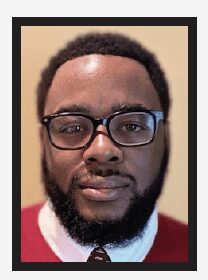
Michael Crump and his six siblings grew up together in the UK. He received a BA in Sociology/Education from Ashford University. Michael attended Manhattan College for two years and lived in NYC for 16 years. After working in corporate management for 25 years Michael decided to join his wife, Arlette, as a teacher at her school, the Montessori Village Academy in GA. He completed his Montessori Elementary Teacher Certification in an IMC training program. Michael and Arlette have three children – Isaiah and Morgan in college and Mattison, a working actor in high school.