Related Posts
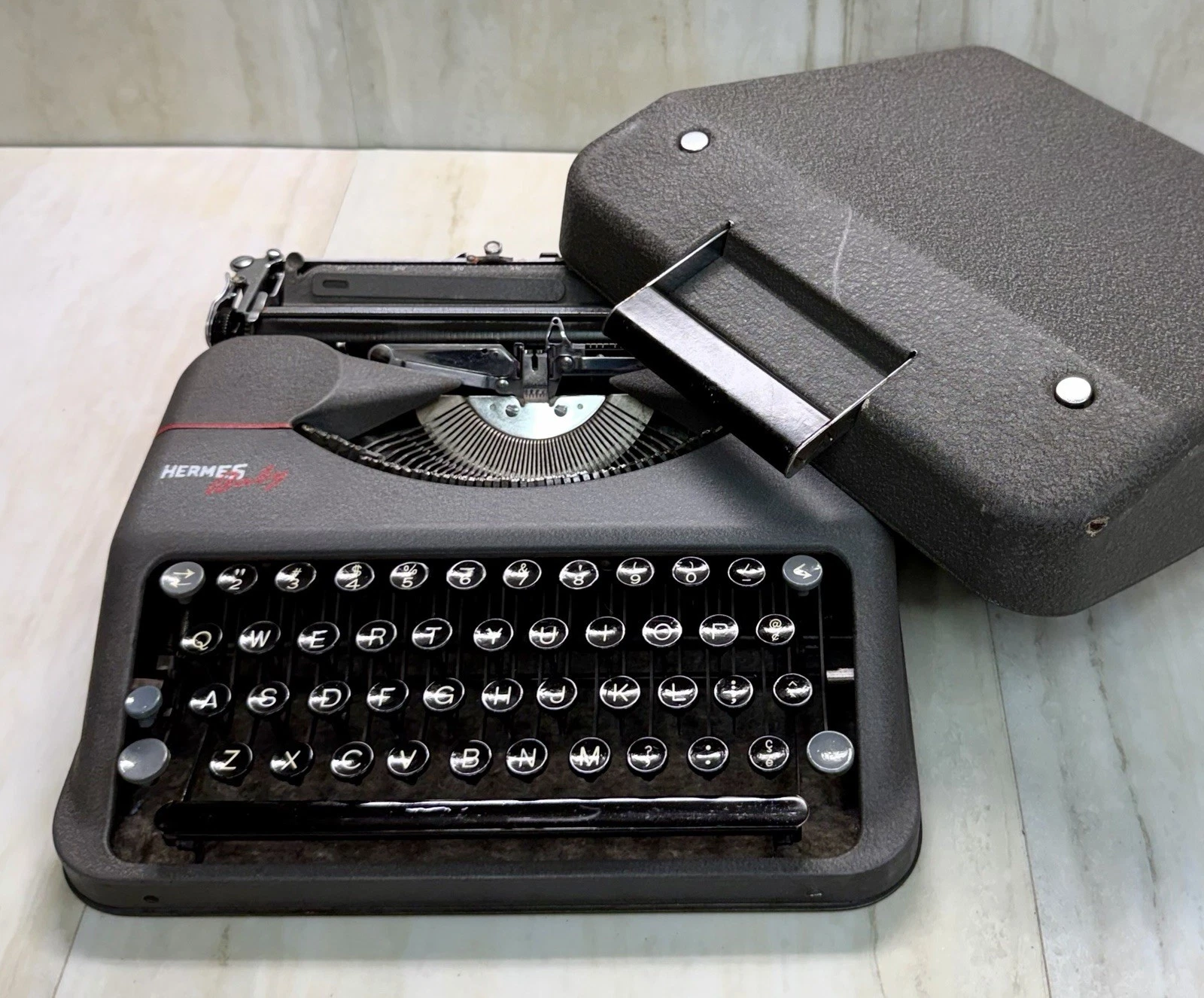
A 1950s-era Hermes Rocket portable typewriter similar to the one that I wrote with every day from age 5 through university.
The Promise — and Limits — of Montessori Inclusion: Following Every Child Honestly
A recent video by Montessori educator Brianna Rettig of Tiny Cabin Montessori prompted me to write about a question that has quietly troubled many Montessori educators for years. In her video, Brianna discusses her experience taking a course on learning differences through the Maria Montessori Institute in London and shares research by Montessori historian Professor Paola Trabalzini. Trabalzini argues that Dr. Maria Montessori’s work with children at the Orthophrenic School and her later work at the Casa dei Bambini were not simply the same educational model applied to different groups of children. Rather, Montessori adapted her approach to the unique developmental needs of each population she served.
That insight strikes me as deeply important — and somewhat uncomfortable — for Montessori schools today. We often say that Montessori is for every child, and in many respects, I believe that is true. During more than fifty years in Montessori education, I have seen remarkable success with children who have ADHD, autism, dyslexia, anxiety, sensory processing differences, executive functioning challenges, and many other learning profiles. Indeed, many families discover Montessori precisely because conventional classrooms have not met their child’s needs.
But there is another question that deserves honest discussion. While we all want to help as many children as possible — and while we should continue expanding our understanding of learning differences and strengthening our teachers’ ability to support them — have we reached the point where our expectations sometimes exceed what even an excellent Montessori guide can realistically provide? This is not a question about compassion. It is a question about professional responsibility, honesty with families, fairness to teachers, and our obligation to every child in the classroom. It is also a conversation that many Montessori school leaders are having privately, even if they are reluctant to discuss it publicly.
Montessori Has Always Been About Following the Child
One of the persistent misunderstandings of Montessori history is the belief that Dr. Montessori simply took what she learned working with children at the Orthophrenic School in Rome and applied it unchanged to typically developing children. That is not what happened. Maria Montessori was, above all, an observer who continually modified her methods in response to the developmental characteristics of the children before her. Her early work with children, then described as “deficient” or “phrenasthenic,” was medically informed and educationally radical. She drew from the work of Itard and Séguin and developed materials and approaches that helped children whom many people had dismissed as incapable of learning.
But when she opened the first Casa dei Bambini in San Lorenzo in 1907, she did not simply reproduce the Orthophrenic School. She created a different kind of prepared environment for a different population of children — one in which freedom, order, purposeful activity, movement, choice, concentration, independence, and social development gradually emerged in new ways. Montessori’s genius was not that she invented one classroom model and then insisted that every child fit into it. Her genius was that she observed children carefully and prepared environments that responded to their developmental needs. In other words, Montessori herself differentiated, and that may be one of the most important lessons we can recover today.
The Extraordinary Progress We Have Made
There is much to celebrate. When I began my career, many children with learning differences were misunderstood, underestimated, or simply excluded. Today, educators recognize neurodiversity in ways that would have been unimaginable only a generation or two ago, and Montessori educators have contributed significantly to that progress.
Many of the finest minds in our movement have shown us how Montessori education can be adapted thoughtfully and successfully for children with a wide range of developmental profiles. Educators such as Maria Eva Caffin, Christine Lowry, Joyce Pickering, Ann Epstein, and others have deepened our collective understanding of dyslexia, language processing differences, attention challenges, executive functioning, sensory processing, motor planning, and social-emotional development. Schools and programs such as the Shelton School in Dallas and Elizabeth Academy in Salt Lake City have demonstrated that Montessori principles can be woven together with specialized expertise to support children with learning differences and other exceptionalities. Their work reminds us that inclusion is not merely an aspiration. It is also a craft — one that requires knowledge, structure, humility, observation, patience, and professional judgment, and one that demands we recognize that good intentions, however sincere, are not enough.
There Is Much We Can — and Should — Do Better
Many of the most effective interventions for children with learning differences are not exotic clinical techniques. They are often simply good teaching made more explicit and more intentional. Clearer routines, more careful observation, thoughtful environmental adaptations, visual supports, and predictable daily schedules go a long way. So do grace-and-courtesy lessons taught with greater deliberateness, more explicit scaffolding for executive functioning, smaller steps between presentations, and more opportunities for meaningful repetition without shame. Better and earlier communication with families matters enormously, as does building referral pathways when concerns emerge and cultivating genuine partnerships with occupational therapists, speech-language pathologists, psychologists, developmental pediatricians, and reading specialists.
None of this diminishes Montessori. Done well, it strengthens and enriches it. Indeed, much of this is simply the fuller expression of Montessori’s own principle: observe the child, remove unnecessary obstacles, prepare the environment, and offer the next right help.
Sometimes One Accommodation Changes a Life
This discussion is not merely theoretical for me. It is deeply personal.
As a young child at the Barrie School in the early 1950s, I struggled with what today would almost certainly be recognized as dyspraxia, a developmental coordination disorder, though at the time no one had a name for it. I was awkward and clumsy, my fine motor skills were poor, and despite repeated attempts, I could never master riding a bicycle. My handwriting was dreadful — what my teachers might charitably have called “chicken scratch” — at a time when every child at our school was expected to develop a beautiful cursive hand. Curiously, I learned to ride horses at a very young age and became a capable rider. Like many children with developmental differences, my strengths and weaknesses did not follow a simple pattern.
Fortunately, my teachers did not conclude that I was lazy or incapable. Nor did they insist that I simply try harder until my handwriting somehow became beautiful. Instead, they observed me — and then they did something remarkably simple and remarkably wise. They encouraged my parents to buy me a lightweight, non-electric portable typewriter manufactured in Switzerland: a Hermes Rocket. That little machine changed my life. I learned to “write” by typing, and I carried that Hermes Rocket throughout elementary school, high school, and even at Georgetown University. While other students filled notebooks with handwritten essays, I produced mine on that little portable typewriter. When, in the early 1970s, I discovered computers and word processing, I thought I had died and gone to heaven.
Looking back, I realize how profoundly Montessori my teachers’ response really was. They did not lower expectations or excuse me from writing. They simply found another path that allowed me to accomplish the same intellectual work without requiring me to overcome a neurological challenge that had little to do with my ability to think. The accommodation did not fundamentally alter the classroom, demand extraordinary resources, or diminish the experience of the other children. It simply removed an unnecessary barrier between one child and his ability to express his ideas. I never felt broken. My teachers assumed I had ideas worth expressing and found another way for me to express them. Looking back all these years later, I understand what a gift they gave me: they accommodated my disability without defining me by it, and that distinction is at the heart of this entire conversation.
Good Montessori Is Good for Almost Every Child
One lesson continues to emerge from both developmental neuroscience and Montessori practice: children are designed to move, to work with their hands, to contribute, and to become increasingly capable through real responsibility. This is true whether a child is neurotypical or neurodivergent, and it points to something I have grown increasingly concerned about over many years.
Many Montessori schools — often with the best of intentions — have drifted toward quieter, more sedentary, more academically compressed programs. The irony is that the very children we most worry about may be precisely the ones who most need what we have allowed to shrink.
Consider what becomes possible when children spend substantial portions of their day engaged in genuinely meaningful work — not pretend work or busy work, but real work that adults in their community actually need done. In a garden or on a farm, children plant, harvest, and care for animals.
In a kitchen, they prepare food for the community, bake bread, and learn to cook for the younger children. In a workshop, they build furniture, repair fences, and master traditional crafts. On the school grounds, they maintain trails, plant trees, and work alongside adults who genuinely depend on their contributions. Through school enterprises, they operate student businesses, lead community service projects, and take on responsibilities that require sustained planning and follow-through.
These experiences are not merely enrichment, nor are they peripheral to Montessori’s vision. They are developmental experiences of the highest order, building executive function, persistence, judgment, self-confidence, coordination, social competence, and emotional regulation in ways that desk-based learning rarely can.
Maria Montessori understood something that neuroscience is only beginning to explain fully: movement organizes the brain, purpose organizes behavior, and responsibility organizes character. Many children who struggle to remain engaged during prolonged periods of seatwork become remarkably calm and focused when given authentic responsibility. The child who finds it difficult to regulate his emotions in a chair may become an entirely different child while caring for animals, splitting kindling, harvesting vegetables, or repairing a broken gate.
None of this eliminates autism, cures ADHD, or erases dyslexia. But it often creates conditions in which children become more regulated, more successful, and more available for learning — and those benefits extend equally to children who carry no diagnosis whatsoever. Good Montessori works because it is profoundly developmental, and Practical Life was never intended merely as preparation for later academic work. It is life itself.
Teacher Preparation Must Continue to Evolve
Montessori teacher education has never stood still. Dr. Montessori herself continually revised her courses as new observations emerged, and we must do the same. Today’s Montessori guides need a considerably stronger foundation in neurodevelopment than previous generations received. Understanding executive functioning, sensory processing, working memory, processing speed, developmental language disorders, dyslexia, dysgraphia, dyspraxia, autism, ADHD, anxiety, and the effects of trauma is no longer the province of specialists alone. It belongs in every Montessori classroom — not because every guide should become a psychologist, but because deeper understanding produces sharper observation, and sharper observation is the foundation of everything Montessori does.
This also means building genuine comfort with the collaborative relationships that can extend a classroom’s reach: occupational therapists, speech-language pathologists, reading specialists, developmental pediatricians, psychologists, and behavioral consultants each bring expertise that no Montessori guide can reasonably be expected to replicate independently.
We have much to learn from these professions, and they, increasingly, have much to learn from Montessori. The best Montessori schools I visit today are not abandoning their philosophy in the name of therapeutic intervention. They are enriching it while remaining faithful to the prepared environment, incorporating what neuroscience and developmental research have taught us over the past century. I believe that is what Maria Montessori would have done.
But We Must Also Be Honest
At this point, the conversation becomes more difficult.
Every experienced Montessori educator has encountered a child whose needs exceeded what the classroom could reasonably provide — not because the child was wrong for Montessori, but because the classroom lacked the support, staffing, or specialist resources that child genuinely needed.
That need may be academic, social-emotional, behavioral, or some combination of all three. A child may be overwhelmed by sensory input, have extremely fragile emotional regulation, or have profoundly impaired communication. A child may require therapeutic interventions or one-on-one support that the current classroom is simply not equipped to provide, and safety may have become a recurring concern. Every one of those children deserves an education, deserves dignity, and deserves adults who refuse to give up on them. But acknowledging those truths does not eliminate another reality.
Montessori guides are human beings.
Imagine a Children’s House with twenty-four to thirty children whose developmental needs span a genuinely wide range. Several are managing significant anxiety or carrying the weight of trauma at home. Some have communication differences that require patient, adapted interaction throughout the day. Others need intensive, individualized support with executive functioning or emotional regulation. In some cases, the level of support a child genuinely requires — through no fault of the child — amounts to dedicated one-on-one adult presence for much of the day. Now picture one guide and perhaps one assistant, without specialist consultation, behavioral support, an occupational therapist, or an additional aide.
The mathematics becomes impossible. No matter how gifted the guide, attention is finite, and every minute devoted to one child is a minute unavailable to another. That is not a criticism of anyone — it is simply reality. The tragedy is that teachers often feel guilty for acknowledging it, and they should not. We would never ask one physician to care for many patients with dramatically different medical needs simultaneously while assuring every family that each would receive exactly what they require. Yet that is sometimes the expectation we place upon Montessori guides. No amount of professional development changes the arithmetic of human attention, and recognizing that limit is not a failure of commitment. It is an acknowledgment of reality.
Whose Rights Are We Protecting?
Perhaps the most difficult question of all is this: when we speak about inclusion, whose rights are we protecting?
For many years, the conversation has rightly focused on the rights of children with disabilities and learning differences, and with good reason. Historically, those rights were too often ignored — children were excluded, underestimated, or denied opportunities they deserved. The movement toward inclusion has corrected many of those injustices, and that is something we should celebrate. But in correcting one imbalance, we must be careful not to create another.
Every child in a Montessori classroom has rights, and among the most fundamental is the right to an environment genuinely prepared to meet their needs.
The child with autism has a right to a setting where the adults are equipped and supported to truly understand and serve them.
The child with ADHD has a right to a classroom prepared to work with their actual neurology, not simply to manage it.
The child with dyslexia, the child coping with anxiety, the child recovering from trauma — each has a right to an educational environment organized around their genuine wellbeing. And every child in that classroom, without exception, has a right to a setting that is calm, purposeful, safe, and genuinely prepared to serve them — including the quiet child who finally found a place where she can concentrate, and the child who comes eagerly to school each morning because the classroom feels peaceful and welcoming. So does the teacher.
Montessori spoke often about freedom, but what we sometimes forget is that she almost always paired freedom with responsibility. Freedom was never absolute — it existed within a carefully prepared community in which everyone’s freedom mattered. The same principle applies here. The rights of one child cannot completely eclipse the rights of everyone else.
The Prepared Environment Is Also a Teacher
Montessori often described the prepared environment as if it were a living teacher, and she was right. The environment itself educates through its order, beauty, predictability, calm, opportunities for concentration, and open invitation to purposeful work. These are not decorative features. They are active ingredients in children’s development, and when the environment becomes chronically chaotic, it ceases to function as Montessori intended.
Every experienced Montessori teacher knows the difference between a classroom that occasionally experiences disruption because children are learning to become social human beings, and one in which disruption has become the defining characteristic of daily life.
The first is normal, even healthy. The second changes the environment for everyone.
Children who were developing concentration begin losing it. Teachers spend increasing amounts of time managing crises rather than observing learning. Presentations become shorter, interruptions become more frequent, and the community’s rhythm is fundamentally altered. The prepared environment slowly becomes something Montessori never intended — and that is not good for any child, including the child whose needs are greatest.
Sometimes the Kindest Answer Is More Help
One of the mistakes we sometimes make is assuming there are only two choices: either the child remains in the classroom exactly as things are, or the child is rejected. Montessori thinking should lead us to resist that false binary. Between those poles lies a wide range of possibilities — additional classroom support, a trained assistant, occupational therapy, speech therapy, behavioral consultation, psychological support, a modified schedule, smaller group instruction for part of the day, parent coaching, medical evaluation, or a more specialized Montessori setting. Sometimes these supports make all the difference. Sometimes, despite everyone’s best efforts, they do not. But the question we should always be asking is not how to preserve a particular placement. The question is how to help the child flourish, and those are not always the same thing.
Honesty Is an Act of Kindness and Respect
One of the hardest conversations a school leader ever has is telling loving parents that the school may no longer be the best setting for their child. No head of school wants to have that conversation, no teacher enjoys it, and no parent wants to hear it. Yet sometimes avoiding it causes greater harm than having it. Parents may continue believing that success is just around the corner. Teachers become increasingly exhausted. Other children become increasingly affected. The child himself often experiences repeated frustration because he is being asked to succeed in an environment that no longer matches his needs, and eventually everyone suffers.
There is another way. Schools can speak honestly — with kindness, with compassion, with humility — saying something like: “We love your child. We believe in your child. We have learned a great deal together. And we also believe your child now needs supports beyond what we can responsibly provide.” That is not abandonment. That is professional integrity, and it may be one of the greatest acts of love a school can offer.
The Difference Between Accommodation and Transformation
My own experience illustrates an important distinction. My teachers did not redesign the classroom because I struggled with handwriting. They found a tool that allowed me to participate fully in it. The classroom remained true to its culture, the expectations remained high, and the accommodation removed a barrier without transforming the nature of the environment.
Some accommodations do exactly that: they remove barriers while preserving and even strengthening the prepared environment. Visual schedules, additional movement opportunities, assistive technology, adjusted presentations, a slower pace, sensory supports, and genuine collaboration with specialists can each open the classroom to children it might otherwise have failed. When such supports are in place and working well, remarkable things become possible, and the prepared environment can serve children it could not have served a generation ago.
But when adequate supports are not in place — when a classroom is operating without the staffing, specialist collaboration, or resources a child genuinely requires — the situation changes.
If one child requires continuous adult support throughout the day and no additional adult is present, if behavioral dysregulation has become a persistent safety concern without specialist consultation available, if the guide is spending most of each day preventing harm rather than guiding learning, these conditions are not reflections of any child’s worth or potential. They are indicators that the supports currently in place are insufficient — and that the most honest, loving response is to seek arrangements that can genuinely serve everyone. Recognizing that fact is not prejudice. It is observation, and observation is where Montessori always began.
We Must Also Protect Our Teachers
There is one more group whose needs we rarely discuss openly: our teachers.
Montessori teachers enter this profession because they love children, and they are among the most generous people I know. Many routinely sacrifice evenings, weekends, personal income, and family time for their schools.
Many of us worry that we mistake generosity for unlimited capacity. Its no wonder that it has become increasingly challenging to find great Montessori teachers.
Today we ask Montessori guides to become fluent not only in child development and curriculum, but in parent education, trauma, executive functioning, neurodiversity, documentation, technology, marketing, admissions, conflict resolution, behavioral intervention, and social-emotional learning — and then we ask them to deploy all of it simultaneously while maintaining a beautiful, functional Montessori environment.
It is an extraordinary and ever-expanding set of demands, and we should not be surprised that burnout has become one of the most pressing challenges facing our profession.
Supporting teachers is not separate from supporting children. It is one of the primary ways we support children. A burned-out teacher cannot offer the careful observation, calm presence, and thoughtful guidance that Montessori education depends on. If we truly value children, we must also value the adults who serve them — which means providing training, coaching, specialist partnerships, reasonable class sizes, and additional staffing when children’s needs genuinely require it. And it means giving teachers authentic permission to say, “We have reached the limits of what this classroom can responsibly provide.” That sentence should never be understood as a failure. Sometimes it is the beginning of finding the right answer.
Following the Child Requires Following the Truth
As I reflect on Brianna Rettig’s video and the historical work of Professor Paola Trabalzini, I keep returning to one simple realization: Maria Montessori never asked us to defend a method. She asked us to observe the children. Those are not the same thing, and the distance between them matters enormously.
When we become more committed to defending our philosophy than to understanding the child before us, we have already drifted away from Montessori. Likewise, when we assume that one educational environment should serve every child equally well, we may also be drifting away from her deepest insight. The prepared environment was never intended to be a one-size-fits-all solution. It was intended to be exactly what its name suggests — a prepared environment, prepared for these children, this stage of development, these adults, these resources, and these needs. As those needs change, the environment sometimes must change as well. That, too, is following the child.
We Need More Montessori, Not Less
If there is one conclusion I hope readers take from these reflections, it is not that Montessori schools should become less inclusive. Quite the opposite. I believe we should become even better at serving children with learning differences, and I believe the path forward is more genuine Montessori, not less.
Teacher preparation should include a far deeper understanding of neurodevelopment than was common a generation ago, and schools should build stronger, more collaborative relationships with occupational therapists, speech-language pathologists, psychologists, pediatricians, and reading specialists.
Our classrooms should reclaim what has been quietly slipping away: more movement, more meaningful Practical Life, more time outdoors, more gardening, cooking, music, woodworking, and animal care, more real responsibility, and more opportunities for children to do work that genuinely matters to the community around them.
These experiences benefit virtually every child, and I sometimes wonder whether they are not the missing ingredient in many schools today. In our understandable desire to demonstrate academic excellence. To reassure families that Montessori children learn to read, write, calculate, and compete, we may have allowed authentic childhood to shrink.
The irony is that the children struggling the most may be precisely the ones who most need what we have allowed to diminish. Perhaps the answer is not more worksheets, more testing, or more clinical intervention layered on top of an increasingly academic day. Perhaps the answer is more Montessori — the Montessori that trusted movement and genuine work, that trusted nature and meaningful responsibility to do what direct instruction cannot.
But We Also Need More Humility
At the same time, we should have the humility to recognize that no educational approach — not Montessori, not progressive education, not traditional education, not any philosophy — can be everything for every child. Every school has limits, every teacher has limits, and every classroom has limits. Recognizing those limits is not an admission of failure. It is the beginning of wisdom and the precondition for an honest partnership with families.
One of the most dangerous promises any school can make is “We can serve every child.” No school can honestly make that claim. The more honest promise sounds something like this: “We will do everything reasonably within our power to understand your child. We will continue learning. We will seek expert guidance when needed. We will partner closely with your family, make thoughtful accommodations whenever we responsibly can, and if we reach a point where another setting can better serve your child, we will tell you honestly, compassionately, and without judgment.” That is a promise I believe Montessori schools can keep, and it is, I would argue, a far more trustworthy promise than one that claims to serve everyone equally well.
The Greatest Gift We Can Offer
Looking back over my own life, I remain deeply grateful for the teachers who saw beyond my unreadable handwriting. They saw a little boy who had ideas, and instead of insisting that I express those ideas exactly as every other child did, they found another path. That little Hermes Rocket typewriter became one of the greatest educational gifts anyone has ever given me. They accommodated my disability without defining me by it, and that, I have come to understand, is what great educators do.
Accommodations are not acts of charity. They are acts of respect. They say to a child: “I see you. I understand what is difficult for you. And I also see what is possible.” There is enormous wisdom in that message, and it applies as much to the thinking of school leaders designing programs as it does to the work of a guide responding to a single child.
Holding Two Truths at Once
Perhaps the real challenge before Montessori education is learning to hold two truths at the same time. The first is that Montessori education is remarkably well suited for many children with learning differences — far more children can thrive in Montessori environments than many people once believed. The second is that some children require resources, expertise, staffing, therapeutic interventions, or educational settings beyond what a particular Montessori classroom can reasonably provide. These truths do not contradict one another. They complete one another.
Holding them together requires judgment rather than ideology, observation rather than assumption, and humility rather than certainty. Above all, it requires courage — the courage to keep learning, to expand our understanding, to ask for help, to support our teachers honestly, and to tell families the truth even when it is difficult. And it requires the courage to remember that every decision we make should begin where Maria Montessori always began: with careful observation of the child. Not the diagnosis. Not the philosophy. Not the politics.
The child.
If this article has raised more questions than it has answered, then perhaps it has served its purpose. These are not easy questions. They deserve thoughtful discussion, respectful disagreement, careful research, and above all, deep compassion for every person involved.
Our goal should never be to prove that Montessori can serve every child. Our goal should be something both more modest and more profound: to ensure that every child finds the environment in which he or she can truly flourish. When we do that, we are not abandoning Montessori.
We are honoring her most fundamental insight.
We are following the child.
Author’s Note: I offer these reflections with enormous respect for the educators and specialists who have devoted their lives to expanding Montessori’s capacity to serve children with learning differences. If anything, I hope this article encourages even deeper collaboration between Montessori educators, families, therapists, and researchers. The goal is not to lower our aspirations, but to match them with honesty, wisdom, and the resources children and teachers truly need.