Why Child Care Is So Expensive — and What Montessori Educators Can Do About It

Why Child Care Is So Expensive — and What Montessori Educators Can Do About It

Montessori Growth Suite

1907-2025 Welcome to the 119th Montessori School Year!


Inspired by Jordan McGillis, “Why child care costs so much — and how to fix it,” The Washington Post, August 18, 2025: https://www.washingtonpost.com/opinions/2025/08/18/childcare-cost-nannies-economy-labor/

Summary for Montessori Leaders

High-quality early childhood education (ECE) is structurally expensive because it is people-intensive, time-intensive, and resistant to automation. Prices are rising faster than inflation due to the Baumol cost disease, compliance expansion, facilities costs, and a shrinking domestic pipeline of qualified educators. Broad subsidies can shift who pays but often impose regulatory frameworks that conflict with Montessori principles (flexibility, mixed‑age groupings, uninterrupted work cycles). Sustainable affordability requires: (1) enlarging the educator workforce (including visas and apprenticeships), (2) right‑sizing credential rules to recognize Montessori pathways, (3) smart public co‑investment that protects pedagogical autonomy, and (4) stronger school‑level talent and finance strategies.

1) Why All Child Care Is Expensive (and getting more so)

People, not widgets. All child-care and early childhood education, including Montessori programs, depend on the presence of trained adults who observe, prepare, and connect with children when needed. Unlike traditional settings that assume a lower adult‑child ratio is always better, Montessori intentionally cultivates peer learning and independence. Guides must balance giving lessons, making space for autonomy, and investing time in children who need deeper connection. That still requires adequate staffing, not to overwhelm guides but to ensure they can observe, build relationships, and prepare the environment.

Baumol cost disease. When productivity rises in other sectors (software, manufacturing), wages increase economy‑wide. ECE productivity is intentionally flat—one adult can responsibly guide only so many children in a classroom community—so programs must raise pay to keep educators from leaving for higher‑paying fields.

Regulatory creep. Over time, well‑meant rules add paperwork, training hours, inspections, and record‑keeping. Each requirement may be reasonable; the cumulative cost is substantial, and the burden falls heaviest on small schools.

Facilities and insurance. Child‑sized fixtures, outdoor spaces, ADA compliance, security, and severe‑weather standards drive capital and operating costs. Premiums and deductibles have risen sharply in many regions.

Benefits and turnover. Inadequate salaries and benefits produce churn. Turnover creates hiring costs, onboarding time, and lost continuity for children—all of which are expensive and educationally harmful.

Montessori specifics. True mixed‑age communities, real materials, and uninterrupted three‑hour work cycles require prepared staff and ample space. You can cut corners, but you won’t have Montessori.

2) Why do so few Americans choose early childhood careers

  • Compensation gap. Talented assistants can earn more in retail, health tech, or HR within a year. Lead guides often lack parity with K–12 teachers (and lack pensions/tenure).
  • Status and career ladders. ECE is viewed as “babysitting” in the U.S. Clear advancement (assistant → associate guide → lead guide → program lead) is rare outside strong Montessori networks.
  • Burnout risk. Demanding emotional labor with limited prep time, limited planning coverage, and scarce subs.
  • Credential barriers. One‑size‑fits‑all degree mandates can exclude excellent practitioners and undervalue rigorous Montessori credentials (AMI, AMS, IMC, etc.). Coursework costs and time deter candidates.
  • Friction costs. Background checks, fingerprinting, first‑aid, TB tests, food‑handler cards—each necessary, all time‑consuming. Without centralized onboarding support, good candidates drop out.

Implication for Montessori leaders: Without a bigger pipeline and better work design, tuition will keep climbing to maintain quality.

3) Subsidies: help with access, but watch the strings

Public funding can increase access, stabilize wages, and reduce family burden. But when dollars are tied to compliance frameworks that prioritize narrow inputs (seat time, scripted curricula, testing, short blocks), Montessori’s essential features—freedom within limits, individualized pacing, mixed ages, and long work cycles—are at risk. The goal is smart subsidies: fund outcomes and core quality elements while preserving pedagogical autonomy and multiple program models.

4) System‑level ideas that actually improve affordability

Drawing on McGillis’s piece and lessons from ECE research:

  1. Expand legal pathways for caregivers and teachers.
  2. Apprenticeships and paid residencies.
  3. Right‑size credential rules.
  4. Tiered program options with safety as the non‑negotiable.
  5. Shared‑services alliances.
  6. Targeted public co‑investment.

5) What Montessori schools can do now (a practical playbook)

Talent pipeline

  • Partner with local colleges and workforce boards to create Montessori assistant pipelines; host paid practicums.
  • “Grow‑your‑own” scholarships for assistants to earn Montessori diplomas; add service commitments.
  • Create compensation ladders tied to observable competencies (presentations mastered, classroom management, parent partnership) with transparent pay bands.
  • Build a regional substitute consortium and shared calendar of observation days.
  • Offer predictable planning time and classroom coverage; reduce burnout.

Finance and pricing

  • Cost every classroom using zero‑based budgeting (salaries & benefits, relief staff, materials refresh, PD, admin allocation, facilities, insurance). Price tuition to cover true cost plus strategic reserves.
  • Diversify revenue: extended day, summer Montessori, parent education, space rentals (when mission‑consistent), philanthropic scholarships.
  • Be radically transparent with parents: publish what tuition funds (wages/benefits %, PD %, materials %, financial aid %). Transparency builds trust.

Operations and program integrity

  • Protect the long extended work cycle; schedule specialists and pull‑outs after core work periods.
  • Keep class sizes at Montessori‑appropriate ranges and invest in assistant training; this is cheaper than chronic turnover.
  • Use tech only to reduce admin friction (enrollment, billing, parent comms), not to fragment the work cycle.

Parent partnership

  • Offer recurring parent education: observation days, short “why we do it this way” videos, and Q&As on mixed ages, independence, and freedom within limits.
  • Provide a clear comparison of Montessori vs. conventional daycare requirements and why Montessori looks different—and costs what it does.

Data and outcomes

  • Track and share: child attendance, concentration indicators (normalized work blocks), executive function rubrics, retention to K/Elementary, and alumni narratives. Funders and parents respond to outcomes, not slogans.

6) Talking points you can use with boards and parents

  • “You’re paying for people.” Quality ECE is a professional service, not a product. The largest line item is wages and benefits, and that’s appropriate.
  • “Montessori encourages independence.” Our classrooms are designed so children learn from each other as well as adults. Ratios matter less than well‑trained guides who know when to step in and when to step back.
  • “Montessori is prevention.” Strong early executive function reduces later remediation and behavior costs.
  • “We welcome smart public support.” We support funding that preserves mixed‑age communities, long work cycles, and Montessori credentials.

Selected references & further reading

(Representative sources you can cite in parent education, grant writing, and board work.)

  • Jordan McGillis (2025). Why child care costs so much — and how to fix it. The Washington Post (op‑ed).
  • William J. Baumol & William G. Bowen (1966). Performing Arts: The Economic Dilemma (origin of the cost disease concept; widely applied to labor‑intensive services like ECE).
  • James J. Heckman & colleagues (2006–2019). Research on returns to early childhood investment and the “Heckman curve.” See Heckman’s synthesis papers and policy briefs.
  • Angeline S. Lillard & Nicole Else‑Quest (2006). “Evaluating Montessori Education.” Science, 313(5795), 1893–1894.
  • Angeline S. Lillard (2017, 2021). Peer‑reviewed studies and meta‑analyses on Montessori outcomes (executive function, academic and social benefits).
  • National Institute for Early Education Research (NIEER). The State of Preschool annual reports.
  • OECD (various years). Starting Strong reports on ECE systems and workforce.
  • District of Columbia OSSE (2016 onward). Early childhood credentialing regulations and subsequent commentary/litigation; debates on degree mandates for child‑care workers.
  • Child Care Aware of America. Annual data on child‑care supply, deserts, and affordability.

Closing thought

Montessori can—and should—help lead the national conversation about affordability. Our task is twofold: tell the truth about why great care and education cost what they do, and build smarter systems that expand the educator workforce while protecting the essence of Montessori. If we do both, more families will be able to choose the environment we know changes lives.

The Courage To Be a Montessori Parent

The Courage To Be a Montessori Parent

mom and child


By Joyce St. Giermaine

  • Montessori is great for little children but that’s it!
  • Montessori is warm and fuzzy. Children enjoy it, but the real world isn’t warm and fuzzy. They have to grow up sometime.
  • I’m worried that Montessori shelters my child from life.
  • Your children are still in Montessori. You should be thinking about their future. You do want them to go to college, don’t you?

As a Montessori parent, you’ve probably heard many statements like those above, and you can probably add a few of your own. These remarks often are expressed by parents to other parents. Sometimes they come from well-meaning relatives, co-workers, neighbors, and just about anybody who knows you have a child in a Montessori school. When it comes to Montessori, it seems that everyone has an opinion.

When my children first started Montessori many years ago, I heard the statement “It takes courage to be a Montessori parent.” I used to believe that it took courage because Montessori was an experimental program to which I was offering the use of my children as guinea pigs. As I became better informed, I quickly discovered this was not the case. Montessori has actually been around for over one hundred years and has been proven successful in many different educational environments throughout the world.

So what does it mean “It takes courage?” Maybe it’s because Montessori tends to encourage children to think for themselves and articulate their own opinions. This is all wonderful, but as a parent, there are moments when it would be a whole lot easier to deal with a six-year-old who blindly and obediently accepts your explanation for why you don’t want to create a recycling center right in the middle of your kitchen or a four-year-old who announces that she knows where hamburger really comes from and she’s never going to eat it or any other animal ever again, period!

That must be it, I thought. It takes courage to live with these self-actualized, intelligent little creatures that have been encouraged by Montessori to think logically and express their opinions. I stuck with this understanding of the “courage” statement for a number of years. As a parent of two children who grew up in a Montessori school for ten years, I’ve got a million examples of a Montessori mother’s courage in action, but that’s the subject of another article.

As my children got older, I came to understand the courage statement in a whole different light. About the time that my children hit kindergarten, I found myself constantly defending my choice to keep my children in Montessori through the elementary years. The opinions of relatives were the most difficult and the hardest to discount because they came from people who were legitimately concerned about their grandchildren, or nieces and nephews. A case in point. My husband went to a New England boarding school, followed by Yale, followed by medical school at Columbia. He later topped it off by obtaining a law degree. Observing his grandson working with little beads while lying flat on his belly during a visit to the school, it was clear from the bemused expression on my father-in-law’s face that Grampa Dan not only had doubts about Montessori, he also had doubts about us as parents.

The pressure can be enormous. There were many times when we were very tempted to walk away from Montessori and put our children into the capable hands of a more traditional school. After all, we turned out all right. Or did we?

Speaking only from my own personal experience, I question how we as a society have come to define “success.” Is a child who grows up to become a doctor or a lawyer any more successful than a carpenter or a musician or a teacher or a homemaker? Do well-intended parents unconsciously push their children into status careers that send out all the right messages that we as a society have come to accept as the true measure of success.

Does it matter to us that our child grows up to be happy with her choice in careers, that she has a sense of fulfillment every day that she goes to work, that she approaches each day of her adult life with the same enthusiasm and eagerness to grow that she experienced as a child in the Montessori classroom, that she is able to accept the challenges that life has to offer and has the ability to adapt to new ideas and technology, that she understands that whatever gifts of intelligence and ability she possesses they are truly gifts and that others have other abilities and gifts that are different from her own? If we as parents can answer yes to these questions, then I believe our children are well placed in a Montessori environment for as long as we are able to keep them there.

In designing the cover, we tried to find a provocative, and indeed a shocking way, to visually portray the question: Does Montessori prepare children for the real world? The cover has a great deal of personal significance to me for three reasons. First, the boy in the picture is my son. I can assure you he does not look like that in real life (see insert). Second, it is the first and possibly only time I have ever succeeded in getting him into a tie and jacket long enough to have a picture taken (my mother will be so happy). Third, and most importantly, as a young adult, I chose a career in law for all the wrong reasons.

I believed that becoming a lawyer would give me prestige and wealth. What it gave me that I hadn’t counted on was an ulcer and the nagging feeling that I should be doing something else with my life. Please don’t get me wrong. I don’t dislike lawyers (or tasseled loafers) — even trial lawyers are ok with me as long as I don’t have to join them in the courtroom. There is nothing wrong with the law, medicine, teaching, carpentry, or anything else as long as it is what is right for the individual.

If the answer to the question of whether or not Montessori prepares children for the real world is to be judged by whether or not great percentages of Montessori students will go on to a professional career, then the answer is maybe. If the answer to the question is to be judged by whether or not Montessori prepares children for life, the answer is an unequivocal yes.

As a parent, I have very high expectations for my children from Montessori. I expect them to be well prepared academically so that they will be able to follow their dreams wherever that may take them, but I hope that they will be able to continue making the responsible choices I see them make every day in their classrooms, I hope that they will be able to retain the love of learning and creativity that hasn’t been driven out of them by a system that is so intent upon conformity that it places individuality at grave risk.

I care about academics, but I know that my children will get them from any good school, Montessori or otherwise. For me, the true value of Montessori goes beyond academics. When I look at my own children, I see behavior patterns that are different from my own at their age. I feel very comfortable that Montessori prepares children for the real world. In an interview, David Kahn once remarked, “Montessori is the real world. It’s the dichotomy that’s false.” When you think about it, there’s a lot of sense behind that statement.

I often wish I could have had a Montessori experience as a child. Things might have turned out differently. For one thing, I could have saved all that money on law school, but then I really do believe that all learning experiences have value. Maybe a bit of Montessori did rub off on me after all. At the age of 35, I quit the practice of law and I’m now doing something I find much more fulfilling, something I probably should have done in the beginning if I had not tried so hard to jam my round-pegged personality into a square professional hole.

When I announced that I wasn’t going to practice law anymore, the initial overwhelming response was, “What do you mean you’re not going to practice law anymore. How do you think you’re going to survive in the real world without a profession?” Sound familiar?

More than anything, I hope that we as parents will have the courage to recognize and continue to support the human values and life lessons that our children are learning in their Montessori classrooms every day. As for my children growing up to pursue some kind of yuppie career, that’s ok as long as it’s right for them. Our world could probably use a lot more Montessori lawyers, politicians, and doctors who understand that there’s more to life than being book smart. Above all, though, I think that as parents and educators we must never accept the premise that our objective must be to teach children to survive life. Better we should help them learn to celebrate it!

If You Can Only Do One Thing Montessori, Do This

If You Can Only Do One Thing Montessori, Do This

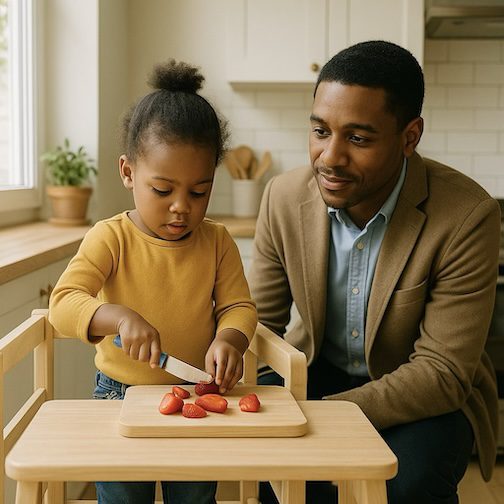
Father and daughter

Many parents ask, “I can’t do it all—what should I never skip?” It’s a question that comes from a very real place. Life with young children is full, messy, and unpredictable. Between work, meals, laundry, and the emotional rollercoaster of toddlerhood, even the most well-intentioned parents can feel overwhelmed. Montessori may sound ideal in theory—but how do you begin when you’re just trying to get everyone dressed and out the door?

If you can only do one thing Montessori, let it be this: protect your child’s independence. More than any shelf, material, or routine, it is the child’s growing sense of self-agency that defines the heart of Montessori.

That means stepping back, even when it’s hard. It means letting your child struggle a bit—not in frustration, but in effort. It’s holding back the instinct to swoop in and fix, and instead allowing them to discover that they can do hard things. When a child senses that you trust them to do for themselves, something powerful takes root. They begin to believe in their own ability.

Consider the simple act of getting dressed. A two-year-old trying to put on socks may fumble, get them inside out, or put them on the wrong feet. It would be so much faster to just do it for them. But those few extra minutes of patience are an investment. Over time, the child not only learns the mechanics of dressing—they build confidence. They begin to see themselves as capable.

Or imagine the morning rush before school. You’re trying to get breakfast on the table and lunches packed. Your child wants to help pour their own cereal. You’re tempted to say no—it might spill, it will take longer. But this is where independence is born. Instead of brushing it off, you bring out a small pitcher with milk and a child-sized bowl. You stand close, just in case, but you let them pour. If it spills, you clean it up together. And then you see it—that proud little smile that says, “I did it.”

These aren’t just conveniences or chores. These are moments of trust, of growth, and of identity. The child isn’t helping—they’re participating. They are learning that they matter, that they are part of the family, and that they have the power to contribute.

Montessori reminds us that true independence is not just about doing things on your own—it’s about developing the executive function skills that make that possible. When children are allowed to choose their clothes, prepare a snack, or water the plants, they’re practicing planning, focus, self-control, and problem-solving. These skills form the foundation not only for academic success but for life.

Independence also transforms the parent-child relationship. Instead of being locked in constant correction, you become a guide and a partner. You begin to notice more. You step back, observe, and let your child lead. And in doing so, you create space for connection that isn’t based on control, but on mutual respect.

This approach doesn’t require special tools or a perfect home environment. It starts with noticing your child’s desire to do things for themselves—and saying yes more often. Yes, you may carry your plate to the sink. Yes, you may put your shoes on, even if they’re on the wrong feet. Yes, you may help stir the pancake batter, even if it’s a bit messy.

Every time you say yes, you’re saying something deeper: I see you. I trust you. You are capable.

This isn’t about letting children run wild or do whatever they want. Montessori is built on the idea of freedom within limits. We prepare the environment, set clear expectations, and then step back. We create spaces that invite independe nce and make it safe to explore. We hold boundaries with kindness, and we support children without rescuing them.

So if your days feel rushed, if you’re not sure where to start with Montessori, start here. Create a little time and space for your child to try things on their own. Resist the urge to jump in. Celebrate effort over perfection. And above all, let your child know—again and again—that you believe in their capabilities.

Because when a child knows they are trusted, they begin to trust themselves. And that, more than anything else, is what Montessori is all about.

The Montessori Journey Begins

The Montessori Journey Begins

toddler cooking

By Amanda Riccetti

A Gentle Welcome to Independence, Discovery, and Avery’s First Day

You’ve enrolled your child in a Montessori school. Perhaps a trusted friend recommended it. Maybe you were a Montessori child yourself. Or perhaps the calm beauty of the classroom simply spoke to you during your visit, resonating on a level you couldn’t quite name.

Whatever path led you here, your child is about to begin a new chapter of growth—and you’ll be walking alongside them into something extraordinary: the Montessori Primary years, spanning ages three to six.

This isn’t preschool or kindergarten in the traditional sense. It’s what Montessori calls a Three-Year Journey—a formative period of development where your child learns by doing, observing, and discovering at their own pace, guided by an intentionally prepared and beautiful environment.

As this journey begins, it’s natural to feel a mix of wonder and uncertainty. Your child will be stepping into a space designed for them—a classroom that nurtures independence while offering structure, beauty, and purpose. And while the materials are thoughtfully arranged and the guides warmly prepared, your presence—the emotional grounding you offer at home—remains an essential part of the experience. Together, we can help your child feel safe, curious, and ready to begin.

Supporting Your Child’s Transition

Entering a Montessori classroom is like embarking on a beautiful adventure. Here’s how you can support this transition:

  • Speak Positively: Frame the start of school with enthusiasm and curiosity.
  • Visit if Possible: Help your child picture the space and meet familiar faces.
  • Respect the Process: Allow time for nesting—a valid stage where children observe, breathe, and acclimate before choosing work.
  • Trust the Journey: Know that even quiet observers are learning and preparing to engage.

Once your child walks through the door, they’ll step into an environment prepared just for them. The Montessori classroom isn’t just a room full of materials—it’s a living, breathing space designed to meet children where they are developmentally, emotionally, and socially. Understanding what your child will encounter inside helps you support their journey even more deeply. So what will they see when they arrive?

Inside the Montessori Classroom

Practical Life: Learning Through Living

Practical Life is the heart of the Montessori classroom. Activities like pouring, sponging, sweeping, and table-washing build both gross and fine motor skills while teaching grace, order, and courtesy.

These exercises fall into four core categories:

  • Care of Self
  • Care of the Environment
  • Grace and Courtesy
  • Control of Movement

Children experience the rhythm of each task—beginning, middle, and end—developing sequencing skills, independence, and real-world competence in a peaceful, purposeful way.

Sensorial: Refining the Senses, Awakening the Mind

Sensorial materials are uniquely Montessori—crafted to engage the five senses and refine perception. Children classify objects by shape, color, sound, and texture, learning vocabulary such as rough/smooth, short/tall, and even geometric expressions like triangular prism and quatrefoil.

This work builds the cognitive architecture for literacy and math by nurturing observation, comparison, and joyful repetition.

Cultural: Exploring the Wonders of Our World

Dr. Montessori believed a cultured person understands the natural world and human expression. In this area, children explore:

  • Geography
  • Botany & Zoology
  • Science
  • Music & Art

These activities foster wonder, broaden perspective, and help children see themselves as part of a respectful, interconnected world.

Language & Math: The Power of Words and Numbers

Language begins with phonetic awareness—children learn how words are constructed from sounds, then joyfully decode and read at their own pace. Vocabulary flourishes through conversation and work, while writing emerges organically through the use of drawing with metal insets and storytelling.

Math is introduced through tactile materials—golden beads, number rods, and precise tools that turn abstract concepts into something concrete. Children discover that math is a language they already speak.

The Montessori Environment: A World Prepared for the Child

The classroom is designed to meet children’s developmental needs with beauty and clarity. Materials are arranged on low shelves for easy access. Each item teaches a lesson and is self-correcting, so children explore and learn independently.

Montessori classrooms are intentionally multi-age, typically ranging from 2½ to 6 years. This structure offers children authentic opportunities for peer learning and leadership. Older children gain confidence and reinforce their own learning through mentoring, while younger children learn by observing, imitating, and engaging with guidance.

Social development blossoms naturally. Respectful interactions and collaborative rituals help children practice empathy, inclusion, and real-world citizenship.

In this prepared environment, the classroom becomes a community—one where every child is invited to grow with confidence, joy, and purpose. As children settle into this prepared environment—filled with choice, beauty, and meaningful work—they begin to find their rhythm. But even in the most thoughtfully designed classrooms, the first days can bring big emotions. Separation, new routines, and unfamiliar faces can feel overwhelming at first. And for families, this transition is just as profound. That’s why emotional readiness, reassurance, and storytelling have such an essential place in the Montessori journey.

Readiness and Reassurance

As children settle into this prepared environment—filled with choice, beauty, and meaningful work—they begin to find their rhythm. However, even in the most thoughtfully designed classrooms, the first days can evoke strong emotions. Separation, new routines, and unfamiliar faces can feel overwhelming at first. And for families, this transition is just as profound. That’s why emotional readiness, reassurance, and storytelling have such an essential place in the Montessori journey.

Remember that readiness doesn’t always arrive with bounding energy and bold declarations. Sometimes it comes quietly—through watchfulness, observation, and inner preparation. Montessori honors all paths to readiness. This transition isn’t a single leap—it’s a gentle unfolding.

Often, parents carry the deeper emotional weight, balancing excitement with uncertainty. Your calm, trusting presence becomes your child’s anchor. Through daily rituals, shared conversations, and gentle transitions, you send a clear message: school is a safe, beautiful place, and you believe in them.

 A Quick Goodbye, A Confident Start

The way each morning begins sets the tone for your child’s day. We recommend a short and consistent goodbye to support a smooth transition.

When you arrive, a teacher will warmly greet your child and help them with their cubby. This is the moment to say goodbye, gently, and with confidence. Children thrive on routine, and a quick departure sends a powerful message: “School is a safe place. You’ve got this.”

Lingering too long or hesitating can unintentionally give your child false hope that you’ll stay, which may lead to confusion or emotional stress. Saying goodbye promptly helps your child shift into classroom life with clarity, autonomy, and ease.

You’re not abandoning them—you’re affirming their strength. This daily ritual becomes a trusted rhythm, empowering both child and parent to embrace the day ahead with courage and grace.

You’ll feel confident because your child is well prepared, grounded by routine, greeted with warmth, and guided with consistency. And once this emotional foundation is set, another beautiful way to reinforce your child’s readiness is through storytelling.

Storytelling: A Gentle Bridge to Confidence

In the Montessori environment, stories aren’t just entertaining—they’re purposeful. Whether it’s a tale about resilience, kindness, or curiosity, storytelling offers children a gentle bridge from emotional connection to cognitive growth. Through narrative, they build language, imagination, and the inner tools needed to approach the day with clarity and self-assurance.

Across cultures and generations, stories have helped children understand and embrace change. They offer continuity, language for emotions, and images to visualize what’s ahead. Picture books especially give children a quiet path to prepare themselves, rehearsing new experiences in ways that feel safe and imaginative.

Throughout my decades as a Montessori guide, I sought a story that would gently introduce children to this unique approach to education—child-led, emotionally rich, and inclusive of all family structures. I found glimpses of similar themes in other books, such as Llama Llama Back to School, but nothing fully aligned with the Montessori values I hold dear.

So, I wrote one.

Avery’s First Montessori Day:

Avery’s First Montessori Day is told entirely through Avery’s voice, giving children language to name feelings, visualize their classroom, and see their experience affirmed. Each page features gentle narration and a thought bubble from Avery, reflecting the inner moments of hesitation, joy, and curiosity that Montessori children often reveal.

Notably, the story uses the word “parent” sparingly and never describes adults in detail, allowing families of all kinds to feel welcome. Whether your child has two moms, two dads, one parent, grandparents, is in foster care, or has a chosen family, the book makes space for their reality without needing to explain it.

Avery doesn’t tiptoe into his Montessori world—he dives in. With wonder as his guide and quiet courage blooming in small ways, he embraces his first day as an adventure that belongs to him alone.

This updated edition builds on the 2013 original, now more inclusive and more deeply aligned with Montessori principles. I’ve seen its impact firsthand: families say their children settle more easily, cry less, and enjoy their experience with more confidence and less trauma.

You can purchase a copy from Amazon at

https://www.amazon.com/Averys-First-Montessori-Amanda-Riccetti/dp/B0FHWV6DML

If you choose to share Avery’s First Montessori Day with your child, I hope it becomes more than a book—I hope it becomes a companion. A bridge between home and school. A hug that says: “You belong here. You’re ready.”

About the Author

Amanda Riccetti has welcomed children into Montessori classrooms with joy and purpose since 1980. As Director and Head Teacher at Big City Montessori School, she leads with warmth, wisdom, and a deep respect for every child’s unfolding journey.

Amanda is the author of Reading with Miss Amanda, a hands-on reading series rooted in phonics, storytelling, and child-centered learning. Her songs, storybooks, and curriculum materials reflect decades of observation, empathy, and innovation.

Now a proud mother and grandmother, Amanda continues shaping education as Big City Montessori becomes a second-generation family-run school. She writes not to teach at children, but to walk with them—ensuring every story, song, and lesson is a tool for connection, not just content.

Her work is a legacy of care, inclusion, and quiet brilliance. Avery’s First Montessori Day is one more reflection of that vision: a child’s voice, honored from the very first moment.

Below is the article description

The Montessori Journey Starts. Montessori educator Amanda Riccetti shares a gentle roadmap for families entering the Primary years, highlighting emotional readiness, self-led learning, and the story behind her new book, Avery’s First Montessori Day.

Screens and Stillness_ A Call to Screentime Stewardship

Screens and Stillness_ A Call to Screentime Stewardship

Teacher training


By Jennifer Iamele Savage  

“Breaking up with your phone means giving yourself the space, freedom, and tools necessary to create a new, long-term relationship with it, one that keeps what you love about your phone and gets rid of what you don’t.” Catherine Price, How to Break Up with Your Phone, Revised Edition: The 30-Day Digital Detox Plan

Over the past month I have been exploring the concept of screentime stewardship as a social change initiative, and the journey has been eye-opening. Like most of us, I have had a complicated relationship with screens throughout the years. As a member of Generation Y, I remember a time without the internet, technology, screens, and the like, and yet at this moment, I cannot imagine them not being a part of our daily lives. I have ridden all the waves of technology including getting excited about the potential and possibility of these advancements to getting disgusted by the statistics of the time being wasted and those who profit from our distractions.  I have quit social media for extended periods of time and done digital detoxes. My mindset was always “disconnect to reconnect”.  In recent years, however, I feel like completely disconnecting is no longer an option–and with the growing popularity of AI and other technological advances, that option will only become less available, in my opinion. Therefore, I am turning my attention to a different way of interacting with technology which I refer to as Screen Time Stewardship. 

What is Screen Time Stewardship? 

“Screen time stewardship” is a thoughtful, values-based approach to managing digital device use—especially in homes, schools, and communities. Rather than simply limiting screen time, stewardship emphasizes intentionality, balance, and responsibility in how we engage with screens.

It’s about asking:

  • What purpose does this screen time serve?
  • Is it enriching, connecting, or numbing?
  • How does it align with our values, goals, and well-being?
  • How does cultivating this practice apply to other technologies as well? 

In practice, screen time stewardship might look like:

  • Co-creating family or classroom media plans that prioritize quality over quantity.
  • Modeling mindful tech use—pausing to reflect before picking up a device.
  • Encouraging digital citizenship and critical thinking about online content.
  • Making space for offline experiences that nurture creativity, movement, and connection.

How do I Build my own Capacity for Screen time Stewardship? 

As part of this exploration, I have been running a screen time stewardship pilot program and have heard feedback from participants such as “it [technology use] feels like a familiar pattern with clear signals: craving, dopamine hit, let down, renewed craving” and “I would like to model responsible phone behavior and use my phone as a tool not as a mindless addiction”.  Participants reflect on their screen time use and set goals regarding what they hope to get out of the study. Based on participant feedback and personal reflection, I have identified a pathway with practical steps for cultivating digital stewardship. 

Awareness 

Audit your current screen time use. Reflect and notice when you use your devices and what needs you are trying to fill. Consider your goals. Become conscious of the statistics and their implications for yourself and those you care about. Consider the things that you do not have time to do that you want to spend more time doing. 

Staggering Statistics:

U.S. adults spend an average of 7 hours and 3 minutes per day on internet-connected devices.  (Backlinko, 2025)

47.5% of children aged 2–5 exceed 2 hours of recreational screen time on weekdays; this jumps to 65.5%for ages 6–11. (CDC, 2020)

50.4% of teens aged 12–17 report 4+ hours of daily screen time, excluding schoolwork. (NHIS–Teen, 2024)

Action

 After you audit the time that you spend online, consider how you could reduce the wasted time and replace that time with things that you want to prioritize.In reducing your time, try different actions (adapted from Catherine Price’s 30 Day Break Up Plan) that could help you break your addiction and make those mindful changes. 

Accountability

Find an accountability tool or person to support you in your goals. Maybe it’s setting screen time limits. Maybe it’s joining an accountability group or finding an accountability partner to check in with regarding your screen time usage. 

Engage Family

Part of Screen Time Stewardship involves acting as a role model for your families and/or future generations. Try building your own family commitments based off of Andy Crouch’s work in Tech-Wise Family. Build a family contract. Play Family Wellness Bingo

Application to Other Technologies

Stewardship doesn’t stop at screens: it extends to emerging technologies like AI, which are rapidly changing our lives before our eyes.  At this moment I am inviting people to consider how they want to interact with AI. I recently read an article that said “You’re not going to lose your job to an A.I., but you’re going to lose your job to someone who uses A.I.” Jensen Huang, CEO of Nvidia and that truly encapsulated the mindset that I believe we need to adopt.  AI is here to stay so we need to apply some of the same principles that we are applying to other technologies and screens to AI. We must find a way to stay in integrity with our intellectual capital while utilizing this technology and maintaining an awareness of the environmental implications–which are all parts of stewardship. Stewardship also includes understanding the unseen costs of technology use, specifically its environmental footprint.

A single ChatGPT request uses about 10 times more electricity than a standard Google search.

Data centers powering AI models consumed 4.4% of all U.S. electricity in 2023, and that figure is projected to rise to 6.7–12% by 2028.

Some AI prompts can generate up to 50 times more CO₂ emissions than others, depending on complexity and model size. (Shan, 2025). 

Consider Power Dynamics Behind the Screen

Part of this is in the awareness category and yet I believe that this deserves its own space for big picture, structural consideration. There are cultural currents shaping our attention and part of being a good steward is taking the intentional time that is necessary to understand if being complicit in these systems is serving us and our society. 

For example, Bo Burnham, an American comedian, musician, filmmaker, and former YouTube sensation, has been outspoken about the psychological toll of social media, describing it as a form of attention colonization.” In interviews and panels, he’s warned that tech companies are no longer just selling products—they’re coming for every second of your life,” monetizing human attention and shaping behavior through algorithmic design.  

More Perfect Union,an Emmy-winning nonprofit media organization focused on building power for the working class, blends investigative journalism with advocacy, spotlighting corporate abuses and amplifying the voices of everyday Americans. While on a recent road trip, I saw some of their billboards, got interested, and did some research. Recently, the group launched a billboard campaign targeting Big Tech, calling out companies like Meta and TikTok for exploiting user attention and contributing to mental health crises. These billboards are part of a broader push to hold tech giants accountable for their role in digital overconsumption, especially among youth. 

What Other Resources are Available to Support this Social Change? 

There are resources and movements like The Anxious Generation by Jonathan Haidt, the Screenagers documentary series, and campaigns like Wait Til 8th that advocate for limiting screen use for children and teenagers. In Tech Wise Parenting by Andy and Amy Crouch, the authors offer 10 tech-wise commitments and Catherine Price in How to Break Up with Your Phone offers a 30 day break up plan. All of these resources can be invaluable in creating your own screen time stewardship plan. However, the key to creating this successful balance and personalized pathway depends on the individual and is ultimately a personalized journey. In my work I have created a visual companion to assist myself and others who are on this quest to a more intentional relationship with current and emerging technologies that can be found below.

Conclusion

Regardless of the tools that you use to get there, Screen Time Stewardship is a social change effort that I believe should be on our minds and hearts before it is too late. There is no right way to do this and vilifying technology is not the goal–cultivating a responsible and intentional relationship and finding the balance and harmony that exists at the center of this movement is instead what I believe will sustain us in the future. Screens are not going away and if anything, there will be increasing opportunities to engage with them sooner than we may even realize, so the question is not if we want to engage with digital platforms but instead how–and I believe that if we do not set these parameters others who do not have our best interests at heart will. 

References

Backlinko Team. (2025, January 30). Revealing average screen time statistics for 2025. https://backlinko.com/screen-time-statistics

Huang, J. (2025, May 28). You’re not going to lose your job to an A.I., but you’re going to lose your job to someone who uses A.I. CNBC. https://www.cnbc.com/2025/05/28/nvidia-ceo-jensen-huang-youll-lose-your-job-to-somebody-who-uses-ai.html

Mic. (2022, November 10). Bo Burnham warned us about social media, now everyone is listening. https://www.mic.com/life/bo-burnham-social-media-twitter-elon-musk

Shah, S. (2025, June 18). The climate impact of different AI prompts. Time. https://time.com/7295844/climate-emissions-impact-ai-prompts/

Yahoo News. (2025, July 15). Big Tech billionaire backlash protest puts 50 billboards in Augusta and beyond. https://www.yahoo.com/news/big-tech-billionaire-backlash-protest-154155511.html

Zablotsky, B., Arockiaraj, B., Haile, G., & Ng, A. E. (2024, October). Daily screen time among teenagers: United States, July 2021–December 2023 (NCHS Data Brief No. 513). National Center for Health Statistics, Centers for Disease Control and Prevention. https://www.cdc.gov/nchs/products/databriefs/db513.htm

Biography

Jen Iamele Savage is a writer, educator, and empowerment coach whose work bridges the worlds of teaching, motherhood, and personal transformation. Her path has been shaped by a deep commitment to authentic living and a calling to help others—particularly women and mothers—reclaim their voice, worth, and purpose.

Jen began her professional journey as a high school English teacher, has worked in a variety of educational capacities, and is currently pursuing a doctorate in Montessori studies, deepening her commitment to whole-child, whole-person education. Her classroom has always been more than a place of academic learning; it’s where she nurtures reflection, voice, and connection. Drawing from her Montessori foundation and trauma-informed teaching background, she approaches education with compassion and curiosity, encouraging students to ask big questions about identity, purpose, and the world around them.

Jen’s writing, featured on platforms like Her View From Home. Motherly, and Charleston Moms, explores motherhood with both tenderness and fierce honesty. In her books—The Language of Mom Rage: From Injustice to Transformation and The Language of Transformation—she unpacks the emotional undercurrents of modern womanhood, offering readers language and frameworks to make sense of their inner experiences.

Whether she’s speaking to fellow educators about supporting the whole child or guiding a group of mothers through personal transformation, Jen’s work is rooted in a single truth: our hardest moments can become our greatest invitations. Her story is one of surrender, reclamation, and the radical idea that healing can start right where we are—in the classroom, in the kitchen, in the middle of a tantrum or a heartbreak.

Now living in Charleston, South Carolina, Jen is raising two children, continuing to teach, write, and lead with integrity and intention. Through every role she inhabits, she models what it means to be a mindful, purposeful woman in a world that often demands we disconnect from our inner voice.

“Breaking up with your phone means giving yourself the space, freedom, and tools necessary to create a new, long-term relationship with it, one that keeps what you love about your phone and gets rid of what you don’t.” Catherine Price, How to Break Up with Your Phone, Revised Edition: The 30-Day Digital Detox Plan

Over the past month I have been exploring the concept of screentime stewardship as a social change initiative, and the journey has been eye-opening. Like most of us, I have had a complicated relationship with screens throughout the years. As a member of Generation Y, I remember a time without the internet, technology, screens, and the like, and yet at this moment, I cannot imagine them not being a part of our daily lives. I have ridden all the waves of technology including getting excited about the potential and possibility of these advancements to getting disgusted by the statistics of the time being wasted and those who profit from our distractions.  I have quit social media for extended periods of time and done digital detoxes. My mindset was always “disconnect to reconnect”.  In recent years, however, I feel like completely disconnecting is no longer an option–and with the growing popularity of AI and other technological advances, that option will only become less available, in my opinion. Therefore, I am turning my attention to a different way of interacting with technology which I refer to as Screen Time Stewardship. 

What is Screen Time Stewardship? 

“Screen time stewardship” is a thoughtful, values-based approach to managing digital device use—especially in homes, schools, and communities. Rather than simply limiting screen time, stewardship emphasizes intentionality, balance, and responsibility in how we engage with screens.

It’s about asking:

  • What purpose does this screen time serve?
  • Is it enriching, connecting, or numbing?
  • How does it align with our values, goals, and well-being?
  • How does cultivating this practice apply to other technologies as well? 

In practice, screen time stewardship might look like:

  • Co-creating family or classroom media plans that prioritize quality over quantity.
  • Modeling mindful tech use—pausing to reflect before picking up a device.
  • Encouraging digital citizenship and critical thinking about online content.
  • Making space for offline experiences that nurture creativity, movement, and connection.

How do I Build my own Capacity for Screen time Stewardship? 

As part of this exploration, I have been running a screen time stewardship pilot program and have heard feedback from participants such as “it [technology use] feels like a familiar pattern with clear signals: craving, dopamine hit, let down, renewed craving” and “I would like to model responsible phone behavior and use my phone as a tool not as a mindless addiction”.  Participants reflect on their screen time use and set goals regarding what they hope to get out of the study. Based on participant feedback and personal reflection, I have identified a pathway with practical steps for cultivating digital stewardship. 

Awareness 

Audit your current screen time use. Reflect and notice when you use your devices and what needs you are trying to fill. Consider your goals. Become conscious of the statistics and their implications for yourself and those you care about. Consider the things that you do not have time to do that you want to spend more time doing. 

Staggering Statistics:

U.S. adults spend an average of 7 hours and 3 minutes per day on internet-connected devices.  (Backlinko, 2025)

47.5% of children aged 2–5 exceed 2 hours of recreational screen time on weekdays; this jumps to 65.5%for ages 6–11. (CDC, 2020)

50.4% of teens aged 12–17 report 4+ hours of daily screen time, excluding schoolwork. (NHIS–Teen, 2024)

Action

 After you audit the time that you spend online, consider how you could reduce the wasted time and replace that time with things that you want to prioritize.In reducing your time, try different actions (adapted from Catherine Price’s 30 Day Break Up Plan) that could help you break your addiction and make those mindful changes. 

Accountability

Find an accountability tool or person to support you in your goals. Maybe it’s setting screen time limits. Maybe it’s joining an accountability group or finding an accountability partner to check in with regarding your screen time usage. 

Engage Family

Part of Screen Time Stewardship involves acting as a role model for your families and/or future generations. Try building your own family commitments based off of Andy Crouch’s work in Tech-Wise Family. Build a family contract. Play Family Wellness Bingo

Application to Other Technologies

Stewardship doesn’t stop at screens: it extends to emerging technologies like AI, which are rapidly changing our lives before our eyes.  At this moment I am inviting people to consider how they want to interact with AI. I recently read an article that said “You’re not going to lose your job to an A.I., but you’re going to lose your job to someone who uses A.I.” Jensen Huang, CEO of Nvidia and that truly encapsulated the mindset that I believe we need to adopt.  AI is here to stay so we need to apply some of the same principles that we are applying to other technologies and screens to AI. We must find a way to stay in integrity with our intellectual capital while utilizing this technology and maintaining an awareness of the environmental implications–which are all parts of stewardship. Stewardship also includes understanding the unseen costs of technology use, specifically its environmental footprint.

A single ChatGPT request uses about 10 times more electricity than a standard Google search.

Data centers powering AI models consumed 4.4% of all U.S. electricity in 2023, and that figure is projected to rise to 6.7–12% by 2028.

Some AI prompts can generate up to 50 times more CO₂ emissions than others, depending on complexity and model size. (Shan, 2025). 

Consider Power Dynamics Behind the Screen

Part of this is in the awareness category and yet I believe that this deserves its own space for big picture, structural consideration. There are cultural currents shaping our attention and part of being a good steward is taking the intentional time that is necessary to understand if being complicit in these systems is serving us and our society. 

For example, Bo Burnham, an American comedian, musician, filmmaker, and former YouTube sensation, has been outspoken about the psychological toll of social media, describing it as a form of attention colonization.” In interviews and panels, he’s warned that tech companies are no longer just selling products—they’re coming for every second of your life,” monetizing human attention and shaping behavior through algorithmic design.  

More Perfect Union,an Emmy-winning nonprofit media organization focused on building power for the working class, blends investigative journalism with advocacy, spotlighting corporate abuses and amplifying the voices of everyday Americans. While on a recent road trip, I saw some of their billboards, got interested, and did some research. Recently, the group launched a billboard campaign targeting Big Tech, calling out companies like Meta and TikTok for exploiting user attention and contributing to mental health crises. These billboards are part of a broader push to hold tech giants accountable for their role in digital overconsumption, especially among youth. 

What Other Resources are Available to Support this Social Change? 

There are resources and movements like The Anxious Generation by Jonathan Haidt, the Screenagers documentary series, and campaigns like Wait Til 8th that advocate for limiting screen use for children and teenagers. In Tech Wise Parenting by Andy and Amy Crouch, the authors offer 10 tech-wise commitments and Catherine Price in How to Break Up with Your Phone offers a 30 day break up plan. All of these resources can be invaluable in creating your own screen time stewardship plan. However, the key to creating this successful balance and personalized pathway depends on the individual and is ultimately a personalized journey. In my work I have created a visual companion to assist myself and others who are on this quest to a more intentional relationship with current and emerging technologies that can be found below.

Conclusion

Regardless of the tools that you use to get there, Screen Time Stewardship is a social change effort that I believe should be on our minds and hearts before it is too late. There is no right way to do this and vilifying technology is not the goal–cultivating a responsible and intentional relationship and finding the balance and harmony that exists at the center of this movement is instead what I believe will sustain us in the future. Screens are not going away and if anything, there will be increasing opportunities to engage with them sooner than we may even realize, so the question is not if we want to engage with digital platforms but instead how–and I believe that if we do not set these parameters others who do not have our best interests at heart will. 

References

Backlinko Team. (2025, January 30). Revealing average screen time statistics for 2025. https://backlinko.com/screen-time-statistics

Huang, J. (2025, May 28). You’re not going to lose your job to an A.I., but you’re going to lose your job to someone who uses A.I. CNBC. https://www.cnbc.com/2025/05/28/nvidia-ceo-jensen-huang-youll-lose-your-job-to-somebody-who-uses-ai.html

Mic. (2022, November 10). Bo Burnham warned us about social media, now everyone is listening. https://www.mic.com/life/bo-burnham-social-media-twitter-elon-musk

Shah, S. (2025, June 18). The climate impact of different AI prompts. Time. https://time.com/7295844/climate-emissions-impact-ai-prompts/

Yahoo News. (2025, July 15). Big Tech billionaire backlash protest puts 50 billboards in Augusta and beyond. https://www.yahoo.com/news/big-tech-billionaire-backlash-protest-154155511.html

Zablotsky, B., Arockiaraj, B., Haile, G., & Ng, A. E. (2024, October). Daily screen time among teenagers: United States, July 2021–December 2023 (NCHS Data Brief No. 513). National Center for Health Statistics, Centers for Disease Control and Prevention. https://www.cdc.gov/nchs/products/databriefs/db513.htm

Biography

Jen Iamele Savage is a writer, educator, and empowerment coach whose work bridges the worlds of teaching, motherhood, and personal transformation. Her path has been shaped by a deep commitment to authentic living and a calling to help others—particularly women and mothers—reclaim their voice, worth, and purpose.

Jen began her professional journey as a high school English teacher, has worked in a variety of educational capacities, and is currently pursuing a doctorate in Montessori studies, deepening her commitment to whole-child, whole-person education. Her classroom has always been more than a place of academic learning; it’s where she nurtures reflection, voice, and connection. Drawing from her Montessori foundation and trauma-informed teaching background, she approaches education with compassion and curiosity, encouraging students to ask big questions about identity, purpose, and the world around them.

Jen’s writing, featured on platforms like Her View From Home. Motherly, and Charleston Moms, explores motherhood with both tenderness and fierce honesty. In her books—The Language of Mom Rage: From Injustice to Transformation and The Language of Transformation—she unpacks the emotional undercurrents of modern womanhood, offering readers language and frameworks to make sense of their inner experiences.

Whether she’s speaking to fellow educators about supporting the whole child or guiding a group of mothers through personal transformation, Jen’s work is rooted in a single truth: our hardest moments can become our greatest invitations. Her story is one of surrender, reclamation, and the radical idea that healing can start right where we are—in the classroom, in the kitchen, in the middle of a tantrum or a heartbreak.

Now living in Charleston, South Carolina, Jen is raising two children, continuing to teach, write, and lead with integrity and intention. Through every role she inhabits, she models what it means to be a mindful, purposeful woman in a world that often demands we disconnect from our inner voice.

Taking Time to Recommit: How YOUR School Can Reconnect with YOUR Heart and Culture

Taking Time to Recommit: How YOUR School Can Reconnect with YOUR Heart and Culture

Teacher training

“I usually dread workshops… but this was engaging and fun. I got so much out of it.”

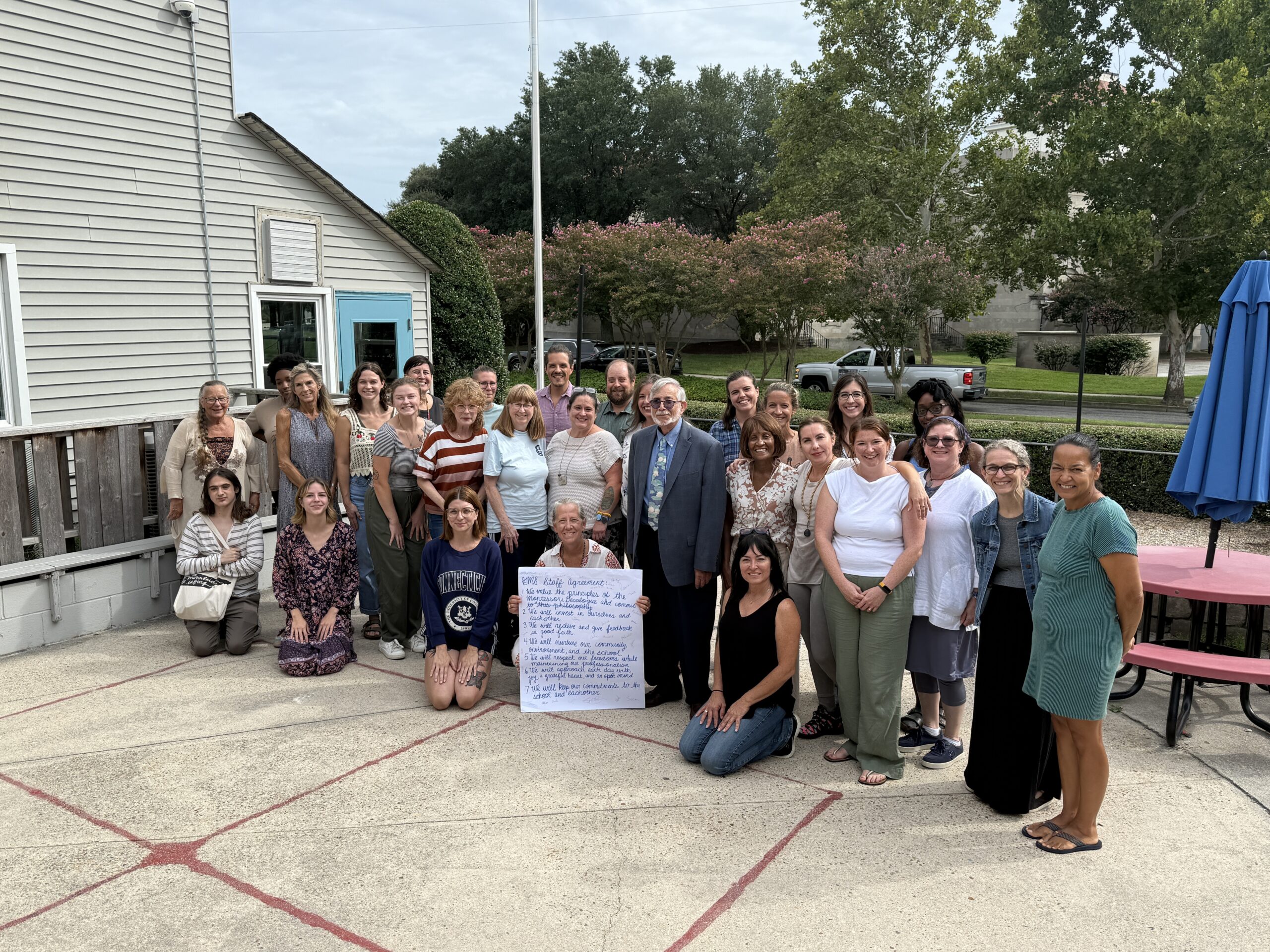
That comment, offered by one of the thirty staff members at Ghent Montessori School in Norfolk, Virginia, meant the world to me. Workshops can easily become another item on the back-to-school checklist—another day in a packed week of CPR training, classroom setup, and policy reviews. But when a day of professional development leaves people feeling reenergized, seen, and more connected to the values that brought them into Montessori education in the first place, it’s something worth sharing.

Why This Workshop Mattered

Ruland Gagné, the school’s Head of School, reached out to me earlier in the summer. Like many leaders, she felt a need to bring her team together—not just physically, but emotionally and philosophically. The school had experienced remarkable growth since COVID. Their programs were strong. The parent community was loyal. Yet under the surface, they were feeling some of the all-too-common challenges: communication issues among staff, negativity seeping into team dynamics, and moments where tone or language strayed from the ideals of Montessori. They wanted a reset. Not a lecture. A reset.

The result was a full-day, on-site workshop I led on behalf of the Montessori Foundation. It wasn’t about adding more rules or fixing people. It was about rediscovering what it means to be a Montessori school—not just in curriculum, but in culture.

The Structure of the Day

Earlier in the week, the Ghent team opened their work week with a quote from The Bear

“It’s the people they remember.”

It set the tone. Our materials and routines matter—but what stays with children and families is how we make them feel. That’s the heart of Montessori.

The Decalogue as a Mirror

We moved into a conversation around Montessori’s Decalogue—a beautifully simple yet powerful list of ten commitments for adults in Montessori environments. We explored each one through practical examples: How do we treat mistakes? How do we correct a child’s behavior without shame? What does it really mean to wait to be invited?

The Decalogue served as a mirror. It reminded us what Montessori called us to do—not just in theory, but in the way we show up every day.

Naming Our Beliefs, Values, and Behaviors

Next, we engaged in small-group work using a framework I adapted from another organization’s social norms document. We explored three questions:

  • What do we believe about children, learning, and each other?

  • What do we value as a school community?

  • What behaviors show those values in action?

Each group shared their thoughts, and the insights were powerful. It gave the team a language to name the culture they wanted to cultivate, and to gently acknowledge where they may have drifted off course.

The School Covenant

In the afternoon, we co-created a Ghent Montessori School Covenant—a short, clear statement of shared professional commitments. Things like:

  • We speak about children, families, and one another with respect.

  • We offer guidance privately, not publicly.

  • We listen first, assume best intentions, and support each other’s growth.

This wasn’t a top-down document. It was built together. And when we concluded the day, every staff member had the opportunity to sign it.

Real Talk: Case Studies from the Field

We also worked through case studies drawn from real scenarios: What do we do when a colleague speaks negatively about students? How do we respond when someone shares a personal diagnosis that feels outside our role? These conversations were honest, respectful, and solution-focused.

Why You Might Want to Do This at Your School

You don’t need a major crisis or a new program to make this kind of day worthwhile. In fact, the best time to run a workshop like this is any time you’re ready to take a fresh look at who you are as a school and recommit to your core values.

Whether it’s before the school year begins, mid-year when fatigue creeps in, or after a leadership transition, this kind of reflective day can do more than “train staff”—it can reawaken your community.

You can run something like this yourself. We are happy to share the structure, handouts, and prompts. We would also be honored to work with your school directly. The Montessori Foundation offers tailored workshops like this one—whether on-site or virtual—designed to fit your unique team, challenges, and aspirations.

Final Thought

Montessori is more than a curriculum. It’s a commitment to who we are and how we treat one another. A single day, thoughtfully planned, can remind your team why they chose this path and help them walk it together—with grace, humility, and renewed joy.

If you’d like to bring a workshop like this to your school, reach out. There’s no bad time to hit pause, look inward, and start fresh.

What Makes Montessori lesson planning different?

What Makes Montessori lesson planning different?

Montessori Growth Suite

1907-2025 Welcome to the 119th Montessori School Year!


Montessori planning is not about racing through a checklist. It’s about understanding where each child is on their unique learning journey and preparing lessons that truly meet them where they are. Montessori Compass 2.0 gives you the tools to do this with precision and flexibility.

Responsive
In Montessori, planning begins with observation. What did you notice today? Is a child showing new interest in number work, or struggling to complete a Practical Life activity? With Montessori Compass, you can log these observations immediately, then plan lessons that respond to the child’s needs—rather than following a fixed schedule that may not fit.

Individualized
No two children progress at the same pace or in the same way. Montessori Compass allows you to create and track lesson plans tailored to each child’s development, interests, and readiness. You can assign lessons to individuals or small groups and see at a glance where each child is in their learning sequence.

Flexible
Even the best plans need room to breathe. Children may be absent, disinterested, or ready for something more challenging than expected. Montessori Compass lets you adjust on the fly—moving lessons forward, postponing them, or swapping them out without losing track of your original plan.

Reflective
Good planning doesn’t just look ahead; it also looks back. Montessori Compass makes it easy to review what has been presented, practiced, or mastered. This history helps you spot patterns, celebrate growth, and decide what’s next. You’re not just planning for tomorrow—you’re learning from yesterday.

With these four principles—Responsive, Individualized, Flexible, and Reflective—you can create a dynamic, child-centered lesson plan that grows and changes with your students, supported every step of the way by Montessori Compass 2.0.

Creating a Lesson Plan in Montessori Compass

In Montessori, lesson planning is both an art and a science. It blends your knowledge of the curriculum with your observations of each child’s unique progress and interests. Montessori Compass 2.0 makes this process intuitive, so you can spend less time wrestling with logistics and more time focusing on what matters—guiding your students.

Step 1: Choose the Curriculum Area
Begin by selecting the appropriate area—Practical Life, Sensorial, Language, Math, or Cultural. If your school has customized curriculum strands, you can navigate those as well. This keeps lessons organized and makes them easier to find later.

Step 2: Select a Child or Group
You can assign a lesson to an individual or to a small group. For efficiency, consider creating custom groupings in Compass, such as “Early Readers” or “Golden Beads Explorers.” These groupings make it faster to plan for multiple children who are working at a similar stage.

Step 3: Set the Lesson Title and Date
Add the name of the lesson and the date you plan to present it. If the lesson is part of a series or a sequence, Compass will help you keep track of what has already been presented and what’s coming next.

Step 4: Add Notes
Use the notes field to capture your objectives, focus points, or any special considerations. For example, “Emphasize place value” or “Encourage peer teaching if interest is high.” These notes will help you stay intentional and provide valuable context for future reflection.

Step 5: Tag Learning Goals or Sensitive Periods
By tagging each lesson with relevant learning goals—or noting if it’s connected to a sensitive period—you’ll be able to pull reports later that show progress in specific skill areas. This tagging system also helps ensure you’re meeting developmental needs across the whole curriculum.

Tip:
You can create groupings such as “Early Readers” or “Golden Beads Explorers” to simplify weekly planning. This is especially useful for multi-age classrooms where several children may be working on the same concept at different times.

When you plan lessons in Compass with this step-by-step approach, you create a clear roadmap for the week that is flexible enough to adapt when children surprise you—which they always will.

Why We Recommend Montessori Compass 2.0

Among other assets, Montessori Compass contains the most robust and carefully designed Montessori curriculum scope and sequence.

Over the years, we’ve seen some Montessori schools drift away from Montessori Compass — often trying other platforms or piecing together multiple tools. Many later tell us they miss the way Compass was explicitly designed for Montessori. Now is the perfect time to take another look.

Montessori Compass 2.0 is not just an update — it’s a complete rebuild from the ground up, informed by over a decade of feedback from Montessori schools worldwide.

Why Montessori Compass 2.0 Is a Game Changer

  • Faster, cleaner, and easier to use — redesigned interfaces for both web and mobile make lesson planning, observation, and parent communication far more intuitive.

  • Teacher and parent apps — purpose-built for each audience, keeping daily records and updates quick for staff and crystal-clear for families.

  • Deep Montessori scope and sequence — developed with the Montessori Foundation to ensure complete coverage of both Montessori materials and the developmental expectations of your country or region.

  • Smarter recordkeeping — track progress with clarity, see who needs follow-up lessons, and plan your week with fewer clicks.

  • Better parent communication — share photos, notes, and progress updates that help parents truly understand the learning happening in your classrooms.

Montessori Compass 2.0 makes it practical for teachers to plan, record, and report in real time — not at home in the evening or in a rush before conferences.

Enter the Montessori Growth Suite

For schools ready to connect classroom work with the rest of their operations, Montessori Compass 2.0 is now available as part of the Montessori Growth Suite — a partnership between Montessori Compass, AiMS, and the Montessori Foundation.

Growth Suite adds:

  • Admissions management — inquiries, tours, and applications in one streamlined system.

  • Digital contracts & online tuition — send, sign, and bill without paper or multiple logins.

  • AI-powered marketing — manage Google, Facebook, and Instagram ads plus all your social media from one place.

  • Multi-channel communication — newsletters, email, and text messaging, all integrated with your parent database.

Why We Recommend It

If you’ve been juggling separate tools for recordkeeping, admissions, billing, and marketing — or if you left Montessori Compass years ago — this is the moment to take another look. Montessori Compass 2.0 delivers the Montessori-specific classroom and parent communication experience you need. Growth Suite takes it further, bringing your entire school into one integrated system.

The Montessori Foundation is here to help your team not only master the technology, but also use it thoughtfully — so these tools strengthen your Montessori practice and help your school thrive.

https://www.montessoricompass.com/growth-suite/

Montessori Compass 2.0 + Growth Suite: A Smart SOLUTION for Montessori Schools

Montessori Compass 2.0 + Growth Suite: A Smart SOLUTION for Montessori Schools

Montessori Growth Suite

1907-2025 Welcome to the 119th Montessori School Year!


Over the years, we’ve seen some Montessori schools drift away from Montessori Compass — often trying other platforms or piecing together multiple tools. Many later tell us they miss the way Compass was explicitly designed for Montessori. Now is the perfect time to take another look.

Montessori Compass 2.0 is not just an update — it’s a complete rebuild from the ground up, informed by over a decade of feedback from Montessori schools worldwide.

Why Montessori Compass 2.0 Is a Game Changer

  • Faster, cleaner, and easier to use — redesigned interfaces for both web and mobile make lesson planning, observation, and parent communication far more intuitive.

  • Teacher and parent apps — purpose-built for each audience, keeping daily records and updates quick for staff and crystal-clear for families.

  • Deep Montessori scope and sequence — developed with the Montessori Foundation to ensure complete coverage of both Montessori materials and the developmental expectations of your country or region.

  • Smarter recordkeeping — track progress with clarity, see who needs follow-up lessons, and plan your week with fewer clicks.

  • Better parent communication — share photos, notes, and progress updates that help parents truly understand the learning happening in your classrooms.

Montessori Compass 2.0 makes it practical for teachers to plan, record, and report in real time — not at home in the evening or in a rush before conferences.

Enter the Montessori Growth Suite

For schools ready to connect classroom work with the rest of their operations, Montessori Compass 2.0 is now available as part of the Montessori Growth Suite — a partnership between Montessori Compass, AiMS, and the Montessori Foundation.

Growth Suite adds:

  • Admissions management — inquiries, tours, and applications in one streamlined system.

  • Digital contracts & online tuition — send, sign, and bill without paper or multiple logins.

  • AI-powered marketing — manage Google, Facebook, and Instagram ads plus all your social media from one place.

  • Multi-channel communication — newsletters, email, and text messaging, all integrated with your parent database.

Why We Recommend It

If you’ve been juggling separate tools for recordkeeping, admissions, billing, and marketing — or if you left Montessori Compass years ago — this is the moment to take another look. Montessori Compass 2.0 delivers the Montessori-specific classroom and parent communication experience you need. Growth Suite takes it further, bringing your entire school into one integrated system.

The Montessori Foundation is here to help your team not only master the technology, but also use it thoughtfully — so these tools strengthen your Montessori practice and help your school thrive.

https://www.montessoricompass.com/growth-suite/

 The Montessori Way – 50 Little Things That Mean a Lot to Kids

 The Montessori Way – 50 Little Things That Mean a Lot to Kids

50 little things

1907-2025 Welcome to the 119th Montessori School Year!


In Montessori education, every interaction is an opportunity to model respect, independence, and joy in learning. At home, it’s the little things—small, consistent gestures—that let your child know they are valued and loved.

Building Connection Through Everyday Gestures

Begin the day with a warm greeting – Make your first words and expressions calm and welcoming.

Make real eye contact – Get on their level and truly listen when they speak.

Leave a kind note – A short message in a lunchbox or by their work mat is a tangible reminder you care.

Acknowledge effort, not just results – Praise persistence and creative thinking.

Invite their opinion – Give them real choices and value their perspective.

Share an inside joke – Humor builds intimacy.

Tell stories from your own childhood – Connect through shared humanity.

Say “I love you” often – Make it a natural part of conversation.

Welcome their friends – Show respect for their social world.

Create small family rituals – Predictable traditions help children feel grounded.


Fostering Independence and Responsibility

Let them contribute to real work – Cooking, gardening, or folding laundry builds skills and pride.

Use their name with kindness – Your tone can invite cooperation.Sit quietly near them while they work – Show you value their concentration.

Encourage them to solve problems themselves – Offer guidance, not quick fixes.

Let them set up their own workspace – Ownership of space encourages order.

Give them age-appropriate tools – Child-sized brooms, pitchers, or rakes say, I trust you to help.

Teach them how to care for their belongings – Part of the Montessori respect for the environment.

Let them prepare their own snack – Builds confidence in daily life skills.

Encourage them to greet people politely – A grace and courtesy lesson in action.

Invite them to help plan a meal – Practical life meets family bonding.


Nurturing Emotional Security

Laugh together often – Joy builds resilience.

Tuck them in with care – A peaceful end to the day signals safety.

Keep your promises – Trust is built in small follow-throughs.

Learn about their passions – Follow the child into their interests.

Let them overhear you speak proudly of them – Authentic affirmation is powerful.

Offer hugs for no reason – Love without conditions.

Listen to their music or stories – Respect their tastes.

Ask about the best part of their day – Encourages reflection.

Say you’re proud—specifically – “I’m proud of how gently you treated the kitten.”

Remember details they’ve shared – Shows they matter to you.


Encouraging Curiosity and Wonder

Share moments of natural beauty – Rainbows, moonlight, birdsong.

Look things up together – Model how to find answers.

Invite them to teach you something – Reverses the roles and builds mastery.

Explore your neighborhood on foot – Observation is a Montessori core skill.

Visit new places together – Museums, libraries, gardens.

Include them in planning trips – Gives them a sense of agency.

Try new recipes side by side – Sensory learning at home.

Collect treasures from nature – Shells, leaves, pinecones for display.

Share your own wonder – “Look at those clouds! What do you see?”

Make time for open-ended play – Follow their lead in pretend or construction play.


Modeling Respect and Kindness

Apologize when you’re wrong – Teaches humility and repair.

Thank them sincerely – Gratitude works both ways.

Use polite language with them – Please and thank you aren’t just for adults.

Speak to them as you would to a respected adult – Montessori dignity at home.

Avoid interrupting their concentration – Respect their flow of work.

Ask permission before borrowing their things – Models respect for property.

Be patient when they’re learning – Mistakes are part of mastery.

Include them in family decisions that affect them – Builds ownership and trust.

Speak calmly even when you’re frustrated – Emotional regulation is learned through example.

Celebrate who they are today – Affirm their worth in this moment, not just their potential.


Starting Strong: How to Prepare Your Child (and Yourself) for the New Montessori School Year

Starting Strong: How to Prepare Your Child (and Yourself) for the New Montessori School Year

new school year

1907-2025 Welcome to the 119th Montessori School Year!

The end of summer brings its familiar rhythm: back-to-school shopping, earlier bedtimes, and the gentle hum of anticipation—or, for some families, a little nervousness. Whether your child is stepping into a Montessori classroom for the first time or returning for another year, transitions can bring big emotions for both children and parents.

The good news is that with a bit of preparation, you can help your child—and yourself—start the school year feeling calm, confident, and excited. Here are practical tips rooted in Montessori wisdom to ease the transition and set the stage for a joyful year ahead.

1. Reset Routines Early

Summer often brings looser schedules, later bedtimes, and spontaneous adventures. About two weeks before school begins, it helps to gradually reintroduce school-year routines:

  • Bedtime and Wake-Up: Shift sleep and wake times earlier in 15-minute increments until you’re back on track.
  • Morning Practice: Do a few trial runs of morning routines—getting dressed, brushing teeth, having breakfast—to help your child feel capable and confident.
  • Predictable Evenings: Calm, predictable bedtime routines help your child wind down and get the rest they need to handle the busy school days ahead.

2. Talk About What to Expect

Children feel more secure when they know what’s coming. Talk about the new school year with excitement and reassurance:

  • Describe what a typical school day might look like: morning work, time with friends, lunch, outdoor play, and storytime.
  • If your child is starting at a new school or moving up to a new classroom, describe the new environment or visit the school together if possible.
  • Share stories about when you started something new and how you handled those first-day feelings.

3. Encourage Independence

Montessori education emphasizes independence—and you can start nurturing that at home:

  • Let your child practice self-care tasks like dressing, putting on shoes, or packing their backpack.
  • Set up a small station at home where your child can keep school essentials (like their lunchbox or water bottle) within easy reach.
  • Invite your child to help prepare snacks or lunch, giving them ownership over part of their school day.

4. Manage Your Own Emotions

Children are attuned to their parents’ feelings. If you’re anxious about the transition, your child will sense it. Take time to reflect on your own worries or hopes for the year ahead. It’s perfectly natural to have mixed emotions—especially if your child is entering school for the first time.
Share your confidence in your child’s abilities, and model curiosity and positivity about the year to come.

5. Reconnect with the School Community

If your school hosts back-to-school events, meet-the-teacher days, or classroom orientations—attend if you can. Seeing familiar faces and spaces helps your child feel part of a larger community.

Even if your school doesn’t have formal events, you might:

  • Schedule a playdate with classmates
  • Review any welcome materials or classroom newsletters
  • Refresh your understanding of Montessori methods, so you can speak the same language your child will hear at school

6. Prepare Practical Needs in Advance

Take time to ensure your child has everything they need to start comfortably:

  • A weather-appropriate wardrobe that allows freedom of movement
  • A comfortable, easy-to-use backpack
  • A reusable water bottle
  • A simple lunchbox they can open independently, if applicable

Label belongings to avoid mix-ups and teach your child how to recognize their things.

7. Normalize First-Day Feelings

Even seasoned students can have jitters on the first day. Normalize those feelings by saying things like:

“It’s okay to feel a little nervous when we start something new. I feel that way sometimes too! Let’s think about what you’re excited to do this year.”

Remind your child that teachers are there to help and that feeling unsure at first is a normal part of learning.

8. Trust the Process

Finally, remember that Montessori education is a journey. The first few days and weeks are often a period of adjustment as children reorient to the classroom and reconnect with their community.

Be patient with your child—and with yourself. Trust that the gentle rhythms of the Montessori environment will help them settle in, find their footing, and flourish.

A Year of Growth Awaits

Starting strong doesn’t mean everything must be perfect from day one. It means creating a foundation of confidence, routines, and connection that supports your child’s growth—not just academically, but socially and emotionally too.

By preparing with care and intention, you’re giving your child the tools to step into the school year with excitement and assurance—and that’s a gift that lasts well beyond the first day.


Back to School Readiness Checklist

Prepare Your Child—and Yourself—for a Great Start to the Montessori Year

1. Reestablish Routines

☐ Adjust bedtime and wake-up times 1-2 weeks before school starts
☐ Practice morning and evening routines
☐ Reintroduce limits on screen time for calmer evenings

2. Prepare Practical Skills

☐ Practice getting dressed independently
☐ Practice opening lunch containers, snack bags, and water bottles
☐ Encourage self-care tasks like brushing teeth and hair

3. Organize for Independence

☐ Set up a child-friendly station for school essentials (backpack, shoes, lunchbox)
☐ Label personal items with your child’s name
☐ Organize a spot for your child to prepare or pack their lunch with your help

4. Emotional Preparation

☐ Talk positively about the upcoming school year and classroom community
☐ Share what the daily routine will look like
☐ Read books about starting school or returning after a break

5. Reconnect with the School

☐ Attend any back-to-school events or orientations
☐ Refresh your understanding of Montessori principles
☐ Review any materials or updates sent by the school

6. Home Environment Refresh

☐ Declutter play spaces to encourage focus and order
☐ Rotate toys and materials to keep interest fresh
☐ Create quiet spaces for reading or independent play

7. Mindset for Parents

☐ Reflect on your own feelings about the new school year
☐ Prepare to support your child with patience during transitions
☐ Plan to check in with your child’s guide if you have questions or concerns

Bonus Tip:
Create a “First Day of School” tradition—like a special breakfast or a family photo—to start the year with joy and celebration.