The Montessori Journey Begins

The Montessori Journey Begins

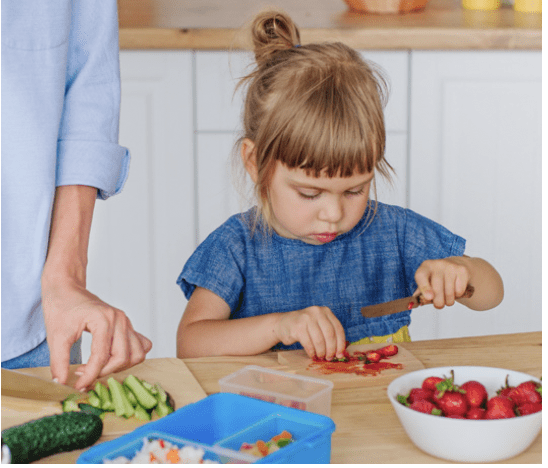
toddler cooking

By Amanda Riccetti

A Gentle Welcome to Independence, Discovery, and Avery’s First Day

You’ve enrolled your child in a Montessori school. Perhaps a trusted friend recommended it. Maybe you were a Montessori child yourself. Or perhaps the calm beauty of the classroom simply spoke to you during your visit, resonating on a level you couldn’t quite name.

Whatever path led you here, your child is about to begin a new chapter of growth—and you’ll be walking alongside them into something extraordinary: the Montessori Primary years, spanning ages three to six.

This isn’t preschool or kindergarten in the traditional sense. It’s what Montessori calls a Three-Year Journey—a formative period of development where your child learns by doing, observing, and discovering at their own pace, guided by an intentionally prepared and beautiful environment.

As this journey begins, it’s natural to feel a mix of wonder and uncertainty. Your child will be stepping into a space designed for them—a classroom that nurtures independence while offering structure, beauty, and purpose. And while the materials are thoughtfully arranged and the guides warmly prepared, your presence—the emotional grounding you offer at home—remains an essential part of the experience. Together, we can help your child feel safe, curious, and ready to begin.

Supporting Your Child’s Transition

Entering a Montessori classroom is like embarking on a beautiful adventure. Here’s how you can support this transition:

  • Speak Positively: Frame the start of school with enthusiasm and curiosity.
  • Visit if Possible: Help your child picture the space and meet familiar faces.
  • Respect the Process: Allow time for nesting—a valid stage where children observe, breathe, and acclimate before choosing work.
  • Trust the Journey: Know that even quiet observers are learning and preparing to engage.

Once your child walks through the door, they’ll step into an environment prepared just for them. The Montessori classroom isn’t just a room full of materials—it’s a living, breathing space designed to meet children where they are developmentally, emotionally, and socially. Understanding what your child will encounter inside helps you support their journey even more deeply. So what will they see when they arrive?

Inside the Montessori Classroom

Practical Life: Learning Through Living

Practical Life is the heart of the Montessori classroom. Activities like pouring, sponging, sweeping, and table-washing build both gross and fine motor skills while teaching grace, order, and courtesy.

These exercises fall into four core categories:

  • Care of Self
  • Care of the Environment
  • Grace and Courtesy
  • Control of Movement

Children experience the rhythm of each task—beginning, middle, and end—developing sequencing skills, independence, and real-world competence in a peaceful, purposeful way.

Sensorial: Refining the Senses, Awakening the Mind

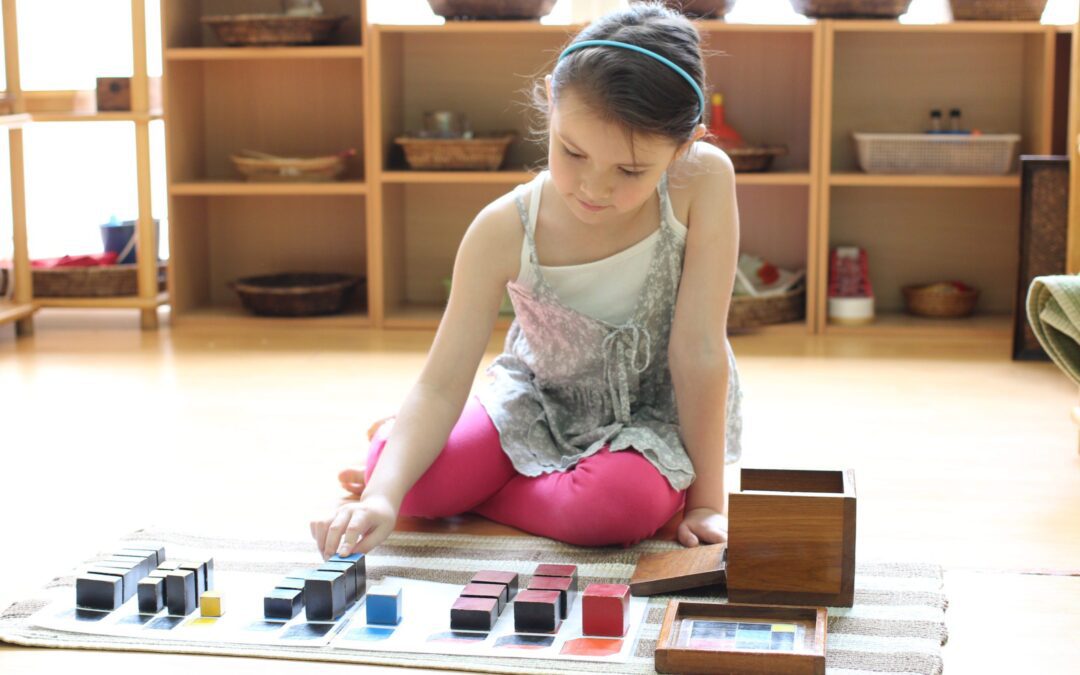
Sensorial materials are uniquely Montessori—crafted to engage the five senses and refine perception. Children classify objects by shape, color, sound, and texture, learning vocabulary such as rough/smooth, short/tall, and even geometric expressions like triangular prism and quatrefoil.

This work builds the cognitive architecture for literacy and math by nurturing observation, comparison, and joyful repetition.

Cultural: Exploring the Wonders of Our World

Dr. Montessori believed a cultured person understands the natural world and human expression. In this area, children explore:

  • Geography
  • Botany & Zoology
  • Science
  • Music & Art

These activities foster wonder, broaden perspective, and help children see themselves as part of a respectful, interconnected world.

Language & Math: The Power of Words and Numbers

Language begins with phonetic awareness—children learn how words are constructed from sounds, then joyfully decode and read at their own pace. Vocabulary flourishes through conversation and work, while writing emerges organically through the use of drawing with metal insets and storytelling.

Math is introduced through tactile materials—golden beads, number rods, and precise tools that turn abstract concepts into something concrete. Children discover that math is a language they already speak.

The Montessori Environment: A World Prepared for the Child

The classroom is designed to meet children’s developmental needs with beauty and clarity. Materials are arranged on low shelves for easy access. Each item teaches a lesson and is self-correcting, so children explore and learn independently.

Montessori classrooms are intentionally multi-age, typically ranging from 2½ to 6 years. This structure offers children authentic opportunities for peer learning and leadership. Older children gain confidence and reinforce their own learning through mentoring, while younger children learn by observing, imitating, and engaging with guidance.

Social development blossoms naturally. Respectful interactions and collaborative rituals help children practice empathy, inclusion, and real-world citizenship.

In this prepared environment, the classroom becomes a community—one where every child is invited to grow with confidence, joy, and purpose. As children settle into this prepared environment—filled with choice, beauty, and meaningful work—they begin to find their rhythm. But even in the most thoughtfully designed classrooms, the first days can bring big emotions. Separation, new routines, and unfamiliar faces can feel overwhelming at first. And for families, this transition is just as profound. That’s why emotional readiness, reassurance, and storytelling have such an essential place in the Montessori journey.

Readiness and Reassurance

As children settle into this prepared environment—filled with choice, beauty, and meaningful work—they begin to find their rhythm. However, even in the most thoughtfully designed classrooms, the first days can evoke strong emotions. Separation, new routines, and unfamiliar faces can feel overwhelming at first. And for families, this transition is just as profound. That’s why emotional readiness, reassurance, and storytelling have such an essential place in the Montessori journey.

Remember that readiness doesn’t always arrive with bounding energy and bold declarations. Sometimes it comes quietly—through watchfulness, observation, and inner preparation. Montessori honors all paths to readiness. This transition isn’t a single leap—it’s a gentle unfolding.

Often, parents carry the deeper emotional weight, balancing excitement with uncertainty. Your calm, trusting presence becomes your child’s anchor. Through daily rituals, shared conversations, and gentle transitions, you send a clear message: school is a safe, beautiful place, and you believe in them.

 A Quick Goodbye, A Confident Start

The way each morning begins sets the tone for your child’s day. We recommend a short and consistent goodbye to support a smooth transition.

When you arrive, a teacher will warmly greet your child and help them with their cubby. This is the moment to say goodbye, gently, and with confidence. Children thrive on routine, and a quick departure sends a powerful message: “School is a safe place. You’ve got this.”

Lingering too long or hesitating can unintentionally give your child false hope that you’ll stay, which may lead to confusion or emotional stress. Saying goodbye promptly helps your child shift into classroom life with clarity, autonomy, and ease.

You’re not abandoning them—you’re affirming their strength. This daily ritual becomes a trusted rhythm, empowering both child and parent to embrace the day ahead with courage and grace.

You’ll feel confident because your child is well prepared, grounded by routine, greeted with warmth, and guided with consistency. And once this emotional foundation is set, another beautiful way to reinforce your child’s readiness is through storytelling.

Storytelling: A Gentle Bridge to Confidence

In the Montessori environment, stories aren’t just entertaining—they’re purposeful. Whether it’s a tale about resilience, kindness, or curiosity, storytelling offers children a gentle bridge from emotional connection to cognitive growth. Through narrative, they build language, imagination, and the inner tools needed to approach the day with clarity and self-assurance.

Across cultures and generations, stories have helped children understand and embrace change. They offer continuity, language for emotions, and images to visualize what’s ahead. Picture books especially give children a quiet path to prepare themselves, rehearsing new experiences in ways that feel safe and imaginative.

Throughout my decades as a Montessori guide, I sought a story that would gently introduce children to this unique approach to education—child-led, emotionally rich, and inclusive of all family structures. I found glimpses of similar themes in other books, such as Llama Llama Back to School, but nothing fully aligned with the Montessori values I hold dear.

So, I wrote one.

Avery’s First Montessori Day:

Avery’s First Montessori Day is told entirely through Avery’s voice, giving children language to name feelings, visualize their classroom, and see their experience affirmed. Each page features gentle narration and a thought bubble from Avery, reflecting the inner moments of hesitation, joy, and curiosity that Montessori children often reveal.

Notably, the story uses the word “parent” sparingly and never describes adults in detail, allowing families of all kinds to feel welcome. Whether your child has two moms, two dads, one parent, grandparents, is in foster care, or has a chosen family, the book makes space for their reality without needing to explain it.

Avery doesn’t tiptoe into his Montessori world—he dives in. With wonder as his guide and quiet courage blooming in small ways, he embraces his first day as an adventure that belongs to him alone.

This updated edition builds on the 2013 original, now more inclusive and more deeply aligned with Montessori principles. I’ve seen its impact firsthand: families say their children settle more easily, cry less, and enjoy their experience with more confidence and less trauma.

You can purchase a copy from Amazon at

https://www.amazon.com/Averys-First-Montessori-Amanda-Riccetti/dp/B0FHWV6DML

If you choose to share Avery’s First Montessori Day with your child, I hope it becomes more than a book—I hope it becomes a companion. A bridge between home and school. A hug that says: “You belong here. You’re ready.”

About the Author

Amanda Riccetti has welcomed children into Montessori classrooms with joy and purpose since 1980. As Director and Head Teacher at Big City Montessori School, she leads with warmth, wisdom, and a deep respect for every child’s unfolding journey.

Amanda is the author of Reading with Miss Amanda, a hands-on reading series rooted in phonics, storytelling, and child-centered learning. Her songs, storybooks, and curriculum materials reflect decades of observation, empathy, and innovation.

Now a proud mother and grandmother, Amanda continues shaping education as Big City Montessori becomes a second-generation family-run school. She writes not to teach at children, but to walk with them—ensuring every story, song, and lesson is a tool for connection, not just content.

Her work is a legacy of care, inclusion, and quiet brilliance. Avery’s First Montessori Day is one more reflection of that vision: a child’s voice, honored from the very first moment.

Below is the article description

The Montessori Journey Starts. Montessori educator Amanda Riccetti shares a gentle roadmap for families entering the Primary years, highlighting emotional readiness, self-led learning, and the story behind her new book, Avery’s First Montessori Day.

Screens and Stillness_ A Call to Screentime Stewardship

Screens and Stillness_ A Call to Screentime Stewardship

Teacher training


By Jennifer Iamele Savage  

“Breaking up with your phone means giving yourself the space, freedom, and tools necessary to create a new, long-term relationship with it, one that keeps what you love about your phone and gets rid of what you don’t.” Catherine Price, How to Break Up with Your Phone, Revised Edition: The 30-Day Digital Detox Plan

Over the past month I have been exploring the concept of screentime stewardship as a social change initiative, and the journey has been eye-opening. Like most of us, I have had a complicated relationship with screens throughout the years. As a member of Generation Y, I remember a time without the internet, technology, screens, and the like, and yet at this moment, I cannot imagine them not being a part of our daily lives. I have ridden all the waves of technology including getting excited about the potential and possibility of these advancements to getting disgusted by the statistics of the time being wasted and those who profit from our distractions.  I have quit social media for extended periods of time and done digital detoxes. My mindset was always “disconnect to reconnect”.  In recent years, however, I feel like completely disconnecting is no longer an option–and with the growing popularity of AI and other technological advances, that option will only become less available, in my opinion. Therefore, I am turning my attention to a different way of interacting with technology which I refer to as Screen Time Stewardship. 

What is Screen Time Stewardship? 

“Screen time stewardship” is a thoughtful, values-based approach to managing digital device use—especially in homes, schools, and communities. Rather than simply limiting screen time, stewardship emphasizes intentionality, balance, and responsibility in how we engage with screens.

It’s about asking:

  • What purpose does this screen time serve?
  • Is it enriching, connecting, or numbing?
  • How does it align with our values, goals, and well-being?
  • How does cultivating this practice apply to other technologies as well? 

In practice, screen time stewardship might look like:

  • Co-creating family or classroom media plans that prioritize quality over quantity.
  • Modeling mindful tech use—pausing to reflect before picking up a device.
  • Encouraging digital citizenship and critical thinking about online content.
  • Making space for offline experiences that nurture creativity, movement, and connection.

How do I Build my own Capacity for Screen time Stewardship? 

As part of this exploration, I have been running a screen time stewardship pilot program and have heard feedback from participants such as “it [technology use] feels like a familiar pattern with clear signals: craving, dopamine hit, let down, renewed craving” and “I would like to model responsible phone behavior and use my phone as a tool not as a mindless addiction”.  Participants reflect on their screen time use and set goals regarding what they hope to get out of the study. Based on participant feedback and personal reflection, I have identified a pathway with practical steps for cultivating digital stewardship. 

Awareness 

Audit your current screen time use. Reflect and notice when you use your devices and what needs you are trying to fill. Consider your goals. Become conscious of the statistics and their implications for yourself and those you care about. Consider the things that you do not have time to do that you want to spend more time doing. 

Staggering Statistics:

U.S. adults spend an average of 7 hours and 3 minutes per day on internet-connected devices.  (Backlinko, 2025)

47.5% of children aged 2–5 exceed 2 hours of recreational screen time on weekdays; this jumps to 65.5%for ages 6–11. (CDC, 2020)

50.4% of teens aged 12–17 report 4+ hours of daily screen time, excluding schoolwork. (NHIS–Teen, 2024)

Action

 After you audit the time that you spend online, consider how you could reduce the wasted time and replace that time with things that you want to prioritize.In reducing your time, try different actions (adapted from Catherine Price’s 30 Day Break Up Plan) that could help you break your addiction and make those mindful changes. 

Accountability

Find an accountability tool or person to support you in your goals. Maybe it’s setting screen time limits. Maybe it’s joining an accountability group or finding an accountability partner to check in with regarding your screen time usage. 

Engage Family

Part of Screen Time Stewardship involves acting as a role model for your families and/or future generations. Try building your own family commitments based off of Andy Crouch’s work in Tech-Wise Family. Build a family contract. Play Family Wellness Bingo. 

Application to Other Technologies

Stewardship doesn’t stop at screens: it extends to emerging technologies like AI, which are rapidly changing our lives before our eyes.  At this moment I am inviting people to consider how they want to interact with AI. I recently read an article that said “You’re not going to lose your job to an A.I., but you’re going to lose your job to someone who uses A.I.” Jensen Huang, CEO of Nvidia and that truly encapsulated the mindset that I believe we need to adopt.  AI is here to stay so we need to apply some of the same principles that we are applying to other technologies and screens to AI. We must find a way to stay in integrity with our intellectual capital while utilizing this technology and maintaining an awareness of the environmental implications–which are all parts of stewardship. Stewardship also includes understanding the unseen costs of technology use, specifically its environmental footprint.

A single ChatGPT request uses about 10 times more electricity than a standard Google search.

Data centers powering AI models consumed 4.4% of all U.S. electricity in 2023, and that figure is projected to rise to 6.7–12% by 2028.

Some AI prompts can generate up to 50 times more CO₂ emissions than others, depending on complexity and model size. (Shan, 2025). 

Consider Power Dynamics Behind the Screen

Part of this is in the awareness category and yet I believe that this deserves its own space for big picture, structural consideration. There are cultural currents shaping our attention and part of being a good steward is taking the intentional time that is necessary to understand if being complicit in these systems is serving us and our society. 

For example, Bo Burnham, an American comedian, musician, filmmaker, and former YouTube sensation, has been outspoken about the psychological toll of social media, describing it as a form of “attention colonization.” In interviews and panels, he’s warned that tech companies are no longer just selling products—they’re “coming for every second of your life,” monetizing human attention and shaping behavior through algorithmic design.  

More Perfect Union,an Emmy-winning nonprofit media organization focused on building power for the working class, blends investigative journalism with advocacy, spotlighting corporate abuses and amplifying the voices of everyday Americans. While on a recent road trip, I saw some of their billboards, got interested, and did some research. Recently, the group launched a billboard campaign targeting Big Tech, calling out companies like Meta and TikTok for exploiting user attention and contributing to mental health crises. These billboards are part of a broader push to hold tech giants accountable for their role in digital overconsumption, especially among youth. 

What Other Resources are Available to Support this Social Change? 

There are resources and movements like The Anxious Generation by Jonathan Haidt, the Screenagers documentary series, and campaigns like Wait Til 8th that advocate for limiting screen use for children and teenagers. In Tech Wise Parenting by Andy and Amy Crouch, the authors offer 10 tech-wise commitments and Catherine Price in How to Break Up with Your Phone offers a 30 day break up plan. All of these resources can be invaluable in creating your own screen time stewardship plan. However, the key to creating this successful balance and personalized pathway depends on the individual and is ultimately a personalized journey. In my work I have created a visual companion to assist myself and others who are on this quest to a more intentional relationship with current and emerging technologies that can be found below.

Conclusion

Regardless of the tools that you use to get there, Screen Time Stewardship is a social change effort that I believe should be on our minds and hearts before it is too late. There is no right way to do this and vilifying technology is not the goal–cultivating a responsible and intentional relationship and finding the balance and harmony that exists at the center of this movement is instead what I believe will sustain us in the future. Screens are not going away and if anything, there will be increasing opportunities to engage with them sooner than we may even realize, so the question is not if we want to engage with digital platforms but instead how–and I believe that if we do not set these parameters others who do not have our best interests at heart will. 

References

Backlinko Team. (2025, January 30). Revealing average screen time statistics for 2025. https://backlinko.com/screen-time-statistics

Huang, J. (2025, May 28). You’re not going to lose your job to an A.I., but you’re going to lose your job to someone who uses A.I. CNBC. https://www.cnbc.com/2025/05/28/nvidia-ceo-jensen-huang-youll-lose-your-job-to-somebody-who-uses-ai.html

Mic. (2022, November 10). Bo Burnham warned us about social media, now everyone is listening. https://www.mic.com/life/bo-burnham-social-media-twitter-elon-musk

Shah, S. (2025, June 18). The climate impact of different AI prompts. Time. https://time.com/7295844/climate-emissions-impact-ai-prompts/

Yahoo News. (2025, July 15). Big Tech billionaire backlash protest puts 50 billboards in Augusta and beyond. https://www.yahoo.com/news/big-tech-billionaire-backlash-protest-154155511.html

Zablotsky, B., Arockiaraj, B., Haile, G., & Ng, A. E. (2024, October). Daily screen time among teenagers: United States, July 2021–December 2023 (NCHS Data Brief No. 513). National Center for Health Statistics, Centers for Disease Control and Prevention. https://www.cdc.gov/nchs/products/databriefs/db513.htm

Biography

Jen Iamele Savage is a writer, educator, and empowerment coach whose work bridges the worlds of teaching, motherhood, and personal transformation. Her path has been shaped by a deep commitment to authentic living and a calling to help others—particularly women and mothers—reclaim their voice, worth, and purpose.

Jen began her professional journey as a high school English teacher, has worked in a variety of educational capacities, and is currently pursuing a doctorate in Montessori studies, deepening her commitment to whole-child, whole-person education. Her classroom has always been more than a place of academic learning; it’s where she nurtures reflection, voice, and connection. Drawing from her Montessori foundation and trauma-informed teaching background, she approaches education with compassion and curiosity, encouraging students to ask big questions about identity, purpose, and the world around them.

Jen’s writing, featured on platforms like Her View From Home. Motherly, and Charleston Moms, explores motherhood with both tenderness and fierce honesty. In her books—The Language of Mom Rage: From Injustice to Transformation and The Language of Transformation—she unpacks the emotional undercurrents of modern womanhood, offering readers language and frameworks to make sense of their inner experiences.

Whether she’s speaking to fellow educators about supporting the whole child or guiding a group of mothers through personal transformation, Jen’s work is rooted in a single truth: our hardest moments can become our greatest invitations. Her story is one of surrender, reclamation, and the radical idea that healing can start right where we are—in the classroom, in the kitchen, in the middle of a tantrum or a heartbreak.

Now living in Charleston, South Carolina, Jen is raising two children, continuing to teach, write, and lead with integrity and intention. Through every role she inhabits, she models what it means to be a mindful, purposeful woman in a world that often demands we disconnect from our inner voice.

“Breaking up with your phone means giving yourself the space, freedom, and tools necessary to create a new, long-term relationship with it, one that keeps what you love about your phone and gets rid of what you don’t.” Catherine Price, How to Break Up with Your Phone, Revised Edition: The 30-Day Digital Detox Plan

Over the past month I have been exploring the concept of screentime stewardship as a social change initiative, and the journey has been eye-opening. Like most of us, I have had a complicated relationship with screens throughout the years. As a member of Generation Y, I remember a time without the internet, technology, screens, and the like, and yet at this moment, I cannot imagine them not being a part of our daily lives. I have ridden all the waves of technology including getting excited about the potential and possibility of these advancements to getting disgusted by the statistics of the time being wasted and those who profit from our distractions.  I have quit social media for extended periods of time and done digital detoxes. My mindset was always “disconnect to reconnect”.  In recent years, however, I feel like completely disconnecting is no longer an option–and with the growing popularity of AI and other technological advances, that option will only become less available, in my opinion. Therefore, I am turning my attention to a different way of interacting with technology which I refer to as Screen Time Stewardship. 

What is Screen Time Stewardship? 

“Screen time stewardship” is a thoughtful, values-based approach to managing digital device use—especially in homes, schools, and communities. Rather than simply limiting screen time, stewardship emphasizes intentionality, balance, and responsibility in how we engage with screens.

It’s about asking:

  • What purpose does this screen time serve?
  • Is it enriching, connecting, or numbing?
  • How does it align with our values, goals, and well-being?
  • How does cultivating this practice apply to other technologies as well? 

In practice, screen time stewardship might look like:

  • Co-creating family or classroom media plans that prioritize quality over quantity.
  • Modeling mindful tech use—pausing to reflect before picking up a device.
  • Encouraging digital citizenship and critical thinking about online content.
  • Making space for offline experiences that nurture creativity, movement, and connection.

How do I Build my own Capacity for Screen time Stewardship? 

As part of this exploration, I have been running a screen time stewardship pilot program and have heard feedback from participants such as “it [technology use] feels like a familiar pattern with clear signals: craving, dopamine hit, let down, renewed craving” and “I would like to model responsible phone behavior and use my phone as a tool not as a mindless addiction”.  Participants reflect on their screen time use and set goals regarding what they hope to get out of the study. Based on participant feedback and personal reflection, I have identified a pathway with practical steps for cultivating digital stewardship. 

Awareness 

Audit your current screen time use. Reflect and notice when you use your devices and what needs you are trying to fill. Consider your goals. Become conscious of the statistics and their implications for yourself and those you care about. Consider the things that you do not have time to do that you want to spend more time doing. 

Staggering Statistics:

U.S. adults spend an average of 7 hours and 3 minutes per day on internet-connected devices.  (Backlinko, 2025)

47.5% of children aged 2–5 exceed 2 hours of recreational screen time on weekdays; this jumps to 65.5%for ages 6–11. (CDC, 2020)

50.4% of teens aged 12–17 report 4+ hours of daily screen time, excluding schoolwork. (NHIS–Teen, 2024)

Action

 After you audit the time that you spend online, consider how you could reduce the wasted time and replace that time with things that you want to prioritize.In reducing your time, try different actions (adapted from Catherine Price’s 30 Day Break Up Plan) that could help you break your addiction and make those mindful changes. 

Accountability

Find an accountability tool or person to support you in your goals. Maybe it’s setting screen time limits. Maybe it’s joining an accountability group or finding an accountability partner to check in with regarding your screen time usage. 

Engage Family

Part of Screen Time Stewardship involves acting as a role model for your families and/or future generations. Try building your own family commitments based off of Andy Crouch’s work in Tech-Wise Family. Build a family contract. Play Family Wellness Bingo. 

Application to Other Technologies

Stewardship doesn’t stop at screens: it extends to emerging technologies like AI, which are rapidly changing our lives before our eyes.  At this moment I am inviting people to consider how they want to interact with AI. I recently read an article that said “You’re not going to lose your job to an A.I., but you’re going to lose your job to someone who uses A.I.” Jensen Huang, CEO of Nvidia and that truly encapsulated the mindset that I believe we need to adopt.  AI is here to stay so we need to apply some of the same principles that we are applying to other technologies and screens to AI. We must find a way to stay in integrity with our intellectual capital while utilizing this technology and maintaining an awareness of the environmental implications–which are all parts of stewardship. Stewardship also includes understanding the unseen costs of technology use, specifically its environmental footprint.

A single ChatGPT request uses about 10 times more electricity than a standard Google search.

Data centers powering AI models consumed 4.4% of all U.S. electricity in 2023, and that figure is projected to rise to 6.7–12% by 2028.

Some AI prompts can generate up to 50 times more CO₂ emissions than others, depending on complexity and model size. (Shan, 2025). 

Consider Power Dynamics Behind the Screen

Part of this is in the awareness category and yet I believe that this deserves its own space for big picture, structural consideration. There are cultural currents shaping our attention and part of being a good steward is taking the intentional time that is necessary to understand if being complicit in these systems is serving us and our society. 

For example, Bo Burnham, an American comedian, musician, filmmaker, and former YouTube sensation, has been outspoken about the psychological toll of social media, describing it as a form of “attention colonization.” In interviews and panels, he’s warned that tech companies are no longer just selling products—they’re “coming for every second of your life,” monetizing human attention and shaping behavior through algorithmic design.  

More Perfect Union,an Emmy-winning nonprofit media organization focused on building power for the working class, blends investigative journalism with advocacy, spotlighting corporate abuses and amplifying the voices of everyday Americans. While on a recent road trip, I saw some of their billboards, got interested, and did some research. Recently, the group launched a billboard campaign targeting Big Tech, calling out companies like Meta and TikTok for exploiting user attention and contributing to mental health crises. These billboards are part of a broader push to hold tech giants accountable for their role in digital overconsumption, especially among youth. 

What Other Resources are Available to Support this Social Change? 

There are resources and movements like The Anxious Generation by Jonathan Haidt, the Screenagers documentary series, and campaigns like Wait Til 8th that advocate for limiting screen use for children and teenagers. In Tech Wise Parenting by Andy and Amy Crouch, the authors offer 10 tech-wise commitments and Catherine Price in How to Break Up with Your Phone offers a 30 day break up plan. All of these resources can be invaluable in creating your own screen time stewardship plan. However, the key to creating this successful balance and personalized pathway depends on the individual and is ultimately a personalized journey. In my work I have created a visual companion to assist myself and others who are on this quest to a more intentional relationship with current and emerging technologies that can be found below.

Conclusion

Regardless of the tools that you use to get there, Screen Time Stewardship is a social change effort that I believe should be on our minds and hearts before it is too late. There is no right way to do this and vilifying technology is not the goal–cultivating a responsible and intentional relationship and finding the balance and harmony that exists at the center of this movement is instead what I believe will sustain us in the future. Screens are not going away and if anything, there will be increasing opportunities to engage with them sooner than we may even realize, so the question is not if we want to engage with digital platforms but instead how–and I believe that if we do not set these parameters others who do not have our best interests at heart will. 

References

Backlinko Team. (2025, January 30). Revealing average screen time statistics for 2025. https://backlinko.com/screen-time-statistics

Huang, J. (2025, May 28). You’re not going to lose your job to an A.I., but you’re going to lose your job to someone who uses A.I. CNBC. https://www.cnbc.com/2025/05/28/nvidia-ceo-jensen-huang-youll-lose-your-job-to-somebody-who-uses-ai.html

Mic. (2022, November 10). Bo Burnham warned us about social media, now everyone is listening. https://www.mic.com/life/bo-burnham-social-media-twitter-elon-musk

Shah, S. (2025, June 18). The climate impact of different AI prompts. Time. https://time.com/7295844/climate-emissions-impact-ai-prompts/

Yahoo News. (2025, July 15). Big Tech billionaire backlash protest puts 50 billboards in Augusta and beyond. https://www.yahoo.com/news/big-tech-billionaire-backlash-protest-154155511.html

Zablotsky, B., Arockiaraj, B., Haile, G., & Ng, A. E. (2024, October). Daily screen time among teenagers: United States, July 2021–December 2023 (NCHS Data Brief No. 513). National Center for Health Statistics, Centers for Disease Control and Prevention. https://www.cdc.gov/nchs/products/databriefs/db513.htm

Biography

Jen Iamele Savage is a writer, educator, and empowerment coach whose work bridges the worlds of teaching, motherhood, and personal transformation. Her path has been shaped by a deep commitment to authentic living and a calling to help others—particularly women and mothers—reclaim their voice, worth, and purpose.

Jen began her professional journey as a high school English teacher, has worked in a variety of educational capacities, and is currently pursuing a doctorate in Montessori studies, deepening her commitment to whole-child, whole-person education. Her classroom has always been more than a place of academic learning; it’s where she nurtures reflection, voice, and connection. Drawing from her Montessori foundation and trauma-informed teaching background, she approaches education with compassion and curiosity, encouraging students to ask big questions about identity, purpose, and the world around them.

Jen’s writing, featured on platforms like Her View From Home. Motherly, and Charleston Moms, explores motherhood with both tenderness and fierce honesty. In her books—The Language of Mom Rage: From Injustice to Transformation and The Language of Transformation—she unpacks the emotional undercurrents of modern womanhood, offering readers language and frameworks to make sense of their inner experiences.

Whether she’s speaking to fellow educators about supporting the whole child or guiding a group of mothers through personal transformation, Jen’s work is rooted in a single truth: our hardest moments can become our greatest invitations. Her story is one of surrender, reclamation, and the radical idea that healing can start right where we are—in the classroom, in the kitchen, in the middle of a tantrum or a heartbreak.

Now living in Charleston, South Carolina, Jen is raising two children, continuing to teach, write, and lead with integrity and intention. Through every role she inhabits, she models what it means to be a mindful, purposeful woman in a world that often demands we disconnect from our inner voice.

Taking Time to Recommit: How YOUR School Can Reconnect with YOUR Heart and Culture

Taking Time to Recommit: How YOUR School Can Reconnect with YOUR Heart and Culture

Teacher training

“I usually dread workshops… but this was engaging and fun. I got so much out of it.”

That comment, offered by one of the thirty staff members at Ghent Montessori School in Norfolk, Virginia, meant the world to me. Workshops can easily become another item on the back-to-school checklist—another day in a packed week of CPR training, classroom setup, and policy reviews. But when a day of professional development leaves people feeling reenergized, seen, and more connected to the values that brought them into Montessori education in the first place, it’s something worth sharing.

Why This Workshop Mattered

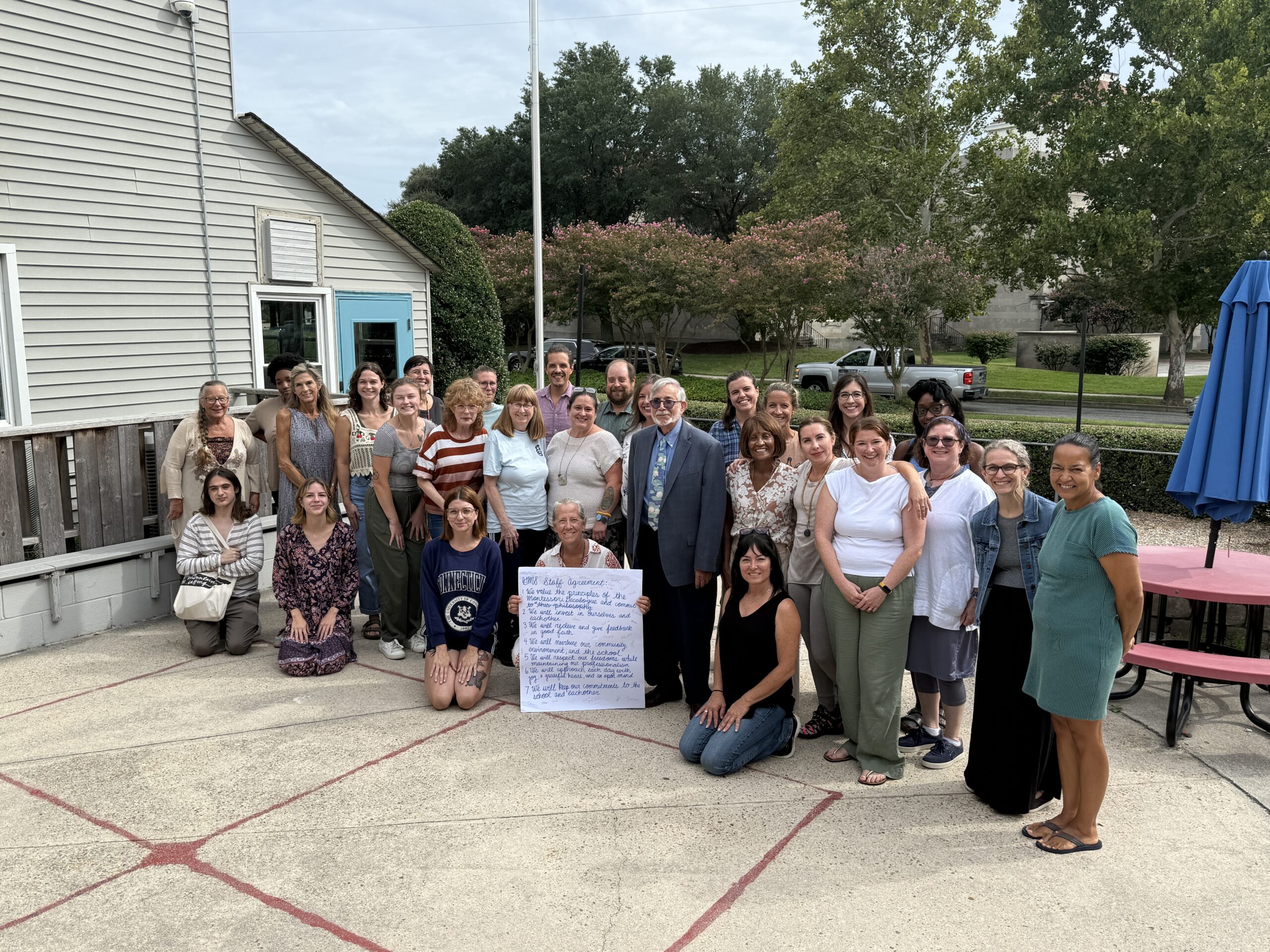
Ruland Gagné, the school’s Head of School, reached out to me earlier in the summer. Like many leaders, she felt a need to bring her team together—not just physically, but emotionally and philosophically. The school had experienced remarkable growth since COVID. Their programs were strong. The parent community was loyal. Yet under the surface, they were feeling some of the all-too-common challenges: communication issues among staff, negativity seeping into team dynamics, and moments where tone or language strayed from the ideals of Montessori. They wanted a reset. Not a lecture. A reset.

The result was a full-day, on-site workshop I led on behalf of the Montessori Foundation. It wasn’t about adding more rules or fixing people. It was about rediscovering what it means to be a Montessori school—not just in curriculum, but in culture.

The Structure of the Day

Earlier in the week, the Ghent team opened their work week with a quote from The Bear

“It’s the people they remember.”

It set the tone. Our materials and routines matter—but what stays with children and families is how we make them feel. That’s the heart of Montessori.

The Decalogue as a Mirror

We moved into a conversation around Montessori’s Decalogue—a beautifully simple yet powerful list of ten commitments for adults in Montessori environments. We explored each one through practical examples: How do we treat mistakes? How do we correct a child’s behavior without shame? What does it really mean to wait to be invited?

The Decalogue served as a mirror. It reminded us what Montessori called us to do—not just in theory, but in the way we show up every day.

Naming Our Beliefs, Values, and Behaviors

Next, we engaged in small-group work using a framework I adapted from another organization’s social norms document. We explored three questions:

  • What do we believe about children, learning, and each other?

  • What do we value as a school community?

  • What behaviors show those values in action?

Each group shared their thoughts, and the insights were powerful. It gave the team a language to name the culture they wanted to cultivate, and to gently acknowledge where they may have drifted off course.

The School Covenant

In the afternoon, we co-created a Ghent Montessori School Covenant—a short, clear statement of shared professional commitments. Things like:

  • We speak about children, families, and one another with respect.

  • We offer guidance privately, not publicly.

  • We listen first, assume best intentions, and support each other’s growth.

This wasn’t a top-down document. It was built together. And when we concluded the day, every staff member had the opportunity to sign it.

Real Talk: Case Studies from the Field

We also worked through case studies drawn from real scenarios: What do we do when a colleague speaks negatively about students? How do we respond when someone shares a personal diagnosis that feels outside our role? These conversations were honest, respectful, and solution-focused.

Why You Might Want to Do This at Your School

You don’t need a major crisis or a new program to make this kind of day worthwhile. In fact, the best time to run a workshop like this is any time you’re ready to take a fresh look at who you are as a school and recommit to your core values.

Whether it’s before the school year begins, mid-year when fatigue creeps in, or after a leadership transition, this kind of reflective day can do more than “train staff”—it can reawaken your community.

You can run something like this yourself. We are happy to share the structure, handouts, and prompts. We would also be honored to work with your school directly. The Montessori Foundation offers tailored workshops like this one—whether on-site or virtual—designed to fit your unique team, challenges, and aspirations.

Final Thought

Montessori is more than a curriculum. It’s a commitment to who we are and how we treat one another. A single day, thoughtfully planned, can remind your team why they chose this path and help them walk it together—with grace, humility, and renewed joy.

If you’d like to bring a workshop like this to your school, reach out. There’s no bad time to hit pause, look inward, and start fresh.

What Makes Montessori lesson planning different?

What Makes Montessori lesson planning different?

Montessori Growth Suite

1907-2025 Welcome to the 119th Montessori School Year!


Montessori planning is not about racing through a checklist. It’s about understanding where each child is on their unique learning journey and preparing lessons that truly meet them where they are. Montessori Compass 2.0 gives you the tools to do this with precision and flexibility.

Responsive
In Montessori, planning begins with observation. What did you notice today? Is a child showing new interest in number work, or struggling to complete a Practical Life activity? With Montessori Compass, you can log these observations immediately, then plan lessons that respond to the child’s needs—rather than following a fixed schedule that may not fit.

Individualized
No two children progress at the same pace or in the same way. Montessori Compass allows you to create and track lesson plans tailored to each child’s development, interests, and readiness. You can assign lessons to individuals or small groups and see at a glance where each child is in their learning sequence.

Flexible
Even the best plans need room to breathe. Children may be absent, disinterested, or ready for something more challenging than expected. Montessori Compass lets you adjust on the fly—moving lessons forward, postponing them, or swapping them out without losing track of your original plan.

Reflective
Good planning doesn’t just look ahead; it also looks back. Montessori Compass makes it easy to review what has been presented, practiced, or mastered. This history helps you spot patterns, celebrate growth, and decide what’s next. You’re not just planning for tomorrow—you’re learning from yesterday.

With these four principles—Responsive, Individualized, Flexible, and Reflective—you can create a dynamic, child-centered lesson plan that grows and changes with your students, supported every step of the way by Montessori Compass 2.0.

Creating a Lesson Plan in Montessori Compass

In Montessori, lesson planning is both an art and a science. It blends your knowledge of the curriculum with your observations of each child’s unique progress and interests. Montessori Compass 2.0 makes this process intuitive, so you can spend less time wrestling with logistics and more time focusing on what matters—guiding your students.

Step 1: Choose the Curriculum Area
Begin by selecting the appropriate area—Practical Life, Sensorial, Language, Math, or Cultural. If your school has customized curriculum strands, you can navigate those as well. This keeps lessons organized and makes them easier to find later.

Step 2: Select a Child or Group
You can assign a lesson to an individual or to a small group. For efficiency, consider creating custom groupings in Compass, such as “Early Readers” or “Golden Beads Explorers.” These groupings make it faster to plan for multiple children who are working at a similar stage.

Step 3: Set the Lesson Title and Date
Add the name of the lesson and the date you plan to present it. If the lesson is part of a series or a sequence, Compass will help you keep track of what has already been presented and what’s coming next.

Step 4: Add Notes
Use the notes field to capture your objectives, focus points, or any special considerations. For example, “Emphasize place value” or “Encourage peer teaching if interest is high.” These notes will help you stay intentional and provide valuable context for future reflection.

Step 5: Tag Learning Goals or Sensitive Periods
By tagging each lesson with relevant learning goals—or noting if it’s connected to a sensitive period—you’ll be able to pull reports later that show progress in specific skill areas. This tagging system also helps ensure you’re meeting developmental needs across the whole curriculum.

Tip:
You can create groupings such as “Early Readers” or “Golden Beads Explorers” to simplify weekly planning. This is especially useful for multi-age classrooms where several children may be working on the same concept at different times.

When you plan lessons in Compass with this step-by-step approach, you create a clear roadmap for the week that is flexible enough to adapt when children surprise you—which they always will.

Why We Recommend Montessori Compass 2.0

Among other assets, Montessori Compass contains the most robust and carefully designed Montessori curriculum scope and sequence.

Over the years, we’ve seen some Montessori schools drift away from Montessori Compass — often trying other platforms or piecing together multiple tools. Many later tell us they miss the way Compass was explicitly designed for Montessori. Now is the perfect time to take another look.

Montessori Compass 2.0 is not just an update — it’s a complete rebuild from the ground up, informed by over a decade of feedback from Montessori schools worldwide.

Why Montessori Compass 2.0 Is a Game Changer

  • Faster, cleaner, and easier to use — redesigned interfaces for both web and mobile make lesson planning, observation, and parent communication far more intuitive.

  • Teacher and parent apps — purpose-built for each audience, keeping daily records and updates quick for staff and crystal-clear for families.

  • Deep Montessori scope and sequence — developed with the Montessori Foundation to ensure complete coverage of both Montessori materials and the developmental expectations of your country or region.

  • Smarter recordkeeping — track progress with clarity, see who needs follow-up lessons, and plan your week with fewer clicks.

  • Better parent communication — share photos, notes, and progress updates that help parents truly understand the learning happening in your classrooms.

Montessori Compass 2.0 makes it practical for teachers to plan, record, and report in real time — not at home in the evening or in a rush before conferences.

Enter the Montessori Growth Suite

For schools ready to connect classroom work with the rest of their operations, Montessori Compass 2.0 is now available as part of the Montessori Growth Suite — a partnership between Montessori Compass, AiMS, and the Montessori Foundation.

Growth Suite adds:

  • Admissions management — inquiries, tours, and applications in one streamlined system.

  • Digital contracts & online tuition — send, sign, and bill without paper or multiple logins.

  • AI-powered marketing — manage Google, Facebook, and Instagram ads plus all your social media from one place.

  • Multi-channel communication — newsletters, email, and text messaging, all integrated with your parent database.

Why We Recommend It

If you’ve been juggling separate tools for recordkeeping, admissions, billing, and marketing — or if you left Montessori Compass years ago — this is the moment to take another look. Montessori Compass 2.0 delivers the Montessori-specific classroom and parent communication experience you need. Growth Suite takes it further, bringing your entire school into one integrated system.

The Montessori Foundation is here to help your team not only master the technology, but also use it thoughtfully — so these tools strengthen your Montessori practice and help your school thrive.

https://www.montessoricompass.com/growth-suite/

Montessori Compass 2.0 + Growth Suite: A Smart SOLUTION for Montessori Schools

Montessori Compass 2.0 + Growth Suite: A Smart SOLUTION for Montessori Schools

Montessori Growth Suite

1907-2025 Welcome to the 119th Montessori School Year!


Over the years, we’ve seen some Montessori schools drift away from Montessori Compass — often trying other platforms or piecing together multiple tools. Many later tell us they miss the way Compass was explicitly designed for Montessori. Now is the perfect time to take another look.

Montessori Compass 2.0 is not just an update — it’s a complete rebuild from the ground up, informed by over a decade of feedback from Montessori schools worldwide.

Why Montessori Compass 2.0 Is a Game Changer

  • Faster, cleaner, and easier to use — redesigned interfaces for both web and mobile make lesson planning, observation, and parent communication far more intuitive.

  • Teacher and parent apps — purpose-built for each audience, keeping daily records and updates quick for staff and crystal-clear for families.

  • Deep Montessori scope and sequence — developed with the Montessori Foundation to ensure complete coverage of both Montessori materials and the developmental expectations of your country or region.

  • Smarter recordkeeping — track progress with clarity, see who needs follow-up lessons, and plan your week with fewer clicks.

  • Better parent communication — share photos, notes, and progress updates that help parents truly understand the learning happening in your classrooms.

Montessori Compass 2.0 makes it practical for teachers to plan, record, and report in real time — not at home in the evening or in a rush before conferences.

Enter the Montessori Growth Suite

For schools ready to connect classroom work with the rest of their operations, Montessori Compass 2.0 is now available as part of the Montessori Growth Suite — a partnership between Montessori Compass, AiMS, and the Montessori Foundation.

Growth Suite adds:

  • Admissions management — inquiries, tours, and applications in one streamlined system.

  • Digital contracts & online tuition — send, sign, and bill without paper or multiple logins.

  • AI-powered marketing — manage Google, Facebook, and Instagram ads plus all your social media from one place.

  • Multi-channel communication — newsletters, email, and text messaging, all integrated with your parent database.

Why We Recommend It

If you’ve been juggling separate tools for recordkeeping, admissions, billing, and marketing — or if you left Montessori Compass years ago — this is the moment to take another look. Montessori Compass 2.0 delivers the Montessori-specific classroom and parent communication experience you need. Growth Suite takes it further, bringing your entire school into one integrated system.

The Montessori Foundation is here to help your team not only master the technology, but also use it thoughtfully — so these tools strengthen your Montessori practice and help your school thrive.

https://www.montessoricompass.com/growth-suite/

 The Montessori Way – 50 Little Things That Mean a Lot to Kids

 The Montessori Way – 50 Little Things That Mean a Lot to Kids

50 little things

1907-2025 Welcome to the 119th Montessori School Year!


In Montessori education, every interaction is an opportunity to model respect, independence, and joy in learning. At home, it’s the little things—small, consistent gestures—that let your child know they are valued and loved.

Building Connection Through Everyday Gestures

Begin the day with a warm greeting – Make your first words and expressions calm and welcoming.

Make real eye contact – Get on their level and truly listen when they speak.

Leave a kind note – A short message in a lunchbox or by their work mat is a tangible reminder you care.

Acknowledge effort, not just results – Praise persistence and creative thinking.

Invite their opinion – Give them real choices and value their perspective.

Share an inside joke – Humor builds intimacy.

Tell stories from your own childhood – Connect through shared humanity.

Say “I love you” often – Make it a natural part of conversation.

Welcome their friends – Show respect for their social world.

Create small family rituals – Predictable traditions help children feel grounded.


Fostering Independence and Responsibility

Let them contribute to real work – Cooking, gardening, or folding laundry builds skills and pride.

Use their name with kindness – Your tone can invite cooperation.Sit quietly near them while they work – Show you value their concentration.

Encourage them to solve problems themselves – Offer guidance, not quick fixes.

Let them set up their own workspace – Ownership of space encourages order.

Give them age-appropriate tools – Child-sized brooms, pitchers, or rakes say, I trust you to help.

Teach them how to care for their belongings – Part of the Montessori respect for the environment.

Let them prepare their own snack – Builds confidence in daily life skills.

Encourage them to greet people politely – A grace and courtesy lesson in action.

Invite them to help plan a meal – Practical life meets family bonding.


Nurturing Emotional Security

Laugh together often – Joy builds resilience.

Tuck them in with care – A peaceful end to the day signals safety.

Keep your promises – Trust is built in small follow-throughs.

Learn about their passions – Follow the child into their interests.

Let them overhear you speak proudly of them – Authentic affirmation is powerful.

Offer hugs for no reason – Love without conditions.

Listen to their music or stories – Respect their tastes.

Ask about the best part of their day – Encourages reflection.

Say you’re proud—specifically – “I’m proud of how gently you treated the kitten.”

Remember details they’ve shared – Shows they matter to you.


Encouraging Curiosity and Wonder

Share moments of natural beauty – Rainbows, moonlight, birdsong.

Look things up together – Model how to find answers.

Invite them to teach you something – Reverses the roles and builds mastery.

Explore your neighborhood on foot – Observation is a Montessori core skill.

Visit new places together – Museums, libraries, gardens.

Include them in planning trips – Gives them a sense of agency.

Try new recipes side by side – Sensory learning at home.

Collect treasures from nature – Shells, leaves, pinecones for display.

Share your own wonder – “Look at those clouds! What do you see?”

Make time for open-ended play – Follow their lead in pretend or construction play.


Modeling Respect and Kindness

Apologize when you’re wrong – Teaches humility and repair.

Thank them sincerely – Gratitude works both ways.

Use polite language with them – Please and thank you aren’t just for adults.

Speak to them as you would to a respected adult – Montessori dignity at home.

Avoid interrupting their concentration – Respect their flow of work.

Ask permission before borrowing their things – Models respect for property.

Be patient when they’re learning – Mistakes are part of mastery.

Include them in family decisions that affect them – Builds ownership and trust.

Speak calmly even when you’re frustrated – Emotional regulation is learned through example.

Celebrate who they are today – Affirm their worth in this moment, not just their potential.


Starting Strong: How to Prepare Your Child (and Yourself) for the New Montessori School Year

Starting Strong: How to Prepare Your Child (and Yourself) for the New Montessori School Year

starting school

1907-2026 Welcome to the 120th Montessori School Year!

The start of a new Montessori school year invites children and families into a season of growth, connection, and discovery.

The end of summer brings its familiar rhythm: back-to-school shopping, earlier bedtimes, and the gentle hum of anticipation—or, for some families, a little nervousness. Whether your child is stepping into a Montessori classroom for the first time or returning for another year, transitions can bring big emotions for both children and parents.

The good news is that with a bit of preparation, you can help your child—and yourself—start the school year feeling calm, confident, and excited. Here are practical tips rooted in Montessori wisdom to ease the transition and set the stage for a joyful year ahead.

1. Reset Routines Early

A child choosing a book during a calm bedtime routine with a parent nearby

Gradually shifting bedtime and morning routines helps children return to the steady rhythms of the school year.

Summer often brings looser schedules, later bedtimes, and spontaneous adventures. About two weeks before school begins, it helps to gradually reintroduce school-year routines:

Bedtime and Wake-Up: Shift sleep and wake times earlier in 15-minute increments until you're back on track.
Morning Practice: Do a few trial runs of morning routines—getting dressed, brushing teeth, having breakfast—to help your child feel capable and confident.
Predictable Evenings: Calm, predictable bedtime routines help your child wind down and get the rest they need to handle the busy school days ahead.

2. Talk About What to Expect

A parent and child having a reassuring conversation about starting school

Warm, honest conversations help children understand what is coming and feel more secure during a transition.

Children feel more secure when they know what's coming. Talk about the new school year with excitement and reassurance:

Describe what a typical school day might look like: morning work, time with friends, lunch, outdoor play, and storytime.
If your child is starting at a new school or moving up to a new classroom, describe the new environment or visit the school together if possible.
Share stories about when you started something new and how you handled those first-day feelings.

3. Encourage Independence

A child putting on shoes and organizing a backpack at a child-height entryway station

An accessible home setup gives children meaningful opportunities to practice independence before school begins.

Montessori education emphasizes independence—and you can start nurturing that at home:

Let your child practice self-care tasks like dressing, putting on shoes, or packing their backpack.
Set up a small station at home where your child can keep school essentials (like their lunchbox or water bottle) within easy reach.
Invite your child to help prepare snacks or lunch, giving them ownership over part of their school day.

4. Manage Your Own Emotions

A calm parent offering reassurance to a child with a backpack before school

Children often take emotional cues from the adults around them; a calm parent can help make separation feel manageable.

Children are attuned to their parents' feelings. If you're anxious about the transition, your child will sense it. Take time to reflect on your own worries or hopes for the year ahead. It's perfectly natural to have mixed emotions—especially if your child is entering school for the first time.

Share your confidence in your child's abilities, and model curiosity and positivity about the year to come.

5. Reconnect with the School Community

A family meeting a Montessori guide at a welcoming classroom orientation

Meeting guides, seeing the classroom, and reconnecting with other families help children feel part of the school community.

If your school hosts back-to-school events, meet-the-teacher days, or classroom orientations—attend if you can. Seeing familiar faces and spaces helps your child feel part of a larger community.

Even if your school doesn't have formal events, you might:

Schedule a playdate with classmates
Review any welcome materials or classroom newsletters
Refresh your understanding of Montessori methods, so you can speak the same language your child will hear at school

6. Prepare Practical Needs in Advance

A backpack, water bottle, lunchbox, and shoes arranged within a child's reach on a low shelf

Practical preparation supports independence when school belongings are organized and easy for children to manage.

Take time to ensure your child has everything they need to start comfortably:

A weather-appropriate wardrobe that allows freedom of movement
A comfortable, easy-to-use backpack
A reusable water bottle
A simple lunchbox they can open independently, if applicable

Label belongings to avoid mix-ups and teach your child how to recognize their things.

7. Normalize First-Day Feelings

A Montessori guide greeting a child warmly at the classroom door

Naming nervous feelings and offering a warm welcome can help children approach the first day with greater confidence.

Even seasoned students can have jitters on the first day. Normalize those feelings by saying things like:

"It's okay to feel a little nervous when we start something new. I feel that way sometimes too! Let's think about what you're excited to do this year."

Remind your child that teachers are there to help and that feeling unsure at first is a normal part of learning.

8. Trust the Process

A child concentrating on purposeful hands-on work in an orderly Montessori classroom

The steady rhythms of purposeful Montessori work give children time to settle, reconnect, and grow in confidence.

Finally, remember that Montessori education is a journey. The first few days and weeks are often a period of adjustment as children reorient to the classroom and reconnect with their community.

Be patient with your child—and with yourself. Trust that the gentle rhythms of the Montessori environment will help them settle in, find their footing, and flourish.

A Year of Growth Awaits

Starting strong doesn't mean everything must be perfect from day one. It means creating a foundation of confidence, routines, and connection that supports your child's growth—not just academically, but socially and emotionally too.

By preparing with care and intention, you're giving your child the tools to step into the school year with excitement and assurance—and that's a gift that lasts well beyond the first day.

A parent and child reviewing school preparations together at a bright table

This readiness checklist brings together the practical, emotional, and organizational steps that can support a positive start to the Montessori year.

Back to School Readiness Checklist

Prepare Your Child—and Yourself—for a Great Start to the Montessori Year

1. Reestablish Routines

☐ Adjust bedtime and wake-up times 1-2 weeks before school starts
☐ Practice morning and evening routines
☐ Reintroduce limits on screen time for calmer evenings

2. Prepare Practical Skills

☐ Practice getting dressed independently
☐ Practice opening lunch containers, snack bags, and water bottles
☐ Encourage self-care tasks like brushing teeth and hair

3. Organize for Independence

☐ Set up a child-friendly station for school essentials (backpack, shoes, lunchbox)
☐ Label personal items with your child's name
☐ Organize a spot for your child to prepare or pack their lunch with your help

4. Emotional Preparation

☐ Talk positively about the upcoming school year and classroom community
☐ Share what the daily routine will look like
☐ Read books about starting school or returning after a break

5. Reconnect with the School

☐ Attend any back-to-school events or orientations
☐ Refresh your understanding of Montessori principles
☐ Review any materials or updates sent by the school

6. Home Environment Refresh

☐ Declutter play spaces to encourage focus and order
☐ Rotate toys and materials to keep interest fresh
☐ Create quiet spaces for reading or independent play

7. Mindset for Parents

☐ Reflect on your own feelings about the new school year
☐ Prepare to support your child with patience during transitions
☐ Plan to check in with your child's guide if you have questions or concerns

A suggestion: Create a "First Day of School" tradition—like a special breakfast or a family photo—to start the year with joy and celebration.

Why Sleep Matters in Early Childhood Development: What Parents Should Know

Why Sleep Matters in Early Childhood Development: What Parents Should Know

parent and teacher

This is a brief summary of “The Brain Architects” podcast by The Center on the Developing Child at Harvard University. This particular episode was titled “Why Sleep Matters in Early Childhood Development: A Discussion on the Main Ways Sleep Affects Early Childhood Health and Well-being.” It was published July 28, 2025


Sleep isn’t just a daily necessity—it’s a fundamental part of how young children grow, think, feel, and learn. In a recent episode of The Brain Architects podcast, produced by the Center on the Developing Child at Harvard University, host Emilia Johnson sat down with two leading researchers in the science of sleep: Dr. Lindsay Burkhart, the Center’s Chief Science Officer, and Dr. Rebecca Spencer, a professor of cognitive neuroscience at the University of Massachusetts Amherst.

Their conversation revealed just how critical sleep is in shaping early brain development and highlighted practical takeaways for parents, caregivers, educators, and policymakers. Below is a synthesis of their discussion, filled with insights that every parent should know.


Why Sleep is So Powerful

Dr. Spencer began by explaining that sleep occupies about a third of our lives—an indicator that it must serve essential functions beyond just rest. While awake, our brains multitask constantly. But during sleep, the brain gets a unique chance to process and consolidate information in a protected, distraction-free environment. Sleep allows for:

  • Faster memory consolidation: Tasks that take seconds while awake happen 10 times faster during sleep.

  • Emotional regulation: Processing experiences and emotions while sleeping leads to calmer, more resilient behavior during the day.

  • Physical growth and immune function: Especially in young children, sleep supports growth hormones and helps build strong immune systems.

Sleep is not one single uniform state. It includes multiple stages—like deep (slow wave) sleep and REM (rapid eye movement)—each of which supports different brain functions. Dr. Spencer emphasized that these varied stages together create an “exponential capacity” for the brain to heal, grow, and learn.

Sleep in Infancy: More Than Just a Nap

Infants can sleep up to 20 hours a day, and there’s good reason for that. Dr. Spencer explained that everything is new to a baby—sights, sounds, feelings, and sensations. Babies don’t just absorb experiences; they build the very scaffolding of understanding on which all future learning will rest. Sleep is when that scaffolding is reinforced.

Importantly, sleep also helps prune synapses—streamlining the brain’s networks for efficiency. This is a “smart” process, selecting which connections to keep and which to let go. And much of that decision-making seems to happen during sleep.


Sleep Starts Before Birth

Dr. Spencer highlighted important research—such as studies led by Dr. Caroline Hriniak at Washington University—showing that maternal sleep during pregnancy can directly affect a baby’s sleep and even their social-emotional development. Mothers who experience “circadian disruption” (like shift workers with irregular sleep patterns) are more likely to have infants with sleep disturbances and mood regulation challenges.

Still, Dr. Spencer reassured listeners that not all is lost if circumstances aren’t perfect. Protective factors—like adequate nutrition, rest when possible, and emotional support—can buffer the impact. And postnatal sleep environments and routines remain powerful influences.


Naps Are Not Optional for Young Children

One of the most striking takeaways from the episode is just how essential naps are for toddlers and preschoolers. Dr. Spencer’s research shows that naps do more than rest the body—they protect memories and emotional health.

Here’s why:

  • Memory protection: Habitual nappers (typically toddlers and younger preschoolers) suffer measurable memory loss if deprived of their nap. The brain simply can’t hold onto new information without offloading some of it during daytime sleep.

  • Emotional reset: Children who nap are less emotionally reactive. That “clean slate” effect after a nap helps them handle peer conflict, frustration, or overstimulation with greater self-control.

  • Cognitive processing: Naps help children generalize what they learn—like understanding that “dog” means more than just the family beagle, but all dogs.

As Dr. Spencer put it, a young child’s brain is like a small bucket—it fills quickly and spills over unless emptied (or rather, sorteLO. Some children may need naps again temporarily during developmental leaps.


Sleep Disruption and Its Impact

Whether due to illness, inconsistent routines, or overstimulation, disrupted sleep can pause or even regress a child’s learning temporarily. The good news: once good sleep resumes, children often catch up. That said, chronic disruption—especially in sensitive windows of development—can have longer-lasting effects.

Dr. Spencer pointed to an intriguing nonprofit initiative called Bedtime Math, which encourages children to practice simple math problems before bed. This kind of cognitive “priming” takes advantage of the brain’s natural memory processing during sleep, showing that we can also harness sleep to boost learning—not just avoid setbacks.


Light, Screens, and Bedtime Routines

A recurring theme throughout the discussion was light sensitivity, especially in early childhood. Research by Dr. Lauren Hartstein (Arizona State University) shows that children are significantly more sensitive to light than adults. Even small amounts of light before bed can interfere with the natural release of melatonin—the hormone that cues the body to fall asleep.

Tips for parents:

  • Dim lights 45 minutes before bedtime: Create a low-light environment to encourage melatonin production.

  • Avoid screens: Tablets and smartphones not only emit disruptive blue light, but they are also overstimulating—offering novelty and excitement when children need calming and routine.

  • Choose familiar bedtime stories: Repetition helps cue the brain for sleep. Save new books or exciting content for daytime.


What About Melatonin Supplements?

Dr. Spencer was emphatic on this point: don’t give children over-the-counter melatonin. Here’s why:

  • It is not regulated by the FDA, meaning dosage and ingredients can be inaccurate or contaminated.

  • It is easily misused. Melatonin isn’t a sleeping pill—it’s a clock setter. It must be taken at the same time every day to have any effect on circadian rhythms.

  • Too much melatonin is not better. High doses can disrupt natural melatonin production and cause additional sleep problems.

Prescription melatonin may be appropriate in certain cases (e.g., for children with autism or sensory processing disorders), but only under pediatric supervision.


Temperature and Sleep

Another overlooked factor is temperature regulation. To fall into deep sleep, the body needs to lower its internal temperature. If a child’s sleep environment is too warm—whether due to external heat, too many layers, or over-swaddling—they may struggle to reach restorative sleep stages.

Recommendations include:

  • Keep bedrooms cool—ideally between 64 and 68°F.

  • Avoid over-swaddling or heavy pajamas in warm rooms.

  • Layer lightly so children can regulate their own temperature (e.g., by kicking off a blanket).

Advocating for Sleep in Schools and Policy

As the conversation turned toward childcare and early education settings, Dr. Spencer raised a critical issue: naps are often undervalued in preschool and pre-K environments, especially in state-funded universal pre-K programs.

Some states don’t even require nap opportunities in their curriculum. Yet if naps protect memory, support emotional regulation, and boost cognitive function, then skipping them undermines the very educational goals those programs aim to achieve.

Dr. Spencer called for:

  • Quieter, more sleep-conducive nap environments in childcare centers.

  • Training for staff to understand that naps are educational, not just logistical.

  • Policy changes that include sleep as a developmental and educational priority, not an optional break.

What Parents Can Do

Based on the insights shared by Dr. Spencer and Dr. Burkhart, here’s what parents can do to support healthy sleep in their children:

✅ Respect nap needs, even if inconsistent. Let children nap if they show signs of fatigue—even if they skipped it the day before.
✅ Create a consistent bedtime routine that includes 45 minutes of dim light.
✅ Avoid screens before bed—use calming, familiar books instead.
✅ Keep bedrooms cool, quiet, and dark.
✅ Avoid over-the-counter melatonin, unless prescribed by a pediatrician.
✅ Advocate for nap time in childcare settings and schools.

Sleep is not just rest—it’s an active, essential part of your child’s development. Supporting healthy sleep from pregnancy through early childhood can lay a foundation for learning, emotional resilience, and well-being that lasts a lifetime.


To Learn More
Visit the Center on the Developing Child at Harvard University (https://developingchild.harvard.edu/) and explore The Brain Architects podcast for more conversations on how science can shape better futures for all children.


Starting the Year Right: Building Parent Confidence, Trust, and Engagement

Starting the Year Right: Building Parent Confidence, Trust, and Engagement

parent and teacher

When a new school year begins, every interaction with a parent is an opportunity to build—or erode—trust. For families, this trust is not just about whether their child will learn but whether their child will be truly seen. They want to know that their child’s teacher notices the sparkle in their eyes, the way they carefully line up their crayons, or how they worry about trying something new.

Trust grows in moments, not just meetings.

As teachers, we shape the emotional environment of our classrooms. But we also shape the emotional connection with our families. And when parents feel confident in us, they become our greatest allies. They offer grace when something goes wrong. They speak positively about the school. They stick with us. And they advocate for us in the wider community.

Here are some ways to set that foundation—before school starts, during the first days, and throughout the year.


Before the School Year Begins: Planting Seeds of Connection


Even before you meet a child, you can build a bridge to their family. A warm welcome email, a video greeting, or a quick call tells parents: “I’m thinking about your child already.” It sets the tone that this relationship will be personal, thoughtful, and kind.


Before-School Connection Checklist

  • Send a warm welcome letter or video to each family
  • Invite families to a “Meet the Teacher” session or classroom preview
  • Ask each family:
    Did anything happen over the summer that I should know?
    Are there any concerns you’d like me to keep an eye on?
    What are your hopes or goals for your child this year?

Schedule short welcome calls with returning families

Send a class-wide email introducing routines, materials, and key dates

Tip: You don’t need to wait for parents to initiate communication. Be the one who reaches out first, and you’ll make it easier for them to come to you when it matters most.


First Days of School: Creating Emotional Safety

Drop-off is full of emotions—joy, worry, pride, and sometimes tears (from both children and parents). These moments are when your calm presence is most powerful. Greet each child by name. Make eye contact with their parent. Smile. These small rituals become touchstones of trust.

By the end of the first day or two, share something—anything—personal with parents. A brief note, such as “Emma spent 15 minutes carefully washing the classroom leaves this morning,” is more effective than a lengthy newsletter.

First Week Checklist
Personally greet each family upon arrival.
Send a short note or email after Day 1 or 2
Share a photo of each child engaged in purposeful work
Highlight one moment of effort, joy, or curiosity for each child

Parents are wondering:

Is my child happy?
Is my child seen?
Does this teacher understand them?

We can answer “yes” with every interaction.


The First Month: Build Habits That Strengthen the Bridge

It’s easy to get swept up in classroom life and forget to communicate with families until there’s a problem. But by creating habits early—like sharing good news weekly or reaching out personally to a few families—you avoid that disconnect.

Even a simple note that says, “Saw Maya peacefully reading for 10 minutes today,” can deepen a parent’s confidence tenfold.

First Month Communication Checklist

Send your first monthly class newsletter with photos and stories
Personally reach out to 5 families per week
Track communication so all families are included over time
Begin logging short “good news” moments for each child

 Tip: Keep a “sunshine folder” on your desk. When you notice something joyful, write it down right away. These are the stories that parents treasure—and the ones they’ll remember when hard conversations arise later.


Everyday Magic: Personal Notes, Good News, and Shared Joy

Monthly newsletters are expected. But it’s the unexpected note on a Monday morning or the candid photo of a child’s quiet focus that creates magic. Parents are not in the classroom—but through you, they can glimpse its beauty.

Don’t overthink it. A sticky note. A quick text. A one-line email. These all say: “Your child is known.”

Ongoing Connection Checklist

Send one personal message per child each month (email, phone, note)
Capture 1–2 candid photos weekly and save them to share
Use a secure platform for sharing media with families
Send monthly group emails with photos, stories, and upcoming activities
Keep notes on communication in your planner or digital log

Sample Notes to Parents:

“Saw Elijah helping a friend clean up today—so gentle and kind.”
“Sofia independently rolled up her work rug and put it away perfectly!”
“Rohan told me all about his trip to the mountains. He was beaming.”


Weekly Family Communication Plan

To make all of this sustainable, structure your week. Here’s a sample plan to help you pace your efforts and ensure no family is left behind:

Personal note/email to 1 parent ✓ ✓ ✓ ✓ ✓
Observe and log “good news” moments ✓ ✓ ✓
Take 1–2 candid photos of classroom work ✓ ✓ ✓
Log contacts in your communication tracker ✓ ✓

Adapt this to your own schedule—but keep it consistent. Small weekly actions add up to deep trust.


Why It Matters

When parents feel seen and heard:

They are more patient and collaborative
They trust your judgment and classroom decisions
They’re less anxious and more engaged
They’re more likely to stay with your school

Even more important: when parents feel their child is known and loved, they relax. That ease ripples out into the home. It fosters consistency, emotional security, and mutual respect between school and family.


Lead with Heart, Follow with Habit

This isn’t about being perfect. It’s about being present.

You don’t need to write daily essays or send weekly photo albums. You just need to keep showing up with curiosity, empathy, and intention. What you do in August and September lays the foundation for the rest of the year.

And that foundation isn’t built on policies or procedures. It’s built on trust, communication, and the quiet message you send every day:

“I see your child. And I care.”

What the Brain Reveals About Montessori

What the Brain Reveals About Montessori

leader with list

A Conversation with Dr. Ann Epstein on Creativity, Thinking, and Memory

By Tim Seldin

I recently had the pleasure of speaking with Dr. Ann Epstein of the University of Wisconsin, a longtime researcher and advocate for high-quality early education. Our conversation turned to some fascinating new studies coming out of Europe and the U.S. that shed light on how different educational approaches actually shape the developing brain. What’s emerging, thanks to researchers like Dr. Solange Denervaud and her colleagues in Switzerland and at Penn State, is compelling scientific evidence for what Montessori educators have observed for over a century: the Montessori approach does more than help children learn well—it appears to support deep, lasting brain development tied to memory, creativity, and flexible thinking.

Dr. Epstein shared two recent studies with me, and I want to pass along what I learned from her. These findings offer new insights—not just affirming what we already know about Montessori education, but potentially helping us understand why it works so well.

Creativity and the Developing Brain: What the Science Shows

The first study Dr. Epstein pointed me to was Creative Thinking and Brain Network Development in Schoolchildren, published in Developmental Science (Duval, Denervaud, et al., 2023). The researchers used both behavioral assessments and fMRI brain scans to compare 75 children aged 4 to 18 from Montessori and traditional schools. The results confirmed what previous research has suggested: Montessori students tend to score higher on measures of creative thinking. But what’s truly remarkable is what was happening in their brains.

Children in Montessori classrooms showed more balanced and flexible activation across three key brain networks involved in creativity:

  • The Default Mode Network (DMN), which supports internal thought, imagination, and self-reflection. 
  • The Executive Control Network (ECN), which supports working memory and decision-making. 
  • The Salience Network (SN), which helps the brain decide what to pay attention to. 

Children from traditional school environments, by contrast, tended to spend more time in a static or introspective mode (high intra-DMN activity), suggesting less flexibility in switching between idea generation and evaluation. Montessori students, meanwhile, moved more fluidly between networks—exactly the kind of dynamic thinking that supports creativity, problem-solving, and adaptability.

This isn’t just academic. As Dr. Epstein reminded me, creative thinking is essential—not just for artists or inventors, but for anyone navigating a complex and ever-changing world. And these findings suggest that Montessori schools may be doing something unique to nurture it.

Memory: Learning by Heart or With Heart?

The second study Dr. Epstein shared was Learning by Heart or With Heart: Brain Asymmetry Reflects Pedagogical Practices, published in Brain Sciences (Schetter, Denervaud, et al., 2023). This paper looked at another important dimension: how children remember and organize what they learn.

Using structural MRI scans, the researchers measured differences in the parahippocampal cortex (PHC), a brain region involved in memory and learning. Children in Montessori classrooms showed a developmental trend toward left-hemisphere asymmetry in the PHC—associated with semantic memory (understanding concepts, generalizing ideas). In contrast, children from traditional schools showed right-hemisphere asymmetry—linked to episodic memory (recalling specific events or rote sequences).

What does that mean? According to Dr. Epstein, the data suggest that Montessori children are more likely to encode meaning, while children in traditional classrooms are more likely to recall isolated facts or events. It’s a difference between knowing and understanding—and it shows up in the structure of the brain.

Montessori students also tend to perform better on recognition tasks and show more interconnected and flexible semantic networks, according to earlier research by Denervaud and colleagues. That flexibility—how easily children link ideas together and transfer learning from one context to another—is at the heart of real-world problem-solving.

Why Might Montessori Make a Difference?

As Dr. Epstein and I discussed, the studies don’t claim that Montessori is the only path to healthy brain development. But they do suggest that some key features of Montessori classrooms may be contributing to these positive outcomes:

  • Multi-age classrooms and peer collaboration, which support social-emotional development and flexible thinking. 
  • Uninterrupted work periods, which promote sustained attention and deeper engagement. 
  • Freedom of movement and choice, which align with how the brain learns best: through agency and active exploration. 
  • Respectful adult-child relationships, where teachers serve as guides rather than lecturers—a factor Angeline Lillard highlights in The Montessori Handbook (Bloomsbury, 2021). 
  • Calm, well-ordered environments, which reduce behavioral disruptions and allow children to focus, regulate, and retain more of what they learn. 

From Dr. Epstein’s perspective, one of the most interesting questions ahead is why these differences arise. Is it the materials? The mixed-age grouping? The training of the teacher? Likely, it’s the synergy of all of the above. Montessori isn’t just a set of techniques—it’s a whole system designed around how children actually grow and learn.

A Word of Caution—and of Encouragement

It’s important to note, as Dr. Epstein emphasized, that this research is still developing. We need longitudinal studies to follow children into adulthood and determine how these early neural patterns play out over time. But even now, these findings offer a rare window into the deeper “how” behind Montessori’s effectiveness.

For parents, it’s an opportunity to see that the choice of school is about more than academics or test scores. Montessori may help your child build a brain that’s not just smarter—but more creative, more adaptable, and more capable of seeing the bigger picture.

And for teachers, these findings can be affirming. What you do each day—the grace with which you guide, the calm you maintain in your classroom, the respect you offer to each child—is quite literally helping shape the architecture of a developing mind.

We’ve always known that Montessori education works. We’ve seen it in the confidence, curiosity, and calm focus of our students. Now, thanks to researchers like Dr. Denervaud and advocates like Dr. Epstein, we’re starting to see why.

And the answer, it seems, is written not just in observation notes or test scores—but in the very folds and rhythms of the growing brain.


If you’re curious to learn more about these studies, I encourage you to watch the video summary from Dr. Denervaud’s team on creativity and the brain: https://www.youtube.com/watch?v=xWV_5o8wB5g. Or, better yet, talk with your child’s Montessori teacher. They’re your partner in this extraordinary journey.