
Tomorrow’s Child | Welcome | April – May 2026




Parents of infants, toddlers, and preschoolers in San Francisco hear the “why?” questions start early, and the bigger challenge is keeping that spark alive once schedules, screens, and preschool pressure creep in. Many families feel torn between wanting to follow a child’s lead and worrying that too much freedom will look like “doing nothing,” especially when Montessori language and school choices add stress. Fostering curiosity in kids now shapes self-motivated learners who ask questions, try again, and learn without needing constant pushing. The payoff is a steady lifelong learning mindset with real early childhood education benefits that reach far beyond preschool.
Natural curiosity is an internal drive that prompts children to investigate, experiment, and ask questions simply because they want to know. Self-motivated learning is what it looks like in real life: your child chooses a challenge, sticks with it, and adjusts their approach without needing a running commentary from you. Montessori leans into this by trusting that discovery fuels development when adults guide gently rather than constantly direct.
This matters when you are weighing early education options because the goal is not “more workbooks.” The goal is for a child to focus, problem-solve, and feel capable, even when something is tricky. Over-directing can teach kids to wait for answers, which slowly shrinks initiative.
Picture your preschooler pouring water and spilling. Instead of fixing it fast, you offer a cloth, name the steps, and let them try again. That simple pause protects the discovery and curiosity that builds real confidence. With that clear, the next step is setting up spaces and time that make curiosity easier to practice.
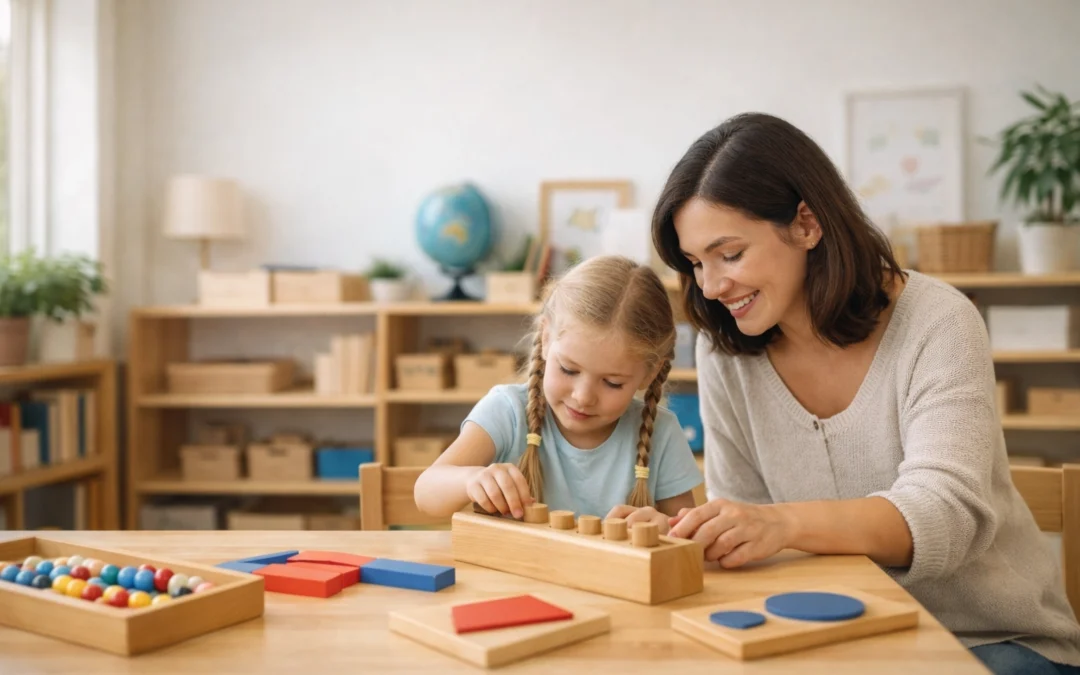
A “curiosity-ready” home doesn’t need a playroom or a Pinterest-level setup. It just needs a few thoughtful materials and a small, protected window of time where your child can follow their own questions.
A little environment plus a little time adds up, especially when you’re focusing on independence, choice, and follow-through. In busy seasons in San Francisco, these simple structures keep curiosity doable on ordinary days.
Habits matter because they turn “we should explore more” into something you can actually sustain. If you’re comparing Montessori early education options in San Francisco, these routines also help you notice what truly engages your child over time.
Q: How can I encourage my child’s natural curiosity without feeling overwhelmed by all the learning options?
A: Pick one “anchor” interest for the week and ignore everything else. Create a tiny menu: one book, one hands-on item, and one outing or conversation starter tied to that interest. When you limit choices, you protect your energy, and your child still gets rich exploration.
Q: What are effective ways to keep learning fun and engaging for my child at home?
A: Follow your child’s lead and aim for short, repeatable invitations like sorting, pouring, building, or drawing. Rotate only a few materials on an open shelf so your child can choose independently without making a huge mess. End activities while they still want more so curiosity stays bright.
Q: How do I balance giving my child structure while allowing them to explore their own interests freely?
A: Use a simple rhythm: predictable times for meals, rest, and getting out the door, plus a daily block of child-chosen work or play. Offer two clear options and one boundary, such as “You can paint or build, and materials stay on the mat.” This keeps your child safe while letting their preferences guide the learning.
Q: What are some simple activities that can help my child develop a love for learning every day?
A: Try practical life tasks that feel real: washing produce, folding towels, watering plants, or matching socks. Keep a “question jar” where you write down their wonders and look up one answer together each day. For organization, store printable activity sheets in a single folder and combine them into a single PDF using a free online PDF merger for easy printing. Those interested in getting more info can click here for more info on adding pages to a PDF.
Q: How can Montessori early education in San Francisco support my efforts to nurture my child’s self-motivation and curiosity?
A: Look for programs that treat children as capable and give them time to choose meaningful work, since the Montessori method emphasizes self-directed learning. Ask how teachers observe each child’s interests and then prepare the environment to invite deeper exploration. Strong Montessori classrooms also prioritize independence and discovery, aligning with learning that supports curiosity and intrinsic drive.
When parenting little ones, it’s easy to worry you’re not “doing enough,” or to get stuck between structure and letting kids explore. The steadier path is a curiosity-first mindset: notice what your child wonders about, offer simple support, and trust your parental role in education to guide rather than control. Families who keep nurturing children’s curiosity this way tend to raise encouraging lifelong learners who try, question, and bounce back. Curiosity grows when kids feel safe asking, trying, and changing their minds. Choose one learning support technique to apply this week, refresh a small shelf of materials, or follow one question all the way to a book, a walk, or a quick chat. These small motivational strategies for parents build resilience and connection that last well beyond preschool.
Charlene Roth is the founder of Safetykid.info, a resource dedicated to helping parents and caregivers create safe, engaging, and skill-building environments for children. With a focus on practical advice and family-friendly projects, Charlene is passionate about fostering creativity and teamwork within the home while ensuring the well-being of every child.
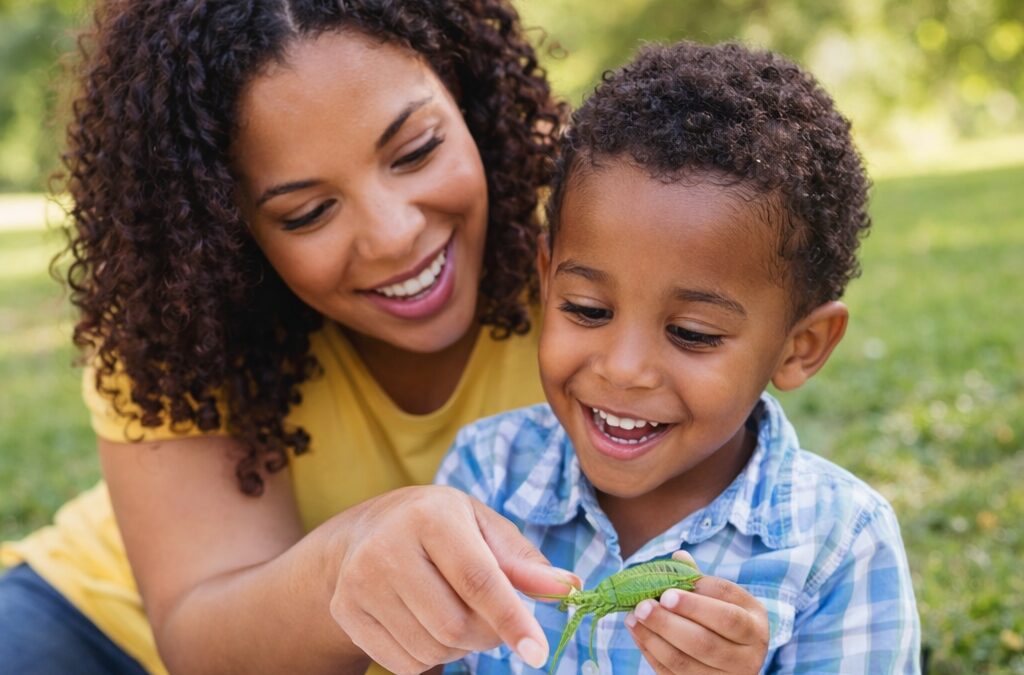
The hardest parenting moments — your toddler dissolving into a heap on the kitchen floor, your preschooler swiping a toy from a sibling, your infant screaming at the worst possible time — are not failures of your child’s character. They’re windows into a developing nervous system. A study published in Developmental Psychology found that dyadic patterns of parent-child emotional contingency explained 34 percent of the variance in children’s emotional lability and 30 percent in inhibitory control at age four — meaning the biggest lever you have is not a technique or a time-out chart. It’s the quality of the back-and-forth between you and your child.
Maria Montessori put it more plainly a century ago: the adult must become “worthy of imitation.” This guide walks through what emotional regulation actually looks like from infancy through age five, how to be the co-regulating presence your child needs, and how to bring everyday courtesy into your home as genuine social-emotional scaffolding — not a rules checklist.
Self-regulation develops in predictable stages. Knowing what’s developmentally appropriate protects you from expecting too much — and from missing the small wins.
Infants (0–12 months): Babies cannot regulate on their own. At all. Their nervous systems are entirely external, borrowed from yours. A calm, attuned caregiver is not just a comfort strategy — it is the infant’s only regulatory mechanism. A rhythm of cry → approach → contact → steady breathing, repeated thousands of times across the first year, is the first curriculum your baby will ever receive. Zero to Three notes that the first step in helping babies learn to soothe themselves is being consistently soothed by you. Responding predictably to a crying infant doesn’t spoil them; it builds the neural template for “I can be calmed.”
Toddlers (1–3 years): The emotional brain is fully online; the thinking brain has barely arrived. A toddler mid-tantrum is not being defiant — they literally lack the language and cognitive tools to handle big feelings like anger and frustration. The CDC recommends teaching children “acceptable ways to show that they are upset” — which requires the adult to name the emotion first. Sleep is also a regulation prerequisite: one- and two-year-olds need 11–14 hours per 24 hours including naps, and three-year-olds 10–13 hours, to have any chance of maintaining basic emotional balance.
Preschoolers (3–5 years): This is the first real window of teachability. Children enter what Montessori educators call the conscious absorbent mind — Maria Montessori’s term for the shift, around age three, from unconscious absorption of the environment to conscious, intentional engagement with it. This is when modeling and practice begin to stick, and when children can intentionally rehearse social interactions for the first time. They can learn to name feelings, use a quiet space, take deep breaths, and begin practicing courtesy. But even now, a flooded nervous system overrides any strategy — your steady presence still comes first.
Before any technique, before any script, before the peace corner or the choices — your regulated nervous system is the tool. A study of 100 mother-child dyads found that flexible, contingent affective interaction between parent and child — when the affective content was primarily positive or neutral — predicted significantly lower emotional lability and stronger inhibitory control at age four.
Here’s the less comfortable half of that finding: when parent-child interactions were predominantly negative, the same emotional attunement worsened child outcomes. The child’s nervous system is an antenna, not just a receiver. It picks up exactly what you’re broadcasting.
Co-regulation in practice:
This is not permissiveness. It is neuroscience.
Once the nervous system is settling — yours first, then theirs — these tools help children begin building their own regulation capacity.
Deep breaths. Demonstrate together: breathe in slowly, breathe out slowly. For toddlers, make it concrete — “breathe in like you’re smelling cookies, breathe out like you’re blowing out candles.” A few rounds physically downregulates the stress response.
A peace corner. Montessori environments use a peace corner (sometimes called a peace table) — a small, soft space with a few calming objects, a stuffed animal, maybe a simple feelings chart. This has a lineage going back to Maria Montessori’s peace education work after World War I; it is not a punishment space. It’s a place to feel, to reset, and eventually to return to a shared activity. Sit with your child there when they’re overwhelmed; over time, they’ll seek it independently. Edutopia notes that preschoolers can learn to recognize their own physical signals of emotional distress — slumped posture, tightness in the chest — when adults model noticing those cues aloud.
Words for feelings. Build a feelings vocabulary every day, not just during meltdowns. “You seem frustrated.” “You look so proud right now.” “I can see you’re disappointed.” The wider a child’s emotional vocabulary, the more options their brain has before it defaults to screaming.
Offer two choices. When a child feels out of control, giving them two acceptable options restores a sense of agency. “Do you want to take deep breaths here or go to the peace corner?” Both options work. The choice is theirs.
Physical outlets. Jumping, tearing paper, squeezing a pillow — these are regulation tools, not rewards. Big bodies need to move big feelings out.
A note on different nervous systems. Children with autism, ADHD, sensory processing differences, or early trauma histories often need co-regulation for longer, and sometimes in different forms — heavier pressure, dimmer light, predictable scripts, or more physical movement. “Your calm is the foundation” remains true, but what arrives on top of it has to be tailored to the child you actually have.
“Grace and courtesy” is the Montessori term for the everyday practices of respect that children absorb through repetition and modeling. Greetings, please and thank you, taking turns, listening when someone else speaks, repairing a conflict — these are not politeness rules. They are the social architecture that allows a child to function inside a community.
The Montessori Foundation’s guide to grace and courtesy and the American Montessori Society both frame these practices around three parallel forms of respect: respect for self, respect for others, and respect for the environment. The classroom parallel applies directly at home.
How to introduce them without making it feel like a drill:
One mini-lesson to try this week: how to interrupt. Teach your child that when you’re talking to someone and they need your attention, they place a hand gently on your wrist. You place your hand on top of theirs to acknowledge. You finish your sentence, then turn fully to them. Three people, three minutes, practiced once at a calm time. Small, named lessons like this are the heart of how grace and courtesy is actually taught in Montessori environments.
The AMS is clear on the mechanism: adults must “be someone worthy of imitation.” Your child’s grace and courtesy will look exactly like yours.
Use this five-step sequence the next time your child’s emotions flood.
Repeat this sequence consistently. Over weeks and months, your child begins to internalize it as their own.
Maria Montessori called the adult who makes this kind of environment possible the prepared adult — a person who is calm, observant, and, crucially, still growing. She was emphatic that the work of becoming a parent or teacher is never finished: children absorb not a finished product, but a person in the act of developing. A parent who is still learning — still curious, still practicing, still picking things up — is modeling the exact orientation the absorbent mind is built to catch.
That framing matters when the harder parts of self-regulation hit. Parents today are often stretched simultaneously across demanding jobs, caregiving, and their own long-held goals — finishing a credential, changing fields, returning to school after a pause. Research shows that parents who struggle to regulate themselves can get caught in a coercive cycle: they choose short-term relief from an aversive moment over the slower work of waiting for the child to settle, which reinforces the very behavior they’re trying to stop. The fuse gets shorter the more overextended you are.
Structural relief matters as much as any regulation technique. When further education is part of your own path, flexible options — like an online business degree designed to fit around family rhythms — let you keep growing without colliding with bedtime or the evening co-regulation shift. The point is less the specific credential than the posture: a parent who is continuing to learn, on a schedule that doesn’t cost their presence, is modeling for their child what the absorbent mind is built to absorb.
More broadly, your self-regulation toolkit matters:
Your calm is not incidental. It is the curriculum.


There’s a quiet shift happening in education right now.
A recent article in Education Week describes a growing movement to bring play back into kindergarten classrooms. After years of pushing academics earlier and earlier — more worksheets, more testing, more structured instruction — educators are beginning to ask an important question: have we gone too far?
The answer, increasingly, is yes.
And so we are seeing a return to play-based learning. Classrooms are reintroducing hands-on exploration, imaginative activity, and child-centered experience. Researchers point to evidence that children learn better — especially in areas such as problem-solving, language, and early math — when they are actively engaged rather than passively instructed.
All of this is encouraging. But from a Montessori perspective, it also feels familiar. Because Montessori education never left this ground in the first place.
What the “Return to Play” Gets Right
For years, many kindergarten classrooms have drifted toward what might best be described as watered-down first grade. Children have been expected to sit longer, complete more formal academic tasks, and move at a pace that reflects adult expectations rather than child development. The consequences have been predictable: rising stress and anxiety in young children, shorter attention spans, reduced intrinsic motivation, and a growing number of children labeled as struggling or behind.
The renewed focus on play is, in many ways, a corrective response. It recognizes that young children learn best when they are actively engaged, genuinely curious, and free to explore within a meaningful environment. This is not a new discovery. It is a rediscovery — and one that aligns closely with what Maria Montessori observed more than a century ago.
Where the Conversation Still Falls Short
At the same time, the current play-based movement often stops just short of something deeper. Many schools are now trying to balance two competing ideas: children need play and early academics. So they create a hybrid model — often called guided play — in which teachers design playful activities that are still tightly aligned with academic standards.
This is a step in the right direction. But it still reflects a fundamental assumption: that play and learning are separate things that need to be balanced against each other.
Montessori education begins from a different premise entirely. For young children, meaningful activity is learning. Not play versus work. Not play plus academics. But purposeful engagement that integrates movement, concentration, exploration, and discovery into a unified experience.
The Science Behind the Magic: Sensitive Periods
To understand why Montessori works the way it does, it helps to understand one of Maria Montessori’s most important insights: the concept of sensitive periods.
Montessori observed — and modern developmental neuroscience has since confirmed — that children do not develop in a smooth, even progression. Instead, they pass through distinct windows of time during which the developing brain is exquisitely receptive to particular kinds of learning. During these periods, a child is drawn to certain experiences with an intensity that can look almost compulsive. A toddler who insists on carrying objects from room to room, organizing them, and carrying them back is not being difficult. She is in the grip of a sensitive period for order and movement, and her brain is building neural architecture that will serve her for the rest of her life.
These sensitive periods are not permanent. They open, they peak, and they close. When a child’s environment provides the right experiences at the right moment, learning happens with a naturalness and joy that requires no coercion. When that window passes, the same learning is still possible — but it becomes effortful in ways it didn’t need to be.
The years from birth through age six represent the most concentrated cluster of sensitive periods in human development. During this time, children are in sensitive periods for language, movement, order, small objects, and fine detail, and the social world around them. The Montessori environment is designed from the ground up to meet children precisely where these sensitive periods place them — offering materials, experiences, and time that align with what the developing brain is most hungry to receive.
This is not a philosophical preference. It is a practical response to how children are actually built.
The Montessori Difference: Beyond Play
If you walk into a Montessori classroom for children ages three to six, you may not immediately see what most people would label as play. You will see children working.
A four-year-old carefully tracing sandpaper letters. A five-year-old building numbers with golden beads. A group of children is preparing a snack together. Another child is deeply absorbed in washing a table, repeating the process with quiet focus.
To an outside observer, this might not look like play. But to the child, it is something far more powerful. It is chosen. It is meaningful. It is deeply engaging. And most importantly, it builds the foundation for everything that follows.
Montessori understood that young children are not simply looking to be entertained. They are driven by an inner need to develop themselves — to refine movement, language, coordination, and understanding. What we sometimes call play is often the child’s way of doing exactly that.
The Power of the Extended Learning Cycle
One of the most overlooked differences between Montessori and conventional play-based programs is the daily schedule. In many kindergarten classrooms, even those embracing play, the day is broken into short segments: circle time, activity centers, transitions, and group lessons. Children are frequently interrupted just as they begin to concentrate.
Montessori classrooms are structured around an extended, uninterrupted work cycle — typically three hours in the morning. This allows children to choose their work, become fully absorbed, repeat activities, and move from simple to more complex challenges at their own pace. It is within this sustained period of concentration that real learning happens — not through constant novelty, but through deep engagement and repetition.
What is less often discussed is what this daily practice is building beneath the surface. Every morning that a child selects a work, carries it carefully to a mat, engages with it fully, and returns it to the shelf before choosing something new, that child is exercising the very capacities that researchers now identify as executive function: the ability to plan, to focus attention, to manage impulse, to follow through, and to shift flexibly from one task to another. These are not incidental outcomes. They are, in a very real sense, the whole point. A child who spends three years in this kind of environment does not simply learn things. She learns how to learn — and develops the self-regulation and inner discipline that will carry her through every level of education that follows.
Independence, Not Entertainment
Another important distinction lies in the role of the adult. In many play-based classrooms, the teacher remains the central organizer, setting up activities, directing engagement, and managing transitions. In Montessori, the teacher prepares the environment — but the child takes the lead.
The goal is not to keep children busy or entertained. It is to help them become independent, self-motivated, and able to sustain focus. This shift — from teacher-directed activity to child-directed learning — is subtle but profound. It changes not only what children learn, but how they come to see themselves as learners.
What a Five-Year-Old Knows and Loves
Perhaps the best way to appreciate the scope of what Montessori offers is to spend time with a child who has grown up in it. By age five — the year that corresponds in conventional schooling to kindergarten — a child who has been in a Montessori environment for two or three years is often a genuinely remarkable person, not because she has been pushed, but because her curiosity has been consistently met.
Language and literacy unfold in Montessori through a progression so carefully sequenced that children rarely experience reading as a struggle. The journey begins with spoken language, with rich conversation, storytelling, and vocabulary that is never artificially simplified. Children handle sandpaper letters, tracing each shape while hearing the sound it represents, building a sensory-motor memory that anchors phonics in the hand and the ear as well as the eye. Movable alphabets allow children to build words before their hand is strong enough to write them fluently. By five, many Montessori children are not simply decoding text — they are reading with comprehension and genuine pleasure, because they arrived at reading through their own effort rather than through instruction imposed from outside. Grammar is introduced not as a set of rules to memorize but through beautiful wooden symbols and hands-on activities that make the function of language visible and concrete. A child comes to understand what a noun is not because she was told, but because she physically sorted words into categories and felt the difference.
Mathematics in the Montessori environment is equally sensory and equally profound. Long before a five-year-old works with abstract numerals on paper, she has carried the weight of a thousand golden beads in her hands, has built and disassembled the decimal system physically, has laid out the sequence of numbers on a long number line that stretches across the floor. She understands quantity, place value, and the operations of addition, subtraction, multiplication, and early division not as procedures to execute but as relationships she has experienced in three dimensions. Geometry enters the picture through wooden insets, pattern work, and the exploration of shape and form that begins with the hands and expands into an intuitive spatial intelligence that will serve her in mathematics, art, architecture, and design for the rest of her life.
Geography and world culture open early and generously in Montessori. Puzzle maps of continents, countries, and landforms are among the most-loved materials in the classroom. Children trace the borders of nations with their fingers, learn the names of capitals, and encounter the diversity of human cultures through stories, artifacts, music, foods, and celebrations from around the world. By five, a Montessori child often has a genuinely global frame of reference — a sense that the world is large, varied, and endlessly interesting — rather than the narrow cultural lens that early childhood can inadvertently impose.
Science is woven through the environment from the very beginning. Children observe, classify, and name the natural world. They work with materials that introduce the properties of matter, the cycles of living things, the structure of the solar system, and the diversity of animal and plant life. The approach is not encyclopedic memorization but the cultivation of scientific habit: careful observation, patient comparison, and the willingness to ask why. A five-year-old who has grown up in this environment has already developed an instinct for inquiry that most adults spend years trying to recover.
Art and music are not enrichments layered onto the curriculum — they are part of its fabric. Children work with color, form, texture, and composition from their earliest years, developing an aesthetic sensibility alongside their cognitive and physical skills. Music is present daily, in singing, in rhythm work, and in exposure to the music of many traditions. The five-year-old Montessori child has not merely been exposed to art and music. She has participated in them repeatedly, building both competence and love.
What ties all of this together is something that no curriculum map can fully capture: confidence. A child who has spent her early years in an environment where her choices were respected, her pace was honored, and her curiosity was consistently rewarded arrives at age five with a deep and unshakeable sense that she is capable. She is not waiting to be taught. She is ready to learn.
Why This Matters Right Now
The renewed interest in play-based learning reflects a growing awareness that something hasn’t been working. Parents are noticing it. Teachers are feeling it. Children are living it. We see it in rising anxiety among young children, increased behavioral challenges, and a widespread difficulty with sustained attention and follow-through.
These are not failures of children. They are signals that the environment is out of alignment with how children actually develop. The move back toward play is an important step. But Montessori invites us to go further.
Rather than asking how we bring play back into kindergarten, a more powerful question might be: how do we design environments that truly match how children learn and grow?
Montessori offers one answer to that question — not as a trend, not as a reaction, but as a coherent, time-tested approach grounded in careful observation of children. Today, there are more than 25,000 Montessori schools around the world, serving children across cultures, languages, and communities. Families continue to choose Montessori not because it is new, but because it works.
A Thought for Parents
If you are hearing more about play-based learning, you are not alone. It is worth asking some thoughtful questions. What does “play-based” actually look like in practice? How much genuine choice and independence do children have? Are they able to concentrate deeply, or are they constantly moved from one activity to the next? And most importantly, is the environment designed around the needs of the child, or around adult expectations?
These questions can help you see beyond labels and understand what your child is truly experiencing each day.
Young children are not meant to be rushed, nor are they meant to be managed from one activity to the next. They are meant to explore, to concentrate, to discover, and to grow into themselves at their own pace. Montessori education has long understood this. And as the broader world of education begins to rediscover the value of play, it may also begin to rediscover something even deeper: that when we truly follow the child, learning takes care of itself.
If you’re wondering how these ideas apply to your own child, your child’s Montessori teacher is always the best place to begin the conversation.
The Prepared Environment at Home
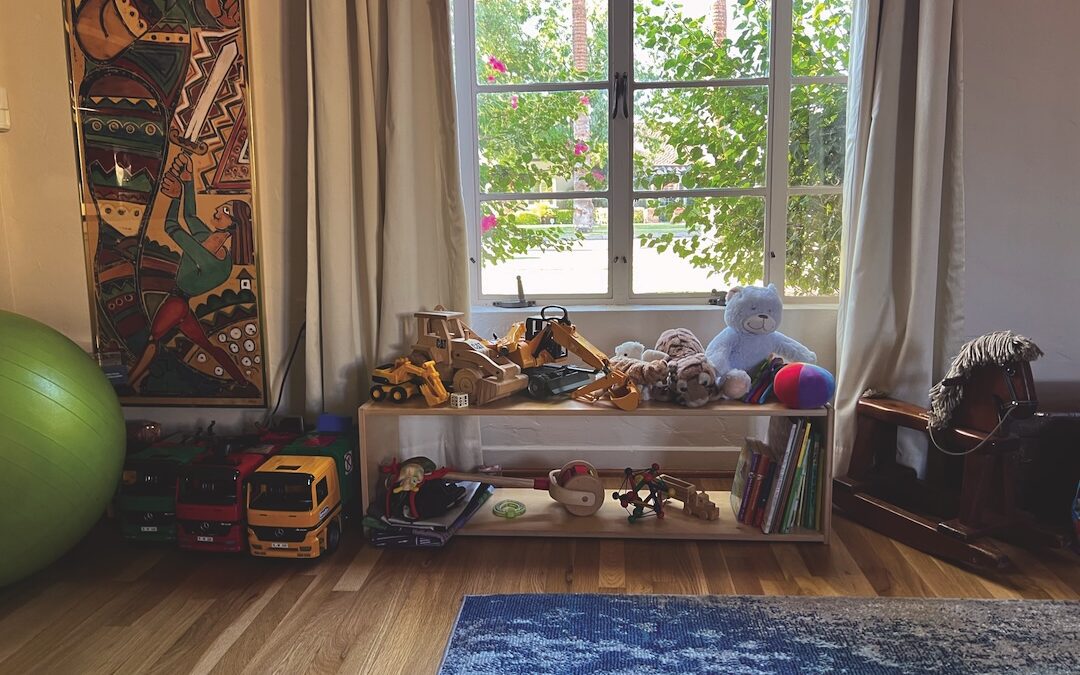
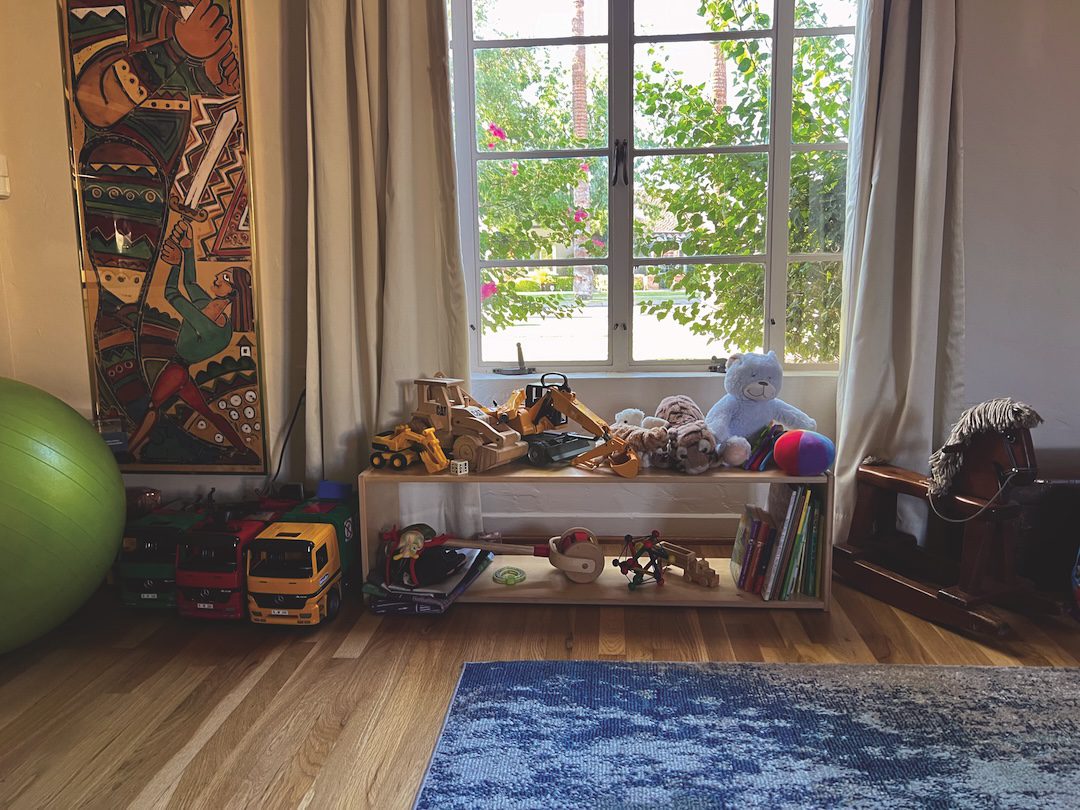
In Montessori circles, you’ll often hear about the “prepared environment at home”. It sounds simple enough, perhaps a bit vague at first. However, when you pay close attention to how children experience their surroundings, like with the things they use or avoid, and how frequently they ask for help, the concept becomes much clearer. This type of environment is defined by how the living space is prepared, not by turning your home into a classroom, which is a common mistake some parents make.
So, how is a prepared environment created at home? Honestly, the first thing is just to get on their level, see what’s really in their way. They need to be able to grab a snack or a toy without having to look for you every five minutes. And creating opportunities for them to make choices independently as much as possible. More recent research has further proven this educational philosophy true. American Institute for Research researchers studied over 400 Public Montessori schools in the United States from 2018 to 2023 (Karen Manship et al., 2019). The research revealed that children in these types of learning settings tend to excel academically while also improving in social development and other aspects of their cognitive skills, including focus and problem-solving. Much of this was attributed to the way children were given the freedom to choose their activities within a structured environment, rather than being directed at every step.
This type of preparation might manifest in a number of forms at home. It could mean having a lower shelf with fewer materials rather than a large box full of toys. It could be establishing a designated area where a child feels comfortable returning to an activity without having it moved or cleaned up immediately. In some instances, creating this sense of familiarity might simply involve placing a stool near the sink so the child can wash his/her hands alone. While none of these changes seem drastic individually, collectively, they transform how a child perceives their daily routine.
Why Our Surroundings Matter Way More Than We Think
It’s easy to assume that a child’s learning mostly comes down to what we, as adults, tell them. We focus so much on our “instruction”, what we’re saying, the way we correct them, or the materials we put out. But that’s only half the story. A 2023 study from the University of Continuing Education Krems in Austria actually examined how a child’s environment directly affects their stress levels and motivation. The researchers found a huge link: if the environment is off, stress goes up, and emotional stability takes a hit. Interestingly, their actual drive to learn was tied specifically to the quality of their individual workspace.
Basically, where a child is doesn’t just change what they do, it changes how they feel. I’m reminded of a parent who once watched their two kids playing. Her son, Tim, was struggling through a puzzle in the middle of a high-traffic, distracted area. His sister was working on the exact same puzzle, but she’d tucked herself into a quiet corner on her favorite rug. Same task, similar kids, but the results were night and day. It all came down to the space they were in. Montessori teachers have known this for a century. They don’t just organize classrooms to keep things tidy; they do it because that level of order is what actually lets a child’s concentration take root.
Dr. Angeline Lillard has spent the last twenty years proving this point. Her research shows that kids in these environments end up with much stronger “executive functions”, things like self-control, focus, and the ability to stay flexible when things get tough. The best part? These aren’t skills you teach from a textbook. Kids just pick them up naturally when they’re allowed to work, uninterrupted, in a space that was actually built for them.
Small Changes in Independence
Some of the biggest changes occur when a child can obtain what they need on their own. I remember working with a family whose 4-year-old boy refused to clean up after playing with his toys. We took a thorough look at their home space and at any possible behavioral issues. It turned out the main culprit was accessibility. The storage bins were too big and too heavy. He physically couldn’t get his toys back into the containers. So we switched them out for smaller ones (small baskets) and put them lower so he could reach them. One week later, he was more willing to clean up after himself. Of course, this is just one example of how not all “defiance” is defiance. Sometimes it is just a poor fit between the child and the world they are living in. Small changes can make a world of difference. This is why thinking ahead about how a certain activity might change as children get older can be helpful. Young children are interested in simple, repetitive movements such as pouring, sorting, and stacking. Older children are interested in more complex patterns and problem-solving.
The Role of Materials in the Prepared Environment
Too many choices can confuse a child and prevent them from choosing anything at all. This may occur when they quickly move from one material (toy) to another without really becoming engaged with either. Often this appears as if the child is bored, but it is actually them feeling overwhelmed. In Montessori schools, fewer materials are introduced at any given time, and each material is clearly labeled for its intended use. This allows for much greater opportunity for the child to engage more deeply. Rather than using something once and then leaving it, the child will return to the material repeatedly, refining their actions as they notice slight differences. Many parents find that introducing a few intentional, hands-on materials creates a totally different atmosphere in the home. For example, parents who previously spent a great deal of time dealing with clutter have told me that their children are able to focus more and stay focused a little better.
Creating Space for Focus & Calm
Another aspect of creating a prepared environment in your home is one that is very easy to miss: the emotional feel of the space. This is not something you can organize with shelves. Light, noise, predictability, and consistency create emotional tones. For instance, according to numerous studies conducted since 2000, including the earlier-mentioned study at Krems University in Austria (2023), environmental elements such as noise levels, cluttered spaces, undefined space, and lack of structure negatively affect a child’s ability to relax while learning and increase stress levels. Conversely, structuring a well-designed, calming environment supports both student motivation and self-regulation. This is probably why some children appear more relaxed in certain areas of the house than in others.
It doesn’t take a separate room to create a space for your child to focus. Creating a space for focus may be as simple as a small mat designated specifically for particular activities or a table that remains generally free of clutter. Having a place for your child to return items can be a powerful message. In addition, working within the prepared environment in your home means that over time, you can take some steps back while simultaneously moving forward. Research comparing Montessori educational models with traditional models (including research funded by organizations such as the American Montessori Society) and studies by researchers such as Dr. Angeline Lillard indicate that children in Montessori education show higher levels of independence, creativity, and intrinsic motivation. Unlike children in other educational systems, where students may complete tasks for external rewards, students in Montessori programs perform tasks because they enjoy them. When a child repeats a similar activity multiple times or persists through an activity that has some level of challenge, these can be considered subtle signs of success.
This typically does not happen quickly. A child may first show a sense of independence by consistently completing a routine task (such as pouring a glass of water without spilling) or by consistently storing items in the same location every day. Both of these tasks represent examples of independent action, which tends to increase children’s confidence in their ability, and that confidence builds upon itself.
Limiting The Complexity of The Environment
A common tendency for parents who want to develop a prepared environment in the comfort of their own homes is to overdo it. Parents may choose to completely reorganize the entire space. Purchase additional products. Develop systems and processes. Create an idealized setup. While developing a prepared environment at home can positively impact a child’s development, doing so should be done slowly and with restraint.
Start with only one area. Observe how you think your child will use it. Gradually make adjustments. Eliminate anything not being utilized. Only add those items you feel are necessary to achieve the desired outcome. What is most important is not creating a perfect environment; it is about creating an environment that responds appropriately to your child’s needs.
Elena Maren is with Alphabet Trains, which offers research-based resources and materials that focus on how kids flourish in the right environments, while helping children develop a love for learning. With their focus on educational psychology, the team at Alphabet Trains is a big believer in those small daily changes that build real confidence. Elena Maren is a writer and Montessori guide whose work focuses on child development, experiential learning, and emotionally supportive educational environments. Drawing from her background in educational psychology and her experience working within international Montessori communities, she writes about curiosity-driven learning, early childhood development, and how conducive learning environments may positively influence the confidence and creativity of children.

Recently, the Hechinger Report published an article on child care centers that employ retirees to fill child care staff positions where there are few applicants.”
There is something deeply human and hopeful in what’s being described. As an older adult, I appreciate that people in their 60s and 70s are stepping into classrooms, forming relationships with young children, and offering warmth, presence, and wisdom. One 72-year-old participant spoke about the “emotional return” of the work, while another described a child hugging her from behind and sharing what they were learning. (The Hechinger Report)
This matters. Children need more caring adults in their lives, not fewer. Intergenerational connection is powerful. In many ways, this echoes something Montessori educators have long understood: children thrive in communities, not just classrooms.
But beneath this heartwarming story lies something far more troubling.
This is not innovation. It is an adaptation under strain.
The article describes a program in Denver that has placed about 150 older adults into child care centers over three years, supported by more than $440,000 in public funding. (The Hechinger Report)
Let’s pause on that.
We are not talking about a scaled, systemic workforce solution. We are talking about a creative patch—one of many—being used to stabilize a system that is fundamentally under-resourced and undervalued.
Child care centers are legally required to maintain adult-to-child ratios. Without substitutes, teachers cannot even step out of the room for basic needs like a bathroom break. (The Hechinger Report)
That detail alone should stop us.
When a profession is structured so that its practitioners cannot take care of themselves during the workday, we are not dealing with a staffing inconvenience. We are looking at a structural failure.
One of the most important lines in the article comes from a researcher who notes that early childhood educators are often perceived as “babysitters” whose roles can be easily filled. (The Hechinger Report)
This misconception sits at the root of the crisis.
If we truly understood early childhood education as the foundation of human development—as the stage where executive function, language, social awareness, and identity are formed—we would not be scrambling to “fill gaps.”
We would be investing heavily in building a professional workforce.
Montessori educators have long argued that working with young children is among the most complex and demanding forms of teaching. It requires observation, emotional intelligence, developmental knowledge, and extraordinary patience.
And yet, as a society, we continue to compensate early childhood educators among the lowest in the education system.
So we shouldn’t be surprised when there are shortages.
To be clear, there is something genuinely valuable in what this program is doing.
Older adults bring stability, perspective, and a calm presence that many classrooms desperately need. They are not trying to build careers. They are there because they want to contribute.
In Montessori environments, especially, this kind of adult presence can be incredibly powerful. Children benefit from relationships that feel less hurried, less transactional, and more grounded.
There is also an important secondary effect described in the article: participants gain a deeper understanding of early childhood education and begin to see its broader societal importance. (The Hechinger Report)
That is not a small thing.
When more adults—especially those outside the profession—begin to understand the significance of early childhood, the potential for cultural change increases.
But we need to be very careful not to confuse a meaningful supplement with a solution.
Programs like this do not address:
• Low wages in early childhood education • High turnover rates among trained teachers • The financial fragility of child care centers • The increasing gap between cost to families and sustainability for providers
They do not build a long-term professional pipeline.
They do not solve the economic model.
And perhaps most importantly, they risk reinforcing a dangerous narrative: that child care is something well-meaning adults can simply step into, rather than a profession requiring deep preparation and expertise.
Even in this program, participants receive anywhere from 7 to several months of training depending on their role. (The Hechinger Report)
That alone should remind us: this is not casual work.
If anything, this article raises a much bigger question.
What do we, as a society, truly believe about young children? Because our systems reflect our values. We say that children are our future. We say that early childhood matters. We say that education is the foundation of a healthy society. And yet, the people doing this work are underpaid, overworked, and in short supply.
So we turn to retirees—not because it is part of a grand design, but because we have run out of other options.
There is a better way forward, but it requires clarity.
We need to do several things at once:
First, elevate early childhood education as a respected, well-compensated profession.
Second, design financial models that actually work—for schools and for families.
Third, welcome intergenerational involvement not as a substitute for professional educators, but as a complement to them.
And fourth, help parents understand what high-quality early childhood education really is—and why it matters so deeply.
This is where Montessori schools have something important to contribute.
We have spent more than a century refining environments where children develop independence, concentration, and a love of learning—guided by adults who are intentionally prepared for this work.
We understand that the adult is not just supervising the child, but shaping the conditions for human development.
That is not something we can afford to treat casually.
I found the Hechinger Report both inspiring and unsettling.
Inspiring because it shows older adults’ willingness to step forward and serve.
Unsettling because it reveals how fragile our early childhood system has become.
If we are relying on “school grandmas” to hold things together, we should be asking not just how to expand the model…
…but why do we need it in the first place?
And what would it take to build a system worthy of the children in our care?

Leadership transitions have been defining moments in the life of every organization since the beginning of our species. For the purposes of this essay, I would like to explore the implications of that observation for educational institutions, particularly in Montessori schools. Whether anticipated or sudden, the transition in a school’s leadership reshapes relationships, strategic priorities, student outcomes, and the institution’s daily rhythm. Boards, faculty, families, and students look for continuity, clarity, and reassurance at precisely the time when uncertainty is most acute. Complicating this issue is that most Montessori school leaders come with a background exclusively in the classroom; finding a successful classroom guide who can adjust to the demands of administration is a challenge. The dynamics differ significantly between a planned retirement and the unanticipated departure of a head of school. Transitions in both smooth-running and turbulent schools—and in both change triggers—require careful stewardship.
Factors of a Transition
The players in a transition of school leadership include the outgoing and incoming heads of school, the board of directors or school owner that makes the final hiring (and sometimes firing) decision, the faculty and staff of the school, the parents of the children, and oftentimes members of the community who do not have direct contact with the school but are affected by it.
The structural environment also plays a role in this complex chemistry. The transition in a small private school will affect the players differently than in a public school in a district, and a charter school will exhibit some of the characteristics of the other two categories. A public Montessori school in a school district is the outlier in this case. Since the “governing body” is a district administration with a superintendent and usually a robust staff, its decision-making apparatus is usually quite familiar with the factors involved in replacing principals. While they may or may not do it well, they are quite experienced with the process. This is usually not so in small private and charter schools. For the purposes of this examination, I will focus on private and charter schools where the decisionmakers are likely to be less experienced. Nonetheless, for a Montessori school, a district office would do well to take into consideration the observations that follow here.
The specific circumstances of every transition define the boundaries of the event. Sometimes, the departing school leader is retiring. On other occasions, the head of school has accepted a position elsewhere, at another school perhaps, or a promotion to school district level. Sadly, in many cases heads of school who have not met the expectations of the district office, board of directors, or school owner are either removed or their contracts not renewed, often at a most inconvenient mid-year moment.
Some departures are planned well in advance while others are emergencies. While in many cases retiring heads of school announce their departure well in advance, circumstances sometimes force them to a shorter-term decision that doesn’t leave the decisionmakers enough time to react with the appropriate lever of deliberation. In some cases, the school head is here-today, gone-tomorrow—the worst-case scenario!
One might think that the more time allowed to replace a head of school the better. Up to a point, this is true. But the minute the announcement of retirement is made public, the head of school becomes a “lame duck.” If the anointed successor or successor presumptive (or possibly multiple candidates vying for the position) exists, the faculty members will need to learn where to find solid ground. Do they go to the existing head to get a decision that may not outlive her transition? If a successor hasn’t been named, do they bypass the head of school and go to higher authority for a decision?
The tenure of the departing leader weighs heavily in the circumstances of the transition. A long-tenured head of school is very likely to have stamped the school with her personality. She will have hired many members of the faculty and endured significant storms during her tenure with them. Regardless of her qualities as a leader, these factors will have forged bonds between them. Any successor is likely to suffer by comparison; not because she is less experienced or less capable, but simply because she will behave differently and make different decisions; she is, at the beginning of her tenure, less predictable.
Adding these variables leaves us with a complex equation: five groups of players, three types of schools, three scenarios of departures, three timings of departures, and several lengths of tenure for the departing head of school. If the hiring authority contemplates inviting an interim head, that adds yet another factor. Thus, we are writing an equation with five or six variables. If my arithmetic is correct, this allows for 810 possible combinations.
Challenges for the Board of Directors
The board plays an essential leadership role in any transition, and its responsibilities intensify when circumstances are difficult. As custodians of the mission of the school, the Board holds the ultimate responsibility for the hiring decision.
Boards of directors often find themselves at a decision point: do we replace the head of school or not? If the school is in a downward spiral and the clear proximate cause is behavior or decisions of the head of school, it may seem best to pull the plug immediately. Weighing against that impulse is what to do for a replacement. While it may be satisfying to eliminate the source of the school’s problems immediately, it may be more prudent to identify a replacement first. A cluster of symptoms may also be unraveled by following the axiom about how to eat an elephant—looking at each issue separately and evaluate precisely the root cause of each before taking the radical step of replacing the head of school. In the process of every replacement of a leader some knowledge is lost, and some aspects of the new leader are unexpected. The decision to replace the head of school should be the last step in a process of troubleshooting, and in some cases indicates a failure of that process.
Unless the new head of school comes from inside the school community, the day she arrives she will be like a fish on the beach. Normal “full support” from the staff will be insufficient: she won’t know where the stapler is or which classroom guide goes with which face, much less have a full grasp of the intricacies of the annual budget. The office staff is unlikely ever to have been in the shoes of a new head of school and be, depending on the tenure of the predecessor, accustomed to one leader being the mistress of all things large and small. The new head of school will want to project competence and confidence and is less likely to admit not knowing how to use a system or an app. This presents a stress point of unmet expectations in the office, bewilderment on one side and frustration on the other. The board needs to ensure that the office staff and head of school have clear lines of communication and that the staff has a clear understanding of its responsibility to support the new school leader beyond the list of duties in their job descriptions.
Challenges for the Outgoing Head of School
A retiring head often has the benefit of time, goodwill, and a celebratory narrative. Yet challenges remain. Retiring leaders must balance sentiment with practicality: advancing long-term initiatives, documenting institutional knowledge, and making space for new leadership while avoiding prematurely relinquishing authority. They may also experience personal emotional transitions—letting go of a role that has shaped their identity for many years. Depending on the tenure of the departing head of school, the faculty will be to a degree in tune with the rhythm she has established over the years. They will watch her for cues. Is the head of school supportive of the path chosen by the governing body? Is the head of school attentive to the mood of the faculty? Is she advocating for them in the search process?
In a Dismissal Scenario
A dismissed and outgoing head of school doesn’t have any challenges, but he can leave behind him a wake full of them, strikingly different from those faced in an orderly transition. The separation has a history that may involve conflict, confidentiality constraints, or unresolved tensions within the community. The outgoing leader has less opportunity to shape the transition narrative and may feel shock, disappointment, or reputational concerns. For the school, the challenge lies in managing communications sensitively and professionally while balancing legal considerations and community expectations for transparency. In this scenario, the faculty may or may not be divided. If the dismissal is the result of a total failure of leadership, malfeasance, or sexual deviance, the faculty is very likely to applaud it and invest a robust level of confidence in a successor. If the head of school was dismissed for other reasons—disagreement with the board over strategy, authenticity of the Montessori program, a struggle to find the line between board governance and school administration, or test scores, for example—the faculty may become fractured along lines of who agreed with the head of school and who agreed with the board.
The Question of Overlap
Unless the departing head of school has already left, the board needs to help find the right duration of overlap between outgoing and incoming leaders. This is primarily a question of personality, but environmental factors play a role as well. During my time in the Army, I frequently received new assignments, often on new military bases, and never wanted more than three days overlap with my predecessor. I found that amount of time made the transfer of institutional knowledge balanced having my predecessor underfoot with my new staff looking from one of us to the other to see which had the answer to a question. That staff was also accustomed to frequent changes of leaders. A Montessori school staff is less likely to have that experience, and a new head of school, particularly one moving from a classroom to the office, might need more support from her predecessor. The two heads of school should decide between them the optimum overlap period and the board should support it.
Challenges for the New Head of School
The incoming head faces the dual challenge of embracing opportunity and navigating legacy.
First Footnote: What about a Search Firm?
Search firms are expensive, usually taking a percentage of the annual salary of the person they’ve found for the school. On the other hand, they have much more experience identifying quality candidates which, to an inexperienced school board might make the difference between a candidate who stays for six months and one who stays for twenty years. As a professional recruiter observed, “Sometimes Boards sometimes overthink it.” An almost perfect candidate can make a single comment that sends the Board into self-doubt. Sometimes they will hire a known quantity rather than a better candidate. If the school can afford a search firm, they should find one that “speaks Montessori” or the recruiter may miss an aspect of a candidate that is important from a Montessori perspective but perhaps less so in a general education environment. If it can’t afford a search firm, finding a Montessorian experienced in searches may be a less expensive but effective option.
Second Footnote: What About an Interim Head of School?
Governing bodies sometimes choose an interim head of school. This path makes the most sense when the board has plenty of time to choose a successor because the current leader has announced her departure well in advance, or needs more time because the crop of possible candidates is not encouraging. An interim head of school often plays a pivotal role in stabilizing the community and preparing the path for the next long-term leader. Neither fish nor fowl, an interim head occupies a delicate position in the entire transition. Unless the interim is a strong candidate for the position, this is the role for a person very experienced with both the Montessori Method and administration, very likely to be found in the ranks of retired Montessorians. The functions of an interim include:
In both scenarios, the interim head’s contributions shape the success of the eventual transition more than many stakeholders realize. A strong interim head performs a number of functions, including maintaining or creating emotional and operational stability, modeling transparency and integrity, addressing unresolved problems that would otherwise burden the new head, defining realistic expectations for the community about change and continuity, maintaining institutional momentum in academics, fundraising, and culture-building, and strengthening governance by fostering effective board–administration collaboration. In essence, the interim head protects the school’s long-term health by absorbing shock, restoring alignment, and preserving the space necessary for thoughtful selection of the next permanent head.
Conclusion
Transitions in educational leadership are complex events that test the resilience and maturity of a school community. Whether the outgoing head departs through a planned retirement or a sudden dismissal, each group involved—the outgoing leader, the board of directors, an interim head, and the incoming head—faces distinct responsibilities and challenges. When managed thoughtfully, these periods of change can become opportunities for renewal, improved governance, and strengthened institutional culture. While the board holds the ultimate responsibility to oversee the transition—from the moment a decision to have a new school leader is made until the transition is successfully completed—the primary factor that must be taken into account is the faculty. If the board takes its needs into account and its counsel at each step of the process, the faculty can ensure that the process will work.

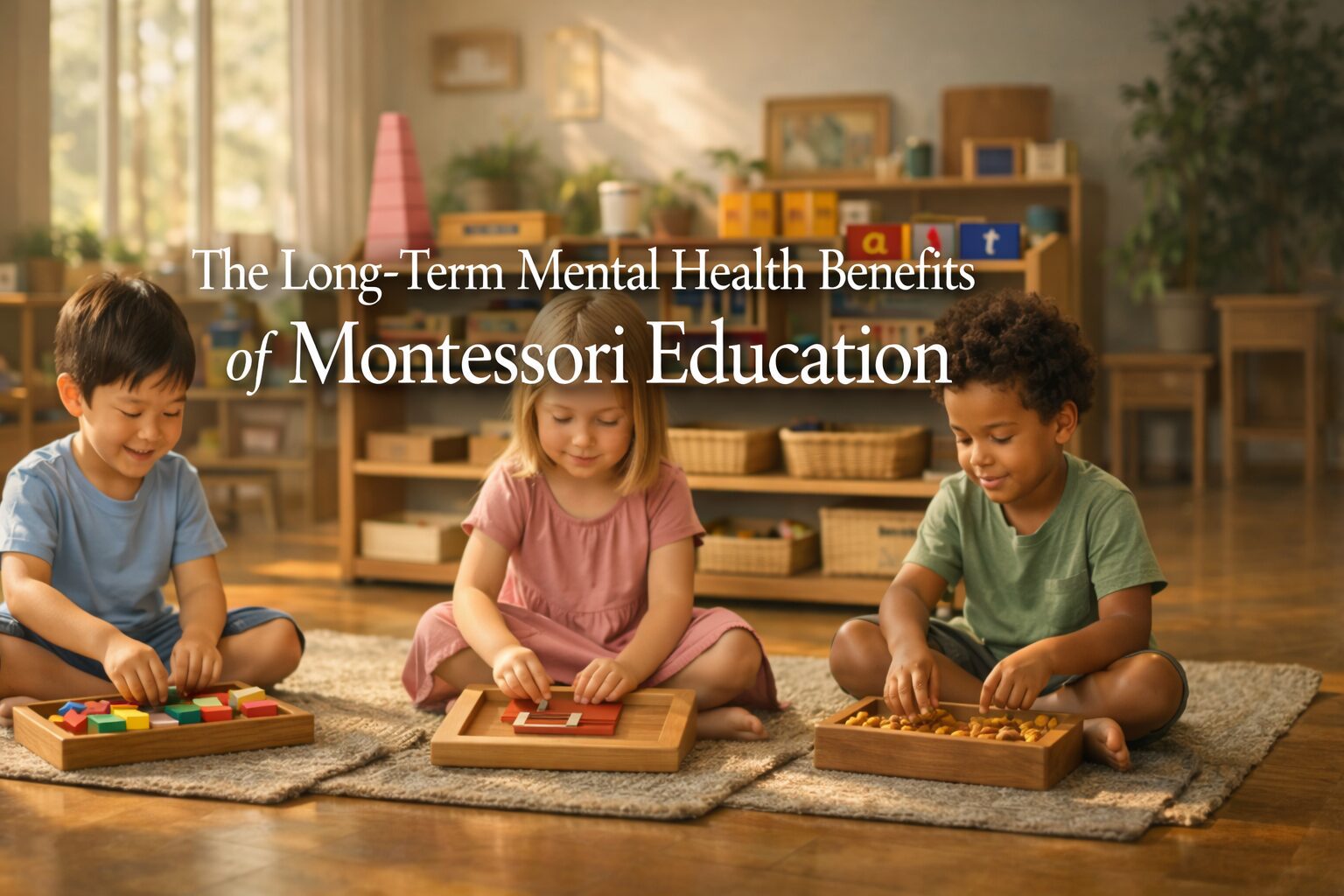
Every parent wants to raise a child who is not only intelligent but also emotionally resilient and truly at peace with themselves. Yet, as classrooms around the world become more pressurized and competitive, anxiety, depression, and burnout are showing up earlier than ever. Parents are starting to ask challenging questions: Does the traditional school system really nurture mental wellness—or does it quietly erode it over time?
This is where the Montessori approach earns serious attention. Designed over a century ago by Dr. Maria Montessori, this educational model has been steadily gaining relevance in a world that often prioritizes test scores over mental stability. Montessori education doesn’t just prepare children for exams—it helps them grow into grounded, emotionally balanced individuals. By understanding how this system shapes mental well-being across a lifetime, parents can make wiser choices about their children’s development, both in and beyond the classroom.
The classroom is often the first structured social environment a child experiences. How children are guided, corrected, and encouraged during these early years sets the tone for how they’ll see themselves—and how they’ll relate to others—for decades to come. Montessori classrooms differ radically from traditional ones in that they are designed around intrinsic motivation rather than external rewards. Children don’t earn gold stars; they earn satisfaction from mastery.
What most people don’t realize is that this shift can deeply affect emotional regulation. A child who learns to take pride in effort rather than in outcomes develops greater internal confidence. They’re less susceptible to perfectionism, social comparison, and chronic stress later in life. In other words, the mental habits formed in Montessori classrooms often echo well into adulthood.
Montessori education rests on a deceptively simple idea: children are naturally curious and capable of self-directed growth when given the right environment. The teacher’s role isn’t to fill a child with knowledge but to prepare the space where learning can unfold naturally. This respect for autonomy builds emotional strength.
Children in Montessori classrooms choose tasks based on interest and readiness. They work independently, repeat activities as they wish, and experience the full cycle of concentration and satisfaction. Over time, this nurtures three psychological cornerstones of mental health: focus, self-efficacy, and calm persistence.
Here’s where things often go wrong in more conventional settings. When adults constantly intervene—checking progress, setting strict time limits, or offering constant praise—they unintentionally weaken the child’s belief in their own inner compass. Montessori educators, on the other hand, learn to step back and trust the child’s process, which preserves that vital internal sense of agency.
In most traditional classrooms, emotional safety is still secondary to academic performance. Montessori environments reverse that order. Everything—from soft tones of voice to specially designed furniture—is intended to reduce stress and help children feel respected. Emotional safety, in this setting, isn’t a side benefit; it’s the starting point for all learning.
Children are encouraged to express emotions openly and respectfully. Conflicts are often resolved through a peace table or dialogue rather than adult-imposed punishment. The effect may seem subtle day-to-day, but over the years it helps children develop emotional literacy—the ability to name and manage feelings without repression or outburst.
This kind of psychological grounding often shows up much later, during adolescence or adulthood, when peers are struggling with identity crises or relational instability. Montessori alumni often describe themselves as more self-aware and emotionally steady. That’s not by accident—it’s the natural result of being raised in an environment where feelings are acknowledged, not ignored or rushed through.
What truly distinguishes Montessori isn’t just its academic outcomes — it’s how deeply it fortifies a child’s inner landscape. The following six benefits show how early independence, respect, and emotional awareness ripple forward into lifelong mental well-being.
Because Montessori learning emphasizes freedom of choice and self-pacing, children regularly encounter moments of challenge and frustration. Instead of being shielded from difficulty, they learn to face it with patience and creativity. Whether re-threading a bead, reworking a puzzle, or revisiting a math material, the process itself teaches emotional balance — that mastery comes from calm persistence, not avoidance.
Over time, this repeated exposure to manageable frustration strengthens emotional regulation: the ability to stay centered under pressure. Montessori children learn to pause, reflect, and try again rather than react impulsively. As adults, that same adaptive stability helps them navigate stressful work environments and complex relationships with resilience and a clear head, not panic.
Montessori students spend years exploring subjects that genuinely spark their curiosity instead of being confined to rigid lesson plans. This sustained freedom to choose builds self-direction and clarity about personal interests — what psychologists might call the foundation of intrinsic purpose. They are constantly asked: What do you want to learn next? That question builds internal guidance instead of dependence on external approval.
As a result, these children grow into adults who trust their instincts and pursue goals aligned with their values. They tend to make career and lifestyle choices that feel authentic rather than performative. This internal compass reduces the lifelong friction of identity confusion, promoting emotional steadiness and a true sense of meaning.
One of the subtle drivers of childhood anxiety is relentless comparison — report cards, awards, “best student” labels. Montessori classrooms dismantle this dynamic entirely. By removing traditional grades and ranking systems, they shift the focus from outperforming others to improving oneself. Collaboration becomes the norm: older students guide younger peers, reinforcing kindness, mastery, and leadership in organic ways.
This non-competitive culture allows students to feel safe exploring without judgment. Without the constant noise of “who’s ahead,” children stay internally relaxed, curious, and self-assured. As they mature, this early conditioning turns into a naturally balanced relationship with achievement — one that values growth and effort over external validation, dramatically reducing long-term anxiety.
Montessori’s approach develops a kind of motivation that doesn’t depend on gold stars or praise. Each task — pouring water, polishing wood, tracing letters in sand — serves a practical purpose and offers sensory satisfaction. Children see the immediate outcomes of their actions, which makes learning meaningful in itself. The adult’s role is simply to facilitate, not reward, discovery.
That deep connection between curiosity and competence becomes self-reinforcing. Children who learn this way internalize the joy of mastery and grow into adults who learn, work, and create because they want to, not because they have to. Intrinsic motivation anchors emotional well-being by reducing stress, fostering perseverance, and protecting against burnout driven by external pressure.
Montessori classrooms are social laboratories built on respect and community. Mixed-age groups allow younger children to learn through observation while older ones practice mentoring — both sides benefiting in empathy and confidence. Conflicts are resolved through conversation, not punishment, reinforcing the idea that relationships thrive on understanding rather than authority.
That repeated practice of empathy in daily life leaves a lasting imprint. Students grow up comfortable expressing emotions, listening to others, and finding common ground. As adults, this interpersonal intelligence becomes a cornerstone of mental health — reducing loneliness, strengthening collaboration, and equipping them to sustain healthy, emotionally balanced relationships.
A quietly radical element of Montessori education is how it celebrates imperfection as part of learning. Teachers don’t correct every misstep or rush to help; instead, they invite children to notice what went wrong and adjust independently. A spilled pitcher isn’t a failure — it’s a sensory lesson in control, awareness, and patience.
That subtle shift changes everything. Children realize that mistakes are information, not identity. They associate effort with progress, not judgment. Later in life, these same individuals are more likely to bounce back from professional setbacks or creative risks without collapsing into self-criticism. In a world that often glorifies flawless output, Montessori graduates carry a grounded sense of balance — knowing when to push, when to pause, and when “good enough” truly is.
It’s important to acknowledge that Montessori education is not without practical challenges. Parents sometimes expect instant calm or academic precocity from the method, misunderstanding that its benefits unfold slowly and cumulatively. The real transformation happens over years of consistent, freedom-within-limits practice.
Another trade-off is logistical. True Montessori implementation requires specially trained teachers and carefully prepared materials. In adapting the model to modern contexts, some schools dilute core principles—over-scripting activities, limiting freedom, or layering on digital distractions. This dilution weakens many of the long-term mental health benefits.
For parents considering Montessori education, the key is alignment rather than perfection. Look for schools that emphasize authentic Montessori elements: uninterrupted work cycles, mixed-age classes, and trained guides who observe more than they intervene. At home, parents can extend this philosophy by giving children real responsibilities—watering plants, setting the table, or planning simple activities. What matters most is consistency in treating the child as capable and worthy of trust.
The long-term mental health benefits of Montessori education don’t come from any single technique. They arise from a coherent philosophy that prioritizes self-direction, respect, and emotional safety. Children raised in this environment learn early that their thoughts, feelings, and actions hold meaning. Over time, that understanding builds adulthood characterized by calmness, confidence, and authentic purpose.
For parents and advocates, the message is simple but profound: nurturing mental wellness begins long before therapy or mindfulness apps. It starts at the classroom level—where curiosity is honored, independence is trusted, and emotional growth is treated as the true measure of success.
Author Bio
Stacy Bryant is a mental health advocate and seasoned content writer passionate about raising awareness on mental well-being. She has written for several websites and currently contributes to EmpowHer Psychiatry and Wellness, a blog focused on helping individuals navigate mental health challenges. Alongside this, she collaborates with Springhive as a content creator for their Mental Health Care clients, crafting SEO-friendly content to enhance their online presence. Outside of her professional work, Stacy enjoys reading, writing, and practicing activities that maintain her mental health.
 Montessori Family Alliance School Group Membership (Print & Digital 2026 1/2 year pricing)
Original price was: $30.00.$15.00Current price is: $15.00.
Montessori Family Alliance School Group Membership (Print & Digital 2026 1/2 year pricing)
Original price was: $30.00.$15.00Current price is: $15.00.
 The Montessori Way, Revised and Expanded: An Education for Life; A Comprehensive Guide for Parents and Teachers
$25.00
The Montessori Way, Revised and Expanded: An Education for Life; A Comprehensive Guide for Parents and Teachers
$25.00
 The Montessori Child: A Parent's Guide to Raising Capable Children with Creative Minds and Compassionate Hearts (The Parents' Guide to Montessori)
$20.00
The Montessori Child: A Parent's Guide to Raising Capable Children with Creative Minds and Compassionate Hearts (The Parents' Guide to Montessori)
$20.00
 The Montessori Toddler: A Parent's Guide to Raising a Curious and Responsible Human Being (The Parents' Guide to Montessori)
$20.00
The Montessori Toddler: A Parent's Guide to Raising a Curious and Responsible Human Being (The Parents' Guide to Montessori)
$20.00
 Montessori in Action: Building Resilient Montessori Schools 1st Edition
$29.95
Montessori in Action: Building Resilient Montessori Schools 1st Edition
$29.95