Related Posts
Reimagining the School of Tomorrow as a Place Where Children, Families, and Teachers Belong
A Snapshot
What if we stopped thinking of schools mainly as places where children attend classes and began to imagine them as communities that help children and families flourish?
A family-friendly school is not defined by how many services it offers or how long it stays open. It is defined by the quality of the relationships and opportunities it creates for children, parents, and teachers. Children feel safe and valued there. Families find friendship and support. Teachers are respected as people and professionals. The school offers discovery, creativity, and community beyond the classroom, and it also recognizes that children need time at home, freedom, and rest.
This vision draws on Montessori’s understanding of the prepared environment, Gavin McCormack’s emphasis on safety and belonging, Riane Eisler’s partnership education, and my own experience in two schools that worked hard to become this kind of place. The goal is not to extend the school day. It is to rethink what a school can mean in the lives of the people it serves.
Imagine a Different Kind of School
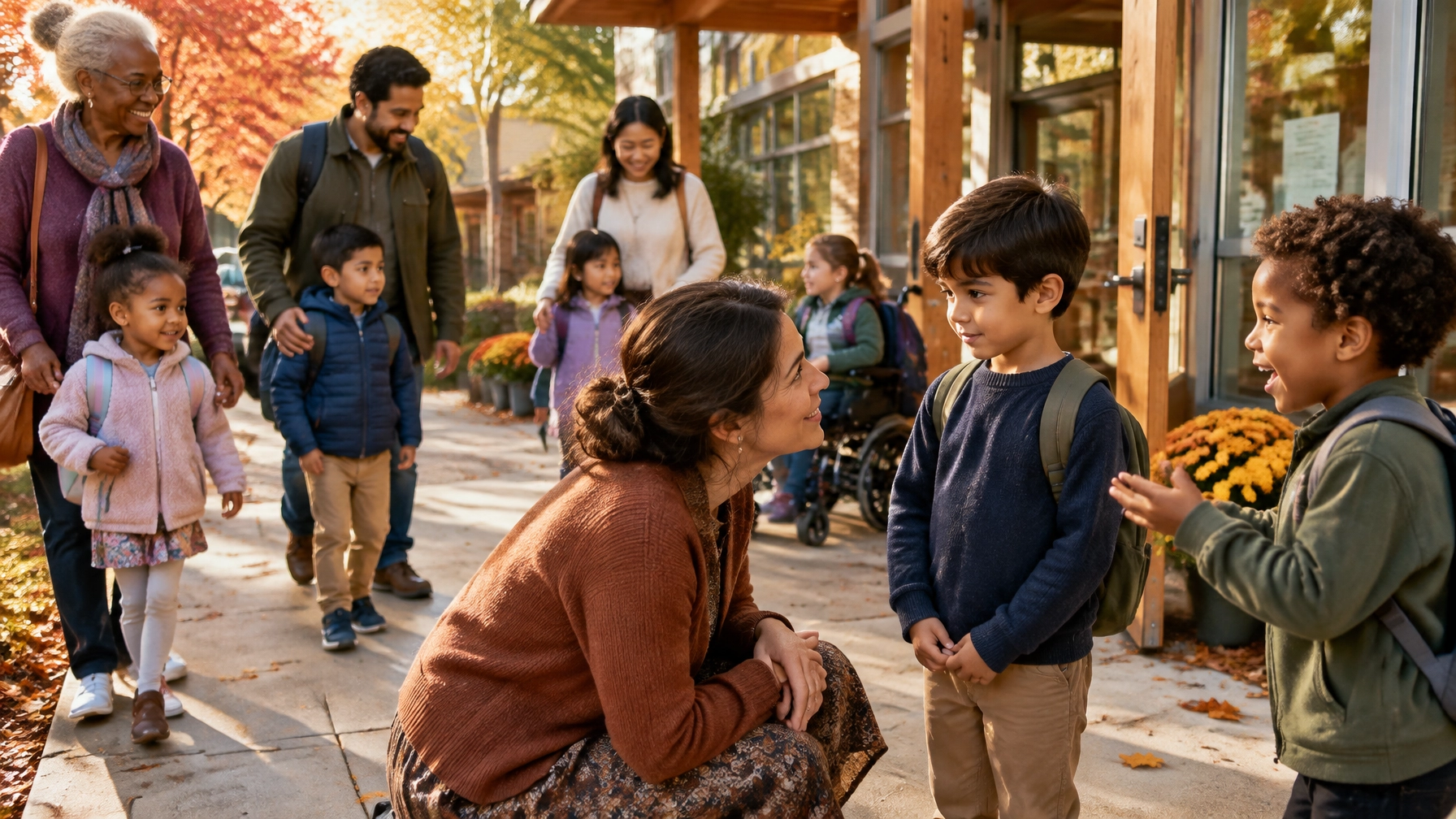
Arrive at this school early one morning. Children are coming through the entrance with parents, grandparents, older siblings, and caregivers. Some hurry inside, eager to see their friends. Others linger, reluctant to say goodbye. A teacher greets each child by name. She notices that one boy seems unusually quiet and takes a moment to speak with him. A girl proudly announces that she has learned to ride her bicycle. The atmosphere is calm and welcoming, and people know one another.
Inside, the classrooms have been prepared with care for the children who use them. Materials are within reach. Plants are tended. Children’s work is treated with respect. There are places for concentration, conversation, movement, and quiet reflection. The children are not visitors in an adult institution. This is their community.
Now return late in the afternoon. Some children have gone home. Others remain because their parents are working or because they love doing something here. A group is working in the garden. Others are building a small wooden structure with the help of an experienced craftsperson. Several are painting in the art studio, a few are curled up with books, and outside, children are playing games they invented themselves. No one is expected to take part in everything. Some children want to be busy. Others want to relax, talk with friends, or simply be outdoors.

After school, children can choose to create, build, read, garden, or simply enjoy time together.
In another part of the building, parents have gathered to talk about helping children become more independent at home. Nearby, a new parent is having coffee with someone whose children have attended the school for years. One family is going through a hard time, and other parents have quietly organized meals and practical help.
This school has become more than a place where children are dropped off in the morning and collected in the afternoon. It has become part of the fabric of family life. It does not replace home. It is a second home.
That is the idea I want us to consider. The school of tomorrow should be designed not only around children’s academic education, but around the well-being of the children, families, and teachers who make up its community.
I Have Seen This School
None of this is a fantasy. I grew up in a school very much like the one I have just described, and I later had the privilege of leading it.
At the Barrie School in Silver Spring, Maryland, where I was first a student and later the headmaster, school did not end when classes did. On Friday evenings, we held a coffee house for children and parents. Parents and older students were the talent, and the secondary students ran it as a business. We held potluck dinners and international potluck dinners. We celebrated festivals from all over the world, many of which I later described in my book Celebrations of Life. We took overnight camping trips and overseas trips. For a number of years, we even had Saturday school, which wasn’t really school at all. It was much more like a camp.
At NewGate School in Sarasota, Florida, we did the same kinds of things on a smaller scale, with programs, activities, sports teams, and scouting troops. One of the most popular was Friendly Fridays. Families would come on Friday afternoon, watch their children on the playground, and share mocktails and finger foods until the sun went down. It was lovely, and it cost almost nothing.
Many schools hold beautification days. At NewGate, Chris Gallagher went a step further and started the Beauty Corps, in which children learned interior decorating, carpentry, and landscaping and took on all kinds of projects to make the school more beautiful. It created a wonderful esprit de corps.
None of these things were complicated or expensive. What they had in common was that they gave children and parents reasons to be at school together, enjoy one another’s company, and feel the place belonged to them.
Why Are Schools Still Organized This Way?
A recent New York Magazine article, “The 7-Days-a-Week, 12-Months-a-Year School,” describes Strive Charter School, a new school in the South Bronx that challenges familiar assumptions about schooling. Its regular academic program is supplemented by optional programming that runs from early morning into the evening and continues through weekends and much of the summer. The school was designed in part around working parents who struggle to reconcile conventional school schedules with their jobs and family responsibilities.
It is an intriguing experiment, and its long-term educational, operational, and financial success remains to be demonstrated. I am not suggesting that every school should stay open seven days a week, and I would not want any child to spend seven long days a week in any institution, however good. What interests me is the question Strive raises. Why do we continue to organize schools around schedules that have so little to do with the lives of today’s families?
Many households depend on two incomes. Many children are being raised by single parents or grandparents. Parents work evenings, weekends, and unpredictable shifts. Some commute long distances. Others work from home but still need uninterrupted time to do their jobs. Even families with substantial resources find themselves juggling school schedules, childcare arrangements, summer camps, transportation, and after-school activities. For families with limited resources, the juggling can be overwhelming.
Perhaps we should stop asking families to organize their lives around the convenience of schools and begin asking how schools might organize themselves around the needs of children and families.
This is about much more than schedules. Education does not happen in isolation. Children grow within families, friendships, neighborhoods, and communities, and their success depends in part on the relationships and support that surround them. If we want children to flourish, we have to care about the well-being of the people who care for them.
Before Anything Else, Children Must Feel Safe
Before we consider extended hours, summer camps, parent programs, or community services, we need to think about what it feels like to be a child in our school.
My friend and colleague Gavin McCormack, a Montessori-trained educator and former school principal, has developed the Safe School Framework, which invites educators to examine children’s everyday experiences of safety, dignity, and belonging. Its central message can be expressed in three simple statements.
I matter. I am safe. I belong here.
Think about those words from a child’s point of view. Will someone be glad to see me when I arrive? Will I be embarrassed if I make a mistake? What happens if I do not understand something? Will someone help me when I am frightened? Is there an adult I can trust?
Gavin’s framework identifies practical ways to strengthen welcoming relationships, belonging, predictability, support, and the connections between children and adults. What I especially appreciate is its attention to ordinary moments. A child who has forgotten something should not be humiliated. A child who works slowly should not be made to feel inadequate. A child who is anxious about a change in routine should be helped to understand what is happening. These may seem like small matters, but they are not small to the child who is living them.
A school can have an impressive curriculum, beautiful buildings, and outstanding academic results and still leave some children feeling invisible or unsafe. And emotional safety is only part of the picture. It must stand on a foundation of strong child protection, appropriate supervision, emergency preparedness, and responsible safeguarding policies.
If we want schools to become second homes, we begin here. A second home is not measured by the number of hours a child spends there. It is measured by the relationships that tell the child, every day, that he or she belongs.
What Montessori Understood About the Prepared Environment
Maria Montessori recognized that children develop through their interactions with the world around them. She challenged educators to prepare environments that respect children’s developmental needs and give them meaningful opportunities to act independently.
The prepared environment is one of Montessori education’s great contributions, but I believe we sometimes interpret it too narrowly. We think at once of classroom materials, carefully arranged shelves, child-sized furniture, and uninterrupted work periods. The underlying idea is much larger. The environment includes the relationships children experience, the opportunities they are given, the responsibilities they take on, and the culture of the community in which they grow.
What if we prepared the entire school with the same care we devote to the classroom? What if we gave the same thought to arriving in the morning, eating together, playing outdoors, spending time after school, and taking part in community life? What if the school itself became a prepared environment for children and families?
This would not mean stretching Montessori lessons across every hour of the day. Quite the opposite. Children need concentration and intellectual challenge. They also need recreation, companionship, physical activity, creativity, and rest. They need adults who guide them, and they need time to make their own decisions and organize their own activities.
The goal is not to make the school responsible for everything. It is to make the school a thoughtful partner in childhood.
Building a Community, Not Just a School
Successful community organizations, including some large churches and neighborhood centers, have learned something schools often overlook: belonging rarely happens by accident. These organizations do more than bring people together for scheduled activities. They help people form friendships, find support in difficult times, contribute their talents, and feel part of something larger than themselves.
Schools could do much more. A coffee house, a potluck dinner, or a Friday afternoon on the playground is a beginning. Experienced parents could help welcome new families. Informal groups could give parents a place to share what they are learning. A community network could quietly organize meals and help when a family faces a crisis. Parents and grandparents could share their skills, mentor others, and help organize activities that enrich school life. Sometimes the most valuable thing a school can do is help people find one another.
This does not mean that schools should become social service agencies or take responsibility for solving every family’s problems. They must maintain appropriate boundaries, protect confidentiality, and ensure volunteers and outside professionals are properly screened and supervised. It does mean recognizing that a school can be a place where relationships grow, people help one another, and families feel connected to a real community.
Community does not happen automatically. It must be cultivated, organized, and sustained.

Everyday conversations can help families find friendship, connection, and support.
Rediscovering the Magic of Summer
I have long believed that Montessori schools should take summer programs much more seriously.
Too often, summer camp is something a school does reluctantly because parents need childcare. Someone organizes activities, a few teachers agree to work, and a schedule is assembled around whatever resources happen to be available. The result may be pleasant enough, but it seldom approaches what an excellent camp can be.
Summer gives us a remarkable opportunity to help children grow in ways that complement the school year. Children can spend more time outdoors, develop practical skills, form new friendships, pursue their interests, and explore without the structure of an academic day. They can experience adventure, responsibility, creativity, and discovery. Much of this should sound familiar to Montessori educators.
Imagine a summer in which children care for gardens, prepare meals, build shelters, explore forests, create art, investigate streams, and make friends across age groups. Older children might help plan expeditions, organize projects, and mentor younger campers. The experience could be unmistakably Montessori while drawing on the rich traditions of experiential education.
Schools do not have to invent all of this themselves. The American Camp Association offers professional knowledge, standards, and decades of experience in camp education to help school leaders design safe, engaging, developmentally appropriate summer programs. Schools might also form partnerships with established camps or outdoor education organizations rather than trying to develop every activity on their own.
Summer should feel different from the school year. The goal is not twelve months of conventional schooling. It is to open more possibilities for children and families while protecting time for rest, family experiences, and unstructured play.
Studios: Places Where Children Discover Who They Are
Studios were part of life at Barrie for many years, both when I was a student there and when I was headmaster, and I have wanted to see them in Montessori schools ever since.
A studio is more than an extracurricular activity. It is a place where children work with interesting materials, pursue real interests, and learn from adults who bring particular skills and passions. Imagine a school with a woodworking studio, a teaching kitchen, a music studio, a garden, an art workshop, and a space for robotics, engineering, and scientific investigation. Some schools might have dedicated facilities. Others might adapt ordinary classrooms or shared spaces. What matters is the quality of the experience.
I know what this can mean to a child because it happened to me. Barrie’s art studio had separate spaces for different media, and I loved it so much that I spent many Saturdays there from about nine-thirty in the morning until two in the afternoon. It was a very important part of my childhood, as was the writing program.
A generation later, I watched it happen to my daughter. When she was about four, she became enchanted with Barrie’s after-school riding program. Nearly every day, from about two-thirty until the end of the day, she was in the stables working alongside Robin Wyman and the staff. She is a grown woman now, and her passion for horses has never left her.
That is what a studio can do. A child who struggles with conventional academic work may discover extraordinary ability in design, construction, or music. A quiet child may find confidence through theater. An adolescent may become fascinated by filmmaking, photography, entrepreneurship, or environmental restoration.
Studios can also bring the larger community into the school. Parents, grandparents, local artists, musicians, craftspeople, scientists, and other professionals often have skills they would enjoy sharing. A school might invite an architect to work with children on the design of a small building, a gardener to help develop a greenhouse, or a chef to lead a cooking workshop. Older students might create businesses, organize community events, or take on projects that address real problems. The school becomes a place where children encounter many different forms of human accomplishment.
And because studios can operate after school, during vacations, and in the summer, they help families manage their schedules without sending children back and forth between unrelated activities all over town.
Learning from Community Schools
The community-school movement offers another important source of experience. Community schools connect academic instruction with expanded learning opportunities, family engagement, health and social services, and partnerships with community organizations. Rather than expecting schools to solve every problem themselves, the approach encourages them to coordinate resources and work with other institutions.
The Learning Policy Institute’s review of 143 studies found substantial research support for the community-school approach when its key elements are implemented well. This matters. The idea of a school serving as a center of its community is not just an appealing vision. There is a body of experience and research from which school leaders can learn.
The movement also reminds us that different communities have different needs. A school serving families with limited incomes may find that meals, transportation, healthcare referrals, and affordable after-school programs make the greatest difference. A school serving families with demanding professional schedules may find that flexible hours, summer programming, and enrichment opportunities are most valuable. A rural school may need to focus on transportation and access to services that are otherwise far away.
No school should try to provide every service. Every school should understand its community and build its partnerships accordingly.
Parents Are Partners, Not Customers
Many schools describe parents as partners. But what does partnership actually mean? If it means that parents attend conferences, read newsletters, volunteer occasionally, and pay tuition, those things matter, but they do not add up to a partnership. They describe a customer.
A customer buys a service and judges whether it was worth the price. A partner belongs. What we are hoping for is that parents will come to feel that the school is an extension of their family. That does not mean they own it, and it does not mean the school is a democracy. It means that we care about their needs, their thoughts, and their concerns, that we invite their ideas and their help, and that when they speak, we listen.
A real partnership begins with mutual respect. Parents know their children in ways that teachers do not. Teachers understand children’s development and learning in ways that parents may not. Both bring valuable perspectives, both have responsibilities, and both need to listen.
Partnership also means trying to make life easier for parents. One of the most useful exercises I know is to sit down as a staff and list every way a school can aggravate the families it serves: the last-minute request, the event scheduled in the middle of a workday, the form that asks for information the school already has. Then deliberately stop doing those things. A school that removes even a few sources of stress from family life has told parents something no newsletter can.
In a family-friendly school, parent education would not be limited to an occasional lecture about discipline or homework. It would include conversations about independence, sibling relationships, emotional development, technology, adolescence, family routines, and the challenges of raising children in a rapidly changing world. Parents would gather in small groups, help one another solve practical problems, and take part in projects that contribute to the life of the school. New families would be welcomed into a community rather than simply enrolled in a program.
Partnership does not mean that parents and teachers will always agree. It means that parents who disagree with a school decision are still treated with dignity, and that disagreements are approached with a shared commitment to the child’s well-being.
The Teachers Must Be Partners, Too
A family-friendly school must also be a teacher-friendly school.
Teachers already carry enormous responsibilities. Many work long hours preparing lessons, communicating with parents, evaluating student progress, and taking part in school activities. We cannot build a humane school by asking teachers to sacrifice their own family lives.
Extended hours therefore require different staffing arrangements. A school might employ dedicated extended-day educators, studio specialists, camp professionals, and part-time staff whose schedules complement those of the classroom teachers. Some teachers may welcome the chance to work in the summer or lead special programs. Others may prefer to concentrate on the academic year. Both choices should be respected. Everyone should have clear responsibilities, adequate compensation, professional development, and real opportunities for rest.
This is also where Gavin McCormack’s emphasis on adult self-regulation and connection becomes especially important. Children are profoundly affected by the emotional climate that adults create. Teachers who feel supported are better able to respond to children with patience and thought. The same principles of partnership and respect that we want children to experience should guide the way adults work together.
A school that cares for children while exhausting its teachers has misunderstood the meaning of community.
Partnership Is Something Children Must Experience
I have worked closely with Riane Eisler for more than twenty years, and in the interest of full disclosure, I serve on her board. Our work together has shaped the way I think about the relationship between how schools are organized and the messages they send to children.
Riane’s work on partnership education challenges us to examine the cultural assumptions children absorb about power, authority, gender, cooperation, caregiving, and human relationships. Children learn from the stories they encounter, the relationships they observe, and the social arrangements in which they take part. Over the years, we have explored three dimensions of education: how we teach, how schools are structured, and what we teach. The family-friendly school gives us a chance to reconsider all three, and the second most of all.
What does the organization of a school teach children about human relationships?
When children see adults working cooperatively, respecting one another, sharing responsibilities, and responding with compassion to difficulties, they are learning something important. When they see their school helping families rather than treating parents as inconveniences, they are learning that caregiving matters. When they belong to a community in which different talents are valued and everyone has a chance to contribute, they are learning that human worth is not measured only by grades, status, or competition.
The school itself becomes part of the curriculum. This does not replace the need to reconsider the stories we teach children about history, society, human nature, and the possibilities for a more peaceful world. But we cannot teach partnership convincingly unless children experience it. The school of tomorrow should be a living example of the values it hopes children will carry into the world.
Could This Actually Work Financially?
School leaders will reasonably ask whether such a vision is affordable. Extended hours require staff. Summer programs require leadership, materials, insurance, and supervision. Studios need instructors and equipment. Family support programs take time and coordination. These costs are real.
There are also real opportunities. Schools have already invested heavily in facilities that sit unused during evenings, weekends, and much of the summer. Families are already spending money on childcare, summer camps, tutoring, enrichment programs, and transportation. Some of those resources could be brought together far more effectively. And some of the things that matter most, such as a potluck dinner or a Friday afternoon gathering on the playground, cost very little.
A school might develop a summer program that is both educationally excellent and financially sustainable. Studios might be supported by optional fees, partnerships, grants, or sponsorships. Community organizations might provide services on campus so that the school does not have to employ every specialist. Some programs could be included in tuition, while others could be optional and supported by financial assistance.
School leaders should not assume, however, that every new program will pay for itself. A poorly enrolled summer camp can lose money. Extended hours require staffing even when few children attend. Programs that involve transportation, aquatics, specialized equipment, or outside providers can bring substantial costs and risks.
The first step should be a careful study of family needs, existing resources, staffing capacity, and financial feasibility. Then begin with a few programs the school can do exceptionally well. Growth should be deliberate rather than improvised.
Where Do We Begin?
A school does not need to transform itself overnight. The most sensible place to begin is by listening.
Ask children what makes them feel welcome, safe, and valued. Ask parents what they appreciate about the school and what makes family life difficult. Ask teachers what would help them do their best work while keeping healthy lives of their own.
Then look carefully at what already exists: the daily schedule, the use of the facilities, the opportunities children have beyond formal instruction, and the summer program. Consider whether parents have real opportunities to form friendships and support one another. Identify community organizations that might become partners.
One school might begin with a more welcoming arrival experience, a parent discussion group, a small summer program, or a single studio led by an enthusiastic and capable adult. Another might improve its extended-day care, create a family resource network, or build a stronger relationship with local outdoor education organizations. The possibilities are different for every school.
What matters is the underlying intention. We are not simply adding programs. We are reconsidering what it means to be a school.
The School of Tomorrow
Years from now, when our children think back on their school days, I hope they remember more than the lessons they learned or the examinations they passed. I hope they remember adults who knew them, friendships that mattered, work that gave them a sense of accomplishment, and a community where they felt they belonged.
I hope their parents remember a school that made family life a little easier and helped them become more confident in raising their children. And I hope their teachers remember a place where their work was valued and their own lives mattered.
Perhaps that is what the family-friendly school should ultimately be: not simply a better school, but a better place for children and adults to grow together. A place where every child knows:
I matter. I am safe. I belong here.
And where every family feels that they are not raising their children alone.

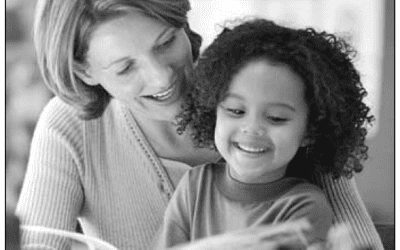
A school community grows through shared moments of play, conversation, and belonging.
Resources and Further Reading
American Camp Association. Professional Resources and Accreditation.
https://www.acacamps.org/
Eisler, Riane. (2000). Tomorrow’s Children: A Blueprint for Partnership Education in the 21st Century. Westview Press.
Hilgers, Lauren. (2026, November 9). The 7-Days-a-Week, 12-Months-a-Year School. New York Magazine.
https://nymag.com/intelligencer/article/strive-charter-school-child-care-bronx-work.html
Learning Policy Institute. (2017). Community Schools as an Effective School Improvement Strategy: A Review of the Evidence.
https://learningpolicyinstitute.org/product/community-schools-effective-school-improvement-report
McCormack, Gavin. The Safe School Framework.
https://safeschoolframework.com/
Montessori, Maria. (1949). The Absorbent Mind.
Seldin, Tim. Celebrations of Life. The Montessori Foundation.
Seldin, Tim, Epstein, Paul, and Howe, Robin. (2025). The Montessori Way, second edition.
Prepared for The Montessori Foundation’s Weekend Read series.