Related Posts



I own, at minimum, 47 plastic dinosaurs. I know this because I counted them at 11:00 PM on a Tuesday while questioning my life choices, my storage solutions, and my sanity.
We’ve all been there, haven’t we? Standing in the middle of a living room that looks like a prehistoric disaster zone, wondering how one small human managed to accumulate enough plastic to choke a landfill. It starts with one friendly Stegosaurus, and before you know it, you’re knee-deep in “dino debris,” contemplating if you should just move to a house with larger closets or perhaps a bunker.
But here is the Montessori secret that nobody tells you until you’re literally buried: kids don’t actually need more toys. In fact, the more toys they have, the less they actually play. They don’t need a mountain of stuff; they need fewer, better-chosen items, rotated on a schedule that you control.
At The Montessori Foundation, we call this the “Prepared Environment.” It’s one of the core Montessori basics, and honestly? It might just save your life (or at least your shins).
The Psychology of the “Dino Pile”
Why does a box of 60 toys lead to a child screaming, “I’m bored!” while throwing a T-Rex at the wall?
It comes down to a concept Dr. Montessori called the Sensitive Period for Order. From birth to age six, children have an internal, almost biological drive to organize their world. They are trying to make sense of how things fit together. When we present them with a chaotic toy box, a literal jumble of unrelated parts, we aren’t giving them “choices.” We are giving them a sensory overload that their developing brains can’t process.
Imagine walking into a library where the books are just piled in the middle of the floor in a giant heap. You wouldn’t think, “Oh, look at all these wonderful choices!” You would walk right back out and find a Netflix show to watch. That’s what our kids do. They “flit” from one toy to another, never settling, never focusing.

The Great Dinosaur Culling
So, I did it. I performed the “Great Dinosaur Culling.”
I put 40 dinosaurs in an opaque bin in the back of the closet. I left exactly seven on the shelf. I didn’t just toss them there; I spaced them out. I gave them “room to breathe.”
To our delight, something magical happened. My son didn’t ask where the other 40 went. Instead, he walked up to the shelf, picked up a lone Triceratops, and spent twenty minutes: twenty actual minutes!: investigating its horns and making it “walk” across the rug. He began treating them like precious artifacts instead of floor hazards.
By following the Montessori philosophy of simplicity, we transitioned from “clutter management” to “meaningful engagement.”
The “Blocks” of a Prepared Environment
When we talk about the building blocks of a home environment, we aren’t just talking about literal wooden blocks (though those are great). We are talking about the structural elements that make a home feel like a sanctuary rather than a schoolroom or a warehouse.
In the Montessori Family Alliance, we often guide parents through the process of setting up these spaces. If you’re looking for a comprehensive guide, I highly recommend checking out our resources like “Montessori 101” or the classic book “How to Raise an Amazing Child” by our president, Tim Seldin. They offer a deep dive into how simplicity fosters independence.
How to Try It: Your 3-Step Plan
If you’re ready to find the meaning of life (or just your floor), here is how to implement a basic Montessori materials list through rotation:
- The “Job” Rule: Pick 5–8 toys per shelf. Every item must have a clear “job.” One for building (blocks), one for sorting (a tray of shells), one for fine motor skills (a puzzle), and one for pretend play (those 7 lucky dinosaurs). If it doesn’t have a job, it goes in the bin.
- The “Breathe” Rule: Use low, open shelves. Place each toy or activity in its own basket or tray. Leave visible space between them. This visual “quiet” is what allows a child to choose with intention.
- The Rotation Strategy: Store the extras out of sight: not out of the house (yet!). Every 2–3 weeks, observe your child. Are they ignoring the puzzle? Swap it for a new one from the closet. It feels like Christmas morning every time, and it costs exactly zero dollars.

Why This Matters for the Long Haul
You might be thinking, “It’s just dinosaurs, Penny. Is it really that deep?”
Yes. It is.
By creating an orderly environment, we are teaching our children how to focus, how to value their possessions, and how to find peace in their surroundings. We are moving away from the “more is better” consumerist mindset and toward a life of intentionality. This is the heart of what we teach in the Montessori Family Alliance. We want to help you solve the “Parenting Puzzle”: which, as it turns out, is a lot easier to solve when there aren’t 47 plastic dinosaurs missing their tails under the sofa.
Frequently Asked Questions
Q: What if my child asks for a specific toy that I’ve hidden in the closet?
A: If they ask for it by name, give it to them! That shows they have a strong mental image and a real desire for that item. Swap it out for something currently on the shelf. The “rotation” isn’t a prison; it’s a menu.
Q: My house is small. I don’t have room for “open shelves” and “breathing space.”
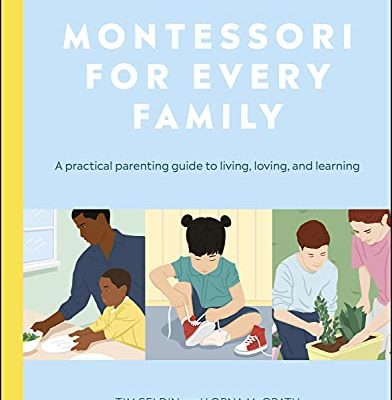
A: We hear you. In small spaces, the principle of simplicity is even more important. Use vertical space, or even just designate one single shelf as the “Montessori Shelf.” You don’t need a palace; you just need a plan. For more small-space tips, check out “Montessori for Every Family.”
Q: How do I know which toys are “better-chosen”?
A: Look for “passive” toys that require an “active” child. Simple wooden blocks, realistic animals, and practical life tools (like a small pouring set) are better than toys that light up and talk. When the toy does the work, the child’s mind turns off. When the toy is simple, the child’s imagination turns on.
The Takeaway
The meaning of life, it turns out, is a slightly emptier shelf.
When we clear away the literal and metaphorical “dino debris,” we make room for what actually matters: concentration, joy, and the quiet hum of a child at work. We move from being “toy managers” to being “guides.”
If you’re feeling overwhelmed by the clutter, I invite you to join us. The Montessori Family Alliance is a community of parents just like you: parents who are tired of stepping on T-Rexes and are ready to bring a little more “authentic Montessori” peace into their homes.
Start small. Pick one shelf. Pick 7 dinosaurs. And then, take a deep breath. You’ve got this.

Want to dive deeper? Explore our full library of parenting guides, including “The Parenting Puzzle” and “Montessori 101,” at montessori.org.