Related Posts

When Montessori schools work together, children gain opportunities to build friendships, develop skills, and participate in a wider community.
By Tim Seldin
Most Montessori schools are intentionally human in scale. Their classrooms are carefully designed communities where children learn with and from one another. Across the school, teachers know the children well, and families often develop lasting friendships.

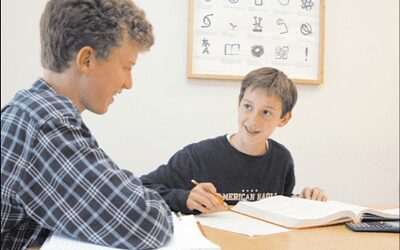
Montessori classrooms are carefully designed communities where children learn with and from one another.
That sense of connection is one of Montessori's greatest strengths.
At the same time, even the finest school can offer only so much on its own. Imagine what becomes possible when one or more Montessori schools in the same community begin working together.
This may not seem so important when our children are under age five, but it becomes invaluable as they reach the elementary years and beyond.
Instead of one small school trying to organize every activity, neighboring schools could create opportunities together.

Montessori sports leagues can emphasize teamwork, perseverance, and respect while bringing children from neighboring schools together.
Working together, we could give our children opportunities to participate in Montessori sports leagues that emphasize teamwork, perseverance, and respect. They might perform in regional theater productions, exhibit their work in art festivals, compete in robotics or engineering challenges, participate in speech and debate, join hiking clubs, attend family camping weekends, organize community service projects, take part in science fairs, music festivals, entrepreneurship programs, and student leadership conferences, or simply gather for dances and celebrations.

Regional theater productions and art festivals allow children to share their creativity while forming connections beyond their own schools.
These experiences would never replace school. They would extend it.

Robotics and engineering challenges give Montessori students opportunities to collaborate, test ideas, and solve problems together.
They would allow children to build friendships with other Montessori students throughout their community—friendships that might continue for years as they move into adolescence and adulthood.
Parents have an equally important role to play. Most want to help, but they are not always sure how.
The Montessori Family Alliance can help families discover meaningful ways to contribute—not by taking over the work of teachers or administrators, but by becoming thoughtful partners with their schools.

Parents become thoughtful partners when they volunteer, plan community activities, and welcome new families into the Montessori community.
Some parents may welcome new families. Others may organize teacher-appreciation programs, family-education evenings, children's activities, service projects, or community celebrations. Still others may help neighboring Montessori schools work together to create opportunities that none of them could easily create alone.
The Alliance provides ideas, practical blueprints, leadership training, and opportunities for parents to learn from one another. A successful idea developed in one community can inspire dozens of others.
Perhaps most importantly, our children are watching.

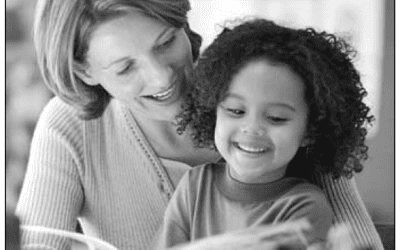
Children learn citizenship by watching adults volunteer, solve problems, and contribute to something larger than themselves.
They notice when adults care enough to work together. They notice when parents volunteer, solve problems, welcome newcomers, organize events, and quietly contribute to something larger than themselves.
These experiences teach lessons that cannot be found in any textbook. Children learn what a community looks like because they have lived in one. They learn citizenship by watching adults practice it.
That, it seems to me, is profoundly Montessori.
I know most families will not become deeply involved. Every family's circumstances are different, and participation will naturally take many forms.
Some parents may simply enjoy reading Tomorrow's Child or asking Abigail a question about their child's development. Others may attend an occasional webinar or join an online discussion. Still others may decide to help organize local activities, welcome new families, mentor other parents, or bring neighboring Montessori schools together around a shared idea.
Every contribution matters.
If enough parents and schools choose to participate—even in small ways—they can create something that extends far beyond any individual school.
They can create communities where families support one another, where children enjoy opportunities that no single school could provide alone, and where parents demonstrate through their own example that building a better world begins with ordinary people deciding to work together.
That, ultimately, is the larger vision behind the Montessori Family Alliance: not simply to help parents raise their own children, but to help families strengthen one another, enrich the schools they love, and create communities in which children can experience the very values that first drew us to Montessori.

Family camping weekends and hiking clubs create relaxed opportunities for Montessori families to build lasting connections in nature.
The greatest gift children receive may be more than an outstanding Montessori education. It may be the experience of growing up surrounded by adults who chose to build the kind of community they hoped their children would one day inherit.