Related Posts
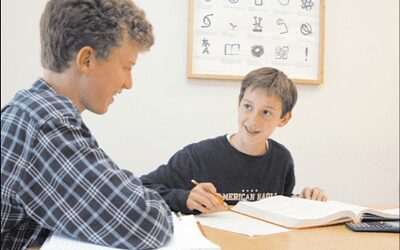
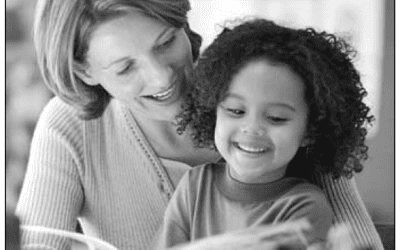

The partnership between home and school begins when children see the adults they love trusting and participating in their Montessori community.
By Montessori Foundation Staff
Every September, we ask a great deal of children. We ask them to walk into a new classroom—or an old classroom made new by a summer's growth—and trust a room full of unfamiliar materials, greet a guide they are only beginning to know, and adjust to a rhythm of independence that feels very different from home.
What we ask of parents is less often named, but it matters just as much. We ask you to trust a process you may not fully understand yet, to let go of some of the daily oversight you are used to, and to believe that a three-hour work cycle, a set of wooden materials, and a teacher who rarely says "good job" are quietly building something extraordinary in your child.
That trust is not automatic. It is built the same way your child's concentration is built: one small experience at a time. The parents who get the most out of a Montessori education are almost always the ones who decide early and deliberately to become partners in it rather than spectators.
This is an invitation to be that kind of parent this year.
Why This Is Worth Your Time
It would be easy to treat school as something that happens to your child during the day and to you only at pickup, at conferences, and when a note comes home. Many families do exactly that, and their children still learn a great deal. But something different happens when parents actually understand what they are observing.

A child carrying a tray of work is practicing concentration, coordination, sequencing, and care for the prepared environment.
When you know why your four-year-old is carrying a tray of work back and forth across the room instead of sitting still with a workbook, you stop worrying that nothing is being taught and start noticing that everything is being built: concentration, coordination, sequencing, and a sense of order that will eventually become the foundation for abstract thought.
When you know why your ten-year-old suddenly wants to argue about fairness at the dinner table, you recognize the moral reasoning of the second plane of development rather than a discipline problem.
Understanding the philosophy does not just make you a more informed observer. It changes what you do at home, how you talk to your child, and how much you trust the process on the days when it is hard to trust. It is the difference between a family that survives Montessori and a family that lives it.
Let Your Child See the Connection
Children notice where their parents' attention goes. When you speak warmly about their teacher, when you show up for a classroom observation, or when you volunteer for a work morning or fall festival, your child absorbs something important:
This place matters to the people I love most.

When parents volunteer, children notice that their school community matters to the people they love most.
That connection does real work. Children whose parents are visibly engaged with the school tend to carry less anxiety about the separation between home and classroom. They sense that the two halves of their life are not in competition and that the values practiced in one place are honored in the other.
You do not need to be at school every day to give your child this. You need your child to know, in both large and small ways, that you and the school are on the same team.
What You Most Want to Learn
If you have limited time this year—and most parents do—here is where that time will pay the greatest dividends.
Learn how your child is actually developing

Montessori's four planes of development remind us that children at different ages have distinct developmental needs.
Montessori's four planes of development—birth to six, six to twelve, twelve to eighteen, and eighteen to twenty-four—describe distinct human beings with distinct needs, not one long march through the same kind of childhood.
A toddler is not a small preschooler. A twelve-year-old is not a young teenager who happens to be shorter. Understanding which plane your child is in will change how you interpret nearly everything they do.
Learn to read behavior as information, not judgment
A child who resists a transition, insists on doing something "the hard way," or seems fixated on one activity is usually not being difficult. They are very often responding to a developmental need that has not yet been named for you.
Learning to ask, "What is this behavior trying to tell me?" instead of, "How do I stop this behavior?" is one of the most transformative shifts a Montessori parent can make.
Learn what is coming
Ask your child's guide. Ask the school. Read ahead. Knowing what the next two or three years typically bring lets you meet each stage with curiosity instead of alarm.
Learn how to bring Montessori home
This is where understanding becomes practice, and it touches nearly every corner of family life.

A prepared environment at home gives children accessible ways to participate, such as hanging a coat on a low hook or reaching a shelf independently.
A prepared environment at home does not require a classroom's worth of materials. It requires things sized and placed so your child can succeed without you: a low hook for a coat, a step stool at the sink, or a shelf they can reach.
The instinct to protect children from real work is understandable and usually mistaken. A child who sets the table, sorts laundry, or helps prepare a meal is not being burdened with chores. They are being handed the dignity of contribution, one of the deepest benefits Montessori offers.

Setting the table and preparing food allow children to experience the dignity of meaningful contribution to family life.
Predictable routines and time protected from constant scheduling give children the same sense of order at home that the classroom gives them during the day.
Montessori classrooms also explicitly teach grace and courtesy: how to greet someone, how to interrupt politely, and how to offer help. Families that practice these same small courtesies at home—modeling rather than lecturing—raise children who carry that social grace everywhere.
Montessori discipline is rooted in respect, natural consequences, and clear limits held with warmth rather than punishment or reward. A child who spills something is invited to clean it up, not shamed. This is a skill parents can learn and practice, and it changes the emotional climate of a home.
Trust runs in both directions. Showing up for observations, communicating openly with your child's guide, honoring the school's approach to screens, sleep, and homework, and speaking about the school with respect in front of your child are all quiet but powerful ways of protecting what your family is building together.
What to Read
You do not need to become a Montessori scholar to be a wonderful Montessori parent, but a few well-chosen books will save you years of guessing.
Maria Montessori's own writing, particularly The Absorbent Mind, remains the clearest window into why the Method works. For the elementary years and beyond, ask your school for recommendations tied to the second and third planes of development, since so much parenting advice aimed at younger children stops being useful right when it matters most.
Most of all, read what your own school sends you.
Use Your Montessori Family Alliance Membership
If you are receiving this issue, your school is part of the Montessori Family Alliance, or you are an individual member.

Reading and exploring resources such as the Montessori Family Alliance platform can help parents become informed, confident partners in their child's education.
The Montessori Family Alliance platform at familyalliance.montessori.org offers age-based guidance built around your own child's developmental stage. Abigail, our AI-powered Montessori guide, is there for the 2:00 a.m. question that cannot wait for a conference. Set aside twenty minutes some evening this month and simply explore what is there.

Predictable family routines and protected time help children carry the classroom's sense of order into home life.
None of this requires perfection. It requires attention. The parents who get the most from a Montessori education are not the ones with the most free time. They are the ones who decide, in a hundred small ways across the year, that this is worth understanding well.
Your child is doing extraordinary work this year, often quietly. The more you understand what you are watching, the more fully you can be part of it.
That partnership—between home and school, and between what your child practices in the classroom and what they live at home—is not a nice extra. It is very often what makes the difference.