Related Posts
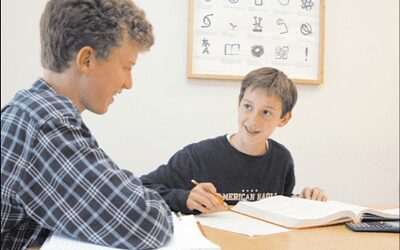

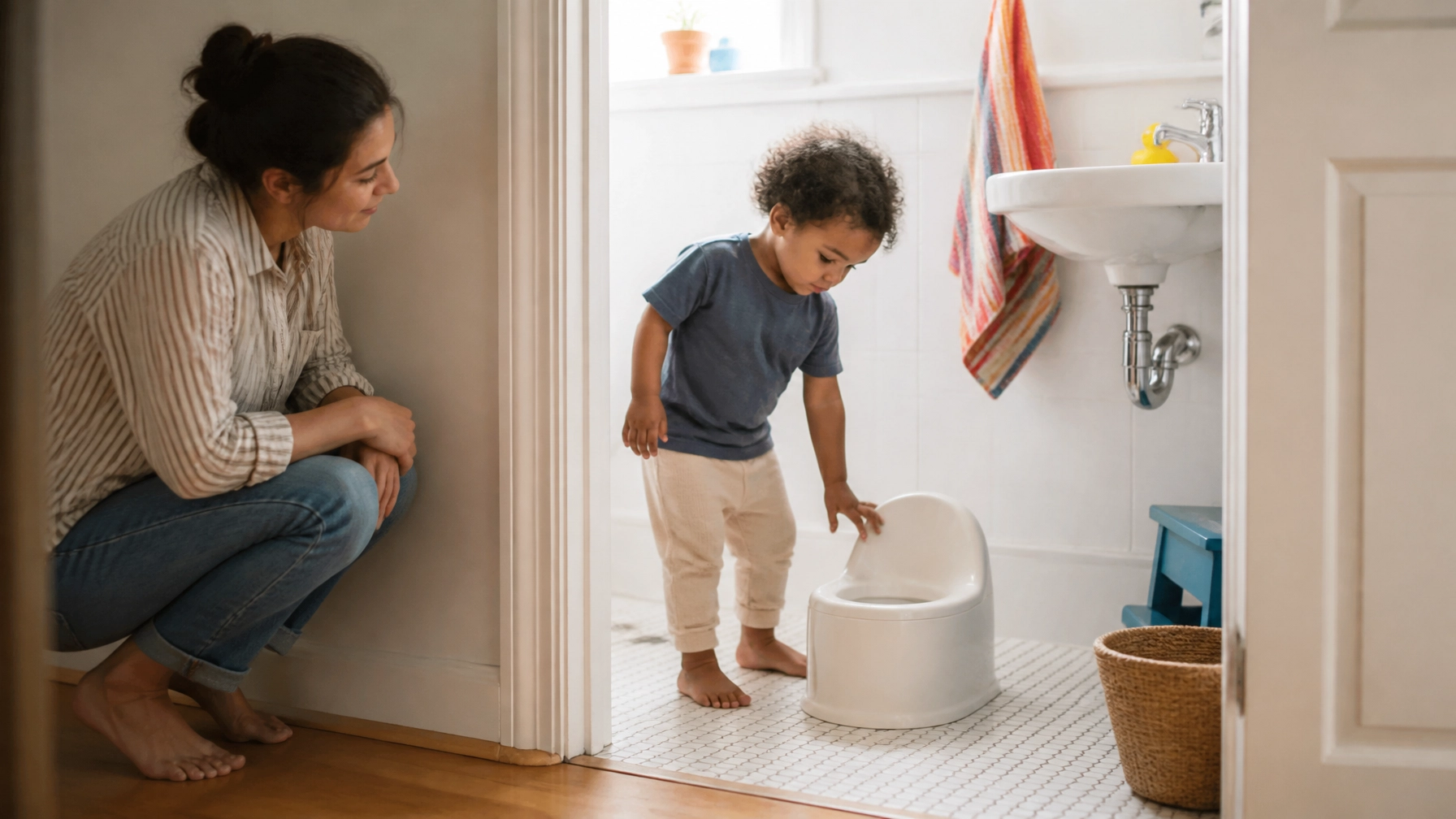
In a calm home environment, a caregiver observes a toddler’s emerging independence without pressure.
Few topics generate more anxiety for parents of toddlers than toileting. Is my child ready? Am I pushing too soon? Should we wait? Modern disposable diapers have made postponing the process easier than ever before. Montessori offers a different perspective—one grounded in developmental readiness and deep respect for the child.
This approach isn’t about rushing children or enforcing timelines. It’s about recognizing when a child’s neurological development supports toilet learning and understanding why continuing diapers past that point may unintentionally delay independence and body awareness.
Readiness Is Neurological, Not Chronological
Montessori toilet learning begins with observation, not age. When the brain and nervous system reach sufficient maturity, children naturally begin to notice bodily signals, anticipate elimination, and coordinate the physical steps of toileting.
Signs of neurological readiness include: Awareness of being wet or soiled, often expressed through discomfort or communication; Predictable elimination patterns (waking dry from naps, regular timing); Ability to follow two- or three-step sequences (“Let’s go to the bathroom, pull down pants, sit”); Increasing motor control and coordination; and Interest in bathroom routines or desire to participate in self-care

Careful observation helps adults notice when a child begins to communicate needs and participate in self-care.
When these capacities emerge (typically between 18 and 30 months of age), the child’s nervous system is signaling readiness. Continuing exclusive use of diapers at this stage can create confusion. Although the body signals capability, the environment says it’s unnecessary.
Montessori asks us to align support with development rather than convenience.
How Diapers Affect Body Awareness
Modern disposable diapers excel at keeping children comfortable regardless of elimination. While this serves infants well, it can inadvertently delay awareness once neurological readiness emerges.
Body awareness develops through simple but important feedback loops: I feel pressure. I release. I notice wetness. I connect these sensations. When diapers absorb everything instantly, this learning loop becomes weaker. Children receive less sensory information about what their body is doing, which can delay their ability to recognize and respond to these internal cues.
This doesn’t mean diapers harm infants or young toddlers. They serve an important purpose early on; however, once a child can recognize and respond to bodily signals, continued reliance on diapers may dampen the very awareness needed for independent toileting.
Toilet Learning as Self-Care, Not Compliance
Montessori frames toileting not as a behavioral milestone but as natural self-care, parallel to feeding oneself or washing hands. Dr. Montessori observed that children possess a deep drive toward independence. When adults support this drive, children experience competence and dignity. When it’s inadvertently blocked, children may resist or disengage.
Learning to use the toilet isn’t about pleasing adults. It’s about the child discovering: My body belongs to me, and I can care for it.

Simple clothing and accessible choices allow children to participate actively in their own self-care.
Why Delayed Support Sometimes Creates Resistance
Many parents assume waiting longer makes toileting easier. Sometimes the opposite occurs. Children who are neurologically ready but kept in diapers may assert control through refusal, anxiety around toileting, or resistance to transitions.
This isn’t defiance. It’s often the child communicating: I’m capable, but I’m not being allowed to try.
Montessori environments introduce toileting gently at the developmental window when curiosity and capability align, before frustration builds. When offered respectfully at the right moment, toilet learning rarely becomes a power struggle.
The Environment Enables Independence
Success relies on intentional preparation. When children are expected to use adult-sized bathrooms designed for adult bodies, they face unnecessary challenges that hinder independence and confidence.

A prepared bathroom provides stable footing, accessible handwashing, simple routines, and the tools children need to participate.
A supportive environment includes a child-sized toilet or secure toilet insert with stable footing, a sturdy step stool for independent climbing, simple clothing with elastic waistbands while avoiding overalls or complex fasteners, an accessible sink or basin for handwashing, and calm, predictable routines without urgency.
When the environment supports capability, toileting becomes something the child does rather than something done to them.
Montessori toileting never involves coercion, shame, or punishment. Accidents are treated as information, not failure. Adults model calm confidence, such as offering reminders without anxiety, assistance without intrusion, and encouragement without rewards or charts.
The message remains consistent: Your body is learning. I trust you.

A calm reminder before a transition can support consistency without creating pressure.
Throughout this process, it’s important to avoid praise/shame language (such as Good job!, or Uh-oh!). Instead, use observation-based language. Here are a few examples: Your pants are dry. Your pants are wet. Let’s change into dry ones. You worked hard to get to the toilet. You are learning to care for yourself.

Handwashing is an important part of the complete self-care sequence.
This preserves emotional well-being while supporting physical development.
Nighttime and Temporary Setbacks
Daytime readiness differs from nighttime dryness, which depends on physiological maturation (often coming months or years later) and is largely involuntary. Montessori doesn’t equate nighttime accidents with lack of readiness.
Temporary regressions during illness, travel, or major transitions are normal. The response is to return to support, not to abandon progress.

Home and school can work together to provide a consistent, reassuring approach during periods of change.
The Deeper Lesson: Dignity and Self-Trust
At its heart, Montessori’s approach to toileting is about dignity. Children who learn to listen to their bodies, respond appropriately, and care for themselves develop quiet confidence that extends far beyond the bathroom.
They internalize: Awareness of internal signals, Responsibility without shame, Trust in their capabilities, Respect for their bodies.

Warm, attentive conversations help children connect self-awareness with trust in their own capabilities.
These lessons influence how children approach challenges throughout life.
For Parents Navigating this Stage
If you’re wondering whether to begin, observe your child. Are they showing signs of awareness? Can they communicate needs? Do they show interest in the bathroom?
You’re not rushing your child by offering support when they’re neurologically ready; you’re honoring development. Your child’s Montessori guide can be an invaluable partner in this process, observing readiness patterns throughout the school day and helping align home and school approaches.

A respectful partnership between parents and guides helps align observations and support across home and school.

The guide’s role is to observe carefully, prepare the environment, and support the child’s growing independence.

When changes are needed, children can participate in the practical steps calmly and without shame.

Small, repeated responsibilities help children experience themselves as capable contributors.
Moving beyond diapers isn’t about growing up too fast. It’s about allowing children to grow when they’re ready—with confidence, dignity, and trust in their unfolding capabilities.
In a well-functioning Montessori Children’s House, children work, move, talk, and care for their shared environment with growing independence.
<br>
Why Some Montessori Classrooms Become Calm, Joyful Communities—and Others Never Quite Get There
Walk into a well-functioning Montessori Children’s House and something feels different. It is not silent. Children are talking. Someone may be washing a table. Two children may be rolling a rug together. Another is carefully carrying a tray across the room. A four-year-old is watching an older child read. Someone spills something and goes to get a cloth without calling for an adult.

A child cares for the environment by responding to a spill with the practical skills needed to restore order.

Rolling a rug together gives children an ordinary opportunity to coordinate their movements and practice cooperation.

Children learn through observation as well as through direct lessons, often discovering possibilities by watching an older classmate work.

Carrying a tray with care supports purposeful movement and respect for the work of everyone sharing the room.
There is movement, conversation, occasional disagreement, laughter, concentration, and work. Yet underneath it all there is a remarkable sense of order. The children seem to know what to do. They know where things belong, how to move around one another, that one child’s work deserves protection. They increasingly recognize when someone needs help—and, just as important, when someone does not.
The adults are present, observant, and available, but they are not directing every moment.
This is what Montessori teachers have traditionally called a normalized classroom. Unfortunately, the word normalization is often misunderstood. Montessori was not suggesting that children should become compliant, quiet, or “normal” in some conventional sense. She was describing a transformation she repeatedly observed when children were able to choose purposeful work, concentrate deeply, experience increasing independence, and live within a carefully prepared social community. Over time, something changed: children became calmer, more focused, more independent, more considerate, and more capable of regulating themselves.
This raises an important question. Why do some Montessori guides seem able to create this kind of classroom almost effortlessly, while others struggle year after year?
The answer is not simply better classroom management. In fact, classroom management may be part of the problem.
The Children’s House Is Not the Teacher’s Classroom
Listen carefully to the language adults use: my classroom, my shelves, my materials, my rules, my children. There is nothing malicious about these phrases—we all use them—but they can reveal an unconscious assumption that the classroom essentially belongs to the adult, and that the children are visitors we are trying to manage successfully.
Montessori turns that assumption around. The Children’s House is exactly what its name suggests: it is the children’s house. The environment exists to support their development. The furniture fits them. The materials are accessible to them. The routines should eventually be carried out by them. The community should increasingly function through their competence rather than through constant adult direction.
The guide does engineer this environment—deliberately and continuously—but the nature of that engineering changes over the year, and a mature Montessori classroom shifts real ownership of daily upkeep to the children as fast as they’re able to carry it.
At the start of the year, the adult does the heavy lifting alone: selecting materials appropriate to the group’s developmental range, sequencing them from simple to complex, arranging shelves so the logic of the curriculum is visible, making sure every material is complete and beautiful, and removing anything that isn’t earning its place. This is not decoration. It is curriculum design made physical.
But almost immediately, the guide begins teaching children to take over pieces of that maintenance—not as chores handed down—but as competencies taught with the same care as any other lesson. A three-part lesson on how to roll a rug, carry a tray, wash a table, or return a work to the shelf exactly as it was found is not a side task. It is the mechanism by which the environment stops belonging exclusively to the adult.

Practical skills such as rolling a rug and carrying a tray are presented as precise lessons, not assumed to be understood automatically.
Returning children accelerate this. A second- or third-year child who already knows how to prepare snack, water the plants, or reset a work after use can be given real responsibility for opening or closing the room—not as a favor to the teacher—but because doing so is itself developmentally significant. It builds the child’s sense of belonging and competence, and it models for newer children what ownership of the space looks like.

Returning a work complete and carefully arranged allows the next child to find the material ready, while strengthening the child’s ownership of the environment.
So the honest description is that the adult engineers the environment first, then engineers the transfer of its maintenance to the children—choosing, teaching, and stepping back—deliberately and in stages, rather than either doing it all forever or expecting children to intuit it. The guide prepares the environment, establishes the culture, teaches the necessary skills, protects the conditions for concentration, observes carefully, and intervenes when necessary. Then, gradually, the guide becomes less necessary. That last step can be surprisingly difficult—good Montessori teaching requires adults to deliberately surrender a kind of power that conventional schooling often gives them.
The goal is not to become the indispensable center of the classroom. The goal is to create a community that can increasingly function without us.
Freedom Does Not Create Community by Itself
One of the most damaging misunderstandings of Montessori is the idea that children should simply be free to choose what they want to do. Montessori certainly believed in freedom—but it was always freedom within a carefully established social order.
A new group of three-, four-, and five-year-olds does not automatically know how to live together harmoniously. They have to learn: how to carry a chair without crashing into someone’s work, how to watch another child without touching, how to wait, how to interrupt appropriately, how to offer help and how to decline it graciously, how to walk around a rug rather than across it, how to return a material so the next person finds it complete, how to resolve a disagreement, how to recognize “she is working, I need to wait.”
Grace and Courtesy is not a charming little corner of the Montessori curriculum. It is the operating system of the classroom. Without it, freedom deteriorates into chaos.

Grace and Courtesy lessons give children practical ways to greet one another, move through the room, wait, offer help, and protect the community.
The Guide Establishes the Culture Before Expecting Children to Live It
Experienced Montessori guides understand something that less experienced teachers sometimes miss: you cannot demand from children a culture you have never explicitly taught.
Grace and Courtesy is often treated as reactive—something invoked after a conflict, a spill, an interruption. In strong classrooms it is mostly proactive: taught before the need arises, so that when the moment comes, the child already has the vocabulary and the physical skill for it.
That looks like short, specific lessons given to individuals or small groups, often modeled with exaggerated slowness so the child can see each step: how to walk around a rug, how to ask to join someone’s work, how to interrupt an adult politely, how to offer help, how to say no to an offer of help, how to greet a visitor, how to pass a pair of scissors, how to wait near a friend who is concentrating.

By moving slowly and making each step visible, the guide teaches children what respectful participation looks like before the situation becomes difficult.
The guide often role-plays both sides—demonstrating the clumsy version and the graceful version—so the children see the contrast rather than just hearing a rule. Lessons are usually given when the classroom is calm, not in the heat of a conflict, and then quietly rehearsed and reinforced in the moment it’s actually needed, with minimal language: a raised hand, a single word, a gesture toward the demonstration already given.
Guides also watch for the moments when a new skill is about to become necessary—a new child joining, a new material arriving that requires a new kind of care, the first cold morning that means coats and boots—and teach ahead of the need rather than only correcting after.
At the beginning of the year, successful guides spend enormous energy establishing these patterns. They demonstrate how to move. They rehearse routines. They give Grace and Courtesy lessons, redirect again and again, protect concentration, and help children discover meaningful work. They intervene early when behavior begins to disturb the community—but without anger, and without turning every correction into a lecture. The message is calm and consistent: this is how we live together here.
Over time, the children absorb the culture, and eventually the older children become some of its strongest guardians. A five-year-old quietly reminds a younger child to walk around a rug. Another child shows someone where the towels belong. A child who has finished snack wipes the table, because that is simply what people do here.

Older children often become guardians of the classroom culture, helping younger classmates without taking away their opportunity to act independently.
At that point, the classroom is no longer functioning primarily because the teacher is enforcing rules. The community has developed expectations of its own. That is a profound difference.
When Adults Talk Too Much
One of the most common problems in struggling Montessori classrooms is excessive adult language.
A child is running: “Sarah, remember we use walking feet inside because someone might be carrying something and you could bump into them and somebody could get hurt.” A child grabs a material: “Remember, Nicholas was using that and we need to respect our friends and wait until someone is finished.” A child interrupts a lesson: “Can you see that I’m giving Maya a lesson right now? You need to wait until I am finished and then I will be happy to help you.”
Every statement is reasonable. But multiplied hundreds of times each day, the classroom becomes saturated with adult voices, and children learn an unfortunate lesson: the adult will regulate the environment for us.
Successful guides often say much less. “Walk.” “She is working.” “You may wait.” “Try again.” Or sometimes they simply make eye contact, gesture, or quietly position themselves between a child and something that needs protection. The adult does not withdraw authority. The adult becomes more precise.
Helping Can Become an Obstacle
Montessori’s warning—never help a child with a task at which he feels he can succeed—goes much deeper than buttoning coats or carrying pitchers. Adults often over-help socially as well.
Two children disagree. The teacher arrives immediately: “What happened? Tell me your side. How do you think he feels? What could you say?” Soon the adult has become judge, translator, counselor, and arbitrator. Sometimes that intervention is necessary. Often it is not.
Children need opportunities to develop the ability to negotiate ordinary social life: “I’m using this.” “You can have it when I’m done.” “Please stop.” “I don’t like that.” “Can I work with you?” “No, I want to work alone.” These small encounters are not interruptions to the curriculum. They are part of the curriculum. A Montessori community is a laboratory for human relationships.

When safety allows, children can practice the language of negotiation and learn that ordinary social problems are part of the curriculum.
The Real Work of the Guide Is Observation
When a classroom is unsettled, adults naturally focus on the children whose behavior is most visible. Experienced guides ask a different question: what is the environment telling me?
Is there enough compelling work? Are children receiving lessons that connect them to the materials? Are some shelves cluttered with work no one chooses? Are activities too difficult or too easy? Are transitions creating unnecessary disorder? Are adults interrupting concentration? Are we keeping the entire group together too often? Are children dependent on teachers for things they could do themselves? Are we inadvertently rewarding disruptive behavior with enormous amounts of adult attention? Is one adult constantly correcting while another undermines expectations? Are we moving around the room too quickly and talking too loudly? Is the work cycle truly protected?

Observation helps the guide study patterns in the environment and make deliberate adjustments rather than reacting only to the most visible behavior.
This is where Montessori becomes much more sophisticated than behavior management. The guide does not merely ask, “How do I stop this behavior?” The guide asks, “What conditions are producing it?”
The Adult Sets the Emotional Temperature
Children are extraordinarily sensitive to the adults around them. A hurried adult creates hurry. A loud adult produces volume. An irritated adult generates tension. An adult who constantly interrupts teaches interruption. A teacher who handles materials carelessly cannot convincingly insist that children handle them beautifully.
Children learn the culture of a Montessori classroom partly through lessons and largely through immersion. This is why the preparation of the teacher is as important as the preparation of the environment. The adult has to become someone worth imitating.
That does not mean becoming artificially serene. Montessori teachers are human beings—they get tired, they become frustrated, days go badly. But the strongest guides develop a kind of practiced intentionality. They slow themselves down. They lower their voices rather than raising them. They move deliberately. They observe before intervening. They distinguish between behavior that is genuinely harmful and behavior that is simply inconvenient for adults. They resist the urge to solve every problem. And perhaps most importantly, they trust development.
Protecting Concentration Changes Everything
One of Montessori’s most important discoveries was the relationship between concentration and the development of the personality. A child deeply engaged in meaningful activity is doing much more than completing a puzzle or polishing a piece of brass. The child is organizing the mind, developing coordination, strengthening executive function, learning perseverance, building independence, experiencing competence, and gradually developing self-discipline.
This is why the uninterrupted work cycle matters so much. A classroom cannot easily normalize when children are constantly being stopped for announcements, adult-directed activities, unnecessary transitions, or whole-group lessons. Concentration needs time to emerge, and the guide becomes its protector.

The guide protects deep concentration by remaining nearby and attentive without interrupting the child’s purposeful work.
When a child begins to concentrate deeply, experienced Montessorians treat that concentration almost reverently. They do not interrupt unnecessarily. They prevent other children from interfering. They resist the temptation to praise. They allow the child to finish—because they understand that something important is happening internally.
The Classroom Does Not Need to Be Quiet to Be Normalized
This deserves emphasis. A normalized Montessori classroom is not a silent classroom. Three-year-olds laugh. Children talk. Things fall. Someone occasionally cries or becomes frustrated. Two children argue. A pitcher breaks. A child has a difficult morning. Real communities are alive.
The difference is not the absence of disorder. It is the community’s capacity to return to equilibrium. In a well-developed Montessori classroom, small disturbances do not necessarily spread; children increasingly regulate themselves and one another, and the adult does not have to reset the entire room every five minutes. That resilience may be one of the best measures of classroom normalization.
Beware the Perfect Montessori Classroom
There is another trap. Some adults create classrooms that appear beautifully ordered because children have learned to comply with the teacher. The shelves are perfect. Voices are whisper-soft. Everyone seems controlled.
But look more carefully. Are children making meaningful choices? Do they initiate work themselves? Can they solve ordinary problems without an adult? Do they move confidently, laugh, help one another naturally? Do they feel ownership of the environment—or are they constantly watching the teacher to determine what is permitted?
Montessori was not trying to create exquisitely behaved children. She was trying to liberate human potential. Order matters because it supports freedom. Discipline matters because it eventually becomes self-discipline. Community expectations matter because they allow many individual freedoms to coexist.
The Magic Appears Slowly
When people observe an exceptional Montessori classroom, they sometimes assume the guide has simply been blessed with unusually wonderful children. Almost never. What they are seeing is the accumulated result of hundreds of small decisions.
The teacher prepared carefully. The adults agreed on consistent expectations. Grace and Courtesy lessons were given repeatedly. Unnecessary materials were removed. Interesting lessons connected children with purposeful activity. The work cycle was protected. Disruptions were addressed early. Children were given real responsibility. Adults stopped doing things children could do themselves. Older children were allowed to become leaders. The teacher observed patterns and adjusted the environment.
And slowly something remarkable happened: responsibility began moving from the adults to the children. That is the moment when a classroom begins to feel different. The guide is no longer holding everything together. The community is.
What Does a Real Montessori Community Look Like?
It looks like a child noticing that the easel needs paper and replacing it. It looks like a five-year-old showing a three-year-old where something belongs. It looks like two children negotiating whose turn comes next, or one protecting another’s concentration. It looks like children preparing food and cleaning up afterward. It looks like a child making a mistake without immediately looking toward an adult for rescue, and an older child experiencing genuine pride in helping a younger one. It looks like children noticing beauty, disorder, loneliness, frustration, and need—and increasingly knowing what to do about them.

When children can notice a mistake and restore the environment themselves, they experience resilience, competence, and genuine ownership.
Above all, it looks like a community in which children experience themselves not merely as students receiving an education, but as capable human beings whose actions matter. That may be the heart of the Children’s House.
The shelves belong to the children. The materials belong to the children. The routines belong to the children. The responsibility increasingly belongs to the children. And eventually the culture itself belongs to them.
The guide’s great achievement is not creating a classroom that cannot function without her. It is creating one that can.
Perhaps that is the paradox at the center of Montessori teaching. We prepare more carefully so that we can control less. We teach deliberately so that children can act independently. We establish order so that freedom becomes possible. And we lead the community, ultimately, so that it can increasingly belong to the children themselves.