Related Posts
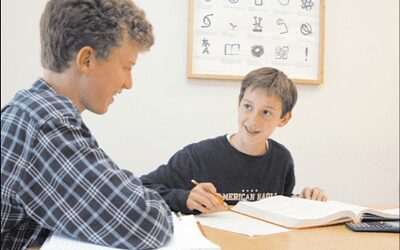



The first weeks of school lay the foundation for a child’s confidence, connection, and learning throughout the year.
By Montessori Foundation Staff
The first few weeks of a new school year are unlike any other time of the year.
Whether your child is walking into a Montessori classroom for the first time or returning to one that already feels familiar, those early days lay the foundation for everything that follows.
During this brief period, children are not simply learning new lessons or meeting new classmates. They are building relationships, establishing routines, discovering new expectations, and gradually finding their place within a community.

Children build relationships, learn classroom customs, and gradually find their place within the Montessori community.
Parents often measure the success of these first weeks by asking questions such as:
- Is my child happy?
- Is she making friends?
- Is he learning anything yet?
Those are understandable questions, but they are not the most important ones.
The first six weeks of school are less about academic progress than about helping children feel secure, capable, and confident enough to embrace all the learning that will come later.
A child who feels safe, trusted, and connected will almost always learn more effectively than one who feels anxious or uncertain.
That is why Montessori teachers devote so much care to the beginning of each school year. They are not simply teaching lessons. They are patiently building a community.
Every Transition Is a Major Event
Adults sometimes underestimate how significant transitions can be for young children.
Starting school, moving into a new classroom, welcoming a new teacher, or simply returning after a long summer break all require children to adapt to change.
Even children who are excited about school may feel tired, emotional, or unusually sensitive during the first few weeks.

Transitions are major events for young children, and a calm, confident farewell helps them manage change.
Some children race into the classroom without looking back. Others cling to a parent's leg. Many do both, depending on the day.
None of these reactions necessarily predicts how successful the school year will be.
Children adjust at different rates because every child has a unique temperament. Some are naturally cautious. Others eagerly embrace new experiences. Both approaches are perfectly normal.
Our role as parents is not to eliminate every uncomfortable feeling. It is to provide enough reassurance and consistency for our children to gain confidence gradually in their ability to manage change.
Montessori Is Building Much More Than Academic Skills
Parents sometimes wonder why Montessori classrooms seem to move so deliberately during the opening weeks of school.
Shouldn't the teachers begin introducing all the wonderful materials immediately?
In fact, they are already doing something even more important.
The first lessons often involve the simplest routines:
- How to greet one another
- How to carry a chair
- How to roll a work rug
- How to return materials to the shelf
- How to wait patiently
- How to ask another child to join you
- How to care for the classroom

Simple routines create order, security, and the conditions children need for concentration to develop.
These may appear to be small things. They are not.
These routines create order, and order allows children to feel secure. Security allows concentration to develop, and concentration becomes the foundation upon which all later academic learning is built.
Maria Montessori often reminded us that education begins not with information, but with the development of the whole child.
Don't Be Surprised If Your Child Is Tired
One of the most common concerns parents express during September is that their child suddenly seems exhausted.
This is completely understandable.
Imagine beginning a new job where every face is unfamiliar, every routine is new, and every expectation must be learned. Even if you enjoyed the experience, you would probably come home mentally tired.
Young children experience something very similar.
They concentrate intensely throughout the day, learning names, routines, expectations, and social customs while navigating new friendships and emotions.
Many children who seem perfectly happy at school release their emotions once they get home.

September exhaustion is often a sign that children are working hard to adapt to new routines, relationships, and expectations.
Some become clingy. Some cry more easily or develop a shorter temper. Some fall asleep unusually early, while others seem unusually energetic because they are overtired.
Rather than seeing these behaviors as signs that something is wrong, parents can view them as indications that their children are working very hard to adapt.
The Best Thing You Can Do at Home
Parents often ask what they should be teaching before or during the first weeks of school.
Usually, the answer is not letters or numbers.
The greatest gift you can give your child is a calm, predictable home routine.
Children thrive when mornings are unhurried, bedtime is consistent, meals happen at familiar times, and the adults around them remain calm—even when the child does not.

Calm, predictable home routines help children feel secure as they adjust to the new rhythm of school.
Simple routines reduce stress by allowing children to predict what comes next. Predictability creates emotional security.
At the same time, look for opportunities to encourage independence.
Can your child dress independently, help prepare breakfast, carry a backpack, put away shoes, or pour water?

Everyday responsibilities, such as pouring water and helping prepare breakfast, build confidence through meaningful participation.
These everyday responsibilities build confidence far more effectively than worksheets or flashcards.
Resist the Urge to Interrogate
Almost every parent asks the same question after school:
"What did you do today?"
Almost every young child gives the same answer:
"Nothing."
Or perhaps:
"I don't remember."
This does not mean children are hiding information. Young children do not organize their memories chronologically in the way adults do.
After a busy day filled with hundreds of experiences, they often need time to decompress before talking about it.
Instead of asking for a report, try inviting conversation:
- "I wonder what made you smile today."
- "I wonder who you worked with."
- "I noticed you seemed proud when you came out. I wonder what happened."

The richest conversations often happen later, when children have had time to decompress rather than answer an immediate report-style question.
Sometimes the richest conversations occur much later—during dinner, bath time, or a drive together.
Trust the Process
For parents who are new to Montessori, the beginning of school sometimes requires an act of faith.
The classroom may appear quieter than expected. Children may spend considerable time practicing simple tasks. The teacher may not immediately discuss reading or mathematics.
Trust that something important is happening.

When we trust the process, we can recognize deep concentration and purposeful work as important Montessori learning.
Montessori education has always understood that lasting academic success grows from something deeper than memorizing information.
It grows from independence, self-confidence, curiosity, concentration, self-discipline, and a genuine love of learning.
Those qualities cannot be rushed. They are cultivated carefully, day by day, especially during the first weeks of school.
A Partnership That Lasts All Year
The beginning of a school year is not only a transition for children. It is a transition for parents as well.
You are getting to know new teachers, establishing new routines, learning how your child's classroom functions, and perhaps navigating your own emotions as you watch your child become more independent.

Open communication between parents and guides strengthens the partnership that supports children throughout the school year.
Remember that you and your child's teachers share the same goal.
You all want the year to be filled with discovery, confidence, friendships, and joyful learning.
The partnership you begin building during these first six weeks may become one of the most valuable gifts you give your child.
When home and school trust one another, children almost always learn to trust themselves.
Ways to Help Your Child During the First Six Weeks
Keep mornings calm
Try to get up a little earlier than necessary so the day begins without rushing. Children sense our stress, and a peaceful morning helps them begin the school day feeling secure.
Prioritize sleep
The beginning of the school year is surprisingly tiring. An earlier bedtime during the first few weeks often makes a remarkable difference in a child's mood, concentration, and resilience.
Allow enough time for drop-off
Offer a warm hug, a reassuring smile, and a confident farewell. Avoid lingering or repeatedly returning for one more hug. Children take their emotional cues from us.
Encourage independence at home
Let your child dress, put on shoes, pack a backpack, carry belongings, help prepare meals, and clean up after activities. Every small success builds confidence that carries into the classroom.
Resist solving every problem
If your child encounters a small frustration, pause before stepping in. One of the greatest gifts we can give children is the opportunity to discover that they can solve problems themselves.
Don't expect detailed reports after school
Many children need time to unwind before talking about their day. A quiet snack, a walk, or simply playing together often opens the door to more meaningful conversations later.
Limit unnecessary activities
Whenever possible, avoid overscheduling during the opening weeks. Children benefit from having time to rest, play freely, and adjust to the new rhythm of school before adding numerous extracurricular commitments.
Stay in communication with your child's teacher
If you have concerns, ask questions early rather than allowing worries to grow. Teachers appreciate knowing what is happening at home, just as parents appreciate understanding what is happening at school.
Trust the process
Progress in Montessori is not measured only by worksheets or homework. During these first weeks, your child is developing independence, concentration, self-discipline, friendships, and confidence—the qualities that make future academic success possible.
Celebrate growth, not perfection
There will be wonderful days and difficult days. Measure success by your child's increasing confidence, curiosity, kindness, and independence—not by whether every day goes exactly as planned.

The first six weeks are not about perfection; they are about helping children feel safe, confident, and ready to begin.
Remember, the goal of the first six weeks is not to create the perfect school year.
It is to help your child feel safe enough, confident enough, and excited enough to begin one.