Related Posts



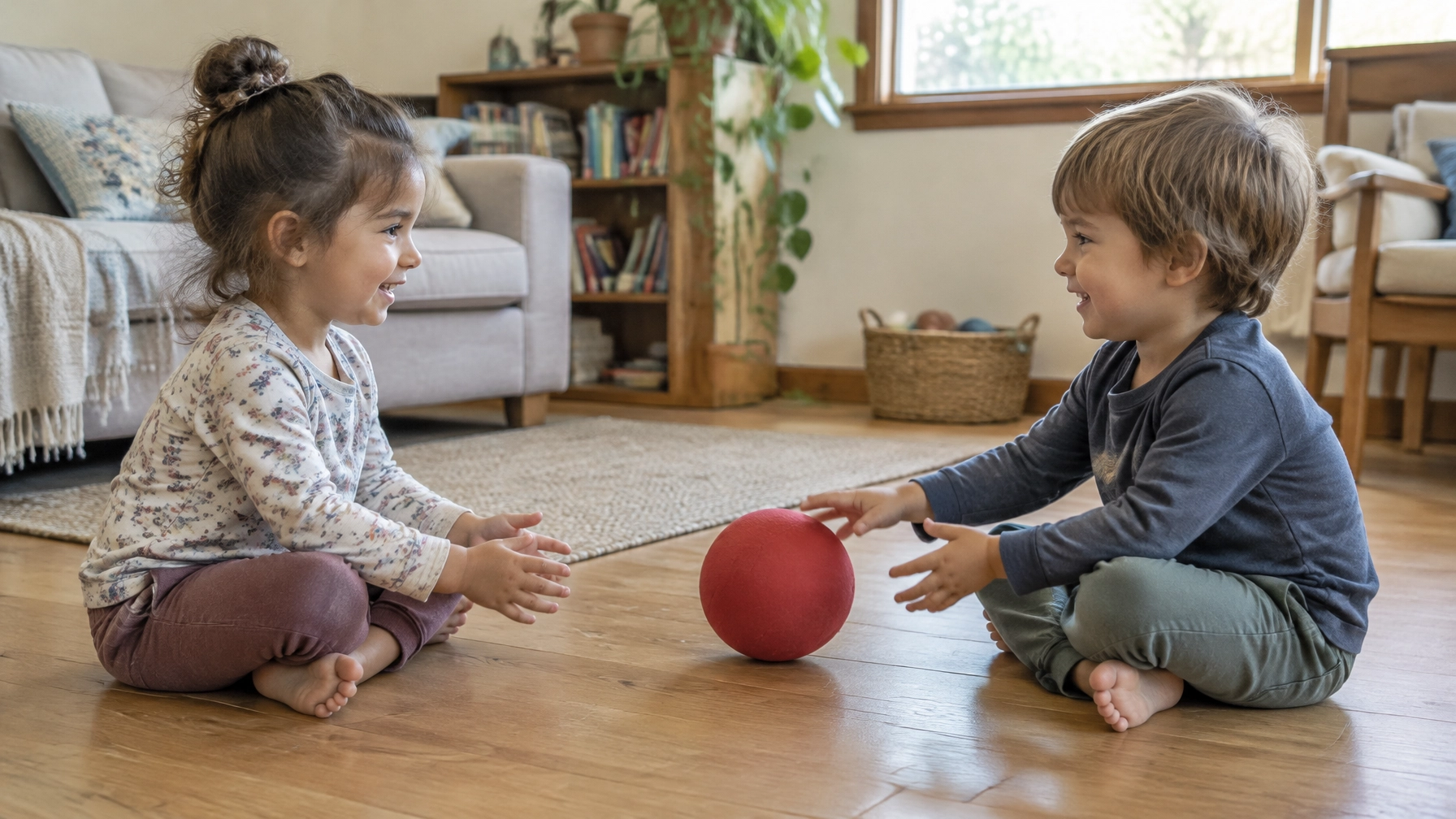
Two children share the simple goal of keeping the ball moving between them.
Snapshot
Not every game needs a winner and a loser. In cooperative games, players work together toward a shared goal: finishing a puzzle, rescuing characters, completing a journey, or beating the clock. These games are especially appealing to young children because they build teamwork, communication, and patience, and everyone shares in the success. Here's how to introduce cooperative play at home and choose games that suit your child's age.
"Who Won?"
It's often the first question children ask when a game ends, and winning can be thrilling. But what if the more interesting question were, "Did we do it together?" That's the idea behind cooperative games. Instead of competing against one another, players face a challenge as a team. Everyone succeeds together, or everyone tries again together. For young children, that can be a refreshing change.
How Cooperative Games Are Different
In competitive games, one player wins and the others lose. That isn't bad; learning to win graciously and lose without falling apart is an important part of growing up. But competition isn't the only way to enjoy a game.
In cooperative games, the challenge comes from the game itself. The players might need to gather fruit before a pretend storm arrives, help animals reach safety, or solve a puzzle together. To succeed, they have to talk, plan, and help one another, and the pleasure comes from shared accomplishment.
Why They Suit Young Children
For a three-year-old, waiting for a turn is hard, following several rules at once is challenging, and losing can feel overwhelming. Cooperative games ease some of that pressure. Instead of worrying about beating a sibling, the child can focus on taking part. Frustration doesn't disappear. Sometimes the group loses, and sometimes another player makes a choice the child doesn't like. But those moments become chances to work together rather than against each other.
Start Simple
You don't need to buy anything to introduce cooperation. Try rolling a ball back and forth and counting how many passes the group can make without losing it. Try building a block tower together to see how tall it can get. Try carrying a lightweight ball across the room on a towel held by two children. Try completing a large floor puzzle as a team. Or make a cushion "bridge" across the living room and decide together how to cross safely.

Building one tower gives children a shared goal to work toward together.
Keep the goal simple enough that every child understands what the group is trying to do.
A Cooperative Treasure Hunt
This works especially well at family gatherings. Hide several objects around a room or yard and give the children a picture list of what to find. Instead of racing to collect the most, the group shares one goal: find everything on the list. Children naturally divide the work. Someone looks under tables, someone checks the bookshelves, someone keeps track of what's been found. When the last object turns up, everyone celebrates, and no individual winner is needed.

The children share one goal as they search the yard together.
Games That Invite Planning
As children grow, cooperative games can grow with them. Older preschoolers enjoy making simple choices together. Elementary children can handle strategy, planning, and limited resources. Should I use my turn to help another player, or move us closer to the goal? Now cooperation means more than being friendly; it requires judgment. "What would help the whole group?" is a powerful question for a child to learn to ask.
Choosing a Game
Look for a good match with your child's stage. Toddlers and young preschoolers do best with simple rules, sturdy pieces, short playing time, and an obvious shared goal. Ages four to six can handle more choices, basic strategy, and slightly longer play. Elementary children are ready for real problem-solving, planning, teamwork, and meaningful decisions.
The right game is challenging enough to stay interesting without being so hard that everyone gives up. Age ranges on the box are only a starting point; you know your child best.

Working on a puzzle together gives children a chance to talk, listen, and solve a shared challenge.
Don't Take Over
Adults can quietly take over cooperative games. We see the best move and want everyone to succeed, so we start directing: "Put that there." "No, use this card." Soon the children are just following instructions. Instead, ask "What do you think we should do?", "Does anyone have another idea?", and "What might happen if we try that?"
Let children make reasonable decisions, even ones you wouldn't make. The thinking is part of the game.
When the Group Loses
Sometimes the storm wins. That's disappointing, and it's also an opportunity. Ask, "What worked well? What could we try differently? Want to play again?" The goal isn't to pretend losing doesn't matter. It's to help children discover that a disappointing result doesn't have to feel like a personal defeat. The group can learn and try again.
Competition Has Its Place
Montessori education doesn't ask us to eliminate competitive games. Chess, checkers, card games, and sports can all be wonderful. What matters is variety. Some games emphasize individual performance; others emphasize working together. Both teach valuable lessons.

Children listen to one another and plan together as they work toward a shared goal.
A Different Kind of Victory
Picture four children gathered around a game, talking, listening, planning, and helping one another. They disagree, change their minds, and eventually reach the goal. Everyone cheers, and no one had to lose for someone else to succeed. That is one of the quiet gifts of cooperative play: children discover that success can be something we create together.