Related Posts

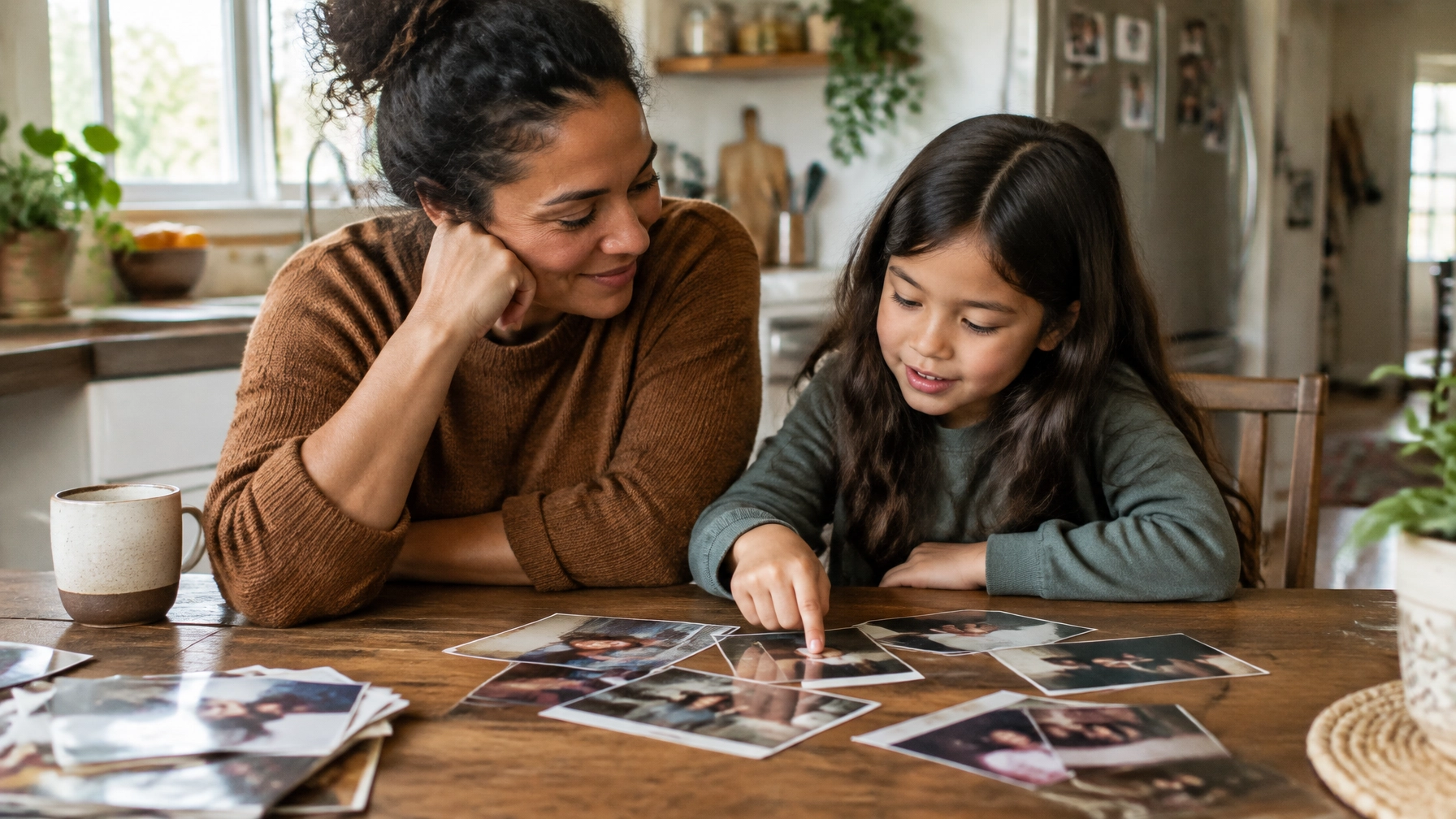
Looking through family photographs can open the door to stories children will want to hear.
Snapshot
Last week, in “Beyond Halloween: What If We Celebrated Children Instead?”, we proposed that Montessori schools consider an International Children’s Week at the end of October as a joyful alternative or addition to Halloween. This week, we turn to families. Whether or not your child’s school takes up the idea, you can begin this celebration at home. With a few simple activities, some conversations with relatives, and a little planning, your family can create a tradition that honors your children, your heritage, and the many stories that connect you to the wider world.
Picking Up Where We Left Off
In last week’s article, “Beyond Halloween: What If We Celebrated Children Instead?”, we suggested that the end of October could become a time to celebrate children rather than frighten them. We imagined schools devoting a week to the study of countries and cultures, to conversations with grandparents and other relatives, to sharing family traditions, and to a closing celebration of peace and friendship.
Several readers asked an important question: what if our school isn’t doing this? The answer is simple. You don’t need to wait. Some of the most meaningful traditions children ever experience begin around the kitchen table, not in the classroom. A family can hold its own International Children’s Week, or call it a Family Heritage Festival, or give it any name that feels right. What matters is the spirit behind it.
Why Begin at Home?
Children learn what matters to us by watching how we spend our time together. When a family sets aside a week to explore where it came from, to listen to its elders, and to celebrate the children who will carry its story forward, children receive a powerful message: you belong to something larger than yourself, and your story matters.
Celebrating at home also gives you freedom a school can’t always offer. You can move at your own pace, focus on the parts of your history that mean the most to you, include relatives who live far away, and decide for yourselves how much to share and with whom.
Choosing When to Celebrate
Many families will want to hold their celebration during the last week of October, so that it offers a gentle alternative in the days leading up to Halloween. Others may prefer to extend it into November, ending on November 20, which the United Nations observes as World Children’s Day. You might also choose a weekend rather than a full week, or spread the activities across the whole month.
There is no wrong answer. The goal is to create something your family will look forward to year after year.
A Simple Plan for Your Family’s Week
Here is one way to structure the celebration. Feel free to shorten it, combine days, or replace any idea with something that suits your family better.
Day One: Celebrating Each Child. Begin with your children themselves. Look through baby photographs together, tell the story of the day each child was born or joined your family, and talk about what makes each one special. Children might draw self-portraits or make a small book about their interests, friends, and hopes.

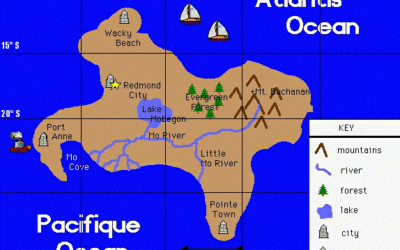
A world map can open a conversation about where a family’s story begins.
Day Two: Where in the World Are We From? Bring out a world map or globe and mark the places where your family has lived, going back as far as you can. Children are often fascinated to discover that a great-grandparent was born in a different country, or that relatives have lived in the same valley for two hundred years. If you choose to study a country with no family connection, that’s wonderful too.

Letting the child ask the questions turns a call into a conversation the family will keep.
Day Three: Talking With the People Who Came Before Us. Call, video chat with, or visit a grandparent, great-aunt, or other older relative. Let your child ask the questions. Record the conversation, with permission, so it can be treasured for years to come.
Day Four: Traditions We Carry Forward. Cook a family recipe together, learn a song or game your grandparents played, or practice a few words in a family language. Talk about which traditions your family has kept, which have changed, and which you have created yourselves.

Preparing a family recipe together gives children a chance to learn through shared work and conversation.
Day Five: A Family Celebration. Invite relatives, neighbors, or friends to share food, music, and stories. Children might display their maps, drawings, and interview recordings, or present what they’ve learned. If friends join you, invite them to bring a story or dish from their own heritage.

Children can share what they have learned as family and friends gather around the table.
Questions Children Can Ask Relatives
Children often feel more confident when they prepare a few questions in advance. Here are some to get started:
“What was your favorite game when you were my age?”
“What was your house or neighborhood like when you were growing up?”
“What did your family eat for special celebrations?”
“Did your family ever move to a new place? What was that like?”
“Who in our family do you remember most fondly, and why?”
“What is something you want me to know about our family?”
Encourage your child to listen carefully and ask follow-up questions. Some of the best stories come from the second or third question, not the first.
Matching the Celebration to Your Child’s Age
Montessori parents know that children experience the world differently at each stage of development. A family heritage celebration can grow with your children.
Toddlers. Keep it sensory and simple. Look at photographs of relatives, sing a family song, cook together, and let them hold a meaningful keepsake while you tell its story.
Children from three to six. Young children love real objects and concrete experiences. Let them place stickers on a map, help prepare a family dish, sort photographs, and draw pictures of relatives they’ve met or heard about. Keep stories short and joyful, and save painful history for later years.
Children from six to twelve. Elementary children are natural researchers who want to know how and why. They can conduct interviews, build family timelines, research a country’s history, geography, and culture, and explore why people migrate. Questions about the past often lead them into history, geography, and economics, very much in the spirit of Montessori’s Cosmic Education.
Adolescents. Teenagers can take real responsibility. They might record and edit video interviews, organize family photographs into a digital archive, research family records, or plan and host the closing celebration. Many adolescents find deep meaning in becoming the family’s historian.
Creating a Family Heritage Box
One lovely way to make the tradition last is to create a family heritage box. Each year, children add something new: a recording of a grandparent’s story, a recipe card in a relative’s handwriting, a drawing of the family tree, a photograph from the year’s celebration, or a letter to their future selves. Over time, the box becomes a treasure that grows with your family and may one day be passed on to your grandchildren.
When Your Family Story Is Complicated
Not every family has easy access to its history. Some children are adopted. Some families have been separated by distance, conflict, or loss. Some histories include painful chapters that young children are not ready to hear.
Your celebration can honor every kind of family. Adopted children may want to explore both their birth heritage and the heritage of the family that raised them. Children can interview any trusted adult, study the history of the community where they live now, or choose a country simply because it fascinates them. You decide what to share, when, and how. The goal is belonging, not completeness.
What About Halloween Night?
Families approach Halloween in different ways, and this celebration can work alongside any of them. A few possibilities: hold your closing family celebration on October 31 as a warm alternative to trick-or-treating. Let children dress as an ancestor, a historical figure from a country they’ve studied, or someone they admire. Trick-or-treat early in the evening and come home to share stories and a family meal. Or invite neighbors over for a heritage potluck instead of a costume party.
Last week, we noted that the end of October has long been a time for remembering those who came before us, from All Hallows’ Eve to Día de los Muertos on November 1 and 2. A family heritage celebration fits naturally into that older tradition of remembrance and gratitude.
If You’d Like Your School to Join In
If your family enjoys the celebration, consider sharing the idea with your child’s teacher or head of school. You might offer to visit the classroom to share a family tradition, help organize a heritage potluck, or suggest the idea to your parent association for next year. Many school traditions begin because one family cared enough to start something at home.
A Tradition Your Children Will Remember
Years from now, your children may not remember which costume they wore when they were five. But they may well remember the afternoon their grandfather told them about the farm where he grew up, the smell of a great-grandmother’s recipe cooking in the kitchen, or the moment they found their family’s village on a map.
Those are the memories that help children understand who they are and where they belong. And they can begin in your home, this October, whether or not anyone else is doing it yet.