Related Posts
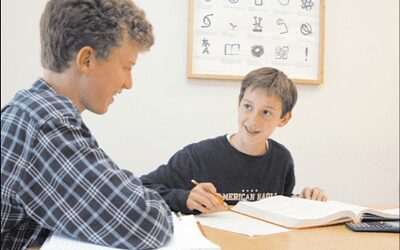



Your child brings home a familiar story. Again. Or tells you they worked with a material you know they used last year. Again. Perhaps you watch in the classroom and see your child doing something that looks almost effortless, and a natural thought occurs , why is the teacher letting my child do this? Shouldn’t they be moving on to something harder?
Sometimes, yes , children need challenge. But sometimes what looks like unnecessary repetition is doing something important.
Knowing something once isn’t the same as mastering it
Adults tend to define learning as , I understand it, now move on. But mastery runs deeper than initial understanding. Think about learning to drive , at first, every action requires conscious attention: mirror, brake, signal, steering, traffic. Eventually many of those actions become automatic, which frees your mind for more complex things. Children’s learning works the same way. When foundational skills become fluent, the mind has more capacity available for higher-level thinking.
This distinction can be easy to miss when we observe children from the outside. We see the same story, the same activity, or the same Montessori material. We do not always see the changing coordination, perception, memory, and confidence developing inside the child.
Repetition builds the brain’s efficiency
A child may know how to form a letter but still need practice until handwriting stops consuming enormous mental effort. A child may understand addition but need enough experience that basic combinations become readily available. A young child may know how to pour water but keep repeating the activity as coordination becomes more precise. The visible task stays the same. The child’s internal experience is changing.
At home, we might notice this when a child insists on fastening a coat independently, cutting a banana, setting the table, or reading a familiar book aloud. The result may already look successful to us. Yet the child may be strengthening the small movements, sequencing, vocabulary, and attention that make future work easier.
This is one reason Montessori environments make room for purposeful repetition. Children are not simply being kept busy. They are given time to make a skill their own.

Repetition can refine perception
Montessori materials are often designed so children notice increasingly subtle differences. The first time a child works with a material, the challenge is simply understanding what to do. Later repetitions become more precise , the child notices relationships that were invisible before, movements become smoother, order becomes clearer, errors become easier to spot. The child isn’t merely repeating. The child is refining.
Dr. Maria Montessori paid close attention to this process. She observed that children often returned to an activity after they had apparently completed it, not because they had failed to understand the lesson, but because some part of their development was still unfolding.
A child may initially focus on the steps of an activity. Later, the child notices the sequence. Later still, the child notices an exception, a pattern, or a more efficient way to work. The material hasn’t changed. The child has.
Repetition also builds confidence
There’s real pleasure in competence. Children need experiences where they know, I can do this , which matters especially because so much of childhood involves encountering things they can’t yet do. A familiar activity can serve as a psychological anchor before a child attempts something harder. Adults do this too , we return to things we know well because competence feels good.
That confidence is not the same as empty praise. It comes from direct experience. The child sees that careful effort produces a result, that mistakes can be corrected, and that persistence makes a difference.
In the Montessori classroom, this is part of the child’s gradual movement toward independence. A child who repeats meaningful work is not waiting for an adult to say, “Good job.” The child is discovering, through action, what it feels like to become capable.
Concentration often deepens through repetition
Watch a young child repeat the same action again and again; adults often grow bored long before the child does. Maria Montessori observed that when children freely repeated purposeful activity, they frequently reached unusually deep states of concentration , and when the child finally stopped, the child often looked satisfied rather than exhausted. This led Montessori to see repetition as part of self-construction. At some level, the child seems to know , I am not finished with this yet.
For parents, this can be a useful reminder to protect uninterrupted time whenever possible. If a child is absorbed in reading, drawing, building, sorting, preparing food, or caring for the home, we may not need to introduce a new activity simply because the current one looks familiar.
We can offer materials and experiences without demanding constant novelty. We can allow the child to repeat while observing whether the work remains purposeful, focused, and developmentally useful.

But shouldn’t teachers push children?
Yes, sometimes. Montessori education isn’t about leaving children indefinitely in their comfort zones. Teachers observe carefully : is the child repeating because meaningful development is still happening, or avoiding challenge? Those two situations can look identical from across the room but call for very different responses : a skilled teacher may let one child repeat undisturbed while gently inviting another toward new work. The distinction depends entirely on observation.
This is where “follow the child” requires more than simply allowing choice. The Montessori guide studies the child’s work, readiness, interests, concentration, and relationships. The guide asks : what is the child practicing? What is the child avoiding? What lesson might support the next step?
A child who repeats with calm attention may need time. A child who moves from one familiar activity to another without settling may need a new presentation, a clearer limit, or help choosing meaningful work. Montessori teachers do not make these decisions from a single glance. They observe patterns over time.
Children rarely develop in a straight line
Progress often looks more like a spiral : a child encounters an idea, moves away from it, returns to it, sees it at a deeper level, connects it with something else, and then suddenly seems to make a leap. The leap looks sudden to us. It usually isn’t : it was being prepared by all the work that came before.
This is true across the planes of development. A young child may repeat a practical activity to strengthen movement and concentration. An elementary child may return to a familiar mathematical process while connecting it with a broader question about patterns, quantity, or the natural world. An adolescent may revisit an earlier idea with new reasoning and a more developed sense of its social meaning.
Development is not a race from one lesson to the next. It is a continuing process of construction.
What repetition can look like at home
A family does not need a classroom full of materials to support healthy repetition. We can begin by noticing what our children return to voluntarily and what they are trying to master in everyday life.
We might:
- Allow a child to hear a favorite story again while listening for new questions or observations.
- Let a child repeat a practical activity such as pouring, folding, sweeping, washing, or preparing a snack.
- Avoid interrupting concentrated work simply because we think the child has “already done that.”
- Offer a small number of meaningful choices rather than constantly introducing new entertainment.
- Ask what the child is noticing now that was not noticeable before.
- Speak with the teacher before deciding that repeated classroom work is too easy.
The goal is not to protect children from every challenge. It is to help us distinguish between productive repetition and work that no longer serves the child.

Ask a better question
When you see your child doing familiar work, instead of asking, “Why is she still doing that?” try asking the teacher : What are you seeing in this work? What is she refining? Where does this lead next?
The answer may surprise you. Sometimes familiar work has genuinely become too easy, and the teacher is already preparing the next challenge. But sometimes the child who looks like she’s “doing the same thing again” is actually doing something quite different. The material hasn’t changed. The child has.
For more guidance on observing your child’s development and strengthening the partnership between home and school, explore the Montessori Family Alliance. You can also learn more about the Montessori approach through the Montessori Foundation’s resources on Montessori education and following the child.
Sometimes repetition is the work. Our task is to observe closely enough to see why.