Related Posts
Snapshot
A Montessori Children’s House may look different from the classroom parents remember. Children pour water, build towers, trace letters, arrange number beads, study maps, and care for plants. Are they playing or learning? Often, they’re doing both. Behind these activities is a carefully organized curriculum that helps children develop concentration, independence, coordination, language, mathematics, and an understanding of the world. Here’s a closer look at what happens in the Montessori classroom for children ages three to six.
Imagine visiting a Montessori Children’s House on an ordinary morning.
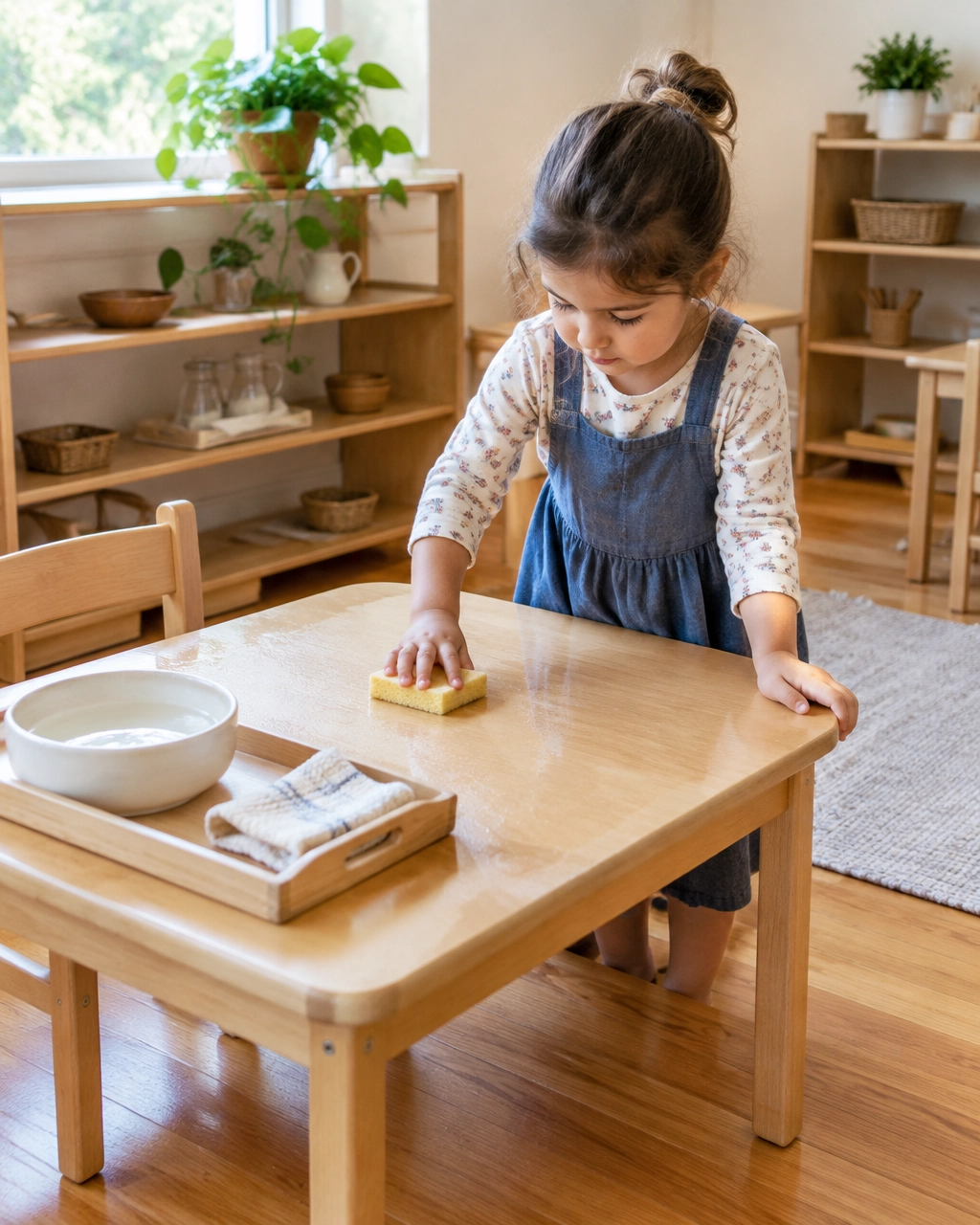
One child is carefully washing a table.
Another is arranging a tower of pink wooden cubes.
Two children are working with colorful beads.
A child sits quietly with a small globe.
Across the room, another child is arranging letters on a rug.
There are no rows of desks.
The teacher isn’t standing in front of the class delivering a lesson to everyone at once.
Children are doing different things.
Some are working alone. Others are collaborating. A few are watching classmates.
To someone unfamiliar with Montessori education, the classroom might appear to be a collection of unrelated activities.
But look more closely.
What you’re seeing is a carefully organized curriculum designed around how young children develop and learn.
Five Areas, One Connected Education
The Montessori Children’s House traditionally organizes its curriculum into five broad areas:
Practical Life.
Sensorial.
Language.
Mathematics.
Cultural Studies.
Each area has its own materials and learning goals, but they are closely connected.
A child doesn’t suddenly stop developing coordination when beginning mathematics.
Language isn’t confined to the language shelves.
Scientific thinking doesn’t begin only when a child studies plants or animals.
Learning happens throughout the classroom.
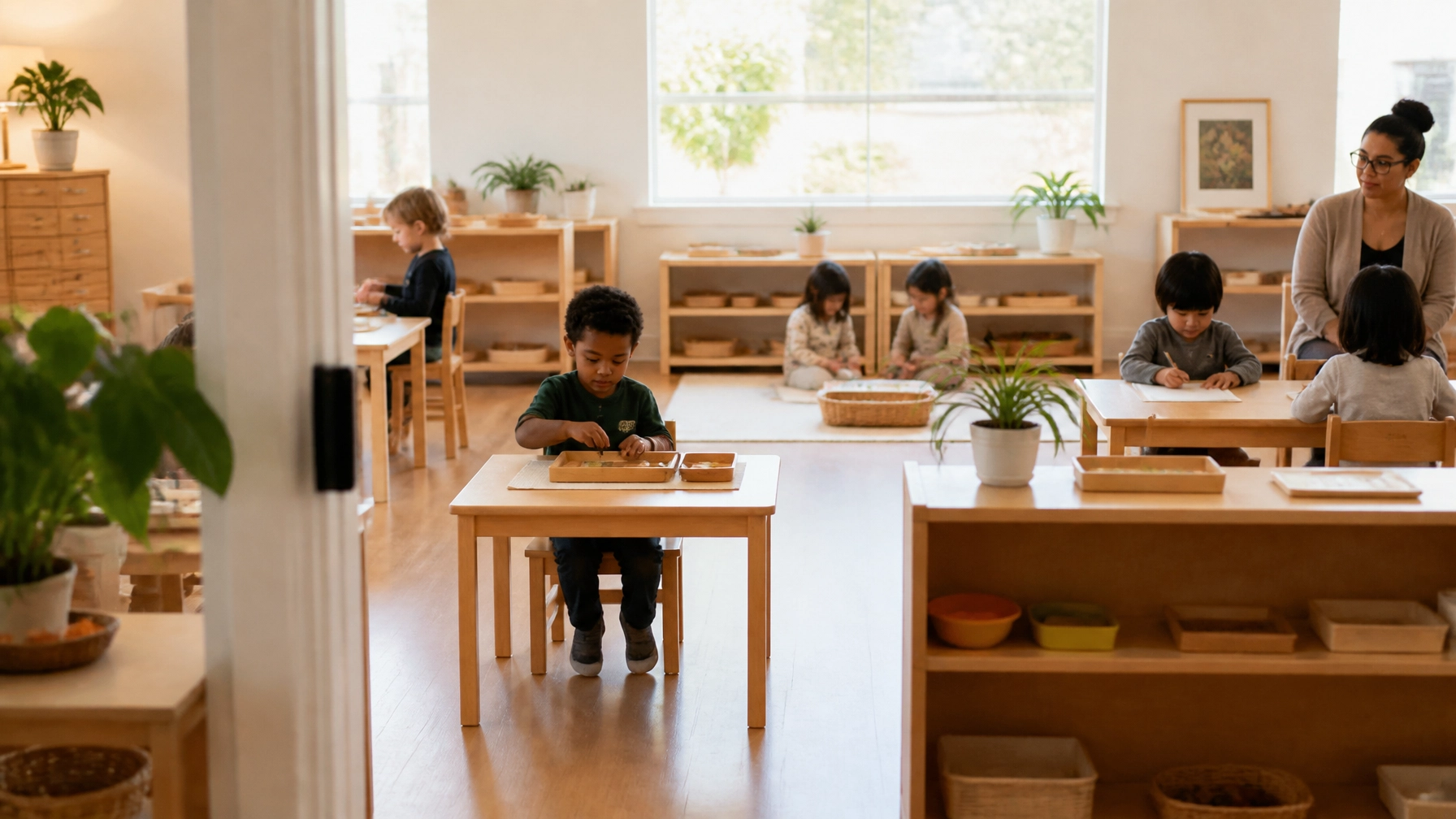
Children explore different interests within one prepared classroom.
Practical Life: The Foundations of Independence
Why would a child spend time polishing a mirror or washing a table?
Shouldn’t school be teaching reading and mathematics?
It is.
But Montessori recognized that young children have a powerful desire to become capable and independent.
Practical Life activities help satisfy that need.
Children learn to pour water, prepare food, care for plants, sweep floors, fasten clothing, and maintain their classroom.
These are real activities with meaningful purposes.
And they develop far more than household skills.
Consider a child washing a table.
The child gathers the necessary materials.
Follows a sequence.
Controls movements.
Notices when the task is complete.
Cleans up.
Returns everything to its place.
The activity requires attention, coordination, memory, and responsibility.
Through repeated experiences like these, children develop confidence in their own abilities.
They discover that they can contribute to the life of their community.
Sensorial: Learning to Observe the World
Young children learn through their senses.
They touch.
Listen.
Look.
Smell.
Taste.
Compare.
Montessori Sensorial materials help children refine these abilities.
The Pink Tower invites children to compare cubes of gradually increasing size.
The Brown Stair introduces differences in thickness.
The Red Rods help children perceive and compare length.
Color Tablets help children distinguish colors and shades.
Sound Cylinders encourage careful listening.
These materials isolate particular qualities so children can notice differences more precisely.
This is not simply a collection of sensory games.
Children are developing observation, classification, comparison, sequencing, and the ability to recognize patterns.
These skills contribute to later work in mathematics, science, geometry, and language.
A child who has spent time comparing dimensions and arranging materials in order is developing ways of thinking that will be useful far beyond the Sensorial shelves.
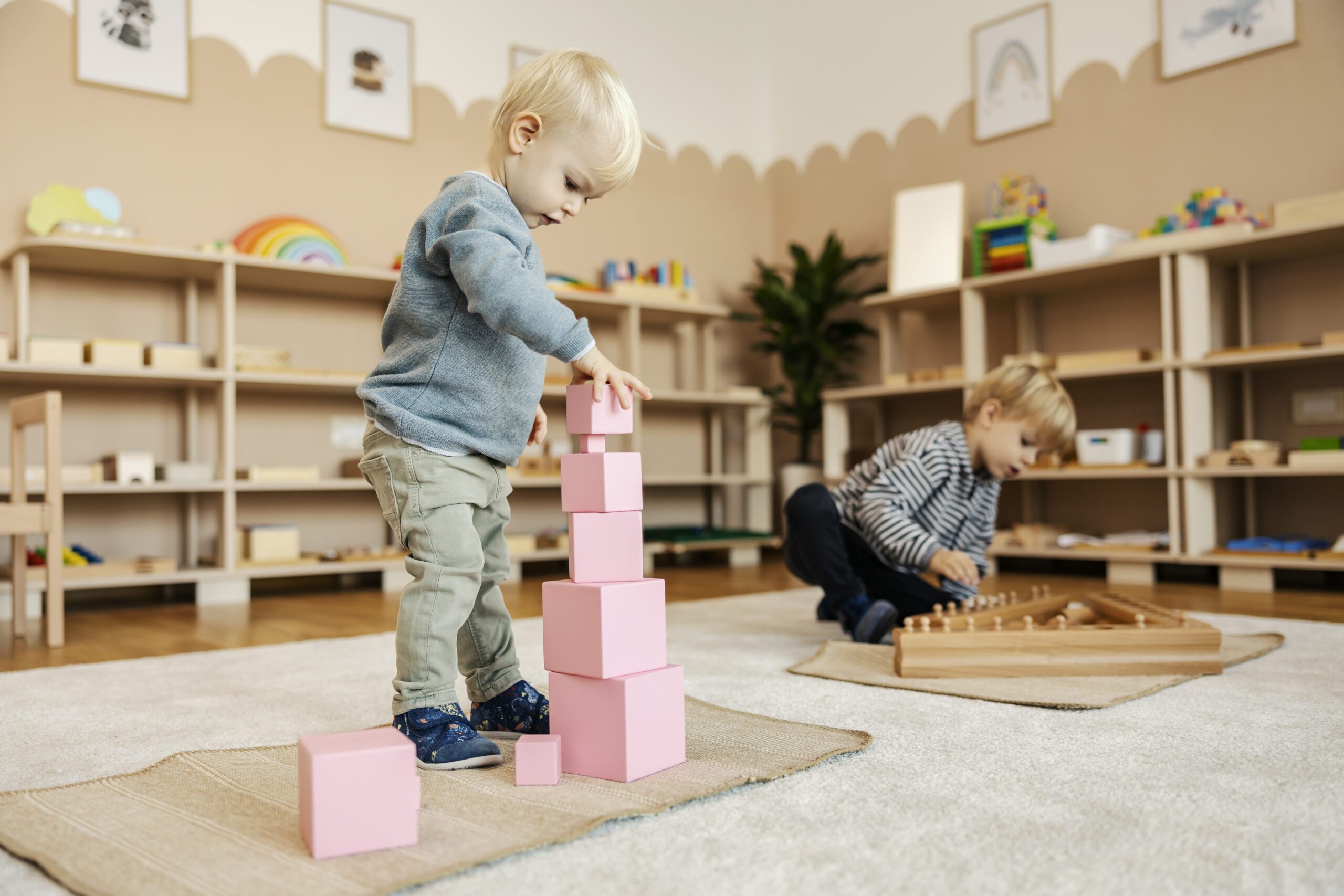
The Pink Tower refines visual discrimination of size and dimension.
Language: From Conversation to Reading and Writing
Language development begins with listening and speaking.
Children learn new vocabulary through conversations, stories, poems, songs, and carefully presented lessons.
They learn the names of objects, animals, plants, landforms, and geometric shapes.
They practice describing things and expressing their thoughts.
Then they begin exploring the sounds within words.
Montessori teachers introduce sandpaper letters, connecting letter shapes with the sounds they represent.
Children trace the letters with their fingers.
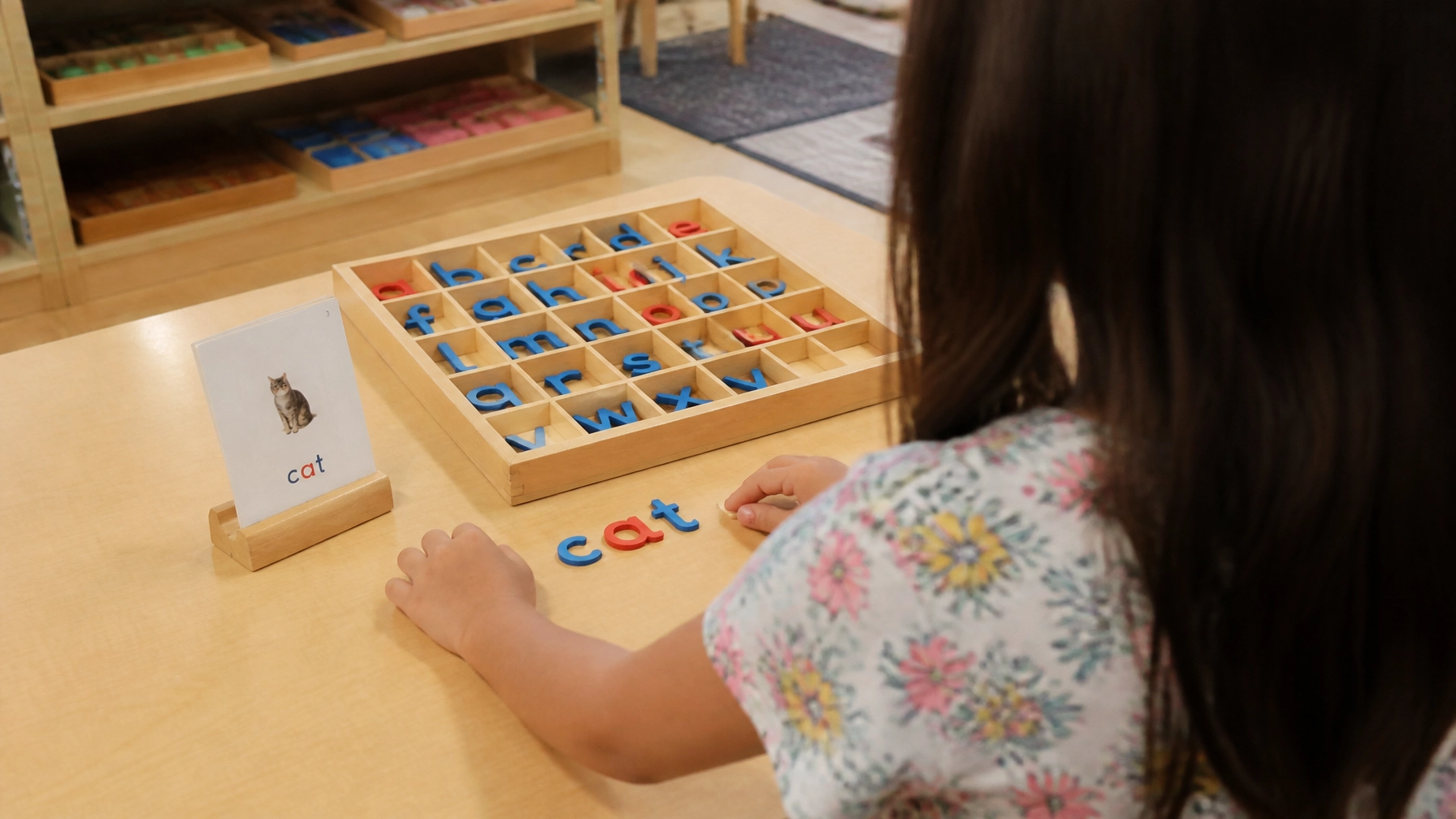
Later, they use the movable alphabet to build words, phrases, and sentences.
This allows children to compose written language even before their handwriting is fully developed.
Reading emerges through a carefully sequenced progression, beginning with sound-symbol relationships and moving toward increasingly complex words, sentences, and books.
Children continue developing comprehension, vocabulary, and a love of literature.
Not every child progresses at the same pace.
The teacher observes readiness, introduces appropriate lessons, and provides practice and support.
The goal isn’t to rush children into reading as early as possible.
It’s to help them become capable readers and writers who enjoy using language.
Mathematics: Making Abstract Ideas Concrete
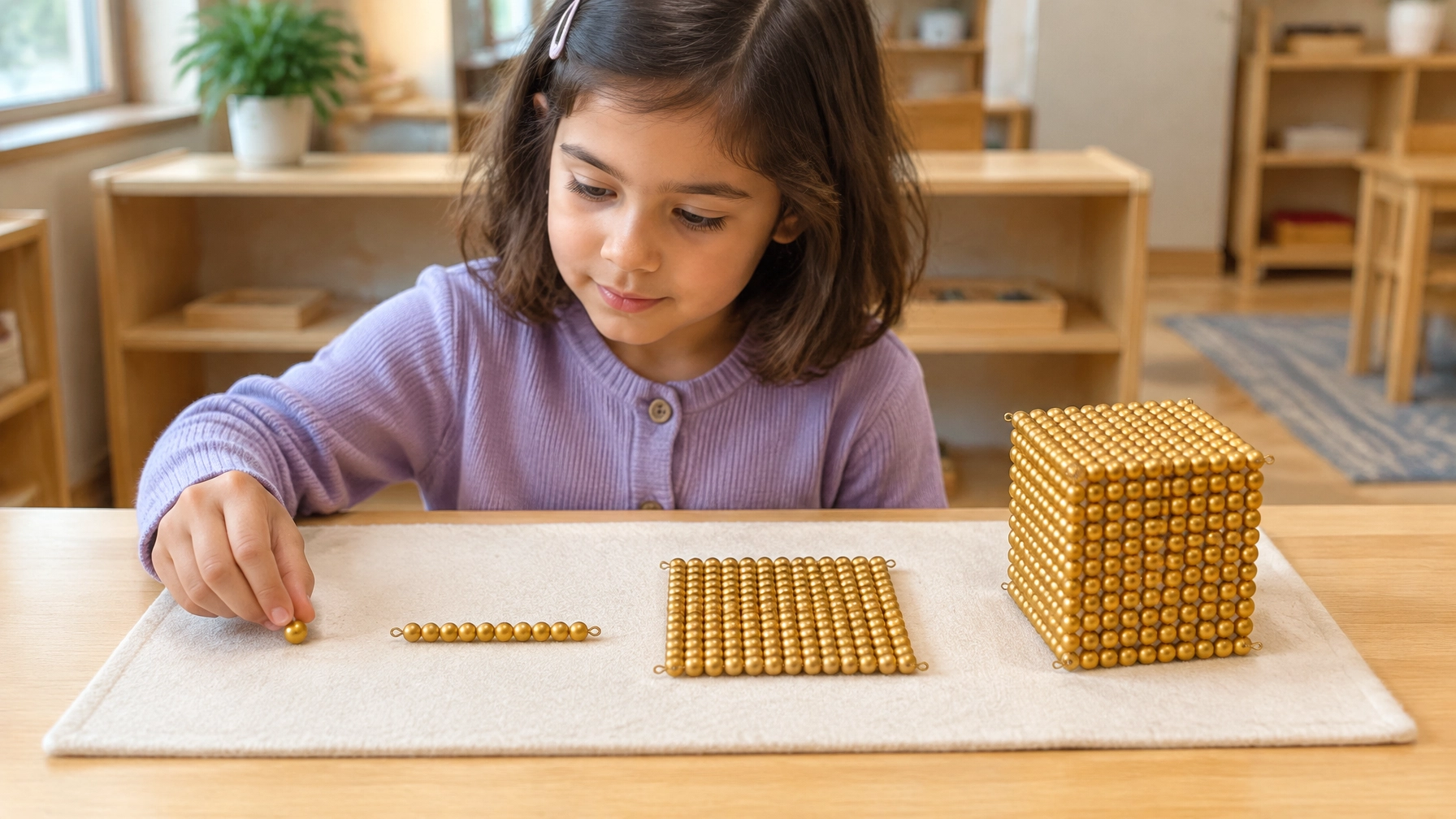
Montessori mathematics is particularly fascinating because children can see and touch mathematical relationships.
A child working with the Number Rods experiences quantities from one to ten through rods of increasing length.
The Spindle Boxes connect numerals with quantities and introduce zero as an empty set.
Golden Bead materials help children explore the decimal system.
One bead represents a unit.
A bar of ten beads represents ten.
A square represents one hundred.
A cube represents one thousand.
Children can physically experience the relationship between these quantities.
Later, they use materials to explore addition, subtraction, multiplication, and division.
The materials help children understand what mathematical operations mean before relying entirely on written symbols and mental calculation.
Over time, children move toward increasingly abstract mathematical thinking.
What may look like a child playing with beads is often serious mathematical work.
Cultural Studies: Discovering the World
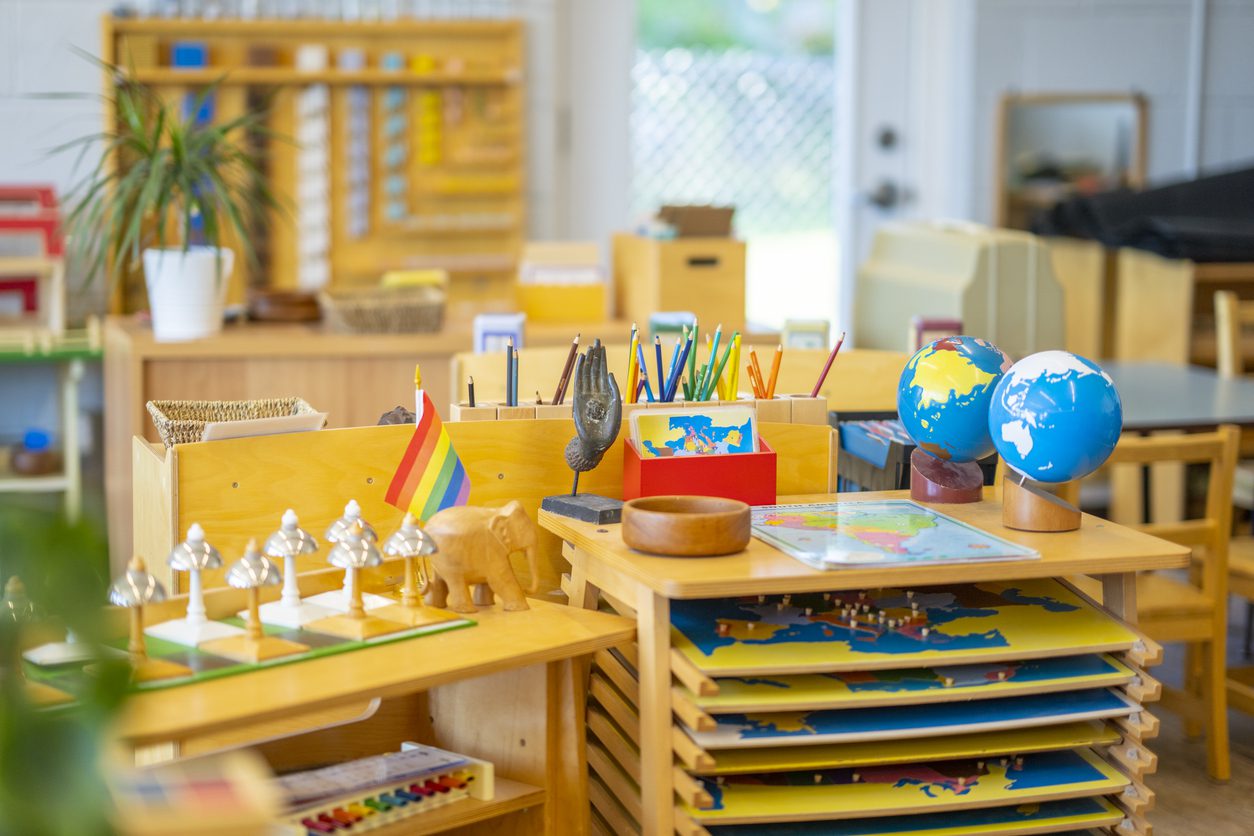
A Montessori classroom set-up complete with desks, paint racks, globes, musical instruments, plants, writing utensils, and other education inspiring tools.
The Cultural area opens the classroom to the larger world.
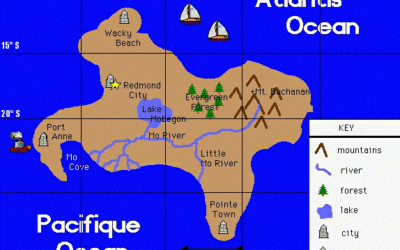
Children explore geography with globes, maps, and landform materials.
They study plants and animals.
They learn about continents, countries, and the people who live in different places.
They investigate the natural world.
They explore art, music, history, and science through age-appropriate experiences.
A child may learn the parts of a flower.
Another may study the life cycle of a butterfly.
Another may work with a puzzle map of Africa.
These activities encourage curiosity and help children begin to understand the world beyond their immediate surroundings.
Why Children Work at Different Levels
One of the distinctive features of the Montessori Children’s House is its three-year age span.
Children around ages three through six share a classroom.
This means a younger child may watch an older child reading.
An older child may help a younger classmate.
Children see work that they aren’t yet ready to do, but may eventually want to try.
And children who have mastered an activity often gain confidence by helping others.
The classroom is not organized around the assumption that every child must learn the same thing on the same day.
Instead, teachers observe each child’s development and introduce lessons accordingly.
The Importance of the Kindergarten Year
Parents sometimes wonder whether to move their child to another school for kindergarten.
But the third year of the Children’s House is often particularly important.
Children who have spent two years developing independence, concentration, coordination, and foundational academic skills are ready for increasingly complex work.
They may be reading, writing stories, exploring multiplication and division with materials, conducting investigations, and taking greater responsibility within the classroom.
They also become some of the oldest and most experienced members of the community.
They have opportunities to lead, help, and contribute.
The third year is not simply another year of preschool.
It is intended to bring together and extend much of what children have been developing during the earlier years.
What Should Parents Look For?
A good Montessori classroom is not defined simply by the presence of beautiful materials.
Look for children who are genuinely engaged.
Teachers who observe carefully and give purposeful lessons.
Materials that are complete, orderly, and used appropriately.
Children who have opportunities to make choices and work independently.
A peaceful but active classroom community.
And a curriculum that progresses from foundational experiences toward increasingly challenging work.
Ask the teacher what your child is learning.
What lessons have been introduced?
What interests are emerging?
What skills are developing?
What comes next?
A well-prepared teacher should be able to explain the educational purpose behind the activities you observe.
More Than Meets the Eye
The Montessori Children’s House is sometimes misunderstood because its work doesn’t always resemble conventional schoolwork.
A child pouring water may be developing coordination and independence.
A child building the Pink Tower may be refining visual discrimination and mathematical thinking.
A child arranging letters may be composing words.
A child working with beads may be exploring the decimal system.
And a child caring for a plant may be learning responsibility and respect for living things.
These experiences are part of a connected educational journey.
The beauty of the Children’s House is not simply that children enjoy what they’re doing. It’s that meaningful work helps them become increasingly capable, curious, independent, and eager to learn.