Related Posts
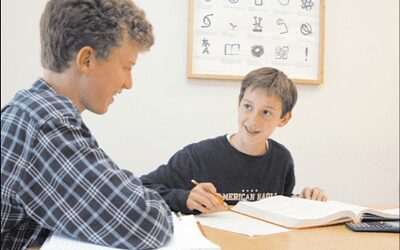



Welcome to a community of children learning, growing, and working side by side.
Dear Parents,
Welcome — or welcome back — to another exciting year at our Montessori School! Whether you are just beginning your journey with us or returning with a child who has blossomed in our environment, we want to start the year by offering you a thorough, thoughtful introduction to Montessori education.
Understanding the Montessori approach will help you better appreciate what your child is experiencing in the classroom, and, perhaps more importantly, how you can support that growth at home. So let's explore the essence of Montessori and what every parent should know to make the most of these formative years.
Who Was Maria Montessori?
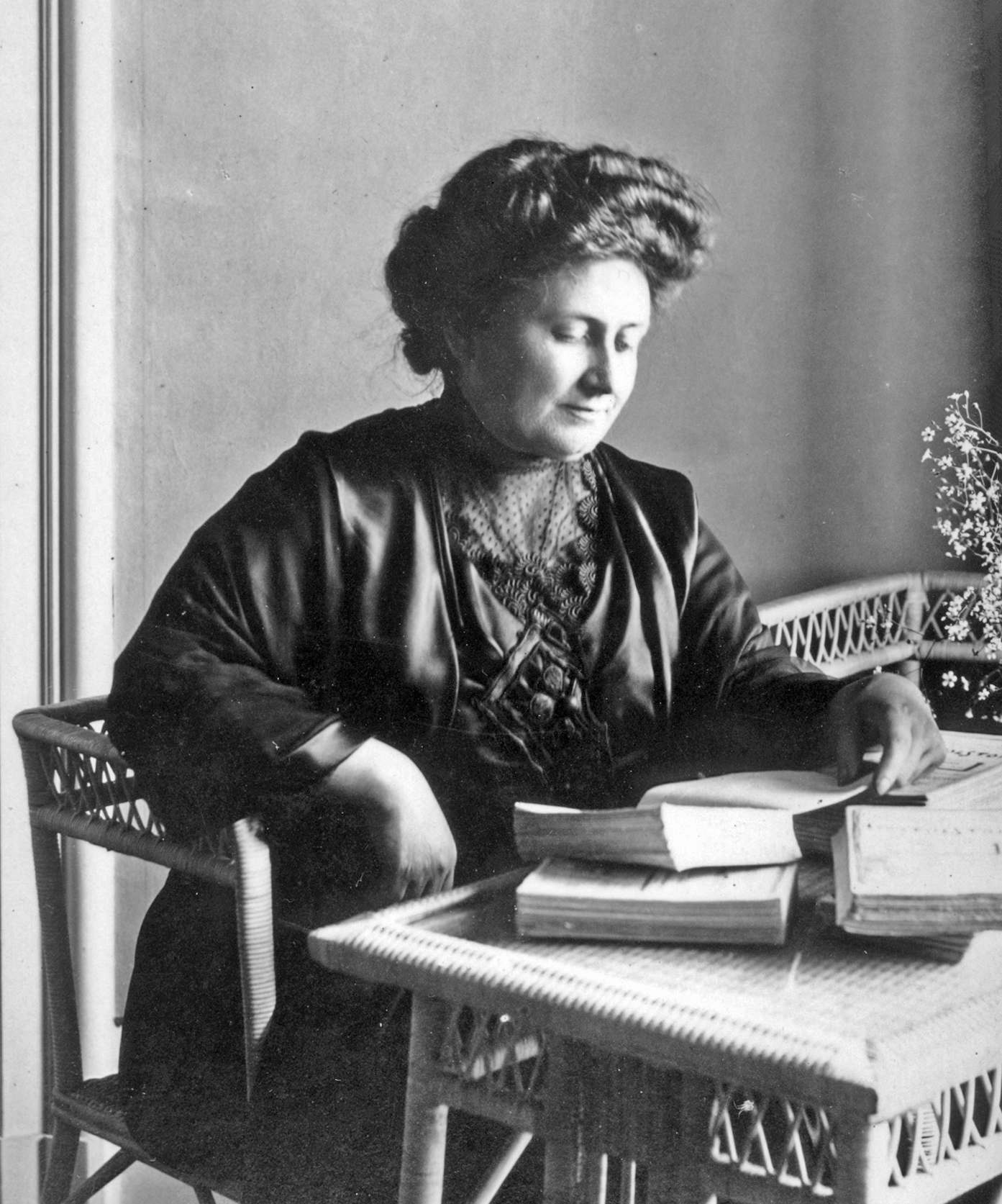
Dr. Maria Montessori, physician, scientist, and educator, whose careful observations of children became the foundation of Montessori education.
Before we discuss the method, it helps to know about the visionary behind it. Dr. Maria Montessori was an Italian physician, scientist, and educator, notably one of Italy's first female doctors. In the early 1900s, through her work with children from disadvantaged backgrounds, she observed that young children learned best when allowed to explore, manipulate materials, and learn independently.
These observations became the foundation of her revolutionary educational approach, which has now flourished worldwide for more than a century, and today serves children on every continent, in public and private schools, from infancy through adolescence.
The Core Principles of Montessori Education
At its heart, Montessori education is based on deep respect for the child as a capable, curious, and independent learner. Here are the foundational principles we follow, and how each one might look at home.
1. The Prepared Environment

A prepared environment: everything within reach, everything with a place.
Montessori classrooms are carefully designed environments that invite exploration. Materials are arranged logically on open shelves, everything is child-sized, and spaces are organized to foster both independence and focus.
You will notice our classrooms are warm, orderly, and beautiful, a deliberate contrast to overstimulating or cluttered play spaces. Nothing is placed on a shelf by accident; each material has a purpose and a place, and children learn to return work when they are finished so the next child finds it ready to use.
2. Freedom Within Limits

Freedom within limits: choosing meaningful work while respecting people, materials, and the environment.
In a Montessori classroom, children are free to choose their activities, but within the boundaries of respect for others and the environment. This balance cultivates decision-making, autonomy, and a natural sense of discipline that comes from within the child, rather than being imposed from outside.
3. Hands-On Learning with Concrete Materials

The Pink Tower: ten cubes, each a precise gradation in size, refining the eye and the hand.
Montessori materials are designed to teach abstract concepts through tangible experience. A child does not simply hear that ten is larger than one; she builds, carries, and compares the difference with her own hands, and the concept becomes her own.

Golden Beads: units, tens, hundreds, and thousands, made visible and touchable.
The Golden Beads introduce the decimal system by letting children physically handle units, tens, hundreds, and thousands, long before they are asked to work with the abstract numeral alone.

Sandpaper Letters: tracing the shape and sound of a letter with the fingertip, before ever holding a pencil.
Sandpaper Letters teach letter shapes and sounds through touch. A child traces the textured letter with two fingers while saying its sound, building a muscular memory of the shape that later supports both reading and handwriting.

Number Rods: alternating red and blue sections making quantity, length, and numerical relationships visible.
Other classic materials your child may bring home stories about include Number Rods, for understanding quantity and numerical relationships, and countless sensorial materials designed to refine sight, sound, and touch.

Knobbed Cylinders: fitting each cylinder into its corresponding opening, refining visual discrimination, coordination, and concentration.
4. Mixed-Age Classrooms

A three-year age span means younger children learn by watching, and older children deepen their own understanding by teaching.
Our classrooms include children spanning three years, for example, three-to-six-year-olds together. This structure allows younger children to learn by observing older peers, older children to reinforce their own knowledge by teaching others, and every child to progress at an individual pace, without artificial grade levels holding anyone back or pushing anyone forward before they are ready.
As your child progresses through the three-year cycle, you will see growth not only in academic skills, but in leadership, patience, and social maturity, qualities that are difficult to teach directly, and that emerge naturally from this structure.
5. The Role of the Montessori Guide

The guide observes closely, and steps in with a new lesson only when the child is ready for it.
Rather than a traditional teacher who lectures to the whole class, the Montessori guide carefully observes each child, introducing new lessons when the child shows readiness and interest. This personalized approach ensures that learning is child-driven, rather than dictated by an adult's timeline.

A one-to-one lesson: the guide demonstrates with care, then steps back so the child can work with growing independence.
Your child's guide is constantly assessing not just academic progress, but emotional and social growth as well, often through quiet observation rather than testing. This is why you may not see traditional worksheets or graded quizzes come home; the record of your child's growth lives in the guide's careful, ongoing observation.

Returning work: completing the cycle by restoring the material so the next child finds it ready to use.
A Morning in the Work Cycle

Deep concentration: the work cycle at its heart, uninterrupted and self-directed.
One of the great rhythms of a Montessori classroom is the three-hour work cycle. During this uninterrupted morning span, children choose work freely from the shelves, settle into it with growing focus, repeat it as often as needed, refine their movements and understanding, and then return the material to its proper place.
That cycle — choose, work, return — is the heartbeat of the classroom. It may look simple from the outside, but it is the foundation for independence, order, concentration, and self-mastery. When a child is allowed enough time to become absorbed, real work begins.
This is also why the guide protects concentration so carefully. We do not interrupt unnecessarily, even to praise, because deep engagement is precious. A child who is fully involved in meaningful work is building far more than an academic skill; that child is constructing attention, persistence, and inner discipline.
Grace and Courtesy

Grace and courtesy: social skills taught not by lecture but by modeling, practice, and gentle guidance.
Parents are sometimes surprised to learn how deliberately Montessori classrooms teach social behavior. We do not assume children will simply absorb these skills by chance. We model them, practice them, and revisit them throughout the year.
How do we greet someone warmly? How do we interrupt politely when we truly need help? How do we offer assistance without taking over? How do we apologize, make amends, and begin again? These are all lessons, and they matter.
In many ways, grace and courtesy lessons are the social foundation of the classroom. They help children move through community life with respect, confidence, and increasing awareness of others. Dr. Montessori understood that peaceful classrooms are not accidental — they are built, patiently and deliberately, one interaction at a time.
How to Talk With Your Child About School

Better questions, better answers: specific and open invitations bring your child's school day to life at home.
When your child comes home, it is natural to ask, "How was your day?" The difficulty is that this often invites a one-word answer. Fine. Good. Okay. And the conversation ends before it has really begun.
I would suggest asking more specific, open questions instead. "What was something you made today?" "What work did you choose this morning?" "Did anyone show you something new?" "Was there something you did again and again?" Questions like these give your child something concrete to hold onto and make it much easier to share.
Why does this help so much? Because open, specific questions invite memory, reflection, and storytelling. They let your child revisit the day with you, and they help you see the classroom not as a mystery, but as a living part of your child's growing world.
Bringing Montessori Home

Montessori at home: a low hook, a small pitcher, and a place for everything give independence a place to grow.
You do not need to turn your house into a school in order to bring Montessori home. In fact, the most meaningful changes are often the simplest ones. A low shelf with a few well-chosen activities, rather than too many options, can invite calm and purposeful engagement.
A small pitcher and cup allow a child to pour drinking water independently. A low hook for a coat and a basket for shoes say, in a very practical way, "You can do this yourself." Real child-sized tools for cooking, sweeping, washing, and polishing invite participation in family life rather than passive observation.
The key is not perfection. It is intention. When we prepare the home environment thoughtfully and limit choices instead of overwhelming the child, we make independence easier, concentration more likely, and family life more harmonious.
Common Questions Parents Ask
Isn't it too unstructured?
Not at all. Montessori offers freedom within carefully prepared limits. Children do choose their work, but they do so within a deliberately designed environment, with clear expectations, consistent routines, and respectful guidance from the adult.
Will my child be ready for the transition after Montessori — first grade, middle school?
Yes. Montessori children are practiced in concentration, self-direction, flexibility, and social confidence, all of which serve them well in new settings. Research and the experience of Montessori graduates over many decades consistently show that these transitions are typically smooth and successful.
What about homework?
In Montessori, authentic work happens during the school day through the work cycle, when children are fresh, focused, and fully engaged. Rather than relying heavily on worksheets, we invite families to extend learning at home through reading together, practical life, conversation, and real-world experiences.
How can I help at home?
Observe your child closely. Limit choices, protect concentration, invite your child into real family work, and create opportunities for growing independence. And perhaps most importantly, stay in conversation with your guide — you are your child's first and most important teacher.
A Note on This Guide
This is only a beginning. Over the course of the year, we will share more, about the work cycle, about grace and courtesy, about how to talk with your child about school, and about what to expect as your child moves through each stage of development. We are grateful to be walking this path together with you, and we look forward to a wonderful year.
Warm regards,
Your Montessori Faculty and Staff