Stickers and Silence: Why the “Silence Game ” Isn’t About Rewards

Stickers and Silence: Why the “Silence Game ” Isn’t About Rewards
hiring teachers


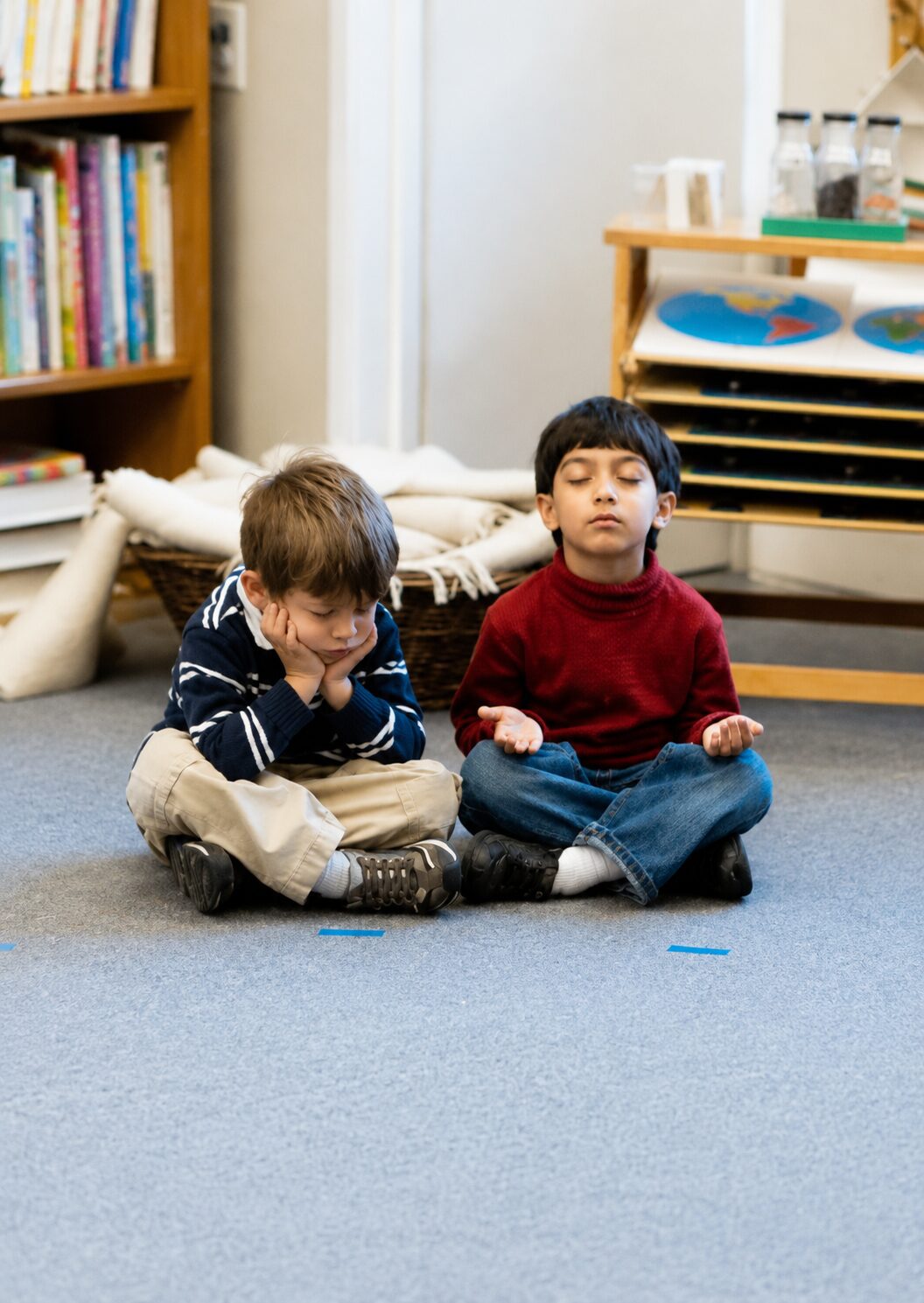
Last week, a school administrator confided her frustration about a situation many of us have seen. One of her assistants said she “just loves” when a teacher plays the Silence Game. In this version, when the children become noisy, the teacher calls the Silence Game to help them calm down — but then rewards each silent child with a sticker.

At first glance, this might look like a creative classroom management strategy: noise → silence → reward. But in a Montessori classroom, this picture is troubling for a few reasons.

The Real Purpose of the Silence Game 

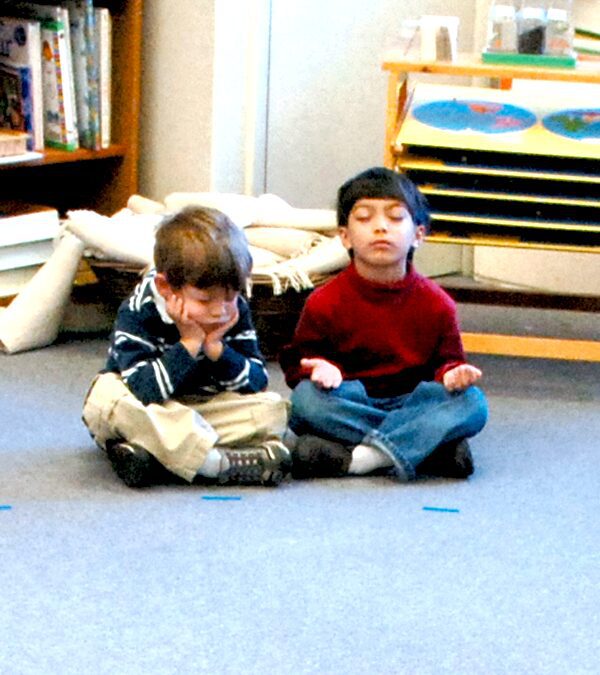
Dr. Montessori created the Silence Game as an exercise in self-mastery and joyful discovery, not as a behavior-control tactic. Children are invited to create silence together — a state of stillness, concentration, and awareness. This is not “Simon Says” with a bribe at the end.

The game is most powerful when:

  • It’s presented as a privilege and a shared experience, not a punishment or an emergency brake for noise.

  • It taps into children’s natural curiosity (“Can we be so still we hear a bird outside?”) rather than their compliance.

  • It becomes a moment of collective mindfulness that children help co-create.

When played this way, the Silence Game builds self-regulation, inner discipline, and a sense of community. Children feel the intrinsic satisfaction of calmness and control — and that’s the whole point.

Why Rewards Undermine the Goal

Giving stickers for silence sends the opposite message. It turns an experience of inner discovery into an external transaction. Instead of practicing self-control for its own sake, children learn: “Be quiet and you’ll get a prize.” Over time, this undermines intrinsic motivation, making the game far less effective.

Montessori education is built on the principle that children develop self-discipline through freedom within limits, purposeful activity, and respect for the environment. When we add extrinsic rewards, we teach children to rely on someone else’s approval rather than building their own inner compass.

Classroom Management vs. Child Development

It’s understandable why teachers reach for tools like stickers — they’re simple, quick, and often seem to “work.” But in Montessori our goal is to support development. The Silence Game isn’t a shortcut to quiet; it’s a tool for cultivating concentration and communal grace.

A more authentic approach might look like this:

  • Invite the children to gather for the Silence Game at a neutral time, not as a reaction to noise.

  • Make it playful: dim the lights slightly, sit together, whisper, “Let’s see if we can hear the clock ticking.”

  • Allow the silence to emerge organically, without dangling a reward.

  • Reflect briefly afterwards: “Did you notice how peaceful it felt? What sounds did you hear?”

This keeps the activity aligned with its Montessori roots — emphasizing self-discovery over compliance.

The Deeper Value of Silence

The Silence Game has a profound place in Montessori education. It can:

  • Strengthen concentration and impulse control.

  • Heighten sensory awareness (“I can hear my heartbeat!”).

  • Create a sense of unity (“We made the silence together!”).

  • Offer children a moment of calm and wonder in a busy day.

When done well, it’s a magical experience children cherish. Many Montessori graduates remember the Silence Game decades later as a high point of their classroom life.

Bottom Line

Using the Silence Game as a behavior-management tool with stickers misses its essential purpose. Montessori classrooms thrive on intrinsic motivation, mutual respect, and self-discipline — not prizes for compliance. By honoring the true spirit of the Silence Game, we help children discover the satisfaction of calmness, focus, and community from within.

Ask Ms. Montessori Practical Wisdom for Parents

In this column, we invite parents to bring their questions about raising children the Montessori way. Ms. Montessori offers gentle yet firm counsel rooted in deep respect for the child’s natural development. Whether the concern is about discipline, learning, family pressures, or the challenges of modern life, these answers are meant to reassure and guide with timeless principles.

Ms. Montessori believed that every child carries within them the blueprint of their own growth, and that the role of adults is not to mold them by force, but to prepare an environment in which their fullest potential may unfold. Her replies aim to honor that vision while giving parents practical strategies they can use today.

Ms. Montessori is actually the voice of many Montessori teachers, women and men, who channel their inner Montessori voice to offer some gentle parenting tips.

Grandparent Pressure

Dear Ms. Montessori, my mother insists that my three-year-old should already be learning to read. She continues to buy flashcards and drill him when she visits. I don’t want to offend her, but I feel this isn’t right. How do I handle it? – Conflicted Daughter


Dear Conflicted, your mother’s eagerness stems from love, but her methods reflect a misunderstanding of the natural development of young children. At three years of age, your son is in a “sensitive period” for language development. During this period, the child absorbs the spoken word, the rhythms of conversation, and the joy of storytelling effortlessly. He learns in the way he learns to walk—by living, imitating, and joyfully repeating what he sees and hears around him.

The danger of flashcards and drills is that they ask the child to perform before a solid foundation has been built. Reading must grow out of the child’s own inner readiness, not from an adult’s insistence. If we compel a child to recite what he does not yet understand, we replace joy with anxiety. Worse still, the child may come to believe that learning is about pleasing adults rather than discovering truth for himself.
How then can you respond with kindness to your mother while protecting your child? Begin by acknowledging her intention: “I see how much you want to help him.” Then gently explain: “Right now, he is preparing for reading through conversation, singing, and listening to stories. When the time comes, he will learn with enthusiasm.” If she can visit his classroom, the experience will speak louder than any words. She will see children joyfully tracing letters in sand, building words with movable alphabets, and reading with delight—not under pressure, but out of inner discovery. Ms. Montessori

You may also guide her energy into more fruitful channels. Invite her to read aloud to him, to sing songs from her childhood, or to tell him stories of the family. These activities are not only precious in their own right, but they nourish the very faculties that will enable him to read naturally in due time.

Never forget: the task of the parent is to safeguard the child’s freedom to grow according to his inner plan. To resist pressure—whether from grandparents, neighbors, or society at large—is often the most loving thing we can do. When we trust the child’s rhythm, we allow him to become a reader not by compulsion, but by joy. – Ms. Montessori

Why all Schools should implement mastery progress-based report schemes

Why all Schools should implement mastery progress-based report schemes

hiring teachers


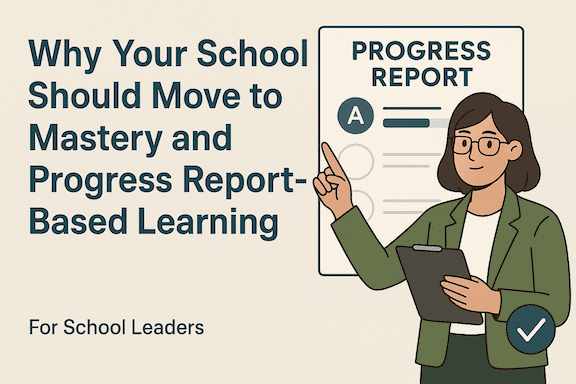
Years ago, when I first sat down with a group of eighth graders in a traditional private school to talk about grades, one boy said something that stayed with me: “I feel like my grades are a race I’m losing — even when I’ve learned more than I did last year.” That’s the moment it hit me again how the traditional grading system can distort learning. Letter grades and percentages compress a child’s effort, growth, and curiosity into a single symbol. They make it easy to measure compliance but harder to measure progress.

More schools today are moving toward mastery-based learning and progress reporting — and with good reason. These approaches give families a fuller, clearer picture of what students know and can do. They honor the process of learning, not just the end result, and they invite students to take real ownership of their education.

Moving Beyond One-Size-Fits-All Grading

Think of a classroom where a student struggles for weeks with fractions, while another is already ready for algebra. In a traditional system, the first student gets a C and the second an A, and both move on at the same time. In a mastery-based classroom, the first student keeps working with support until mastery is demonstrated, while the second moves ahead as soon as he’s ready.

A teacher at a small K–8 school put it this way: “It’s like teaching children to swim. You wouldn’t keep a child in the shallow end forever because of their birthday, and you wouldn’t send a non-swimmer into the deep end because of their age. You watch, you coach, you measure progress, and you let them advance when they’re ready.”

Why Progress Reports Beat Letter Grades

Instead of static grades, progress reports give parents a window into their child’s actual learning. One parent I spoke with said, “I used to dread report cards. Now I look forward to them. I can see exactly what skills my daughter has mastered, what she’s working on, and what support she needs.” Teachers find them equally useful for planning instruction and sparking meaningful conversations.

Levels of Mastery — A Continuum, Not a Checkbox

Too often we frame mastery as binary — “has mastered” or “has not mastered.” But learning is rarely that simple. The International Baccalaureate (IB), for example, uses levels of achievement to reflect a continuum of understanding.

A middle school teacher in our network likes to map skills to Bloom’s Taxonomy. She’ll tell her students, “You’re solidly at the ‘apply’ level on this math concept. Let’s aim for ‘analyze’ next.” Students can see themselves moving up the ladder — remembering, understanding, applying, analyzing, evaluating, creating — which reframes mastery as a journey, not a hurdle.

Portfolios: Bringing Learning to Life

Progress reports tell a story with words. Portfolios show it with evidence. They’re living archives of authentic student work — and they look different at each stage of development.

  • Kindergarten–3rd Grade: Portfolios might hold drawings, early math activities, first stories, photographs of practical life work, and teacher notes documenting reading or presentations. I once watched a 6-year-old proudly flip through her portfolio, pointing out how her handwriting had “grown up.”
  • 4th–6th Grade: Students can showcase multi-step projects, science experiments, essays, goal-setting sheets, and even peer feedback. A fifth grader at one of our schools told his parents at a conference, “This is the project where I learned to keep going even when it didn’t work the first time.”
  • Secondary Level: Older students can build a record of research papers, capstone projects, leadership experiences, community service, and creative work. Some even lead their own portfolio conferences, presenting their growth to parents and teachers with confidence.

Narrative Progress Reports — Telling the Story of Learning

Narrative reports take progress reporting a step further. Instead of ticking boxes or filling in charts, teachers write a brief narrative covering academic progress, work habits, and social-emotional growth.

Done well, these reports don’t have to be overwhelming. One high school team uses a simple template: an opening paragraph, strengths, areas for growth, and next steps. They also invite students to write their own reflections, which both enriches the report and saves teacher time. “I was skeptical at first,” one teacher admitted. “But once I started writing evidence-based statements instead of trying to sum up everything, it actually became easier — and more meaningful.”

Implementation Tips

Making the shift doesn’t require an overnight revolution. Begin by setting clear learning standards and competencies. Train your staff in mastery-based practices. Develop or adopt tools to track mastery and student work. Communicate changes early and often to families and stakeholders. Pilot in one grade or subject area, gather feedback, and expand gradually.

The Payoff

Schools that make this shift often see immediate changes. Parent-teacher conferences become more productive. Students become more engaged because they understand where they’re headed and what they’ve achieved. Teachers can target interventions more precisely.

One principal summed it up perfectly: “For the first time, our conversations with parents are about learning — not about defending grades.”

A Call to Action

If you’re a school leader or educator, now is the time to start the conversation with your team. Explore tools and resources that support mastery and progress reporting. Plan a pilot, gather feedback, and commit to a timeline. Above all, involve your students and families in the process.

The shift from traditional grades to mastery and progress reporting isn’t just a change in paperwork. It’s a cultural transformation toward deeper, more personalized learning — one that can rekindle joy in teaching and learning alike.

Ask Ms. Montessori Practical Wisdom for Parents

In this column, we invite parents to bring their questions about raising children the Montessori way. Ms. Montessori offers gentle yet firm counsel rooted in deep respect for the child’s natural development. Whether the concern is about discipline, learning, family pressures, or the challenges of modern life, these answers are meant to reassure and guide with timeless principles.


Ms. Montessori believed that every child carries within them the blueprint of their own growth, and that the role of adults is not to mold them by force, but to prepare an environment in which their fullest potential may unfold. Her replies aim to honor that vision while giving parents practical strategies they can use today.

Ms. Montessori is actually the voice of many Montessori teachers, women and men, who channel their inner Montessori voice to offer some gentle parenting tips.

Grandparent Pressure

Dear Ms. Montessori, my mother insists that my three-year-old should already be learning to read. She continues to buy flashcards and drill him when she visits. I don’t want to offend her, but I feel this isn’t right. How do I handle it? – Conflicted Daughter


Dear Conflicted, your mother’s eagerness stems from love, but her methods reflect a misunderstanding of the natural development of young children. At three years of age, your son is in a “sensitive period” for language development. During this period, the child absorbs the spoken word, the rhythms of conversation, and the joy of storytelling effortlessly. He learns in the way he learns to walk—by living, imitating, and joyfully repeating what he sees and hears around him.

The danger of flashcards and drills is that they ask the child to perform before a solid foundation has been built. Reading must grow out of the child’s own inner readiness, not from an adult’s insistence. If we compel a child to recite what he does not yet understand, we replace joy with anxiety. Worse still, the child may come to believe that learning is about pleasing adults rather than discovering truth for himself.
How then can you respond with kindness to your mother while protecting your child? Begin by acknowledging her intention: “I see how much you want to help him.” Then gently explain: “Right now, he is preparing for reading through conversation, singing, and listening to stories. When the time comes, he will learn with enthusiasm.” If she can visit his classroom, the experience will speak louder than any words. She will see children joyfully tracing letters in sand, building words with movable alphabets, and reading with delight—not under pressure, but out of inner discovery. Ms. Montessori

You may also guide her energy into more fruitful channels. Invite her to read aloud to him, to sing songs from her childhood, or to tell him stories of the family. These activities are not only precious in their own right, but they nourish the very faculties that will enable him to read naturally in due time.

Never forget: the task of the parent is to safeguard the child’s freedom to grow according to his inner plan. To resist pressure—whether from grandparents, neighbors, or society at large—is often the most loving thing we can do. When we trust the child’s rhythm, we allow him to become a reader not by compulsion, but by joy. – Ms. Montessori

New Mexico’s Big Bet on Free Child Care—What It Means for Montessori Programs

New Mexico’s Big Bet on Free Child Care—What It Means for Montessori Programs

hiring teachers


On November 1, 2025, child care will be free or highly subsidized for every family in New Mexico, regardless of income. Governor Michelle Lujan Grisham’s decision to remove income limits, end copayments, and boost reimbursement rates is a major shift in public policy. Centers that pay their entry-level staff at least $18 an hour and offer 10 hours of care a day, five days a week, will qualify for extra incentives. The program is funded through the state’s Land Grant Permanent Fund and Early Childhood Trust Fund, built over the years from oil, gas, and investment income.

For many families, this is life-changing. KOB-TV in Albuquerque spoke with parents who said the savings would help them afford everything from holidays and vacations to a long-awaited down payment on a house. One parent summed it up simply: “Everybody deserves to be able to keep working and not cut as much out of their budget for child care.”

Providers, however, see both opportunity and challenge. Ruth Porta, owner of La Esperanza Child Development Centers, said, “They deserve that help … but how is this going to be sustainable?” Natalie Aragon of ABQ Childcare is already “hiring at least one to two people per classroom” to handle the expected surge. Their comments reflect what many of us in the field are thinking: this is bold, but it needs careful execution.

To understand how this plays out at ground level, I spoke with my friend and colleague Sheila Griffin, who runs Leap Montessori School in New Mexico. Sheila is excited for families but realistic about what the policy does and doesn’t cover.

For preschoolers, tuition will be fully funded. For elementary-age children, the state covers before- and after-school care but not the entire school day. At her school, that means families still pay a couple of hundred dollars a month — a significant reduction, but not completely free. For schools with higher tuition, the remaining gap would be larger.

Sheila is passionate about preserving the authenticity of Montessori. Some worry that quality systems like New Mexico’s FOCUS framework will force schools to compromise. She’s found the opposite. By making only minor, respectful adjustments — such as adding a simple storytelling tray to meet a literacy benchmark — she’s been able to maintain full Montessori fidelity.

She’s also learned to be strategic with state Pre-K funding. Taking a large number of Pre-K seats can squeeze kindergarten enrollment, weakening the three-year primary cycle at the heart of Montessori. She solved it by starting a small multi-age elementary class for ready five-year-olds—her advice: guard your three-year cycle and plan.

When asked if universal free child care threatens private providers, Sheila didn’t hesitate: “Absolutely not.” She believes the state intends to raise the floor for everyone, not undercut private schools. With stable reimbursement and higher pay for teachers, she sees a stronger future for early childhood educators.


What’s Covered at a Glance

Age Group Coverage Family Out-of-Pocket (Leap Montessori Example)
Birth–Kindergarten Full tuition covered (licensed providers) $0
Elementary (Grades 1–6) Before- & after-school care covered; instructional day not covered About $200–$300/month

Funding flows directly to the school, not the parent. Programs must be licensed and registered with ECECD to qualify. For schools, that means a predictable stream of public support, a chance to serve more families, and the resources to improve staff pay.

Still, challenges remain. State reimbursements may not fully cover the higher costs of Montessori programs, quality standards will require some adaptation, and competition for qualified teachers will almost certainly grow. Knowing this in advance helps schools plan wisely and stay ahead.


If you run a Montessori school in New Mexico, here are a few steps to consider:

  • Engage early. Ensure your schedule and licensing align with reimbursable hours.
  • Budget with real numbers. Model tuition and reimbursement scenarios using actual state rates.
  • Protect the three-year cycle. Don’t overcommit Pre-K slots at the expense of kindergarten continuity.
  • Recruit ahead of demand. Build a salary scale and invest in professional development to attract and keep staff.
  • Communicate clearly with families. Celebrate the savings, but be honest about what’s covered and what’s not. Highlight what makes your Montessori program distinct.

Other states are watching New Mexico closely. The state can do this now because it has built an endowment-style funding engine over the years; others will need a different path, whether dedicated revenue, phased rollouts, or public-private partnerships. But the essentials — stable funding, quality systems that respect program identity, a separate agency focused on early childhood, and true partnership with community providers — can be replicated anywhere.

As Montessori educators, we’ve always believed early childhood education is a public good. New Mexico is testing what it looks like to fund that belief at scale. Sheila’s experience convinces me that, if we stay engaged, protect fidelity, and plan intelligently, this moment can widen access and strengthen the work we cherish.


On November 1, 2025, child care will be free or highly subsidized for every family in New Mexico, regardless of income. Governor Michelle Lujan Grisham’s decision to remove income limits, end copayments, and boost reimbursement rates is a major shift in public policy. Centers that pay their entry-level staff at least $18 an hour and offer 10 hours of care a day, five days a week, will qualify for extra incentives. The program is funded through the state’s Land Grant Permanent Fund and Early Childhood Trust Fund, built over the years from oil, gas, and investment income.

For many families, this is life-changing. KOB-TV in Albuquerque spoke with parents who said the savings would help them afford everything from holidays and vacations to a long-awaited down payment on a house. One parent summed it up simply: “Everybody deserves to be able to keep working and not cut as much out of their budget for child care.”

Providers, however, see both opportunity and challenge. Ruth Porta, owner of La Esperanza Child Development Centers, said, “They deserve that help … but how is this going to be sustainable?” Natalie Aragon of ABQ Childcare is already “hiring at least one to two people per classroom” to handle the expected surge. Their comments reflect what many of us in the field are thinking: this is bold, but it needs careful execution.

To understand how this plays out at ground level, I spoke with my friend and colleague Sheila Griffin, who runs Leap Montessori School in New Mexico. Sheila is excited for families but realistic about what the policy does and doesn’t cover.

For preschoolers, tuition will be fully funded. For elementary-age children, the state covers before- and after-school care but not the entire school day. At her school, that means families still pay a couple of hundred dollars a month — a significant reduction, but not completely free. For schools with higher tuition, the remaining gap would be larger.

Sheila is passionate about preserving the authenticity of Montessori. Some worry that quality systems like New Mexico’s FOCUS framework will force schools to compromise. She’s found the opposite. By making only minor, respectful adjustments — such as adding a simple storytelling tray to meet a literacy benchmark — she’s been able to maintain full Montessori fidelity.

She’s also learned to be strategic with state Pre-K funding. Taking a large number of Pre-K seats can squeeze kindergarten enrollment, weakening the three-year primary cycle at the heart of Montessori. She solved it by starting a small multi-age elementary class for ready five-year-olds—her advice: guard your three-year cycle and plan.

When asked if universal free child care threatens private providers, Sheila didn’t hesitate: “Absolutely not.” She believes the state intends to raise the floor for everyone, not undercut private schools. With stable reimbursement and higher pay for teachers, she sees a stronger future for early childhood educators.


What’s Covered at a Glance

Age Group Coverage Family Out-of-Pocket (Leap Montessori Example)
Birth–Kindergarten Full tuition covered (licensed providers) $0
Elementary (Grades 1–6) Before- & after-school care covered; instructional day not covered About $200–$300/month

Funding flows directly to the school, not the parent. Programs must be licensed and registered with ECECD to qualify. For schools, that means a predictable stream of public support, a chance to serve more families, and the resources to improve staff pay.

Still, challenges remain. State reimbursements may not fully cover the higher costs of Montessori programs, quality standards will require some adaptation, and competition for qualified teachers will almost certainly grow. Knowing this in advance helps schools plan wisely and stay ahead.


If you run a Montessori school in New Mexico, here are a few steps to consider:

  • Engage early. Ensure your schedule and licensing align with reimbursable hours.
  • Budget with real numbers. Model tuition and reimbursement scenarios using actual state rates.
  • Protect the three-year cycle. Don’t overcommit Pre-K slots at the expense of kindergarten continuity.
  • Recruit ahead of demand. Build a salary scale and invest in professional development to attract and keep staff.
  • Communicate clearly with families. Celebrate the savings, but be honest about what’s covered and what’s not. Highlight what makes your Montessori program distinct.

Other states are watching New Mexico closely. The state can do this now because it has built an endowment-style funding engine over the years; others will need a different path, whether dedicated revenue, phased rollouts, or public-private partnerships. But the essentials — stable funding, quality systems that respect program identity, a separate agency focused on early childhood, and true partnership with community providers — can be replicated anywhere.

As Montessori educators, we’ve always believed early childhood education is a public good. New Mexico is testing what it looks like to fund that belief at scale. Sheila’s experience convinces me that, if we stay engaged, protect fidelity, and plan intelligently, this moment can widen access and strengthen the work we cherish.


Classroom Management that Fosters Self-Directed Learning

Classroom Management that Fosters Self-Directed Learning

by Tim Seldin

In every Montessori classroom, the atmosphere is as important as the materials on the shelves. Children learn best in an environment where concentration, respect, and independence are carefully protected. To create such a space, we must remember that classroom management is less about control and more about tone, modeling, and partnership. Montessori guides are called not to “manage” children in the conventional sense, but to prepare a climate where self-discipline, self-direction, and love of learning can flourish.

The Role of the Tone Keeper

Every classroom needs at least one adult who consciously serves as the tone keeper. This role is more than simply maintaining order—it is about preserving a climate of calm, respect, and purposeful work.

Children absorb the emotional atmosphere of a room as readily as they absorb language. If the adults are hurried, distracted, or tense, the children mirror that energy. Conversely, when we embody grace, courtesy, and attentiveness, children feel secure and respond by settling into their own work.

A calm adult presence communicates: this is a place where we work with care and respect. In practical terms, the tone keeper:

  • moves slowly and with purpose,

  • speaks softly and with intention,

  • notices when the classroom energy begins to rise and gently redirects it,

  • serves as an anchor when children feel uncertain.

When the adult consistently radiates steadiness, the children internalize it. In time, the classroom itself begins to regulate and sustain its own peaceful rhythm.

Teaching Grace and Courtesy

Grace and courtesy lessons are not optional; they are foundational. Just as we give lessons in math or language, we must intentionally model how to greet, wait, interrupt politely, offer help, and care for the environment.

These lessons are short, practical demonstrations, often lasting only a minute or two. For example:

  • showing a child how to walk around a rug without disturbing another’s work,

  • practicing how to say “Excuse me” and place a hand gently on someone’s shoulder instead of interrupting,

  • modeling how to push in a chair quietly or roll a work mat neatly.

When given consistently, these lessons create a culture of civility and respect. Children learn not only how to behave, but why: they come to see that their actions contribute to the well-being of the whole community. Grace and courtesy lessons equip them with the social tools to navigate challenges peacefully, reinforcing the culture of respect that supports concentration.

Redirecting with Respect

Even in the most peaceful classroom, children will sometimes be noisy, distracted, or disruptive. Our task is not to scold but to guide. Montessori spoke of “helping the child help himself.” That begins with redirection delivered in a way that preserves dignity.

Instead of “Stop that!” we might say, “Let me show you another way.” Instead of correcting harshly, we might quietly kneel beside a child and ask, “Would you like me to help you begin again?”

Respectful redirection does three things at once:

  1. It preserves the child’s self-esteem.

  2. It protects the concentration of others.

  3. It strengthens trust between adult and child.

When redirection becomes a habit of kindness, children learn that mistakes are not failures but opportunities to try again. Over time, they internalize this compassionate discipline and apply it to themselves.

Observation Before Action

Montessori insisted that guides become scientists in the classroom, always observing before intervening. Every behavior carries a message. A child may abandon work because it is too difficult, too easy, or because emotional needs are unmet.

Before stepping in, pause and ask:

  • What is this behavior telling me?

  • Is the environment supporting this child?

  • What need might be unmet—social, emotional, or developmental?

For example, a child who wanders may be seeking more challenging work. A child who interrupts repeatedly may be craving connection. A child who grows frustrated may need a fresh presentation or reassurance.

By seeking the root cause rather than reacting to the surface behavior, we respond thoughtfully and effectively. Observation helps us see the child more clearly and support their growth with compassion.

Supporting Work and Concentration

One of our greatest responsibilities is to protect the child’s concentration. Interruptions—whether from adults or peers—fracture the flow of deep engagement. Montessori called this “false fatigue”: the restless energy that arises when concentration is broken too soon.

We can support concentration by:

  • protecting the three-hour work cycle,

  • minimizing unnecessary interruptions,

  • encouraging children to complete the full cycle of activity (choose, work, return),

  • offering lessons again when clarity or confidence is lacking,

  • preparing transitions with predictable cues so children know what to expect.

When concentration is respected, children not only learn academic skills but also build the inner discipline, resilience, and satisfaction that come from sustained effort.

Partnering with Parents

Our success as guides depends on building strong alliances with parents. Children thrive when home and school share consistent values and expectations.

When parents understand Montessori principles, they become partners rather than spectators. We can:

  • invite them into parent education evenings,

  • share stories and observations that show how independence and respect unfold at school,

  • encourage them to adopt simple practices at home—like giving children time to complete tasks independently, or inviting them to contribute to family life.

When challenges arise, partnership is essential. A child who is struggling benefits most when parents and teachers work together with shared trust. By approaching parents not as critics but as allies, we create a united circle of support around the child.

Key Reminders for Montessori Teachers

  • A calm, purposeful adult presence sets the tone of the entire classroom.

  • Grace and courtesy lessons equip children with essential tools for community life.

  • Respectful redirection keeps children on track without undermining their dignity.

  • Careful observation allows us to understand and respond to underlying needs.

  • Partnerships with parents create consistency and support for every child.

When we attend to these essentials, our classrooms become communities of peace and focus. The children experience not just academic progress, but also the inner growth that prepares them for a lifetime of independence, responsibility, and joy in learning.

Checklist for Teachers

Adult Presence

  1. Ensure one adult is always serving as the tone keeper of the classroom.

  2. Model calm, respectful, and purposeful behavior at all times.

  3. Demonstrate follow-through and responsibility in daily routines.

Grace and Courtesy

  1. Intentionally teach lessons in grace and courtesy: greetings, waiting, interrupting politely, offering help.

  2. Reinforce respectful interactions consistently through modeling and practice.

  3. Use grace and courtesy as the foundation for building community harmony.

Observation and Redirection

  1. Observe carefully before intervening—ask what need underlies the behavior.

  2. Respond thoughtfully to misbehavior rather than reacting hastily.

  3. Redirect with dignity using gentle, clear, and respectful language.

  4. Identify patterns in behavior and adjust the environment or guidance accordingly.

Supporting Work and Concentration

  1. Protect uninterrupted work cycles and minimize unnecessary interruptions.

  2. Encourage completion of the full work cycle through gentle prompting.

  3. Offer lessons again when clarity or confidence is lacking.

  4. Provide purposeful transitions with predictable cues and advance notice.

Parent Partnerships

  1. Communicate openly with parents about classroom practices and expectations.

  2. Share observations and strategies so home and school can work in harmony.

  3. Invite parents into the Montessori approach, helping them understand the importance of concentration, independence, and respect.

  4. Approach challenges collaboratively, positioning parents as allies on the child’s team.


Ask Ms. Montessori – Grandparent pressure

Ask Ms. Montessori – Grandparent pressure

hiring teachers

Ask Ms. Montessori Practical Wisdom for Parents

In this column, we invite parents to bring their questions about raising children the Montessori way. Ms. Montessori offers gentle yet firm counsel rooted in deep respect for the child’s natural development. Whether the concern is about discipline, learning, family pressures, or the challenges of modern life, these answers are meant to reassure and guide with timeless principles.


Ms. Montessori believed that every child carries within them the blueprint of their own growth, and that the role of adults is not to mold them by force, but to prepare an environment in which their fullest potential may unfold. Her replies aim to honor that vision while giving parents practical strategies they can use today.

Ms. Montessori is actually the voice of many Montessori teachers, women and men, who channel their inner Montessori voice to offer some gentle parenting tips.

Grandparent Pressure

Dear Ms. Montessori, my mother insists that my three-year-old should already be learning to read. She continues to buy flashcards and drill him when she visits. I don’t want to offend her, but I feel this isn’t right. How do I handle it? – Conflicted Daughter


Dear Conflicted, your mother’s eagerness stems from love, but her methods reflect a misunderstanding of the natural development of young children. At three years of age, your son is in a “sensitive period” for language development. During this period, the child absorbs the spoken word, the rhythms of conversation, and the joy of storytelling effortlessly. He learns in the way he learns to walk—by living, imitating, and joyfully repeating what he sees and hears around him.

The danger of flashcards and drills is that they ask the child to perform before a solid foundation has been built. Reading must grow out of the child’s own inner readiness, not from an adult’s insistence. If we compel a child to recite what he does not yet understand, we replace joy with anxiety. Worse still, the child may come to believe that learning is about pleasing adults rather than discovering truth for himself.
How then can you respond with kindness to your mother while protecting your child? Begin by acknowledging her intention: “I see how much you want to help him.” Then gently explain: “Right now, he is preparing for reading through conversation, singing, and listening to stories. When the time comes, he will learn with enthusiasm.” If she can visit his classroom, the experience will speak louder than any words. She will see children joyfully tracing letters in sand, building words with movable alphabets, and reading with delight—not under pressure, but out of inner discovery. Ms. Montessori

You may also guide her energy into more fruitful channels. Invite her to read aloud to him, to sing songs from her childhood, or to tell him stories of the family. These activities are not only precious in their own right, but they nourish the very faculties that will enable him to read naturally in due time.

Never forget: the task of the parent is to safeguard the child’s freedom to grow according to his inner plan. To resist pressure—whether from grandparents, neighbors, or society at large—is often the most loving thing we can do. When we trust the child’s rhythm, we allow him to become a reader not by compulsion, but by joy. – Ms. Montessori
A Montessori inspired Home – room-by-Room checklist

A Montessori inspired Home – room-by-Room checklist

home shelf

Simple Ways to Foster Independence, Order, and Confidence.

Entryway / Mudroom

† Low hooks for coats, hats, and bags

† Small bench or chair for putting on/taking off shoes

† Basket or shelf for shoes

† Mirror at child’s height for last checks before heading out

† Seasonal accessories (like mittens or sunglasses) should be stored where the child can reach

Kitchen

† Child-sized dishes, cups, and utensils on a low shelf

† Low shelf or accessible bin for healthy snacks

† Small water dispenser or pitcher with cups

† Learning tower or step stool for safe access to counters

† Child-sized tools: vegetable peeler, spreading knife, small cutting board

† Cleaning tools: small broom, dustpan, cloth for spills

† Space for the child to help set the table or prepare simple meals

Bathroom

† Step stool to reach the sink

† Low hook for towel and washcloth

† Toothbrush, toothpaste, and grooming items organized in a reachable spot

† Mirror at child’s height or an adjustable one

† Laundry basket accessible for putting dirty clothes away

† Toilet learning accessories if needed: small potty or seat insert

Living Room / Play Space

† Low shelves with curated toys, puzzles, and materials displayed neatly

† Toys organized in baskets or trays for easy access and return

† Open floor space for movement and play

† A cozy reading corner with a small chair or floor cushion

† Art materials (like crayons, paper, and scissors) in a contained, accessible spot

† Natural, calming colors and lighting to reduce overstimulation

Dining Area

† Child-sized chair or booster seat at the family table

† Cloth napkins, placemats, and utensils within reach for setting their own place

† Water jug or pitcher at the table so the child can pour their own drink

† Predictable mealtime routine that includes family-style serving when possible

Bedroom

† Floor bed or low bed to allow getting in and out independently

† Low wardrobe, dresser, or open shelving with a limited selection of clothing

† Hamper for dirty clothes

† Low bookshelf with a small, rotating selection of books

† A calm, uncluttered space for dressing and quiet activities

† Nightlight or accessible light switch for independence at bedtime

Laundry & Cleaning

† Small laundry basket for the child to carry clothes to the washer

† Small spray bottle with water and a cloth for wiping surfaces

† Short-handled broom and dustpan

† Child-safe participation in sorting laundry, folding, and simple chores

Outdoors / Garden

† Child-sized gardening tools

† Easy-to-reach watering can

† Designated area for digging, planting, or exploring nature

† Outdoor toys organized in a reachable bin or shelf

† Space for gross-motor play: running, climbing, balancing

Bonus Tips

† Rotate toys and materials regularly to maintain interest without overwhelming.

† Label baskets or shelves with words or pictures to guide organization.

† Involve your child in setting up and maintaining these spaces to build ownership.


Making Montessori Work At Home

Making Montessori Work At Home

montessori home

Creating Simple Spaces for Growth


When visitors step into a Montessori classroom for the first time, they’re often struck by its beauty, calm, and sense of order. The environment feels inviting, child-centered, and purposeful. Children move confidently, choosing their work, returning materials neatly to their places, and engaging with others in peaceful collaboration.

Naturally, many parents wonder: How can we bring some of that magic into our home?

Fortunately, you don’t need to replicate a Montessori classroom to make Montessori work at home. By creating simple, intentional spaces that foster independence and choice within clear boundaries, you can nurture your child’s growth in confidence, curiosity, and responsibility right where you live.

The Prepared Home: More Than Furniture

In Montessori, the environment is considered the “third teacher,” alongside the adult and the materials. But creating a Montessori-inspired home is not about buying specialized furniture or expensive educational tools. Instead, it’s about preparing your home in ways that align with how children naturally learn and develop.

At its heart, a Montessori-inspired home environment:

• Encourages independence and self-care.

• Respects your child’s pace of learning and natural interests.

• Builds a sense of order and predictability.

• Promotes collaboration and peaceful interactions.

These qualities can be cultivated in any home, regardless of size, style, or budget.

Start Small: Setting Up Spaces for Independence

Rather than overhauling your entire home, begin by preparing just one space where your child can act independently, make choices, and contribute to family life.

The Entryway:

Make arrivals and departures easier by setting up a small bench where your child can sit to put on shoes. Add low hooks for coats and backpacks, and a basket for shoes or hats. When a child can manage their own belongings, it fosters a sense of personal responsibility.

The Kitchen:

Invite your child to participate in preparing food by providing access to a low shelf, stocked with their own utensils, cups, and plates. A child-sized water dispenser or pitcher allows them to pour their own drinks. Keep simple snacks within reach, empowering them to serve themselves. A learning tower or sturdy stool lets them safely help with washing vegetables, stirring, or baking.

The Bathroom:

With a low stool, your child can reach the sink to brush their teeth or wash their hands. Store towels, washcloths, and grooming items at their level to encourage independent self-care.

The Bedroom:

Create a calm, uncluttered space where your child can dress themselves. An open wardrobe or a low shelf with limited clothing options lets them make decisions without feeling overwhelmed. A small bookshelf with a curated selection of books fosters a love of reading.

Living & Learning Spaces:

Provide low shelves with a few open-ended toys, puzzles, and art materials. Organize these items so each has its place. Fewer choices displayed at a time help children focus deeply and complete activities before moving on to the next.

The Power of Simplicity and Order

Children thrive in environments where there is order and clarity. In a Montessori home, this means everything has a place, and children are involved in maintaining that order. Instead of being told to “clean up your room,” children are shown where things go, why it’s important, and are given the time to do it themselves.

This predictability helps children build not only Practical Life skills but also internal discipline and a sense of accomplishment.

Using Real, Purposeful Tools

Montessori encourages using real tools rather than toy imitations. Children can learn to care for their home with child-sized but functional tools—small brooms, dustpans, kitchen utensils, and gardening tools. Using real tools teaches them that their contributions are meaningful and valued.

Freedom Within Limits

A Montessori home is not a free-for-all; it is structured to provide freedom within clear, consistent boundaries. Children can make choices, but those choices are framed by safety, respect, and shared family values. For example, children might choose their own clothing from a set of weather-appropriate options, or decide which snack to eat from a selection you’ve prepared.

Observe and Adapt

As your child grows, their needs and interests will change. The Montessori approach emphasizes careful observation—watching how your child uses a space or material and making adjustments accordingly. If a shelf is being emptied but nothing is being engaged with, it might be time to rotate the materials or simplify the choices.

Creating a Calm Atmosphere

Montessori classrooms feel peaceful because they are designed to minimize chaos and overstimulation. At home, this might mean reducing clutter, using natural materials, and keeping decor calm, rather than bright and busy. Soft lighting, neutral tones, and quiet background music can contribute to an atmosphere of focus and peace.

Making Montessori a Way of Life

Setting up Montessori-inspired spaces is just the beginning. The deeper work is in creating a home culture based on respect, collaboration, and curiosity. This means:

• Speaking to your child with kindness and patience.

• Involving them in everyday life—cooking, cleaning, gardening.

• Encouraging effort rather than praising outcomes.

• Allowing mistakes as opportunities to learn.

• Holding family meetings where even young children have a voice.

Over time, these practices build not just a home that is tidy and organized, but a family culture that is cooperative, respectful, and joyful.

The Real Reward

When children are trusted with real responsibilities, they rise to the occasion. A Montessori home nurtures a child’s innate desire to contribute, to learn, and to grow—not because they are forced but because they feel respected, capable, and connected.

In the end, preparing the environment is really about preparing the child for life, and preparing ourselves, as parents, to see and support their remarkable potential.

The Wonderful World of trees

The Wonderful World of trees

A Seed Planted with Purpose

In a modest apartment in Sydney, Australia, surrounded by handwritten notes and books on education, Montessori teacher, Montessori Australia Ambassador, author, TEDx speaker, and co-founder of Upschool, Gavin McCormack, sat down with one goal: to create a course that would help children feel their power to change the world.

The result was The Wonderful World of Trees — a free, globally accessible education program designed to connect children with the natural world, empower them to take meaningful local action and, ultimately, help plant forests in countries across the planet through a partnership with global tree-planting initiative, Evertreen.

The result was The Wonderful World of Trees — a free, globally accessible education program designed to connect children with the natural world, empower them to take meaningful local action and, ultimately, help plant forests in countries across the planet through a partnership with global tree-planting initiative, Evertreen.

The concept was disarmingly simple: inspire children to learn about trees, care for one locally, and then make a real-world impact by planting a forest somewhere they may never visit, for people they may never meet.

The Urgency of Now

In a world facing climate breakdown, deforestation, and environmental collapse, The Wonderful World of Trees arrives as more than a learning module; it’s a response.

This course doesn’t sugar-coat the truth. Instead, it empowers children with knowledge, agency, and hope. They are not passive bystanders. They are active participants in healing the Earth.

According to the UN’s Food and Agriculture Organization, the world loses approximately 10 million hectares of forest each year. That’s the equivalent of 30 football fields per minute. As fires blaze, biodiversity shrinks, and weather systems shift, the next generation is growing up surrounded by environmental uncertainty.

This course doesn’t sugar-coat the truth. Instead, it empowers children with knowledge, agency, and hope. They are not passive bystanders. They are active participants in healing the Earth.

Teaching Through Action

The Wonderful World of Trees is built on a simple truth: when children engage in purposeful work, learning becomes unforgettable.

In the first stage of the course, students are invited to observe and care for a single tree in their community: to name it; study it; draw it; and document its life. In doing so, they begin to understand trees not just as part of the landscape but as living companions and intelligent contributors to the planet’s survival.

Once they’ve built that relationship, students hold a vote to decide where they want their forest to grow. With over 30 countries to choose from ( including Mozambique, Nepal, the Philippines, Canada, Madagascar, and Brazil) their decision becomes a global connection. Evertreen then plants the forest on the school’s behalf and sends back a custom video of the planting.

One child put it best when they exclaimed, “I can’t believe we planted a forest in another country!”

The Movement Begins

Among the first to join this initiative was Ryan International Schools, one of India’s leading educational networks. Under the guidance of Dr. Snehal Pinto, Ryan Schools committed to using the course not only to educate, but to mobilize their students into one of the most impactful forest-planting campaigns ever initiated by a school network.

“I’m grateful to be a part of the vision that empowers our students to serve the planet, enabling them to learn for life.” – Dr. Pinto

Delhi International School, Dwarka, led by Anubha Srivastava and Muskaan Mehta, quickly followed. Their students have already begun creating a legacy: writing reflections; designing artwork; and taking part in forest planning across continents.

These schools aren’t alone. From Costa Rica to Rwanda, teachers and students are proving that meaningful action can start with a lesson and end with a living, breathing forest.

As McCormack explains, “When a child plants a tree for someone they’ll never meet, they learn that kindness doesn’t need applause. That’s where true education begins.”

Where Will You Plant Yours?

Thanks to the partnership with Evertreen, every school enrolled in the course can vote on where they’d like to plant their forest. The course invites schools to choose locations where reforestation is needed most, allowing them to discuss global challenges while making a tangible difference.

The map serves as both a lesson and a symbol, reminding students that education has the power to extend far beyond the classroom walls, across oceans and into communities they may never visit, but will have touched forever.

A Curriculum That Lasts a Lifetime

What sets this course apart is not just its message, but its method. Designed to be cross-curricular, it weaves through science, literacy, geography, environmental studies, and the arts. Children write stories and poems, analize environmental challenges, and explore how ecosystems work together in harmony.

Backed by research into how purpose-driven learning impacts long-term memory and emotional development, the course also taps into neuroscience. When children take meaningful action, their brains form stronger, more lasting connections, making this both a cognitive and emotional journey.

A Mission Rooted in Belief

At the heart of this movement is a single, unwavering belief: Every child deserves to feel their true potential to change the world.

Gavin McCormack and the team at Upschool created The Wonderful World of Trees not just to teach children about deforestation or environmental science, but to help them become connected, compassionate, and courageous. The result? A course that doesn’t just inform — it transforms.

Join the Global Movement

This is not a call for passive learning. It’s a call for schools to take part in something living, breathing, and urgent.

The course is completely free. It comes with a six-week lesson plan, video content, creative assignments, and a direct link to global forest planting. It’s ready to use, right now.

Because when children believe they can change the world — they usually do.

Reach out to Gavin directly at: gavin@upschool.co

Access the course online at: courses. upschool.co/short-course/the-wonderful-world-of-trees

Or scan the QR code to get started.

Gavin McCormack is a Montessori teacher, former Montessori school principal, and the co-founder of Upschool.co, a global platform providing free educational courses for children and high-quality training for teachers. With ten years of Montessori teaching experience and 25 years in total, Gavin is committed to fostering lifelong skills through purposeful, real-world learning.

Gavin has travelled the world to bring the best the planet has to offer to children everywhere. His educational expeditions have taken him to some of the most remarkable locations on Earth, including Mount Everest, Antarctica, Costa Rica, the Arctic Circle, Iceland, the Chitwan Jungle, and soon Greenland. In each of these places, along with the team at Upschool, he has filmed educational content, collaborated with local communities, and developed courses that connect children with the wonders of the natural world and the lessons it holds.

He has received multiple accolades, including a nomination for Australian of the Year and a ‘Best Contribution to Education’ award at the GESS Dubai Awards. He is an author of children’s books and a practical guide on Montessori education for parents. His TEDx talk and presentations at global conferences focus on the importance of hands-on, meaningful learning experiences.

Books to inspire

Books to inspire

montessori home

Global Babies by Global Fund for Children

A sturdy, multicultural board book featuring photographs of babies worldwide. Reflects real-world diversity and fosters early connection.

All the World

by Liz Garton Scanlon & Marla Frazee

A lyrical celebration of connection, nature, and family, encouraging mindfulness and calm.

The Story of the Root Children

by Sibylle von Olfers

A seasonal tale celebrating nature’s rhythm, perfect for autumn and sensory exploration.

Whose Tracks Are These?

by Jim Nail

A nature-based clue book that engages observation and reasoning—ideal for curious nature-lovers.

The Secrets of the Apple Tree: A Shine-a-Light Book

by Carron Brown & Alyssa Nassner

An interactive nonfiction exploration of nature’s hidden wonders—ideal for fall curiosity.

The Lost Words

by Robert Macfarlane & Jackie Morris

A lyrical celebration of nature vocabulary, blending poetry and painting to reclaim words fading from children’s lexicon.

9–12 years

The Newbery Award Collection 8-Book Box Set by Various

Authors

An essential library of eight unforgettable Newbery Medal winners. Includes beautiful paperback editions of eight classic winners of the Newbery Medal for the most distinguished contribution to American literature for children.

The Newbery Award Collection 8-Book Box Set available here, on Amazon.

We would love to publish reviews of your favorite books. Send book reviews to Joyce at: joycestgiermaine@montessori.org

This updated edition of the popular course, The Parenting Puzzle, led by Lorna McGrath, shares the secrets of Family Leadership— the Montessori way. Over the course of five weeks, Lorna provides strategies and practical examples that you can use right away to bring peace and ease into your home, creating a haven for the whole family, where power struggles fall away and give rise to joy. Discount for MFA members. Now offering a monthly payment plan.

SCAN TO REGISTER TODAY!

Dear Cathie: new to montessori

Dear Cathie: new to montessori

New to Montessori

WE ARE NEW TO THE MONTESSORI PHILOSOPHY AND WANT TO MAKE THE MOST OF IT IN OUR FAMILY AND OUR CHILDREN’S LIVES. WE HAVE COME TO THIS A BIT LATE, AS WE JUST MOVED TO AN AREA WITH A MONTESSORI SCHOOL. WE HAVE ENROLLED BOTH OF OUR CHILDREN AND ARE TRYING TO LEARN AS QUICKLY AS POSSIBLE. WHAT ARE THE KINDS OF THINGS WE SHOULD BE DOING AT HOME TO SUPPORT THE TYPE OF LEARNING THE CHILDREN ARE DOING AT SCHOOL?

– Just Beginning

Dear Parents,

You are asking all the right questions and doing all the right things! Montessori is indeed a philosophy, and you can’t adopt it too late in the life of your family or your child’s life. In a Montessori school, the guides believe that your child will reveal themselves through the work they choose and show us, the adults in their life, what they need to learn at that time.

It is our job to support him on this journey, introducing him to skills and activities that interest him, challenge him, and foster the development of his academic, social, and motor skills as he progresses along this path. We strive to allow him as much freedom as he can handle in doing things for himself and being independent. We create an environment with maximum accessibility based on the ages and skills of the children, and then teach them to use the materials in that environment safely. An Infant/Toddler environment would allow children to reach their own diapers and lunch boxes, so they can show us when they are hungry. A 3-6-year-old environment might contain scissors, a stapler, a tape dispenser, sewing needles, etc. An Elementary environment is much richer with all the tools and resources a child would need to plan a complicated individual or group project or a “going out” field trip of their choosing and planning, such as phones and internet accessibility.


The primary ways that your family can help are to allow your child to be as independent as possible in all areas of his life. Let your child do as much for himself as his age and skill set allow in the areas of dressing, eating, food preparation, and contributing to his family. Let him choose his clothing and dress himself as much as he is able. If he cannot do all of a dressing task, let him do the part that he can. If he is not strong enough to pull on his whole sock, you can pull the sock over his heel, and he can pull it up to his ankle. If he cannot manage his shirt, let him place his hands in the sleeve holes and then help him get his head into the head hole. Together, pull the shirt over his torso. Removing clothes is an easier skill and will be mastered more quickly. With that comes the responsibility of placing the dirty clothes into the dirty clothes hamper. Sure, you can do it quicker, but letting him do it aids him in the path to independence! As he gets older, invite him to help you sort the laundry, match the clean socks, fold the dish; practice in making choices about what to eat and how often to eat from these limited choices. If your refrigerator allows it, place a small pitcher and glass on a low shelf so your child can pour his own water or juice when he is thirsty. Your child can carry his own lunch box to the car and into school. Try to constantly think of things that you are doing that your child might be able to do for himself.


Strive for independence in eating and food preparation. At meal time, encourage your child to help prepare the meal. Teach your child to set the table. Perhaps at first, he will only place the napkins under the fork. But eventually, he will know where all the parts of the table setting go and will be able to do it independently. This is a great way to get some quality family time while teaching valuable table setting and food preparation skills. A child as young as two can tear lettuce, and a three or four can cut vegetables using a child-friendly knife (www. forsmallhands.com/small-nylon-knife).

Preschoolers can also help to cut vegetables or fruit, even when they are not brave enough to eat them. Once the meal is on the table, encourage your child to serve himself from the family serving bowls. This is good practice in motor control as well as choosing the amount of food you are planning to eat. If your child is elementary-aged and your family is ordering “take out,” allow your child to help in the planning and even in making the phone call to order the food. Your child can bring in the mail, feed the dog, empty the trash cans in the house, or take out the garbage. Families can work together to plan vacations, solve family problems, or create a new project, such as a vegetable garden or a fire pit. All of these things help the family function as a unit and help children realize that they are part of a group.


As he moves towards Kindergarten, he is probably ready to take over parts of packing his own school lunch. Try to arrange your refrigerator so that the things that your child will need for his lunch are available for him to access independently. He can select his own yogurt, or make his own sandwich, put his own fruit into the reusable container (and close it), and fill his own water bottle. Let it be a joint effort until his skills are solid, and then let that be your child’s work, and he has mastered another piece of independence. Let your child be a part of choosing what food to buy each week so he gets experience being a smart consumer, buying appropriate types and quantities of food at the grocery store. Once he is old enough, he will be able to contribute to the family grocery list and eventually shop for himself with confidence and skill.


Optimal development is the goal of every Montessori classroom and every family. Guides encourage each child to grow in their social, emotional, academic, selfhelp, and motor skills, each on their timetable. All the adults in a child’s life help him along his path to independence, and by working together, parents and Montessori schools aid the optimal development of a child so he can become his most authentic, happy, and healthy self.

Cathie Perolman has been involved in Montessori education for over 40 years. Cathie has worked in the classroom as a 3-6 assistant; a classroom teacher; a level leader; a teacher trainer; and a college professor. She currently spends her time mentoring teachers, conducting workshops for teachers and administrators; and writing for her blog and for magazines. She also serves as a consultant for schools and as a school validator for the Montessori Schools of Maryland. Cathie is the creator of the Color Coded Sound Games and the Rainbow Reading System as well as other reading and cosmic printable materials to enhance classrooms. Find them at cathieperolman.com.