Classroom Management that Fosters Self-Directed Learning

Classroom Management that Fosters Self-Directed Learning

by Tim Seldin

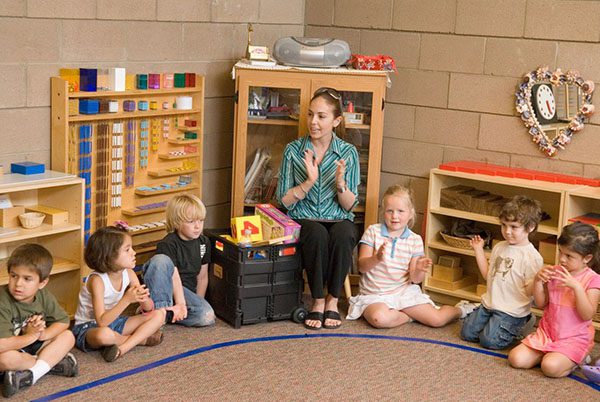
In every Montessori classroom, the atmosphere is as important as the materials on the shelves. Children learn best in an environment where concentration, respect, and independence are carefully protected. To create such a space, we must remember that classroom management is less about control and more about tone, modeling, and partnership. Montessori guides are called not to “manage” children in the conventional sense, but to prepare a climate where self-discipline, self-direction, and love of learning can flourish.

The Role of the Tone Keeper

Every classroom needs at least one adult who consciously serves as the tone keeper. This role is more than simply maintaining order—it is about preserving a climate of calm, respect, and purposeful work.

Children absorb the emotional atmosphere of a room as readily as they absorb language. If the adults are hurried, distracted, or tense, the children mirror that energy. Conversely, when we embody grace, courtesy, and attentiveness, children feel secure and respond by settling into their own work.

A calm adult presence communicates: this is a place where we work with care and respect. In practical terms, the tone keeper:

  • moves slowly and with purpose,

  • speaks softly and with intention,

  • notices when the classroom energy begins to rise and gently redirects it,

  • serves as an anchor when children feel uncertain.

When the adult consistently radiates steadiness, the children internalize it. In time, the classroom itself begins to regulate and sustain its own peaceful rhythm.

Teaching Grace and Courtesy

Grace and courtesy lessons are not optional; they are foundational. Just as we give lessons in math or language, we must intentionally model how to greet, wait, interrupt politely, offer help, and care for the environment.

These lessons are short, practical demonstrations, often lasting only a minute or two. For example:

  • showing a child how to walk around a rug without disturbing another’s work,

  • practicing how to say “Excuse me” and place a hand gently on someone’s shoulder instead of interrupting,

  • modeling how to push in a chair quietly or roll a work mat neatly.

When given consistently, these lessons create a culture of civility and respect. Children learn not only how to behave, but why: they come to see that their actions contribute to the well-being of the whole community. Grace and courtesy lessons equip them with the social tools to navigate challenges peacefully, reinforcing the culture of respect that supports concentration.

Redirecting with Respect

Even in the most peaceful classroom, children will sometimes be noisy, distracted, or disruptive. Our task is not to scold but to guide. Montessori spoke of “helping the child help himself.” That begins with redirection delivered in a way that preserves dignity.

Instead of “Stop that!” we might say, “Let me show you another way.” Instead of correcting harshly, we might quietly kneel beside a child and ask, “Would you like me to help you begin again?”

Respectful redirection does three things at once:

  1. It preserves the child’s self-esteem.

  2. It protects the concentration of others.

  3. It strengthens trust between adult and child.

When redirection becomes a habit of kindness, children learn that mistakes are not failures but opportunities to try again. Over time, they internalize this compassionate discipline and apply it to themselves.

Observation Before Action

Montessori insisted that guides become scientists in the classroom, always observing before intervening. Every behavior carries a message. A child may abandon work because it is too difficult, too easy, or because emotional needs are unmet.

Before stepping in, pause and ask:

  • What is this behavior telling me?

  • Is the environment supporting this child?

  • What need might be unmet—social, emotional, or developmental?

For example, a child who wanders may be seeking more challenging work. A child who interrupts repeatedly may be craving connection. A child who grows frustrated may need a fresh presentation or reassurance.

By seeking the root cause rather than reacting to the surface behavior, we respond thoughtfully and effectively. Observation helps us see the child more clearly and support their growth with compassion.

Supporting Work and Concentration

One of our greatest responsibilities is to protect the child’s concentration. Interruptions—whether from adults or peers—fracture the flow of deep engagement. Montessori called this “false fatigue”: the restless energy that arises when concentration is broken too soon.

We can support concentration by:

  • protecting the three-hour work cycle,

  • minimizing unnecessary interruptions,

  • encouraging children to complete the full cycle of activity (choose, work, return),

  • offering lessons again when clarity or confidence is lacking,

  • preparing transitions with predictable cues so children know what to expect.

When concentration is respected, children not only learn academic skills but also build the inner discipline, resilience, and satisfaction that come from sustained effort.

Partnering with Parents

Our success as guides depends on building strong alliances with parents. Children thrive when home and school share consistent values and expectations.

When parents understand Montessori principles, they become partners rather than spectators. We can:

  • invite them into parent education evenings,

  • share stories and observations that show how independence and respect unfold at school,

  • encourage them to adopt simple practices at home—like giving children time to complete tasks independently, or inviting them to contribute to family life.

When challenges arise, partnership is essential. A child who is struggling benefits most when parents and teachers work together with shared trust. By approaching parents not as critics but as allies, we create a united circle of support around the child.

Key Reminders for Montessori Teachers

  • A calm, purposeful adult presence sets the tone of the entire classroom.

  • Grace and courtesy lessons equip children with essential tools for community life.

  • Respectful redirection keeps children on track without undermining their dignity.

  • Careful observation allows us to understand and respond to underlying needs.

  • Partnerships with parents create consistency and support for every child.

When we attend to these essentials, our classrooms become communities of peace and focus. The children experience not just academic progress, but also the inner growth that prepares them for a lifetime of independence, responsibility, and joy in learning.

Checklist for Teachers

Adult Presence

  1. Ensure one adult is always serving as the tone keeper of the classroom.

  2. Model calm, respectful, and purposeful behavior at all times.

  3. Demonstrate follow-through and responsibility in daily routines.

Grace and Courtesy

  1. Intentionally teach lessons in grace and courtesy: greetings, waiting, interrupting politely, offering help.

  2. Reinforce respectful interactions consistently through modeling and practice.

  3. Use grace and courtesy as the foundation for building community harmony.

Observation and Redirection

  1. Observe carefully before intervening—ask what need underlies the behavior.

  2. Respond thoughtfully to misbehavior rather than reacting hastily.

  3. Redirect with dignity using gentle, clear, and respectful language.

  4. Identify patterns in behavior and adjust the environment or guidance accordingly.

Supporting Work and Concentration

  1. Protect uninterrupted work cycles and minimize unnecessary interruptions.

  2. Encourage completion of the full work cycle through gentle prompting.

  3. Offer lessons again when clarity or confidence is lacking.

  4. Provide purposeful transitions with predictable cues and advance notice.

Parent Partnerships

  1. Communicate openly with parents about classroom practices and expectations.

  2. Share observations and strategies so home and school can work in harmony.

  3. Invite parents into the Montessori approach, helping them understand the importance of concentration, independence, and respect.

  4. Approach challenges collaboratively, positioning parents as allies on the child’s team.


Gift Ideas for age 1-2

Gift Ideas for age 1-2

Toys play an essential role in the developmental journey of children, particularly during the critical years between ages 1 and 2. These formative years are a period of rapid growth and exploration, where toys become tools for learning and discovery. Specifically designed to stimulate creativity, enhance cognitive abilities, and promote physical dexterity, toys for this age group are crucial in nurturing various developmental aspects. From timeless classics to innovative designs, the diverse selection of toys available for children aged 1 to 2 creates an enriching environment that fosters holistic growth and joyful exploration.

A timeless addition to any nursery, fostering endless creativity and imaginative play for little ones. These blocks in soothing neutral hues offer both entertainment and developmental benefits, encouraging cognitive skills and fine motor development through hours of engaging play.

This engaging toy features colorful balls that roll, drop, and slide, aiding in the development of coordination and motor skills. Recommended for ages 12 months and up, fostering interactive and safe play.

A delightful toy encouraging hand-eye coordination as children hammer balls into the box, delighting in the rolling fun. Plan Toys® pioneers sustainability, crafting toys from reclaimed rubberwood, offering a more eco-conscious approach to playtime. Enjoy interactive play and skill development while supporting a greener future with this innovative and entertaining toy.

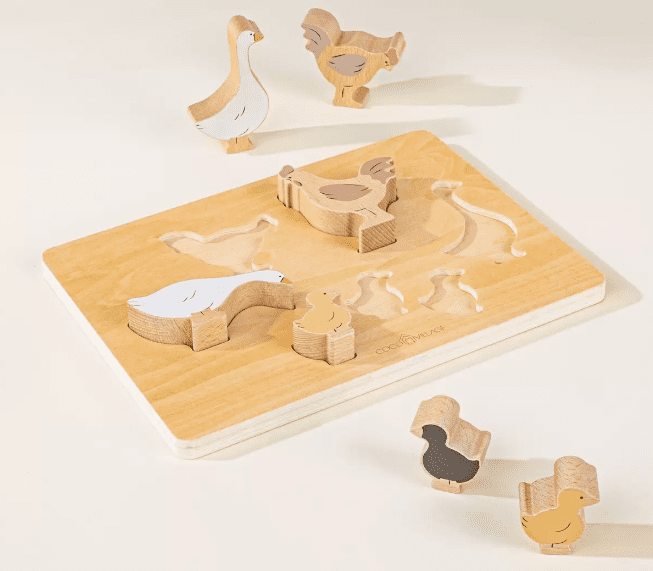
This toy fosters hand-eye coordination and gross motor skills. These easy-to-handle animals inspire imaginative adventures and are conveniently stored on a practical wooden plate after play.

This is a delightful toy that encourages motor skills in children aged 18+ months. Crafted from wood and plywood with an exclusive design, it doubles as a charming room decor piece.

The Rocker Climber is a versatile playroom essential designed for children to explore their physical abilities and boundaries. Crafted from solid birch and birch plywood, it offers a non-slip surface, 11 grabbable bars, and 4 handles for easy mobility. This Climber Collection piece supports motor skills, encourages independent play, and promotes cognitive development, catering to various developmental stages and providing diverse play opportunities.

An Education Tower supports toddler independence in daily tasks with sturdy birch wood construction and adjustable features. It ensures safety and stability while promoting learning and motor skills development. This tower enables children to participate in various activities, granting parents more mobility and bonding moments during shared experiences.

Social Justice Parenting book review

Social Justice Parenting book review

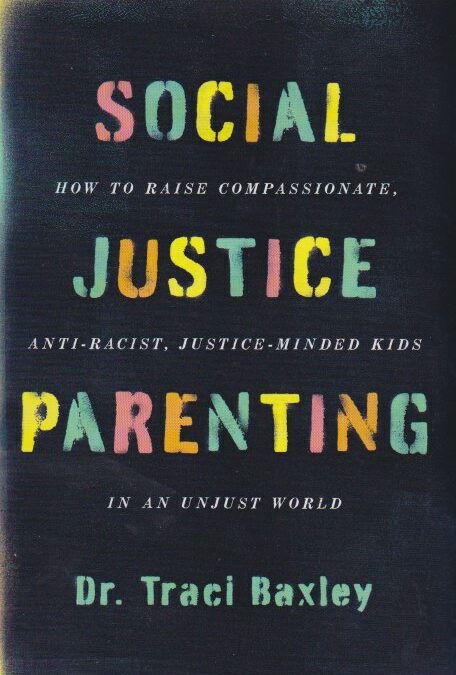
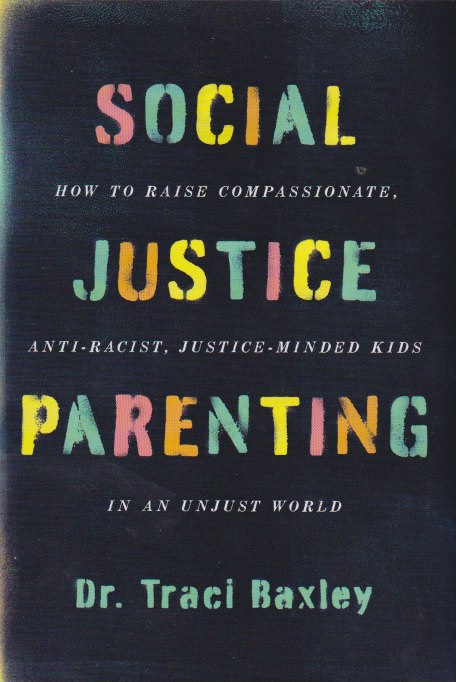
Social Justice Parenting

Written by Dr. Traci Baxley

A friend of mine gave me a copy of this book, and I’m so glad that he did! Dr. Baxley is an interesting, honest, and insightful author. She has taken social justice and parenting (which makes some of us a bit uncomfortable) and delivered a book for parents and other caregivers for children. She has produced a work that not only goes straight to the heart of the American ‘legend’ that is more commonly known as American ‘history.’

Many of the ideas and strategies that Dr. Baxley espouses in her book are very much in alignment with Dr. Montessori’s pedagogical method and philosophy. She cites values such as: respect for self and others; giving children a voice; actively seeking change; problem solving as a family in preparation for problem solving in their community and country; and trusting intuition along with factual information as the main components for social-justice parenting. And she shares real life stories to demonstrate how to put these values into practice.

“Modeling Advocacy” is just one of the chapters in this book. The author states in many of the chapters that parents (adults) in children’s lives must model through their actions the values and principles that they want children to learn and practice in their lives. She states, “Self-education, effective communication, and maintaining a support system are the keys to self-advocacy.”

One of the main characteristics of Dr. Baxley’s writing is that she lets the reader know that parenting takes conscious awareness of ourselves and others, that it can be challenging, that she has made mistakes with her own children along the way, and that we can mend mistakes and move forward. Readers will feel encouraged, develop new parenting skills, and appreciate their own commitment to children and to helping make our world a better place to live for all people.

I highly recommend this book for your adult library and for parent or faculty discussion groups. It can be purchased from amazon. com and other booksellers.

How Your School Can Get its Message Across to the Community

How Your School Can Get its Message Across to the Community

Helping Parents to Hear the Montessori Message


By Matt Hillis and Morgan Childers

The words marketing and public relations are rarely mentioned around the grounds of the typical Montessori school until the need is critical, and often resources and budgets for such endeavors are inadequate. If this sounds like your school, you are not alone. 

Apart from a handful of large schools that employ a marketing staff, most Montessori programs consist only of teachers, assistants, and few administrators. These individuals’ unwavering dedication to children, parents and the classroom is unparalleled, but all too often their focus on education causes proper marketing and public relations programs to be overlooked. 

Unfortunately, when marketing is set aside, it often results in a classroom that falls short of ideal enrollment numbers. Those unfilled classroom spaces, no matter how few, represent the continuing financial vitality of your school. Full enrollment can equate to teacher bonuses, updated materials, new playground equipment, qualifying for community sponsorships, and more. 

Clearly, the question is not if to market your school; but how to market your school and to whom? 

The Ideal Family

One of the challenges in operating a quality Montessori program is enrolling the right type of family. Many schools rely on the old axiom that “every child is a Montessori child.” Unfortunately, not every family is a Montessori family. 

In general, focus your marketing efforts on families who are looking for one or more of the following:

  • child/day care
  • early childhood education
  • public school alternatives
  • a Montessori program

Of these four, the last group is the most desirable. These families understand classroom methodologies, are likely to respect your teachers, refer your school to friends, and support school functions. These families are also likely to stay through each three-year cycle until their child completes your program. 

Even if you are the only Montessori school in the area, it does not follow that your ideal families will automatically flock to your school. They need to know that you are dedicated to the Montessori method and not just relying on the name. 

For this group, it is critical to focus on a strong public relations and outreach program that demonstrates your commitment to the community while emphasizing all things Montessori. Your ideal family is intelligent and informed – they will not choose your school without researching their options. Your efforts will ensure top-of-mind awareness during their decision-making process.

Marketing to and Working with other Targeted Audiences

With a few variances, the other three groups of families listed above will respond to similar fashions of marketing. This may include targeted mail, newspaper advertising, sponsorships, newsletters, television and radio advertising, and many others. 

Before you initiate any of these tactics, be sure to have a clear and concise strategic plan that is consistent with your overall goals. Create a plan defining your target market, marketing methods, timelines, evaluation tools, and budget. 

When Marketing Works, Get Ready to Work

If successful, your marketing efforts will also result in families that know very little about Montessori enrolling in your school. 

The simple truth is that many families are looking for safe and reliable child care, especially in the toddler and pre-school classes. However, these families can be just as dedicated as your most ardent supporters with little more encouragement and the right information. A marketing program can help these families recognize the benefits of Montessori education and marvel at their children’s accomplishments. 

Demographics

Eventually, proper marketing will result in you working with various companies including mailing list resellers, broadcasters, designers, and publishers. Each will discuss your target market and demographics in order to determine the best message, distribution, and placement of your message. The better you understand your typical customer, the better your marketing dollars can be utilized.

Income, Proximity, and Education

If you are operating a tuition-based program, then the most important trait of your target market is, arguably, income level. A good rule of thumb is to target families with income at least 10 to 15 times that of your annual tuition. Barring scholarships or financial aid, a family without the proper disposable income will be unable to afford your school.

Creating a parent survey will help determine the likely maximum distance that people are willing to travel to your school. This distance will vary by community, depending on population density, traffic patterns, and competition, but will provide you with a logical radius in which to focus your efforts. 

Finally, the education level of your target family is an important demographic factor. With few exceptions, the higher the education level of the family, the more likely they will be interested in exploring alternatives such as Montessori. 

Missing the Target, but Hitting the Mark

Naturally, other groups will see your marketing and you will benefit from it. For example, future parents who are regularly exposed to your messages will naturally think of you first when the time comes. Similarly, grandparents, community leaders, educators, and news editors will notice your school and each of these groups can have a powerful connection to your potential customers. 

Tell the Community Why or They May Never Know

No matter how impressive your school is, few people will know you exist if you don’t have an active marketing program. The days of relying on word-of-mouth alone are over. As the private education market becomes more competitive, a strong marketing and public relations program is essential for successful Montessori schools. 

Matt Hillis and Morgan Childers own and operate Go Montessori, a company specializing in developing marketing and public relations programs and materials for Montessori schools across the nation. Email your comments to info@GoMontessori.com.

This article appeared in Montessori Leadership magazine

IMC Members’ Resource Center

IMC Members’ Resource Center

Access to the IMC Online Resource Center

  • Archives of past issues of Montessori Leadership magazine
  • Years of videos recording of our weekly webcasts for Montessori school leaders
  • More than 20 years of articles on almost every aspect of Montessori school leadership
  • Articles on innovative programs, resources, and trends in Montessori education
  • Sample forms and documents
  • Stories about member schools
IMC School Accreditation

IMC School Accreditation

The IMC Montessori School Accreditation program is international in scope, user-friendly, supportive, and designed to help schools grow stronger through the process of self-study and external evaluation. Any full school member that has completed its third year of running a fully-implemented Montessori program is eligible to begin the process of self-study and candidacy.

Free Live Weekly Webcasts 

Free Live Weekly Webcasts 

This is an ongoing program of free webcasts for Montessori school leaders sponsored by The Montessori Foundation. Recordings are archived in the IMC members’ resource center. 

Free Annual Consultation for IMC Schools

Free Annual Consultation for IMC Schools

School members may request an hour of free consultation a year by phone, Zoom, or other video meeting software each year. Should your school wish additional consultation, IMC School Members receive a discount on Montessori Foundation school consultation and professional development services.

IMC School Member Certificate

IMC School Member Certificate

All member schools receive an IMC membership certificate and a copy of the IMC Code of Ethics, suitable for framing. Accredited schools receive a special certificate of their accreditation.

IMC Member Discounts

IMC Member Discounts

IMC members are eligible for discounts on registration to Montessori Foundation/IMC courses, workshops, conferences, and many publications and programs that we offer. School members can apply their discount to any of their faculty or staff who wish to register for sponsored programs.

School Mentorship

School Mentorship

The IMC School Mentorship Program is a network of member schools that offers advice and informal support without charge to fellow IMC schools.

Our Mission And Story

Our Mission And Story

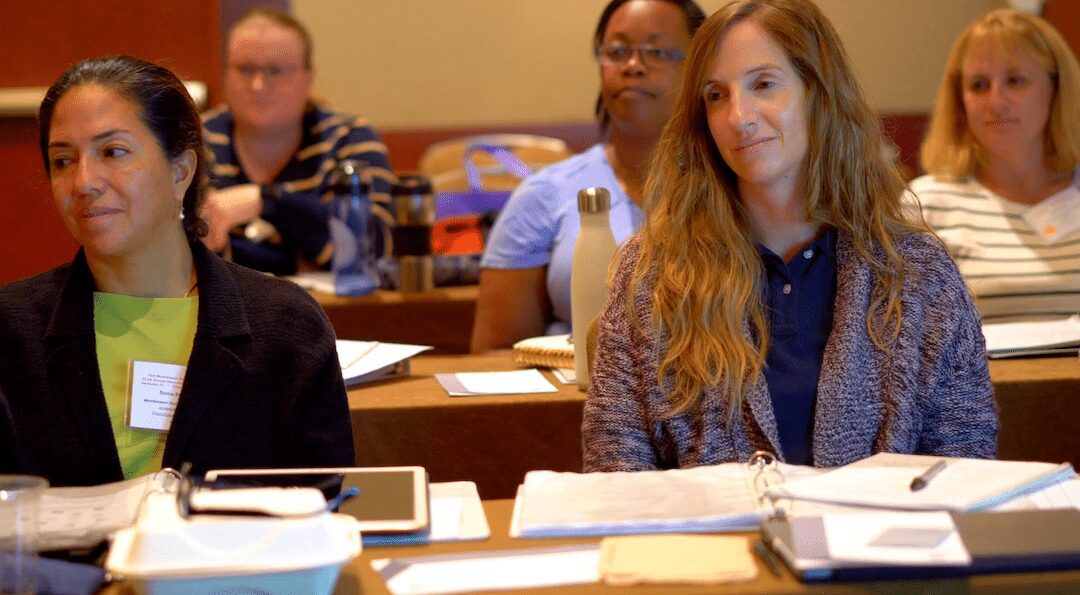
conference attendees

Welcome to The Montessori Foundation. The Montessori Foundation and its membership organization, The International Montessori Council, are non-profit educational organizations, that nurture, inspire, and support the development of strong, successful Montessori schools around the world.

The Montessori Foundation is a 501(c)3 nonprofit organization dedicated to the advancement of Montessori education in the United States and abroad. It was established in 1992 to create an independent source of assistance, encouragement, and support for the international Montessori community.

The Montessori Foundation works with the entire Montessori community, regardless of affiliation, as well as parents, educators, schools, and schools systems that are interested in learning more about the insights, research, and approach pioneered by Dr. Maria Montessori.

School Consultation

Our Montessori School Consultation Service provides a wealth of knowledge and experience. We work with boards, Heads of Schools, and faculties on all issues related to creating, managing, improving, and ‘growing’ a Montessori school. For more information, CLICK HERE.

Montessori Leadership Institute

Our Montessori Leadership Institute offers a broad program of in-depth and practical workshops and courses in Montessori leadership. We offer seminars on a wide range of topics, from school design to fund raising, recruitment, internal communications, and curriculum development. Our courses are offered in person and online. For a current schedule and more information, CLICK HERE

Conference / Events

In addition to ongoing Leadership Workshops, we host an annual international conference every year in Florida and other locations in the USA and abroad. CLICK HERE FOR OUR CONFERENCE SCHEDULE.

Our Membership Organization: The International Montessori Council (IMC)

In 1998, The Montessori Foundation organized an independent membership organization, The International Montessori Council (IMC), to offer a wide range of programs and support to Montessori schools around the world, including school accreditation, teacher education, and mentorship. Montessori Leadership is published by the Montessori Foundation on behalf of the International Montessori Council. It is written for Heads of Schools, educational coordinators, Montessori teachers, parent leaders, and members of school boards. For more information, CLICK HERE

The Montessori Family Alliance

The Montessori Foundation’s first project was to establish a trusted independent resource  to speak directly to parents. We began with Tomorrow’s Child, the only magazine written specifically for parents with children enrolled in Montessori schools. Tomorrow’s Child is also enjoyed by Montessori teachers and administrators around the world. In the 30 years that it has been a part of the Montessori community, our work evolved into the Montessori Family Alliance, a network of Montessori parents, teachers, and heads of schools in North America and abroad. We offer both family and school group memberships. The Family 

 For more information, CLICK HERE TO GO DIRECTLY TO OUR BOOKSTORE.


Lab School

Through our Lab School, The NewGate School of Sarasota, Florida, we work to develop and implement new programs and curricula, test new resources, and integrate Montessori “best practices” with 21st century technology. One of our key projects involves the develop of a replicable program and secondary Montessori curriculum that is capstoned by a Montessori International Baccalaureate Diploma Program For more information, CLICK HERE.

Collaboration with Outside Service Providers


The Foundation works with external providers that serve Montessori school administration, such as:

• MontessoriCompass (online student record keeping, progress reporting, and parent communication)
• National Montessori School Insurance Program
• The Montessori Rosetta Stone Online Program
• Montessori DonorPath support for fundraising and grant writing
• Montessori/Semble (Crowd source low cost loans to help finances campus expansion
• Montessori Planned Giving Program


Montessori Education Research Institute

The Montessori Education Research Institute is a new initiative developed by The Montessori Foundation. Our primary goals are to organize ongoing validated data collection initiatives using formative assessment, teacher recorded progress against a nationally aligned curriculum, assessments of personal development, and ongoing studies and survey collection input of Montessori students in many settings through their schooling and into adulthood.


Montessori Help Line

Our Montessori Help Line (1-941-729-9565) offers counsel when schools need a friendly ear and some advice. The only catch is that you will need to pay for the long-distance call, and it is possible that we may need to schedule your telephone conference for a time when a consultant is free from other duties.


Contact Us:

The Montessori Foundation
19600 E State Road 64 Bradenton
FL 34212-8921
1-941-729-9565 • 1-800-655-5843
941-745-3111 (fax)
Email Us: info@montessori.org


J1 Visa Program – Schools in USA

This may be of interest to Montessori schools in the USA The J1 Visa program allows US schools to sponsor visiting teachers to teach at their schools for a number of years. Many Montessori schools use, have used, or have considered participating in the J1 program to find a well-qualified Montessori teacher from outside the […]

Peacemaking Circles

Peacemaking Circles

The Blueprint Process Condensed

The Blueprint Process Condensed

The Montessori Foundation encourages schools to clearly set down their core philosophy and beliefs into a very specific formal written document, The Blueprint, and thereafter to use it as a road map in making decisions, setting new policy, and evaluating the educational program. This document explains the process of initially developing the Blueprint for the […]