Related Posts
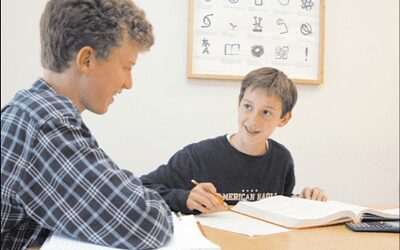

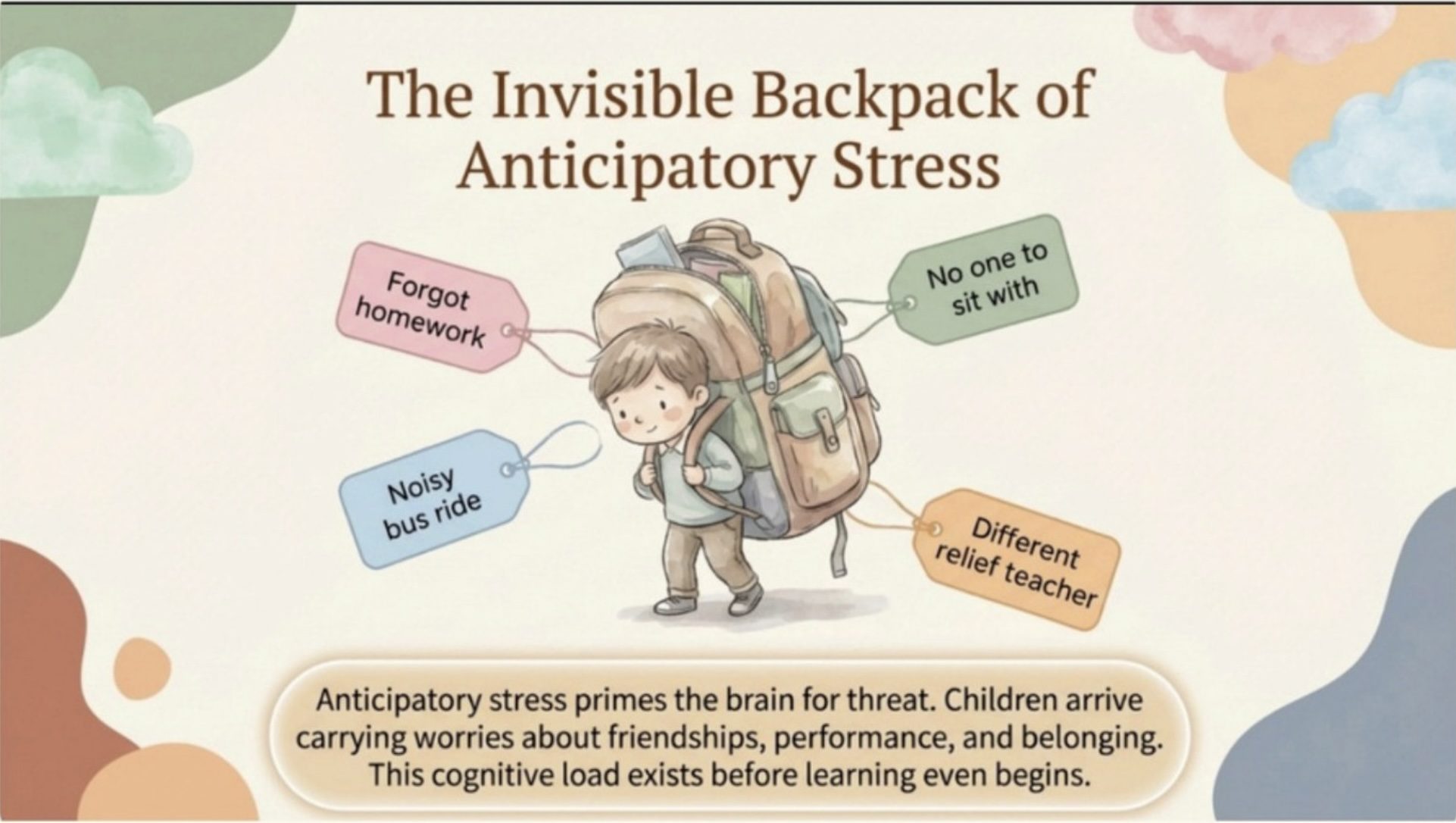
The Safe School Framework illustrates the unseen worries that can affect a child’s attention, trust, and readiness to learn.
The Montessori Foundation is pleased to support Gavin McCormack’s Safe School Framework and to work with schools interested in bringing its principles into everyday practice.
Ask almost any school leader whether children are safe at their school, and the answer will almost certainly be yes. In the United States especially, we know why that question matters so much. Schools have had to think seriously about locked doors, visitor procedures, emergency plans, background checks, bullying, threats of violence, child protection, and harassment. These things matter enormously. Every school has a fundamental responsibility to protect the children entrusted to its care.
But Australian educator Gavin McCormack asks us to consider a different question , do children actually feel safe at school? That turns out to be a much larger and more interesting question than it first appears.
Safety through the eyes of a child
A school can have excellent security procedures and still contain children who spend much of their day feeling anxious, embarrassed, exposed, judged, excluded, or afraid of making a mistake. A child may be physically safe while quietly wondering, “Will my teacher embarrass me if I get this wrong? Will everyone know that my family could not afford something? Will someone make fun of my name, my clothes, my accent, or my family?”
A child may also wonder, “If I tell an adult that something is wrong, will anyone listen? If I lose control and make a mistake, will I still belong here? Will I be compared publicly with other children? Is there an adult in this school whom I know I can trust?”
These are safety questions too.

Image: Feeling safe includes having room to ask questions, make mistakes, and continue learning without humiliation.
They are the territory explored in Gavin McCormack’s Safe School Framework, a collection of fifty practical interventions designed to help schools examine children’s everyday experience through three deceptively simple ideas , I matter. I am safe. I belong here.
The Montessori Foundation believes this is an important conversation, and we will be working with Gavin to introduce the framework to schools in the United States and elsewhere.
Not another security program
It is worth being clear about what the Safe School Framework is, and what it is not. It does not replace a school’s responsibility for physical security, emergency preparedness, safeguarding, mandated reporting, threat assessment, or anti-bullying and harassment policy compliance. Those systems remain essential and non-negotiable.
Gavin’s work addresses something different , the lived, everyday experience of safety. It asks us to look closely at the hundreds of ordinary interactions that happen between adults and children, and among children themselves, every single day.
How do we greet children when they arrive? What happens when someone forgets something? How do we respond to mistakes? Are grades and achievement ever compared publicly? Do we use humor or sarcasm at a child’s expense? Do children have to explain personal circumstances in front of classmates?
We might also ask how carefully we pronounce children’s names, whose families, cultures, and identities are reflected in the curriculum, what happens after conflict, whether a child can disagree respectfully with an adult, and whether every child knows at least one adult they can approach.
None of these moments is significant on its own. Together, over months and years, they form a school’s emotional climate.
Fifty practical ways to look at school differently
One strength of the Safe School Framework is that it does not simply instruct educators to “build relationships” or “create belonging.” It makes those ideas concrete.
Among its fifty interventions, Gavin asks schools to consider practices such as greeting every child warmly each day, avoiding public comparison between students, making resources quietly available without requiring a child to explain why they need them, respecting privacy, and providing meaningful choices.
The framework also asks schools to maintain a child’s sense of belonging while correcting behavior, listen seriously to children’s voices, ensure that every child has at least one trusted adult relationship, challenge stereotypes and unequal treatment, and treat children with dignity when they struggle.
Some of these practices sound remarkably simple. That may be precisely the point. A safe school is not created only through policies adopted by a board or procedures kept in an emergency binder. It is created, or undermined, through thousands of small human interactions.
Safety does not mean permissiveness
Psychological safety does not mean children can do whatever they want. Belonging does not eliminate boundaries. Respect does not eliminate accountability. And protecting a child’s dignity does not mean protecting that child from the consequences of harmful behavior.
If one child threatens, intimidates, humiliates, bullies, or physically harms another, adults have an obligation to intervene. The child who has been harmed needs protection. The behavior needs to stop. The circumstances need to be understood.
Appropriate consequences may be necessary, families may need to be involved, and in serious situations, established safeguarding, disciplinary, or law-enforcement procedures may need to be followed.
But there is an important principle underneath all of this , we can reject harmful behavior without rejecting the child. A child may need to be separated from another child for safety. A serious consequence may be necessary. An adult may have to say a very firm no.
None of that requires humiliation, vengeance, ridicule, or the withdrawal of a child’s dignity.
This distinction should resonate deeply with Montessori educators.
Why this feels so familiar to Montessori
Although the Safe School Framework was not developed as a Montessori program, much of its thinking will sound familiar to anyone trained in the Montessori approach. Montessori asked adults to see school through the child’s eyes. We prepare environments rather than simply control children. We protect concentration. We recognize children’s growing independence.
We try to correct without humiliating. We understand that behavior communicates something. We teach grace and courtesy rather than demanding mere compliance. And perhaps most importantly, Montessori asks the adult to examine themselves first, not just the child.

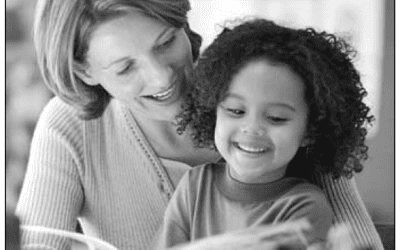
Image: A trusted adult relationship can help a child experience school as a place of connection and belonging.
That same challenge runs throughout Gavin’s work. The question is not simply, “What is wrong with this child?” It is also , what is this child experiencing in this environment, and what might we adults do differently?
That is a profoundly Montessori question.
Families can participate in this reflection as well. Through the Montessori Family Alliance, parents and educators can strengthen the bridge between home and school, use observation to understand children’s experiences, and develop a shared language for supporting growth, independence, and belonging.
Beyond Montessori
This conversation should extend well beyond Montessori schools. Children do not need dignity because they attend a Montessori school, or belonging because they happen to be enrolled in a progressive one. They do not need trusted relationships, protection from humiliation, respect for their identities, or adults who listen to them because their parents selected a particular educational philosophy.
These are human needs, full stop.
That makes the Safe School Framework potentially relevant to independent, charter, public, faith-based, international, and government schools alike. Practices will look different across cultures and systems, and schools must still operate within their own laws, safeguarding requirements, and professional standards. The underlying question, however, travels remarkably well , what does school feel like to the child who walks through the door each morning?
A different kind of school audit
Imagine walking through your own school with that question in mind. Not, “Are the lesson plans complete? Are children meeting benchmarks? Is the handbook being followed?” Instead, occasionally ask where a child might feel embarrassed or powerless. Who might feel invisible? Where are children unnecessarily compared with one another?
What happens to a child who is different from the majority? What happens when someone is bullied, excluded, or demeaned? How easy is it for a child to tell us that something is wrong? Which children have strong relationships with adults, and which do not?
Do our disciplinary practices restore safety, or simply impose punishment?

Image: Schools can ask whether every child knows at least one adult who will listen seriously and respond with care.
Where do children experience the unmistakable message : you matter, you are safe, you belong here?
Those questions alone could spark fascinating conversations among faculty, administrators, boards, parents, and students.
Where we go from here
The Montessori Foundation will work with Gavin McCormack to help schools explore the Safe School Framework and translate its fifty interventions into everyday practice. We are not interested in handing schools another checklist to complete, and we do not believe that implementing fifty practices automatically makes a school safe.
We see this instead as an opening for reflection, professional development, observation, conversation, and gradual improvement.
A school might begin by having faculty examine several interventions together. Another might invite students to describe where they feel most, and least, secure, respected, and heard. Leadership teams might examine existing policies through the lens of dignity and belonging.
Faculty might observe one another and notice practices that quietly strengthen, or unintentionally undermine, psychological safety. Schools might also consider how these ideas intersect with their existing work on bullying prevention, restorative practices, discipline, diversity and inclusion, safeguarding, and physical security.
There is considerable room to explore.

Image: Building safer schools is a shared process involving children, families, educators, and leaders.
The question behind the framework
Ultimately, Gavin’s framework raises a question that is easy to ask and surprisingly difficult to answer : if we could experience our school through the eyes, ears, minds, and bodies of our children, would it feel as safe to them as we believe it is?
Not just safe from catastrophic danger, but safe enough to ask a question, safe enough to make a mistake, safe enough to say, “I do not understand,” and safe enough to tell an adult, “Something is happening to me.”
Safe enough to be different. Safe enough to disagree respectfully. Safe enough to struggle. Safe enough to repair harm after a poor choice. Safe enough to know that adults will act when someone is being hurt.
And safe enough to come through the door tomorrow knowing : I matter. I am safe. I belong here.
That is a definition of school safety worth exploring.
Schools interested in learning more can explore the Safe School Framework, and Montessori families can find additional guidance through the Montessori Family Alliance.