Related Posts

Why observation can be an important part of learning
Watching can be a child’s first step into an activity.
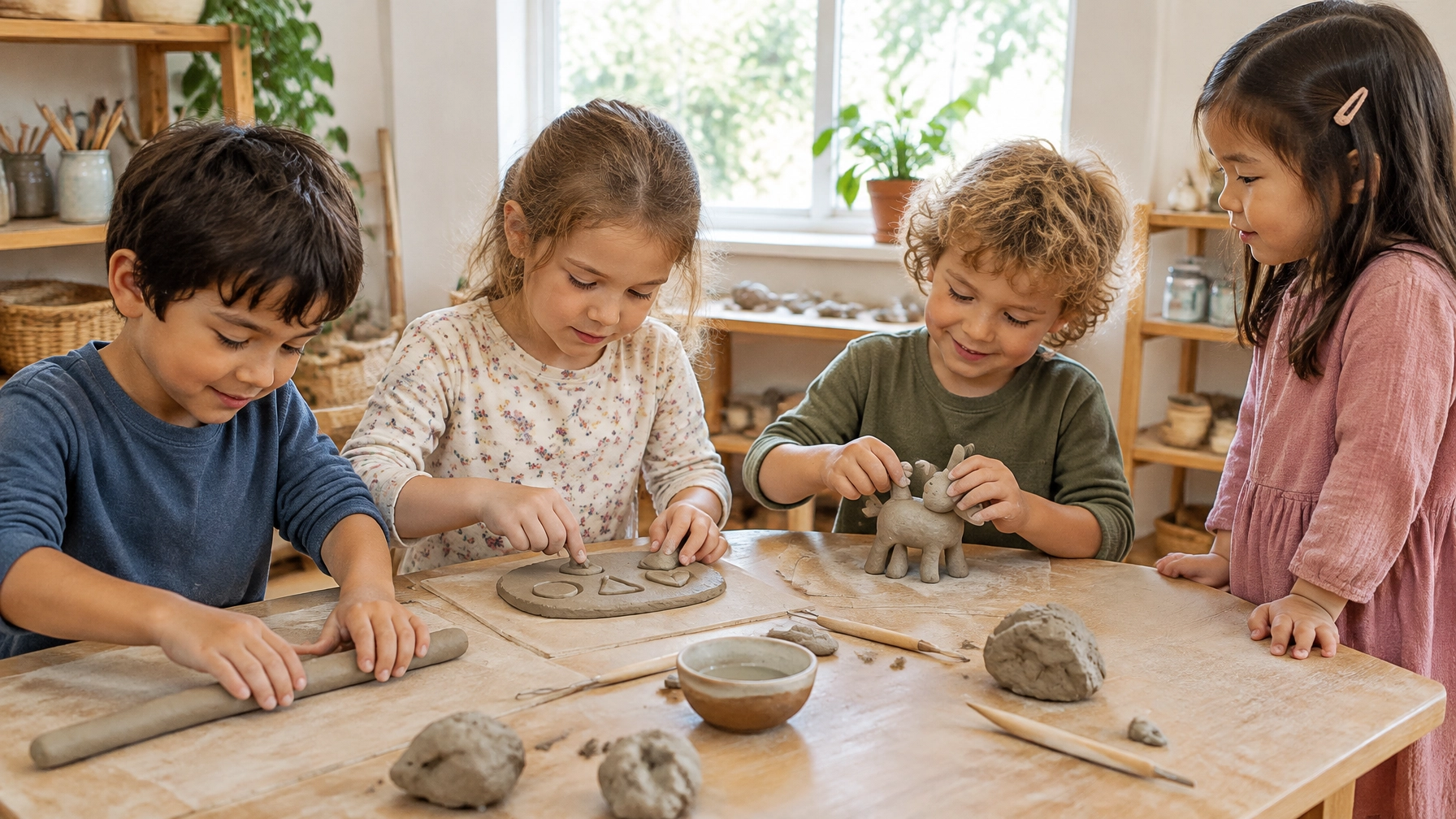
A group of children is gathered around a table, working with clay. One rolls a long snake, another presses shapes into a flat slab, and a third is creating an elaborate animal with ears and a tail. Nearby, a little girl stands quietly and watches. She doesn't reach for the clay or ask to join. She simply observes.
An adult comes over and asks, "Would you like to make something?" The girl shakes her head. "Come on, it'll be fun!" Still nothing. The adult begins to worry. Why isn't she participating? Is she shy? Is something wrong?
Perhaps. But perhaps she is doing something important. She may be learning by watching.
Some children rush toward every new experience, while others prefer to stand back and take it in first. Parents sometimes worry when their child observes rather than joining right away, but watching can be a valuable way of learning. The real challenge for adults is knowing when to give a child time and when to offer a gentle hand.
Not Every Child Jumps Right In
Children are born with different temperaments. Some are eager to try anything new; they walk into an unfamiliar room and immediately start exploring. Others are more cautious. Before they get involved, they want to understand what's happening. They watch the people, notice the materials, figure out how an activity works, and think about what they might do. Only then do they decide whether to take part. Child development researchers have long described this as a "slow to warm up" temperament, and it is a normal variation, not a problem to be fixed.
Neither style is better than the other. A child can be deeply curious and engaged without being immediately active.
Observation Is Part of Montessori Learning
Walk into a Montessori classroom and you will often see one child quietly watching another at work. You might see:
- A child sitting near a classmate who is carefully building a tower of blocks
- A child watching an older student compose words with a movable alphabet
- Several children gathered around a simple science demonstration

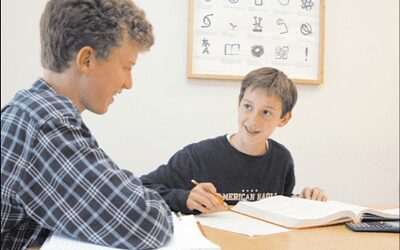
In a multi-age classroom, children have opportunities to observe one another at work.
Maria Montessori noticed that children learn a great deal from watching one another, and the multi-age classroom makes the most of it. Younger children see older ones doing work they will someday attempt themselves, and their interest grows long before they are ready to try. By watching, a child may notice the sequence of steps, see how a problem gets solved, spot a mistake, or simply develop the desire to try the activity. Observation in the classroom always respects the child who is working. Montessori children are taught how to watch without interrupting, touching the material, or crowding in, and the working child may say if they would rather work without an audience. Watching well is itself a lesson in courtesy.
Watching Is Not Doing Nothing
Adults tend to value visible activity. We like to see children producing something: finishing a puzzle, painting a picture, building a tower, writing words. But much of learning is invisible. A watching child may be studying how someone moves their hands, listening closely to a conversation, comparing what they see with something they already know, or imagining what they might try next. Observation can be an active intellectual process even when the body is perfectly still.

Careful watching is an active part of learning.
The Child Who Needs Time to Warm Up
Imagine bringing your four-year-old to a birthday party. The other children race straight to the games, while yours stays pressed against your side. You say, "Go play!" and nothing happens. You may feel a twinge of embarrassment, since everyone else's children seem to be having a wonderful time.
But your child may simply need more time. Instead of pushing, you might say, "Let's watch for a little while," then sit nearby and talk quietly about what the other children are doing. After ten or fifteen minutes, your child may decide to join in on their own. Or they may need a little help approaching another child. Either way, a cautious beginning is not a failure, and treating it as one tends to make the next beginning harder.

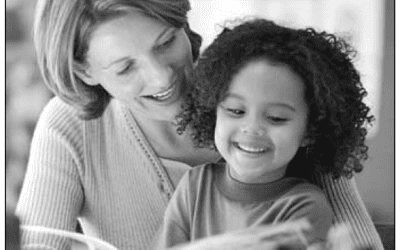
An unhurried moment together can help a child feel comfortable observing.
Be Careful With Labels
Adults sometimes say things like "He's shy," "She never wants to participate," or "He's afraid of everything." Even when these remarks are said with affection, children hear them, and over time they may come to see themselves that way.
A more helpful description is specific and temporary, leaving room for growth. For example:
- "She likes to watch before she joins in."
- "He's getting comfortable with the group."
- "She's interested, but she's not ready to try it yet."
When to Encourage Participation
Giving children time doesn't mean never offering help. Sometimes a child wants to take part but doesn't know how to begin, and an adult can provide a small bridge. You might offer:
- "Would you like to carry the basket?"
- "Could you help me set out the paper?"
- "Would you like to sit beside me while we watch?"
- "Shall we ask if there's room for one more player?"
A small, manageable role lets a child become involved without feeling overwhelmed. The key is to invite rather than pressure.
Observation and Social Development
Some children are especially interested in how groups work. They notice who leads and who follows, who shares, who gets upset, and how disagreements are settled. Watching these patterns can help them understand social situations. But observation alone doesn't replace the need for real relationships. Children also need chances to practice communication, cooperation, and friendship.
A thoughtful adult watches for balance. Is the child gradually becoming more comfortable? Do they have friendships that bring them joy? Can they participate when they choose to? Or are they consistently isolated, distressed, or unable to join in activities they clearly wish they could enjoy? Those are very different situations.
When to Look More Closely
Occasional hesitation, or a general preference for watching first, is usually not a cause for concern on its own. But it's wise to talk with your child's teacher and your pediatrician or another developmental professional if your child:
- Rarely interacts with other children, even familiar ones
- Seems very distressed in ordinary social situations
- Loses social or communication skills they previously had
- Consistently wants to join in but can't seem to do so
The goal is neither to label children unnecessarily nor to overlook genuine needs. It's to understand each child accurately.
How Parents Can Support the Observant Child
There are many simple ways to help a child who likes to watch first:
- Allow extra time in unfamiliar settings, and arrive early before a gathering becomes crowded
- Describe ahead of time what your child can expect to see and do
- Avoid comparing your child with more outgoing siblings or friends
- Look for small-group activities rather than large, busy ones
- Invite one familiar friend over instead of arranging big playdates
- Notice your child's interests, which can offer a natural path into joining others
Above all, remember that confidence grows through successful experiences, not through pressure.
A Quiet Kind of Curiosity
Maria Montessori placed great importance on observation. Montessori teachers are trained to observe children carefully to understand their development, interests, and needs, and children, too, observe the world and one another as a way of discovering how things work.
So when you see a child standing quietly at the edge of an activity, don't assume nothing is happening. Look more closely. Is the child attentive? Curious? Studying what the others are doing? Perhaps preparing to join? Sometimes a child needs an invitation, sometimes reassurance, and sometimes simply time. Before we insist that children participate, it's worth asking what they may be discovering by watching.