Supporting Young Artists with a DIY Home Easel

Supporting Young Artists with a DIY Home Easel
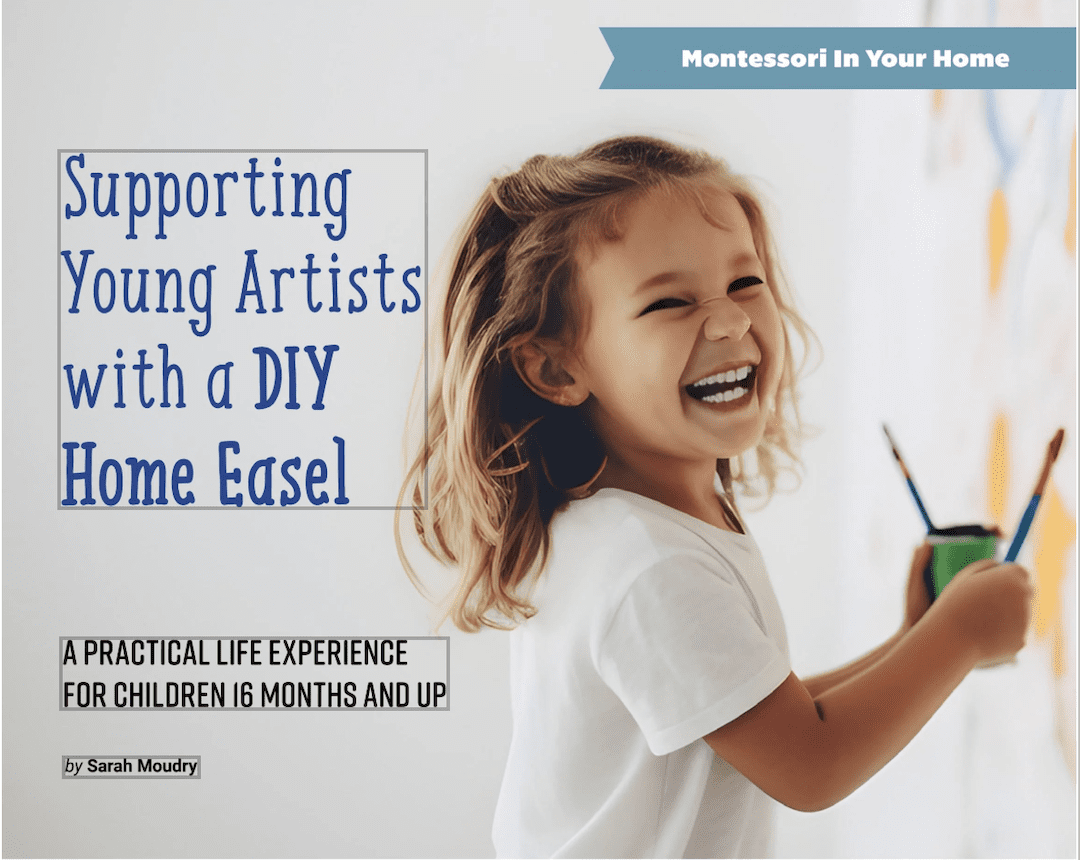
young artist

A Practical Life Experience for Children 16 months and up

by Sarah Moudry

Materials you will need

• Towel bar

• Towel bar brackets

• 18” roll of paper meant for paint

• Contact paper (to protect the wall)

• Vinyl floor mat

• Wall clips

• Magnetic wall strip

• Magnetic container

• Paint cups

• Paint, brushes, chalk, crayons

• Child- and adult-sized aprons

Children love to paint and draw. Are you thinking of adding a painting easel in your home? Or are you frustrated with the amount of space an easel takes up in your house? Many of the easels designed for children are bright, garish in color, plastic, and oversized. Who wants that as a centerpiece in your family space?

Today, we want to share a sturdy, space-saving alternative to an art easel in your home. Children love to paint and draw. Giving them a large surface to do so allows for strength building, provides practice for arm and hand control, and is an open-ended creative exercise they will enjoy. Consider this new install we did at @thestudiojune for a possible art area in your home.

Designing the space

1. Place contact paper on the wall to protect the wall

2. Decide on the proper height of the paper for your child’s height

3. Attach the towel bar at the top of this space

4. Attach the magnetic wall strip at the bottom of this space

5. Slide the paper roll onto the towel bar.

6. Thread the paper behind the magnetic wall strip and out the bottom

7. Attach the wall clips to the wall, where your child can reach and you would like their painting to dry

8. Attach the magnetic container to the magnetic wall strip

9. Prepare the paint in the cups

Sharing the Lesson

1. As with all Practical Life activities, show your child the tools you will need, what they are called, and how to hold them.

2. Remind your child that you will show them how to do the activity, and then they will have a turn.

3. Put on your aprons.

4. Choose a piece of paper.

5. Show your child how to clip the paper to the easel; this will depend on the type of clip and easel you have.

6. Open the paint container and place the lid in the tray of the easel.

7. Hold the paintbrush with a pencil grip.

8. Dip your brush in the paint.

9. Use the tip of the brush to make a stroke on the paper.

10. Look at your child and pause.

11. Dip the brush back in the paint.

12. Use a different edge of the brush to make a new stroke on the paper.

13. Repeat dipping the brush in the paint and holding the brush at a new angle to make a new mark.

14. Place the brush in the tray.

15. Close the container of paint.

16. Invite your child to have a turn.

17. Remove the paper and show your child where you can place it to dry.

18. Invite your child to choose a new piece of paper.

19. Invite your child to adhere the paper to the easel and assist if needed.

20. Invite your child to put their paper in a place to dry.

21. Invite your child to repeat as long as they are interested.

22. When they are finished, help them to remove their apron and put it away.

Sarah Moudry (@sarahmoudry) is an education innovator whose work is focused on creating education environments and experiences that inspire growth and joy. Her work is rooted in Montessori philosophy and paired with her extensive experience as a designer.

Recently, her projects included the founding of StudioJune (@thestudiojune), a Montessori parent and child education center, and Family Friendly Home (@familyfriendlyhome), an interior design company that creates inspirational home and school interiors.

Sarah is the author of books and online courses that help parents, childcare professionals, and grandparents to incorporate Montessori practice into their lives. She has an MEd in Montessori education, a BS in environment and design; AMI Montessori certification for birth to six years; and is an Associate Member of American Society of Interior Designers.
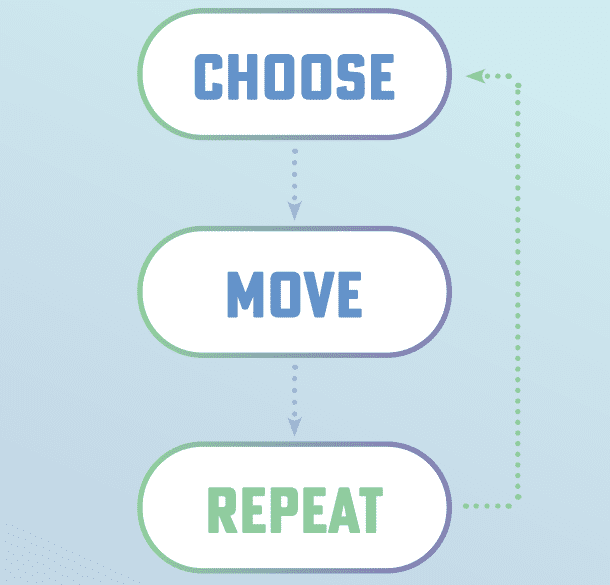

Choose. Move. Repeat.

Choose. Move. Repeat.

These three words can guide your choices as a parent of a young child.

You make choices based on what you believe to be best for your child and family. These choices may be based on emotion, assumptions, or exasperation. I encourage you to consider making your decisions based on a system you know can work.

When you can create a system for yourself in your decision making for your children, you may find that you have better, less-stressful outcomes and more confidence as a parent.

Although all situations and families are different, many of the choices you make as a parent in a day can go back to these three words: Choose. Move. Repeat.

These are the three freedoms that Dr. Maria Montessori provided for in her first classroom and are still part of every authentic Montessori environment (whether home or school).

The freedom to choose.

The freedom to move.

And the freedom to repeat .

Within a classroom, this may seem easy, but what does this mean as a parent?

I recommend that as a parent, when faced with making a decision about What’s for dinner? Do we go to the park or on a walk? or Will you wear a blue or green hat? you come back to these three freedoms.

Ask yourself: How can I offer my child choice in this situation?

For example, if it is dinner, can he choose between carrots or green beans?

Then ask, How can my child have the freedom to move in this situation?

You can offer your child freedom of movement with dinner is by inviting them to help set the table or wash the carrots?

Whenever you incorporate movement into a task, you help children connect and learn. Children need to move to learn and can get very frustrated when expected to be still.

The next question you can ask is: What part of this can we repeat?

Well, when it comes to dinner, I suggest just one dinner (Ha!). You can think about what are the repetitions within the dinner? When setting the table, how many place settings are needed? When washing the carrots, how many carrots need to be washed? Then how can this become a daily activity? Can you repeat this multiple times a week? Can your child come to count on this as a predictable routine?

Choose, move, repeat. These three words can be a system and checklist for parents while bringing consistency, predictability, and routine to your days. They are the three words that can create harmony in your busy family life.

Sarah Moudry (@sarahmoudry) is an education innovator whose work is focused on creating education environments and experiences that inspire growth and joy. Her work is rooted in Montessori philosophy and paired with her extensive experience as a designer.

Recently, her projects included the founding of StudioJune (@thestudiojune), a Montessori parent and child education center, and Family Friendly Home (@familyfriendlyhome), an interior design company that creates inspirational home and school interiors.

Sarah is the author of books and online courses that help parents, childcare professionals, and grandparents to incorporate Montessori practice into their lives. She has an M.Ed in Montessori education, a B.S. in environment and design, AMI Montessori certification for birth to six years, and is an Associate Member of ASID.

Making Montessori: Shoe Cleaning

Making Montessori: Shoe Cleaning

Purpose

  • Develop independence in care of self
  • Strengthening and refinement of movements of the hands

Age

  • 16 months and up

Young children enjoy learning to care for themselves and their environment. Dr. Montessori described these activities as Practical Life activities and you will find them in all Montessori classrooms from birth through high school.

When children learn to take care of themselves and their environment, they experience inner pride and confidence. This supports their need to do for themself independently and serves their intellectual, physical, and language development.

Learning to clean shoes is a fun activity for young children. As a parent, you can introduce this activity and keep it available to your child in a space that makes sense: near your entry; on a cleaning supply shelf; or even in your broom closet. Once you show your child how to use this activity, keep the set intact (don’t let the pieces migrate around the house), remind your child of the true purpose if they use the tools for other activities, and remove the activity if your child is not able to use it safely.

INSTRUCTION

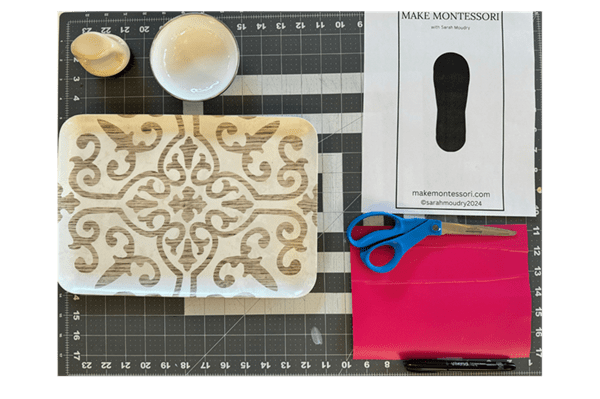
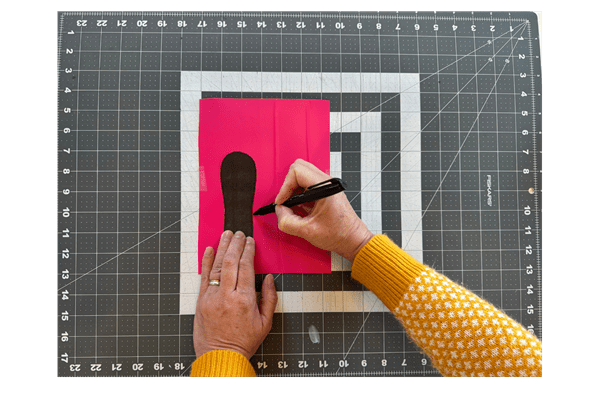
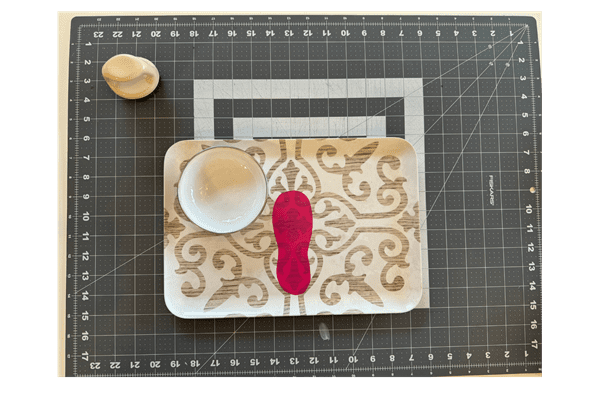
  1. Trace the shoe silhouette template on the adhesive vinyl with the marker.
  2. Cut out the Shoe silhouette and set aside.
  3. Wipe the tray surface with a clean dry towel.
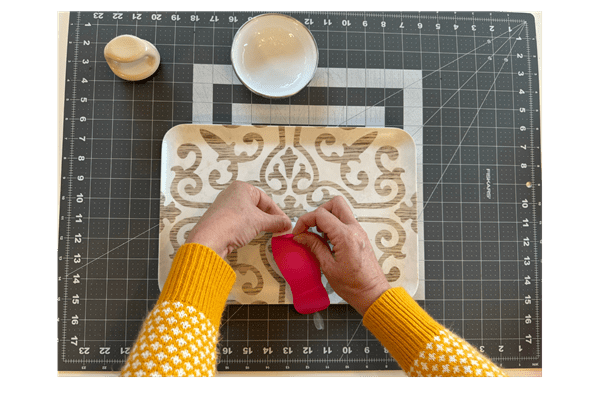
  4. Remove the backing of the cut shoe shape.
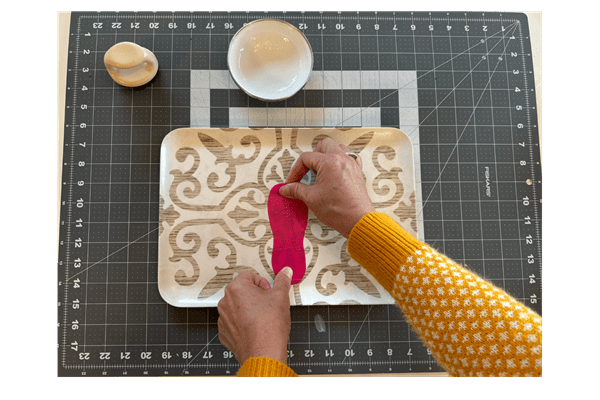
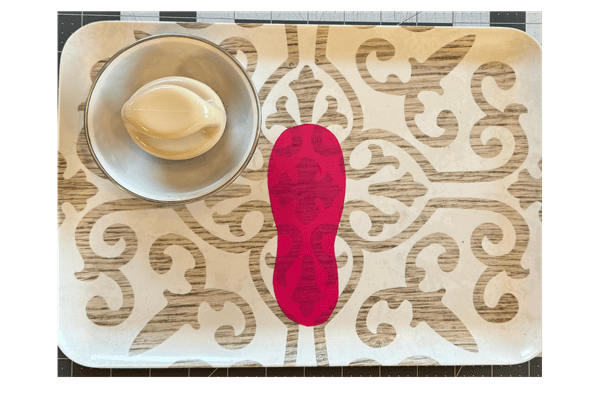
  5. Place the shoe shape in the center of the tray so that the length of the shoe shape is parallel with the handle sides of the tray.
  6. Press the shoe shape with your hands and smooth out any bubbles.
  7. Place the brush dish on the upper left side of the tray.
  8. Place the brush in the brush dish.
Lesson
  1. As with all Practical Life activities, show your child the tools you will need, what they are called, and how to hold them.
  2. Remind your child that you will show them how to do the activity and then they will have a turn.
  3. To clean shoes, place one shoe on the shoe shape and one shoe to the left of you on the floor.
  4. Place one hand in the shoe, and hold the brush with the other.
  5. Gently brush the shoe.
  6. Turn the shoe side to side so your child can see that you are looking for dirt.
  7. Place the brush back in the dish.
  8. Place the shoe next to the one on the floor.
  9. Pick up the other shoe and place it on the tray.
  10. Invite your child to have a turn!

When your child is done, they can see what other shoes are around the house to clean. This activity combined with the hunt of finding shoes can make this activity last a long time. Once your child understands the activity, you can say things like…”I think I remember a pair of brown shoes in your dad’s closet…” By doing this you are supporting your child’s awareness of their environment, need to engage socially and genuinely, as well as your child’s language development. Try using different adjectives to describe shoes they may find. Scan

Communicating with Your Young Child

Communicating with Your Young Child

A young child’s receptive language develops sooner than their expressive language. This means they are capable of understanding much more than they can express. Honoring this intellectual development can be difficult when you feel you are constantly met with the one-word answer (“no!”) or a temper tantrum. You may feel like you just asked a simple question, or you just suggested a meal of their favorite food and you look down to find your child flailing on the floor. How did this happen?

Communicating with your young child with respect is what lays the foundation for how they will relate and communicate with others as they get older. Using a calm and clear voice helps them feel your sincerity and honest nature. They look to you for guidance as they build their personality.

Staying calm and clear can be difficult to remember when your young child has dropped to the floor and is crying and neither of you know why. Although this situation may not always be avoidable, often it is. You can prepare for this moment by using clear, honest, and positive communication from the start. That’s right, from the moment they are born, you can start communicating your trust in their development. And it is never too late to start! Children of all ages respond well to positive and honest communication.

Using consistent positive phrasing as your communication style helps your child understand when they have the opportunity for choice and input. Young children often feel everything is decided for them and out of their control. They are newly aware that they have choice, can contribute to family life, and they are seeking autonomy. They express it by saying, “no!” even when they may really want to say yes. We can support them as they learn that their contribution matters and that they truly have an important voice by not putting them in a situation where they can say no. We can invite them to participate in community life whenever possible and set them up for seeing their role as a contributor not a bystander.

Whenever possible, give your child a choice of two options: “Would you like to walk around the block or play in the backyard?” “Would you like to wear brown pants or blue pants?” These are moments where they feel a sense of control and that build their trust in your relationship. This foundation of trust allows you to make the bigger decisions with their cooperation (and without tantrums). “I will give you one more push on the swing and then we are leaving the park,” rather than, “Are you ready to leave?”

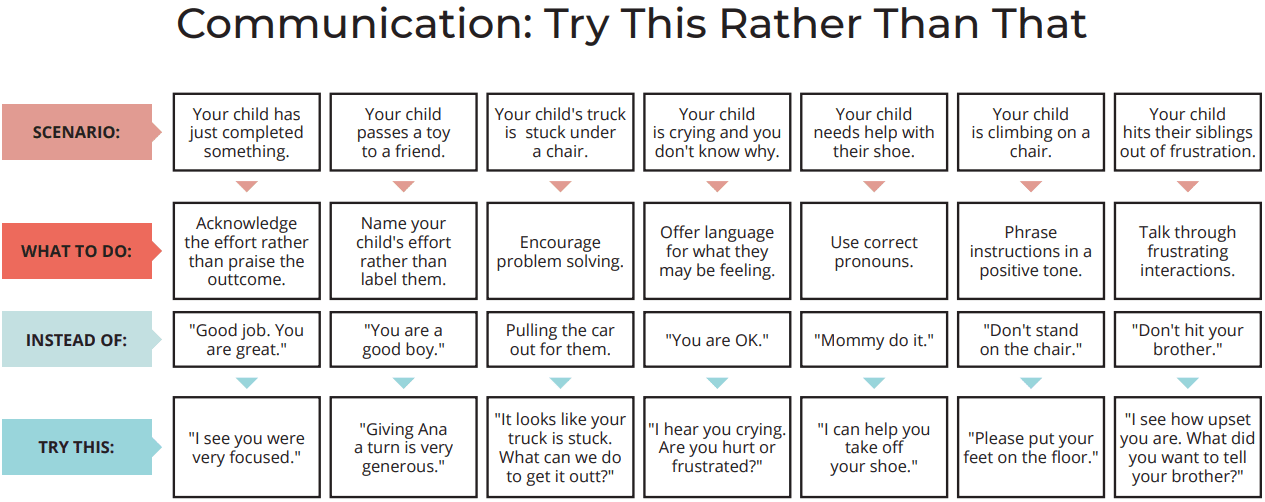
Below is a chart of seven common situations with young children. By changing just a few words you may find that your young child is much more cooperative and engaged in family life. And you may even see fewer tantrums!

Sarah Moudry (@sarahmoudry) is an education innovator whose work is focused on creating education environments and experiences that inspire growth and joy. Her work is rooted in Montessori philosophy and paired with her extensive experience as a designer.

Recently, her projects included the founding of StudioJune (@thestudiojune), a Montessori parent and child education center, and Family Friendly Home (@ familyfriendlyhome), an interior design company that creates inspirational home and school interiors.

Sarah is the author of books and online courses that help parents, childcare professionals, and grandparents to incorporate Montessori practice into their lives. She has an M.Ed in Montessori education, a B.S. in environment and design, AMI Montessori certification for birth to six years, and is an Associate Member of ASID. Visit

Visit www.studiojune.com to learn more!

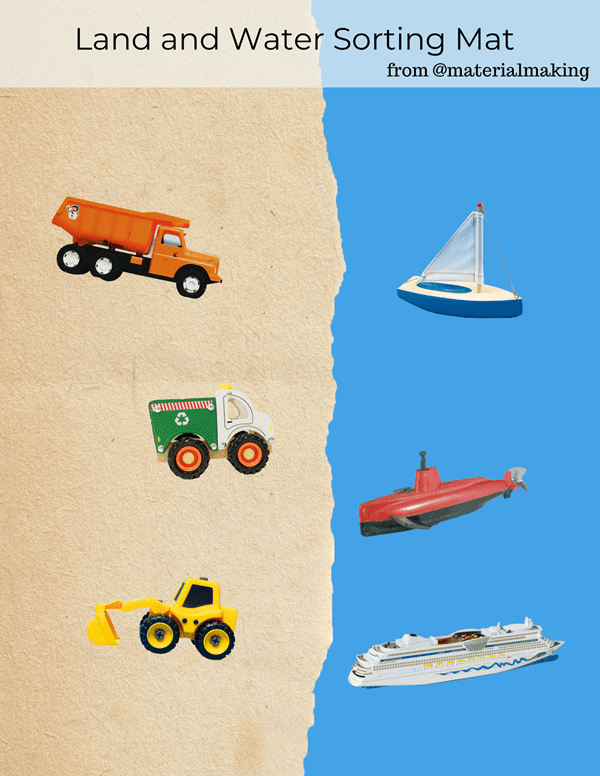
Land and Water Sorting

Land and Water Sorting

Help your child develop independence in caring for self and their environment.

Purpose Vocabulary Enrichment for 30 months and up

Materials

  • Brown Construction Paper

  • Basket

  • Blue Construction Paper

  • Land and water items to sort Cardstock

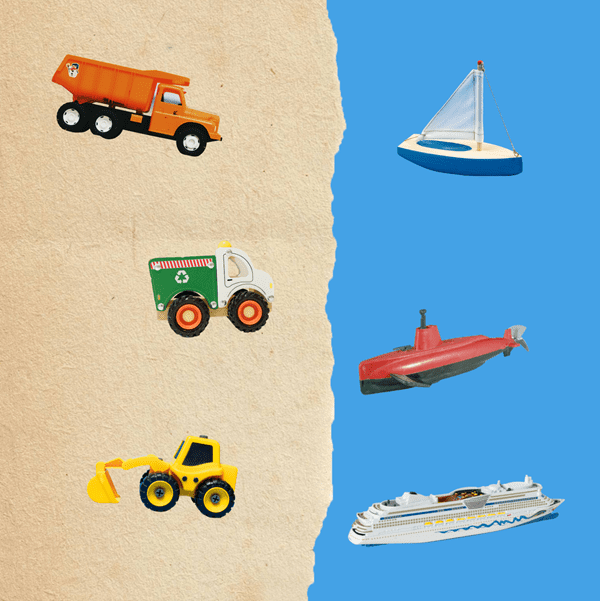
  • Vehicles: Boats and Cars

  • Scissors

  • Animals

  • Glue . Plants . Laminate (optional)

Preparation

1. Cover the cardstock with ½ blue and ½ brown construction paper.

2. Glue in place.

3. Laminate if desired.

Show Your Child

1. Show your child the laminated land and water mat and the basket of objects.

2.Point to the brown side and say, “this is brown like soil. This represents the land. What are some things we do on land?” Have a short conversation and discuss things like walking, driving, riding bikes…

3. Point to the blue side and say, “This is blue like water. This represents the water.” Continue with a conversation about water and all that we do in the water.

4. Point to the brown again and say, “land.” Point to the blue again and say “water.”

5.Remove one of the objects from the basket and name it. For example, “whale.” Then say, “The whale lives in water,” and place the whale on the blue side of the mat.

6. Repeat with an object for land.

7. Continue to do this with your child until they get the idea. Then allow them to continue the sorting. Give the names of the objects that are new to them.

8. When they are all done, help them to put the basket of objects and mat away on a shelf. Once you show them this activity, they should be free to take it out whenever they have time to play at home.

Note: If your child places an object incorrectly, you do not need to correct them right away. It may take more time and experience for your child to understand how to sort them. If you notice this, at another time, read books about animals that live in water and live on land, or vehicles in the water and vehicles on the land. Then, represent the activity.

Resources: Inexpensive collections of plastic objects can be found on Amazon.com/Safari-Ltd


Free of Obstacles

Free of Obstacles

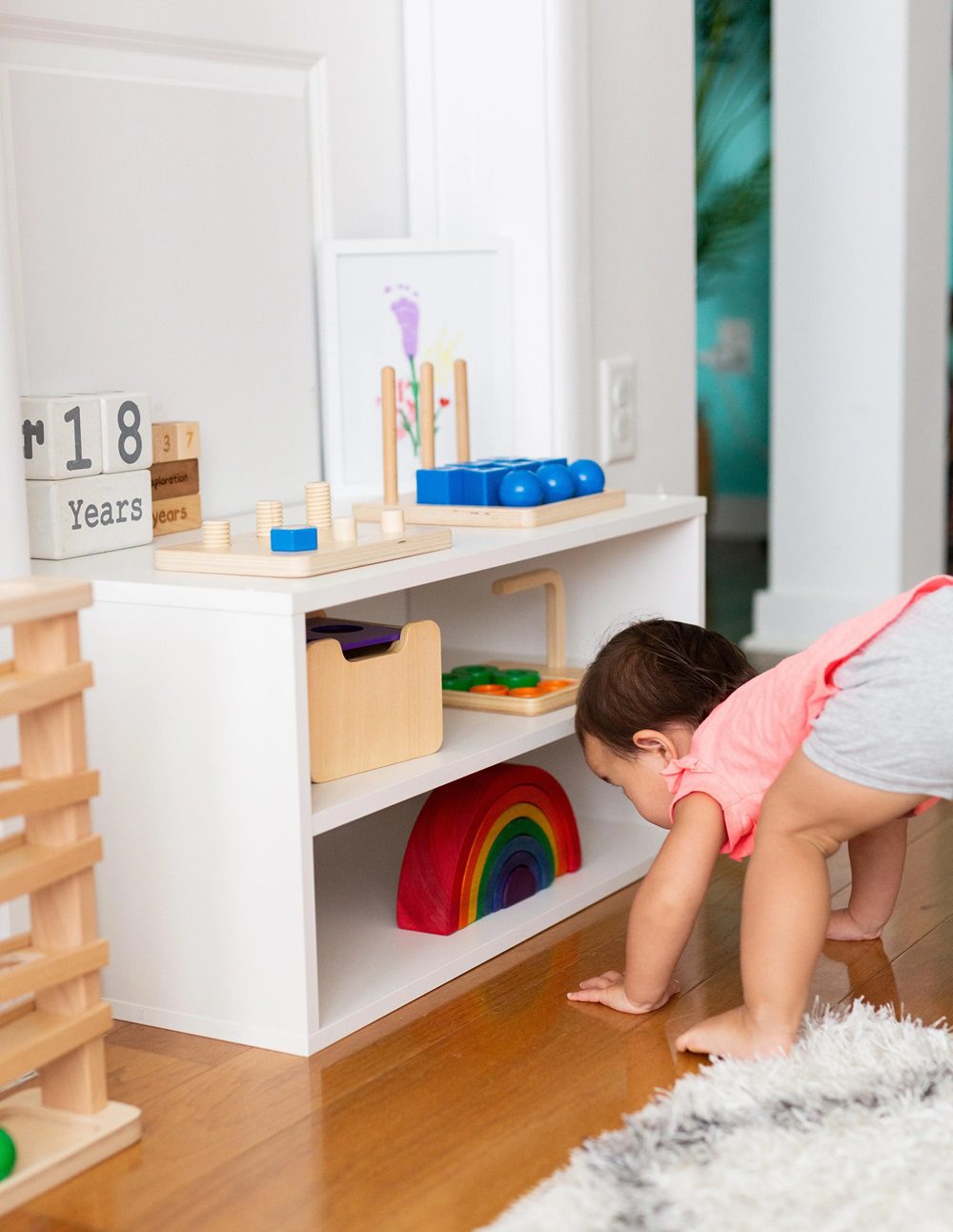
If you have poked around on the internet looking for information about Montessori homes or schools, you have come across the term “Prepared Environment.” The Prepared Environment is any space that is designed to maximize the experiences of the people who use the space. So, a Prepared Environment can be a classroom, a bedroom, the kitchen, dining, living, backyard, park…really any space. We use the term “Prepared Environment” to emphasize that these spaces are deliberately designed and the items in that layout are intentionally chosen.

When it comes to spaces for children, a Prepared Environment has a balance of opportunity and safety. Many companies market tools and gadgets to parents, appealing to their desire to create a safe home with educational experiences. It can be difficult to navigate the marketing and understand what experiences are best for your child and what items will help you create a safe home. Questions to ask, when preparing your home and routine for your child, are: Does this space allow for the freedom of movement that your child needs? Is it free of obstacles to development?

When we ask these questions, we learn what hopes and fears are guiding our parenting choices. Many parents ask:

Should we use baby gates?

When needed, yes. If you are using the gate to maximize independence and movement yet keep your child safe from using the stairs or reaching the stove (as just a couple examples), then yes, use baby gates to create a safe home. However, if you are using baby gates to keep your child from participating in family life (such as helping in the kitchen, independently washing their hands, or choosing activities to play/work with), then you may want to rethink how and why you are using baby gates.


Does a harness allow my impulsive child freedom when we go for walks?

One product that is marketed to parents with the promise of allowing freedom of movement is a harness. A harness gives both the parent and the child a false sense of security. Using a harness can send the message to your child that they are not trusted to explore, that you will control their body and keep them from logical consequences, and that, ultimately, you are in control of their body and they are not. For the parent, you may feel you are allowing your child to explore, but, instead, you are controlling their movement. You are keeping them from developing the skill of learning when and how to stop their own body. Using a harness also does not allow children to experience the capabilities of their bodies.

I understand that, when it comes to safety, it seems that controlling them is the best way. Rather than controlling their body in this way, you can, instead, choose experiences that they are ready to handle. One of my children, when young, was impulsive and would not look before ‘taking off.’ Rather than controlling their body, we changed our patterns to have outdoor experiences where our child could safely practice walking next to us, holding a hand, and then, eventually, just be by our side. We would go to a park or a small market to practice. And until our child understood the expectations and could not be as impulsive, we avoided large, busy parks and busy streets. This was a short period of time, but we dedicated our outdoor time to helping teach this skill, and then we were able to take our family on walks again.

When we see our child as not being able to handle the freedom, our reaction is usually to “lock it down” rather than take the small steps to help us get there. Sometimes our own agendas, busy schedules, or plans get in the way of taking the time children need to learn and understand their bodies and control of movement. The truth may be that a trip to Disney World is not what children can handle when they are in this phase. Rather than see it as denying them the opportunity to experience the magic, you can see that you are supporting their need to understand their bodies and all they can do with them!


Should I use “baby locks” on my cabinets?

When we describe a kitchen that welcomes all family members to take part in food preparation, we recommend having snacks that are accessible and child-size dishes and tools that your child can reach. When you take the time to prepare cabinets with your child in mind, you do not need to use baby locks on these cabinets. Make sure to limit the snacks available to the amount you want your child to eat in a day. When you have dishes and tools available, only make accessible what you have shown children to use safely and have observed them repeat the safe use. For more on this, my book First Foods to Family Meals explains how to create an accessible kitchen and how to prepare food preparation activities.

For cabinets with cleaning supplies and other items that pose a safety hazard, locks are the appropriate limit. When we create spaces that invite a child to take part and also learn limits, we are creating an environment that gives honest feedback. It is OK for your child to learn that not everything they can reach is for them. Additionally, they learn that there is usually a way they can participate safely.

These are just a few examples of how we can remove obstacles to a child’s freedom to move, all while creating safe spaces and experiences. It is through freedom of movement that a child learns controlled, refined, and purposeful movement guided by choice. As you prepare spaces and routines to include your child, remember there is a balance to offering freedom and maintaining safe and consistent spaces.

Follow @familyfriendlyhome for more information on preparing your home, or visit familyfriendlyhome.com. 

Sarah Moudry is an education innovator whose work is focused on creating education environments and experiences that inspire growth and joy. Her work is rooted in Montessori philosophy and paired with her extensive experience as a designer. She is a guide at the NewGate school in Sarasota, Florida.

Recently, her projects include the founding of Studio June, a Montessori parent and child education center, and Family Friendly Home, an interior design company that creates inspirational home and school interiors.

Sarah’s most recent book, First Foods to Family Meals (2019), provides parents a Montessori grounding to help them include their children in preparing food at home. Sarah has created online courses that help parents, childcare professionals, and grandparents to incorporate Montessori theory into their lives.

Sarah has an M.Ed in Montessori education, a B.S. in environment and design, AMI Montessori certification for birth to six years, and is an Associate Member of ASID.

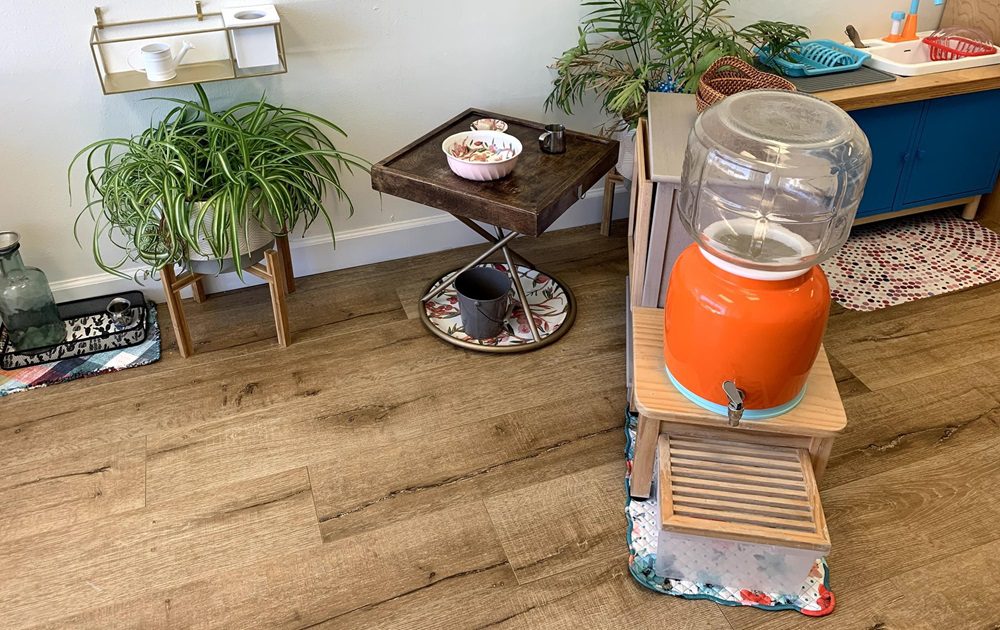
Montessori in Your Home: A Water Source

Montessori in Your Home: A Water Source

Help your child develop independence in caring for self and their environment.

Age: When walking

Materials:

  • Water Jug
  • Grate
  • Water Dispenser
  • Water Dispenser and Stand
  • Low Stool
  • Bin
  • Sink Grate
  • Plastic Tub
  • Small Rug
  • 3 oz. Pitcher

Preparation:

  1. Place the rug on the floor where you would like to have the water source accessible to your child.
  2. Place the tub on the rug and the sink grate on top of the tub.
  3. Place the low stool over the grate and tub so that about half of the tub/grate is visible.
  4. Fill the dispenser one-third full of water.
  5. Place the dispenser on the stool so the spout is over the grate and tub.
  6. Place the jug on top of the dispenser.

Show Your Child:

  1. Tell your children you will show them how to get a glass of water.
  2. Show them where their glasses are kept and ask them to place them on the table.
  3. Show your children where you keep a little pitcher (about 3 oz).
  4. Introduce the water source.
  5. Bring the pitcher to the water source and show how to put the pitcher under the spout, on the grate.
  6. Invite your children to try. *
  7. Push the spout lever down to release a little water into the pitcher and let go.
  8. Ask a child to have a turn.
  9. They may need help to know when to let go.
  10. Ask the child to carry the pitcher to the table with two hands.
  11. Go with the child to the table.
  12. Ask the child to put the pitcher on the table next to the glass.
  13. Sit down, invite your child to pour the water into their glass. (It is important to make sure to sit while drinking. This prevents spills around the house and proper posture when drinking from a glass.)
  14. Let children know that they can get water from the water source when they need.
  15. This is a great time to show children where you keep clean-up cloths, just in case, they have a spill.
Reprinted with permission by ©familyfriendlyhome2023

*For children younger than three, when we give them a chance to try each step, we keep their interest, we slow down the lesson, and we invite them to be a part of the process.