Related Posts
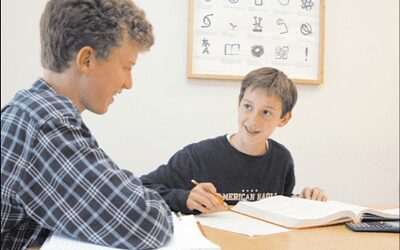
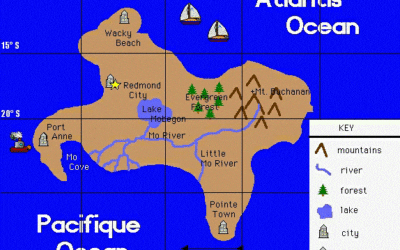

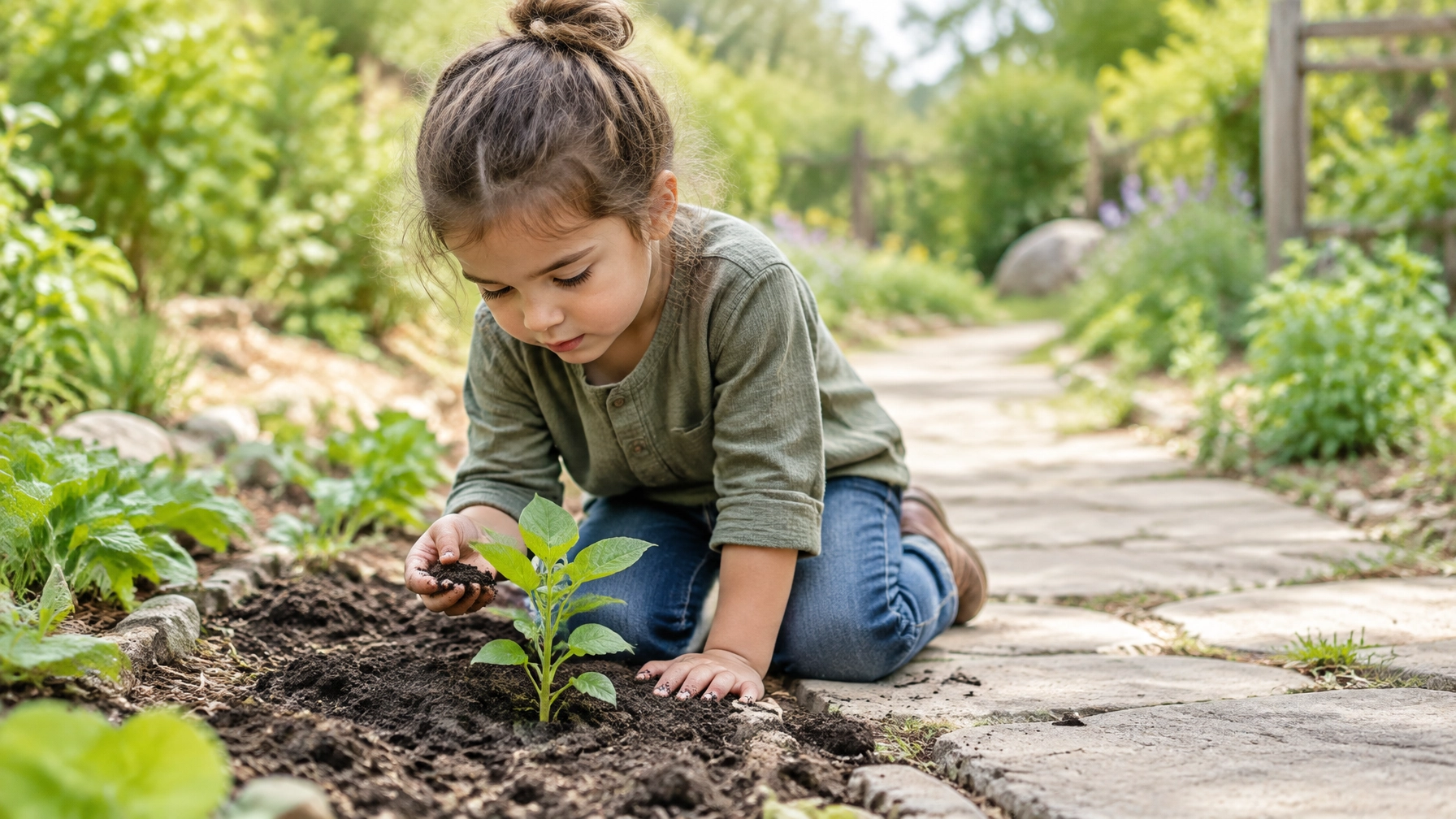
Real-world discovery gives children rich material for imagination.
One of the most persistent myths about Montessori is that it does not believe in imagination. No pretending, no fairy tales, no fantasy, no make-believe, the story goes, as though Montessori classrooms are humorless little laboratories where childhood magic goes to die.
That is an oversimplification bordering on a caricature. Montessori placed enormous value on imagination. What she actually drew was a more careful line : between imagination that grows out of a child’s own developing mind, and fantasy that adults manufacture and hand to children as though it were real. That distinction, once we see it, explains almost everything about the Montessori approach to this topic.
Young Children Are Busy Trying to Understand Reality
Try to remember what it was like to be three. The actual world, the one right in front of you, was already astonishing. Water disappears down a drain and you have no idea where it goes. A seed becomes a plant. Birds fly. Bread rises in the oven like it is alive. Magnets pull on metal for no visible reason. The moon changes shape every night.
Some people speak in sounds you do not recognize at all. There are creatures the size of a house called elephants, and other creatures so small you need a special instrument just to see them. From where a three-year-old is standing, reality is already full of mystery.
Adults sometimes assume children need us to sprinkle magic onto the world to make it interesting. From where a three-year-old is standing, the real world is already doing that job. Montessori believed young children have an unusually strong, almost hungry drive to make sense of that real world while it is still new to them, and that this drive deserves to be fed, not distracted from.
This is why the Montessori environment for infants and young children emphasizes movement, language, practical life, nature, and direct sensory experience. A child washes a table, pours water, cares for a plant, prepares food, listens to birds, or observes an insect. These are not alternatives to imagination. They are some of the materials imagination will later use.

Practical experiences such as baking connect imagination to the real world.
Imagination Is Not the Enemy Here
A child riding a stick like a horse is using imagination. Children invent stories. They build characters out of nothing. They draw worlds that do not exist anywhere. They act out whole scenes from their day. None of this is somehow un-Montessori.
Spontaneous pretend play can be a healthy sign that a child is processing experience and imagining alternative possibilities. If your child plays restaurant, pretends to be a dog for an entire afternoon, invents an imaginary friend, or announces that the couch is now a pirate ship under attack, there is no need to panic. That is child-generated imagination, springing directly out of the child’s own mind, and it is exactly the kind Montessori welcomes.
Join in if you are invited. Otherwise, just enjoy the show.
The distinction is not between imagination and no imagination. It is between giving children room to construct their own imaginative worlds and assuming that adults must constantly manufacture pretend scenarios to keep childhood interesting.
Reality Is the Raw Material Imagination Runs On
Here is the actual Montessori argument, and it is a subtle one: rich imagination grows out of rich experience, not out of a vacuum.
Dr. Montessori wrote, “The true basis of the imagination is reality, and its perception is related to exactness of observation.” A child who has explored the outdoors, heard beautiful language spoken aloud, handled real tools and objects, cooked something from scratch, grown something from seed, studied real animals up close, listened to real music, pored over real maps, and heard genuinely fascinating true stories has an enormous reservoir to draw from later.
That reservoir is what imagination actually runs on.
We do not build a stronger imagination by starving reality. We build it by helping a child fall in love with the world as it actually is, so there is something worth transforming later. The more accurately children observe, the more freely they can combine, reinterpret, and extend what they have learned.
What changes as children grow? Their use of imagination becomes increasingly deliberate and abstract.
In infancy and early childhood, children are building an understanding of the real world. They need time to explore how objects behave, how people communicate, how plants grow, and how daily life works. During the elementary years, children begin reaching beyond what they can see directly. They use imagination to study ancient civilizations, the formation of the universe, the development of life, geography, culture, literature, and the long story of human beings.
Montessori’s elementary curriculum leans hard into a child’s imagination on purpose. The Great Lessons and cosmic education invite children to imagine events that happened long before they were born and places they may never visit. A child can picture the first stars forming, imagine early human communities, or reconstruct the movement of people across a continent. These ideas are imaginative, but they are grounded in real history, science, and human experience.
By adolescence, imagination supports a different kind of work. Young people use it to explore ethical questions, consider the consequences of decisions, envision their future, interpret literature and art, design projects, and imagine meaningful contributions to their communities. In a Montessori adolescent program, imagination is not protected from real life. It is directed toward real life : toward purposeful work, social responsibility, creative expression, and the question of what kind of world we want to help create.
So What About Fairy Tales?
Families land in different places on this, and so do individual Montessori schools. Stories are part of being human. Fairy tales, myths, folktales, fantasy : all of it can be wonderful, genuinely wonderful, and nobody is suggesting otherwise.
The real question with very young children is not whether fantasy is allowed. It is whether the child can tell what is real from what is pretend.
A seven-year-old can happily delight in dragons while knowing perfectly well that dragons do not exist. A two- or three-year-old is often still working that distinction out, and for a mind that young, a dragon and an elephant can land in the same category: things adults say are real. That uncertainty is exactly why Montessori tends to lean toward reality with the very youngest children.
Not out of suspicion of fantasy, but out of respect for how much a young child is still sorting out.
As children mature, they can engage with fantasy literature, myths, fables, and imaginative stories with greater independence and understanding. They can ask what a story means, compare it with reality, consider its moral questions, and appreciate the artistry of a world that does not exist literally. The elementary years are often a particularly important period for this kind of imaginative exploration.

Elementary children use imagination to explore geography, science, history, and the universe.
Pretend Play at Home
What can we do at home? We can offer children real experiences without trying to control what they make of them.
Take your child into the garden. Bake bread together. Watch a spider build a web from scratch. Look at the moon. Tell them a true story from your own family. Visit a museum. Read a wonderful book. Put on real music. Hand them clay, paint, blocks, scraps of fabric, and enough unstructured time to do something with all of it.
We can also observe before we intervene. Is your child using pretend play to revisit something that happened during the day? Are they experimenting with cause and effect? Are they working through a social experience or simply enjoying a story they have invented? We do not need to turn every imaginative moment into a lesson.
The Montessori Family Alliance offers parents a place to continue exploring these questions alongside educators and other families. Its resources are designed to strengthen the partnership between home and school, helping us understand children’s development without reducing childhood to a set of rules.
What Montessori actually cautions against is a different thing: the assumption that adults are responsible for constantly manufacturing fantasy to keep childhood interesting, as if reality alone is not enough to hold a child’s attention.
It is.
Reality, it turns out, is more than generous enough. The goal was never to raise children without fantasy. It is to give children minds so full of real experience that imagination has an entire universe to draw from when it finally gets to work.

Adolescent imagination turns toward creative work, ethical reflection, and purposeful contributions.
The Montessori View in One Sentence
Montessori values imagination deeply : and understands that imagination is strongest when it grows from careful observation, meaningful experience, and a developing relationship with reality.
Young children need the real world as a foundation. Elementary children use imagination to reach across time and space into history, science, culture, and the universe. Adolescents use it to think creatively, reflect ethically, and contribute purposefully.
So, does Montessori believe in imagination?
Yes.
It simply asks us to give imagination something real to work with.