Related Posts

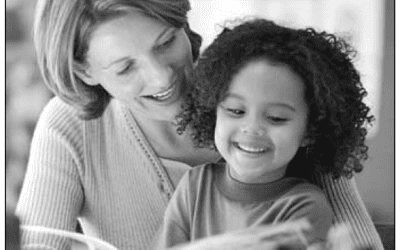

Your child shows you a picture. We respond, “Good job!”
Your child puts on a coat. “Good job!”
Lunch, cleanup, a finished puzzle, a written word, the dog fed. “Good job! Good job! Good job!”
We say it because we are proud, and we want our children to feel that. Nothing is wrong with the impulse. But say it enough times, attached to enough things, and something else can start happening underneath the praise , your child can quietly become dependent on it.
That is not a metaphor. It works a lot like a habit forms.
What Dependency Actually Looks Like
You can usually spot a child who has become a bit of a praise junkie. They do not finish the drawing and admire it. They finish the drawing and immediately spin around looking for you. Not “look what I made,” but “did I do good?” The finished thing is almost beside the point. What they are really waiting for is the hit of approval that comes after.
Watch closely and you will see the tell , a flicker of anxiety before the verdict lands. Is this good? Did I do it right?
That flicker is new. A three-year-old stacking blocks for the joy of stacking blocks does not have it. It shows up only after enough “good jobs” have taught a child that the value of what they did is not decided by them. It is decided by whoever is watching.
Once that pattern sets in, it tends to spread. The child who needs to hear “good job” after every drawing often becomes the child who hesitates to try the harder puzzle, because an unpraised attempt feels riskier than an easy win that is guaranteed to land well. Praise dependency does not just make children needy. It can quietly make them cautious.
The Montessori Question , Where Does Judgment Live?
This is one reason Montessori educators are careful about evaluative praise. Dr. Maria Montessori understood that children are not simply waiting for adults to tell them whether their work is good. They are developing the ability to observe, compare, correct, and judge their own efforts.
In a Montessori environment, the materials and activities often help children discover what works. A piece either fits or it does not. A sequence either makes sense or it needs another look. A carefully prepared activity gives the child information without requiring an adult to issue a verdict.
The goal is not to make children work without warmth. The goal is to help them experience the satisfaction of meaningful work itself. Montessori wrote about protecting “the joy in the work itself,” and that joy is easily displaced when every effort becomes a performance for adult approval.
This movement toward inner judgment begins much earlier than many of us realize. In infancy, a baby reaches, grasps, shakes, drops, and reaches again. We respond with delight, of course. Warmth and connection matter deeply. But we do not need to turn every movement into a public evaluation. The infant is already gathering information from the experience , the sound of the object, the feeling in the hand, the result of the movement, the response of a trusted adult.
By the toddler years, this becomes more visible. A young child pours water, carries a bowl, opens a container, or tries to put on a coat. The child is not merely completing a task for us. The child is building a sense of competence. Our role is to prepare a safe environment, offer enough help, and allow the child to notice what happened.
Infancy does not look like elementary research, and elementary research does not look like adolescence. Still, the developmental direction is connected , from depending on the adult’s response toward developing an inner sense of purpose, judgment, and responsibility.
Why This Happens So Easily
Nobody sets out to create this. It happens because praise feels good to give and good to receive, so it is easy to reach for constantly, the way it is easy to reach for a compliment or a treat. And children, being smart, notice exactly what earns the reaction.
If “good job” reliably follows finishing something quickly, children may start optimizing for quick and easy over hard and interesting. Why struggle with something uncertain when the sure thing gets the same applause?
This is the trap. The more we praise, the more a child’s attention can drift from the work itself to us. The internal question , this is interesting, let me figure it out , gets crowded out by an external one , will this make them say it again?
In early childhood, we may see this when a child repeatedly asks, “Is this right?” even when the child has enough information to investigate independently. In the elementary years, the same pattern can appear when a child avoids a challenging mathematics problem, writing project, or geography study because there is no guarantee of immediate approval.
Montessori elementary education gives children increasingly complex academic work, collaboration, and opportunities to research questions that matter to them. The adult still teaches, guides, observes, and offers feedback. But the child is gradually expected to plan, persist, revise, contribute to a group, and evaluate the quality of the work. These are not small extensions of early childhood skills. They are the beginnings of intellectual independence.

The Weaning Process
The fix is not to go cold turkey on encouragement. It is to change what we are handing over.
Swap the verdict for a description. Instead of “Good job on the picture!” try, “You used almost the whole page,” or, “I see you mixed blue and yellow there.” Instead of “Good job cleaning up!” try, “The books are back on the shelf and the clothes are in the hamper.”
We are still showing the child that we noticed. We are simply not handing over a rating.
Swap our opinion for theirs. When your child runs up with something finished, resist delivering the verdict first. Try, “Tell me about it.” Now your child has to form an opinion of the work before hearing ours, which is exactly the muscle we are trying to build.
We might ask, “What part was hardest?” “What would you like to change?” or “How did you decide where to begin?” These questions are not tests. They invite reflection.
Let some things go unremarked. Not everything a child does needs a response from us. That feels almost rude to modern parenting instincts, but a child who paints without an audience is getting uninterrupted practice at being interested in something for its own sake.
That is the whole point.
Concentration Needs Room
Praise can also interrupt concentration. We have all seen a child deeply engaged in drawing, building, reading, sorting, or solving a problem. We mean to encourage the child. We lean over and say, “That is wonderful!”
The child looks up. The moment has changed.
Montessori guides are often careful not to interrupt a child who is concentrating, even when the interruption would be positive. Concentration is not just a pleasant side effect of learning. It is a capacity children build through meaningful activity, repetition, effort, and time.
At home, we can practice waiting. When your child is deeply engaged, experiment with saying nothing at all. Just watch. If your child looks toward you, offer a smile. If your child brings you the finished result, describe what you noticed.
“You worked on that for a long time.”
“You kept trying even when it got hard.”
“You figured out how those pieces fit together.”
Or simply, “You did it.”
Often the child’s own smile tells us that nothing more needs to be said.

It Is Still Fine to Be Delighted
None of this means becoming a stone-faced parent who never says a warm word. Say “I love you.” Say “That was wonderful” when you mean it, not on a schedule. Celebrate real milestones with real enthusiasm. Share your delight when your child contributes to the family, helps another person, or completes something genuinely important.
The goal was never to eliminate praise. It is to stop praise from becoming the reason your child does things in the first place.
There is also a difference between encouragement and control. We can encourage a child by staying nearby, offering time, acknowledging effort, and helping the child return to a problem. We use praise differently when we attach it to a desired behavior as a reward or when we make adult approval the final measure of worth.
A helpful test is this , if your child stopped getting praised for something tomorrow, would they still want to do it?
If the honest answer is no, that is worth noticing. Not as a crisis. Not as a reason for shame. It is simply information about where the motivation is currently living : outside the child instead of inside.
The Long Montessori Arc
The movement from external approval toward inner judgment does not end in early childhood. It continues through the full Montessori developmental span.
In infancy, we offer secure relationships and opportunities for purposeful movement and exploration. In toddlerhood and the primary years, children practice independence through everyday work, language, movement, and concentration. They discover that they can do meaningful things for themselves.
In elementary school, children’s curiosity expands. They work with others, pursue academic questions, complete research, and contribute to a community. They learn that their ideas have merit beyond whether an adult applauds them. Feedback remains important, but it becomes part of a larger process of revision, reflection, and responsibility.
In adolescence : the third plane of development : this inner judgment matters deeply. Young people are preparing to take responsibility for complex work, relationships, ethical questions, and decisions that cannot always be reduced to a simple right or wrong answer. They need adults who will offer guidance and honest feedback, but they also need room to ask, What do I think? What are the consequences? What kind of person am I becoming?
A teenager who has learned only to work for approval may wait for someone else to define success. A teenager who has gradually practiced self-evaluation can begin to take ownership of a project, a relationship, a mistake, or a decision. The adult’s role shifts over time : from protector and interpreter to guide, adviser, and trusted consultant.

The Real Payoff
Weaned off a steady diet of “good job,” children do not stop feeling proud of themselves. If anything, the pride gets sturdier, because it is no longer on loan from someone else’s opinion.
I did it.
I kept trying until it worked.
I know I can do hard things, because I have actually done them.
That kind of confidence does not evaporate the moment nobody is watching. It is the kind that is still there in the room by itself, with no audience at all, which is exactly where we want it to be.
For more guidance on Montessori discipline, motivation, and family life, explore the Montessori Family Alliance and the Montessori Foundation’s Discipline resources. Our Montessori Curriculum Scope and Sequence also offers a helpful view of how independence, purposeful work, collaboration, and responsibility develop from infancy through the elementary years and beyond.