
IMC Town Hall
Montessori’s schedule of the day

“Is That a Rat… or a Class Pet?” Why Every Montessori School Needs a Pest Policy

If you haven’t reviewed your employee handbook lately—or haven’t yet written one—consider this your gentle nudge. In the Montessori world, we tend to take a compassionate view of the natural world. We teach children to observe living creatures with curiosity and care. That’s beautiful—and exactly what we want to nurture.
But every now and then, that curiosity extends a little too far… like when a well-meaning teacher picks up a “dead” rat on the playground, only to discover it was still very much alive.
Yes, it really happened.
Fortunately, the teacher was okay (after a trip to the doctor), but the incident prompted an important realization for the school leader: We need a clear policy about what to do when pests show up at school.
Because let’s face it—at some point, they will. Whether it’s a wasp nest in the outdoor classroom, a snake curled up in the garden, or a mouse making itself at home behind the snack cabinet, every Montessori campus eventually has an unexpected visitor.
And because Montessori teachers are a special kind of human—nurturing, unflappable, and almost unfailingly kind—we’re the folks most likely to say, “Aww… look at that little guy!” instead of backing away and calling for help.
That’s why your staff handbook should spell out a simple, clear, no-room-for-interpretation Pest Encounter Policy. Something that says: Don’t touch it. Keep children away. Notify administration immediately. Let trained professionals handle it. Document the incident.
Not only does this keep your team and your students safe, it also protects your school from liability. It shows you’ve prepared your staff, and you’re taking proactive steps to manage risks thoughtfully and responsibly.
If you don’t already have a pest policy in place—or if you’re not sure whether yours covers all the bases—now’s a good time to review it. And if you’re starting from scratch, you’re welcome to use or adapt this sample policy we just helped a client develop.
Click this link to download the sample Pest Encounter Policy
https://lnkd.in/eJP6bzP3
Feel free to customize it for your own school’s name and context.
As Montessori leaders, we model calm, capable responses to the unexpected. Having the right policies in place gives our team the confidence to do just that.
And if you do end up with a class pet rat? Well—just make sure it came from the pet store and not the playground,
“Shaping Journeys: Rites of Passage in Schools”

Admissions: Recruiting Your Ideal Enrollment and Building a Strong School Community
In the ever-evolving landscape of education, Montessori schools face the dual challenge of staying true to their mission while navigating the practical realities of enrollment. Many families today are overwhelmed, time-constrained, and simply looking for a school that feels safe, nurturing, and convenient. Often, their first priority is to solve a problem—find a school that fits their child’s immediate needs and secure a spot quickly. Yet behind this urgency is a deeper desire: to find a place where their child can thrive and where they, as parents, feel a sense of trust and belonging.
Recognizing this, Montessori schools must meet prospective families where they are—acknowledging the pressure and pace of modern parenting—while gently guiding them toward a fuller understanding of what it means to join a Montessori community. This article presents a refined approach to enrollment and engagement—one grounded in relationship-building, authentic storytelling, and an unwavering commitment to the school’s mission. We call it “Finding the Perfect Match.”
Traditional enrollment strategies often follow a transactional model: attract attention, provide information, and ask for a decision. This approach treats parents as consumers and education as a product. In contrast, the Montessori approach to enrollment invites families into a journey of mutual discovery. It allows prospective parents to engage not only with what Montessori education is, but with what it feels like to be part of a deeply connected school community. The goal shifts from simply filling seats to forming genuine partnerships that support the child’s development and the school’s long-term culture.
The first step in this relationship-based model is to increase visibility and awareness in the local community. Schools must be intentional in making their presence known—not through broad marketing campaigns, but through targeted, values-driven outreach. This might include participating in community festivals, setting up interactive Montessori exhibits at farmers’ markets, offering parenting workshops at local libraries, and creating vibrant, informative bulletin boards in nearby cafes and businesses. These outreach efforts are led by admissions and development staff but must be supported by the broader school community. Consistency and follow-through are essential. A member of the admissions team should be assigned to track outreach events, update materials, and personally follow up with contacts.
Once a prospective parent makes initial contact—whether through an email, a website inquiry, or by visiting the school—it is vital to respond promptly and personally. The initial reply should reflect warmth and attentiveness. Ideally, the response includes an invitation to visit, observe a classroom, and speak with a school leader or experienced teacher. The process should feel welcoming and affirming, not automated or rushed. Each inquiry is a potential relationship, and how that relationship begins often shapes whether it continues. For parents in crisis mode, who simply want to enroll quickly, the key is responsiveness and clarity—combined with gentle pacing that opens the door to deeper engagement once the immediate need is met.
Rather than relying solely on a single tour or presentation, schools can create an intentional series of touchpoints that gradually deepen engagement. A family might begin with an observation morning, followed by an invitation to attend a community event or curriculum night. They may be offered an opportunity to speak with current parents or receive a series of short, mission-driven emails that highlight key aspects of Montessori education. At each step, the emphasis should be on listening, understanding, and trust-building. The admissions team should develop and manage a simple CRM system or tracking tool to log these touchpoints and ensure follow-up is timely and meaningful.
Equally important is the active participation of the current parent community. These parents serve as natural ambassadors and advocates when invited to do so. Schools can provide them with tools such as “invite a friend” postcards, social media graphics, or talking points about Montessori education. Admissions staff can host informal gatherings or coffee chats where current families invite neighbors or friends to visit the school. This parent-to-parent outreach feels more personal and authentic than traditional marketing and can be an especially effective way to reach values-aligned families.
When a family decides to enroll, the onboarding process should be seen not as an administrative task, but as the beginning of a long-term partnership. New families should be welcomed with intention and care. This may include a personalized welcome packet, a video or letter from the Head of School, and an invitation to a new family orientation. Pairing each new family with a mentor family offers an additional layer of support and connection. The admissions team and classroom guides should check in during the first few weeks, ensuring that new families feel seen, supported, and empowered to participate.
A successful community is not built solely through events—it is built through ongoing, meaningful communication. Families should be regularly informed not only of upcoming activities but of the deeper purpose behind those activities. School leaders should share stories from the classroom, reflections on Montessori principles in action, and opportunities for involvement that go beyond volunteering. Families need to know that their voice matters, their ideas are welcome, and their contributions—whether time, talent, or financial support—make a meaningful difference.
To support this, schools should implement structures that facilitate two-way communication. Parent surveys, listening circles, and community forums provide families with avenues to share their experiences and offer input. Classroom guides and administrators must be accessible and responsive. A family liaison or community engagement coordinator can help manage these connections and ensure that families remain engaged over time.
The implementation of this approach requires clearly defined roles and responsibilities. The admissions team leads the design and execution of the enrollment pathway, including outreach, tours, and follow-up. The Head of School ensures alignment between the school’s philosophy and the admissions process, while teachers and classroom guides provide key insights and help families experience the pedagogy in action. Parent volunteers serve as hosts, mentors, and storytellers. All of this is guided by a shared commitment to cultivating a vibrant, values-aligned community.
This approach to enrollment and engagement is not about fast growth or flashy campaigns. It is about honoring the values that Montessori education holds dear: respect for the individual, trust in human development, and the power of authentic relationships. By focusing on fit, cultivating connection, and supporting families with care and intention, Montessori schools can create communities that are not only full—but full of purpose, joy, and enduring commitment.
Finding the perfect match means telling the truth about who you are, what you believe, and what it means to be part of your school. When this message is conveyed consistently and sincerely, the right families will not only find your school—they will help it flourish.
Great Governance Supports Great Schools: The Important role of Boards in Montessori Schools
IMC Town Hall
The Intersection of Montessori and Science
The Intersection of Montessori and Science
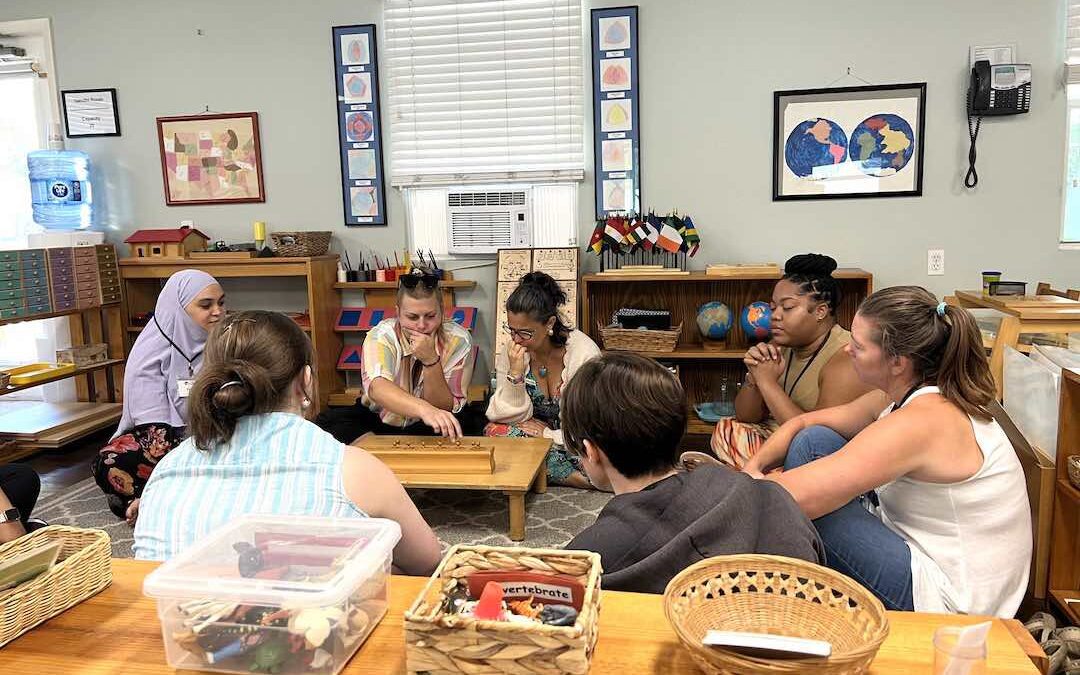
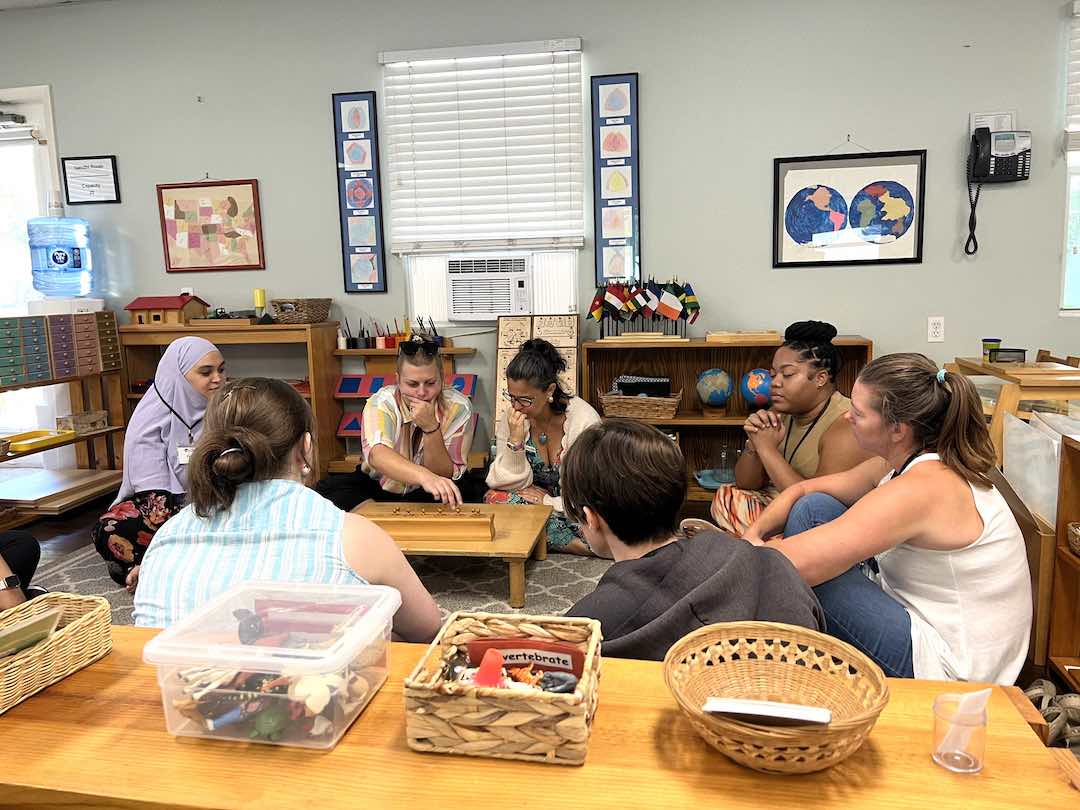
In Montessori education, we are continuously testing and refining our understanding. Science is not about believing something because a public figure says it; it is about seeking reliable information. The same principle applies to education—our approach must be guided by observation, adaptation, and evidence-based methods.
One significant challenge in many Montessori schools today, especially in public settings, is that students are not entering at the optimal age. Montessori education is most effective when children begin at age three. If a child enters at four or five, they have already missed critical developmental time. While they may eventually catch up, their experience will not be the same as that of a child who had the full early childhood Montessori experience. If we seek the best outcomes associated with Montessori, we must adhere as closely as possible to the principles and methods that made it successful.
Maria Montessori herself evolved her methods over time. For example, in her early writings, she suggested young children needed sugar—a belief we now understand differently. It is essential to contextualize her work historically while maintaining fidelity to her core principles.
Integrating Late-Entry Students into Montessori
In public Montessori schools, it is common for students to join at later grade levels, such as second or third grade, without prior Montessori experience. This presents challenges, but they are not insurmountable. The key is diagnostic, prescriptive teaching—analyzing what the child knows, identifying gaps, and meeting them where they are. We celebrate what they already understand to build confidence and create a safe, supportive environment for learning.
A crucial goal is to prevent children from feeling embarrassed or insecure about their knowledge gaps. Fear and shame are barriers to learning. When children feel safe, valued, and free from ridicule, they are more likely to engage with and absorb new material. Emotional safety is not just an educational priority—it is a foundation for overall well-being. Many school shootings, for example, stem from a lack of emotional security. The more we create emotionally safe schools, the more physically safe schools.
Understanding the Montessori Curriculum
For Montessori-trained educators, the curriculum is often thought of in terms of the albums used for training. However, in public school settings, the curriculum is defined by state standards. Montessori is a European-derived educational approach, which is why its math sequence differs from the typical American sequence. In Montessori, fractions are introduced around age five, whereas many public schools do not introduce them until third or fifth grade.
Montessori education is a tool—one that must be adapted within various educational frameworks. The materials themselves are beautifully designed, but they are not magical. Simply having them in a classroom does not ensure learning. The effectiveness of Montessori education depends on how we use these tools to support individual students.
Historically, Montessori teachers relied on handwritten records to track student progress. While these methods worked, they were not always reliable. In the private sector, some schools have faced lawsuits for failing to document student progress adequately. In public Montessori schools, record-keeping is critical for accountability and ensuring students are meeting benchmarks.
A common issue in Montessori is that students may appear to understand a concept but later struggle with it. For example, a child may demonstrate mastery of long division using Montessori materials but forget how to apply it months later. This is what we call “orbital velocity” in learning—students must reach a point where their knowledge is deeply ingrained rather than temporarily memorized. Authentic learning is a permanent change in the learner.
The Role of Assessment and Curriculum Planning
Montessori education emphasizes hands-on, experiential learning, but it is essential to have a structured way of assessing progress. The Montessori Foundation provides a detailed scope and sequence that outlines learning objectives across different age levels. Teachers must continually assess whether students have mastered concepts and ensure they retain knowledge over time.
In traditional education, scaffolding is used to build upon prior knowledge systematically. In Montessori, learning is more fluid, with constant cycles of reinforcement. Teachers must ask themselves: Is this lesson essential for the child’s progression? Some skills, such as handwriting, may be deprioritized in certain districts, yet they remain vital in others. It is up to the educator to determine what is necessary and how to adapt within their given framework.
Ultimately, Montessori education is a philosophy and a tool. It requires educators to be adaptable, observant, and deeply committed to guiding each child toward meaningful learning. By fostering a culture of curiosity, respect, and perseverance, we empower students to reach their full potential.
Looking Ahead
Montessori educators must navigate the complexities of curriculum adaptation, student integration, and record-keeping while maintaining the integrity of Montessori principles. As we move forward, it is essential to continue refining our methods, supporting teachers, and ensuring that all students—regardless of when they enter Montessori—receive the best possible education.
Education is an evolving journey. Whether in public or private Montessori settings, our goal remains the same: to provide children with the tools, confidence, and knowledge they need to succeed in an ever-changing world.
The Heart of Montessori: Building Connections and Community
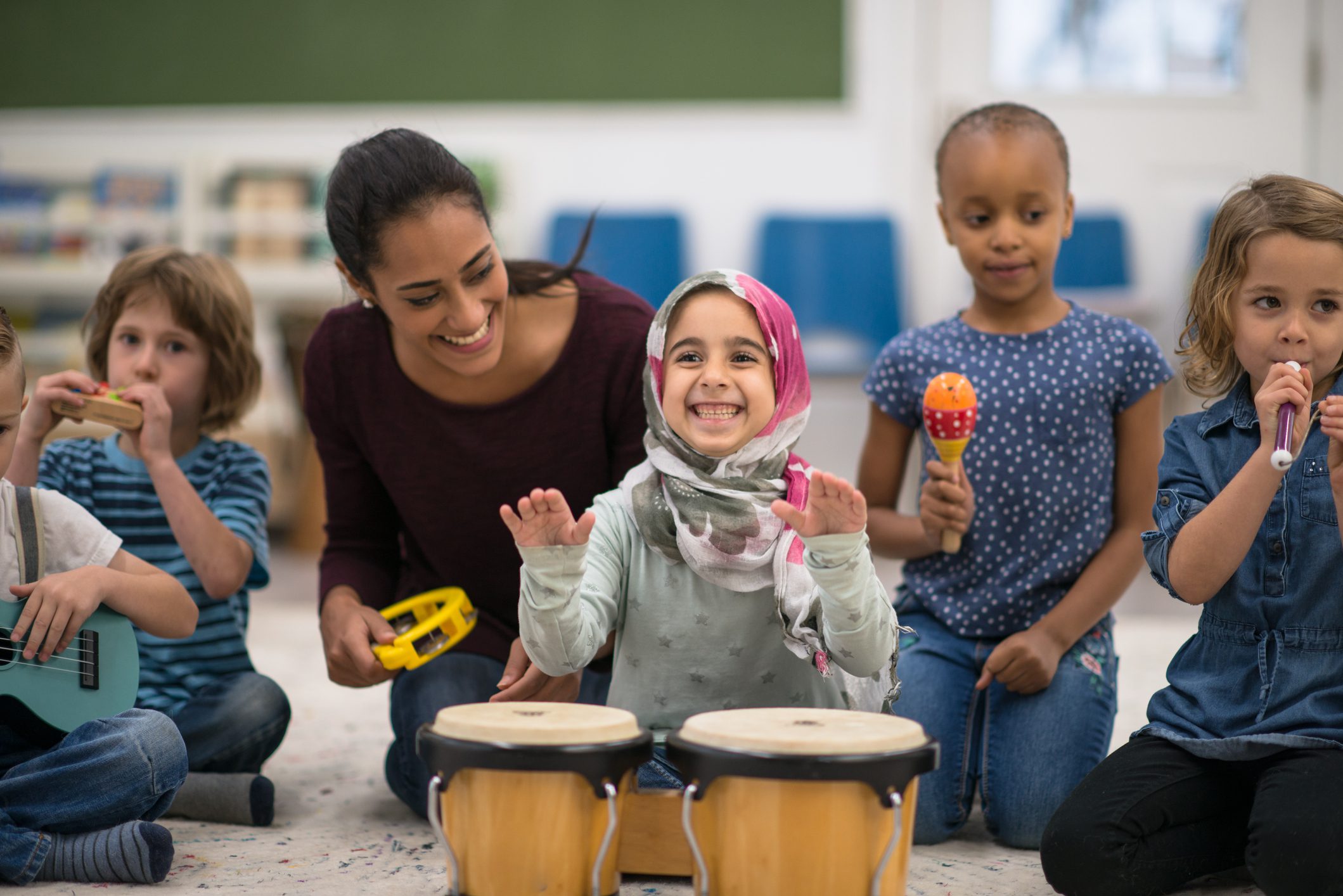
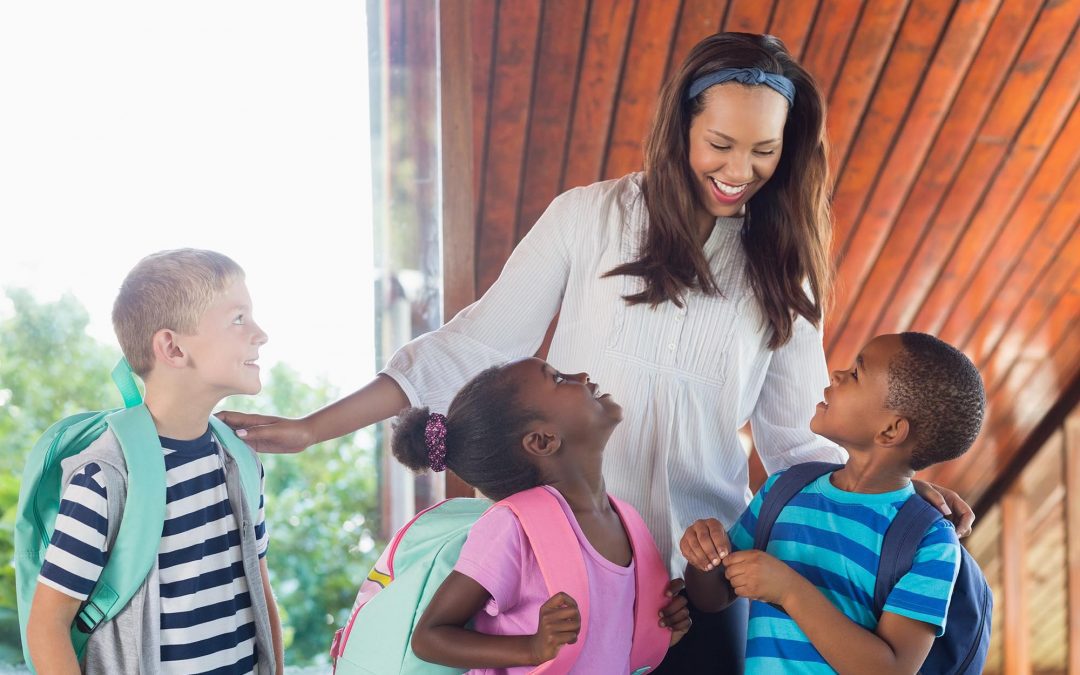
Teaching is not just about academics—it is about connecting with human beings. We may think we are here to teach mathematics, grammar, and vocabulary, but our real job is to build relationships. Some children enter the classroom open and eager to connect, while others challenge us, testing boundaries and seeking attention in unconventional ways.
One key lesson in working with children is not allowing one or two difficult students to overshadow the growth and well-being of the entire group. This does not mean leaving struggling children behind but rather ensuring that the community remains strong. A harmonious classroom culture—where students feel connected, valued, and engaged—becomes a foundation for individual growth. The more we foster a culture of belonging, the more children will respond positively to their learning environment.
Across different cultures, parents and teachers have intuitively understood this. In some Indigenous communities, for example, adults tend not to become frustrated with children’s disruptive behavior; they recognize it as part of the learning process. They guide children with patience, knowing that they will eventually mature. This perspective reminds us that discipline should be rooted in understanding rather than frustration.
A strong classroom culture starts with recognizing and nurturing the willing—the students who are ready to engage. These students become role models, influencing their peers far more effectively than any adult can. Children listen to each other in ways they may not always listen to adults, making peer relationships a powerful tool for guiding behavior.
At the heart of effective teaching is the idea that every child must feel loved and respected, even when their behavior is challenging. This does not mean tolerating all actions but rather setting clear, firm, and consistent boundaries while maintaining a sense of care. A child may act out, but they need to know they are still valued. This principle echoes in the best examples of teaching across history, where educators have combined firm expectations with a deep personal investment in their students’ success.
Discipline is not about control—it is about guidance. Yelling at a child to stop shouting, for example, only reinforces the behavior. The goal is to model the behavior we want to see and to create an environment where children understand expectations naturally. Some children are naturally oppositional, always looking for a conflict, but that does not mean they are beyond reach. It simply means we have not yet found the right approach to connect with them.
Beyond academics, our work is to form relationships. This starts with simple gestures: sitting at a child’s level, looking them in the eye, and listening—genuinely listening. When children feel seen and heard, they are more likely to engage positively. Not every child will respond immediately, but fostering a culture of respect and care creates long-term change.
The Montessori approach, at its core, is about human development. Maria Montessori herself was a trailblazer—more than just an educator, she was a scientist, a feminist, and a visionary who challenged the status quo. She saw potential in children that society overlooked, particularly those from marginalized backgrounds. Her work was not just about teaching; it was about reshaping society by nurturing individuals who could think, create, and contribute meaningfully.
Her first significant work with children took place in an institution for those deemed “deficient,” many of whom were abandoned and neglected. Within two years, Montessori’s methods enabled these children to pass standardized exams designed for their typically developing peers. This success led her to ask: If these children, considered to be at a disadvantage, could achieve so much, what untapped potential lay in all children?
Montessori’s work was not just about education—it was about shaping a more peaceful world. She lived through a time of global conflict, witnessing the brutality of industrialized warfare. Her belief was that actual change could only come from raising children in a way that nurtured empathy, independence, and a sense of responsibility to others. This is why dictatorships—whether Nazi Germany, Fascist Italy, or Soviet Russia—feared and shut down Montessori schools. They understood that free-thinking, self-directed children grow into empowered adults who are more challenging to manipulate.
The impact of Montessori education is profound. While not every student will carry Montessori principles with them for life, many do, and those who do are forever changed. The goal is to create individuals who are not just academically competent but who embody what in Yiddish is called a “Mensch”—a genuinely good and decent person.
For those working in education today, especially in Montessori settings, the mission is clear: we are not just teaching subjects; we are shaping lives. Every day spent with students is an opportunity to make a difference and to create a world where children grow into thoughtful, compassionate, and capable adults.
This work is not always easy, but it is always meaningful. And that, more than anything, is why it matters.
Featured
-
 Montessori Family Alliance School Group Membership (Print & Digital 2026 1/2 year pricing)
Original price was: $30.00.$15.00Current price is: $15.00.
Montessori Family Alliance School Group Membership (Print & Digital 2026 1/2 year pricing)
Original price was: $30.00.$15.00Current price is: $15.00.
-
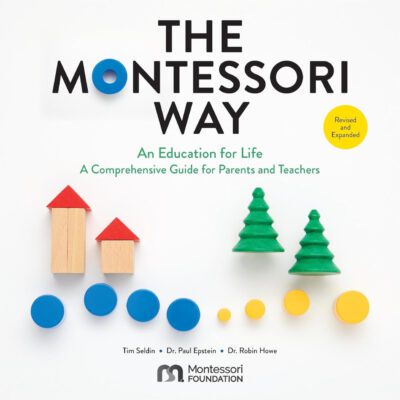
The Montessori Way, Revised and Expanded: An Education for Life; A Comprehensive Guide for Parents and Teachers
$25.00
-
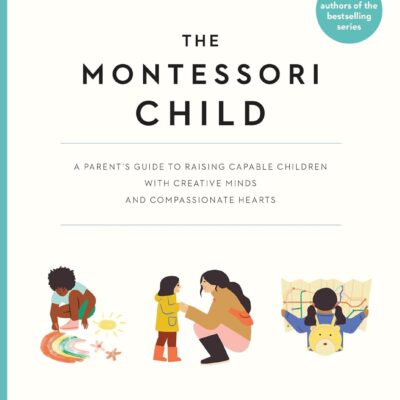
The Montessori Child: A Parent's Guide to Raising Capable Children with Creative Minds and Compassionate Hearts (The Parents' Guide to Montessori)
$20.00
-
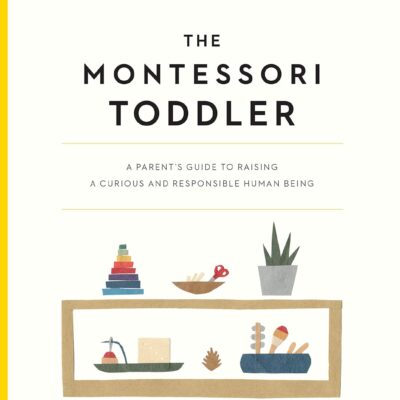
The Montessori Toddler: A Parent's Guide to Raising a Curious and Responsible Human Being (The Parents' Guide to Montessori)
$20.00
-
Montessori in Action: Building Resilient Montessori Schools 1st Edition
$29.95