
You Don’t Have to Be a Teacher to Bring Montessori Home

You Don’t Have to Be a Teacher to Bring Montessori Home

parents at home

A common worry I hear from parents is: “I love Montessori, but I’m not a trained teacher.” It’s a real concern, especially for parents of toddlers and young preschoolers just discovering the Montessori approach. But let me be clear—you don’t need a credential to bring Montessori into your home. What you need is a curious spirit, a respectful relationship with your child, and a willingness to slow down and be present.

Montessori at home doesn’t require you to recreate a classroom. You don’t need specialized training or a room full of wooden materials. The real magic happens in the everyday moments—in the rhythm of daily life, where your child learns by doing, by observing you, and by participating in the meaningful work of your home.

Picture a mixed-race couple in their bright kitchen, sunlight pouring in through the windows. Their three-year-old daughter stands on a wooden learning tower, stirring batter in a bowl while her father holds it steady. Her mother is nearby, placing muffin tins on the counter and chatting gently about what they’re baking. This is Montessori at home. It’s not about lesson plans. It’s about inviting your child to be part of your world, to do real things with real tools, and to feel capable and trusted.

Children between the ages of one and a half and four are in a powerful stage of development. They crave participation and purpose. In Montessori, we honor this by including them in the real work of daily life. Helping with breakfast, watering plants, sorting socks, brushing the dog, or cleaning up a spill—these are all learning opportunities. They build fine motor skills, coordination, and—most importantly—confidence. Children begin to feel that they matter. That they can do things for themselves. That they are not just observers in the family—they are participants.

We often underestimate what young children are capable of. But if you slow down and invite them in, they will surprise you. A toddler can carry their own plate to the sink. A three-year-old can help fold napkins or dust a shelf. It may take longer, and it may not be perfect, but that’s not the point. What matters is that the child begins to see themselves as competent.

Montessori also teaches children to follow a process. When we give them time and space to work through a task—whether it’s slicing a banana or cleaning up spilled water—they develop executive function skills that will serve them for life. They learn to plan, to concentrate, to finish what they start. These early experiences lay the foundation for attention, memory, and self-control.

And beyond skills, there’s something even deeper being nurtured: the child’s sense of self. When a child contributes to their home—not because they are told to, but because they want to—they feel dignity. They feel belonging. And they begin to understand what it means to be part of a community.

That’s the real work of Montessori at home. It’s not about educational outcomes or hitting milestones. It’s about building strong relationships within the family and giving your child a sense of purpose and pride. When your child is invited to help wash vegetables for dinner, or put on their own shoes, or carry a basket of clean laundry, they are learning responsibility, independence, and grace.

We want to encourage parents to let go of busywork and worksheets and instead embrace the richness of real life. A worksheet may keep a child occupied, but it doesn’t nurture their spirit. It doesn’t build connection. It doesn’t say, “You belong here.” The daily tasks of the home do. And that’s the heart of Montessori.

You don’t have to do it all at once. You don’t need to be perfect. You just need to begin. Start by slowing down. Watch what your child is drawn to. Invite them into your world. Let them mix the pancake batter, match socks, and scrub potatoes. Be patient. Be present. And trust that these small acts—done together with love—are building something powerful.

No, you don’t have to be a teacher to bring Montessori home. You just have to be a parent who believes in your child and values the time you spend together. And when you do, your home becomes more than just a place of shelter. It becomes a place of learning, of growth, of joyful connection—and a space where independence, grace, and belonging quietly take root.

How Montessori Brings Clarity and Freedom to Overwhelmed Parents

How Montessori Brings Clarity and Freedom to Overwhelmed Parents

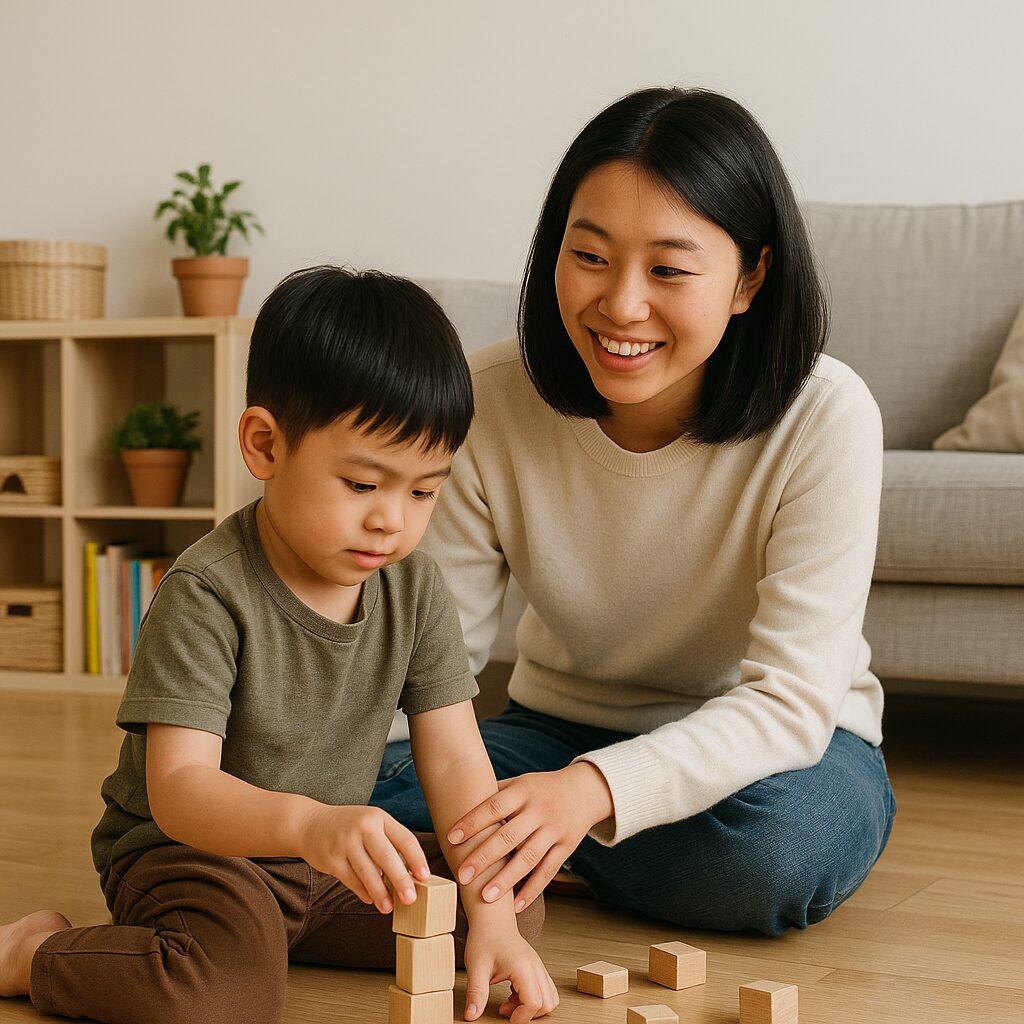
mom and son

Real-life reflections for parents walking the Montessori path

Parenting small children can feel like navigating a fog. The days are long, the nights are short, and your mind is cluttered with questions you didn’t know you’d be asking: Should she be talking more? Why is he still having tantrums? Are we too strict? Too lenient? What’s normal? What’s best?

Montessori doesn’t hand you all the answers, but it does offer something just as powerful—a lens. A way of seeing. And for many overwhelmed parents, that’s exactly what they need.

When you begin to understand Montessori, you find yourself breathing a little easier. This isn’t a trendy method that requires you to throw out your furniture or memorize scripts. It’s a way of tuning into your child’s development, seeing who they really are and what they truly need—and letting go of the pressure to force growth that isn’t ready to happen.

You stop asking, “Why isn’t she reading yet?” and begin noticing how she studies letters on the cereal box, asks about the sounds in her name, and joyfully pretends to be the teacher reading a story aloud to her stuffed animals. You realize she’s absorbing everything, even when it’s not measurable on a chart.

In the early childhood years, this shift is subtle but profound. A parent might find themselves rearranging a corner of the kitchen so that their three-year-old can reach their own dishes, learning to pour water from a small pitcher, and taking part in preparing their snack. It’s not about making your home look like a classroom. It’s about inviting your child into real life in ways that feel natural and affirming for both of you.

A Montessori home doesn’t need to be minimalist or magazine-perfect. It just needs to function in a way that says to the child, “You belong here. You’re capable.” Low hooks for a coat. A little basket of socks by the door. Fewer toys, but ones that invite deep play. Predictable routines that create calm instead of chaos. These are the kinds of quiet adjustments that bring surprising peace to a household.

As the fog begins to clear, many parents find that they begin watching their children differently. Instead of correcting or rushing in, they pause. They observe. They start to notice the concentration in their toddler’s face as she buttons her sweater, or the quiet determination of their preschooler trying to sweep a spill without being asked. They begin to trust that their child is learning all the time—even in moments that look messy or slow.

There’s a relief in letting go of the race. Montessori parents often find themselves resisting the pressure to overschedule, to push early academics, or to compare. They start to protect unhurried time. They linger at the park. They choose books over apps. They spend more time in conversation and less in correction. Slowly, the parenting experience becomes less about managing behavior and more about building a relationship.

Of course, this doesn’t mean everything is smooth. There are still meltdowns. Still piles of laundry and sibling squabbles. Montessori doesn’t promise a perfect child—it just helps you see the challenges with clearer eyes. When you know that tantrums are part of healthy emotional growth, you don’t take them quite so personally. When you see that independence is built through repeated effort, you stop rushing to tie every shoe or pack every lunch.

For those who have chosen to send their child to a Montessori school, the experience deepens even further. The philosophy of the classroom begins to echo at home. Parents hear their children using phrases like “I’m working” or “Can I have a turn?” They see their child choosing to set the table, folding napkins carefully, or explaining the life cycle of a butterfly with quiet authority. And instead of wondering where this self-discipline or inner calm came from, they begin to understand that it was there all along—just waiting to be nurtured.

Montessori is not a quick fix. It’s not a method you try for a week and judge by results. It’s a path you walk slowly, thoughtfully, with as much grace for yourself as for your child. It teaches you to focus on process rather than product, and to see effort as more important than outcome. Your child may pour water and spill it a hundred times, but each time, their hands grow steadier. Their confidence grows stronger. And so does yours.

For many parents, the greatest gift of Montessori isn’t a better-behaved child. It’s the clarity that comes from knowing what matters most: connection, rhythm, trust, and presence. When you embrace this, parenting shifts from something you’re trying to survive to something you’re learning to live—moment by imperfect, beautiful moment.

Are Montessori Homeschoolers and Montessori School Parents on a Shared Journey?

Are Montessori Homeschoolers and Montessori School Parents on a Shared Journey?

montessori homeschool

Are parents who choose to use Montessori to homeschool and parents who send their children to a Montessori school following a similar path? In many ways, the answer is yes. While their environments, schedules, and supports may look different, both sets of parents are inspired by the same vision: to raise children who are curious, independent, capable, and connected to the world around them. Montessori offers a philosophy, not just a curriculum, and that philosophy can guide learning both at home and in a school setting.

Still, it’s worth exploring the strengths, challenges, and motivations of each path—and what unites them at the core.

Montessori Homeschooling: Flexibility, Family, and Deep Connection

Parents who choose to homeschool the Montessori way often do so because they value time together as a family. For many, it’s not a rejection of professional educators or social opportunities, but rather a choice to prioritize the bond between parent and child. In a homeschool environment, parents can closely observe their children, follow their individual pace of development, and cultivate a home rhythm that reflects their unique family values.

Some families participate in Montessori co-ops or parent-led learning groups to ensure their children have social experiences beyond the home. Others create close-knit communities through shared homeschooling networks. They may fully understand the trade-offs—fewer materials, less outside input, fewer chances for peer collaboration—but feel that the intimacy, trust, and continuity of homeschooling more than compensate.

Financially, homeschooling may also be a practical necessity. High-quality Montessori schools can be costly, and for families with two or more children, tuition may exceed the income a parent could earn by returning to the workforce. For some, choosing to stay home is both a philosophical and an economic decision.

Montessori Schools: Expertise, Socialization, and Structure

Parents who choose Montessori schools often do so for a different but equally valid set of reasons. Many are working professionals who want their children to be in a nurturing, thoughtfully designed environment during the day while they pursue their careers. These parents may deeply value being part of their child’s life but also recognize that they thrive when working in a professional community with other adults.

Montessori schools offer structured opportunities for social learning, exposure to peers of various ages, and the leadership of trained educators who bring objectivity, developmental knowledge, and years of experience. In these classrooms, children benefit not only from the prepared environment and carefully sequenced materials but also from teachers who understand subtle developmental cues and can respond in ways that support long-term growth.

Many parents also find reassurance in partnering with professionals who bring insight and perspective they may not have. It’s not about abdicating responsibility, but about recognizing the value of collaborative care—trusting that trained Montessori guides can work alongside the family to nurture the whole child.

The Common Ground: Prepared Adults and Trust in the Child

Regardless of which path a family chooses, success in Montessori education depends less on the setting and more on the mindset of the adults involved. Both homeschooling and school-based parents are called to prepare themselves: to observe rather than control, to guide rather than direct, and to trust rather than rush.

Montessori parents—whether at home or partnering with a school—learn to slow down, simplify, and create meaningful opportunities for their children to act with purpose. They cultivate an environment of respect, order, and beauty. They resist the impulse to over-schedule or micromanage, instead inviting children to engage with real work and follow their curiosity.

Many families blend the two approaches. A school-based Montessori parent may create a home life filled with independence and practical life activities. A homeschooling parent may seek out community groups, Montessori co-ops, or part-time programs to offer social interaction. The lines are often softer than we imagine.

Conclusion: Two Roads, One Vision

So are Montessori homeschoolers and Montessori school parents following the same path? Not quite—but they are certainly moving in the same direction. Both want their children to become confident, joyful, lifelong learners. Both believe in the dignity of childhood. And both recognize that education is not something we do to children, but something we support in partnership with them.

In the end, it’s not about choosing the “right” way to do Montessori. It’s about committing to the work of presence, patience, and preparation—whether that happens in a classroom or at your kitchen table.

Keeping Your New and returning families engaged over the summer

Keeping Your New and returning families engaged over the summer

summer family

How Smart Schools Use Summer to Deepen Connection and Boost Engagement

By Tim Seldin
President, The Montessori Foundation

Summer may feel like the quiet season in schools—but in truth, it’s a golden opportunity. A chance to build relationships, deepen family engagement, and get ahead on the work that ensures a strong start to the new school year.

At a recent Montessori Foundation and AIMS (Admissions Inquiry Marketing Software) webinar, we had a lively and insightful conversation about what schools can do now—before families drift into vacation mode—to keep the spark alive. Here’s what we learned from each other and from years of real-life experience in school leadership.

Summer Is a Season of Opportunity

Let’s start by acknowledging a simple truth: during the summer, many families disengage. They mean well. But life happens—travel, camps, work, fatigue. We become a vague memory until a back-to-school email jolts everyone back to reality.

But it doesn’t have to be that way.

In fact, summer is a critical window to:

  • Reinforce your school’s place in the heart of the family

  • Build anticipation and belonging for new families

  • Strengthen bonds with returning families

  • Head off potential attrition before it happens

The key is intentional, consistent outreach.

Three Audiences, Three Needs

As we discussed in the session, your community isn’t one-size-fits-all. Most schools have three key audiences to think about:

  1. New Families – They’ve just joined your community. This is your chance to build excitement, answer questions, and offer a warm welcome. The goal: help them feel like they already belong before the school year begins.

  2. Returning Families – These families may seem secure, but summer is often when people reconsider decisions. Life changes—moves, divorces, job shifts—can lead to surprise withdrawals. Keep them engaged so that leaving feels hard.

  3. Waitlisted or Prospective Families – Don’t forget them. The more they hear from you, the more likely they’ll stay excited and committed if a space opens up.

What Works? Practical Strategies from the Field

Here are a few of the top strategies we discussed that schools can use to engage families all summer long:

1. Email Campaigns That Build Trust

Create a simple series of emails to:

  • Welcome new families and introduce key staff

  • Share summer fun ideas and Montessori-friendly home activities

  • Offer quick “Did You Know?” insights about your program

  • Answer FAQs before they’re asked

  • Promote social media accounts (many families still don’t follow!)

Consistency matters more than volume. Even one message every two weeks can be powerful.

2. Family Outreach: Ask and Listen

Send a thoughtful message asking:

  • What are your summer plans?

  • Anything going on we should know?

  • What are your hopes for the coming school year?

You’ll learn so much—and your teachers will love starting the year already knowing what matters to each child.

3. Parent and Student Ambassador Outreach

Activate your room parents or PTA members to welcome incoming families. A quick phone call or coffee invitation can make a world of difference. Consider pairing students too, especially in upper grades.

4. Create a Summer Video Montage

Record short “welcome back” clips from teachers, students, and staff. Compile them into a joyful, authentic video and send it out in August. It’s a low-cost, high-impact way to rekindle excitement.

5. Summer Socials and Ice Cream Events

If families are in town, invite them in:

  • Ice cream socials

  • “Meet the Teacher” picnics

  • Pool parties or open playground days

These informal gatherings spark friendships and belonging early on.

6. Reframe Tuition Reminders with Heart

No one loves bills—but they don’t have to be cold. Consider a friendly message with your invoice:

“Think of this not as a payment, but as an investment in the joyful journey your child is on. We’re honored to walk this path with your family.”

It’s a small touch that reminds people why they’re here.

7. Support for Overloaded School Leaders

Let’s be real—many of us are juggling admissions, finances, summer camp, and gala prep all at once. Lean on tools like AIMS or Montessori Compass to streamline communication and automate reminders where you can. And when in doubt, send a short note that simply says: We’re thinking of you. We care.

Final Thoughts

We don’t stop being a community in June. If anything, these quieter months are the time to double down on connection. Show families that they matter, that their presence is missed, and that they are part of something special.

When you do, you’ll find fewer surprises in August—and more smiles on the first day of school.

Let’s not disappear in the summer haze. Let’s lead with presence, warmth, and intention.

A Living Work of Art: Why Montessori Schools Are So Much More Than Schools

A Living Work of Art: Why Montessori Schools Are So Much More Than Schools

Every Montessori school is a living, breathing work of art.

Unlike businesses that exist solely to deliver a product or generate profit, schools—especially Montessori schools—are something more organic, more soulful. They are shaped not just by strategy or budgets, but by the hearts and hands of the people who govern, lead, and teach within them. In this light, school leaders, teachers, and even parents become artists—co-creating something deeply human and beautiful: a community that nurtures children and helps them grow into their fullest selves.

This is why so many Montessori educators feel such a powerful, often lifelong bond with the schools they help shape. The connection goes far beyond employment. We don’t just work at a school—we *give ourselves* to it. We invest not only our time and energy, but our hopes, our creativity, and our love.

Montessorians know this: education is not assembly-line work. Each school, like each child, is a unique creation. The way we prepare the environment, interact with families, guide children, and design learning spaces is all a form of artistic expression—not in the sense of decoration or aesthetics alone, but in the deeper sense of crafting something meaningful, responsive, and alive.

To run a school, of course, is also to manage practical realities: payrolls, admissions, tuition, staffing, compliance. Even nonprofit schools need financial sustainability to exist. But in a Montessori school, money isn’t the mission. The mission is transformation. We are here to shape lives, to build peace, to cultivate independence, empathy, and a love of learning in children—and in ourselves.

And what we create together—the school community—is never static. Like any great work of art, it evolves. New families arrive. Children grow and graduate. Staff come and go. Challenges arise, new ideas take root. Through it all, the culture of the school shifts, expands, deepens—always becoming. The artist’s hand never leaves the canvas.

This is why we care so deeply when something threatens the life of a school. Why we grieve when a program closes or a beloved teacher leaves. Why we work late, show up early, volunteer for things that were never in our job description. We are not just protecting a structure—we are protecting a vision, a community, a sacred trust.

At its heart, a Montessori school is not a building or a business. It’s a collective expression of love—for children, for humanity, for the possibilities of a better world. It is a place where purpose and practice meet, where people—children, parents, and educators alike—are nurtured, challenged, and transformed.

And like all great art, it leaves an impression on everyone who experiences it.