

The 2022 Montessori Conference: Montessori Mindfully: Living, Working, Playing with Passion and Purpose
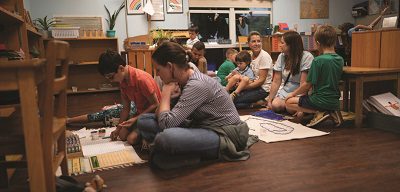
What Children Really Get Out of Montessori
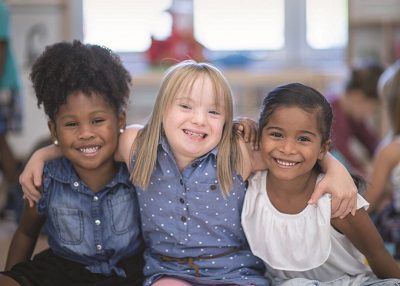
Montessori: A Model for Inclusive Education?
More and more students with a diversity of unique behavior and learning needs are enrolling in Montessori classrooms in independent, public, and charter Montessori schools. And more and more Montessori school leaders and classroom teachers are expressing their concerns:
“I don’t know how to work with these kids.”
“There are just too many challenges in my classroom.”
“My teachers will quit if I put these students in their classrooms.”
“Is Montessori a good fit, the right place for these kids?”
As Montessori educators, we are not alone. According to the National Center for Education Statistics, students 3-21 years of age receiving special education services under the Individuals with Disabilities Education Act (IDEA) rose to 14% between 2012-2019. A full percentage increase across all public education settings.1
This statistic, however, does not report on the largest group of students who challenge us: those not formally identified through the IEP process. This group leads teachers to say, “50% of my class is special needs.” This large group of diverse, unique learners, at every level, raises questions for the educational community, including Montessori.
A brief history:
Requirements for free appropriate public education, or FAPE, and least restrictive environment, or LRE, expanded in IDEA (2004) (Individuals with Disabilities Education Act). This law, combined with increased funding, and Head Start mandates for serving a percentage of students with disabilities, led to an increase in inclusive education programs. In 2009, a joint statement released by The Council for Exceptional Children: Division for Early Childhood (DEC) and the National Association for the Education of Young Children (NAEYC) released a joint statement that identified three components of inclusion: access, participation, and support for all children.
The latest report from the DEC lists five priority issues needing attention in its Priority Issues Agenda 2018.
• High-quality Inclusion
• Overcoming implicit bias
• Appropriate response to behavior
• Create strong family partnerships
• Prepare a highly effective workforce
1 National Center for Education Statistics. https://nces.ed.gov/
What does Inclusion mean?
Inclusion is more than a place… Inclusion means that all young children, regardless of ability, are given an authentic opportunity to fully participate in the experiences any child might have. The evidence clearly shows that all children developing within intentionally inclusive cultures simultaneously acquire a sense of belonging and membership, cultivate positive social relationships and friendships, and reach their full potential more comfortably. (DEC, 2018).
An inclusive classroom can benefit all students at every level. Universal best practices:
• Differentiated instruction that increases student engagement
•Academic supports that help each student access the curriculum
•Behavioral supports that help maintain a positive learning environment for everyone
• Respect for diversity that creates a welcoming environment for all (Inclusive schools, 2015)
• Serve, support, and educate every student, regardless of formal designation of “special needs,” as well as the many students who challenge us for various reasons (economic status, trauma, sensory issues, cultural differences, English learners, etc.).
With the increase in students who challenge us, the trend toward inclusive classrooms, the move toward most students being served most of the time in the general education classroom, and the use of multi-tiered systems of support in these classrooms, a close look at the obstacles in implementation might provide some guidelines for serving these students.
The Obstacles:
A review of the literature points to the two most significant obstacles: attitudes of school leaders and classroom teachers and teachers who are not adequately prepared with the education, knowledge, training, or skills to feel confident in their ability to competently meet the needs of all of their students.

Over the past thirty years, studies have demonstrated the significance of teachers’ attitudes in implementing inclusive classroom practices. Examining variables is consistent regardless of setting, levels taught, years of classroom experience, and acceptance of the model.
Across studies, teacher attitude has been found to determine willingness to work with diverse learners, use instructional practices that benefit all students, and correlate with student achievement.
Firmly held beliefs, attitudes, biases, and preconceived notions about diverse learners are compounded by a lack of expectation for self-reflection. Some of the common misconceptions are: 1) that students with differences in behavior and learning should be taught by special education staff outside of the regular classroom, 2) that the curriculum must be modified, and 3) that supporting students with behavior difficulties takes too much time away from other students. Negative attitudes and beliefs contribute to a lack of confidence or self-efficacy, feelings of not knowing how to provide for a variety of learners, lack of support from school administrators, and more significant stress and “burn-out.”
One study of interest to the Montessori community compared Montessori and Non-Montessori early childhood teachers’ attitudes toward inclusion (Danner, 2015). Both groups indicated a similar value of, and support for, inclusive education. However, non-Montessori credentialed teachers felt they had a greater understanding and knowledge of the variety of diverse learners, with most having completed some special education coursework as part of their teacher preparation program. The Montessori credentialed teachers, however, felt less able to provide an inclusive environment, to be able to modify materials if needed, and contribute to a sense of belonging for each student. With little prior knowledge and limited exposure to teaching in an inclusive classroom during Montessori teacher preparation, the authors hypothesized that Montessori teachers might not recognize the alignment between Montessori education and recommended best practices for inclusive classrooms.

Montessori Could Be a Perfect Model for Inclusive Classrooms:
If we reflect on “our history” as Montessori educators, let’s remember what set Dr. Montessori on the path of scientific pedagogy. Her response to her early work with students considered “deficit” was curiosity and inquiry. She searched for answers, and with knowledge, observation, experimentation, and patience, she developed an education system founded on respect for each individual child.
Further reflection on the foundations of this system of education, meant to respond to the needs of all children, reveals:
• A child-centered system that “follows the child” with the child’s needs before all else.
•An environment prepared to meet students’ needs in all aspects.
• A three-year curriculum using manipulative multi-sensory materials.
• A mixed-age group of students so that each learns at their own pace.
• Differentiated instruction with expectations, goals, and plans for each student.
•A classroom community built on trust, support, social skills, and belonging for all.
This is a system, a philosophy, a curriculum, and a practice that naturally includes all the best of special education and inclusive classroom practices. Those practices that are our 100+ year tradition are now implemented in inclusive classrooms at every level and in every setting in non-Montessori classrooms worldwide. The language might be slightly different, but it is the same in practice.
Montessori IS the Model of Inclusion:
If Montessori is a model for inclusion, what can we learn from the broader education landscape to guide us toward full implementation?
It starts with attitude. Dr. Montessori calls on us to engage in self-reflection regularly. How many of us are willing to take a long, hard look at our attitudes toward students who challenge us? Are we willing to question our beliefs, biases, preconceived notions, and maybe most difficult expectations of our students, how they should act and learn, and what our Montessori classrooms need to be?
Can we come to see differences rather than disabilities and deficits? And see neu- rodiversity as naturally occurring and contributing to the richness of our Montessori classrooms?
The need for increased teacher education and professional development for working in inclusive classrooms is well established. Montessori and non-Montessori educators need greater knowledge, skills, and support to succeed in their classrooms. (Gaines, 2017). When School leaders see the value and benefit of inclusive classrooms and support teachers with ongoing professional development and coaching, they will create a school-wide culture of inclusion. That will include using Universal Design Learning, and a Multi-tiered System of Support to provide universal best practices for all students, focused support for behavior and learning, and a team approach for systematic, individualized interventions as needed.
Many in the broader education world are calling for improved teacher preparation programs that prepare teachers to create a responsive social-emotional environment. This objective provides a sense of belonging for all, differentiated instruction as a matter of course, and understanding and implementing responsive guidance in managing their classrooms. Is it time for Montessori teacher preparation programs to look at their instruction? Perhaps integrating universal teaching practices and techniques for differentiating instruction while learning Montessori materials’ presentations would give new teachers greater confidence in their ability to support diversity. With child development, observation, and positive, respectful classroom management as priorities, would we have an opportunity to re-examine the foundations of the Montessori system and implement them in the inclusive Montessori classroom?

The Future:
As we contemplate our place in education, there is much we can learn from outside of the Montessori community. But there is so much we have to share as inclusive classrooms become the norm. An exchange of knowledge, research, understanding, and experience can support us on the path of honoring and respecting differences and seeing all individuals as unique and valuable members of our community. We can work toward a peaceful world where everyone belongs.
References
Danner, N. & Fowler, S. (2015). Montessori and non-Montessori early childhood teachers’ attitudes toward inclusion and access. Journal of Montessori Research, 27-41.
Division of Early Children. (n.d.). https://www.dec-sped.org/priorityissues.
Gaines, T. & Barnes, M. (2017). Perceptions and attitudes about inclusion: Findings across grade levels and years of teaching experience. Cogent Education, 1-11.
Shanks, P. (2014). Building the Inclusive Montessori School. NAMTA Journal, 5-36.
Stauble, K. (2009). Teacher attitudes toward inclusion and the impact of teacher and school variables. https://doi.org/10.18297/etd/1375: Theses and Dissertations Paper 1375.

MACTE Update Spring 2022

Building a Solar Observatory by Marc G. Jensen
Modular Buildings
Observation
Observation is a requisite part of the Montessori philosophy. Maria Montessori trained teachers; she emphasized that they observe to “follow the child,” recognize their needs and respond to them. This article is about cultivating observation as an essential skill in the classroom. We will examine the different facets of obser- vation to feel more comfortable observing as part of your routine.
Observation in My Childhood
My story of observation began when I was a child. You may be wondering how a child can know how to observe. I did not. I was following my inner teacher. Through her observation of children, Dr. Maria Montessori believed that each child has access to their own teacher. This teacher knows all the lessons he needs to learn to fulfill his needs and destiny. This teacher is his inner teacher. I was born and raised in a town on the mountainside where nature was part of my growth. My mom taught me to observe everything around me, the clouds, the trees, and the stream. She encouraged me to watch the bees trying to take the nectar from the flowers. She used to tell me: “If you listen and observe, you will hear the bee buzzing!” I learned how to talk to people, clean the house, and cook from watching her. These early experiences with observation helped me overcome many difficulties and be successful in my career later in life.
An Introduction to Observation
What is observation? Have you observed anything? What did you watch? How did you make comments? What did you feel when you were following? Have these observations changed you? What would you add to your statement next time?
The dictionary defines observation in the following manner: It is the action or process of carefully observing something or someone to gain information. Observations are different from one person to another and can be short-term or long-term.
Dr. Maria Montessori considered observation a continuous part of the adult’s work. Her brilliant discoveries were based on a lifetime of keen observation. That led to an understanding that the child grows the pattern for his development within himself.
It is the child’s inner teacher that must be allowed to direct the child’s development. Dr. Maria Montessori gathered data patiently, reflected on the information gathered to conclude, and took the proper steps.
Observation in my Early Career
Observation has been an essential part of my career in the Montessori field. My early experience with observation started when I was working as a floater in an American school in Kuwait. I moved from one classroom to another, trying to fill the absence of either the assistant or the teacher herself. I worked at this school for four great years. Although all the pre-school teachers implemented the same curriculum, each classroom delivered it uniquely. I had no problem following the routine of each classroom. I carefully watched the teachers doing different circle times. I listened to their conversations with children and each other and how they implemented their schedules throughout the day.
My observations were natural and spontaneous. There were things that I did not like in the classrooms and some things that I liked. I started to understand why some classes were organized, and some were not. With time, I understood why some children were listening and enjoying their time in school and why some were not. Additionally, I realized why I was full of energy and happy to help Mrs. A but overwhelmed with Miss B.
I observed, supported, and kept notes for myself at the start. Slowly, I started sharing ideas I learned from the teachers while moving from one classroom to another. Following what my heart told me to do, I sang with the children during circle time. I played games to enhance their listening skills and helped the children with behavior problems to calm down and focus on their work. I realized later that the teachers started to trust me and treated me like part of the team. Not only that, but they were also asking me about what ideas I had and what new things I could add to their classrooms.
At that stage, I observed not because I was required but because I felt I needed to find the best way to communicate with the teachers and understand how they led their classrooms.
When I did my Montessori diploma training in Kuwait, I learned that observation was an essential tool used by the teacher to follow the child, discover his interests and needs, and adjust the child’s environment accordingly.
I was assigned to observe a Montessori classroom for a week. I described the classrooms and how the children were working in my observation. I also watched how the teachers communicated with each other and the children. Other things, such as the schedule and transitioning, were also interesting.
Every time I observed, I noticed that I was learning something new. I started to pay attention to things the teachers may not see. For example, for the whole week, I noticed that one child was so focused on building the pink tower for the entire hour I had been there. The teacher tried to make him do something else, but the child kept returning to work with the pink tower. I knew then that the child was going through what Montessori called “sensitive periods,” and the teacher overlooked that.
I saw children very talented in the arts ignored by the staff, while others trying to do a map project gave up when they could not find the materials. I observed an inspiring teacher who led her circle time beautifully. I learned a few songs and got ideas on engaging children and making it fun for them. I could see clearly what was working and what needed to be changed! My brain was trying to find solutions while recording. I realized that there was much more to the art of observing than recording the skills or noticing a behavior.
After finishing my Montessori Diploma, I got accepted to work as a Montessori teacher in Canada. I was excited to start my career as a Montessori teacher and share my experience. I was one of the five teachers in the class of forty children, with one lead, three assistants, and myself, who had just joined the team. I was trying to adjust to the new environment. I felt overwhelmed and lost. There were too many rules, different ways of presenting, and diverse personalities. There were lots to learn. I had to get to know the children, the teachers, and the environment. It was so busy that it was hard for the teachers to answer my questions. That was when I realized that I needed to step back and observe.
The class lead agreed to allow me to observe the classroom before I started doing my responsibilities. That helped me understand the rules, transitioning, schedules, and most importantly, get to know the teachers and the children better.
Observing Children
Maria Montessori observed how children learn from each other. She also let the children guide her to what they needed and found interesting. This quote exemplifies the importance she placed on observation: “Even when helping and serving the children, she (the teacher) must not cease to observe them, because the birth of concentration in a child is as delicate a phenomenon as the bursting of a bud into bloom.” Maria Montessori, The Absorbent Mind
When I started observing children, I felt joyful. It was interesting to see how the children worked, moved, and communicated with each other. I tried to understand why John was hitting, and Mary liked to work only with knobbed cylinders! I wondered how the children felt when the teacher interrupted them and what I would have done differently. I suddenly started to think of solutions and new ideas instead of judging. I looked at children with eyes of love and compassion. I became humbler and more peaceful. As I was determined to understand the children’s interests, needs, and abilities, I adjusted the environment accordingly. I was so motivated to try new things with the children I started adding new materials on the shelves and observed again to see what was working and what needed to be changed. Slowly I noticed that the children began to trust, respect, and love me. I was so happy that the children wanted to work with me. Others were asking for help, and some enjoyed my circle time. My heart was a field of joy and happiness when the children greeted me with a big smile and a warm hug in the morning. The children remembered my name and shared stories with their parents about me as the new teacher. The more I observed, the more my relationship with the children grew, as I enjoyed my work and learned about their needs.
I realized that observing children was an art. You can not learn it in one day or a year. It is a lifelong effort. You need to connect with your heart, let go of your pride and anger, and become humbler. That created peace inside me and in our classroom.
Observing Teachers
The lead teacher allowed me to observe the classroom for two weeks in my new position mentioned in the above section. That helped me get to know the teachers, understand their personalities, and connect with them. It also helped me to recognize my natural leadership skills.
I observed how the teachers were moving in the classroom and communicating with each other. I also watched their body language, tone of voice, and interactions with the children. I was curious to know why some teachers were quiet and calm, and others were open and outgoing. I could see how the classroom dynamics and teacher relationships affected the children’s peace, harmony, and environment. The lead teacher was trying to support and guide the team. Besides teaching the children, she was the campus lead. She was kind, friendly, and respectful with the children and her team. She talked to them in a gentle voice and helped them solve their problems without getting angry.
Additionally, she presented the materials in a well-mannered way while doing classroom management. I saw how much she loved the children and how the children loved her. The children trusted her, respected the classroom rules, and worked independently with joy. However, I noticed that sometimes she was tired and overwhelmed. I realized she needed support and help, so I started offering my service and taking on some of her responsibilities. I did classroom management while she was working with the children. I also asked the lead if we could take turns to do the at- tendance and circle time.
I jumped to help a teacher who needed help with children testing her patience while working in Practical Life, and I shared some ideas about communicating with children to gain their trust. I supported the teachers during circle time and encouraged those struggling to do it.
The first six months I spent in the classroom was a turning point in my life. I learned how to build a good relationship with my colleagues and the campus’s lead. I started having small conversations with the teachers to understand their culture and what they liked and did not like. I also shared some of my stories and experiences with my peers to get to know me better.
I started to feel more comfortable sharing my ideas and knowledge with my team members. I did not hesitate to help a child or a teacher. I observed every day and tried to learn, change, and brainstorm with the team for new ideas. I noticed that the teachers came to me when the lead was busy or absent, asking for support or advice. I realized that I was leading the classroom and modeling the proper behavior I wanted to see and encourage in the teachers and the children. The teachers and the leader of the class welcomed me. They met my approach and ideas with cheers, enthusiasm, and support.
My observation as a natural leader, skill, and love for the children led me to accept the position of campus lead after six months of being a directress. The head directress and the team decided after the unfortunate and sudden leaving of the campus lead.
My start as a campus lead was full of excitement, challenges, and accomplishments. I was fortunate with my work team. We were all learning how to work together for the children’s sake. I started to observe more. I wrote my responsibilities every day and reflected on everything I handled, hoping that I could learn something from it or improve it in the future. I visited and observed the other classrooms daily. I offered my help when needed. I listened to the teachers, showed them love, respect, and empathy, and helped them solve problems.
The desire to observe was growing more in me. It became a part of my daily life. It was the key to gaining teachers’ and parents’ trust and having a peaceful and happy campus when I was there.
Through observation, I learned how to accept and understand people the way they were and focus on the positive side. I also learned to find the best way to communicate with everyone. I noticed the power of observation on me. I became more humble, patient, and peaceful.
I discovered that the teachers were learning and growing from observing me and observing each other. We all had to model the proper behavior in front of each other and the children. Our conversations became more meaningful and peaceful; the children were happy and respectful, and there was more harmony and joy in the environment.
Observation and Training Teachers
During my stay in the United States, I had the opportunity to volunteer in a Montessori school. It was a new school with new staff.
My job was to support and train the teachers in transitioning where children are still learning potty training—fourteen children of mixed ages, between two and a half to three and half years old. The children were not fully toilet trained and were in school for the first time. The Montessori teacher had a diploma but no teaching experience. The assistant was a parent of a Montessori child. Her knowledge of the Montessori philosophy was little; this was her first time with the children.
I did not have much information about this class except that the teachers struggled with classroom management. The head directress asked me if I could teach the teachers some techniques on classroom management and how to talk to children.
My observation started as soon as I stepped inside the classroom. The teachers were excited to see me, and so were the children. The lead teacher greeted me from afar using her loud voice. The children were eating breakfast. I immediately walked toward her with a smile and introduced myself in a gentle voice. Then I asked if she could introduce me to the children before they started working because I did not want to interrupt the work cycle. I also asked her to act as if I was not in the classroom and whether she allowed me to work and talk to the children. I encouraged both teachers to observe me while working with the children and write any questions to discuss with me at nap time.
I always found myself acting as if the classroom was my classroom whenever I visited a new environment, and that is how I felt in this classroom. I reminded myself that I must be kind, peaceful, calm, and humble. I did not want to ask questions because I did not want to overwhelm the teachers and disturb the classroom routine.
For the first half-hour, I looked at the classroom organization and how the children moved and worked with the materials. At the same time, I watched the teachers talk to each other and the children. I fixed the shelves, tucked a chair, and had small conversations with the children while observing.
After that, I started working with the children without making any immediate changes and corrections or teaching the teachers by telling them what was not working and why. I observed a lot and modeled the proper behavior I wanted to see in the teachers and children. In addition, I was writing some notes so I could share them with the teachers and the head directress at the end of the day.
For example, I walked to the child’s eye level and reminded him to use the toilet instead of yelling across the room and repeating his name many times to go to the bathroom. I took a child’s hand and showed him to walk into the classroom instead of yelling, “stop running!”. I hugged a new child, tried to comfort him, and then asked if he would work with me or read a book with me and did not ignore him. I had to breathe a lot and think fast. I kept reminding myself that I was there for the children’s sake, and we were all trying to find the best for them. We attempted to turn every struggle into a learning moment with the teachers.
The teachers had many things to do when the children were having lunch. I could feel they were tired, overwhelmed, and hungry. They tried to remind the children to sit, eat and finish quickly so they could clean up and put them to bed. I grabbed my snack, sat beside a child who was still learning table manners, and said: “Can I sit beside you so I can eat my snack?” The child said, “Yes!”. The child welcomed me with a big smile and a few giggles from the other children. I invited the teachers to sit and eat with the children. Then I asked the children if they needed help raising their silent hands, showing them what a quiet hand was. The child beside me watched how I was chewing my food, wiping my mouth, and asking for help from the teachers by raising my hand. I then cleaned up the crumbs and tucked in my chair.
The teachers and I sat together to reflect on our observations. The first thing I heard from the lead was, “Thank you! You helped us a lot, and the children loved you.” I asked, “How do you know the children loved me?” She answered, “They listened to you and wanted to work with you.” I asked, “Why do you think they were listening to me?” She said, “It was the tone of your voice and the way you were talking to them. You were so calm.” I said, “That is a good observation! Using a gentle voice, going to the child’s eye level, and modeling the right behaviors are the keys to gaining the child’s trust. We should respect children and try to understand their needs and the reason behind their behavior.”
The conversation between the teachers and myself was productive. I was asking questions about specific situations that happened in the class. For example, a boy was running in the classroom, who refused to listen to the teachers and gave them a hard time during naptime. I asked the teachers, “Why would you think Joshua stopped running in the classroom?” The lead teacher said she thought it was because I showed him how to walk in the classroom and asked him to help his friends by showing them how to walk instead of running. The assistant teacher said, “You put tape on the floor with the help of Joshua and gave him a presentation on how to walk on a line, and you kept on saying “walking feet.” Then I asked them why they thought Joshua went to his bed without any struggle. The lead teacher replied that I had experience with children, and he listened to me. I said, “He trusted me! He knew that I was trying to help him. I gave him two choices, and he was happy to choose between them. Joshua was happy to prepare his bed. He also helped other children to set their beds and turned the lights off.” The assistant teacher asked how I knew that Joshua would stop running and sleep without any trouble. I said that I did not know for sure. I was observing him and trying to understand the reason behind his running. What was he trying to tell me? How could I help him?
Most importantly, I did not give up and treated Joshua with love and respect. I was willing to try new things to help him. I was learning like the teachers were. We all agreed that we must change a few things in the classroom and try different methods to communicate better with the children and each other to have a peaceful environment. The teachers realized that observation is a crucial aspect of their daily lives to understand children’s needs and respond to them. They also needed the vision and hope that the child was not there yet.
The next day I visited the class. I noticed that the teachers had already made some changes in the environment. They moved the Practical Life area to make it more accessible for the children and added more materials on the shelves. They also gave children more time to practice table manners and care for themselves and allowed more independence to get ready to go outside. I could see that the lead teacher and her assistant were practicing their soft voices and modeling the proper behavior. I also enjoyed seeing the teachers brainstorming ideas and discussing ways to help those children struggling to follow the rules.
This experience with the teachers taught me that if you want to succeed in your work, you must have the ability to observe, record, find solutions, and reflect on them. Observation is something that you can learn and practice. You observe with your heart, and judgment and anger will melt away. When you do that, you become peaceful, happy, and humble.
Lobana Alabbas is a certified Montessori early childhood teacher from the London Montessori Centre and a certified Arabic language teacher and has been passionate about teaching children to love learning for over twenty-two years. She draws her inspiration from Maria Montessori and her teaching methods, who believe that “…it is the child who makes the man, and no man exists who was not made by the child he once was.”. She also believes that each child has a unique and wonderful spirit to help grow into an independent, responsible, and compassionate adult. She is also passionate about writing articles from her own experiences. She has published a few pieces in Tomorrow’s Child and New Horizons in Adult Education and Human Resource Development magazines.

Implementing Servant Leadership Part II

Book Review: The Child is the Teacher
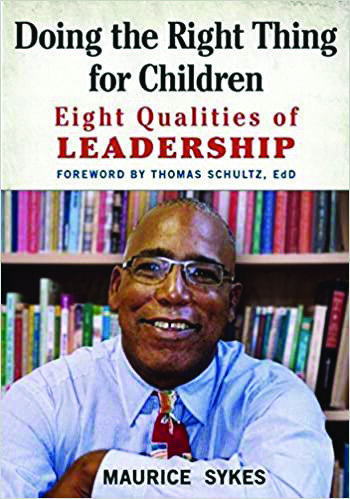
Book Review: Doing the Right Thing for Children
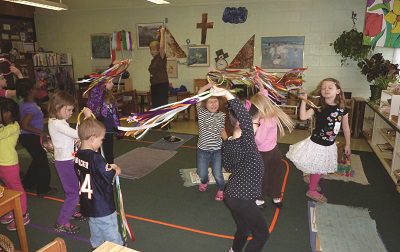
Our School is Moving: How Can I Say Goodbye?

MPPI Review
Maryland Passes Legislation for State Teacher License
After 4 years of hard work and persistence on the part of Montessori Schools of Maryland (MSM), the Maryland legislature passed, and the Governor signed into law a bill that allows an individual who holds a bachelor’s degree and a credential from the AMS, AMI or a program accredited by the MACTE to be eligible for a Maryland State Teaching Certificate to teach in a Montessori school. This bill also stipulates that this teacher would have to pass any required state teaching exams. Maryland becomes the 10th state to have a pathway for Montessori teachers to obtain a state teaching license.
MSM assembled a broad group of Maryland Montessorians, including representatives from district, private, and charter schools along with teacher education programs and national organizations, who provided written and oral testimonies in support of the bill. MPPI and MSM worked with the bill sponsor to draft the legislative language, met with stakeholders outside the Montessori community to educate them on the positive impact this bill would have on education in the state of Maryland, and closely followed the bill through the legislative process, attending various committee meetings and floor session along the way.
We celebrate this legislation which will greatly help Maryland public Montessori schools recruit and retain Montessori credentialed teachers and, in turn, support them in providing students and families with high-quality Montessori education.
Michigan Advocates Make Big Strides
Th e state of Michigan is currently updating their quality rating and improvement systems. The Michigan Montessori Education Advocacy Network (MMEAN) also has a strong history of cultivating positive relationships with their QRIS policymakers and are currently leveraging those relationships to improve QRIS for Montessori schools. MMEAN had previously done considerable work with Michigan’s Great Start to Quality program regarding the use of environmental assessment tools. As Michigan is revamping the program, MMEAN has reached out to discuss Montessori teacher credential recognition within the QRIS rubric. In particular, the Michigan Registry Career Pathway has a credential level that allows an early childhood teacher to teach in a universal preschool program. They have requested that Montessori credentials be re-assessed and credited at that level.
As a result, a new version of the registry has already been written that allows Montessori teachers who have a bachelor’s degree in any field and a credential issued by a MACTE accredited institution or by AMS or AMI to reach the level needed to teach in Michigan’s UPK programs. In addition, those Montessori credentialed teachers with associate degrees in any field will be able to be assigned to the registry with credit for that degree. Simultaneously, work is occurring in state legislation to recognize the Montessori credential, with a bachelor’s degree in any field, as a pathway to state teacher licensure. (A bill to this effect was recently proposed in the Michigan Senate!) MMEAN representatives presented various documents, including teacher licensure bill language, MACTE credit hour estimations, content of Montessori teacher preparation, and an overview of what other states have adopted to support their request, as well as meetings with policymakers and the support of MPPI.
Save the Date! This year we will be hosting our pre-conference Advocacy 101 workshop virtually on Tuesday, September 20th. Our annual Advocacy conference will be held in Washington, DC, on Oct 1st & 2nd at the beautiful Yours Truly hotel. Conference registration will soon be available.
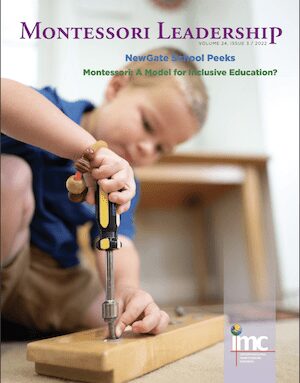
Montessori Leadership Magazine Volume 24 Issue 3 2022 digital edition
Featured
-
 The Montessori Way, Revised and Expanded: An Education for Life; A Comprehensive Guide for Parents and Teachers
$25.00
The Montessori Way, Revised and Expanded: An Education for Life; A Comprehensive Guide for Parents and Teachers
$25.00
-
The Montessori Child: A Parent's Guide to Raising Capable Children with Creative Minds and Compassionate Hearts (The Parents' Guide to Montessori)
$20.00
-
The Montessori Toddler: A Parent's Guide to Raising a Curious and Responsible Human Being (The Parents' Guide to Montessori)
$20.00
-
Montessori in Action: Building Resilient Montessori Schools 1st Edition
$29.95
-
Bulk Order, 30 Copies of Montessori for Every Family: A Practical Parenting Guide To Living, Loving, And Learning
Original price was: $600.00.$510.00Current price is: $510.00.




Products
-
The Montessori Way, Revised and Expanded: An Education for Life; A Comprehensive Guide for Parents and Teachers
$25.00
-
The Montessori Child: A Parent's Guide to Raising Capable Children with Creative Minds and Compassionate Hearts (The Parents' Guide to Montessori)
$20.00
-
The Montessori Toddler: A Parent's Guide to Raising a Curious and Responsible Human Being (The Parents' Guide to Montessori)
$20.00
-
Montessori in Action: Building Resilient Montessori Schools 1st Edition
$29.95
-
Bulk Order, 30 Copies of Montessori for Every Family: A Practical Parenting Guide To Living, Loving, And Learning
Original price was: $600.00.$510.00Current price is: $510.00.