Infant Toddler Nutrition: Aiden Ate Cucumbers At Snack Time
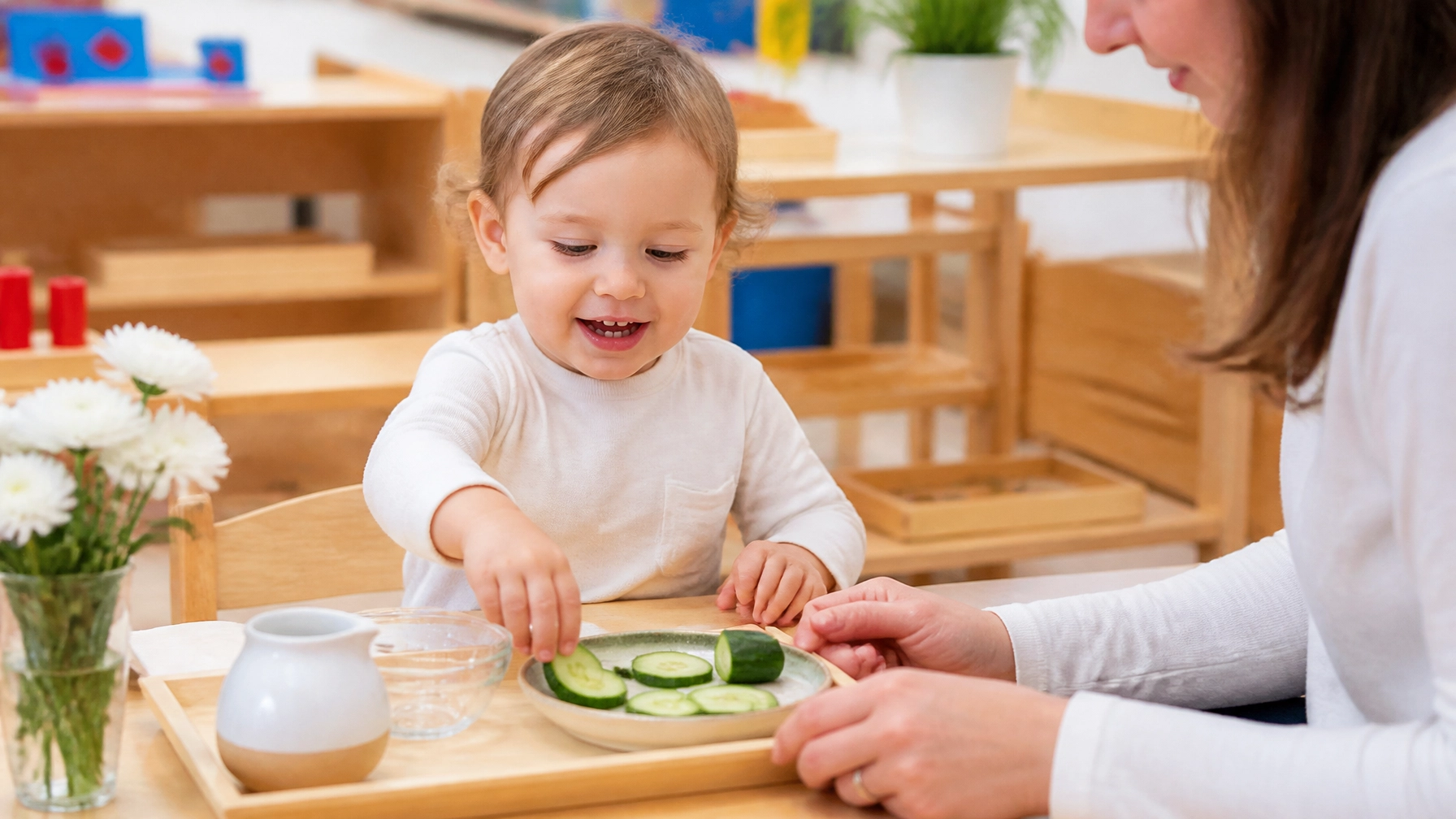
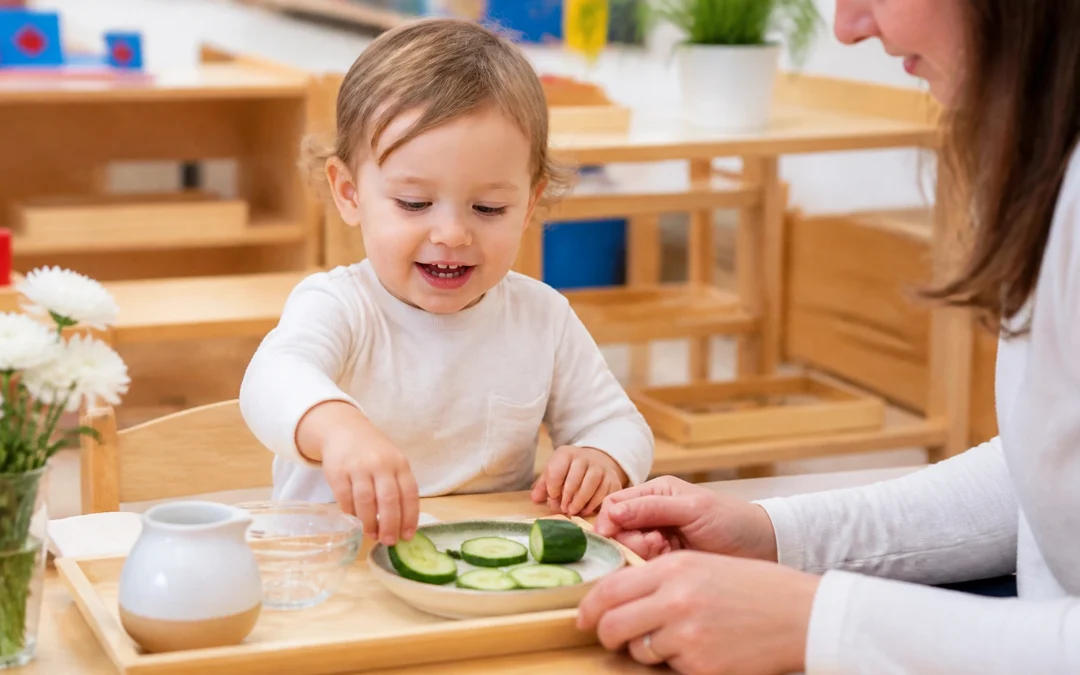
Aiden ate cucumbers at snack time with me today!
The cool crispiness, color, texture, who knows? Or was it because he helped peel them, cut them up, and then sat with me while I savored mine? Whatever this celebration is it’s certainly the next step in his food exploration and acceptance of a variety of foods. This little two-year-old boy, who still breastfeeds, began the school year in late August with little hope in his lunch box for a balanced nutritional transition into solid foods. In fact, as I recall, his initial packed lunches included a breakfast bar, a bag of sugary cereal, crackers, and a cookie. He would nibble a little bit on the crackers and cookies but truly basked his gustatory sense in the gritty, fruit filling of the breakfast bar. Further illustrated by the berry-coated film left on his teeth.

Eating cucumbers at snack is a small celebration of food exploration and acceptance.
Several weeks into the school year, I noticed that the enamel on the bottom of Aiden’s front teeth was eroding, making them look jagged and irregular. I continued to observe this little guy who passed up a snack daily, nibbled only the sweet things in his lunchbox, yet (and the big asterisk goes here) continued to work in the classroom in a steadfast, joyful, well-organized, exceptionally focused manner.
An unfortunate turn of events served as a wake-up call that we all had to answer. Mark, who is Aiden’s father, brought him to school late one morning, holding him tightly against his body. Without his usual, “Good morning, Miss Jan,” he looked at me, carrying a great sadness and concern in his eyes. “We just came back from the dentist. Aiden won’t be in school on Monday, October 20th. He has eight cavities; needs porcelain veneers on his front teeth, and has to be put under anesthetic to do the work. He’s only twenty months old!” Mark shared the suggestions from his pediatric dentist with me. Stop breastfeeding (mom was admittedly a sugar aficionado), eliminate sodas, any sugary foods, and brush Aiden’s teeth after every meal. Mark asked me what the other children were bringing in their lunchboxes and what kinds of things he should be feeding Aiden.

A dentist’s visit for eight cavities at twenty months became a wake-up call for the whole classroom community.
Early childhood nutrition, as it applies to the child’s behavior, mood, and ability to learn, has been an interest of mine for years. Coincidentally, I was scheduled to give a presentation on nutrition at the Montessori Peace Academy in two months. As a partner in Aiden’s education and well-being, I felt compelled to dig deeper and find scientific, nutritional, and practical answers. I had never seen a child as focused as Aiden, who ate so poorly at school. There must be something in the breast milk that is sustaining him. At a critical juncture in the older weaning child’s life, when sensitive periods for exploring new foods, tastes, and textures had surely diminished, and windows of taste-bud opportunity were all but shut, how could we compete with the nutritional perfection of mom?
Day after day, Mark sent new things in Aiden’s lunchbox for him to try. On the first day, Mark removed the breakfast bar from the lunchbox. Aiden threw his lunch box on the floor in disgust, then flailed his body right next to it (first time I had ever seen Aiden throw a tantrum; a testament to the power of sugar)! I knew right then and there, this was NOT going to be easy. I decided it was time for me to educate myself so I could educate not only Aiden’s family but also all the parents of my students on the best practices for feeding their children.
I interviewed parents to find out the dietary habits of children who came to school emotionally balanced and ready to learn, and the diets of children who began kicking their friends within minutes after getting to school or walking around the classroom, verbissina (Yiddish for sourpuss face), in a fog, unable to focus on anything. My mind’s eye zeroed in on definite patterns of eating that benefited the very early learner and on patterns that created behavioral and learning stumbling blocks for some children. The following are characteristics of unlimited and limited little learners, followed by the core foods each category is being fed. The characteristics from both lists are interchangeable and can be modified, reduced, or enhanced through dietary changes.
Please note that the following characteristics can also be influenced by the child’s physical and emotional state.

Children who come to school nutritionally satiated are ready to separate happily, focus deeply, and engage with their work.
Characteristics of “unlimited” little learners:
happy separation from mom and dad when being dropped off at school in the morning (except for the occasional sick day or got up on the wrong side of the bed day)
cheerful mood
ability to gesture and verbally express needs, wants, and feelings in a composed manner
self-directed and eager to become engaged with an activity or greet a classmate or teacher when dropped off at school
works with the materials in a respectful, organized manner, comprehends the work cycle (choosing an activity, taking it to a table or work rug, and then returning it to the shelf) finds a new activity on the shelf immediately
joyfully takes direction and complies
pays close attention to detail and personal organization
asks for lessons, loves when the teacher offers instruction and will keep trying with support and encouragement
watches role-modeling with the greatest of interest and willingly resolves conflict using good eye contact and verbal communication
changes inappropriate behavior in response to logical explanation, sometimes redirection
displays physical impulse control
withstands life’s emotional and mental challenges with a minimum of emotional extremes (this does not include the young child’s innate, natural, emotional honesty)
embodies positive self concept, “I can do it!”
shows respect for other children’s feelings, belongings, and personal space
grasps reality and can focus at the task at hand but also exhibits great imagination and creativity
comes to school nutritionally satiated, demonstrates good manners (including many of the above characteristics) at snack time (will try new food items), mealtime (brings a balanced nutritional lunch to school), and naptime
The following list of “unlimited” little learner’s core foods is compiled from the parents of several of my students who began the school year demonstrating the above characteristics on a regular basis:
Breakfast: rice cereal, cooked oatmeal, honey, low sugar cereal and granola, oat bran cereal, whole grain bagels, bread, tortillas, cream cheese, peanut butter, butter, whole milk, soy milk, eggs, sausage, bacon, cheese, cottage cheese.
Lunch and dinner: cheese, tofu, whole milk yogurt, cottage cheese, cashews, walnuts, peanut butter (low sodium, low sugar) and jelly sandwiches, vegetarian soy products (butter, bacon, chicken nuggets, hot dogs), tuna fish salad sandwiches, egg salad sandwiches, ham and cheese sandwiches, whole grain bagels, tortillas, bread, salmon, sushi, mackerel cakes, chicken, turkey, meatloaf, steak, rice, couscous, risotto, mashed potatoes, noodles with butter, spaghetti with marinara sauce, pizza Hummus, squash, peas, green beans, edamame beans, olives, asparagus, Swiss chard, broccoli, carrot sticks, avocados, broccoli, tomatoes, cucumbers, jicama, pickles, salad Prunes, pears, apples, blueberries, raspberries, strawberries, grapes, oranges, melon, raisins, dried fruit, kiwi Snacks popcorn, stone ground crackers, cheese, low sugar peanut butter, tortillas, graham crackers, frozen juice popsicles, carrots, broccoli, raw veggies, dip, avocados apples, dried fruit, oranges water, milk, soy milk.
“Unlimited” little learner’s parental anecdotes:
“Sophie ate a lot at meals – more vegetables, too, until she was two years old. Now she eats a little bit every few hours, and I offer her cheese, yogurt, avocado, apples, healthy choices all day long; otherwise, she will ask for candy, cookies, and sugary things.”
“Wilson loves apples. He started eating them at nine months old. He eats at least one/half an apple every day. He does not drink much juice. He mostly drinks water and milk.”
“Ella (who is now 3) was breastfed until 28 months old. She did not eat food until she was 2 years old. Her first introduction to whole foods was smashed steamed vegetables (broccoli, carrots) and quinoa (a high-protein grain source). Next, she ate steamed asparagus with lots of butter. I really steamed it until it was tender. We fed her what we ate. She never had juice until after she was 2. She only drank water. Her juice is always diluted with water. When she was 28 months old, she started eating eggs and chicken from chickens fed flax seeds. Last night we went out to eat, and Ella tasted her dad’s salmon for the first time. She ate half of it! There are no foods in my house with trans fats, high fructose corn syrup, or modified corn starch, nothing heavily processed!”
“Since grandma and dad have a sweet tooth, Grace has ice cream, cake, or candy a few times a week. I do notice that if she eats candy or a Popsicle after 6:00 PM, she stays up later (10 PM) and whines right before she falls asleep. Without sugar, she is pleasant all evening and would go to bed by 9 pm and drift off while reading books.”
“From time to time, the children get bored with my routine meals and do not eat. This is when I realize I need to stop offering graham crackers, raisins, and peanut butter and jelly and get more creative. A trip to the farmer’s market, a different grocery store, or a health food store gives me new ideas. Trader Joe’s has many kid-friendly, quick snacks that I use as staples: dried fruit, frozen fruit, crackers, frozen edamame, mixed vegetables, pasta sauces, cheese sticks, turkey, organic cereals, organic fruits, etc.”
Characteristics of “limited” little learners:
unhappy separation from mom and dad when being dropped off at school in the morning, cheerless mood
inability to gesture and verbally express needs, wants, and feelings in a composed manner, may have delayed or garbled speech
upon arrival to school seems impervious to his surroundings, requiring others to incite his interest
works with the materials haphazardly (sometimes blending several works together) using poor organizational and planning skills, needs constant reminders to follow through with the work cycle
unaware of new works that have been placed on the shelf
has difficulty following directions, appears to be responsively delayed or highly over-stimulated, gets frustrated easily, can become defiant, or abandons the project completely
chooses activities or tasks that require limited fine motor capability, patience, or reasoning skills, prone to guessing at answers rather than deliberating
rejects teacher’s help in finding an activity, ignores presentations, will not join group lessons (with friends) when invited
has limited staying power watching role models, has difficulty maintaining eye contact or not physically grabbing the other child involved while resolving conflict verbally, frequently runs away from conflict
has difficulty changing inappropriate behavior without repetitive use of concise, firm, verbal limit setting, and finally removal from the situation
lacks physical impulse control, aggressive with other children (pushes, bites, body bangs), adults, the materials (throws or drops the work), or reckless with the environment (jumping on chairs, etc.)
demonstrates a low stress threshold, is easily frustrated, prone to temper tantrums, crying jags, and hopeless whining
lacks confidence, refuses to try, and often anticipates a negative outcome by whining “I can’t” even when successfully completing a task
often laughs at another child’s misfortune, runs away after hurting someone, grabs personal items that another child is wearing or using, disrupts the child who is concentrating by touching his activity, taking parts of it, or daunting him
has a difficult time staying in the moment, sequencing (connecting the dots), often drifts off into space or fantasy land, becoming a superhero, frequently disassociating from the task at hand
comes to school hungry (no breakfast at all, non-nutritional breakfast at home or on the run), eats unbalanced or very little at snack (just the sweet items), turns up his nose at new food experiences without trying them, brings a nutritionally unbalanced lunch to school
containing mostly simple sugar processed entrees and accompaniments
usually becomes disruptive at lunchtime
has difficulty falling asleep at naptime
The following list of “limited” little learner’s core foods is compiled from the parents of several of my students who began the school year demonstrating the above characteristics.
Breakfast: no breakfast at all, sugary cereal or instant sugary oatmeal, processed cereal, pancakes or waffles with syrup, breakfast bars, fruit bars, granola bars, iced popped tarts, sugary muffins, donuts, high sugar sweetened yogurt, graham crackers, bananas, grapes, undiluted juice, juice box, chocolate milk.
Lunch and dinner: high sugar sweetened yogurt, peanut butter and jelly, jam sandwiches, individual serving of high sugar peanut butter in a squeezable container, white bread and bagels, Lunchables (containing candy), fast food hamburgers, chicken and fish nuggets, hot dogs, turkey, chicken breast, Slim Jims (beef jerky), French fries, hash browns, cellophane wrapped peanut butter or cheese crackers, boxed macaroni and cheese, canned spaghetti, ravioli, baked beans corn on the cob, carrots, peas high fructose sweetened applesauce, pudding, bananas, raisins, pears, grapes, fruit roll-ups with high fructose corn syrup Snacks sugary cereals, crackers, gold fish, (chocolate) graham crackers, potato chips, corn chips, flavored popcorn, cheese crackers or puffs, cellophane wrapped peanut butter or cheese crackers, processed foods containing trans fats (hydrogenated vegetable oils such as cottonseed or soybean, containing no health benefit and actually interfering with healthy cell functioning), ice cream, candy, cookies, soda, Popsicles, undiluted juice and juice boxes.
“Limited” little learner’s parental anecdotes:
“He doesn’t eat salad or green vegetables!”
“I cooked a whole breakfast for him and he wouldn’t eat anything so I gave him something sweet just so he’d eat something..”
“There’s just no time in the morning so I grabbed a bag of cereal for him to eat in the car.”
“He never eats fish. I didn’t eat fish until I was an adult.”
“I suppose I should try sending different foods for lunch. I guess I just get lazy.”
“I gave him a Popsicle. It’s the only way I could get him in the car to come to school.”
“He found the candy bar on the back seat of the car and ate it on the way to school when I wasn’t looking..”
“He spent the weekend with grandma. They continually feed him sweets!”
“I received a call at work from Jack’s teacher because he was acting very aggressively towards the other students. I had only given him cornflakes for breakfast. The next morning Jack had a poached egg and a quarter of a bagel with cream cheese. Wow! He was focused, content, happy and loving. It is so evident to me that a balance of protein, fat, and complex carbohydrates attributes to a better demeanor in my child. What a difference a day makes. I’m convinced this nutritionally unbalanced way of feeding my child caused his behavioral problems, and impacted his overall ability to learn. We replaced most of the carbs in his diet with protein and fat. Now I only hear good things about my son. On the occasional lapse into his old eating patterns his teacher always noticed a difference. I’m convinced that changing my son’s diet really helped him in so many ways. Now I’m encouraged to change mine!”
The good news for teachers and parents – keep introducing new foods at meal and snack time. My experience has been that if I contact a parent and let them know what their child has eaten at school they will make it available at home. For example, about a week after Aiden ate the cucumber slices for the first time at school, he grabbed a whole cucumber off of the counter at home and started to eat it like a banana!
In order to find out for themselves whether a particular food, pattern of eating, or type of meal helps or hinders a child’s behavior, parents must become good observers and experimenters and follow these principles:
- Be sure the overall diet is nutritionally sound.
- Define the target behaviors.
- Record the behavior.
- Record a baseline (estimate the behavior over several days).
- Make a dietary change.
- Record the target behaviors for several days after the change.
Once a child with behavioral or learning difficulties makes dietary changes the results can be instantaneous and remarkable!
Essential fatty acids in the little learner’s diet
As I began to research the benefits of breastfeeding I realized that Mother Nature had done it again, provided the perfect nutritional elixir for infants and young children. AA (arachidonic acid, omega 6), and DHA (docosahexaenoic acid, omega 3) are naturally occurring fats in breast milk. They are extremely important for brain development and visual acuity in infants and young children.
No wonder Aiden is barely 2 and already exhibiting the characteristics of an “unlimited” little learner. He was one of the first children to master the fine motor skills needed to open and close his lunch box and food containers. Mother’s milk is a tough act to follow but with the right guidance from the experts in the field of human nutrition we can surely provide the little learner with the right stuff for ambling about the classroom and through life.
What the experts say:
“Vision and the brain first evolved in the sea, which provided a rich source of docosahexaenoic acid (DHA). This essential fatty acid was selectively involved in photoreception and neural systems throughout evolution. My studies in the 1960s and 70s showed that there was little DHA in the land food chain for large mammals, consistent with the universal collapse of relative brain size. Andrew Sinclair and I showed that for every molecule of DHA that reached the developing brain from dietary DHA, you needed 30 molecules of linolenic acid. Hence, we concluded in 1972 that DHA and indeed arachidonic acid were determinants of brain development and evolution. We then showed that deprivation of essential fatty acids in rats over three generations resulted in a loss of brain cell number and described severe behavioral pathology in young capuchin primates on an omega-3-deficient diet. A recent publication has described how omega-3 fatty acids regulate more than 107 genes in the brain. Hence, there is now a full biochemical mechanism on the requirement for DHA and the way in which a rich food resource could have fueled cerebral development in harmony as body size increased. There are now several thousand papers confirming the importance of the omega-3 fatty acids and DHA in particular to brain function.”
“Docosahexaenoic Acid and the Evolution of the Brain: a Message for the Future” Michael A. Crawford, PhD, CBiol, FIBiol, FRCPath. Institute of Brain Chemistry and Human Nutrition, London Metropolitan University, Lipid Technology, March 2004
“Breast-fed babies have more DHA in their brains and retinas than bottle-fed babies, and, years later, score higher on standardized tests of reading, visual interpretation, sentence completion, nonverbal skills, and math. The process of learning and remembering involves the transmission of various chemicals from one nerve ending to another. In a study of learning ability, rats were raised on either a diet deficient in omega-3 fatty acids or a nutritionally complete diet. Initially, both groups of rats had similar numbers of synaptic vesicles. After a month-long learning program, however, the omega-3-enriched rats had considerably more vesicles in their nerve endings and also performed markedly better on the tests. This study suggests a direct link between omega-3 fatty acid intake and learning ability. Blood tests show that children with attention deficit hyperactivity disorder, or ADHD, have abnormally low levels of omega-3 fatty acids. This is correlated with temper tantrums, impulsivity, sleep disturbance, and an inability to concentrate.”
The Omega Plan, Simopoulos, Dr. Artemis P., M.D., president of The Center for Genetics, Nutrition and Health in Washington, D.C., Robinson, Jo. Harper Collins 1998
Fats make up 60 percent of the brain and the nerves that run every system in the body. It stands to reason that the better the fat in the diet, the better the brain. The eye is a perfect example of the importance of getting the right kind of fat. The retina of the eye contains a high concentration of the fatty acid DHA, which the body forms from nutritious fats in the diet. The more nutritious the fat, the better the eyes can function. And since most people are visual learners, better eyes mean better brains. When the cells of the human body-and the human brain-are deprived of the omega-3 fatty acids they need to grow and function, they try to build replacement fatty acids that are similar but may actually be harmful. Higher blood levels of replacement fatty acids are associated with diets high in hydrogenated fats and those containing excessive amounts of omega-6 fatty acids. Elevated levels of replacement fatty acids have been found in persons suffering from attention deficit disorder or depression. Omega-3 fatty acids are flax seed, flax oil, canola oil, walnuts, soybeans, wheat germ, cold water fish such as salmon and tuna, fish oils such as cod liver, tuna, and salmon oil, and dark green leafy vegetables. Omega-6 fatty acids are found in safflower oil, sunflower, corn, and sesame seed oils.
The family nutrition book, Sears, William, M.D., Sears, Martha, R.N. Little, Brown, and Company 1999
“Early childhood is the time during which nutritional and taste habits that last a lifetime are learned. Because of the natural affinity of love that exists between mother and child, a conscientious mother imparts good food habits to her child with little effort. These habits which lasts the child’s lifetime, underscore both the power and awesome responsibility of motherhood!”
Fats that Heal, Fats that Kill, Udo, Erasmus, PhD Nutrition, Alive Books 1996

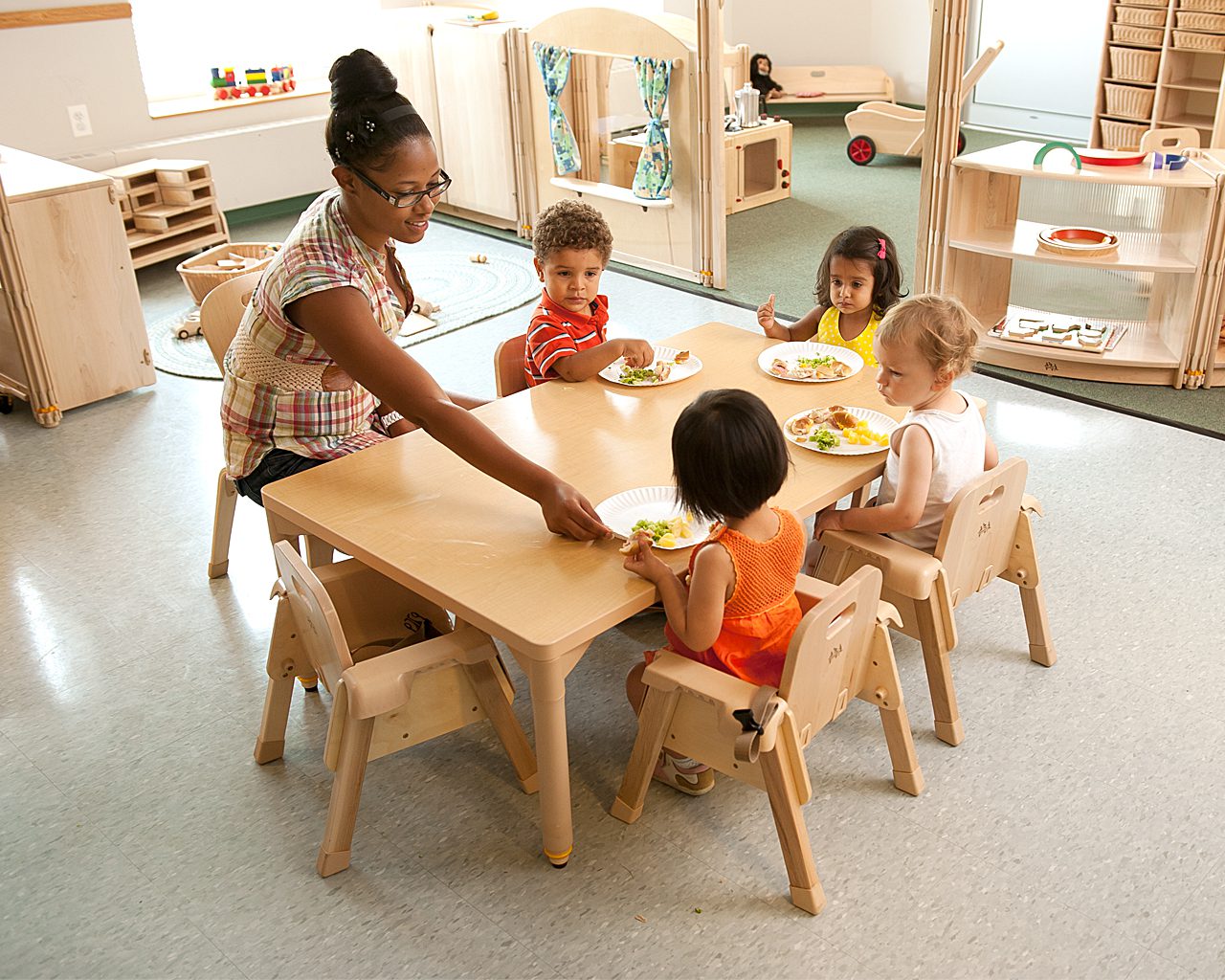
A nutritionally balanced snack table changed the whole rhythm of the classroom — fewer distractions, deeper concentration.
Food balancing in the little learner’s diet
When I first began teaching little learners I stumbled upon the awareness that there is a profound correlation between nutrition and the child’s ability to focus. There was a self-serve snack area in the classroom where the children could help themselves to a food item and drink. Parents usually provided snack. It was not unusual to see items such as muffins, graham crackers, and of course, an array of canned fruit juice. (Do they even make canned fruit juice anymore?) I thought this is just what little children eat so I figured everything was a-ok.
Some children would eat a small snack and then go back into the classroom and continue working. Other children ate non-stop and continually filled their bottomless juice cups. We had to invite these children away from the snack table and back into the classroom. I noticed several of the children were unable to focus on an activity, became easily distracted, and disturbed the work of other children. A nutrition conscious parent took care of snack three days simultaneously. The results were astounding. I also made a bowl of garbanzo beans with sunflower seeds available when the children arrived at school.
Ninety percent of the children served themselves normal portions of bagels spread with cream cheese or low sugar peanut butter, cucumbers, mild cheese cubes, oranges, and apples. Instead of serving juice full strength, we mixed small amounts of fruit juice in big pitchers of water. Most of the children were eager to finish their snack so they could resume their work activities. It was if they had never lost their concentration, even while they were eating their snack! There were fewer outbreaks of aggression by certain children who were visibly aggressive the week before, waiting for a turn at the snack table.
What was going on here? I conferred with my personal trainer and expert nutritionist, Cheryl Rogers, and with Yvette Morelli-Giesman, a pediatric nutritionist. I learned of the glycemic response in different foods. Aha, what was missing at our snack table (and on the breakfast tables and in the lunch boxes of a few of my students) was nutritional balance.

Hands-on food experiences at school often travel home — about a week after trying cucumbers, Aiden grabbed a whole one off the counter and ate it like a banana.
What the experts say:
“Foods that have a particularly high glycemic response cause a surge in blood sugar levels. Foods such as glucose (and all of those fruit juice drinks), rice cakes, graham crackers, refined cereals, carrots, watermelon, raisins, candy, and processed breads and muffins are very high on the glycemic index. These foods eaten alone can give you an immediate burst of energy, however they cannot sustain you for long periods of time. For some, the letdown can be debilitating. Complex carbohydrates, proteins and fats take a longer time to digest and break down in the system. This causes more consistent blood sugar levels for energy and attention. Breakfast should consist of a complete carbohydrate, a protein and a fat (include a balance of dairy, vegetable, and fruit allotments throughout the day as well). Things like whole milk, peanut butter or cheese on a bagel, oatmeal with melted butter, whole milk and raisins (raisins are a great source of iron and the glycemic index is minimized when mixed with other foods), cereal containing less than 5 grams of sugar and whole milk, bacon and eggs, sausage and cottage cheese. Fats are so important for toddlers. They should never be restricted as they promote the myelinization of nerves and healthy brain growth. Fats also cause satiety. They delay gastric emptying, so whatever you feed the child will go the extra mile.
Yvette Morelli-Gieseman, pediatric nutritionist, Good Samaritan Hospital, Phoenix, Arizona
“It is well known today (early 1900’s) that the diet must be adapted to the physical nature of the child. The nitrogenous diet for a child from two or three years of age ought to be constituted chiefly of milk and eggs, but after the second year broths are also to be recommended. After three years and a half meat can be given; or, in the case of poor children, vegetables. Fruits are also to be recommended for children. The growing organism of the child is very rich in water, and, hence, needs a constant supply of moisture. Among the beverages, the best, and indeed the only one, to be unreservedly advised is pure fresh spring water. Bread is an excellent food for the child. And is very rich in starches, but is lacking in fats and as the fundamental substances of diet are, as is well known, three in number, starches, fats and proteins, bread is not a complete food and it’s necessary to offer the bread to the child buttered.”
“Refection, the child’s diet from The Montessori Method, Maria Montessori, M.D. Shocken books Inc. 1964 (first translation from Italian into English 1912)
“A well-selected meal, with good distribution of protein, fat, and carbohydrates, can help your child regulate his food intake. Each of these nutrients has a role to play in inducing some of the many satiety factors that let your child know that he has had enough to eat and give him sustained energy between eating times. Given the support of regular and varied meals and snacks, he will eat the variety he needs to get a nutritionally adequate diet. If you serve a variety of food, over time he will learn to like a variety of food and will maintain the dietary variety he needs. Parents will often pass on their fussiness along to their children by not making foods they don’t like and by not giving their children experience with certain foods.
Child of Mine, Feeding With Love and Good Sense, Ellyn Satter, MS, RD, CICSW, BCD, Bull Publishing Company 2000.
“Food has profound effects on higher mental functions, even in well-nourished children eating ordinary foods in ordinary amounts. Foods can enhance problem-solving ability, optimize alertness, and improve mood and behavior in normal children. Contrarily, foods can also impair children, whose behavior and learning are already in trouble from other causes, hampering their efforts to concentrate and maintain self-control. Over an extended period, food affects basic intelligence through effects on brain growth and by altering the way the environments changes the developing brain. Children whose attention is already impaired, who have learning and impulse control problems, are even more likely to suffer from missing breakfast than normal; and they are especially vulnerable to impairment in attention following a pure carbohydrate meal.
Feeding the Brain, How foods Affect Children, C. Keith Conners, Ph.D., Plenum Press 1989.
Parents and teachers must become scientists themselves to some extent – observing their children’s behavior and mental functioning while systematically studying what happens when their diets change.
Conclusion
“In order to protect the child’s development, especially in neighborhoods where standards of child hygiene are not yet prevalent in the home, it would be well if a large part at least of the child’s diet could be entrusted to the school”
Maria Montessori, M.D., The Montessori Method, 1912
As parents, grandparents, administrators, educators, and health providers of very young children, we must take nutrition as seriously as we do any other aspect of their education, physical, and mental health. We must educate ourselves now, and rigorously move towards mandating specific nutritional curriculums, with the emphasis on macronutrients, for brain development in all early childhood teacher/training accredited schools and certification programs. Only when this is accomplished can we truly understand the fundamental dietary needs of man and form a society based on home/school partnerships that include not only resolutions and remedial plans for our children’s academic success, but conscious meal planning and snack planning road maps that insure the nutritional equilibrium for each child’s developing mind, body, and potential.
To look the other way is to deny him his future.

Sugar and ultra-processed foods can be uniquely harmful for children — affecting not only health but behavior, emotion, and learning.
We also have cutting edge data and research on the addictive nature of sugar and ultra-processed, industrialized foods. In Sugarless, Dr. Nicole M. Avena, a pioneering neuroscientist on food addiction, spells out the substance’s detrimental effects on the brain and body. Many people blame sugar cravings on a lack of willpower rather than acknowledge that the substance is highly addictive, even more so than cocaine, nicotine, and alcohol.
Most of us know that sugar can wreak havoc on adult bodies, but few realize how uniquely harmful it can be for children. The damage can begin early in life, resulting in fatty liver disease, prediabetes, obesity, and elevated risk for eventual heart disease, not to mention behavioral, emotional, and learning problems.
This article is drawn from Little Learner’s Diet, Food balancing, Fats, and Focusing by Jan Katzen-Luchenta, CN, AMI Copyright 2004. For updated information and resources on food addiction, refer to Jan’s website below.
Jan is a former AMI Montessori educator, and currently, a certified nutritional researcher and specialist. She provides virtual consultations worldwide for all ages, from kids to seniors, creating individualized, nutrition plans.
Jan combined her passion for nutritional education with her Montessori background to create a book called Nutrition for Development and Learning: Guide and Workbook.
To contact Jan, and receive updates on her soon-to-be published children’s picture book, Hannah Has a Sweet Tooth, please email her at jan@nutritionforlearning.com or visit her website at www.nutritionforlearning.com

Jan combines decades of Montessori experience with nutritional research to support children, families, and schools worldwide.