
Bringing Movement Back into the Spotlight
To continue reading, you will need to choose a subscription plan.
Physical Wellness: Part 3 – Physical Wellness: The Activities We Do with Nicolas Lepine
Physical Wellness: Part 2 – The Sleep We Need
Physical Wellness Part 1: The Food We Eat What’s in Your Pantry

Keeping Your Family Culture and Language and Alive with Karen Simon
Part 3: Your Rookie Year as a Montessori Parent: Middle and High School Years
To continue reading, you will need to choose a subscription plan.
Part 2: Your Rookie Year as a Montessori Family 6-12 Years Old
To continue reading, you will need to choose a subscription plan.

Empowered Wellbeing For Success
To continue reading, you will need to choose a subscription plan.
Part I: Your Rookie Year as a Montessori Family (0-6 Years Old)
To continue reading, you will need to choose a subscription plan.
Homeschooling Through a Montessori Lens: Cultivating a Curious, Self Directed Learner
To continue reading, you will need to choose a subscription plan.
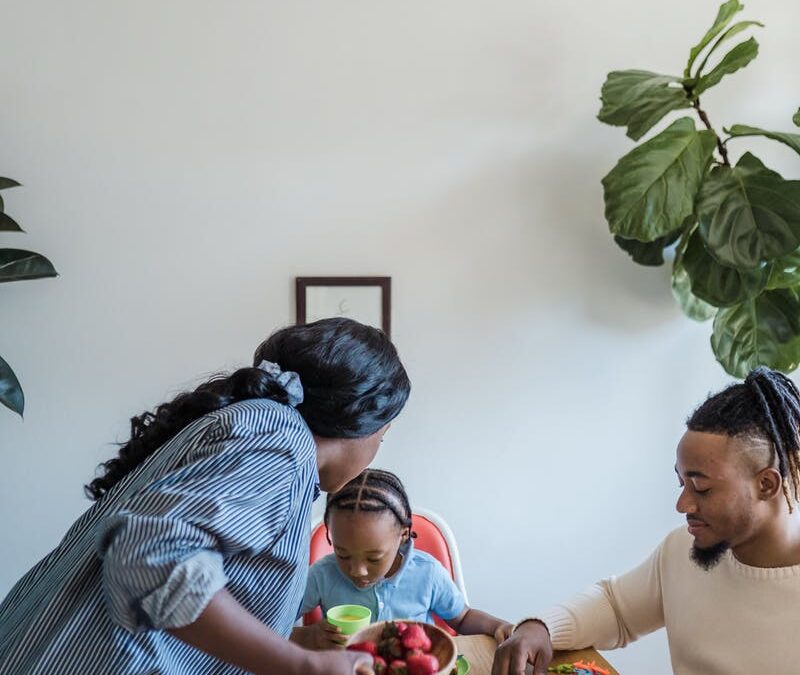
Foods for Thought: Navigating Your Family’s Dietary Needs or Preferences
To continue reading, you will need to choose a subscription plan.

Teacher Happiness
To continue reading, you will need to choose a subscription plan.
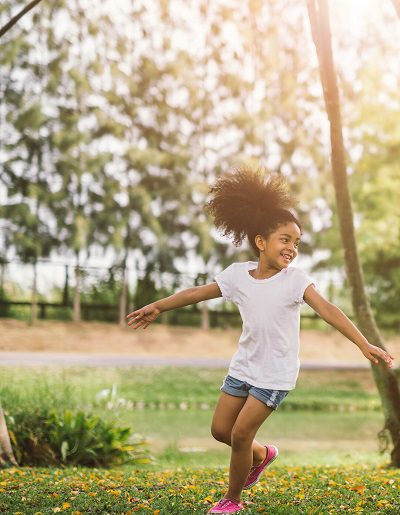
Get Kids Moving
Why Physical Play Must Be Part of the Formula When Kids Head Back to School
By Preston Blackburn

What began abruptly as a stay-at-home mandate two springs ago settled in for significantly longer than any of us expected. Fortunately, with vaccines, we are trending back toward normalcy. One of the brightest spots we are seeing is children returning to their classrooms in person.
As we get ready for a school year in the classroom rather than virtual, many educators are considering how to make up for suspected learning losses that may have occurred during a year of virtual school (Pearson, 2021). From an adult perspective, the first reaction might be to buckle down and power through as much curriculum content as possible to bridge any gaps in acquired knowledge. But is this the right answer? I would argue emphatically, no.
Play is the way kids wring out their brains. The brain is like a sponge. Once it is full, it cannot continue to absorb until it has been wrung out. As adults, we instinctively take breaks when we are working. We grab a coffee, head to the water cooler, or take a peek at social media. These breaks give the brain time to wring itself out.
Play is the way kids wring out their brains. Play is a time for resetting and relaxing their focus, so that their brains are more alert when it is time to go back to the desk. Students’ play was already being restricted before the pandemic. Reports found 44 percent of school administrators had already reduced recess and PE time to increase academics, despite studies proving that more time in recess leads to bigger gains in the classroom (Reilly, 2017). Coming back to school post-shutdown, we must remember to include play-based breaks. It is play that helps kids build strengths and motor patterns needed for classroom success, and it is play that helps kids develop social skills needed for lifetime success.
How Play Leads to Physical Skills and Strength, Leading to Classroom Success
Kids need strength in their arms, legs, necks, and core to sit at a desk, hold and move a pencil, or keep their bodies still so they can pay attention. Children build strength in play when they run, climb, and swing.
Kids need to know where their bodies end and begin, so they can transfer that information to the page as they learn to write. How much space does a letter, or a sentence take up? What direction are they moving their pencil when they write? Children learn these skills in play when they hide under the bed in a game of hide and seek or shimmy through a fence to explore what lies beyond.
Kids need to master rhythm so they can internalize patterns, which help them understand the rhythm of language, the sequence of writing, the patterns of math, the order of logic and reasoning. They develop rhythm in play while jumping, throwing, and skipping.
In addition, children’s aerobic activity releases chemicals in their brains that enhance cognition, behavior, and memory; thereby, having a direct impact on their learning trajectory. Kids get aerobic in big physical play.
These skills and strengths can only be built in movement. And children move best when they are engaged in big physical play. While some children were able to get outside and engage in big, body play during virtual schooling, many did not, spending more time on screens than ever before. As we look to bridge the academic development gap, we need to also bridge the physical development gap that grew for some of our most vulnerable students.
And we know that recess works. Consider Finland, a country known for scoring in the top levels of international academic exams. Finnish children get 15 minutes of outdoor recess in every hour of classroom time. Outdoor play allows them to explore with their bodies and gives their brains that crucial reset, helping them achieve academic success. Here in the U.S., Eagle Mountain Elementary School in Fort Worth, Texas decided to apply this theory by tripling their recess time to 60 minutes every day. Teachers worried that they would not be able to maintain their academic schedule, but by winter break, every single class was ahead of the academic schedule despite 40 fewer minutes of class time each day.
How Play Develops Social and Emotional Skills
There are the crucial social and emotional skills that can only be developed in play. When humans engage in self-directed, unstructured play, we learn how to socialize, collaborate, and read body language. We learn assertiveness, boundary setting, sharing, and restraint.
Imagine a playground filled with children engaged in play. The first thing you might notice is the sound. It is usually joyous and loud. Evolution and biology designed us to enjoy this kind of big, body, physical play. It builds key physical strengths and skills, like those listed above. It also helps children build lifetime social skills.
It might look like this: One child initiates a play idea, maybe a new idea or the continuation of a previous game. Another friend may join and suggest a modification, sending the play in a new direction. Over and over, new ideas and new alternatives surface as the play evolves. Inevitably, conflict will arise and possibly one player will become aggressive. When this happens, the other player may pull back, giving signs of displeasure with this sort of play. Or a player may have his idea dismissed and take exception, or there may not be enough equipment or material to continue the play as planned. Whatever the challenge, the players have a choice: Find a solution or the play will come to an end.
Play is the way kids wring out their brains.
How can this kind of play be woven into a child’s day?
These exchanges demonstrate the power of unstructured play. Children want the play to continue. They take ownership of the play. They are in charge of the game, they make the rules, and they have a vested interest in continuing the game. Out of this fundamental ownership grows a wealth of learning and development. And, for many children, this sort of interactive, conflict-resolving play was missing from their days during the pandemic shutdown. Many children missed out on a year of the give-and-take of listening to the ideas of peers, of sharing scarce materials, of finding a way to make the game work. The social and emotional learning that comes from this play is just as essential—maybe even more essential—as any academic skills missing from their repertoire.

How can this kind of play be woven into a child’s day? Through both structured and unstructured play. Structured play is adult-directed and designed, while children direct unstructured play. Children need both. Finding time for play in the school day is crucial for making a dent in any learning losses from the past year.
To start with, children should have unstructured play at recess every single day, for at least 30 minutes, but the more the better. There is really no excuse for eliminating this break in the day. Removing recess only makes the school day more challenging for everyone, putting stumbling blocks in front of learning.
Structured play is also crucial to children’s development. It takes place in PE but can move beyond the gym and into any learning environment with a little creativity and planning. Using play and movement in teaching helps kids secure neural connections in their brains, anchoring new knowledge. Whether it is adding physical movement to a memorization task or doing pushups to answer math problems, movement in learning helps children retain what they have learned. Believe it or not, something as simple as spelling practice can be active, sweaty, and fun. An example game can be seen above (Spelling Frenzy Relay).
Children can do these games at home, as well, with siblings or on their own.
There are many ways to add physical movement to academics. Do long division with sidewalk chalk and make it a dance. Use action words to practice rhyming. Hop down a giant number line. When students move, they learn.
All of us want children to be successful in all aspects of life. We want them to be strong students, with strong bodies, and strong friendships. These crucial skills suffered during virtual learning. We cannot further jeopardize students’ physical, social, and emotional development in the quest for checking off boxes on an academic curriculum. Play-based skills make us better people from the classroom to the boardroom. These are not skills that can be learned from an app, a computer, or flashcards. These skills are only developed in play—play that must be in every school day. •
Spelling Frenzy Relay
Work on spelling, practice teamwork, and get aerobic
Set-Up: Children are divided into teams of 2–4 children each. Each team has a set of three-letter words with one letter missing from each one (e.g., H _ T, _ I E, S E _). Scattered on the floor are cards with letters that could complete the words. The first team member finds a letter to complete one word, runs to the opposite side of the room around a cone or chair, comes back to complete the word, and tags the next teammate. Play continues until the team’s words are complete.
Change the Game:
» Instead of running, try jumping jacks, skipping, hopping, bear crawling
» Use longer words
» Make it a math game by using math facts
REFERENCES
Pearson, C. 2021. 1/11/21. “Experts Predict What School Will Look Like Next Fall.” Huffington Post retrieved from https://www.huffpost.com/entry/expertspredict-what-school-will-look-like-nextfall_l_5ffc916cc5b66f3f79601ffe
Reilly, K. 10/23/17. “Is Recess Important for Kids or a Waste of Time? Here’s What Research Says.” Time. Retrieved from https://time.com/4982061/ recess-benefits-research-debate/
Wong, A. 11/15/16. “Why Kids Need Recess.” The Atlantic

Preston Blackburn created Pop, Hop& Rock™ in 2000, when her children were preschoolers. What started as an exercise program has evolved into one that focuses on creating opportunities for children to hone fundamental motor skills, which allows them to develop physical literacy and foundational strengths, proven to help them find success socially, emotionally, behaviorally,and cognitively in the classroom and beyond.www.pophopandrock.com
Reprinted with permission from Community Playthings: www.communityplaythings.com
Making Lunch
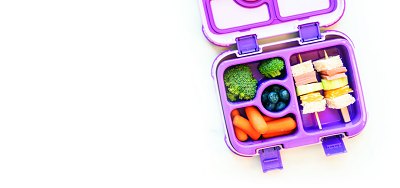
One of the most challenging parts of having children in school is making lunches. With some guidance, children can make their own lunch. It then becomes a win/win situation. You do not need to make lunch daily, your child gets to practice practical life skills, and your children are more likely to eat their lunches. As with all new skills, it may take more time initially, yet the work and time will benefit both of you for years to come.
How can a young child prepare their lunch each day? Preparation of the environment, the necessary tools, and a lesson will all be necessary.
Preparing the Environment:
• Make appropriate food for lunches available at child height. This may mean reserving space on a low cabinet and low shelf in the refrigerator for lunch materials. At our house, we used colored baskets in the cabinet and refrigerator to quickly designate which items were for lunches.
• If needed, divide the food into servings before lunches are made. Your child can help you do this after school or over the weekend. If five baby carrots are an appropriate serving for your child, make a few bags with five carrots in each.
• Make sure your child can open and close any containers used and manage their lunch box.
• Consider when lunch should be prepared. If your child has trouble getting out of the house in the morning, make lunch the night before and store it in the refrigerator if needed. If your child is usually ready early, the morning is a great time for this job.
The Necessary Tools:
• Have utensils your child can use to make lunch, such as: a knife for spreading and cutting; a cutting board; containers that your children can open and close; and lunch boxes that allow them to pack easily.
• A list of ideas in written or picture form may be helpful for your child.
• Decide what you expect for lunch. What constitutes a main meal? What is a snack? Do you have a guideline of how many fruits or vegetables need to be included?
A Lesson or a few lessons):
• Discuss the plan with your child.
• Show where the tools and materials for making lunch are.
• Talk about what should be included in lunch and why, i.e., you need energy for growth and your day; these foods are not allowed at school for allergy or other health reasons; these items do not transport well. Share the reason for the guidelines.
• Work with your child the first few times and discuss what you are doing and checking: e.g., “I don’t see any fruit in here. Would you like to add a fruit or another vegetable?”
• Show your child how to clean out their lunch box at home before just adding to it.
Follow Up:
• Peek inside the lunches that are going to school. Do they meet nutritional needs as you expect?
• Discuss options and ideas with your child before grocery shopping.
• If you have leftovers from dinner, ask if your child would like some for lunch and plan together how to make that work.
• Let your child’s teacher know that your family is making this change. Your child may be pleased and possibly even distracted by the lunch they made at first, so letting the teacher know means they can help with these changes.
Enjoy the small break this gives you and the independence it gives your child.

Cheryl Allen is the Associate Coordinator of the Montessori Family Alliance and is also a parenting educator and a Montessori consultant with the Montessori Foundation. Cheryl attended Montessori school as a child. After sometime as a traditional Secondary teacher, she worked in Montessori classrooms, 3-6, 6-9,and 9-12, earning certifications from both AMS (3-6 and 6-9) and IMC (6-12). She is a teacher educator, workshop presenter, and member of IMC accreditation teams. Cheryl’s two children attended Montessori from age two through high school graduation.

When Public and Private Montessori Schools Work Together, Everyone Wins
by Amy O’Connor
On the small island of Key West, located at the southernmost tip of Florida, there are two Montessori schools that happen to be less than a half-mile from each other on the same street, which is coincidentally named United Street. This year they partnered to co-host their 5K race.
Founded in 1972, Montessori Children’s School is Key West’s oldest Montessori school. It is a private, non-profit school, and its programs educate children eighteen months to sixth grade.
May Sands Montessori School is Monroe County’s first charter school. It serves students in Key West and the Lower Keys from kindergarten through eighth grade.
The two schools are accustomed to having students and staff transfer from one school to the other. In addition, several families have children at both schools. The schools also get together each year for their annual International Day of Peace walk. However, this is the first year they have teamed up for a fundraising event.
There is so much energy and expense put into fundraising, so having the two schools split both of these was a great way to lighten the load. Not only did the number of registrants increase, but profits increased as well. Each school secured its own sponsorships but split the race registration proceeds and the expenses.
Often, private and public schools see themselves as being in direct competition with one another. Each school has its own fundraising events and tries to garner the most participants. By coming together as one, we are not only providing Montessori families at different schools the opportunity to get to know one another, but we are also celebrating our individual and shared experiences.
A few years ago, the company that records race times of the individual 5K’s suggested combining the races to save money. Both schools had been hosting their own 5K’s for many years. As the weather in Key West is beautiful almost all year round, fitness is a huge part of life here. In addition, it’s a popular destination point for out-of-towners who love a warm place during cold winters. Running, biking, swimming, and water sports are quite popular in the Florida Keys. Years ago, when there were just a handful of fitness events, the turnout at individual events was much larger. As more and more events were scheduled, participation at each event began to dwindle.
Due to COVID, both schools canceled their 5K events last year. This year seemed like a great year to experiment with a combined race. We couldn’t have been more pleased with the way this year’s race turned out. Seeing all the families together, uniting for one great cause, was truly gratifying for all involved. Perhaps there will be more shared events in the future. In true Montessori fashion, collaboration wins over competition every time. •
Amy O’Connor, Executive Director of Montessori Children’s School of Key West, has been involved with Montessori in some capacity almost her entire life. Her parents helped found the school in 1972. Amy’s three children attended Montessori schools in Essex, Vermont, and Key West, Florida. Amy has her Primary Montessori teaching certification as well as her BA in business.
Health & Wellness: The New Rules of Peanut Allergies: What Concerned Parents Need to Know
by Libby Ryan and Nicole Harris Updated September 16, 2019 from Parents.com
New guidelines encourage us to introduce peanuts to all kids much earlier. Plus, the FDA recently supported development of a drug aimed at lessening the severity of allergic reactions from peanuts. Here’s what you need to know.
This article brings a new, exciting possibility for allergy sufferers but should not be taken lightly or without the help of qualified medical personnel.
Everything you think you know about peanut allergies might be about to change. In March 2019, the American Academy of Pediatrics (AAP) released new guidelines for introducing kids to peanuts in the hope of decreasing the prevalence of this widespread allergy.
The study says babies should be given peanuts early, in order to prevent allergic reactions. In fact, multiple reports in the past decades have shown the benefit of introducing peanuts to highrisk babies when they are between 4 to 6 months old (with proper medical supervision). Infants with less of a risk can start these foods at 6 months or older, following the pattern of the family’s normal diet.
Previously, kids in danger of developing an allergy were supposed to avoid any contact with peanuts for the first three years of their lives, according to Hugh Sampson, M.D., director of the Elliot and Roslyn Jaffe Food Allergy Institute at Mount Sinai and a Parents advisor.
The study says babies should be given peanuts early, in order to prevent allergic reactions.
Then, in 2008, the AAP said that babies should not be refrained from eating allergens like peanuts, milk, and eggs. Being introduced to these allergens wouldn’t prevent them from developing eczema, skin conditions, and food allergies, according to the report.
But the March 2019 guidelines state that high-risk children should have peanuts in their diet much sooner. In turn, the babies will (they hope) have less of a risk of developing allergies in the future.
So how can a parent know if their baby might be at high risk of developing a peanut allergy? Two main signs your little one could be ready for a peanut intervention are egg allergies or severe eczema, according to the National Institute of Allergy and
Infectious Diseases (NIAID). Talk to your pediatrician if your child has either or both conditions; your doctor can do an allergy test to find out the best timing for introducing peanuts.
Whole peanuts are a choking hazard for infants and small children, says Drew Bird, M.D., director of the Food Allergy Center at Children’s Health in Dallas. For your baby’s first bites, you can stir a small amount of peanut powder into a puree or spread a thin layer of peanut butter on toast.
The sticky consistency of thick peanut butter can also be hard for little mouths to handle, so Dr. Bird recommends two teaspoons of smooth peanut butter mixed with two teaspoons of warm water for babies just starting solids.
It’s also important to keep serving your child peanuts once they’ve been introduced. “Foods that are in the diet more frequently are less likely to cause problems down the road,” Dr. Bird explains. He also stresses that children who have already been diagnosed with a peanut allergy should continue to use the same caution around peanut products as always.
If your child does have an allergic reaction, symptoms may include swelling lips, coughing, vomiting, or rashes that look like mosquito bites around the mouth or other parts of the body, and they would begin almost immediately after eating. If your child has a reaction, call your doctor immediately. •
TOMORROW’S CHILD © • NOVEMBER 2019 • WWW.MONTESSORI.ORG

A Cup of Calm: Recipe to Relaxation
To continue reading, you will need to choose a subscription plan.
Featured
-
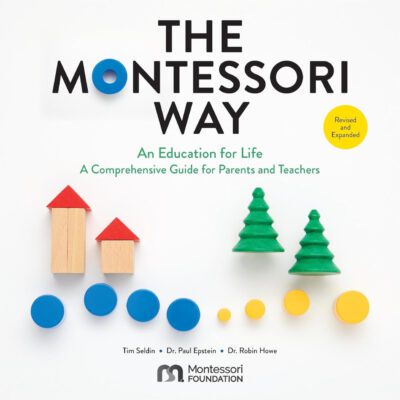
 The Montessori Way, Revised and Expanded: An Education for Life; A Comprehensive Guide for Parents and Teachers
$25.00
The Montessori Way, Revised and Expanded: An Education for Life; A Comprehensive Guide for Parents and Teachers
$25.00
-
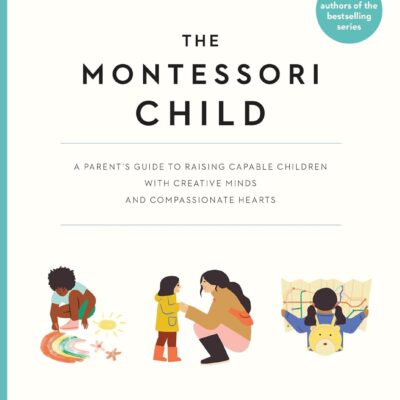
The Montessori Child: A Parent's Guide to Raising Capable Children with Creative Minds and Compassionate Hearts (The Parents' Guide to Montessori)
$20.00
-
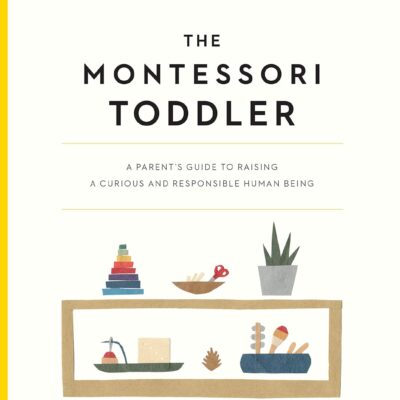
The Montessori Toddler: A Parent's Guide to Raising a Curious and Responsible Human Being (The Parents' Guide to Montessori)
$20.00
-
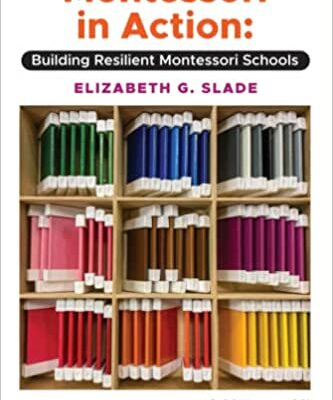
Montessori in Action: Building Resilient Montessori Schools 1st Edition
$29.95
-
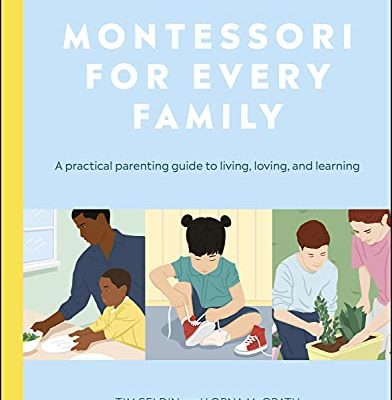
Bulk Order, 30 Copies of Montessori for Every Family: A Practical Parenting Guide To Living, Loving, And Learning
Original price was: $600.00.$510.00Current price is: $510.00.

Products
-
The Montessori Way, Revised and Expanded: An Education for Life; A Comprehensive Guide for Parents and Teachers
$25.00
-
The Montessori Child: A Parent's Guide to Raising Capable Children with Creative Minds and Compassionate Hearts (The Parents' Guide to Montessori)
$20.00
-
The Montessori Toddler: A Parent's Guide to Raising a Curious and Responsible Human Being (The Parents' Guide to Montessori)
$20.00
-
Montessori in Action: Building Resilient Montessori Schools 1st Edition
$29.95
-
Bulk Order, 30 Copies of Montessori for Every Family: A Practical Parenting Guide To Living, Loving, And Learning
Original price was: $600.00.$510.00Current price is: $510.00.