Montessori’s Enduring Insights

Montessori’s Enduring Insights
curiousity

All Ages


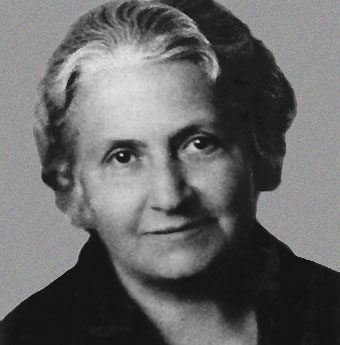
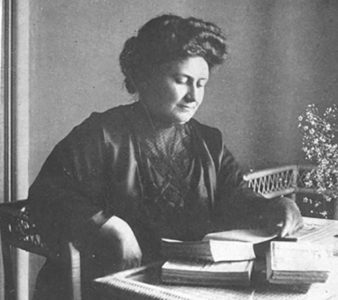
On January 6, 1907, Dr. Maria Montessori opened the first Casa dei Bambini—the Children’s House—in a poor tenement district of Rome. The children who entered that classroom were widely viewed as difficult, neglected, and incapable of learning. What Montessori observed there changed not only her career but the course of education itself.

When these children were given order, beauty, meaningful work, and freedom within clear limits, something remarkable happened. They became calmer, more focused, more independent, and more socially connected. Not because anyone trained them to behave differently, but because the obstacles blocking their natural development were removed.

That first classroom matters today not as a historical milestone, but because its purpose remains unchanged: creating the conditions that allow children to become fully themselves.

What Montessori Meant by

“Normalization”

Few Montessori terms are as important—or as misunderstood—as normalization.

Normalization does not mean conformity or compliance. It does not mean suppressing personality or producing unusually obedient children. Montessori used the term to describe something closer to psychological health: a child who can concentrate deeply, act independently, regulate their own behavior, and engage constructively with others.

Montessori observed that many behaviors adults assume are simply “how children are”—restlessness, short attention spans, defiance, withdrawal, or constant dependence—often emerge when children’s developmental needs are not being met. These behaviors are adaptations, not character traits.

When children experience constant interruption, a lack of meaningful work, chaotic or overly controlled environments, or excessive help paired with minimal responsibility, they adjust in ways that may appear to be temperament but are in fact signals of unmet needs.

When conditions are right, a different picture emerges. The normalized child shows sustained concentration, growing confidence, internal self-discipline, a love of order and purposeful activity, and genuine concern for others. Montessori observed this pattern repeatedly, across cultures and circumstances.

Why This Matters More than Ever

Montessori made these discoveries over a century ago, yet they feel strikingly relevant today. Many of the pressures that disrupt healthy development have intensified.

Modern childhood often includes constant stimulation, frequent interruptions, adult-paced schedules, limited opportunities for deep focus, and heavy screen exposure. Children are often given many choices but little meaningful responsibility, and adults—out of love—may step in too quickly, unintentionally undermining developing independence.

Even in caring homes, children can be pulled away from their natural developmental rhythm. When they cannot concentrate deeply, act independently, or contribute meaningfully, their behavior often reflects that imbalance. What we see as difficult behavior is often a message, not a flaw.

The Environment Is Key

Montessori’s approach began with observation, not theory. If children’s struggles were rooted in their environment, then changing the environment could support their return to balance.

The prepared environment supports normalization through a few essential elements.

Order and predictability help children orient themselves without constant adult direction. Meaningful work—real activities with purpose—focuses attention in a way entertainment never can. Freedom within clear, consistent limits allows self-regulation to develop. Beauty and simplicity calm rather than overstimulate. Respectful adults support independence rather than fostering dependence.

When children are given uninterrupted time to engage in purposeful work, concentration appears. With concentration comes calmer behavior, patience, self-control, and kindness. Montessori’s great insight was that discipline and social harmony need not be imposed; they emerge naturally when children are properly supported.

What This Means for Parents

January 6 reminds us that Montessori was never primarily about academic acceleration or achievement. From the beginning, it was about helping children reconnect with their natural developmental path.

That matters deeply today, as many families grapple with attention challenges, anxiety, impulsivity, and

social disconnection. Montessori’s promise re mains simple and profound: when we protect

what children genuinely need—order, meaningful work, freedom with limits, respect, and uninterrupted time—children tend to find their way back to themselves.

Normalization is not about perfection. Children will still have hard days, strong emotions, and moments of struggle. But this lens helps parents respond with clarity and compassion, understanding behavior as information rather than identity.

Living This Legacy at Home

Honoring Montessori’s legacy does not require dramatic changes. Often, it means small, intentional shifts.

Protect time for your child to work without rushing. Reduce interruptions when they are deeply engaged. Allow greater independence before intervening to help. Invite children into real household work, not as chores

0-6 Years | Early Childhood

to endure but as meaningful contributions. When behavior becomes difficult, look first at sleep, transitions, stimulation, and opportunities for responsibility before assuming a character problem.

These simple choices align home life more closely with children’s developmental needs.

Your Child’s Guide As Partner

If you are unsure what your child needs at present, your Montessori guide is an invaluable resource. Guides observe children over time within a carefully prepared

community and can interpret behavior through a developmental lens, distinguishing between typical challenges and signs of unmet needs.

Their goal is the same as Montessori’s in that first Children’s House: to help each child remain connected to their natural capacities for concentration, confidence, and joyful engagement.

This is Montessori’s enduring gift—not a method alone, but a vision of childhood rooted in trust, respect, and the belief that children flourish when we create the conditions they truly need. 

 

Preparing Thoughtful Adults

Preparing Thoughtful Adults

curiousity

Why Montessori Adolescents Question Authority

12–18 Years The Adolescent Years


Your 13-year-old looks at you and says, “That rule doesn’t make sense.” They point out an inconsistency in something you just said. Or they challenge a school policy as unfair.

If you’re raising a Montessori adolescent, this probably feels familiar, annoying, and exhausting. The child who once accepted rules without much pushback now interrogates decisions, questions authority, and presses for explanations. It may even feel personal. And it’s natural to wonder: Is this healthy? Or have we raised someone who can’t accept authority at all?

Montessori’s answer is clear: This questioning isn’t a problem. It’s a sign of healthy development.

What’s Changing in Adolescence

Dr. Montessori described adolescence as a second major transformation, comparable to Early Childhood. Adolescents are reorganizing themselves cognitively, emotionally, and socially. One of the most significant shifts can be recognized when children are no longer satisfied with what is. They urgently need to understand why things are the way they are—and whether they should be.

Authority based solely on position (“because I’m the parent”), habit (“that’s how we’ve always done it”), or convenience (“because I said so”) no longer feels legitimate. These children are not trying to be difficult. They’re building their own internal framework for judgment, deciding what is fair, reasonable, and deserving of respect.

This is not rebellion for its own sake. It’s the emergence of moral and intellectual independence.

Important Developmental Work

When adolescents challenge rules or decisions, they’re doing important developmental work:

  • Distinguishing power from legitimacy by recognizing that authority must be justified, not merely asserted.
  • Testing consistency and fairness by asking whether rules align with stated values.
  • Understanding systems rather than simply complying with them.
  • Taking responsibility for their own thinking instead of borrowing it from adults.

A child who never questions authority hasn’t developed independence. They’ve learned compliance. Montessori’s goal has never been obedience; it’s discernment.

How Montessori Supports This Development

Montessori Adolescent programs deliberately place students in situations that require them to analyze systems: economic, social, political, environmental, and ethical.

Adolescents may run small businesses, study social movements, participate in community governance, or grapple with real-world environmental challenges. These experiences help them understand why rules exist, how systems function, and when change is justified.

This doesn’t mean “anything goes.” Clear boundaries, accountability, and expectations remain essential. What changes is how authority is exercised. Instead of “follow this rule because I’m the adult,” the message becomes: “Here’s why this expectation exists. What do you think would happen without it?”

The goal isn’t blind obedience; instead it’s internalized standards.

Questioning vs. Disrespect

Parents often struggle to distinguish between healthy questioning and disrespect.

Healthy questioning sounds like curiosity, thoughtful disagreement, or frustration paired with engagement.

Disrespect shows up as contempt, personal attacks, refusal to listen, or deliberate rule-breaking after discussion.

The distinction matters. Questioning should be met with explanation and dialogue. Disrespect should be addressed calmly and clearly, with boundaries and consequences.

Many families find it helpful to say explicitly: “I want you to question things that don’t make sense. That’s important. But questioning must be done respectfully.”

This is not rebellion for its own sake. It’s the emergence of moral and intellectual independence.

Why This Feels Especially Intense with

Montessori Adolescents

Montessori adolescents often question more persistently and articulately than their peers because they’ve been practicing these skills for years. They’re accustomed to being taken seriously, to reasoning rather than complying, and to expressing their thinking clearly.

That means parents often get the unpolished version of these emerging capacities. It can be impressive—and maddening—simultaneously.

How to Respond

When your adolescent challenges a rule, try to:

  • Pause before reacting.
  • Acknowledge the question as legitimate.
  • Explain your reasoning, not just the rule.
  • Invite their thinking without yielding responsibility.
  • Be clear about what’s negotiable, what’s not, and why.
  • Follow through consistently.

Not every challenge requires a full debate. Sometimes it’s enough to say, “I hear your disagreement. We can talk more later. For now, this is the expectation.”

Preparing for a Complex World

Adolescents allowed to question thoughtfully—while held to standards of respect—tend to emerge with strong internal values, the ability to disagree without destroying relationships, and respect for authority that’s earned rather than imposed. These capacities are essential for adult life. They don’t appear suddenly at 18. They develop through practice in adolescence—messy, inconvenient practice.

Supporting this stage asks parents to shift from control to mentorship, from issuing directives to explaining reasoning. It doesn’t mean abandoning boundaries. It means recognizing that the tools that worked at age seven no longer serve at thirteen.

And on the days when it feels like too much, it’s okay to pause, set limits, and say, “That’s a good question. Let’s come back to it.”

Your adolescent’s questioning isn’t a failure of Montessori education. It’s evidence that it’s working. You’re raising someone who will think critically, challenge unjust systems, and act from internal conviction rather than fear of punishment.

That is demanding work—for them and for you. But it’s work worth doing. 

Tim Seldin is President of the Montessori Foundation. His more than 40 years of experience in Montessori education includes 22 years as Headmaster of the Barrie School in Silver Spring, Maryland, his alma mater, from toddler through high school graduation. Tim was Co-Founder and Director of the Institute for Advanced Montessori Studies and the Center for Guided Montessori Studies. He earned a B.A. in History and Philosophy from Georgetown University, an M.Ed. in Educational Administration and Supervision from The American University, and his Montessori certification from the American Montessori Society.

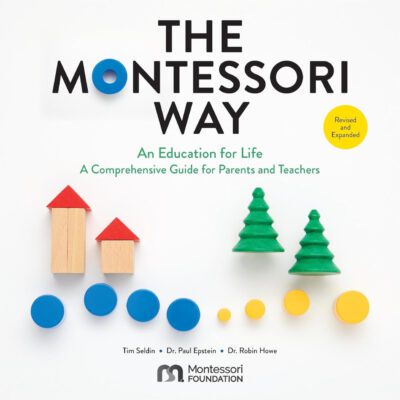
Tim is the author of several books on Montessori Education, including The Montessori Way, How to Raise an Amazing Child, The World in the Palm of Her Hand, and Montessori for Every Family,

Learning to Live Together

Learning to Live Together

curiousity

How Mixed-Age Montessori Classrooms Support Social and Moral Development

One of the first questions many parents ask about Montessori is whether mixed-age classrooms are used. Children ages three to six learn together, sharing the same space, materials, and daily rhythms. Parents naturally wonder: Will younger children be overwhelmed? Will older children be held back? How does this actually work socially?

These are reasonable questions, especially for those of us

who grew up in traditional, same-age classrooms. Montessori, however, is grounded in a different understanding of how children develop—not only academically but also socially and morally. The mixed-age classroom is not simply an instructional choice. It is a carefully designed social environment intended to help children learn to live with others.

A Classroom that Reflects Real Life

Outside of school, children are rarely grouped strictly by age. Families include siblings of different ages. Neighborhoods and communities are naturally mixed. Montessori classrooms intentionally mirror this reality.

Within a three-year age span, children experience themselves in different roles. One year, they are new and learning; later, they become confident helpers and leaders. No child is always the youngest or always the most capable.

This balance reduces unhealthy comparison and allows confidence and humility to grow side by side.

Leadership Grows Naturally

In a mixed-age Montessori classroom, leadership is not assigned by adults. It emerges from competence. Older children help younger ones because they can—and because they remember what it felt like to struggle.

You might see a five-year-old patiently showing a younger child how to roll a rug, or a four-year-old helping a threeyear-old complete a puzzle. These moments are not staged. They occur because children feel ownership of their environment and a sense of responsibility for one another.

This kind of leadership builds empathy. Younger children learn that asking for help is safe. Older children learn that knowledge carries responsibility. Both age groups come to see learning as something shared rather than competitive.

Conflict as a Learning Opportunity

When children of different ages share a space for several years, conflict is inevitable—and valuable. Montessori does not try to eliminate conflict.

Instead, guides help children work through it respectfully.

Montessori classrooms do not rely on reward charts, public praise, or artificial incentives to encourage good behavior. Instead, values are embedded in daily life.

A younger child may want a material that someone else is using. They learn to wait, ask, or choose something else. The older child learns to finish their work thoughtfully and return materials so others may use them. Over time, children learn that their choices affect the community.

These everyday moments are how moral reasoning develops. Children are not lectured about fairness or kindness. They experience what cooperation feels like—and what happens when it breaks down.

How Character Is Built

Montessori classrooms do not rely on reward charts, public praise, or artificial incentives to encourage good behavior. Instead, values are embedded in daily life.

Children wait because the community matters.

They care for materials because other children depend

on them.

They speak respectfully because relationships endure.

They help because they belong together.

Over time, external guidance becomes internal understanding. Children begin to act considerately, not to please adults but because it feels right.

What Parents Often See—and Miss

From the outside, Montessori classrooms usually appear calm and simple. Children work independently or in small groups without constant adult direction. What may not be immediately visible is the complex social learning taking place beneath the surface.

When an older child patiently teaches a younger one, they are learning responsibility and self-control. When younger children watch attentively, they are developing trust in their own future growth.

Parents sometimes worry that younger children will struggle or older children will be bored. More often, younger children feel inspired, and older children feel purposeful. Each child matters—not only for what they receive but also for what they contribute.

Partnering with Your Child’s Montessori Guide

If you are curious about how your own child is navigating the mixed-age environment, your Montessori guide is your best resource. Guides observe social development over extended periods and can provide insights that may not be apparent at home.

They see the shy child beginning to speak up, the impatient child learning to wait, the confident child learning gentleness.

In a mixed-age Montessori classroom, children are learning far more than academics. They are learning how to live with others—and how to act with integrity when no one is watching. That, ultimately, is education at its deepest level. 

Dear Cathie: Stars and Stickers

Dear Cathie: Stars and Stickers

curiousity


DEAR CATHIE—

I WISH I COULD MOTIVATE MY CHILD TO DO WHAT I WANT HIM TO DO. THESE THINGS ARE USUALLY THE BASICS OF LIFE, LIKE DRESSING, EATING, TAKING A BATH, AND USING THE BATHROOM BEFORE WE LEAVE THE HOUSE, COMING WHEN HE IS CALLED, AND GETTING INTO THE CAR MORE QUICKLY. I FIND MYSELF GETTING UPSET AND RAISING MY VOICE. I REALLY DON’T WANT TO BE A MOM WHO YELLS AT HER CHILD TO GET HIM TO DO WHAT HE SHOULD DO! I WONDER IF IT WOULD HELP IF I BRIBED HIM. I HAVE HEARD OF STICKER SYSTEMS WHERE THE CHILD “EARNED’ A STICKER OR A STAR FOR DOING WHAT HE WAS SUPPOSED TO DO. THEN, AFTER 5 OR SO STICKERS, HE GETS A TRIP TO THE ICE CREAM STORE, A SPECIAL PRIZE, OR SOMETHING LIKE THAT. I KNOW THERE ARE TWO DIFFERENT POINTS OF VIEW ON THIS. WHAT ARE YOUR THOUGHTS?

—A FRAZZLED MOM

Dear Mom,

I think all parents feel the way you do at some point during the day. It is very challenging to get through the days with the children cooperating smoothly most of the time. And while we would so like them to respond more quickly and do what they are told, the truth is that these skills take time to develop for many children. Children need to learn the value of cooperation and their role within the family.

We ultimately want children to be motivated to do the right thing because it is the right thing, not because they will get a “pay-off” for doing it. Getting a “payoff” makes a child think that the reason to get dressed, eat, and come when they are called is to earn a reward rather than to learn to be a self-sufficient human being and a contributing member of their family. Then they do not feel obligated to comply if there is no external reward. And once you begin this kind of system, it is often difficult to stop.

The major negative side of using stars and stickers to control your child’s behavior is twofold. First, your child is being controlled by external forces…. You! It puts you in the role of judge and jury, ruling on your child’s actions and passing judgment on his behavior. The other issue is that it does not actively help your child develop internal motivation. I think it is far better to help him learn to do what is right because it feels good to do what is

I think this is a dangerous path to begin to pursue.

It is better for the optimal independence and personal development of a typically developing child to help him learn to handle the expectations of life and do what is expected, because it is just a natural part of life. While using stars and stickers may seem like a “quick fix,” it is actually more negative than positive in the long run. There are many interesting studies on the longitudinal value of external rewards on children’s performance.

For further reading on this subject, I recommend: Punished by Rewards: The Trouble with Gold Stars, Incentive Plans, A’s, Praise, and Other Bribes by Alfie Kohn and Unconditional Parenting: Moving from Rewards and Punishments to Love and Reason by Alfie Kohn.

As an alternative, I suggest using logical consequences and rewards to help children comply. “As soon as everyone is ready, we can use any extra time to read a story.” “Let’s hurry and get in the car so we have time to drive by the cows on our way to school.” This not only gives the child motivation but also the promise of a positive shared experience within the family. 

Cathie Perolman has been involved in Montessori education for over 40 years. Cathie has worked in the classroom as a 3-6 assistant, a classroom teacher, a level leader, a teacher trainer, and a college professor. She currently spends he time mentoring teachers, conducting workshops for teachers and administrators, and writing for her blog and for magazines. She also serves as a consultant for schools and as a school validator for the Montessori Schools of Maryland. Cathie is the creator of The Color Coded Sound Games and The Rainbow Reading System as well as other reading and cosmic printable materials to enhance classrooms.

Find them at cathieperolman.com.

Book Reviews

Book Reviews

curiousity

Books to Inspire

by The Montessori Foundation

Grab a Book


0–3 years 3–6 years 6–12 years


The Wonderful Things You Will Be

by Emily Winfield Martin

A beautifully illustrated, poetic celebration of childhood that nurtures a child’s sense of possibility and identity. Gentle language, inclusive imagery, and a message of unconditional love make this perfect for reading aloud with infants and toddlers.

Baby Loves Science Board Books (Series)

by Ruth Spiro

This science board-book series (Baby Loves Gravity!) introduces real scientific concepts in simple, lively language. Suitable for developing curiosity and early conceptual thinking.


3 to 6 years old


The Gruffalo

by Julia Donaldson

This rhyming tale supports the development of emerging literacy, narrative understanding, and memory. Its rhythm and predictability build language while its clever structure invites prediction and imagination (both foundational

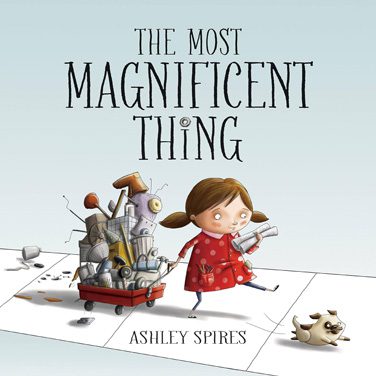
The Most Magnificent Thing

by Ashley Spires

A brilliant story about creativity, frustration, persistence, and problem-solving. This book helps children see the process of making (including mistakes and revision) is itself meaningful. It aligns well with Montessori values of purposeful activity and self-directed effort.


6 to 12 years old 

At this age, children are ready for richer narratives, deeper meaning, and global contexts. These books support curiosity, empathy, and intellectual engagement.

Where the Mountain Meets the Moon

by Grace Lin

A beautifully woven fantasy that draws on Chinese folklore, this novel encourages cross-cultural imagination, resilience, and wonder. Its structure invites children to notice narrative cause-and-effect, moral choices, and interconnected stories.

The Wild Robot

by Peter Brown

A compelling blend of nature, technology, and identity. Children explore what it means to belong, adapt, and communicate across species and systems. This story stimulates empathy, ethics, and systems thinking — key features of Montessori’s integrated curriculum.

12+ years

For teens, we aim for books that support moral reasoning, global awareness, identity exploration, and the complexity of the real world.


The Giver of Stars

by Jojo Moyes

A historical, character-driven novel about librarians on horseback in 1930s Kentucky. Themes include service, community, freedom of information, and personal courage. Great for building empathy and socio-cultural awareness.


All the Light We Cannot See

by Anthony Doerr

A richly layered novel about a blind French girl and a German boy whose paths cross in WWII. This book lends itself to deep discussions on history, moral complexity, perspective-taking, and the interconnectedness of human experience.

Early Childhood Developmental Assessment With Chancy and Bruce

Early Childhood Developmental Assessment With Chancy and Bruce

A sense of wonder


By Tim Seldin

From time to time, I come across an organization whose work aligns so closely with what we value in Montessori education that it deserves thoughtful attention. Chancey & Bruce is one of those organizations.

For nearly fifty years, Chancey & Bruce has focused on a single, deceptively simple question: Is a child developmentally ready for kindergarten?

At first glance, some Montessori educators may feel cautious about that language. Montessori is not about pushing children prematurely toward academic benchmarks. We respect developmental timing. We trust sensitive periods. We know that growth unfolds naturally when the environment is prepared thoughtfully.

But what impressed me about Chancey & Bruce is that their work is not about rushing children forward. It is about understanding whether foundational developmental structures are in place.

What They Assess — The Nine Foundational Pathways

Chancey & Bruce evaluates children across nine clearly defined developmental pathways. These are not academic drills. They are neurological and developmental foundations:

• Fine motor
• Gross motor
• Visual memory
• Visual discrimination
• Auditory memory
• Auditory discrimination
• Receptive language
• Expressive language
• Comprehension
• Social-emotional development

(Several of these domains naturally work together, but each is observed and evaluated with intention.)

For Montessori educators, these pathways should feel familiar. They mirror what we observe every day in our classrooms.

Fine motor and gross motor development are visible in Practical Life and Sensorial work.
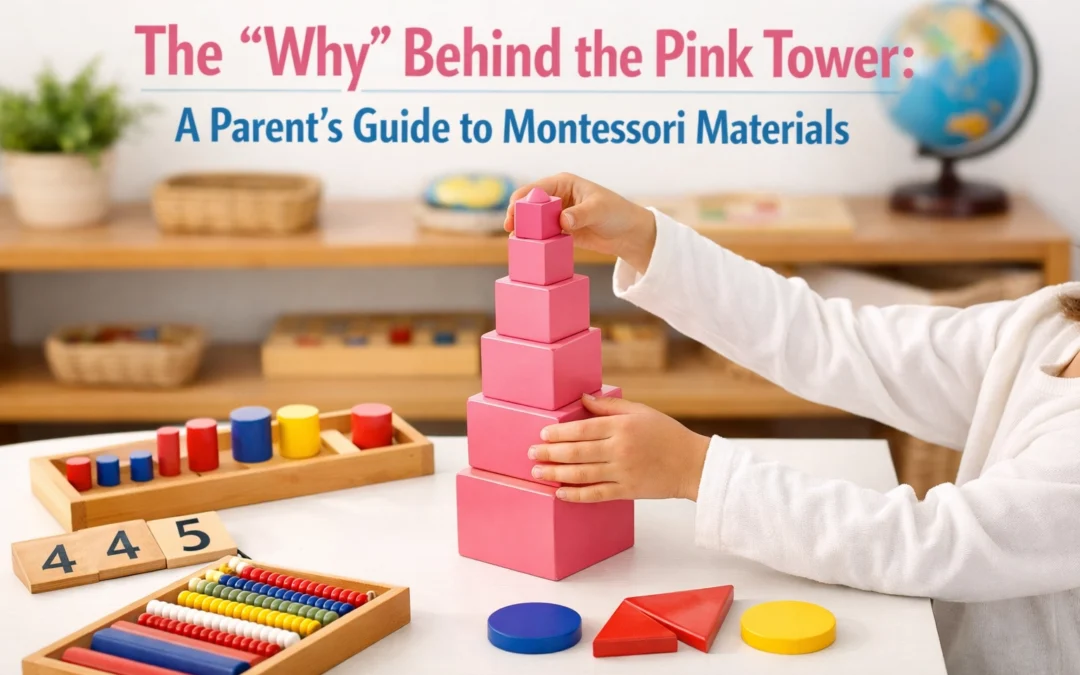
Visual discrimination and visual memory are refined through materials like the Pink Tower, Knobbed Cylinders, and Geometry Cabinet.
Auditory discrimination and auditory memory are strengthened through sound games and early phonemic awareness activities.
Receptive and expressive language are cultivated in rich oral language environments.
Comprehension develops as children make meaning of stories, directions, and experiences.
Social-emotional growth unfolds through Grace and Courtesy, conflict resolution, and multi-age community life.

In other words, Chancey & Bruce is not measuring something foreign to Montessori. They are looking carefully at the very capacities that allow a child to flourish in a Montessori classroom.

How the Assessment Works

The assessment is conducted one-on-one by a trained screener and lasts approximately 20–30 minutes. It is adaptive, meaning it responds to the child’s performance in real time.

Importantly, it is not designed to push a child as far as possible academically. Its purpose is not to prove that a five-year-old can do six-year-old work. Its purpose is to determine whether developmental alignment exists between chronological age and foundational readiness.

That distinction is critical.

This is not about labeling children advanced or behind. It is about identifying whether the neurological and developmental groundwork is sufficiently integrated for the next stage.

Three Perspectives, One Clearer Picture

Another strength of the Chancey & Bruce model is that it gathers information from three perspectives:

• Parent input
• Teacher input
• Live screener observation

As Montessori educators, we value observation deeply. But we also know that children behave differently in different environments.

A child may demonstrate strong skills in a quiet one-on-one setting but struggle with group dynamics. Another may shine socially but reveal gaps in auditory memory that affect early literacy.

By triangulating these three viewpoints, the resulting developmental profile becomes more reliable and more useful.

Why Montessori Schools Should Care

There are several reasons Montessori schools may find this valuable.

Admissions clarity
When evaluating incoming students, this type of developmental profile can provide insight beyond surface academic skills.

Supporting “the gift of time”
We have all faced moments when we sensed a child might benefit from an additional year before kindergarten. Having structured developmental data can help ground that conversation with parents in shared understanding.

Parent communication
Families increasingly ask for clarity. They want to understand how their child is doing in concrete terms. A thoughtful developmental profile can complement our narrative reports and observational records.

Strategic positioning
Public programs are expanding downward in age across many states. Families compare options. Being able to articulate, with specificity, how Montessori nurtures fine motor integration, auditory discrimination, language development, and social maturity strengthens our message.

Recommendations, Not Labels

The assessment does not diagnose. It does not label children with disorders. It does not attempt to replace professional evaluation when warranted.

Instead, it provides individualized recommendations. These suggestions often align naturally with Montessori materials and practices — Practical Life exercises for fine motor precision, sound games for auditory discrimination, language-rich conversations for expressive growth, Grace and Courtesy for social-emotional development.

In that sense, this is not a replacement for Montessori observation. It is a complementary lens.

A Legacy of Experience

Chancey & Bruce has refined its assessment over nearly five decades. Thousands of children are evaluated each year. Reports are reviewed with human oversight. This is not a trendy short-term product. It reflects sustained commitment to developmental science.

Montessori herself was a scientist. She measured carefully, always in service of understanding the child more deeply. I believe she would recognize in this approach an effort to honor developmental truth rather than rush children toward superficial benchmarks.

Closing Thoughts

Montessori schools need not fear thoughtful assessment when it respects the whole child and aligns with developmental science.

Chancey & Bruce is examining the very capacities we work to cultivate: coordination, discrimination, language integration, comprehension, and social maturity.

Used wisely, this kind of developmental profile can support admissions, guide parent conversations, and strengthen our ability to advocate for children.

As always, the most important work remains in the classroom — in the quiet, careful observation of each child. But tools that illuminate what we already value deserve our thoughtful consideration.

And I look forward to seeing the assessment in action.

  •