
Dear Cathie: Stars and Stickers

Dear Cathie: Stars and Stickers

curiousity


DEAR CATHIE—

I WISH I COULD MOTIVATE MY CHILD TO DO WHAT I WANT HIM TO DO. THESE THINGS ARE USUALLY THE BASICS OF LIFE, LIKE DRESSING, EATING, TAKING A BATH, AND USING THE BATHROOM BEFORE WE LEAVE THE HOUSE, COMING WHEN HE IS CALLED, AND GETTING INTO THE CAR MORE QUICKLY. I FIND MYSELF GETTING UPSET AND RAISING MY VOICE. I REALLY DON’T WANT TO BE A MOM WHO YELLS AT HER CHILD TO GET HIM TO DO WHAT HE SHOULD DO! I WONDER IF IT WOULD HELP IF I BRIBED HIM. I HAVE HEARD OF STICKER SYSTEMS WHERE THE CHILD “EARNED’ A STICKER OR A STAR FOR DOING WHAT HE WAS SUPPOSED TO DO. THEN, AFTER 5 OR SO STICKERS, HE GETS A TRIP TO THE ICE CREAM STORE, A SPECIAL PRIZE, OR SOMETHING LIKE THAT. I KNOW THERE ARE TWO DIFFERENT POINTS OF VIEW ON THIS. WHAT ARE YOUR THOUGHTS?

—A FRAZZLED MOM

Dear Mom,

I think all parents feel the way you do at some point during the day. It is very challenging to get through the days with the children cooperating smoothly most of the time. And while we would so like them to respond more quickly and do what they are told, the truth is that these skills take time to develop for many children. Children need to learn the value of cooperation and their role within the family.

We ultimately want children to be motivated to do the right thing because it is the right thing, not because they will get a “pay-off” for doing it. Getting a “payoff” makes a child think that the reason to get dressed, eat, and come when they are called is to earn a reward rather than to learn to be a self-sufficient human being and a contributing member of their family. Then they do not feel obligated to comply if there is no external reward. And once you begin this kind of system, it is often difficult to stop.

The major negative side of using stars and stickers to control your child’s behavior is twofold. First, your child is being controlled by external forces…. You! It puts you in the role of judge and jury, ruling on your child’s actions and passing judgment on his behavior. The other issue is that it does not actively help your child develop internal motivation. I think it is far better to help him learn to do what is right because it feels good to do what is

I think this is a dangerous path to begin to pursue.

It is better for the optimal independence and personal development of a typically developing child to help him learn to handle the expectations of life and do what is expected, because it is just a natural part of life. While using stars and stickers may seem like a “quick fix,” it is actually more negative than positive in the long run. There are many interesting studies on the longitudinal value of external rewards on children’s performance.

For further reading on this subject, I recommend: Punished by Rewards: The Trouble with Gold Stars, Incentive Plans, A’s, Praise, and Other Bribes by Alfie Kohn and Unconditional Parenting: Moving from Rewards and Punishments to Love and Reason by Alfie Kohn.

As an alternative, I suggest using logical consequences and rewards to help children comply. “As soon as everyone is ready, we can use any extra time to read a story.” “Let’s hurry and get in the car so we have time to drive by the cows on our way to school.” This not only gives the child motivation but also the promise of a positive shared experience within the family. 

Cathie Perolman has been involved in Montessori education for over 40 years. Cathie has worked in the classroom as a 3-6 assistant, a classroom teacher, a level leader, a teacher trainer, and a college professor. She currently spends he time mentoring teachers, conducting workshops for teachers and administrators, and writing for her blog and for magazines. She also serves as a consultant for schools and as a school validator for the Montessori Schools of Maryland. Cathie is the creator of The Color Coded Sound Games and The Rainbow Reading System as well as other reading and cosmic printable materials to enhance classrooms.

Find them at cathieperolman.com.

Dear Cathie: Bullying

Dear Cathie: Bullying

curiousity

DEAR CATHIE— THE TOPIC OF BULLYING SEEMS TO BE ALL OVER THE PRESS. MY CHILD HAS JUST STARTED PRESCHOOL BUT I WANT TO BE PROACTIVE IN BEING SURE THAT MY CHILD DOES NOT BECOME EITHER A BULLY OR THE VICTIM OF BULLYING. IS IT TOO SOON TO THINK ABOUT THIS NOW?

A PROACTIVE MOM


Dear Mom,

I applaud you for already considering the challenging issues. Bullying is a highly discussed topic now, and many schools, religious organizations, and community groups are working hard to raise awareness and develop training and interventions to counteract this behavior!

There are mixed views about the reality of bullying in preschool. I am in the camp that some children begin to show signs of bullying behavior as young as three, and these behaviors need to be addressed as soon as they appear.

Luckily, Montessori guides are trained to do just that. We are trained to work with children in challenging interpersonal situations and to help both bullies and the bullied develop appropriate actions and responses in social settings.

Let’s look at bullying from a few angles.

• When can bullying begin?

• What does it look like?

• What kinds of interventions are possible with such young children?


Children begin to understand and appreciate others’ feelings around age 3. Before that age, children are totally self-absorbed. They have limited capacity to put themselves in another person’s shoes and understand how that person might feel in a given situation.

The development of empathy is central to social learning in the early years.

What actually constitutes bullying behavior? The answer lies primarily in the motivation for the behavior. If a child deliberately does harm to another and smiles about it, that is bullying. If a child regularly hits, kicks, or punches another, that is bullying. It is also bullying to call another child repeatedly “names,” exclude him from play, or put him down with either words or actions.

It is bullying behavior to recruit other children to misbehave and to sneak to do things. Bullies also intimidate their victims by hurting a child or threatening to hurt a child and demanding that she keep it a secret.

In reality, many preschoolers do engage in some of the behavior listed above. The challenge is to distinguish between typical preschool squabbles and actual bullying.

This is the time in life when children “try out” many types of behavior to learn how to interact with others. They work to understand the impact of their actions and their words.

Preschool children who are just learning to socialize may do things that are thoughtless, unkind, or even downright mean. In an effort to secure a friendship, Samantha may boss Rachel around and get her to do what Samantha tells her to do.

My most memorable story about this was a child who ordered another child to use a specific potty in the school bathroom. Even though it made her friend cry, she was adamant day after day. After discussion, she preferred the child use the potty next to her so they could sit together. “That is what friends do, Miss Cathie, they sit together,” she told me, nodding solemnly. This was not bullying but a misunderstood code of conduct in a friendship. The difference is that the negative consequences of these behaviors do not bring the child satisfaction or joy.


One of the main symptoms of bullying behavior is that it is repeated and has a deliberate intent to scare, harm, or upset another. In most preschool conflicts, the power is balanced.

Let’s look at a typical example. David and Paul (both three-year-old boys) are playing in the sandbox. They see a popular red dump truck. They both grab for it, and a conflict begins. “It’s mine! I had it first,” they both cry. One pulls the truck, and the other falls over crying. The child has his truck, and he walks away, leaving the crying child in the sandbox. This conflict will take some teacher interaction to resolve, but it is not bullying. Neither boy wanted to harm the other.

Learning to share, take turns, and care about others’ feelings is an important component of preschool social learning. When working with children to resolve squabbles, I often find they are surprised that their actions caused another child to be upset or cry. They are so egocentric at this age that they only want what they want and focus on getting it, often at the expense of others.

What can you do if you feel there is a bullying situation brewing in your child’s class?

The first step is to gather as much information as possible, then speak with your child’s teacher. While the adults in your child’s classroom are great observers and see much that happens at the school, they are not able to see everything. Therefore, they need your input on how things are affecting your child. Some children are shy, especially in their first year, and do not feel comfortable talking to the teacher. They only share those serious feelings with their parents at home. And a bully may be sneaky, and it may be hard for your child to make sense of the situation.

How do Montessori guides work with children on these skills?

We explain to children that “you can’t have your fun by making other people sad.” This is the basic anti-bullying mantra. When squabbles arise, Montessori works with both children to discuss, analyze, and resolve the conflict. They help each child to listen while the other tells their side of the story and identify the way the conflict made them feel. Then the children and the guide brainstorm for ways to resolve the problem. “What do you need to make you feel better?” is a question we often ask. We expect that the child who was hurt to initiate the conversation. “It is not Ok for anyone to hurt your body or your feelings.” We expect the child who did the hurting to “fix” the problem.

Problems are not left until they are resolved. The child who was hurt (or bullied) is helped to stand up for himself, and the child who was doing the hurting (or bullying) is taught to listen and make amends.

So in the Montessori Method, both types of children are taught anti-bullying strategies.


Guides in 3-6 classrooms spend significant time with these sorts of problems. And most children do this sort of self-advocacy independently by the end of their fourth year.


 For further reading on this subject, I recommend: The Everything Parents’ Guide to Dealing with Bullies: From playground teasing to cyber bullying, all you need to ensure your child’s safety and happiness by Deborah Carpenter, and the children’s picture book, One by Kathryn Otoshi.


Cathie Perolman has been involved in Montessori education for over 40 years. Cathie has worked in the classroom as a 3-6 assistant; a classroom teacher; a level leader; a teacher trainer; and a college professor. She currently spends her time mentoring teachers, conducting workshops for teachers and administrators; and writing for her blog and for magazines. She also serves as a consultant for schools and as a school validator for the Montessori Schools of Maryland. Cathie is the creator of the Color Coded Sound Games and the Rainbow Reading System as well as other reading and cosmic printable materials to enhance classrooms. Find them at cathieperolman.com.

Dear Cathie: Enough movement?

Dear Cathie: Enough movement?

when our children are loved
by Cathie Perolman

MY WIFE AND I HAVE BEEN CONSIDERING PRESCHOOLS FOR OUR ACTIVE THREE-YEAR-OLD. OUR CHILD LOVES TO BE “ON THE MOVE” AND IS HAPPIEST BEING BUSY. WE THOUGHT A MONTESSORI SCHOOL MIGHT BE A GOOD FIT FOR SUCH AN ACTIVE PERSONALITY. WE EXPECTED TO SEE A BIG OPEN SPACE WITH LOTS OF ROOM FOR THEM TO BE ACTIVE AND MOVE FREELY. BUT IT SEEMS TO BE THE SAME IN EVERY ROOM WE VISIT; THERE’S ONE BIG RUG SPACE, AND MOST OF THE ROOM IS DIVIDED INTO SMALLER SPACES.

CAN YOU EXPLAIN WHY AND CALM OUR FEARS THAT OUR ACTIVE CHILD WILL REALLY GET ENOUGH MOVEMENT DURING THE MORNING? — DAD

Dear Dad,

Thank you for your concerns. As the mom of a son who seemed a lot like yours as a young child, I can totally identify with your worries.

The Montessori classroom for 3-6-yearold children is designed to resemble a children’s house. It is scaled down in size to be a perfect fit for young children and is divided by area; think of it like rooms in a house. The shelves of materials or activities often divide the room helping the children to see where each area ends and begins. Inside each area is workspace where children can choose to put their work rugs if they so desire. Child-sized tables are also placed in some areas, so table work can be encouraged to happen in that space. There are areas for one child to work as well as group activities.

The big work rug that you noticed in each classroom serves as both a gathering space for the entire class when they have their ‘circle time” or “class meeting” and as a space to spread out and do larger rug works and partner activities. This rug is often filled with the happenings of many children during the morning, which creates opportunities for your young child to see, absorb, and aspire to these.

The Montessori philosophy seeks to “control the environment and not the child.” Running is not permitted in the classroom due to safety concerns, so we make the pathways in the classroom too narrow for running. Long stretches of space are obstructed with furniture, so they are not inviting areas in which to run. Children must walk carefully in order to not bump into anything. This helps them learn to move carefully within the classroom while still meeting their need for movement. The work rugs that are laid out on the floor create a sort of natural maze for the child to walk through. This creates a fun and sometimes challenging experience of careful walking in the classroom.

Classrooms have a line drawn or taped on the floor, and children are taught to walk on that line. First, they simply walk on that line. Later, they carry things that are of greater and greater difficulty. This is a very popular movement activity for young children.

Many of the activities in the classroom also require movement to do them. A child may build the Pink Tower (a set of 10 graduated cubes from 10cm – 1cm) across the room with the random cubes on one rug and the emerging tower in order on another rug across the room. This is an enticing activity for young children. They may collect objects of a single color from around the room and bring them to their rug. They may match the pictures of the children in their class to the real children. These types of works keep children moving all morning, and yes, their need for movement is satisfied in a Montessori classroom. Children also choose the amount of movement that is right for them. They have choices as to which activity they select, how long they work with it, and when they are finished. They might choose to have a “water break” or a snack break” in the middle of an activity or between activities.

Some classrooms have designated movement shelves with activities, such as yoga

Cathie cards, jumping circles that can be laid out, or other movement activities. Children may choose to turn over a timer and jog in a square to expend energy or lay out a walking path and move like an animal as they navigate the path.

The Montessori classroom provides natural opportunities for movement. The purpose of the classroom is to help the child refine their movements as they mature. It will assist your child in learning to develop greater self-control and purposeful movement as they grow their skill level. There are opportunities for gross-motor skills during circle time when the class plays group games as well as during free play outside each day. The balance of these myriads of movement-rich experiences will allow your child many opportunities for growth and development. 

Cathie Perolman has been involved in Montessori education for over 40 years. Cathie has worked in the classroom as a 3-6 assistant; a classroom teacher; a level leader; a teacher trainer; and a college professor. She currently spends her time mentoring teachers, conducting workshops for teachers and administrators; and writing for her blog and for magazines. She also serves as a consultant for schools and as a school validator for the Montessori Schools of Maryland. Cathie is the creator of the Color Coded Sound Games and the Rainbow Reading System as well as other reading and cosmic printable materials to enhance classrooms. Find them at cathieperolman.com.
 

Dear Cathie Growing Global Citizens

Dear Cathie Growing Global Citizens

Growing Global Citizens

DEAR CATHIE—

AS FAIRLY NEW PARENTS, WE ARE WATCHING OUR CHILDREN BEGIN TO DEVELOP INTO WHO THEY WILL BE, AND WE REALIZE THAT WE SHOULD ALSO BE PURPOSEFUL IN MOLDING THEM INTO THE KIND OF PEOPLE WE WANT THEM TO BECOME. WE ARE LOOKING FOR IDEAS AS TO HOW TO DO THAT! WHERE DO WE START AND WHAT SHOULD WE FOCUS ON? CAN YOU OFFER ANY INSIGHT ON THIS SUBJECT?

— PROACTIVE PARENTS

Dear Parents,

We applaud you for being proactive in considering your child’s development from the macro point of view. Raising children is one of the most difficult, challenging and important things you will ever do. One way to accomplish that task is to let your children share in your activities as you go through your daily life. Let your child see and understand your values through your actions.

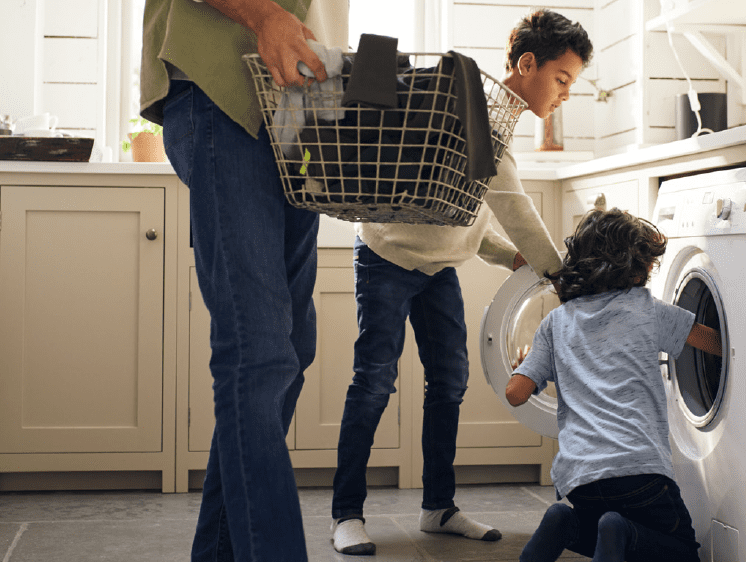
As your young children see you living purposefully in the moment, you can invite them to share the joys of those daily experiences to the best of their abilities based on their age. Let’s use laundry as an example. A two-year-old can pull the laundry out of the dryer and put it in the laundry basket so it can be carried to the sofa to be folded. However, a three-year-old can match the socks into pairs, while a fouryear-old can actually fold the pants in half and sort them into piles for the different members of the family. Everyone is contributing to the work of being in a family while moving on the path towards ultimate self-reliance.

A common worry is children having expectations or feelings of entitlement. One way to minimize this in your family is to regularly cook with your children. Make the creation of a meal a family affair! Invite all members of the family to help you plan meals. Include your children in the purchasing of food, preparing food and cleaning up the kitchen after the meal. Perhaps your child can help put away the groceries, cut the vegetables, clean the crumbs, wash the dishes or put away the leftovers. This helps your child feel like a contributing member of the family, rather than just having the food appear upon the table magically! It is also a way to spend regular quality time together!

Include your children in your philanthropic work or doing for others in your community in whatever form that takes. Make a point to think past yourself and discuss this thinking openly and frequently with your children. Choose a family charity (or even a few charities) and work to make them a part of your family’s culture. This could start as small as giving home-made cookies to your neighbors or your child’s teacher or the school bus driver to choosing a way to help others at holiday time. It could also be service based, checking on an elderly neighbor or shoveling the driveway for somebody who is ill or disabled.

Be sure your child is involved in all aspects of these projects even though it can be more complicated and time consuming. This will help children to begin thinking outside their own bubble. If your family has little to give, you can include your children in recycling used toys to an organization for children in need, instilling the value of compassion.

As children develop, your goal for them is for them to learn to take their responsibilities seriously and grow into global citizens who will work to make the world a better place. Parents begin this effort when their children are very young with the intent to mold their children with lifelong values, where children see and participate in family activities with their parents. Your children are aware of everything you say and do. Why not use your daily chores and activities as a basis for their in-home education with you. What a wonderful opportunity and awesome experience. Enjoy this limited and special time together.

Cathie 

Cathie Perolman has been involved in Montessori education for over 40 years. Cathie has worked in the classroom as a 3-6 assistant; a classroom teacher; a level leader; a teacher trainer; and a college professor. She currently spends her time mentoring teachers, conducting workshops for teachers and administrators; and writing for her blog and for magazines. She also serves as a consultant for schools and as a school validator for the Montessori Schools of Maryland. Cathie is the creator of the Color Coded Sound Games and the Rainbow Reading System as well as other reading and cosmic printable materials to enhance classrooms. Find them at cathieperolman.com.
Dear Cathie – Play Kitchen

Dear Cathie – Play Kitchen

toy kitchen

Play Kitchen

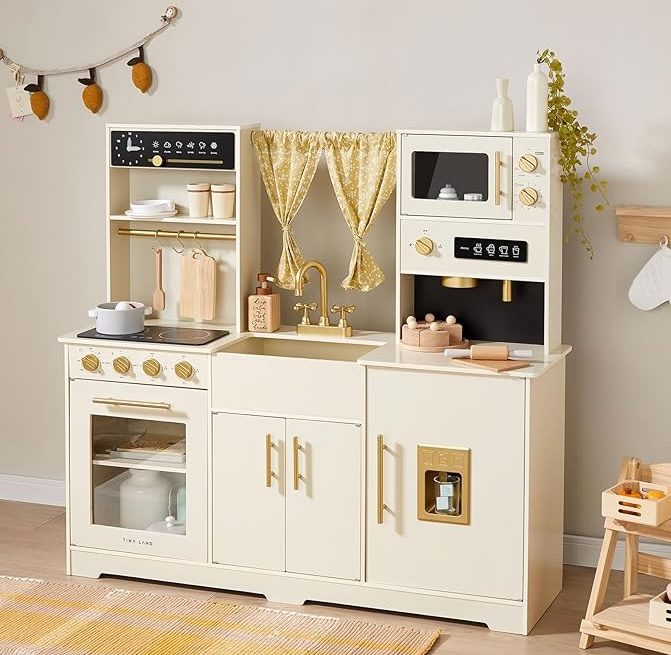
DEAR CATHIE— MY DAUGHTER LOVES PLAYING IN HER COUSIN’S PLAY KITCHEN. WHENEVER WE ARE AT HER COUSIN’S HOUSE, SHE GRAVITATES TOWARD THAT ACTIVITY AND SPENDS A LOT OF TIME THERE. WE HAVE VISITED QUITE A FEW MONTESSORI PROGRAMS, AND WE NOTICE THAT THEY DO NOT HAVE A PLAY COOKING AREA. WE THOUGHT THE MONTESSORI METHOD ENCOURAGED CHILDREN TO DO THINGS THEY WERE INTERESTED IN. WHY DON’T MONTESSORI CLASSROOMS HAVE PLAY KITCHENS?

— PUZZLED PARENTS


Dear Parents,

You are very observant on two counts! Children (even very young children) are naturally drawn to the activities that happen in the kitchen and those that surround eating and cooking. They love to do the things that they see their parents, older siblings, and caregivers do. They are called to be a part of the community happenings surrounding snacks, meals, and food preparation.

Montessori classrooms do not have these activities in play form in their environments. Dr. Maria Montessori noticed that, when given the choice, children were not interested in playing about food preparation. What they were really seeking was real-life experience surrounding food preparation, serving, and cleaning up. They wanted to do the things that adults do with genuine utensils—but the right size for their hands. The Montessori environment does just that. The typical Montessori classroom provides experiences in authentic life activities, such as pouring water from a pitcher for your own snack or serving yourself crackers from a communal bowl. A child as young as two or three is serving himself food when he is hungry and cleaning up after himself when he is finished. He might also be involved in setting up the lunch for the entire class, putting out placemats, silverware, plates, and glasses. This helps the classroom operate much like a real family, practicing manners and grace and courtesy skills daily.

Children have experiences preparing their own snack. They might spread butter on toast, make their own fruit salad (by counting out three pieces of apple, two pieces of pear, and one grape that they cut in half themselves) or dip three chips in salsa.

The shelf contains self-selected activities that develop these skills at different levels. Children learn to pour from one vessel to another. Later they practice pouring up to a line as they will need to do when they are measuring wet ingredients. They might have an exercise pouring from a pitcher into four glasses, as if they were serving four friends. As the skill level of the class grows, the offerings on the shelves change and the skill level of the entire class grows. These skills come together in real cooking experiences in the classroom.

Children are shown how to do the things that adults do by breaking the tasks down into small steps and practicing each step until it is mastered. Adults in the environment provide tasks that are appropriate for each child’s development. For example, a class might make tomato soup. Younger students might mash one whole canned tomato. Older students might cut the fresh seasoning into small pieces with scissors. A child might cut the bread into squares to make croutons. Others will grate the parmesan cheese. Some children will toss the croutons in the olive oil and in the grated cheese. Using tongs, they will carefully lift each crouton and place it on the cookie sheet where it will toast. The adult will mix the soup using the infusion blender, as that part is too sophisticated for a child. Later, they will add vegetable broth and a small amount of pasta to the soup. (In one class they added whipped cream that the children shook themselves and did not add the pasta.) For snack, the children had tomato soup, ladled out by the child and topped with croutons (counted out by the child). The completion of this exercise provides each child with the pride of accomplishment, as well as the completed product.

Montessori classrooms provide real-life experiences for children to do Practical Life exercises. They do not have any play kitchens or pretend toys. Rather, we have real exercises that practice real skills. These build on each other to help children learn to do more and more complicated sequences of skills, such as baking.

I hope this helps clarify the difference between playing with cooking toys one might see in a home playroom and having real Practical Life and cooking experiences that are a part of the Montessori classroom experience. 

Cathie Perolman has been involved in Montessori education for over 40 years. Cathie has worked in the classroom as a 3-6 assistant; a classroom teacher; a level leader; a teacher trainer; and a college professor. She currently spends her time mentoring teachers, conducting workshops for teachers and administrators; and writing for her blog and for magazines. She also serves as a consultant for schools and as a school validator for the Montessori Schools of Maryland. Cathie is the creator of the Color Coded Sound Games and the Rainbow Reading System as well as other reading and cosmic printable materials to enhance classrooms. These materials can be found at her website: cathieperolman.com

Dear Cathie: Building Concentration and Focus

Dear Cathie: Building Concentration and Focus

DEAR CATHIE—

WE THINK IT IS TIME FOR OUR CHILD TO EXPERIENCE LEARNING OPPORTUNITIES IN ADDITION TO MONTESSORI SCHOOL. WE THINK HE IS READY FOR SOME EXTRACURRICULAR ACTIVITIES. WHILE WE KNOW THAT IT IS POSSIBLE TO BE OVERSCHEDULED, WE DO WANT OUR CHILD TO TAKE ADVANTAGE OF ALL THAT OUR AMAZING COMMUNITY HAS TO OFFER. HOW DO WE BALANCE THIS?

— A SERIOUS PARENT

Dear Parents,

You are right on target, and we applaud your conscientious approach to this complicated subject. The rule of thumb is to follow your child interests and seek to broaden their experiences until they are old enough to have found their passion. The purpose of extracurricular activities for young children is to try new things, develop new skills, and have opportunities to take direction from another adult besides parents and teachers at school.

We recommend that young children experience extracurriculars in small segments for the purpose of just trying them out. These are usually offered in areas such as sports, dance, drama, art, etc. Seek classes that are in short sections such as 8 weeks or a week-long summer program. The purpose of these of classes is to expose children to the activity or skill. These short introductions help parent and child determine interest, without overtaxing the child or family’s resources. These classes focus on the basics. It may be possible to engage your child in a summer camp that encompasses a number of different sports or types of dance at a single location. From there it is possible to decide where to focus your child and family’s resources in the years ahead.

Many towns have recreation sports leagues as well as travel leagues that require children to try out for a place on the team. However, your child may enjoy being a part of the experience at any level. Additionally, sometimes activities are offered as single day camps during days off from school. These may include computer skills, 3-D printing, cooking classes, etc. These one-day activities can help you widen a child’s awareness of the myriad of activities available to pursue.

As children mature, they begin to narrow their focus and gravitate toward some extracurricular activities more than others. Many begin to show an affinity for a particular activity such as scouting, a specific sport, a type of musical instrument, a dance class, etc. Now is the time to zone into one (or a few) of these areas and begin to focus your child’s after school time. You may eventually decide that private music or dance classes are for your child. Maybe your child is committed to soccer and is attending practice twice a week and playing a game once a week as well. Each of these comes with a time and financial commitment on your part, and that needs to be figured into the equation. Be sure to involve your child in the decision and not simply decide for them.

As you are making these decisions, remember to program in some free time for your child to have time outdoors to play, create, and spend unstructured time with friends. This is an important part of your child’s development as well. 

Cathie Perolman is a reading specialist, Elementary educator, author, consultant, and creator of educational materials. For over three decades, she has dedicated her energies to improving reading for all youngsters. She is the author of Practical Special Needs for the Montessori Method: A Handbook for 3-6 Teachers and Homeschoolers (available through montessori.org). 

She is a regular contributor to Tomorrow’s Child and Montessori Leadership magazines. Cathie holds a BS in Early Childhood Education and a MEd in Elementary Education, with a concentration in reading. She is credentialed as a Montessori teacher. Check out her new downloadable materials on her website cathieperolman.com.

Dear Cathie: Building Concentration and Focus

Dear Cathie: Building Concentration at Home

DEAR CATHIE—

WE ARE SENDING OUR CHILD TO A MONTESSORI SCHOOL TO LEARN HOW TO CONCENTRATE, AMONG OTHER THINGS. WE ALSO WANT TO ENCOURAGE HER TO CONCENTRATE AND FOCUS AT HOME. WE SEE IT IN SCHOOL MUCH MORE THAN WE DO AT HOME. ANY ADVICE TO HELP US WORK ON THIS IMPORTANT SKILL? — SOMEWHAT FRAZZLED PARENTS

It is not unusual for the school day to get the best part of your child’s concentration. That is when they are at their freshest, most rested, and are often putting their best selves forward. When they return home after a full (or even a partial) day at school, they have mostly used up their focus energy and have little left to give. Educators and psychologists say that this is often when children show their worst behavior, as it is safe to let their guard down in the place of unconditional love.

You can indeed foster concentration at home through both your home environment and when you interact with your child through your shared experiences. Within your home, be sure there is a quiet place for your child to play that minimizes noise or distractions. This can be as simple as a mat or a small table and chairs away from the hustle and bustle of the rest of the family. Obviously, if your child is very young, you need to be sure you can see them to ensure their safety. Be certain that a group of activities are available to your child so that they can make individual choices without you.

Concentration develops when a child gets “lost in play” or is deeply engrossed in an activity of their own choosing. While it is positive to introduce your child to something new and offer new experiences, avoid doing so, as this can break their concentration on an activity previously chosen. It is constructive to offer suggestions as to the activities you place in their space and what you offer to them. Rotate those activities regularly as their interests and developmental level constantly are in flux. Be sure favorite activities are always available and maybe something new and interesting for a holiday or birthday. Talk to your child about what activity is calling to them now. New books, activity kits, and building materials can be part of the ongoing family discussion and can enter their space.

It is also appropriate to model concentration for your child by having them see you focused on tasks they can understand and to which they can relate. You can participate in shared experiences with your child that encourages concentration. Activities like peeling an entire potato, rolling, and cutting out cookies with a cookie cutter, making meatballs or emptying all the garbage cans in all of the rooms in your home build both motor skills and concentration, as well as helping your child contribute to the family. These activities also work on many other executive functioning skills that are important for all aspects of a successful school career and a successful life.

Concentration builds over time. Toddlers, Primary, Lower Elementary, and Secondary students will have ever-increasing concentration spans. Nevertheless, we can encourage through modeling ourselves, offering conducive spaces, and sharing experiences that require concentration (both new and repeated) that build concentration.

Cathie Perolman is a reading specialist, Elementary educator, author, consultant, and creator of educational materials.

For over three decades, she has dedicated her energies to improving reading for all youngsters. She is the author of Practical Special Needs for the Montessori Method: A Handbook for 3-6 Teachers and Homeschoolers (available through montessori.org). She is a regular contributor to Tomorrow’s Child and Montessori Leadership magazines.

Cathie holds a BS in Early Childhood Education and a MEd in Elementary Education, with a concentration in reading. She is credentialed as a Montessori teacher. Check out her new downloadable materials on her website cathieperolman.com.

Dear Cathie: Family Traditions

Dear Cathie: Family Traditions

DEAR CATHIE—

WE ARE THINKING ABOUT THE UPCOMING HOLIDAYS AND HOW AND WHEN TO BRING OUR CHILD INTO OUR FAMILY’S TRADITIONS. SOMETIMES, IT FEELS TOTALLY OVERWHELMING, AND MAYBE IT IS JUST TOO SOON TO THINK ABOUT IT AT ALL. WHEN IS THE RIGHT TIME TO BEGIN, AND WHAT KINDS OF ACTIVITIES SHOULD WE BE THINKING ABOUT?

— A YOUNG FAMILY

Dear Young Family,

It is never too soon to begin creating intentional traditions or just living and sharing the seasons and the holidays and letting your repeated experiences grow into family traditions. The truth is, often, anything a family does twice is considered to be a tradition by children. As you enjoy celebrating the changing seasons or the holidays, it is natural to want to share that with your children and involve them in your joy. Your enthusiasm will be contagious, whether picking apples, carving pumpkins, planning Thanksgiving meals, putting out decorations, going to an Autumn fest, or walking in nature to appreciate the colorful leaves or flowers. Sharing them with young children sets the stage for future experiences — building memories extending into middle childhood, adolescence, and beyond. Shared experiences make strong families. And children will look forward to traditions.

Aim for yearly traditions spanning each season of the year. Traditions can revolve around nature, planting and harvesting, food and food preparation, and trips to the zoo, park, pumpkin patch, nature trails, or farmer’s market. They can also involve preparation of the home, such as decorating for a season, weeding out your clothes or toys as the children grow, or sharing sports experiences, either as spectators or as participants: skiing, snowboarding, skating, hiking, beach time, etc. Philanthropic projects can also be a part of holiday traditions that can grow with the family as the children’s ability to participate increases.

Any type or level of holiday tradition should be upbeat and fun; these activities will help build a strong family. Enjoy any holidays you may celebrate, especially the time you spend with each other. 

Cathie Perolman is a reading specialist, Elementary educator, author, consultant, and creator of educational materials for Primary and Elementary students. Check out her new downloadable materials on her website cathieperolman.com.
For more than three decades, she has dedicated her energies to improving reading for all youngsters. She is the author of Practical Special Needs for the Montessori Method: A Handbook for 3-6 Teachers and Homeschoolers published by the Montessori Foundation (available through montessori.org.) She is a regular contributor to Tomorrow’s Child and Montessori Leadership magazines.

Cathie holds a BS in Early Childhood Education and a MEd in Elementary Education, with a concentration in reading. She is credentialed as a Montessori teacher. She is married and has two adult children and two adorable granddaughters.

Dear Cathie: Attributes of Montessori Children

Dear Cathie: Attributes of Montessori Children

DEAR CATHIE—

WE HAVE BEEN STRUGGLING WITH BEDTIME AND GETTING OUR CHILD TO SLEEP EVER SINCE HE WAS BORN. EXHAUSTION IS JUST A MATTER OR COURSE IN OUR FAMILY. IT IS SO HARD TO GET OUR CHILD TO GO TO SLEEP WITHOUT ME OR HIS OTHER PARENT SPENDING HOURS WITH HIM AND RUSHING TO HIS SIDE IF HE WAKES DURING THE NIGHT. AS HE GETS OLDER AND GOES TO ELEMENTARY SCHOOL, WE WOULD REALLY LIKE TO FIGURE THIS OUT AND TEACH OUR CHILD TO SLEEP SO THAT WE, AS PARENTS, CAN HAVE SOME TIME TOGETHER ONCE AGAIN.

— A WEARY SET OF PARENTS

Dear Parents,

Thank you for reaching out with this difficult yet common challenge. I am happy to recommend Dr. Lynelle Schneeberg’s book, Become Your Child’s Sleep Coach, as my favorite resource. Her book is clear, readable, and practical. And while I will share a few highlights, I highly recommend you read the entire book, which focuses on sleep challenges for families with children ages 3-10. She recommends developing a fairly simple routine around bedtime that is consistent for all caregivers. Some children have a variety of adults in their lives, who are involved in their bedtime routine, and it is critical that all follow the same bedtime routine.

Prepare the Child’s Room

The author recommends creating a sleeping environment that allows the child to put themselves to sleep independently. This environment will look the same when the child wakes up in the middle of the night so they can put themselves back to sleep easily. Remove all electronics, pets, and anything that turns off later from the child’s room, such as a white noise machine. (A white noise machine that stays on all night is fine.) The routine is clear, consistent and streamlined.

Add to the child’s room:

  • a single bedtime buddy (lovey)
  • a bedtime basket (filled with books and other non-electronic things to do in bed while the child is becoming drowsy)
  • 3 ‘bedtime tickets’ (These can be used for a trip out of bed if necessary. If they are not used, they can be cashed in for a prize the next morning. The number will decrease over time.)
  • a reading light
  • a nightlight

Create a Clear 5-Step Bedtime Routine

The actual bedtime routine is simple and routine.

  • bedtime bite (encourage a healthy snack including complex carbohydrates eaten only in the kitchen.)
  • bath or wash-up time and a change into pajamas
  • brushing teeth
  • bathroom (provide one last time to go to the bathroom)
  • books (read in bed with your child and their bedtime buddy. Set a timer for the end of this time or a number of books/ chapters you will read.)

Create a visual chart for this 5-step routine so they are clear to your child. There is a chart to copy in the book.

Once all the steps of the routine are complete, your child is ready to fall asleep on their own. They may look at books or do other activities from their bedtime basket until they are drowsy. They may need a parent to stay near them, but do not interact with them as they transition to this step. The child may get up to go to the bathroom, but each time they get up it costs them a bedtime ticket. Be matter of fact, and do not interact with your child during this time.

Your goal is for the child to learn to fall asleep alone after completing the bedtime routine. Dr. Schneeberg speaks about making the things necessary to sleep simple, such as those they would take to summer camp.

Remember that this process may take a few weeks to master.

Dr. Schneeberg provides more clarification and detailed explanations in her book and discusses special contingencies. She also shares case studies from her work with families and children or all ages. I am confident it will be helpful to you.

Best of luck helping your child learn to sleep alone.

Warmly, Cathie

Cathie Perolman is a reading specialist, Elementary educator, author, consultant, and creator of educational materials for Primary and Elementary students. Check out her new downloadable materials on her website cathieperolman.com.

For more than three decades, she has dedicated her energies to improving reading for all youngsters. She is the author of Practical Special Needs for the Montessori Method: A Handbook for 3-6 Teachers and Homeschoolers published by the Montessori Foundation (available through montessori.org.) She is a regular contributor to Tomorrow’s Child and Montessori Leadership magazines.

Cathie Perolman holds a BS in Early Childhood Education and a MEd in Elementary Education, with a concentration in reading. She is credentialed as a Montessori teacher. She is married and has two adult children and two adorable granddaughters. Cathie lives in Ellicott City, Maryland with her husband.

Dear Cathie: First Days at School: Morning Routines

Dear Cathie: First Days at School: Morning Routines

Child puring milk

First Days at School: Morning Routines

DEAR CATHIE— WE WILL BE ATTENDING OUR LOCAL MONTESSORI SCHOOL BEGINNING NEXT FALL, AND WE HAVE BEEN READING ABOUT THE SCHOOL AND THE MONTESSORI METHOD. THIS WILL BE OUR CHILD’S FIRST TIME TO BE SOMEPLACE OTHER THAN HOME ON A DAILY SCHEDULE. WE KNOW THAT TIME SCHEDULING IS NOT EASY FOR CHILDREN. WHAT CAN WE DO TO HELP MAKE THE MORNING ROUTINE WORK EFFICIENTLY AND YET NOT FEEL RUSHED? WE HAVE HEARD FROM OTHER PARENTS THAT THIS CAN BE QUITE STRESSFUL! — AN ALREADY STRESSED PARENT

Dear Parent,

This is an exciting time in your family’s life as you get ready for your child to start school. There are many things you can do to make the morning as smooth as possible, and they all begin with a calm, smooth, and predictable daily routine.

Consider which tasks you might do in the evening versus what you might need to do in the morning. Think about which time frame might be less hectic for you and your family. Consider things, such as picking out clothes; packing lunches; packing your child’s backpack; finding tomorrow’s footwear; etc.

Now think through the details of the tasks. Where will you take care of the morning bathroom business? Will you bathe in the morning or evening? If you take baths in the evening, will you eat breakfast in pajamas and then change into school clothes or get totally dressed for school and then eat breakfast? When will you pack the backpack? Perhaps you have the backpack ready and by the door in the morning, as well as the child’s shoes so you don’t need to look for these items as you are getting ready; if ready the evening before, all that is necessary is to add the child’s filled water bottle and lunchbox to the backpack and, viola, you are done. Let your child be aware of what

will be coming and make it more or less the same every day. We encourage children to be involved in all the process as much as they are able. When choosing clothes, choosing between two outfits works well. If picking out clothes is challenging, then perhaps that can be done after dinner the night before, so this is an already completed task in the morning. Let him help with packing his backpack, choosing what he will eat for lunch, etc. Keep the possibility of his helping at the forefront of your mind as you go through the process. (If he needs clean socks for school, can he get them from the drawer and put them in his backpack?)

When you return home in the evening is another time to work with your child to begin preparing for the next day. Let your child assist with unpacking his backpack and taking care of items that need to be dealt with, such as washing his water bottle; cleaning his lunch box; putting laundry where it belongs; etc. Adding these tasks to your afternoon routine ensures you will be aware of what your child needs for school the following day or other school notifications. It also encourages your child to become a partner in these responsibilities and encourages him to chat about his day. It is just one more way of keeping the lines of communication open.

Of course, school information comes out electronically, as well, these days, but this is still a good way to stay organized and involve your child.

As with all aspects of child rearing, flexibility is paramount as routines will naturally ebb and flow. Your family’s situation may change, or you may decide what you are doing is just not working! Parental workplace demands may cause a shift in routine, and children may assume some of the responsibilities as they mature.

Your best family routine will evolve with time. Make a conscious plan and carefully think through the division of your morning, afterschool, and evening tasks. Keep your routine as consistent as is reasonable and involve your child in as many aspects of the process as is developmentally appropriate. Build in a bit or extra time so your morning does not feel rushed! Good Luck! •

Here is an example of a family’s daily, school-year routine.

MORNING

• breakfast

• brush teeth

• get dressed

• fill water bottle

• pack lunch

• put on shoes

AFTER SCHOOL

• unpack backpack

• wash water bottle

• clean lunchbox

• put laundry where it belongs

• replace any clothing/bedding needed for the next day

EVENING

• pack backpack

• pick out clothes for tomorrow together

• bath time

• brush teeth

• read stories

• child goes to bed

Cathie Perolman is a reading specialist, elementary educator, author, consultant, and creator of educational materials for Primary and Elementary students. Checkout her new downloadable materials on her websitecathieperolman.com.
For more than three decades, she has dedicated her energies to improving reading for all youngsters. She is the author of Practical Special Needs for the Montessori Method: A Handbook for 3-6 Teachers and Homeschoolers published by the Montessori Foundation(available through montessori.org.) She is a regular contributor to Tomorrow’s Child and Montessori Leadership magazines.

Cathie Perolman holds a BS in Early Childhood Education and a MEd in Elementary Education with a concentration in reading. She is credentialed as a Montessori teacher. She is married and has two adult children and two adorable granddaughters. Cathie lives in Ellicott City, Maryland with her husband.

Raising a Child to Love Literature

Raising a Child to Love Literature

Parents often wonder and worry about how to encourage children to read and how to raise a child to love literature. How can you inspire your preschooler, school-aged child, or teen to love the written word?

It begins with adult modeling, sharing literature at all stages of your child’s life, and consistently providing books and magazines in your home. Show your child your genuine enjoyment of books, magazines, newspapers, and all things written!

Let’s start with the youngest children: toddlers and preschoolers.

Flood your home with books. You can buy them, ask for them as gifts from grandparents or relatives, or make regular trips to your local library.

Read these books often and try to respond with genuine enthusiasm when your toddler asks you to read the same book over and over, a positive step, as this leads to predictability, comfort, and a true mastery of the story sequence.

Start early with magazine subscriptions: The Babybug (6 months to 3 years) magazine is a great place to start and Hello magazine (0 to 2 years) from the makers of Highlights is for infants and toddlers as well.

Be sure that books are available for them to explore as readily as other toys and set out on low shelves. Children will be more inclined to choose books and magazines when they are as available and attractive as other toys and activities.

One of the best traditions is to start purchasing a quality hardback book for your child at every milestone, birthday, and winter holiday. Write an inscription in these books with a date and message so that they are notably special.

These are the books that will be read over and over again and loved thoroughly.

As children move into their preschool years, they are ready for different types of literature. Young children love stories that show others like themselves and that talk about their world. These books help preschoolers to feel secure and comfortable in the world they see.

But literature can also help preschoolers enter worlds slightly bigger and more divergent from their own. The stories should be getting a bit longer (and the subject matter more varied) as your child matures and is ready to explore.

I recommend looking for literature that embraces subjects that your child is interested in now, but also look for books that stretch your child’s imagination to discover new worlds and new experiences. There are many lists of appropriate Adult/child book clubs have sprung up in many towns. They encourage the experience and love of shared reading. preschool books online.

School-aged children enjoy not only singlesitting books but also chapter books and book series.

I suggest you continue to read aloud to your child at bedtime, even as your child becomes a more proficient reader. Reading aloud not only lets your children hear the cadence and speed of proficient reading, it lets them share a book with you and have the opportunity to discuss the happenings in the book as well. This can allow you to explore sensitive subject matter together, as well as a great story.

Adult/child book clubs have sprung up in many towns. They encourage the experience and love of shared reading.

In my view, it is best to continue the tradition of giving your child a carefully chosen hardcover book as a gift. It is so important for your child to build his or her own personal library with books they will read over and over for years.

Regular trips to the library remain important, although your child will naturally become more independent in selecting books during these years. By watching what is selected, you will get to know your child’s interests better, offering you ways to initiate conversation or other book suggestions. This is also a time to think back on the books or book series that were special to you and suggest them as well.

By the teen years, encourage your young adult to enjoy literature in whatever form brings enjoyment: graphic novels, books, magazine articles. Online and audiobooks can engage one in an interesting story. Non-fiction books about cooking, automobile repair, or outdoor sports also resonate with many teens.

As a parent, I believe our job is to encourage the exploration of any subject that can enhance interest in reading.

Teens also enjoy reading about themselves and their real-life challenges, so many will gravitate toward content that explores these issues.

As a teen, they are probably reading content online, and it may be harder to ascertain their area of interest. You might want to introduce them to others who read online, so they can have discussions there.

Goodreads.com lets kids discuss what they are reading with others, which can often be more interesting to do than discussing them with parents. There are even many chatbased story platforms like Hooked or Wattpad’s Tap app, that combine reading and storytelling for teens.

A continued family discussion about this topic is still important.

Modeling reading for your teens and talking about what you are reading is also very important. This can stimulate conversation with your teen that can lead to hearing them express their own views on topics.

Teens will read books as part of their classes in school and, if you have not read them, you might want to read the books to give you another basis for discussion.

Here are a few more suggestions:

• Continue to reach into your own memory and recommend books that were your favorites.

• Many young adult books (YA) span age groups and can be read and enjoyed by both parents and teens.

• Don’t be afraid to leave books and magazines around your home in enticing places for your teen to pick up!

• Books that are written as a series can be a good way to encourage a teen to keep on reading.

• After your teen has seen a movie, find the book that it was based upon and bring it home. Discuss whether the movie or the book was better.

As with all things “teen,” make every effort to keep the lines of communication open. Your local library may offer classes or programs for teens that can get them inside the library to explore an interest and, at the same, time renew their awareness of what is offered in the library.

Be aware that school requires a significant amount of required reading, which can limit the time that they can spend on recreational reading during the school year. Teens may read more for pleasure during school vacation breaks or in the summer when they may have more free time.

Reading can be encouraged as an enjoyable individual and family experience when it is modeled by parents, shared within families, and openly enjoyed. •

REFERENCE:

The Babybug magazine: shop.cricketmedia. com/babybug-magazine-special-offer.html

Hello magazine: shop.highlights.com/hello-magazine.html

Cathie Perolman is a reading specialist, elementary educator, author, consultant, and creator of educational materials for primary and elementary students. Check out her new downloadable materials on her website: cathieperolman.com.
For more than three decades, she has dedicated her energies to improving reading for all youngsters. She is the author of Practical Special Needs for the Montessori Method: A Handbook for 3-6 Teachers and Homeschoolers published by the Montessori Foundation (available through montessori. org.) She is a regular contributor to Tomorrow’s Child and Montessori Leadership magazines.

Cathie Perolman holds a BS in Early Childhood Education and a MEd in Elementary Education with a concentration in reading. She is credentialed as a Montessori teacher. She is married and has two adult children and two adorable granddaughters. Cathie lives in Ellicott City, Maryland with her husband.

DEAR CATHIE: A CONCERNED PARENT

DEAR CATHIE: A CONCERNED PARENT

DEAR CATHIE—

I have visited a number of Montessori schools as we consider a placement for our 3 and 4 year old children next year. I see the children all busy on different projects, and it all looks great. But can it really work? How can one teacher, even with an assistant, really keep track of who did what and be sure that each child is progressing and getting what she or he needs? All those children—all those needs. I can see it more for younger children, but I really get concerned in the Elementary grades. Does this method really work?

— A CONCERNED PARENT

Dear Concerned Parent,

I am so glad you are looking at Montessori schools for your children and that you have started the search so early. Many schools have rolling admissions and are open to admission at times other than the start of the school year or semester.

The Montessori Method works, as it is truly an individualized approach to education. Each child spends his or her school days in a carefully prepared environment with a group of multi-aged learners and a guide. A child chooses activities that call to her from within that environment while her guide watches her interests and offers lessons. From there, she develops a set of skills upon which to build. She practices the lessons she has learned and asks for new lessons as soon as those are comfortably mastered.

Children in the Montessori prepared environment also have the opportunity to watch others work and are often enticed by the work of those older children, aspiring to do what they do. This leads to more and more advanced work within the classroom as a whole and by your child individually. No child needs to wait for another child to have mastered a skill to move on! She has a new lesson as soon as she is able. Children also assist others younger than themselves, often teaching lessons they have already mastered. The child teaching lessons is one of the best ways to ensure mastery and confidence about something they have learned. It also leads to a kind and caring community.

Children have a say in what parts of the curriculum with which they engage and when they do so—always with awareness and support from the guide and other adults in the room.

Guides spend time observing the class to see which children are working at the mastery level on certain skills and are ready for a new lesson, which children need re-presentation, and which children need social

encouragement. They carefully chart these observations on paper or on the many computer programs that are now available and used in schools. While the classroom may look free flowing and easy going, it is actually a skill and data-driven environment, even though students do follow their own interests and work on projects and activities of their choosing. Their connection with their guide—often for three

years—enhances this relationship and connection and allows for learning to happen more easily from year to year. They offer carefully timed lessons to children as they are ready. These lessons are often one on one, but can be executed with the whole class or small groups. It is often hard to find the guide in the classroom as she is working with only a few children at a time.

In answer to your question, yes, the Method can and does work!

Children have a say in what parts of the curriculum with which they engage and when they do so— always with awareness and support from the guide and other adults in the room. Children learn initiative, self-control, and discipline while mastering basic skills. This method truly parallels the expectations and skills needed as a child grows and faces more adult challenges.

Enjoy your journey looking at schools! Montessori schools truly are unparalleled! •

Cathie Perolmanis a reading specialist, elementary educator, author, consultant, and creator of educational materials for primary and elementary students. Check out her new downloadable materials on her website cathieperolman.com.
For more than three decades she has dedicated her energies to improving reading for all youngsters.

She is the author of Practical Special Needs for the Montessori Method: A Handbook for 3-6Teachers and Homeschoolers published by the Montessori Foundation (available throughmontessori.org.) She is a regular contributor to Tomorrow’s Child and Montessori Leadership magazines.

Cathie Perolman holds a BS in Early Childhood Education and a MEd in Elementary Education with a concentration in reading. She is credentialed as a Montessori teacher. She is married and has two adult children and two adorable granddaughters. Cathie lives in Ellicott City, Maryland with her husband.

TOMORROW’S CHILD © • NOVEMBER 2019 • WWW.MONTESSORI.ORG

Dear Cathie: How can I guide my children to help around the house?

Dear Cathie: How can I guide my children to help around the house?

DEAR CATHIE—

I have always done everything for my children. I just thought that is what good parents did! I thought it showed my love. But now that they are growing up, and I am learning more about the Montessori Method from their school and my reading, I understand that I need to expect more from them and let them help around the house. This is both a practical and a mindset change! Can you help me get started?

—AN EXCITED MOM

Dear Mom,

Congratulations on making the decision to afford your children more responsibility, and opportunities to contribute to the family. This is a key concept in happy and healthy families, and you cannot start too young. The key is to begin small, teach each skill to your children, and then have consistent expectations that the job has become their responsibility and is no longer yours. Let it happen naturally, as the child has the skills to take on a task!

Let’s choose one activity to use as an example: bath time. Your goal is for your child to learn to take a bath independently: from getting pajamas to leaving the bathroom as he found it. This is a process that will take years to learn, and we certainly are not advocating that you leave your child alone in a tub of water until he is mature enough to be safe.

Taking a bath requires a child to do a series of steps that will complete the goal. The child needs to: get pajamas and bring them into the bathroom; turn on the bath water at the correct temperature; undress; get in the bath; turn off the water, when the bath reaches the correct height/ temperature: wash the body; rinse off the soap; wash hair, if needed; rinse hair; get out of the bath; dry off; put on pajamas; let the water out of the tub; dry any spills; hang the towel; and put the dirty clothes in the hamper.

How can we begin to teach a child all those steps? Begin today to turn over one step at a time to the child. Do not do anything for your child that she can do herself.

Be sure your child can find her pajamas in the same place each night. (I always put them under the child’s pillow, and my children wore the same pair of pajamas until they were dirty. This saved on laundry and made life simpler for our family.) Say to your child, “Now that you are getting older, you are ready to start learning how to take your own bath. Please get your pajamas and bring them into the bathroom and then come and get me.” That is now a task for the child every night! You will need to be sure it is done, but you will never do it for her again.

You can turn on the water until she is old enough to do it herself. You can place a mark on the chrome that shows how far to turn the handle on the faucet. (A permanent marker works well.) This is especially important, if the turning the water on also controls the water temperature! Be there while the child does it for as long as it takes for you to be certain that she can manage it herself. This is one of the more difficult steps in the process, and you will need to be involved in it longer.

Teach your child how to wash. How does the soap get onto the washcloth? You may need to do that part, but they can do the actual washing. First you will be there while she is washing, watching to be sure she is doing it correctly. In time, you will come back and check and “help” to do the difficult parts.

The key is to begin small, teach each skill to your children, and then have consistent expectations that the job has become their responsibility and is no longer yours.

Washing hair is one part I helped with for many years. I checked to be sure the hair had all the soap removed. Eventually, she will wash her entire body herself! Even a very young child can rinse off alone. You may need to talk her through the process, check and be sure she rinsed all the spots and gotten all the soap off (especially in the folds of the skin), but you do not need to do it for her.

Once the child is rinsed, she can open the drain to let the water out of the tub. She can get out of the tub and begin to dry off. (Be sure to teach her to “hold on” as she exits the tub — as wet is often slippery.) You can come and help as needed. (I always said I needed a hug when they were in the towel, and I checked that my child was dry before putting on her pajamas). Dressing is a skill that children begin to learn as early as 18 months. By four, this is totally the child’s responsibility.

Drying the bathroom may require you to point out areas of water. Some people prefer to do this before the child is in pajamas, as she may get wet doing it! Children can hang up the towel if the hook is at an appropriate height for them. Hooks are now easy to buy and can be moved as the child grows!

A child as young as 18 months can learn to put her dirty clothes in the hamper, and that is an easy job to turn over to the child immediately.

When you are beginning to teach a series of skills, discuss the sequence of steps in the process with your child. What comes next? Can you do that part yourself? Always talk to your child about how she will be able to do this part in a few months/years This sets the tone that you know/expect that your child will ultimately be a self-sufficient person.

You can apply the same principles to any task. Let your child carry the laundry downstairs; put the toilet paper in the closet, and later onto the toilet paper holder, or put the vegetables in the veggie drawer when you come home with groceries. A child of three can even put three carrots in each small plastic container for lunch. Then, when packing lunch for himself, he simply removes a container.

Have fun letting your children take on more and more responsibility and let us know how it is going! ¢

Cathie Perolman is a reading specialist, elementary educator, author, consultant, and creator of educational materials for primary and elementary students. Check out her new downloadable materials on her website cathieperolman.com.

For more than three decades, she has dedicated her energies to improving reading for all youngsters. She is the author of Practical Special Needs for the Montessori Method: A Handbook for 3-6 Teachers and Homeschoolers published by the Montessori Foundation (available through montessori.org.) She is a regular contributor to Tomorrow’s Child and Montessori Leadership magazines.