Tomorrow’s Child | Welcome | September 2023

Dear Montessori Family Alliance Members,
The Montessori Family Alliance is an integral program of the Montessori Foundation, bringing you a variety of parenting tools. We appreciate your continuing support, ideas, and involvement in creating Montessori-inspired family life, as well as in choosing Montessori education for your child. By doing so, you are providing your child with consistency and alignment with two of the most important aspects of their lives: their family and their school.
During the 2022-23 school year, we spent a great deal of time searching for information to better serve you, your family, and your school, whether it be the content we provide or the method of delivering it. You helped by answering surveys, attending focus groups, and volunteering to assist in pilot parenting programs. Thank you.
All of you who are reading this letter are already members of the Montessori Family Alliance.
Because of your participation, we are starting off the 2023-24 school year with some new and exciting offerings for you and your school.
Montessori.org—home of the Montessori Foundation, the International Montessori Council, and the Montessori Family Alliance—officially released The Montessori App in the iOS and Android app stores. This new app organizes all Montessori.org resources into one central spot in a user-friendly, personalized way. Anyone can join the app, free-of-charge, to discover upcoming events and webcasts, receive notifications about news, navigate through our shop, access our website, schedule meetings with consultants, review archived articles and book reviews, and access helpful resources, such as job boards and information about parenting programs, all in one spot.
The Parenting Puzzle: ‘Peacing’ It All Together is a trusted parenting program that many schools offer to their parents and caregivers, either in person or online. It is a family leadership program that is in alignment with Montessori principles and answers the question, “How do the teachers get the children to work and live together so peacefully?” This year, any school that purchases a bulk membership to the Montessori Family Alliance receives a one-year school license to offer this program at their school, valued at $995.00.
In addition to our weekly webinars during the day, we have begun to offer Wit & Wisdom: a family chat on the last Wednesday of each month at 8:00 pm ET. It is an online ZOOM discussion group created for parents and caregivers. Each month, I will host an open discussion on topics of interest in child/adolescent development, children’s behavior, and education. We will share ideas and information together. It is open to all, and it’s free! We truly hope you will join us.
As we continue to provide programs and services for our members, we hope that you will let us know how things are going, because when you feel heard and supported, so do your children.
Lorna McGrath
MFA Program Director


0-3 YEARS
Some Montessori schools are fortunate to have the physical space and community to offer an infant program. This is a fantastic opportunity for families, as parents return to work when their maternity/parental leave is over! As with all childcare and school enrollment decisions; do the research; take a school tour; ask lots of questions; talk to other parents; and observe classrooms.
Once you have decided to enroll your infant in a Montessori classroom, there will be changes to your daily routine. This is a whole new world for the child. There will be a settling-in period as any new infant in group care transitions to life outside the home. Most assuredly, there will be a shift in daytime sleep patterns, as a newly enrolled infant adjusts to the new sounds and routines of the classroom. Breastfeeding moms will want to plan for bottle-feeding if unable to come to school and nurse during the day. Schedules and routines are geared towards each individual child in the Montessori infant environment. As development progresses, a child’s napping routines and dietary needs continue to change. For example, a newly mobile infant will most likely require more nourishment during the day. Think of the energy they expend! Families may also experience changes in their child’s home schedule as development progresses.
Parents will want to send their infant to school in simple, comfortable clothing that supports movement and exploration. Shoes aren’t really necessary and may hinder movement in the classroom, although shoes may be needed for mobile infants outside. Many teachers will ask parents for a small supply of clothes to keep in the classroom as spills, leaks, and spitting up are common. Keeping a light jacket at school can be helpful for spur-of-the-moment outside time when it unexpectedly turns out to be a nice day. Always have a supply of diapers at school. Types of diapers (cloth or disposable) vary widely among families and schools. Toileting awareness begins with older infants, and a supply of cloth underwear may be needed.
The caregiving moments shared with an adult are a substantial and important part of an infant’s day. These include: bottles/eating; diapering/toileting; changing clothes; hand washing; and soothing to sleep. “Quality infant caregiving is based on respectful and responsive relation-based care by the adult through sensitive observation of the infant.” (Kovach and Patrick, 2008, p. 13). Teachers will build loving, trusting relationships with each child during caregiving, and this promotes a healthy sense of self and feeling valued. In addition, your child will feel safe and secure with kind, responsive caregiving and consistent routines; this allows children to freely explore and learn about the exciting new world around them. Teachers will be observing your infant for cues about hunger, tiredness, and other caregiving needs.

An essential element of the Montessori environment is freedom of movement. When not involved in caregiving routines or resting, an infant will be playing on the floor in a safe space for movement and exploration. While this may look mundane to the casual observer, these infants are actively engaged in rapid cognitive and physical development.
“When awake and physically separated from its mother, a baby’s next natural playground is the floor. It is from the ground that a child can learn to develop muscle tone as an opposing force to gravity.” (Goddard Blythe, 2005, p. 183). On the floor, a variety of safe objects are placed nearby so that infants can choose what they want to hold or manipulate. A child’s hands play an essential role in freedom of movement. Maria Montessori wrote and lectured extensively about the crucial role hands play in brain and body development. “Children develop their senses by handling objects.” “Coordination is developed through movement, especially through the movements of the hands.” (Montessori, 2012, p. 167). For immobile infants, items are placed nearby so they can practice reaching, touching, and grasping. Once infants are mobile, they are free to move and explore around the classroom. They may engage in cause-and-effect activities, such as stacking or dumping. Some days a mobile infant may prefer sustained large muscle activity such as a pull-up bar or climbing over a low bridge.
Parents will notice there are no electronic toys (think flashing lights and shrill mechanical sounds) in an infant classroom. “Being entertained by overstimulating objects can influence babies to observe and become passive rather than active participants.” (Kovach & Da Ros-Voseles, 2008, p. 137). Infants are encouraged to explore and make discoveries on their own at their own pace; this empowering freedom of choice promotes cognitive learning and curiosity about the world around them. Another essential practice in the Montessori environment is repetition. A child will play with an object or engage in an activity until they are no longer interested. This supports concentration and working memory—important components of brain development. Typically, once an infant has exhausted their interest in a particular item or activity, they move on to something else. Teachers will observe their readiness for new materials and activities as development progresses.
The explosion of language that begins at birth continues in the Montessori infant classroom. The classroom environment will be rich with both verbal and non-verbal communication from teachers. Non-verbal communication includes eye contact, facial expressions, and gentle touches. Teachers will verbally prepare an infant for caregiving procedures and talk through the process with them. Teachers will also offer vocabulary words and richly describe new situations and opportunities. Of course, verbal conversations between a teacher and a young infant are mostly one-sided, but expressive language develops as an older infant begins with simple one-syllable words like ba or ball. Singing simple songs or rhymes is also a part of daily life in the classroom.
Some infants will experience more than one language if parents speak a different language at home. A young child’s brain is especially suited for multiple language acquisition. Most young children easily shift from their home language to the primary language of the classroom.
A love of reading books that starts at home will continue in the Montessori classroom. The infant classroom environment is prepared with easily reachable board books. Once they are mobile, an infant can freely choose a board book to flip through on the floor or offer to a teacher to read out loud. Spontaneous book reading on the floor with a teacher is common as infants adore choosing a book and having a teacher read to them and spotlight the photos or illustrations. The infant classroom books are based in realism: photos, illustrations, and simple text depict real life. This aligns with brain development at this age; the infant’s brain isn’t ready to comprehend abstract concepts or fantasy topics.
Once enrolled in a Montessori school, infants will interact daily with other infants. The value of this social opportunity is priceless. Infant-to-infant interactions promote healthy social and emotional growth as well as nurturing a sense of belonging in their classroom community. Most infants will naturally gravitate toward one another and communicate through facial expressions, sounds, and hand movements. Teachers will supervise interactions and provide positive guidance if needed, such as modeling a gentle touch. Heart-warming moments of early empathy development are common, such as one infant picking up a dropped cup and handing it to their classmate who dropped it.

Another community-building and fun part of the Montessori infant environment are meals or snacks eaten at a table with others. Low tables and chairs allow infants to have a meal with their classmates, once they are ready to begin eating purees or solids that parents bring with them. Some schools may provide snacks and meals for older infants. Infants at the table will also be introduced to drinking water from small open cups and try their hand at using a small spoon. This is lovely to observe! Just as most of us adults enjoy a meal with others, so do infants. Older, walking infants may help prepare the table or clean up afterwards; they are very drawn to these purposeful activities of daily life.
As infants grow older, they will also be invited to actively participate in their body care such as diapering, toileting, and changing clothes or shoes. This supports their growing autonomy and independence.
Your infant may also be spending more time outdoors than ever before. Being in nature on a beautiful day is a soothing and rejuvenating experience for children and adults. These early years are the beginning of a child’s relationship with nature. Most Montessori infant programs offer time outside the classroom: gazing at the autumn leaves on a tree or smelling the springtime flowers. “Trees, leaves, and flowers are nature’s own mobiles” (Davies and Uzodike, 2021, p. 157). Time in nature and fresh air provide a wide array of sensory experiences for the growing brain. Once an infant is mobile, they will begin joyously exploring the wonders of nature as they use their large muscles for balance and coordinated movement like walking on uneven terrain or climbing a hill. Outside time also promotes increased social interaction among infants as they engage in an activity together and express their delight.
Regular communication between parents and teachers is crucial for nurturing a child’s healthy development. Many schools use a digital app or school-specific software to relay daily information to parents, such as eating, sleeping, diapering, and supply needs. Communication goes both ways. Parents should not hesitate to express concerns or ask questions. Teachers and parents must also have open communication about sicknesses and the child’s health. Communication at morning drop-off is important, too. For example, writing a simple note or brief verbal communication at morning drop-off can be very helpful for teachers. “My child didn’t sleep well last night” will assist teachers with your child’s care and needs that day. Many Montessori schools schedule regular conferences so that parents will have uninterrupted time to talk to their child’s teachers, ask questions, discuss developmental milestones, and plan ahead.
Infant Montessori teachers will closely observe the children and the classroom environment for ongoing healthy brain and body development in the first 18 months of life (classroom age ranges will vary by school). Through kind and responsive caregiving, teachers will build a secure, trusting relationship with each infant and family so that a child can grow and learn at their own pace. Time immersed in a Montessori infant classroom will surely fly by, and before you know it, your child will be ready to begin the next stage of their childhood journey in the toddler classroom.
REFERENCES
Davies, S. and Uzodike, J. 2021. The Montessori Baby. Workman Publishing, NY
Goodard Blythe, S. 2005. The WellBalanced Child. Hawthorn Press, Gloucestershire, UK
Kovach, B. and Da Ros-Voseles, D. 2008. Being With Babies. Gryphon House, Inc. Silver Spring, MD
Kovach, B. and Patrick, S. 2012. Being with Infants & Toddlers. LBK Publishing, Tulsa, OK
Montessori, M. 2012. The 1946 London Lectures. Montessori-Pierson Publishing Company, Amsterdam, The Netherlands

Alanea Williams. began her Montessori journey at SAS Institute Infant and Toddler Center in Cary, NC. During her 18 years there, she earned an AMS Infant/Toddler Credential and was a lead teacher as well as a teacher trainer. For the past 6 years, she has been guiding teachers at the infant/toddler level with The Center for Guided Montessori Studies.
She has a B.S. in Biology from Florida Tech and a M.S. in Fisheries from Louisiana State University.

“Did you do your homework?” “Did you do your chores?” These questions often fall on deaf ears or, at best, lend themselves to dismissive answers, idle promises, and, at worst, disrespectful retorts.
Four very important things happen when we learn to ask good questions:
Here is a list of effective questions you may want to try.
It is imperative that you ask these questions with curiosity. If your child detects a tone of judgment, they may get defensive or close down.

Kathryn Kvols, a mom of 5, struggled with her parenting skills. Being brought up with strict, shame-based discipline, Kathryn knew she wanted something different for her children and her own peace of mind.
During her 30 years of study on best parenting practices, she wrote the book and parenting course Redirecting Children’s Behavior. This course is being taught in 21 countries and has been translated into 5 languages. Her researched-based strategies have empowered thousands of parents to redirect their kids misbehaviors into positive outcomes without nagging, yelling, or taking away privileges. Redirecting Children’s Behavior can be ordered on Amazon.
A sought-after international speaker, trainer, and parenting coach, her most important role has been her children. Her experiences as a single mom, and a stepmom make her a compassionate and effective facilitator. Her participants always walk away with practical tools they can implement immediately that create connection rather than conflict. For more information visit her website at www.apecparenting.com.
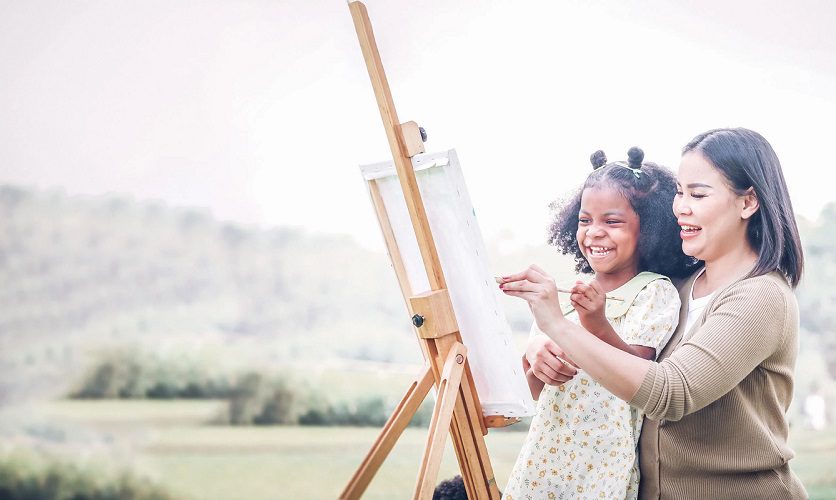
My husband and I recently painted our kitchen. Many different shades of green were tried on various walls until we settled on the perfect shade. However, we were left with four different sample testers. I’m very conscious of not wasting just about anything and did not want to toss them. What could I possibly use them for? The answer came through: a project to try out with my four granddaughters. (We have two granddaughters from each of our two daughters, ranging in age from 7.5 to 13.)
The two families were set to visit us in Florida in April. I love to have them do all kinds of projects when we are together. Plus, it would take them off their devices and engage them in conversation for a few hours.

We scheduled a Facetime visit and I presented this idea. My original thought was that I would provide a large canvas divided into 4 equal parts, allowing each granddaughter to use one of the shades of green to paint their portion. I envisioned them doing something abstract in nature and had a finished idea in my head. I only had a few ground rules.
They needed to collaborate on the project. They like to FaceTime with each other anyway so that was an easy one.
Prior to coming here they were to send me a sketch of what they planned.
And, when they began the painting, they needed to respect each other’s work area and not encroach onto anyone’s portion of the canvas.
Sounded simple enough, right? Well, when rethinking the project with my Montessori hat on I realized I was projecting my finished idea on them and not letting them actually come up with their own. Therefore, I was not really having them fully participate in a collaborative project. Hmmm, what to do, what to do? On top of that, the youngest (Harper) opted out of participating because she felt her artwork would never be as good as that of the three older girls. I felt terrible that I had set her up to fail. I needed to think of a way to get back on track with this being a collaboration and not a contest.
As it turned out, the other three decided the idea of abstract wasn’t in their wheelhouse and they would rather have the freedom to change the focus. They actually FaceTimed me and confessed this to me! I was very proud that they were able to tell me their feelings and express ideas they had agreed upon. So, I let go of my perception and told them whatever they came up with for ideas was actually wonderful. Everyone came away from that planning session happy and ready to go forward.
Stretching and Gesso-ing* a canvas takes some skills which were a little out of the skill level of children of this age, so I did that before they arrived. Plus, in Florida, where it’s quite humid, it was going to take the Gesso longer to dry.
The morning after the girls arrived in Florida, I took Harper quietly aside and explained to her she was free to join if she wished. No pressure, no judgment. She shook her head in a silent understanding way and that was that. She’s always marched to the beat of her own drum. I love that about her. Yet, I didn’t want her to feel excluded so I left the door open. Children need to feel they are safe to express feelings and those feelings are honored and respected.
Over the course of a few days they met and decided how they wanted to divide the canvas, shared thoughts, and changed ideas around. It was interesting that they did this all on their own. I just reaffirmed that this was a collaboration, and I was fine with whatever they were thinking. It demonstrated they were giving real thought to the project and understood the collaboration aspect. The biggest plus for me?
They were so ‘into’ the whole project, that their social media time on devices was quite limited.
We were going to be using acrylic paint, so it was important to set up the work environment correctly. This is a really important part of any project you do with your children. Nothing can make the experience go sideways faster than if paint gets on furniture or flooring and/or clothing, causing tempers to flare and children to feel guilty. We spread a big tarp on the floor of our lanai (screened porch area in Florida) and had plenty of water in our bucket with rags to clean up any spills.
Again, once they began the painting portion, they decided to each use all the shades of green and change a few with adding some black or white. We discussed the difference in adding white hues and black shades to colors and mixing different greens together. Again, this became what the group decided, and I encouraged them to run with their ideas.
Harper looked on, staying in the background. No one tried to convince her to participate. When she came to the realization that everyone was really enjoying themselves, she picked up a brush (since she knew which was her panel) and began painting and chatting about her contribution. I didn’t make a big deal out of it; I just observed or assisted, when asked.
Since they felt the painting was lacking, they decided they wanted to outline their work in black magic marker. Again, it was their project and they got to make the decisions. Since I always have lots of different art supplies here, two of the girls found their box of plastic gemstones and decided to embellish their panels. Using the glue gun, Raegan was very specific about what the gems would do to tell her story better, while Harper free-formed it. The other two felt their panels were complete, signed, and finished.
Each granddaughter is so different in learning styles and focus. Aubrey is meticulous about every thing she does and strives for perfection.
Her sister, Harper, is way more random in her approach. My oldest, Blakely, took on a bit of a teen-tude, but, I think she actually was very proud of her panel and praised the others for their contributions.
In the end, I ended up with a painting, which now hangs on our lanai wall. I loved watching and talking to them while they were creating this painting from the planting of the idea to the final project. When given the chance, the idea and opportunity to do something collaboratively brings one more memory into the family.
When the painting was finished I wanted to make certain it was able to be outside so I sealed it with Mod Podge, a sealing product (available through amazon.com). It now proudly hangs on the wall where I hope it will stay until we move. We took a group photo of them with their painting. When I look at the photo, I see the joy and satisfaction on their faces.
Enjoy your time with young children because they grow up in the blink of an eye. It seems like just yesterday when I submitted my first article to Tomorrow’s Child magazine after Blakely Jayne was born thirteen and a half years ago.
This wasn’t an expensive project and could be done on wood if you aren’t experienced with canvas stretching and Gesso. Get creative have some fun!
*Gesso prepares (or “primes”) canvas for painting, making the surface slightly textured and ready to accept acrylic paint. You can buy gesso from any art supply shop. It is very similar to white acrylic paint, only thinner. It dries hard, making the surface more stiff. Without gesso, the paint would soak into the weave of the canvas. The word gesso is a noun, but many artists also use it as a verb. For example: “You need to gesso your canvas before you paint.”

Margot Garfield-Anderson worked with the Montessori Foundation for twenty years, serving in many capacities. Happily retired, Margot continues to act as a volunteer with the Foundation, the International Montessori Council, and is a regular contributor to Tomorrow’s Child Her role as grandmother to four adorable granddaughters, using the Montessori way of life, has been her greatest joy.
“It is the child who absorbs material from the world about him; he who molds it into the man of the future.” Maria Montessori, The Absorbent Mind.
As a new parent shopping for preschools, you may wonder why you should invest in a Montessori education. What differentiates a Montessori education from other private or public schools?

As a Montessori parent and guide, I can say with confidence that investing in a Montessori education is an investment in peace education to raise a citizen of the world. Maria Montessori once said, “Peace is what every human being is craving, and it can be brought about by humanity through the child.” A flower cannot blossom without sunshine, and in our classroom, sunshine is peace, and the children blossom.
Children learn peace through the continuous lessons in grace and courtesy, which is the foundation on which the classroom flows. Montessori guides focus on the child as a whole. We look at the emotional, social, and physical factors of the individual child. Grace and Courtesy lessons are the backbone of Montessori education and one of the main ingredients in building a Montessori child, but what does Grace and Courtesy mean, and look like, in the Montessori environment?
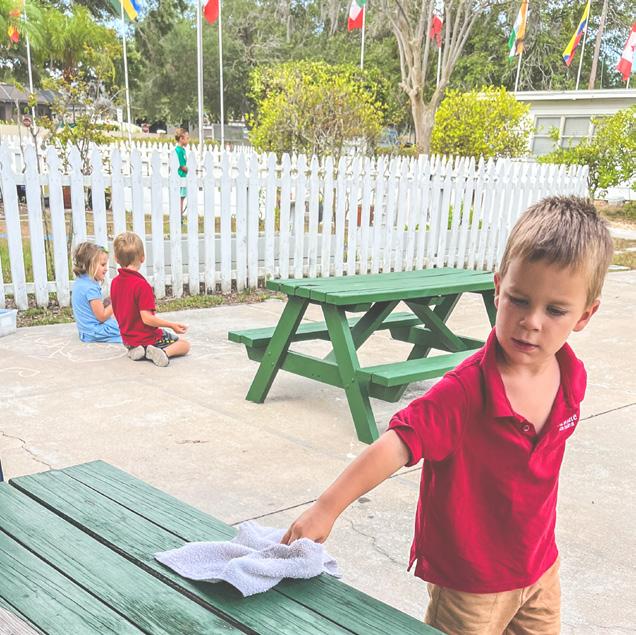
Grace and Courtesy lessons, along with guiding moments, are daily activities involving personal interactions, where children show consideration, empathy, and politeness toward themselves and others by using respectful language and manners.
Some examples of Grace and Courtesy may include: Saying “excuse me” while walking close to someone; washing hands before eating; properly unpacking a lunchbox; knocking on the door before entering the restroom; asking to join an activity politely; carrying a chair safely; properly greeting a visitor; or properly disposing of food or trash after eating. You may see a child completing an activity, politely blowing their nose, learning to sneeze by turning away from people, learning to wait for a turn, and peacefully engaged in solving a disagreement. The list can be endless, and there will always be opportunities to engage the individual child, or the whole class, in a Grace and Courtesy moment or lesson.
Maria Montessori wrote about the first plane of development, which takes place from birth to age six. Around two and a half years of age and up to six years of age, the child leaves behind the stage of infancy and self-immersion and becomes more sensitive to social interactions with peers as well as adults. A child’s mind is like a sponge, and it has the capacity to absorb a great deal from its surroundings. During this time the child shows a significant inner need for order to make sense of his environment and learn how to interact appropriately with others.

If you’ve lived and/or worked with small children, I am sure you have noticed how they respond to changes in routine. I remember a time in the classroom when we were singing the same song we always sing before eating lunch, and one child happened to be in the bathroom at that moment. When he came out of the bathroom, he was very upset that he had missed the lunch song. In this plane of development, children can become easily frustrated if they notice another individual not following directions: “Look at how Isabella is carrying her rug and work at the same time!” These moments are the best opportunity to demonstrate to children how to navigate their shock and disappointment with grace.
During the first plane of development, the window of opportunity is open for the child to absorb lessons on Grace and Courtesy effortlessly and for these graces and courtesies to become a part of the whole child.
As a parent and/or guide, how can we help children assimilate these lessons?
It is ideal to observe the child and promote positive behavior. For example, if you notice that the child is cleaning his room, you might say, “I can see that you cleaned your room, I bet you like knowing where to find everything.” It is always better to promote good behavior than to give negative attention such as, “Your room looks messy again.”
Most importantly these lessons always need to be consistent and clear. For example, if your child keeps getting up from the table during lunch, you need to model the behavior you wish to impart and stay seated while eating. Acknowledge the progress that your child makes. You might say, “It was nice having a good meal all sitting down together.” Keep the expectations consistent, changing them can be confusing and may send mixed messages to your child. If you allow your child to get up every now and then, you are basically saying this behavior is acceptable.
In our classroom, we welcome all opportunities to guide children to assimilate these graces and courtesies, guiding them to learn ways to conduct themselves in everyday society. It is vital for children to develop the appropriate social skills to be able to manage conflict resolution, cope with emotions, handle stressful situations; and be a good citizen of the world.
“It is the child who absorbs material from the world about him; he who molds it into the man of the future.” Maria Montessori, The Absorbent Mind

Alexandra “Alex” Gallen is a primary guide at NewGate Montessori School. Alex earned her BA in Psychology from the University of South Florida and is certified in Early Childhood from the Montessori Accreditation Council for Teacher Education (MACTE). Alex is originally from Lima, Peru; she moved to Florida in 2001. Alex taught Spanish for several years before getting Montessori certified and enjoys integrating Spanish into her lessons. Alex first came across the Montessori Method while looking for schools for her children, and she made it her mission to raise her three children this way.
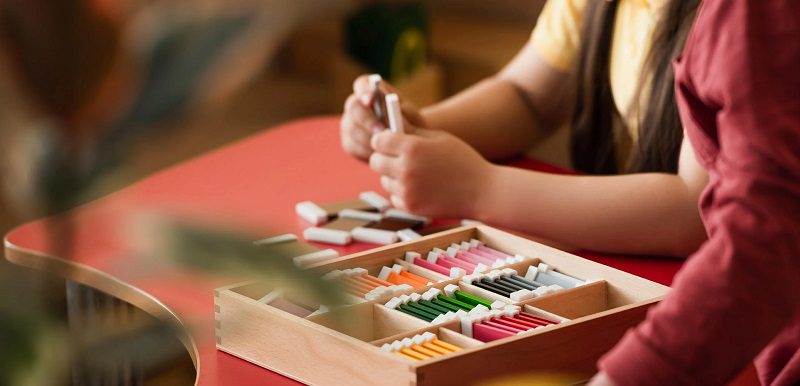
Hello fellow Montessori parents, I’m Sarah, a seasoned Montessori mom. As parents, we’ve experienced the joy, curiosity, and sometimes even a bit of confusion that comes with the Montessori journey. I remember the first time I was invited to observe my daughter Gabriella’s class, I was both excited and unsure about what to expect. Over the years, I’ve learned that these observations offer a unique window into our children’s world, and I’d love to share my insights with you.
The first time I visited Gabriella’s Montessori class, I was instructed to sit in the designated visitor’s chair and observe. At first, it felt a bit strange, sitting in a bustling room full of children, quietly watching. However, with time, I realized the importance of being a silent observer and allowing the class to carry on with its regular routine.
My best advice to you would be to schedule your visits ahead of time with your child’s teacher. This way, the class remains undisrupted, and you get to see an authentic day unfold in the Montessori environment. I found that it’s also crucial to give the younger ones a bit of time to settle into their new routine at the start of the school year before planning a visit.
Over the years, I’ve developed a keen eye for certain elements during my visits. Here’s what you might want to look for:
Classroom Layout: The first thing that struck me about the Montessori classroom was its child-centric design. Notice how everything, from the activities to the furnishings and shelves, is within a child’s reach, encouraging independence.
Adult-Child Interactions: The teacher-student relationship in a Montessori classroom is distinct. Watch how teachers guide rather than instruct, fostering a respectful and nurturing environment.
Child’s Workflow: Choose a child and follow their work pattern for a while. Observing Gabriella taught me that every child has a unique pace and method of learning. This understanding has helped me become more patient and supportive as a parent.
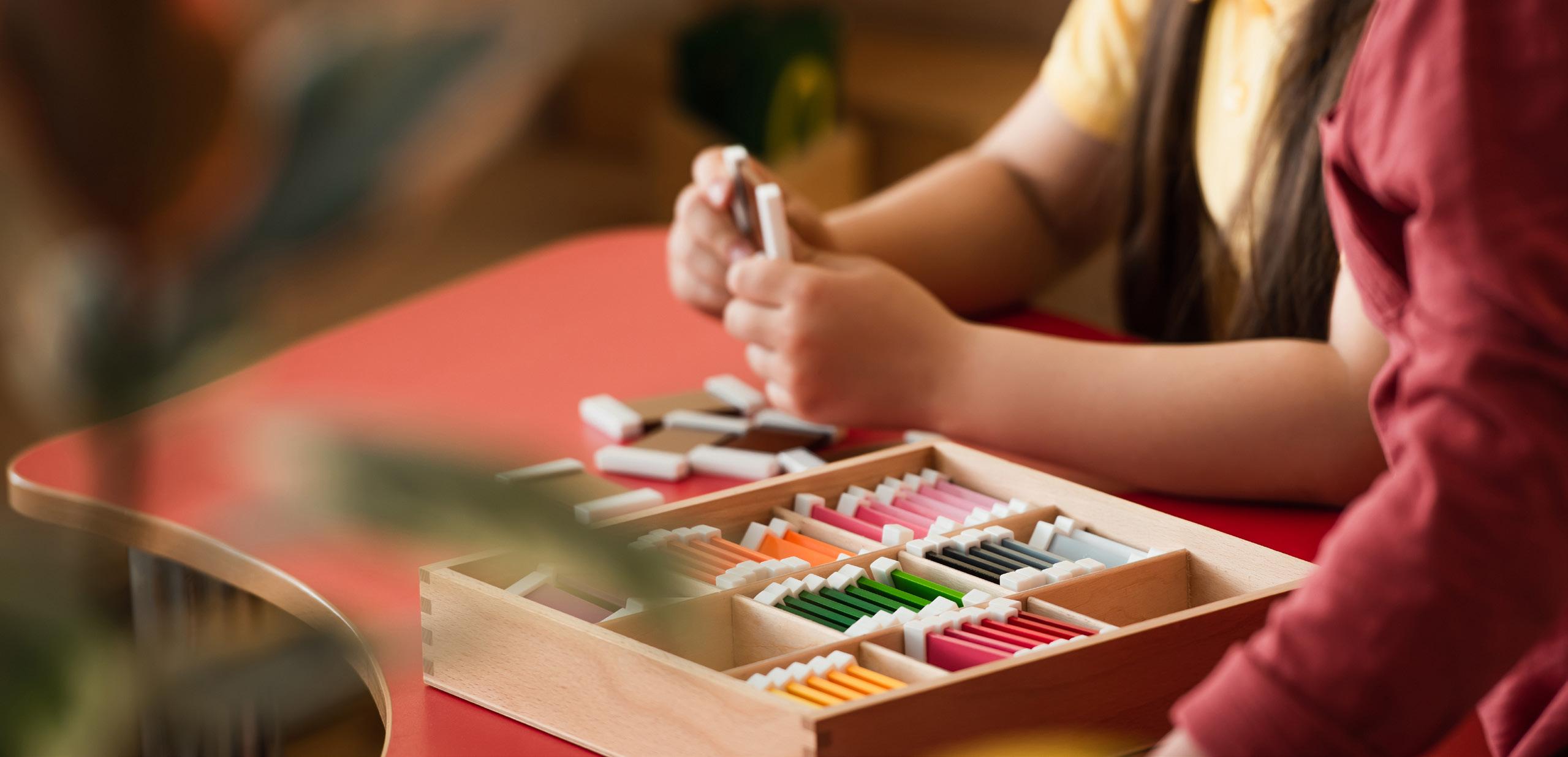
…I REALIZED THE IMPORTANCE OF BEING A SILENT OBSERVER AND ALLOWING THE CLASS TO CARRY ON WITH ITS REGULAR ROUTINE.
Teaching Methods: Observe how lessons are imparted to individual students or small groups. I was amazed to see how the teachers adjusted their teaching style according to each child’s needs.
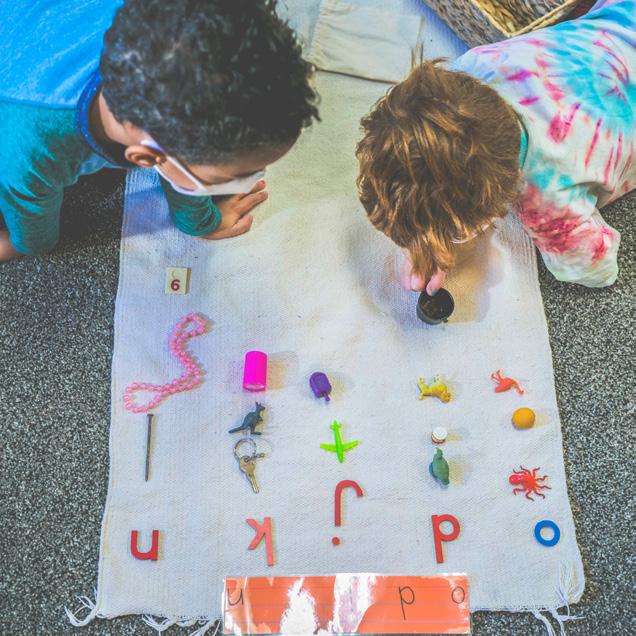
Montessori Materials: Pay attention to how the children interact with the Montessori materials. Seeing Gabriella drawn towards certain activities helped me understand her interests and aptitudes better.
Peer Learning: One of the beauties of Montessori education is peer learning. Watching older children guide the younger ones was a heartwarming experience.
Self-correction: Another striking Montessori principle is self-correction. Watching children correct their own work instilled in me a great respect for the Method and helped me trust Gabriella’s problem-solving abilities more at home.
Observing Gabriella’s Montessori class transformed me as a mom. I learned the importance of patience, trust, and respect in guiding my child’s development. I discovered how to encourage Gabriella’s independence, help her follow her interests, and foster her problem-solving skills. This understanding has helped me create a nurturing environment at home that aligns with her Montessori experience.
Remember, observing is not about scrutinizing every detail; it’s about gaining insights into your child’s learning journey. I hope my experiences will guide you on this beautiful path of observation. Happy observing!
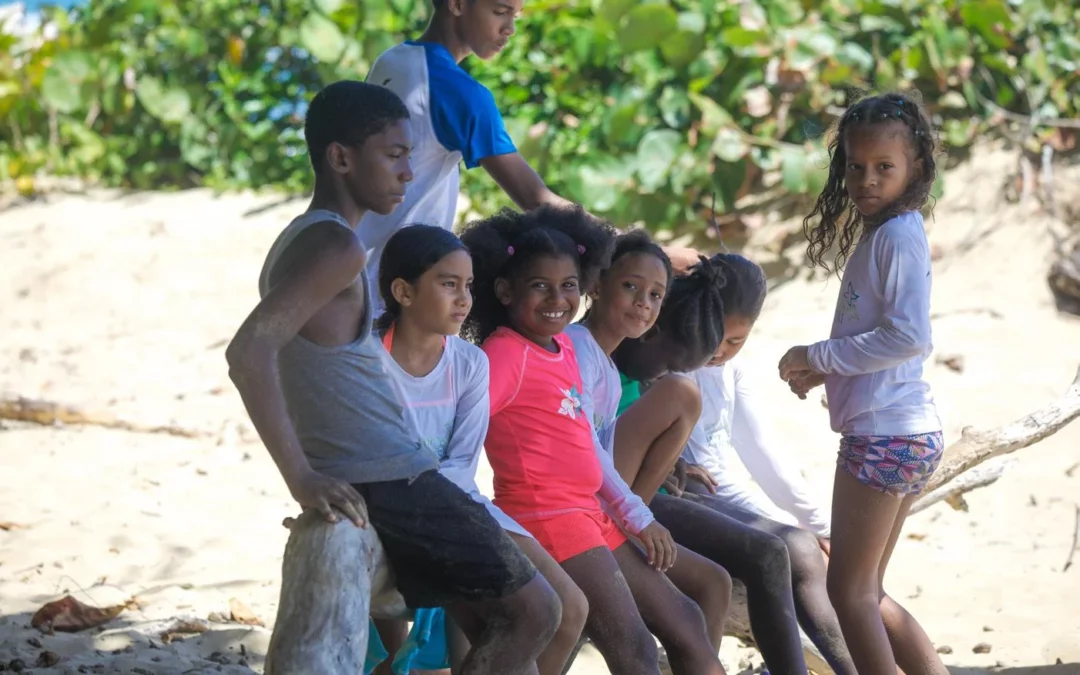
There is no need for words, is there? The pictures below tell you exactly how our students felt about the beginning of the 3 Mariposas Montessori Summer Program in Cab arete, Dominican Republic, this summer. For more information about this school, visit their website at 3mariposasmontessori.com
3 Mariposas offers Montessori from early childhood through the elementary years.

“Let the children be free; encourage them; let them run outside when it is raining; let them remove their shoes when they find a puddle of water; and, when the grass of the meadows is damp with dew, let them run on it and trample it with their bare feet; let them rest peacefully when a tree invites them to sleep beneath it’s shade; let them shout and laugh when the sun wakes them in the morning as it wakes every living creature that divides its day between waking and sleeping.
— The Discovery of the Child, Maria Montessori.


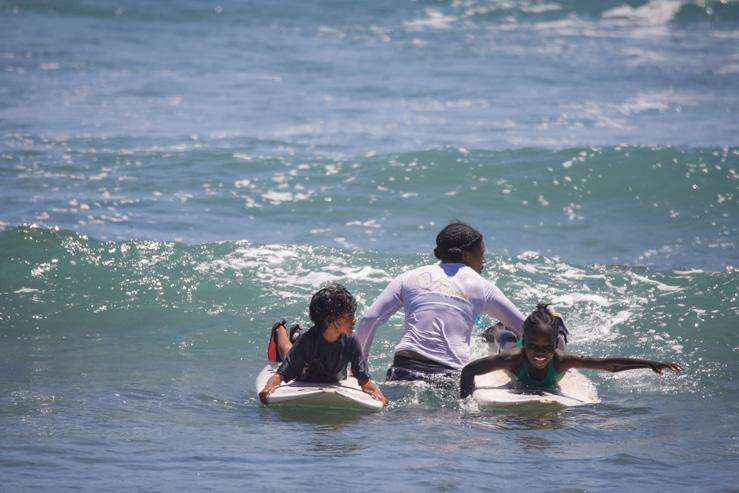


The Montessori Foundation would love to highlight your child’s Montessori school or their summer activities. Send high-resolution photos and a brief story or description along with a “permission to publish.”
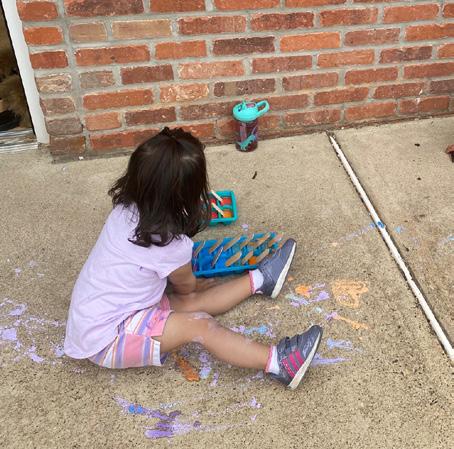
Relationships, collaboration, and community are pillars of Montessori Nido programs. As an infant guide, I know that secure attachment with children under the age of three lays a foundation for social and emotional wellness for the rest of a child’s life and I am equipped from my training to gracefully accomplish this heavy feat within the classroom. I also know that parent partnerships are equally important to the success of my students, but the reality of working parents and Covid restrictions have made this challenging. In a post-pandemic world, the task of reconstructing communities is made harder by the difficulties for people who are adjusting to the new experience of parenthood. This is something that I sought to support for the parents of my students this school year.


I decided to find a way to connect the parents not only with the school and teachers but also with each other. The time constraints of the school day were simply not conducive for this task, so I sent out a poll to my parent community and asked if they were interested in gathering together and when they were available for such a thing. The consensus was a Saturday afternoon and 100 percent confirmation that they would love an opportunity to get together! So I set out to organize a once-a-month social for all the families in my classroom. On the first Saturday of every month at 1:30 pm, I open my classroom for an hour to any family or assistant teacher who is free and interested to join me. I organize a simple developmentally appropriate activity such as art exploration, music time or a sensory experience that can easily be recreated at home. I prepare the environment like I would for any normal day and open the doors.

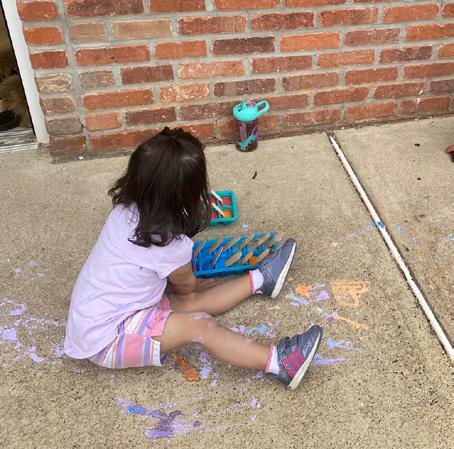
The first month I made some pumpkin applesauce and was met by two families on the playground. They chatted together with each other about the school, their children, and the trials of parenting toddlers and infants, all of whom attend our school. The parents asked me casual questions about their child’s interest in trying new foods at school, like the pumpkin applesauce, and even noted how amazed they were at the capabilities of their infant on our playground structure as their nine-month-old climbed up the stairs and slid down the slide all on her own. “I didn’t know she could do that!”
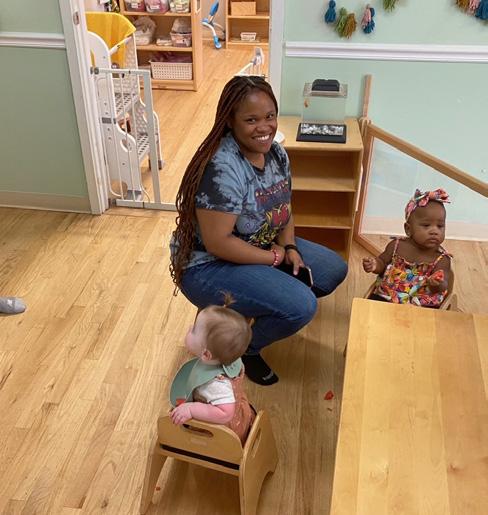

With each month more families joined, and after each event, I received multiple emails thanking me for taking the time out of my weekend to open the classroom to them and for connecting them with other families. It is so wonderful to watch the classroom full of activity between parents and their own child and families who have so much in common but no other time to connect. I also felt so privileged to watch my students amazing their parents each time with their capabilities and independence. The home environment is so different from that of a Montessori classroom for many reasons, but these events helped me to think of ways to share the philosophy and make it accessible to young families. I will be continuing my Saturdays-in-the-Nido tradition, and I invite you all to try it in your Montessori environment too!

Allison Gerlach is the Lead Directress and Infant/Toddler Coordinator at Magnolia Montessori School (Whitehouse Station, NJ). She will be completing her Bachelor’s Degree in Early Childhood Administration from Purdue Global University this year, holds an Associate’s Degree in Education (P-12) from Raritan Valley Community College and also completed her Infant/Toddler Montessori certification in 2021 from West Side Montessori School.
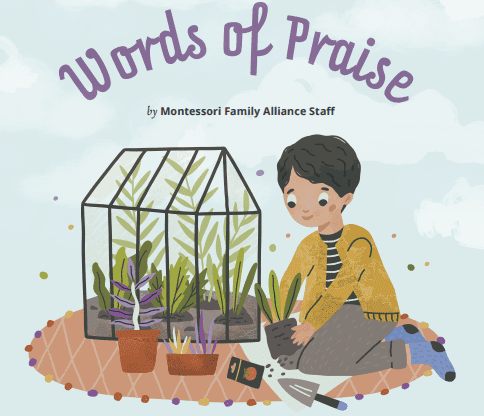
by Montessori Family Alliance Staff
We want our children to grow up to know their own worth and be confident. Praise seems the natural path to get there, yet you hear Montessorians say that you should not give general praise. We focus on the word praise when the focus should be on the word general. We all want to know what to say instead of “good job” or “way to go.” Here are twenty statement starters and one guideline to help you. They may not feel comfortable at first, so practice. Say them out loud, practice with your children, with your loved ones, and with friends and co-workers.
First the guideline: Observe what is happening and pause to think about it or even ask questions about it. Here are twenty ways to share your observations that help build confidence:
 Montessori Family Alliance School Group Membership (Print & Digital 2026 1/2 year pricing)
Original price was: $30.00.$15.00Current price is: $15.00.
Montessori Family Alliance School Group Membership (Print & Digital 2026 1/2 year pricing)
Original price was: $30.00.$15.00Current price is: $15.00.
 The Montessori Way, Revised and Expanded: An Education for Life; A Comprehensive Guide for Parents and Teachers
$25.00
The Montessori Way, Revised and Expanded: An Education for Life; A Comprehensive Guide for Parents and Teachers
$25.00
 The Montessori Child: A Parent's Guide to Raising Capable Children with Creative Minds and Compassionate Hearts (The Parents' Guide to Montessori)
$20.00
The Montessori Child: A Parent's Guide to Raising Capable Children with Creative Minds and Compassionate Hearts (The Parents' Guide to Montessori)
$20.00
 The Montessori Toddler: A Parent's Guide to Raising a Curious and Responsible Human Being (The Parents' Guide to Montessori)
$20.00
The Montessori Toddler: A Parent's Guide to Raising a Curious and Responsible Human Being (The Parents' Guide to Montessori)
$20.00
 Montessori in Action: Building Resilient Montessori Schools 1st Edition
$29.95
Montessori in Action: Building Resilient Montessori Schools 1st Edition
$29.95