Off to the Ballet

Off to the Ballet

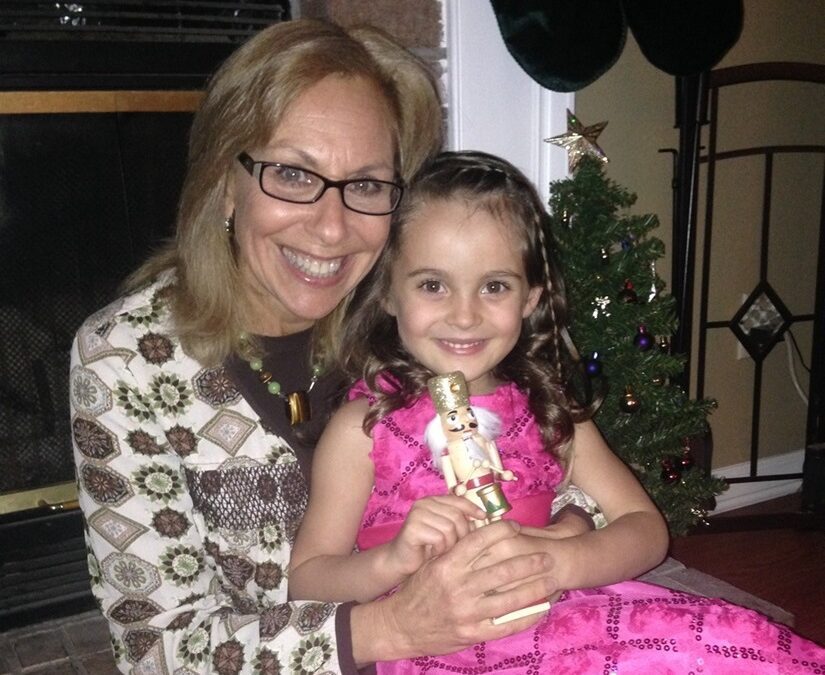
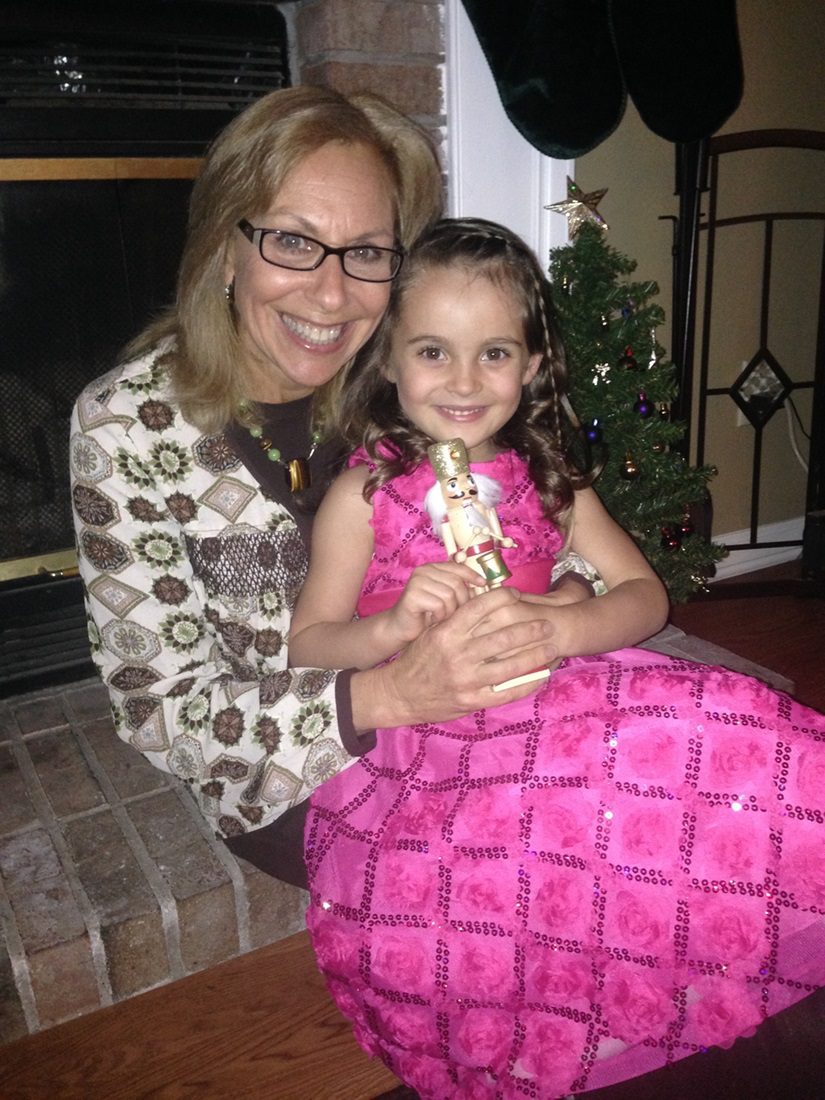
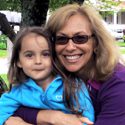
One of my fondest memories I’ve shared with my granddaughter, Blakely, was talking about the time we went to the ballet together when she was five years old. We had watched the Nutcracker numerous times before we finally actually went to see a live performance. I bought her a special dress to wear, we got all fancied up and ready, and off we went.

Everyone sitting around us looked at her in wonderment as she wore a very excited expression on her face. The music began and the ballet started to unfold. 

She leaned in next to me and said, “Grammie, that’s not how Clara should be doing that dance.” It seems that she had memorized the version we had watched, and I had neglected to let her know that every dance troop’s choreographer interprets the dance parts a little bit differently. She still enjoyed the show and every time I stole a glance over at her I could see total rapture on her face.

Her interests have long ago steered away from watching the Nutcracker. She is now almost fourteen and an avid soccer player. However, I just recently asked if she remembered that night. “Grammie,” she said, “how could I ever forget it.” I hope she shares a similar experience with her grandchildren if the time comes.

Creating lasting memories and sharing your passions with your grandchildren creates bonds that can’t be undone, so invest the time in them and with them. The payoff is huge and lasting.

Margot Garfield-Anderson is the retired Montessori Foundation Project Manager and International Montessori Council Membership Director. She continues to be involved in the organization as an IMC Board member and serves as a reader of documents for schools going through the IMC accreditation process. She still enjoys sharing her grandparenting experiences with Tomorrow’s Child subscribers. She also volunteers for many other nonprofits and organizations in Sarasota, Florida.

Collaborative Projects with Elementary-Aged Children

Collaborative Projects with Elementary-Aged Children

(How to Keep Your Four Granddaughters Occupied and off Their Phones)

My husband and I recently painted our kitchen. Many different shades of green were tried on various walls until we settled on the perfect shade. However, we were left with four different sample testers. I’m very conscious of not wasting just about anything and did not want to toss them. What could I possibly use them for? The answer came through: a project to try out with my four granddaughters. (We have two granddaughters from each of our two daughters, ranging in age from 7.5 to 13.)

The two families were set to visit us in Florida in April. I love to have them do all kinds of projects when we are together. Plus, it would take them off their devices and engage them in conversation for a few hours.

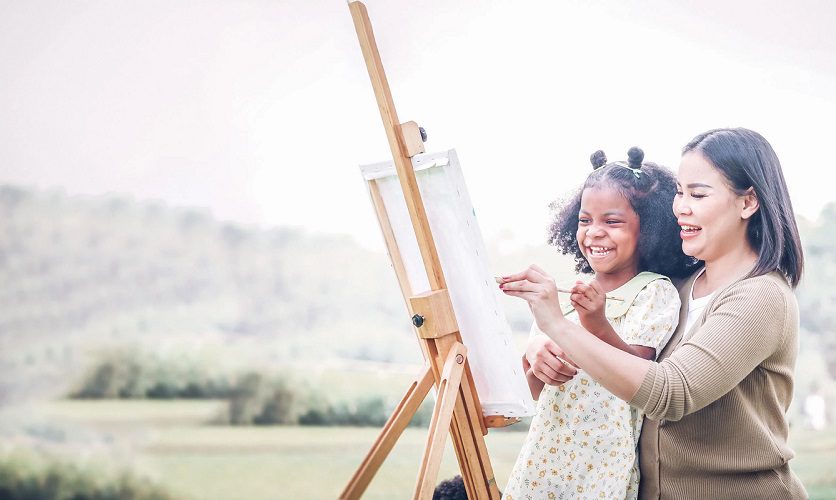
We scheduled a Facetime visit and I presented this idea. My original thought was that I would provide a large canvas divided into 4 equal parts, allowing each granddaughter to use one of the shades of green to paint their portion. I envisioned them doing something abstract in nature and had a finished idea in my head. I only had a few ground rules.

  • They needed to collaborate on the project. They like to FaceTime with each other anyway so that was an easy one.

  • Prior to coming here they were to send me a sketch of what they planned.

  • And, when they began the painting, they needed to respect each other’s work area and not encroach onto anyone’s portion of the canvas.

Sounded simple enough, right? Well, when rethinking the project with my Montessori hat on I realized I was projecting my finished idea on them and not letting them actually come up with their own. Therefore, I was not really having them fully participate in a collaborative project. Hmmm, what to do, what to do? On top of that, the youngest (Harper) opted out of participating because she felt her artwork would never be as good as that of the three older girls. I felt terrible that I had set her up to fail. I needed to think of a way to get back on track with this being a collaboration and not a contest.

As it turned out, the other three decided the idea of abstract wasn’t in their wheelhouse and they would rather have the freedom to change the focus. They actually FaceTimed me and confessed this to me! I was very proud that they were able to tell me their feelings and express ideas they had agreed upon. So, I let go of my perception and told them whatever they came up with for ideas was actually wonderful. Everyone came away from that planning session happy and ready to go forward.

Preparing the Canvas

Stretching and Gesso-ing* a canvas takes some skills which were a little out of the skill level of children of this age, so I did that before they arrived. Plus, in Florida, where it’s quite humid, it was going to take the Gesso longer to dry.

The morning after the girls arrived in Florida, I took Harper quietly aside and explained to her she was free to join if she wished. No pressure, no judgment. She shook her head in a silent understanding way and that was that. She’s always marched to the beat of her own drum. I love that about her. Yet, I didn’t want her to feel excluded so I left the door open. Children need to feel they are safe to express feelings and those feelings are honored and respected.

Over the course of a few days they met and decided how they wanted to divide the canvas, shared thoughts, and changed ideas around. It was interesting that they did this all on their own. I just reaffirmed that this was a collaboration, and I was fine with whatever they were thinking. It demonstrated they were giving real thought to the project and understood the collaboration aspect. The biggest plus for me?

They were so ‘into’ the whole project, that their social media time on devices was quite limited.

Preparing the Environment

We were going to be using acrylic paint, so it was important to set up the work environment correctly. This is a really important part of any project you do with your children. Nothing can make the experience go sideways faster than if paint gets on furniture or flooring and/or clothing, causing tempers to flare and children to feel guilty. We spread a big tarp on the floor of our lanai (screened porch area in Florida) and had plenty of water in our bucket with rags to clean up any spills.

Again, once they began the painting portion, they decided to each use all the shades of green and change a few with adding some black or white. We discussed the difference in adding white hues and black shades to colors and mixing different greens together. Again, this became what the group decided, and I encouraged them to run with their ideas.

Harper looked on, staying in the background. No one tried to convince her to participate. When she came to the realization that everyone was really enjoying themselves, she picked up a brush (since she knew which was her panel) and began painting and chatting about her contribution. I didn’t make a big deal out of it; I just observed or assisted, when asked.

When she came to the realization that everyone was really enjoying themselves, she picked up a brush and began painting…

Since they felt the painting was lacking, they decided they wanted to outline their work in black magic marker. Again, it was their project and they got to make the decisions. Since I always have lots of different art supplies here, two of the girls found their box of plastic gemstones and decided to embellish their panels. Using the glue gun, Raegan was very specific about what the gems would do to tell her story better, while Harper free-formed it. The other two felt their panels were complete, signed, and finished.

Each granddaughter is so different in learning styles and focus. Aubrey is meticulous about every thing she does and strives for perfection.

Her sister, Harper, is way more random in her approach. My oldest, Blakely, took on a bit of a teen-tude, but, I think she actually was very proud of her panel and praised the others for their contributions.

In the end, I ended up with a painting, which now hangs on our lanai wall. I loved watching and talking to them while they were creating this painting from the planting of the idea to the final project. When given the chance, the idea and opportunity to do something collaboratively brings one more memory into the family.

The Finished Project

When the painting was finished I wanted to make certain it was able to be outside so I sealed it with Mod Podge, a sealing product (available through amazon.com). It now proudly hangs on the wall where I hope it will stay until we move. We took a group photo of them with their painting. When I look at the photo, I see the joy and satisfaction on their faces.

Enjoy your time with young children because they grow up in the blink of an eye. It seems like just yesterday when I submitted my first article to Tomorrow’s Child magazine after Blakely Jayne was born thirteen and a half years ago.

This wasn’t an expensive project and could be done on wood if you aren’t experienced with canvas stretching and Gesso. Get creative have some fun! 

*Gesso prepares (or “primes”) canvas for painting, making the surface slightly textured and ready to accept acrylic paint. You can buy gesso from any art supply shop. It is very similar to white acrylic paint, only thinner. It dries hard, making the surface more stiff. Without gesso, the paint would soak into the weave of the canvas. The word gesso is a noun, but many artists also use it as a verb. For example: “You need to gesso your canvas before you paint.”

Margot Garfield-Anderson worked with the Montessori Foundation for twenty years, serving in many capacities. Happily retired, Margot continues to act as a volunteer with the Foundation, the International Montessori Council, and is a regular contributor to Tomorrow’s Child Her role as grandmother to four adorable granddaughters, using the Montessori way of life, has been her greatest joy.

Collaborative, Inclusive Art Projects with Margot Garfield Anderson

Collaborative, Inclusive Art Projects with Margot Garfield Anderson

MOVIE REVIEW: The Biggest Little Farm

MOVIE REVIEW: The Biggest Little Farm

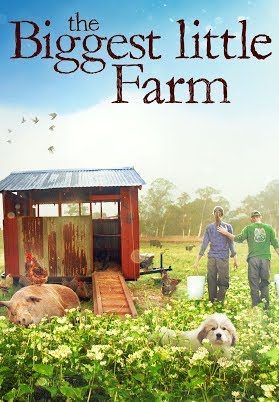
A documentary produced this year is our top pick for all elementary-on-up children, educators, and parents to watch. It’s called The Biggest Little Farm.

In 2009, a California cinematographer and a food blogger met and married. The Biggest Little Farm follows the couple as they attempt to build a sustainable farm an hour north of Los Angeles, CA. With the help of a dedicated environmentalist, they work through the trials and tribulations of achieving perfect (almost, anyway) harmony with nature.

This is the movie to introduce or reinforce many of the Cosmic Education lessons. It will help everyone understand the fragile balance of nature and how easy it is to be destroyed. The visuals are stunning, and the relationship with the animals on the farm are endearing. This movie brought joy, tears, and hope to me, and I highly recommend sharing it with all families to open up discussion on what each of us needs to be aware of to help do whatever we can to respect nature and protect our earth. •

Desert Garden Montessori promotes good nutrition habits

Desert Garden Montessori promotes good nutrition habits

​Desert Garden Montessori School promotes good nutrition habits and healthy, happy students with an organic lunch program. From the April, 2014 issue of Tomorrow’s Child.

The End of the “Granola Crunchers”

Desert Garden Montessori School promotes good nutrition habits and healthy, happy students with an organic lunch program

by Margot Garfield-Anderson, The Montessori Foundation


Back in the late 1960s, I announced to my parents that I was becoming a vegetarian. In those days, we were referred to as “granola crunchers” because people didn’t really think about (or care about) good nutrition.Desert Garden With so many people finally becoming educated in this area, and wellness programs becoming increasingly the norm, we “granola crunchers” are no longer swimming against the tide.

Everywhere you look, natural, nongenetically modified and organic labels are popping up on the shelves of regular supermarket chains, convenience stores, and even chains such as WalMart and Target. We’ve created the demand and we’ve chipped away at the stereotype of the hippie in the Birkenstocks eating, yes, granola, and our time has come. (Confession: my vegetarianism lasted for 13 years before it came to an end, but vegetables still fill my plate at most meals.)

In January of this year, I had the privilege to visit Desert Garden Montessori School in Phoenix, Arizona for their International Montessori Council (IMC) onsite accreditation visit. (The IMC is the membership wing of The Montessori Foundation.) One of the reasons I was excited to be selected for this particular site visit was that the school has an organic lunch program.

The lunch program is an add-on to the cost of tuition, but it is broken down by cost per day, and it is really reasonable. Parents are assured that the child is eating a very well-balanced, high protein meal that is essential to proper brain nutrition, as well as one that is clean, tasty, and filling. This allows your children to have a meal that provides a slow carbohydrate burn that will sustain them for many hours. When compared to buying the ingredients of a lunch that contains such items as Snackables™, lunch meats, even peanut butter (almost all of which is loaded with sugar and salt along with stabilizers), white bread, cookies, and bags of fried chips, yes, the cost is more, but the value to the child just can’t compare. Many of these same items are on the Desert Garden ‘not-allowed-on-campus’ list, and that’s just the way it is.

The school has recently begun to plant edible gardens wherever space permits. The hope is that they can begin to offset some of the cost by growing their own organic produce, even if it’s just for snacking. The children see the vegetables, edible flowers, and herbs growing. They help tend the gardens and learn from the experience—and everyone gets to eat!

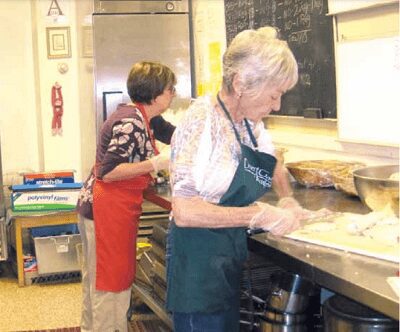
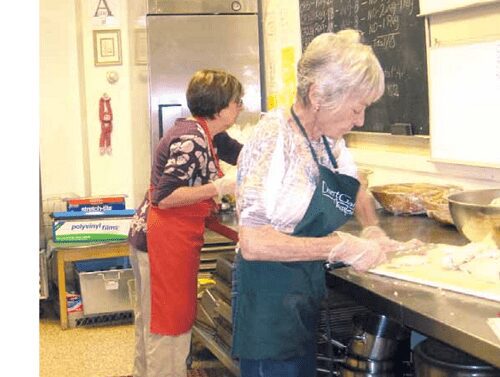
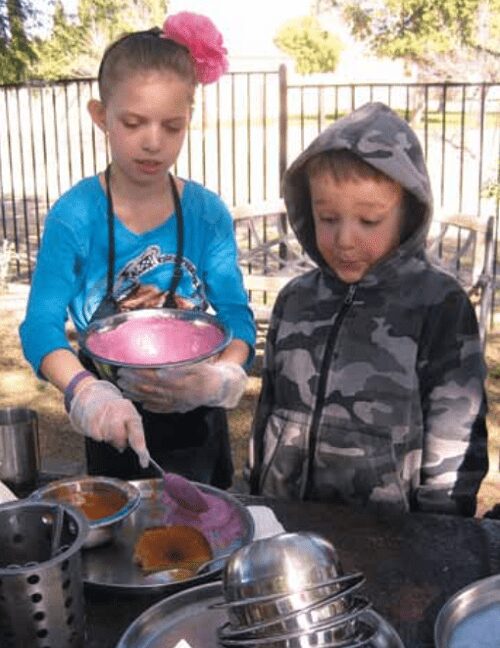
The school has three dedicated women in the kitchen working to create the menus, prep and cook the food, and help serve the lunches. The school has a wonderful outside area where they serve lunch. The students in the Elementary and Adolescent programs are very involved (after they earn their ‘food-handler card’); they set up, serve, clean up, and compost leftovers. What a learning process for these children.

I spent some time in the kitchen talking to Linda, Margot, and Mary about the menus and meal preparation. Menu items, such as chicken nuggets and grilled cheese sandwiches and mac and cheese are on the menu regularly. However, the ingredients are all organic and natural; the chicken nuggets are made from scratch and don’t contain chicken parts! Quinoa pasta is used for the mac part, and organic cheddar is used for the cheese.

Quinoa is actually not a grain; it’s a seed, and many people with gluten or grain restricted diets can eat quinoa. It is loaded with protein, comes in many varieties, and can be used instead of hot cereal for breakfast, as a great addition to a salad (along with some black beans and avocado), and as a side dish instead of white rice and pasta at dinner time. I’ve had quinoa burgers that were mixed with cashew butter instead of peanut butter and seasoned like any other burger, and they were awesome!

Another of the students’ favorites (and you may not believe this one but it’s true according to Linda) is broccoli. Yes, it’s worth repeating, broccoli! How in the world do you get kids to eat broccoli? The school has an Infant/Toddler program, and a large percentage of the student body has grown up in the school, which is now celebrating its 15th anniversary. The infants eat the exact same menu items as the rest of the school, so when it’s introduced over and over again, children’s taste buds create memories of these foods, and they begin to just think of it as something they’ve always eaten. (Of course, it might be blended for the littlest ones, but they are still receiving the nutritional benefit of eating these high-powered foods at this age as well.)

What happens with food the children just don’t like? Shetal, the head of school, has a rule that the children try a food three times before making the call to take it off the menu, which is supported by the create-taste-bud-memory theory just described. So, kudos to Desert Garden’s staff for sticking with this program and making sound nutrition as important a part of the day to children and staff as the rest of the rich Montessori curriculum.

Kid Serving lunchWe are all becoming more aware of the benefits of good nutrition for children, pregnant woman, and adults of all ages. We have gathered a wealth of knowledge about how food works in the body, as well as how important it is to remove the processed, fat, and sugar-laden items from our diets. The use of natural or organic ingredients is finally making inroads into our vernacular, so that everyone can quickly identify better nutrition choices for themselves and their families.

Schools that actually institute a nutrition program, such as Desert Garden, are still in the minority and we applaud their bravery. If more schools started programs such as this and more families chose these non-GMO, organic products, eventually, the cost of such items would continue to come down to meet the growing demand.

Back when my children were young, these kinds of foods were not readily available and the cost was off the charts. When I first became a vegetarian, I thought I could be a vegetarian by only eating vegetables and cheese. Green Giant™ broccoli in cheese
sauce was a staple of my diet. Hey, vegetables and cheese in one boilable pouch—easy, fast, and filling if you eat two or three bags at a sitting—and I was good to go. Do you know how many calories, grams of fat, sodium, and processed ingredients were in that cheese sauce? No wonder my weight ballooned! How could this be I pondered? I’m only eating vegetables. So when I returned to eating a non-vegetarian lifestyle I became a lot more aware and educated about good nutrition.

Foods such as legumes (canned beans packed with sugar and other additives don’t count), lentils, and garbanzo beans are all relatively inexpensive staples you can buy in most markets, and the preparation is usually simply to soak and sometimes boil for an hour. When you add these ingredients to stews and use them to replace white, processed rice or pasta, you are making a smart nutritional swap. In addition, you are filling your bellies with slow-burning, high-protein choices that keep you fuller for longer. When you choose to eat fried chip snacks or sugary treats, these foods don’t fuel your brain and are quickly in and out of your body, leaving you craving more and more of this type of food, so you eat more, it costs you more, and you have put nothing of value into your body.

Dr. Montessori was convinced that good fats such as real butter and good meats and soups, along with freshly baked, hearty bread (processed flour was not common in her time) all fed the child’s body and brain. She even advocated leaving the fat in meatballs.

The point is: You’ve already made the incredible commitment to provide a Montessori education for your child(ren), so why not make the commitment to go the full distance and provide a better source of fuel for your entire family? It’s really not hard. Just do it!


TOMORROW’S CHILD © ♦ APRIL 2014 ♦ WWW.MONTESSORI.ORG

Strategies for Montessori Home Learning

Strategies for Montessori Home Learning

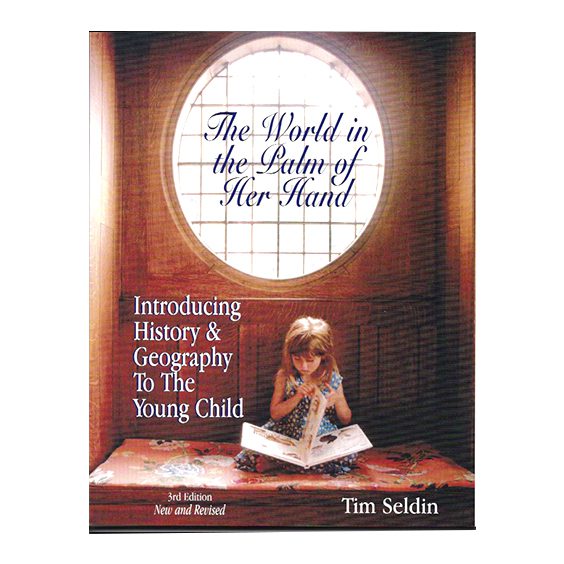
The world in the palm of her hand tim seldin

Review:

The World in the Palm of Her Hand
By Tim Seldin
click to purchase

For parents who want some actual scripting on working with their children at home, we recommend this book. I used it on many occasions with my four granddaughters and they enjoyed the activities immensely. You do not need to be in a classroom to have these kinds of conversations about the world in which they live. The book actually contains the introductory lessons for young learners in the areas of Geography and History but our intent is show you that it is possible to have great conversations with your Montessori child in a Montessori way (incidentally, that is the name of another amazing book!).

The carefully constructed lessons your child’s guide delivers is done in what they call the Three-Part Lesson format.

The carefully constructed lessons your child’s guide delivers is done in what they call the Three-Part Lesson format. I’m going to share from the book so you can see how you can do this as well. And again, we don’t expect you to become a Montessori guide nor have the specific materials in your home; our purpose is to help you understand some ways you can engage your children and just follow the format, so that the message is delivered in a verbal way that children are used to hearing from their guide.

LESSON: COLOR IDENTIFICATION:
For the youngest children, who are just learning to master their ability to identify colors.

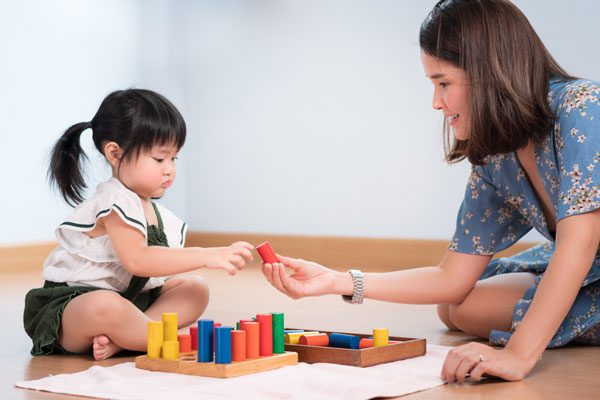
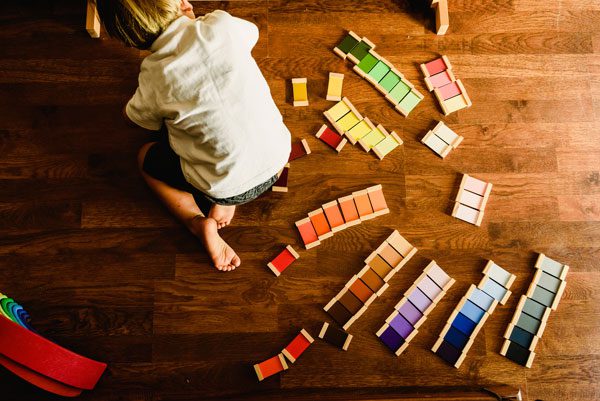
color tiles montessori at homeTo illustrate how you could do this at home, you could use a variety of ways to demonstrate colors if you don’t have a set of color tiles: index cards (or color swatches for paint that you can get from hardware stores) already made up with first the primary colors of red, yellow and blue. When your children have mastered the primary colors, you can move on to secondary colors: green, purple and orange. You can always use real objects you have in the house, such as fruits and veggies of different colors. Keep it simple and keep it to just a few colors.
Have all your materials set up before you ‘invite’ the child to the work. You might say, “Would you like to do some work with colors right now?” Starting your sentence with “would you” makes it clearer that this isn’t some kind of test with consequences.

First Period
Name the color, “This is red.” Show the child the object.
“This is blue.” Show the child the object.
“This is yellow.” Show the child the object.
Remember to sound really enthusiastic.

Second period
This will help the child link the language and her own experience.
Say, “Would you show me the red (object)?”
“Would you show me the yellow?”
“Would you show me the blue?”
The second period actually does involve some deep learning, so you may need to go back to saying it the first way a few times. Try to sound positive as you restate the names of the colors while showing them each respectively.

Third period
Now you get to ask the child, while pointing to one of the objects, “Which one is red?” and so forth. If the child is unable to make the connection you may need to start at the beginning.

This is just a simple example, but might be useful in understanding that each child learns these skills at their own pace. Should you have an older child, you can use this delivery for more building vocabulary. Call objects by their correct names. For instance, if you are working on naming animals, call a cat a cat and not a kitty; a dog is a dog, and not a doggie. If the child is even older and you have, for instance, a German Shepherd, refer to the breed.

In the Montessori class, lessons are initiated in three ways:

  1. The teacher senses children’s readiness and invites them to join her/him for a lesson.
  2. Children become interested spontaneously and ask for a lesson.
  3. The teacher notices when children choose materials for which they have not yet been given a lesson and comes over to present the lesson.

Presenting the Fundamental Lesson: The fundamental lesson is the basic presentation given by Montessori teachers to introduce children to a new material or activity. If it is to have the enticing quality previously described, teachers must prepare themselves carefully.

  1. Teachers must be sure that they are completely familiar with the material and its correct use in order to prevent confusing children with their own uncertainty.
  2. The lesson must be simple and concise enough that the children will be certain to understand.
  3.  The fundamental lesson usually includes only a few words of explanation followed by a demonstration of the typical cycle of work with this material.
  4. To avoid unnecessary distraction, spoken language is limited when presenting the lesson to younger children; nonverbal communication seems to lead to less confusion.
  5. Be sure that all the pieces are present for the lesson/material you are presenting. Nothing is more disruptive to the child’s interest and concentration than discovering that something is missing.
  6. Prepare your work area in advance, allowing for enough space.
  7. Remember the aims of the lesson.
  8. Make your presentation quietly dramatic, emphasizing the key points referred to in the lessons under the heading Points of Emphasis.
  9. When your lesson is finished, either put the materials away with the children’s help, or withdraw to let them work on their own, making sure that they return all the materials when they are done.

The Story Behind the Scarves & Ties

The Story Behind the Scarves & Ties

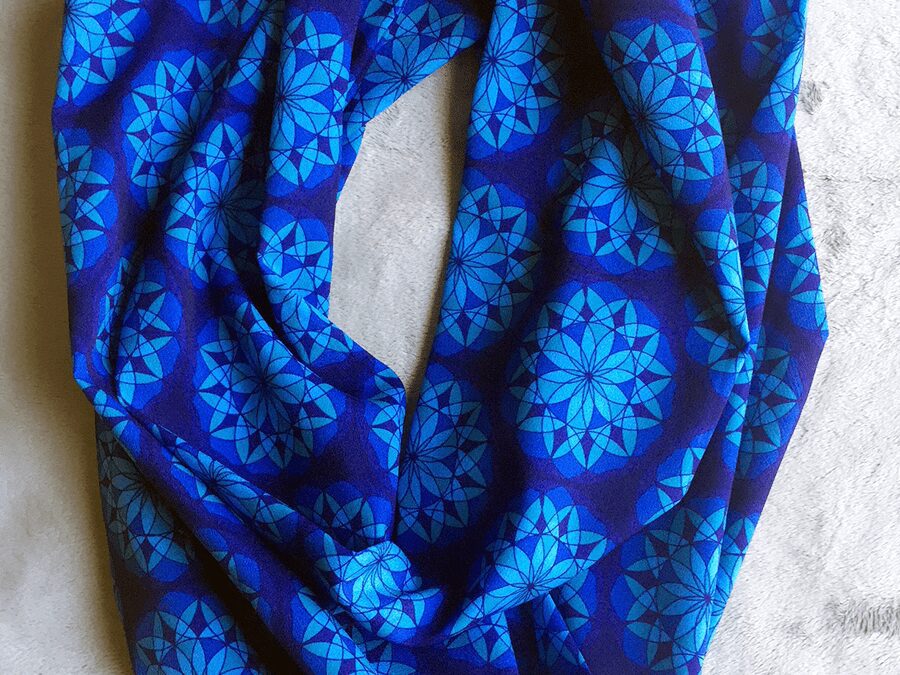
The year 2017 marked the 25th anniversary of Tim Seldin and Joyce St. Giermaine founding the Montessori Foundation. We wanted to honor their work with a unique gift, a creation to express our profound appreciation for their tireless effort. And thus was born, the Seldin Men’s Tie and St. Giermaine Infinity Scarf. The design was […]

School’s Out, Now What?

School’s Out, Now What?

By the time you are reading this issue of Tomorrow’s Child magazine, schools in the US and elsewhere will be winding down for the year.  So what’s on tap for you this summer? Many of us have to work, even during the break, so that doesn’t always allow for lots of free time. Some schools even go year round and don’t get this time off, so what can you do as a family that is fun and engaging?

Here are some suggestions for summer activities:

Have just a day here and there to spend together?

Why not open up a map of your area and let your children either point to a location or choose where they might want to go and then research, together, what might be fun to do and see.

It can be as low key as going to a beach or a national park, hiking, or having a picnic on the banks of a river and fishing. It can be exploring caverns or even seeing if there’s a local history house to learn more about the community in which you live.

Camp out in your own backyard.

Build a tree house or fort together. Plan a pass-a-dish neighborhood day. Have some lawn games planned and maybe a great family movie or campfire with a sing-along? It might sound a bit old-fashioned, but make it fun by involving your children.  Let them help with invites, food planning, movie selection, and setting up the games. Let them learn early on how to be great hosts and hostesses. Then make sure they understand the cleaning-up process is as important as it is in their classrooms.

Have a full weekend to spare?

Expand your map search and stay overnight. Every state has activities, festivals, nature preserves, camping grounds, or historical locations to explore. 

For vacations that are longer in duration.

Once again, provide your children with the opportunity to have a say so in the planning process. Let them work out the budget with you. Let them see how you decide how much a hotel will cost, along with gas, airfare, entrance to events, food, and souvenirs. 

Many of us went camping for the summer. Some of us were fortunate enough (depending on how you viewed it) to even go to sleep-away camps, where we learned all kinds of wilderness skills, appreciation for nature, art, music, theatre,  athletics—and even how to get along.

Need to stay closer to home?

Day camps that run from a week to longer are other options. Search in your area for programs through your museums for more artistic-related camps, the local YMCA,  or even your local library.

The point is to actively engage with your children by spending quality time together. If, in the process, you all happen to learn something that broadens your world, great.

Tomorrow’s Child/ April 2018/ Pg 37