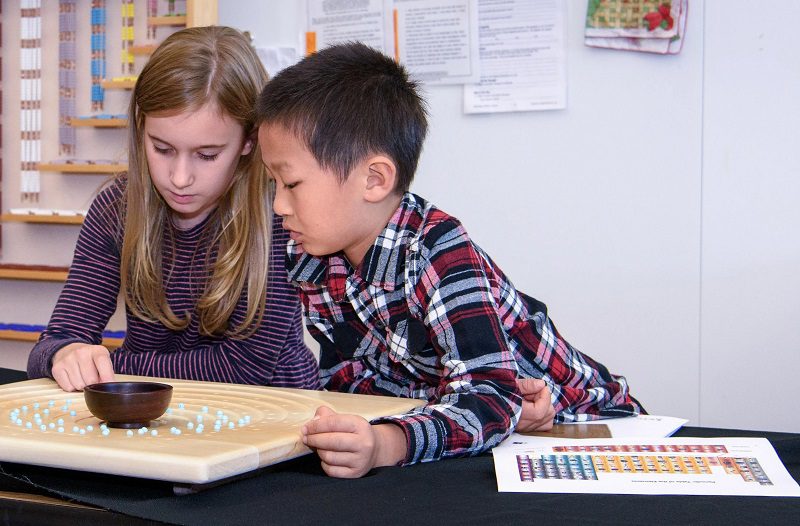
Joyful Learning: Montessori for the Elementary Years

Joyful Learning: Montessori for the Elementary Years

After having your children in Montessori for the initial Early-Childhood (3-6) years, you’ve probably seen them grow into independent, confident, and curious learners who genuinely love school. And guess what? The six years of the Elementary program can unlock even more potential.

We have asked some veteran Montessori educators, a parent, and a sixth-grade student to share their views about the Elementary Montessori journey, which you may find valuable.
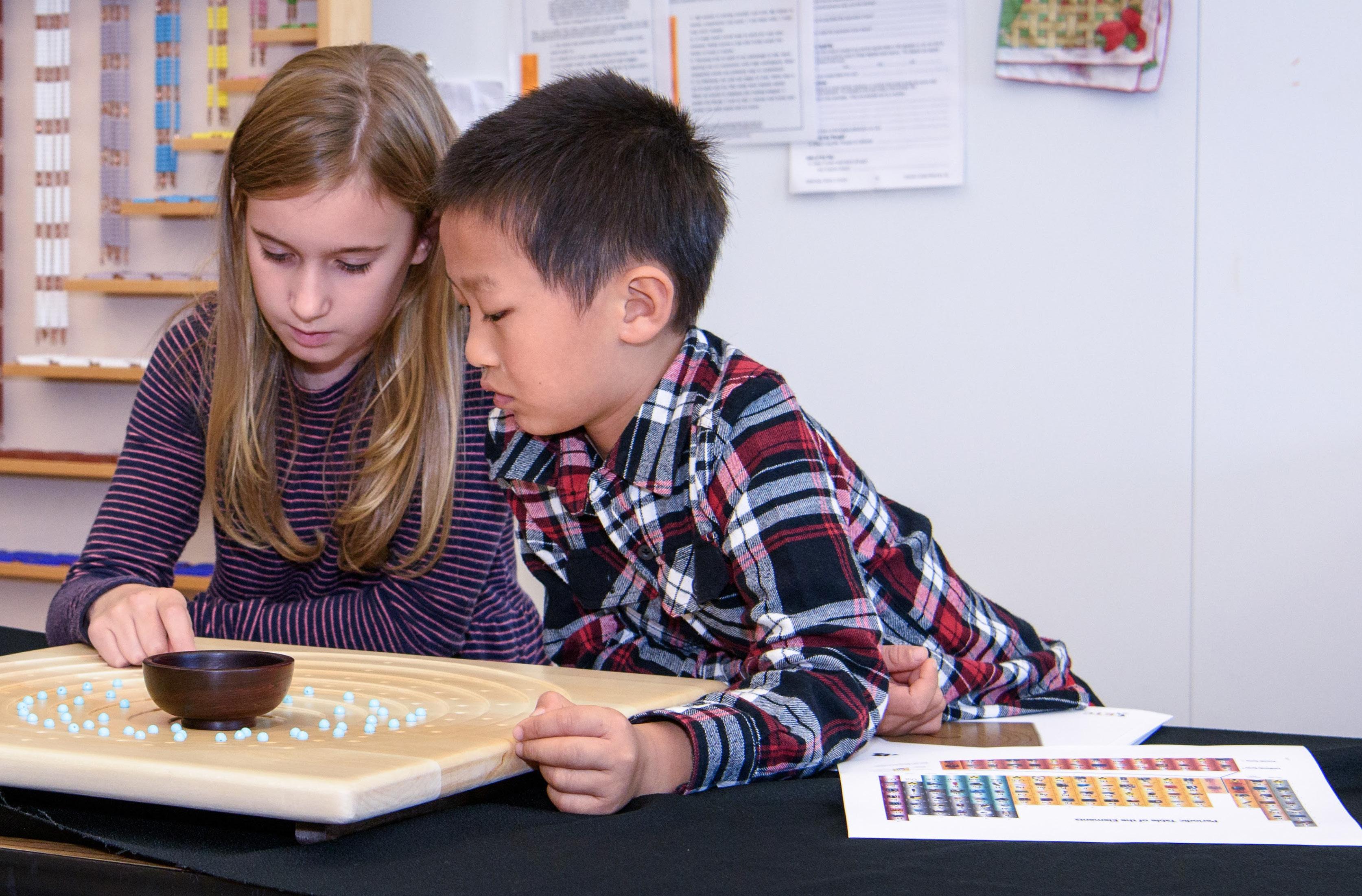
Let’s begin with Val, a Montessori educator.

She explains, “One of the things you see when you enter an Elementary classroom is joy, excitement, and enthusiasm. These are not children who are given papers and workbooks day after day. These children are allowed to take some opportunity to be engaged.

Montessori teachers are not simply teachers. They are mentors, friends, and guides. They are also storytellers. To introduce a lesson, they develop a whole story and draw the children in.”

Our Montessori student, Will, added:

“The best part about our teachers is they are not always using textbooks. We learn from first-hand experience. So we tend to learn things that we wouldn’t ordinarily learn from a book.”

Academics

The Elementary Montessori curriculum is engaging and sophisticated. It requires teachers to have a broad and thorough education of their own. The curriculum is divided into three core elements.

The first focuses on mastering fundamental skills and basic core knowledge. This includes studying mathematics, science, technology, literature, geography, history, economics, and anthropology. It also covers conventional curriculum basics, such as: math facts; spelling lessons; the study of vocabulary, grammar, sentence analysis, creative and expository writing; and library research skills.

The second crucial part of the Montessori curriculum are the Great Lessons. These are captivating stories, experiences, and research projects that explain how the world came to be: the development of life on Earth; humanity’s history; and the evolution of our language, writing, mathematics, and technology. The Great Lessons spark imagination, giving children a cosmic perspective of the Earth and humanity’s place in the universe.

Lastly, the Montessori curriculum encourages individually chosen research. This largely involves library research rather than textbooks, allowing children to gather information, prepare reports, teach their peers, and assemble portfolios. As they progress, their presentations and research reports become more sophisticated and complex.

Hands-On Learning with Montessori Materials

Learning continues to be a hands-on experience in Montessori Elementary classrooms. Children explore through discovery. At this level, the Montessori learning materials advance to more abstract concepts in mathematics, geometry, and pre-algebra.

Val explains, “The learning materials used in the Elementary program are really engaging. After hearing an exciting story about the universe from the teacher, the child can embark on various research projects at their own pace. This excitement and connection with the environment is where true learning happens – and that’s where Montessori really shines.”

Bill, a Montessori parent, adds, “What I loved about Montessori was how the teachers encouraged the kids to choose their daily focus areas. If the child showed special interest in a topic, teachers would support them even if that interest stretched over a week or two.”

One of the best things about Montessori is that it encourages children to think for themselves. It teaches them how to learn – to not simply memorize and forget. They learn that learning can and should be as natural as breathing.

An Integrated Curriculum

In Montessori, subjects are not separated into silos, such as geography, math, and science. Instead, they interweave into each other, providing an interconnected learning experience.

Marsha, another Montessori educator, explained how this works. “For example, when studying the history of our state, we look at how it evolved over time. But to truly understand this, we also explore the geography, the environmental resources, the geology of rock formations, and the local ecosystem. History and science are seamlessly linked—it’s all interconnected.”

Language Arts and Humanities, Mathematics, and History & Geography

Language Arts and the Humanities: The Elementary Montessori Language Arts program stresses developing strong composition and creative writing skills. Students are asked to write continuously, emphasizing, at first, the development and enjoyment of the writing process rather than the strict use of correct grammar and spelling.

However, formal grammar, spelling, and sentence analysis are taught systematically. The key to the Elementary Language Arts curriculum is the quality of literature the children read. They’re introduced early to great children’s books and fascinating works on science, history, geography, and the arts.

Mathematics: Mathematics in Montessori education is based on the European unified math model. This introduces Elementary students to the study of the fundamentals of algebra, geometry, logic, and statistics, along with the principles of advanced arithmetic beginning at the age of six or seven The Elementary math program includes all of the basics that a child needs in order develop further to the next level of algebra, geometry, trigonometry, and calculus.The computer is another key tool used in many Elementary classes for research and the development of compositions.

History and Geography: One of the key objectives of the Elementary Montessori program is to give children a global perspective and help them see their place in the history of humanity. One of the most wonderful things about this cultural area of our curriculum is that it weaves facts together, makes them come alive, and integrates all the studies. From the youngest Elementary grades, children are learning to look at a culture, past or present, from many perspectives. They study the environment, the climate, the look of the land, the food the people would have eaten, how their shelters and houses were built, and how they transported things around the countryside.

You might have a small group of students interested in Greek mythology who build a model of ancient Athens or make and decorate replicas of vases to illustrate a particular story, or they might prepare a diorama of a theme from mythology, or write and produce a play for the rest of the class.

Practical Economics is another important element in the Elementary Montessori curriculum. Students learn how to compare prices against value. They compute costs, maintain checkbooks, operate small school stores, and get introduced to the stock market.
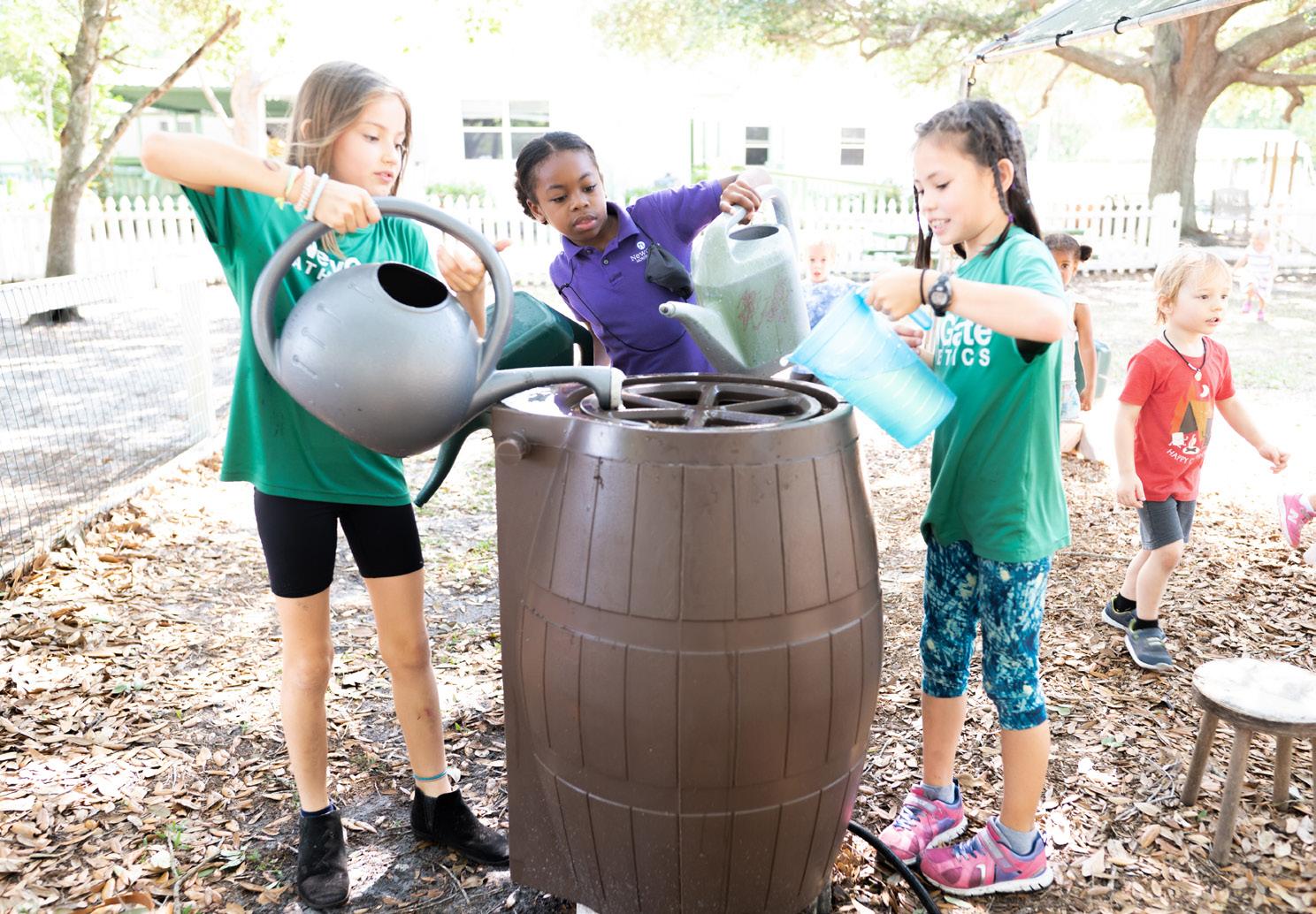
By focusing on the individual needs and interests of each child, Montessori prepares students for a lifelong love of learning, equipping them with the skills necessary to thrive in an interconnected world.

Citizenship: Students study the work of local, state, and federal governments and begin to follow current events. During election years, they might meet candidates and discuss the issues of the day, and sometimes they will even volunteer on the campaign of a local candidate of their choice.

Science: The Montessori science curriculum is focused on studying life, the laws and structure of the universe, and how humanity has sought, throughout history, to put our understanding to practical use.

Val wrote: “Montessori has a gift for science. Science is a participatory thing in Montessori. The child is not just told why things are the way they are; she’s allowed to explore why things are the way they are. She’s allowed to utilize chemicals and processes that maybe one of the first scientists used to reestablish how those things are brought about.”

Kenna (another Elementary Montessori educator) adds: “There are also many science experiment cards on the shelves and children can conduct step-by-step experiments. Students learn to observe and record what takes place during their experiments. The goal is to teach both the scientific method and techniques for safely working with scientific equipment.”

The Montessori Child

The Montessori Elementary classroom functions as a community where children learn social skills, courtesy, conflict resolution, and ethical behavior. It provides a platform for children to work together, acknowledge each other’s contributions, and develop a sense of justice and moral reasoning.

Students actively explore questions of social justice, human rights, aid to the needy, and global peacebuilding. They engage in community service projects, gaining a sense of responsibility and social consciousness. Montessori nurtures children into flexible, self-disciplined, independent learners and self-actualized adults.

Kenna: “We’re trying to develop children who can solve problems and find information on their own. They learn to address conflicts peacefully. That’s what we aim for in our Elementary program.”

Bill adds: “The respect level between the kids in Montessori is very different from what my daughter experienced in a traditional public school. Montessori always fosters a sense of community.”

Conclusion

Montessori’s Elementary program offers a unique educational experience that nurtures academic excellence, character development, global understanding, and community service. By focusing on the individual needs and interests of each child, Montessori prepares students for a lifelong love of learning, equipping them with the skills necessary to thrive in an interconnected world.

If you want your child to love learning, then you’re on the right track with Montessori.
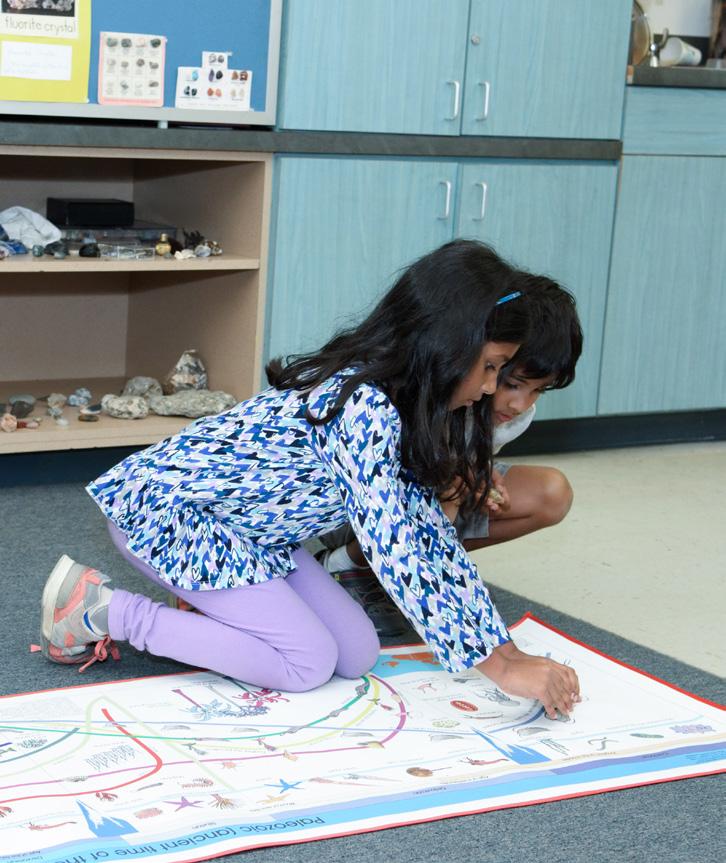
Tim Seldin is President of the Montessori Foundation and Chair of the International Montessori Council. His more than 40 years of experience in Montessori education includes 22 years as Headmaster of the Barrie School in Silver Spring, Maryland, his alma mater from toddler through high school graduation. Tim was Co-Founder and Director of the Institute for Advanced Montessori Studies and the Center for Guided Montessori Studies. He earned a B.A. in History and Philosophy from Georgetown University, an M.Ed. in Educational Administration and Supervision from The American University, and his Montessori certification from the American Montessori Society. Tim Seldin is the author of several books on Montessori Education, including How to Raise An Amazing Child and The World in the Palm of Her Hand. Look for his new book, Montessori for Everyone, co-authored with Lorna McGrath.
Reflections of a Montessori Graduate – Jacob Antczak, NewGate Class of 2023

Reflections of a Montessori Graduate – Jacob Antczak, NewGate Class of 2023

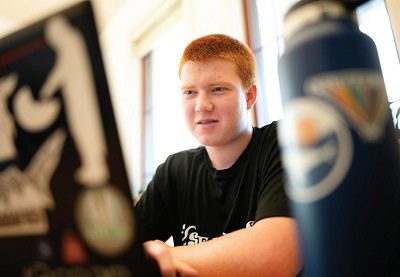
I was just a youngster coming out of preschool, knowing only the basics. I first entered Montessori schooling at the mere age of four. I didn’t know then that it would change my life forever. Everything from the environment to the people was much different than I had experienced elsewhere. As a young learner, Montessori provided me with hands-on education and Practical Life skills. From Elementary through Middle School, I learned many essentials like how to play the recorder and piano or tend to a garden, becoming a well-rounded student early in my years.

The Montessori Primary program completely shaped my future as a person.

Throughout my Montessori learning experience, one thing has stuck with me through the years: involvement in a variety of places. I have gone on all sorts of different trips and had so many experiences, from the many plays and performances I’ve seen, to surveying local waters to calculating seagrass percentage. I have found interest in all kinds of topics solely because I was exposed to them. Montessori helped me to pursue an internship outside of school. I earned more freedom and the opportunity to research marine life in the field without any academic restrictions.

THE MONTESSORI PRIMARY PROGRAM COMPLETELY SHAPED MY FUTURE AS A PERSON.

Montessori also allowed me to interact with a more diverse cast of people and personalities. Throughout all of my years, I never had a class with students who were just my age. Starting in first grade, I attended classes with people in their third year of Elementary school while going on trips and having some classes with students through high school. Even now, in my senior year, I’m grouped with juniors in many of my courses and planning events through the student council, which even middle schoolers can attend. Community played an exceptionally important role in my Montessori experience.

Finally, I benefited the most from Montessori’s freedom. I have already touched a bit on the freedom I was granted through my extracurriculars, but there is more to it than just being able to find opportunities.

Growing through this environment, I was trusted, and my voice was actually heard when I spoke up. If I ever thought something needed to be changed or wanted to try something new, I could voice my opinion. I put my own personal spin on projects I made or papers I wrote. I simply applied my own interests to my coursework.

I’ve grown up in Montessori almost my whole life and couldn’t imagine being somewhere else. I’m sure there are some quirks and perks of having a different education, but Montessori definitely fit me best. On top of the freedom, community, and different experiences, I can’t ask for much more.

Going off to college excites me, and I have already sustained advanced and professional class structures. Montessori has prepared me for the next stage of my life through all that I have done. All my years have molded me into the person I am today, and I’d like to believe I’ve done a pretty good job. 

Navigating Your Child’s Montessori Journey

Navigating Your Child’s Montessori Journey

From Daily Activities to Creating a Conducive Environment at Home

by Montessori Staff Writers

As a parent, one of the most common questions you might ask your child after school is, “So, what did you do at school today?” Often, you might be met with replies like, “Nothing” or vague responses about daily activities, such as playing with clay or spooning beans. Rest assured, your child is engaged in various developmental activities at school, even if they don’t explicitly share them.

Young children, in particular, might have difficulty articulating their day-to-day school activities. The wealth of activities and the unique names of Montessori materials, such as the Trinomial Cube or the Addition Strip Board, can all be overwhelming to remember and express.

Moreover, the Montessori learning experience is predominantly hands-on, involving manipulative materials that promote critical thinking, creativity, and problem-solving. Thus, your child might not bring home many papers or projects depicting their work, but that doesn’t mean they’re not learning and progressing.

Engaging with Your Child’s Montessori Experience

Ask specific questions: Instead of a generic inquiry, ask specific questions, such as: Did you do a counting lesson today? or Did you work with colors or build a tower?

Visit the classroom: Occasionally, you can take your child into the classroom at dismissal so they can show you their favorite activities. Be mindful, however, of the teachers’ end-of-day responsibilities.

Classroom observation: Set up a time to observe your child in class to get a firsthand understanding of their learning environment.

Teacher interaction: Connect with your child’s teacher for insights into your child’s progress. You can have informal discussions or schedule formal parent-teacher conferences.

Montessori literature: Reading a book about Montessori education (or Maria Montessori) can help you understand the teaching methodology and align your expectations.

Participate in school events: Attend school meetings and workshops to stay connected with the school community.

Play school at home: Children often mirror their school activities during play, giving you a glimpse into their learning experiences.

Patience is key: With time, your child’s growth and learning will become more evident.

Supporting Your Child’s Montessori Experience at Home

Witnessing the independence and responsibility of children in a Montessori environment might prompt you to wonder, “How can I foster these qualities at home?” While home should be a more relaxed space, you can apply certain Montessori principles to create an enabling environment for your child at home. Here are some suggestions:

Encourage independence: Provide stable stools to help your child reach items of personal use. Arrange clothes on low racks and organize everyday dishes and nutritious food items within their reach.

Household chores: Involve your child in tasks like laundry, unloading the dishwasher, and cleaning up their messes. Even simple tasks help foster a sense of responsibility.

Organized play: Arrange toys, art supplies, and books on reachable shelves, and rotate these items to maintain their interest. Organize like items together in an attractive manner.

Personal space: Provide a space for your child’s activities in every room. Create a self-quieting corner for them to retreat to when they need to calm down.

Room redecoration: Older children can be invited to help redecorate their rooms, fostering a sense of ownership and decision-making.

Monitor screen time: Limit TV and computer time, promoting more engaging and creative activities.

Reading: Irrespective of their age, reading to your child is an enriching experience.

Emotional communication: Talk about feelings with your child, promoting emotional intelligence.

Use natural consequences: Rather than imposing punishment, allow natural consequences to teach your child about the effects of their actions on themselves and others.

Creating an environment that mirrors the Montessori principles at home can reinforce your child’s learning and growth. This supportive atmosphere, coupled with understanding and patience, will ensure your child cherishes their Montessori journey while developing essential life skills. 

Curated From: Montessori in Your Home

Curated From: Montessori in Your Home

by Tim Seldin and Lorna McGrath, an excerpt from Montessori For Every Family, published by DK Press, © 2021

The kitchen is often the hub of family life, a place where family members gather to prepare food, to talk, and to be close to one another. Young children, in particular, enjoy helping out in the kitchen and spending time with parents while they work there.

Easily accessible plates, cups, bowls, and eating utensils encourage independence in your young child.

Ages and Stages

18 months–6 years: Place items in reach so even very young children can help prep, independently get food for themselves, and clean up. As impulse control and coordination grow, use child-sized ceramic plates, glasses, and metal cutlery. (Use a butter knife until about the age of four.)

6–12 years: Your child can help with simple cooking tasks. Teach them about basic nutrition, cleaning surfaces and utensils, and safe food storage.

12–18 years: Teens can help with meal planning, grocery shopping, cooking, and cleaning.


Tips for Your Kitchen Home Environment

• Create an accessible space: Organize the kitchen to assist and encourage your child to develop the everyday skills that allow them to be helpful and become independent. When everything has a place and is accessible, you create a sense of order that helps your child navigate the kitchen calmly and confidently. Working together to prepare meals and clean up not only helps your child develop useful life skills, but also creates a family community. For young children, simple adjustments make it easy for them to help out.

• Set aside a low refrigerator shelf to store prepared drinks or a small jug of water, fruit, and ingredients for sandwiches and snacks. Allowing your child to help themselves to a snack or drink teaches them self-regulation.

• Use non-breakable containers for peanut butter, jams, and spreads so your child can successfully get out and put away ingredients while they are working on holding and carrying skills.

• If space allows, a child-sized table and chair allows young children to set up and eat their food independently.


• Put plates, cups, and napkins in a low cupboard or on a low shelf. Store cutlery in a low drawer or basket. Ideally, use child-sized metal cutlery, either custom-made or smaller items from your set. Using unbreakable plates and cups until 3 to 4 years of age helps children gain skills confidently and safely.

• Prepping and cleaning-up tools include a sturdy stool or a set of small, stable steps that allow a young child to help wash up or prep food at a counter. Show your child how to wipe the counter after use to instill this habit for life. A child-sized broom, dustpan, and mop will mean that, from a young age, your child can help clean the kitchen floor. 

Lorna McGrath, MEd, is Director of IMC School

Accreditation, Program Director of the Montessori Family Alliance, and Senior Consultant of The Montessori Foundation. Lorna has 41 years of experience in the field of education, teaching children from 18 months through 6 years old and from 12 through 18 years old in both public schools and independent Montessori schools. Lorna is a Montessori teacher educator, conference presenter, and school consultant. She can be reached at lornamcgrath@montessori.org.

Tim Seldin is President of the Montessori Foundation and Chair of the International Montessori Council. His more than 40 years of experience in Montessori education includes 22 years as Headmaster of the Barrie School in Silver Spring, Maryland, his alma mater from toddler through high school graduation. Tim was Co-Founder and Director of the Institute for Advanced Montessori Studies and the Center for Guided Montessori Studies. He earned a B.A. in History and Philosophy from Georgetown University, an M.Ed. in Educational Administration and Supervision from The American University, and his Montessori certification from the American Montessori Society. Tim is the author of several books on Montessori Education, including How to Raise An Amazing Child, and The World in the Palm of Her Hand. Look for his new book, Montessori for Everyone, co-authored with Lorna McGrath.


Dear Cathie: Attributes of Montessori Children

Dear Cathie: Attributes of Montessori Children

DEAR CATHIE—

WE HAVE BEEN STRUGGLING WITH BEDTIME AND GETTING OUR CHILD TO SLEEP EVER SINCE HE WAS BORN. EXHAUSTION IS JUST A MATTER OR COURSE IN OUR FAMILY. IT IS SO HARD TO GET OUR CHILD TO GO TO SLEEP WITHOUT ME OR HIS OTHER PARENT SPENDING HOURS WITH HIM AND RUSHING TO HIS SIDE IF HE WAKES DURING THE NIGHT. AS HE GETS OLDER AND GOES TO ELEMENTARY SCHOOL, WE WOULD REALLY LIKE TO FIGURE THIS OUT AND TEACH OUR CHILD TO SLEEP SO THAT WE, AS PARENTS, CAN HAVE SOME TIME TOGETHER ONCE AGAIN.

— A WEARY SET OF PARENTS

Dear Parents,

Thank you for reaching out with this difficult yet common challenge. I am happy to recommend Dr. Lynelle Schneeberg’s book, Become Your Child’s Sleep Coach, as my favorite resource. Her book is clear, readable, and practical. And while I will share a few highlights, I highly recommend you read the entire book, which focuses on sleep challenges for families with children ages 3-10. She recommends developing a fairly simple routine around bedtime that is consistent for all caregivers. Some children have a variety of adults in their lives, who are involved in their bedtime routine, and it is critical that all follow the same bedtime routine.

Prepare the Child’s Room

The author recommends creating a sleeping environment that allows the child to put themselves to sleep independently. This environment will look the same when the child wakes up in the middle of the night so they can put themselves back to sleep easily. Remove all electronics, pets, and anything that turns off later from the child’s room, such as a white noise machine. (A white noise machine that stays on all night is fine.) The routine is clear, consistent and streamlined.

Add to the child’s room:

  • a single bedtime buddy (lovey)
  • a bedtime basket (filled with books and other non-electronic things to do in bed while the child is becoming drowsy)
  • 3 ‘bedtime tickets’ (These can be used for a trip out of bed if necessary. If they are not used, they can be cashed in for a prize the next morning. The number will decrease over time.)
  • a reading light
  • a nightlight

Create a Clear 5-Step Bedtime Routine

The actual bedtime routine is simple and routine.

  • bedtime bite (encourage a healthy snack including complex carbohydrates eaten only in the kitchen.)
  • bath or wash-up time and a change into pajamas
  • brushing teeth
  • bathroom (provide one last time to go to the bathroom)
  • books (read in bed with your child and their bedtime buddy. Set a timer for the end of this time or a number of books/ chapters you will read.)

Create a visual chart for this 5-step routine so they are clear to your child. There is a chart to copy in the book.

Once all the steps of the routine are complete, your child is ready to fall asleep on their own. They may look at books or do other activities from their bedtime basket until they are drowsy. They may need a parent to stay near them, but do not interact with them as they transition to this step. The child may get up to go to the bathroom, but each time they get up it costs them a bedtime ticket. Be matter of fact, and do not interact with your child during this time.

Your goal is for the child to learn to fall asleep alone after completing the bedtime routine. Dr. Schneeberg speaks about making the things necessary to sleep simple, such as those they would take to summer camp.

Remember that this process may take a few weeks to master.

Dr. Schneeberg provides more clarification and detailed explanations in her book and discusses special contingencies. She also shares case studies from her work with families and children or all ages. I am confident it will be helpful to you.

Best of luck helping your child learn to sleep alone.

Warmly, Cathie

Cathie Perolman is a reading specialist, Elementary educator, author, consultant, and creator of educational materials for Primary and Elementary students. Check out her new downloadable materials on her website cathieperolman.com.

For more than three decades, she has dedicated her energies to improving reading for all youngsters. She is the author of Practical Special Needs for the Montessori Method: A Handbook for 3-6 Teachers and Homeschoolers published by the Montessori Foundation (available through montessori.org.) She is a regular contributor to Tomorrow’s Child and Montessori Leadership magazines.

Cathie Perolman holds a BS in Early Childhood Education and a MEd in Elementary Education, with a concentration in reading. She is credentialed as a Montessori teacher. She is married and has two adult children and two adorable granddaughters. Cathie lives in Ellicott City, Maryland with her husband.

Montessori 101: What is a Montessori Material?

Montessori 101: What is a Montessori Material?

We hear a lot of talk about the Montessori Materials, but what exactly are those materials? How do we determine if something ‘qualifies’ as being ‘Montessori’ or not?

There is a list of characteristics that must be considered when creating a Montessori Material. Dr. Montessori developed this list because she knew that science is always advancing. The materials she developed in the early 1900s would necessarily need to evolve as our understanding of the world and human development grew.

At the top of her list were the age and abilities of the student (from birth to dementia care). She knew that all materials must be sized to match the size of the humans they are designed to teach and be matched to the capacities of those humans. So, the materials will necessarily differ when used to teach young children as compared with adolescents or adults. Beyond that core, the material should have most (if not all) of the following attributes:

Self-teaching (auto didactic): In Montessori, we say that it is the materials that teach. The teacher (more commonly known as a ‘guide’) is there to inspire the child to use the material and show them how to use it. But it is not the teacher who teaches. It is the student’s repeated, uninterrupted experience, using the materials towards their intelligent purpose, that leads to learning.

Control of Error: The material should allow the students to discover and correct their own errors without the need for teacher intervention. When an authority figure comes in and offers a correction, there is a chance that this will trigger a stress response in the learner.

Think about when your boss or parent tells you that you are doing something wrong. How well can you hear that? But, if your friend tells you, it’s usually not a big deal and is seen as helpful, right? So, in Montessori, we try to let the students discover and fix their own errors. Designing activities that allow students to recognize their errors without help is key. For example, the Three-Part Cards (developed by Maria Montessori) are a reading activity where students:

  1. lay out an image of an object,
  2. read a word label and match it to that image, and
  3. use a control card (which includes the image and its name on one card) to check their own work. The control card acts as the control of error. So, if a student places the label ‘peach’ under a picture of a watermelon, the control card will show them that they are wrong. No one else needs to be involved. We learn so much more from seeing our own errors than from being corrected by others.

Intelligent/Purposeful Uses: If you agree with the concept that the materials teach the student, then the student must have ways of using the material, repeatedly, that encourages them to master what the material presents. Typically, the adult teacher/guide will show the student specific ways of using the material, but, sometimes, the student learns by watching other students or by receiving a lesson from another student. The key here is that there are specific ways of using the material towards an intelligent end.

For example, the Number Rods are lined up, aligned on the left, to help children learn about quantity and its connection with length (e.g., the one rod is incrementally smaller than the two rod and the three rod, etc.). If a child picks up a rod and uses it like a light saber, that is not an intelligent end! It’s not helping the child to understand what it is that the material teaches. So, when we see a child do this, we might approach them and say, “I love Star Wars too! But the number rods are so special. We must use them for counting work. Let’s carefully put this back, and I’ll show you again how we use them.”

Movement: Humans need to move. Period. At all ages, but particularly in Early Childhood, movement must be incorporated into the activities. This is why you don’t see children sitting lined up at desks in Montessori classrooms. Movement is not just a biological need; it is a way to help maintain the student’s interest in the materials and extend their attention span. When a student uses a material that requires complex movement, the child must be aware of and focused on their movement to achieve the desired end. Dr. Montessori called this type of movement “synthetic movement.” Think about it like a choreographed dance. There are certain steps we must remember when we do the complex activity of flower arranging. It’s like a ceremony where there is a place for everything and a logical sequence to follow to elegantly complete the activity. Memorizing and practicing this movement pattern strengthens the brain in innumerable ways.

Isolation of a Stimulus: Each material and lesson slowly adds in one more level of complexity. Why? Because we are always trying to isolate the concept being taught. So, for example, the first time we teach children how to use the Moveable Alphabet, we don’t actually write any words. Instead, we just show them how to carry the box and take letters out of and put letters back into the box. Why? Because for a four-year-old, that is a complex series of movements, right? And if we skip this step, you will see alphabets being dropped all the time. Then, the children become averse to using the alphabets; they associate them with disaster. See how that happens? If we isolate one concept at a time, we prepare the student to succeed with whatever it is they are doing. So, one thing at a time is always the motto. It’s better that the student thinks they are too smart for the work than that the work is too smart for the student.

Refinement of the Senses: In the big picture, this means going from greater contrasts to finer gradations of difference. This concept is particularly relevant for Early Childhood, the time when the brain and body are synchronizing sensory perception. As an example, think about the fine-art cards. We introduce cards that show art from around the world first, and then we home in on art from the child’s continent and go deeper into many examples of art from within one continent. See what I mean?

Vocabulary: We always want to teach the student the names of everything we offer them. This is particularly important in Early Childhood when the child is in a sensitive period for learning language(s). In Early Childhood, we give the children a physical experience with an object before we name it. For example, when we introduce the Geometric Solids (a three-dimensional cone, cube, rectangular prism, etc.), we guide them to touch and feel the objects first, before we name them. And, when we introduce a Practical Life activity (something we do every day), we show the movements of the activity without any language at all, so that the child can focus on the movement. Then, once they have experience with the items involved, we give Three Period Lessons on everything.

Materialized Abstraction: This may be the coolest concept Dr. Montessori discovered. It refers specifically to Math and Sensorial materials because those represent abstract concepts in a concrete way. When we think about color, for example, we can’t find anything that is red without being a red something. So, Dr. Montessori designed color tablets that are identical in every way except for their color. That makes the abstract idea of red a real thing.

Aesthetically appealing: Because we are inspiring students to use the materials rather than requiring them to do so, we need the materials to be enticing. They need to be beautiful, clean, and in good order. No one wants to pick up dusty cards! That’s why things like cloth pouches to protect and beautifully display materials are so important in Montessori environments.

Indirect preparation: While many Montessori materials directly prepare a child for something (like the Phonetic 3-Part Cards prepare them to read books independently), some materials are creating a foundation that is somewhat indirect. So, by showing a child how to scrub a table, we are indirectly preparing their hand to use a pencil. How? Because we show them to scrub in circles (like cursive handwriting) from left to right and top to bottom (the direction of English). It also strengthens their muscles and refines their motor coordination so they can control their hand in space. And yes, we are this thoughtful about everything we do in the classroom! That’s what we call a ‘prepared learning environment.’

Repetition: We’ve all heard the phrase, “practice makes perfect.” But, in neuroscience, we say, “practice makes permanent.” Anything we do repeatedly the brain gets more efficient at doing. So, the materials should allow and even invite the child to repeatedly use them.

Diagnostic Value: A key aspect of the Montessori approach (which is actually just the scientific method applied to education) is the importance of observation in understanding the humans we are working with. We must observe their behaviors to learn what we can about their developmental needs. The materials can help us do this. So, for example, if we suspect that a child may have a hearing challenge, we notice if they are able to place items down without making a sound, if they notice that something is noisy, if they can hear the difference in the sound cylinders, etc. Because the materials isolate stimuli, they also isolate a possible learning roadblock or challenge. By observing how the student is able (or not able) to interact with a material, we open a window into that student’s development.
Memory Training: In everything we do, we are subtly training the students’ attention and memory. We invite them to repeat what they have learned when they use a material again and again. This demonstrates their memory of what they have been shown. Even something as seemingly basic as asking a student to locate a material within the room is challenging their memory.

The materials you already find in an authentic Montessori school have been designed with these characteristics in mind. Each material might not contain every characteristic, but they will embody many, if not most, of them. The key here is that the materials meet the innate needs of human development, no matter the student’s age. 

Julia Volkman is the Founder/President of Maitri Learning and a Teaching Fellow in the Neuroscience of Learning course at Harvard University (Extension School). Among other things, she has also been a consultant and thought partner with the National Center for Montessori in the Public Sector (NCMPS), an Advisory Panel Member for and contributor to the Annenberg Foundation’s Neuroscience & the Classroom course, and a Dekyong at Buddhist family camp. Ms. Volkman earned her AMI 3 to 6+ diploma from the Montreal Montessori Training Centre, a bilingual program. She earned her master’s degree from Harvard Extension School, where she won the Dean’s Prize for her research on preschool literacy/the Montessori Movable Alphabet. Most importantly, she is the mother of a young adult (by birth) and a high school sophomore (by adoption) who have taught her most of what she knows. She enjoys hiking with her new puppy, kayaking, researching, and conversing with her family at the dinner table. You can read more about Maitri Learning at maitrilearning.com.

Book Review by Lorna McGrath

Book Review by Lorna McGrath

Campground Kids Series – Yosemite Fortune #7

Written by C.R. Fulton

Whenever I think of summer, I think of National Parks, hiking in the woods, climbing mountains, enjoying beautiful waterfalls, the smell of campfires, and I could go on about appreciating the joy of being outdoors! So, when I saw this series of books, I wanted to find out what there was to it.

I’ve just read Yosemite #7, and I wasn’t disappointed. In fact, I bought the series of seven books for my just-turned-7-year-old grandson. They are reminiscent of the Nancy Drew, Hardy Boys, or The Boxcar Children in that it is a series of adventures. In each book, the setting is a different National Park in the USA with the same family enjoying each other, learning new things, and solving mysteries along the way.

In this particular one, the family went on a trip to Yosemite National Park in search of a hidden treasure. They soon found that they were not alone. that they were not the only ones there. Due to a forest fire, there were many other people working to fight the fire.

The fire also caused a herd of over 200 wild horses to flee from their normal habitat. The children rescued an injured foal that had not been able to keep up with the rest of the herd. It’s quite an exciting and emotionally charged story. I’m not going to give away the end of the story. You and your child will have to read it together. There’s lots to talk about. If the rest of the series is similar, I think any Elementary child will want to read them. Five- and six-year-olds will love reading them with you as well.

Back to Work After Baby: How to Plan and Navigate a Mindful Return from Maternity Leave

Written by Lori K. Mihalich-Levin, JD

Let’s face it, the vast majority of parents have (or want) to go back to work sooner or later and it’s really difficult to find a guide for how to do that in the most healthy and practical way possible. The author wrote this book specifically with moms in mind and from a mom’s perspective. However, I think that any parent or primary caregiver, who is about to go back to work after family leave, would benefit from the ideas and suggestions in it.

My suggestion to readers who are not female, and the birth mother is, try not to be distracted or to become defensive or offended by some of the language and ideas specifically for “mommies.” If you can extrapolate the messages she is making, you will probably get some very useful information from this book.

Back to Work After Baby addresses both the reader’s “soft side” (the emotions that often accompany returning to work) and “hard side” (the logistics that must be figured out for the return). It is well organized, and the reader can easily access the specific areas of interest. Chapters include:

• A Mindful Mindset for Return

• All Those Logistics

• Turning Leave into Leadership

• Building Community

Whether this is your first child or any number after that, you will find information, ideas, and understanding in this book. You can purchase it from most booksellers.

The Hug Who Got Stuck

Written by Andrew Newman, Illustrated by Alexis Aronson

Our friend and author Andrew Newman has added another bedtime book to the collection, including Snuggle Breathing. This is a lovely story for just before going to sleep about the power of hugs to help ourselves and others stay disentangled from negative thoughts. It also reminds us that hugs have a ripple effect in our families and throughout the world.

This whole series by Andrew is filled with books that help children fill their minds with positive, warm emotions when they are getting ready for a peaceful night’s sleep. They are available from www. consciousstories.com.

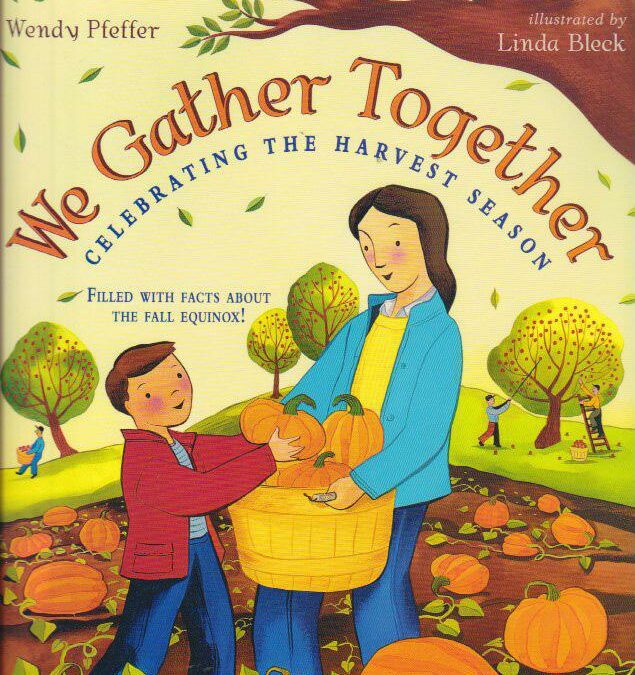
We Gather Together: Celebrating the Harvest Season

Written by Wendy Pfeffer, Illustrated by Linda Bleck

Wendy Pfeffer is one of my favorite children’s book writers. As usual, I really appreciate how she not only tells interesting stories but also helps children learn about scientific events, such as the fall equinox and the history of humans around the world. We Gather Together is no exception, and it is wonderfully illustrated by Linda Bleck.

I loved reading about harvest celebrations around the world and their history. However, I am a bit skeptical about the description of the United States legend concerning the Pilgrims and Native Americans. Please read the two-page spread in advance before reading to your children, then decide for yourself whether to read it as written. I would recommend this book for children 4 to 8 years old.

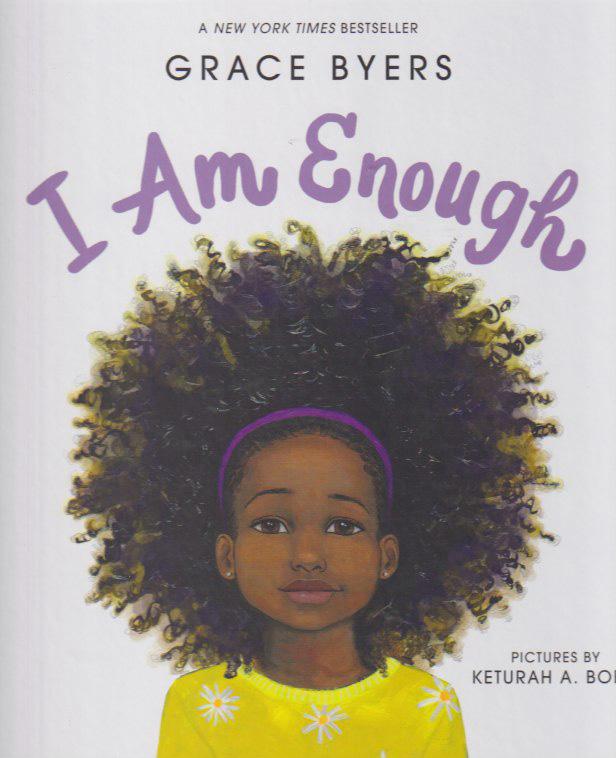
I Am Enough

Written by Grace Byers, Illustrated by Keturah A. Bobo

I am enough. What does that mean? Enough what?

The author, Grace Byers, describes in rhyme what she means by the title. Young children love rhyming, and they will love the rhythm of the words in this book. It is beautifully illustrated with realistic drawings of girls of all kinds. Yet, it is a book for boys and girls that sends messages about loving oneself, respecting others, and being kind to one another. Highly recommended for children from 3 to 8 years old. It is available from most book sellers.

Every Autumn Comes the Bear

Written by Jim Arnosky

This is a beautifully written and illustrated book by Jim Arnosky. It is a story of autumn and wildlife in the wilderness, as a bear gets ready for winter hibernation. It is perfect for setting the stage for more in-depth research into the life of wild animals in the Northern hemisphere. Children may be curious about hibernation. They may ask questions like, “Do other animals hibernate or just bears?” “How can they sleep so long?” “Don’t they get hungry?” What do other animals do during winter?” It made me very curious about the lives of bears and other animals. I would recommend this book for children ages 4 to 8 years old.

A Handwashing Story: Told with Tiny Hands

Written by Pat Prisk, Illustrated by Jason D. McIntosh

This is a wonderfully fun, imaginative story of getting cleaned up! The illustrations are very colorful and fanciful! They make cleaning up a joyful adventure rather than drudgery. Pat Prisk shows (down in the corner of each page) the steps to washing hands. She then reinforces the process by putting each of the steps to handwashing on one page at the end of the book. She also includes ideas for parents, caregivers, and other adults involved in caring for children. I think youngsters 2 to 7 years old will love this book.

Montessori: A Dictionary for Families

Written by Faye Lundberg

This book is a paperback booklet originally created to fill a need in the author’s school. She found that parents were interested in knowing more about their child’s classroom experience. Her idea was to share information about the basic principles of a Montessori classroom and the activities within the 3–6-year-old (Early Childhood) classroom.

Ms. Lundberg briefly describes each curriculum area and then some of the key lessons in those areas. She has included photos of the materials along with their descriptions. She has also added a short biography of Dr. Montessori and some ideas for the home.

This is a great little tool to get parents started in their knowledge and understanding of Montessori at the Early Childhood level. You can purchase this booklet at amazon.com.

A Spider Named Itsy

Written by Steve Light

This book brings new light to the children’s song about an itsy-bitsy spider! The illustrations are action packed, the spider is persistent, and in the process Itsy not only builds a new house but makes new friends as well. The words to the song are written out at the end of the book. Fun to read, fun to sing, and fun to imagine! I would recommend this book for children 2 to 7 years old.

Calling all teachers, parents, & children!

We would love to publish reviews of your favorite books. Send book reviews to Lorna at: lornamcgrath@montessori.org

What Your Child’s Teacher Needs to Know about Your Child…to Optimize their Learning Experience

What Your Child’s Teacher Needs to Know about Your Child…to Optimize their Learning Experience