


Wit and Wisdom: A Family Chat: “Raising Your Child the Montessori Way” with Lorna McGrath

Good-Byes & Good-Hellos
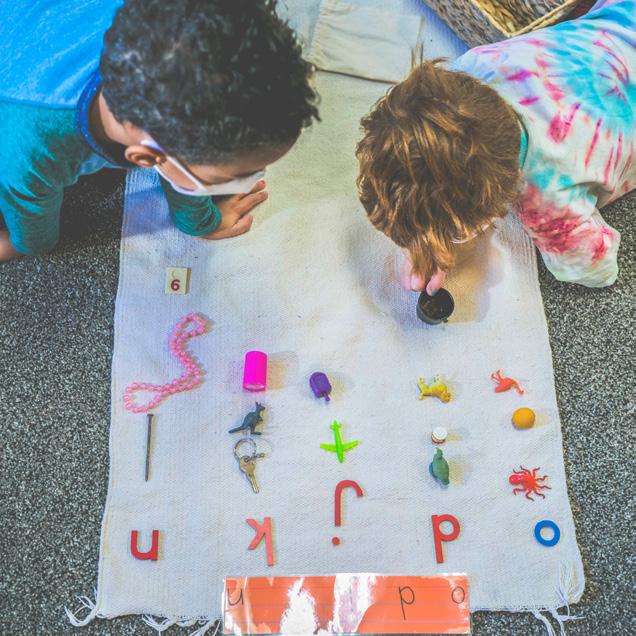
Grace & Courtesy in a Montessori Classroom
RIGHT FROM THE START (0-3 YEARS)
by Alex Gallen
“It is the child who absorbs material from the world about him; he who molds it into the man of the future.” Maria Montessori, The Absorbent Mind.
As a new parent shopping for preschools, you may wonder why you should invest in a Montessori education. What differentiates a Montessori education from other private or public schools?

As a Montessori parent and guide, I can say with confidence that investing in a Montessori education is an investment in peace education to raise a citizen of the world. Maria Montessori once said, “Peace is what every human being is craving, and it can be brought about by humanity through the child.” A flower cannot blossom without sunshine, and in our classroom, sunshine is peace, and the children blossom.
Children learn peace through the continuous lessons in grace and courtesy, which is the foundation on which the classroom flows. Montessori guides focus on the child as a whole. We look at the emotional, social, and physical factors of the individual child. Grace and Courtesy lessons are the backbone of Montessori education and one of the main ingredients in building a Montessori child, but what does Grace and Courtesy mean, and look like, in the Montessori environment?
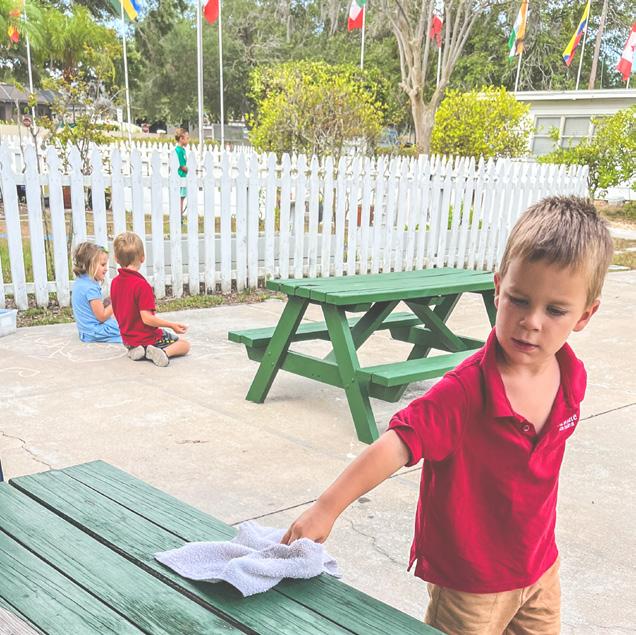
Grace and Courtesy lessons, along with guiding moments, are daily activities involving personal interactions, where children show consideration, empathy, and politeness toward themselves and others by using respectful language and manners.
Some examples of Grace and Courtesy may include: Saying “excuse me” while walking close to someone; washing hands before eating; properly unpacking a lunchbox; knocking on the door before entering the restroom; asking to join an activity politely; carrying a chair safely; properly greeting a visitor; or properly disposing of food or trash after eating. You may see a child completing an activity, politely blowing their nose, learning to sneeze by turning away from people, learning to wait for a turn, and peacefully engaged in solving a disagreement. The list can be endless, and there will always be opportunities to engage the individual child, or the whole class, in a Grace and Courtesy moment or lesson.
Maria Montessori wrote about the first plane of development, which takes place from birth to age six. Around two and a half years of age and up to six years of age, the child leaves behind the stage of infancy and self-immersion and becomes more sensitive to social interactions with peers as well as adults. A child’s mind is like a sponge, and it has the capacity to absorb a great deal from its surroundings. During this time the child shows a significant inner need for order to make sense of his environment and learn how to interact appropriately with others.

If you’ve lived and/or worked with small children, I am sure you have noticed how they respond to changes in routine. I remember a time in the classroom when we were singing the same song we always sing before eating lunch, and one child happened to be in the bathroom at that moment. When he came out of the bathroom, he was very upset that he had missed the lunch song. In this plane of development, children can become easily frustrated if they notice another individual not following directions: “Look at how Isabella is carrying her rug and work at the same time!” These moments are the best opportunity to demonstrate to children how to navigate their shock and disappointment with grace.
During the first plane of development, the window of opportunity is open for the child to absorb lessons on Grace and Courtesy effortlessly and for these graces and courtesies to become a part of the whole child.
As a parent and/or guide, how can we help children assimilate these lessons?
It is ideal to observe the child and promote positive behavior. For example, if you notice that the child is cleaning his room, you might say, “I can see that you cleaned your room, I bet you like knowing where to find everything.” It is always better to promote good behavior than to give negative attention such as, “Your room looks messy again.”
Most importantly these lessons always need to be consistent and clear. For example, if your child keeps getting up from the table during lunch, you need to model the behavior you wish to impart and stay seated while eating. Acknowledge the progress that your child makes. You might say, “It was nice having a good meal all sitting down together.” Keep the expectations consistent, changing them can be confusing and may send mixed messages to your child. If you allow your child to get up every now and then, you are basically saying this behavior is acceptable.
In our classroom, we welcome all opportunities to guide children to assimilate these graces and courtesies, guiding them to learn ways to conduct themselves in everyday society. It is vital for children to develop the appropriate social skills to be able to manage conflict resolution, cope with emotions, handle stressful situations; and be a good citizen of the world.
“It is the child who absorbs material from the world about him; he who molds it into the man of the future.” Maria Montessori, The Absorbent Mind

Alexandra “Alex” Gallen is a primary guide at NewGate Montessori School. Alex earned her BA in Psychology from the University of South Florida and is certified in Early Childhood from the Montessori Accreditation Council for Teacher Education (MACTE). Alex is originally from Lima, Peru; she moved to Florida in 2001. Alex taught Spanish for several years before getting Montessori certified and enjoys integrating Spanish into her lessons. Alex first came across the Montessori Method while looking for schools for her children, and she made it her mission to raise her three children this way.

We Begin with Grace… Purpose begins with our why, from purpose comes vision and mission. Vision is an aspiration; it is our becoming. Mission is our doing; it is our building. GRACE is our how.
To continue reading, you will need to choose a subscription plan.

Going Out: A Japanese Tea Ceremony

For Montessori elementary and adolescent students, the opportunity for learning outside the classroom is an important part of the curriculum. Students may plan a “going out” for a small group of students related to a project, such as going to the grocery store for ingredients for a cooking project. Or a larger trip for the whole group may be planned, usually related to work going on in the classroom.
These opportunities to learn outside the classroom allow students to have hands-on opportunities with the world and their community. In the first plane of development (ages 0-6), we try to bring the world to the classroom, but in the second plane of development, we want to bring the student to the world. Although we cannot take the students around the world, we can take advantage of local opportunities that introduce students to places and activities from around the world.
The tea ceremony and tea appreciation are part of our curriculum at NewGate School. Students are given the opportunity to partake in tea ceremonies at school, and students were able to go to The John and Mable Ringling Museum of Art to experience an afternoon of a traditional Japanese tea ceremony, hosted by Dr. Rebecca Corbett, author of Cultivating Femininity: Women and Tea Culture in Edo & Meiji Japan.
The Japanese tea ceremony (Sado) is rooted in a tradition of mindfulness, naturalist intrigue, and political stability; all of which served to unify, strengthen, and pacify an ancient culture. Tea brokered the deal. Tea welcomed the guest. Tea served as a reminder to pause and appreciate the ephemeral nature of impermanence in an increasingly complex and turbulent world. When we arrived, our host explained how the natural surroundings play an important role in setting the mood; the sounds of the wind blowing through the bamboo grove and cedar branches, the bird song, all contributed to the experience of calm and tranquility presented during the ceremony. As the audience sat with straight spines, attentive to the moment of peace, receptive to the myriad gifts of nature, we were quickly interrupted by the sounds of gasoline-powered golf carts, transporting people to and fro, and prop planes flying above the Gulf of Mexico. Our host joked and suggested that, today, we would have to replace the more traditional sounds of nature with those of mechanized equipment and vehicles, to which the crowd laughed and relaxed further into their seats awaiting the ancient spectacle to unfold.
The designated guest was invited to partake, the sweet was offered, and the tea was prepared. Each gesture of the tea master was carried out with profound precision, meaning, and purpose. As this quiet dance unfolded, the noise of human interference quickly dissipated into an inner abyss of luminous silence that was noticeably felt by all; the experience became palpable. For this brief moment, that felt like an eternity, we were all interconnected: students, teachers, guests, masters, all one. Before we knew it, the ceremony had come to a close, and our host opened up the floor for questions. NewGate students quickly raised their hands in unison! Though I am biased, naturally in a way a teacher would be toward their students, their questions were thoughtful, mature, and insightful. The audience was captivated by the interaction between young people and our host. The students asked questions such as, “What was the food item presented at the beginning of the ritual? What is the significance of the design on the belt (obi) of your kimono?” Our host was visibly pleased with the genuine sincerity and enthusiasm of our students. Eventually, their questions had to be capped off as another group prepared to receive the presentation; otherwise, their dialogue could have continued indefinitely.
This kind of interaction, unexpected by many adults, is typical of students who are expanding their knowledge and building on what they have already experienced. The opportunity to interact with specialists, whether a traditional host for a tea ceremony, or the stocker at the local grocery store, provides a living, hands-on opportunity to ask questions and fulfill curiosity.
The Ringling Museum (Sarasota, FL) also provided a tour of the traditional, yet modern, Japanese Tea House that was recently constructed on the grounds. The tea house is regularly available to view from the outside; there are large glass windows showing the craftsmanship of the interior and the equipment inside. However, today was different. We could actually walk inside, feel the tatami mats below our feet and smell the scent of grass, cedar, and pine. The students delighted in asking more questions and exploring the tea house. We learned that the tea house was designed by a student from the Ringling College of Art + Design. The design combines elements of a traditional tea house, fused with classical, modern Sarasota architecture.
Being able to go out and explore, whether exploring nature, the visual arts, or experiences such as a tea ceremony or live theater, provides a deeper understanding of lessons learned in the classroom. By becoming a part of the larger community, with family, a small group, the whole class, or even the whole school, bonds are strengthened, lessons are learned, and new interests are kindled. Taking the time to let students help plan and attend opportunities, especially those that are out of their regular experiences, both with school and with the family, is time well spent. Those memories of experiences will remain with them and be building blocks for continued learning.

Teaching Children to Navigate Conversations with Opposing Viewpoints

ARE YOU KIDDING ME! Employing Humor To Guide Children Toward Better Learning and Behavior
To continue reading, you will need to choose a subscription plan.

What We Believe Our Children Receive: Living Out Our Family Values
To continue reading, you will need to choose a subscription plan.

Children and Animals: Large and Small
To continue reading, you will need to choose a subscription plan.

Interview with the 2022 NewGate School Graduates
To continue reading, you will need to choose a subscription plan.

Turn ‘I Can’t Wait for School to Start Again!’ to ‘I Don’t Want Summer to End!’
To continue reading, you will need to choose a subscription plan.
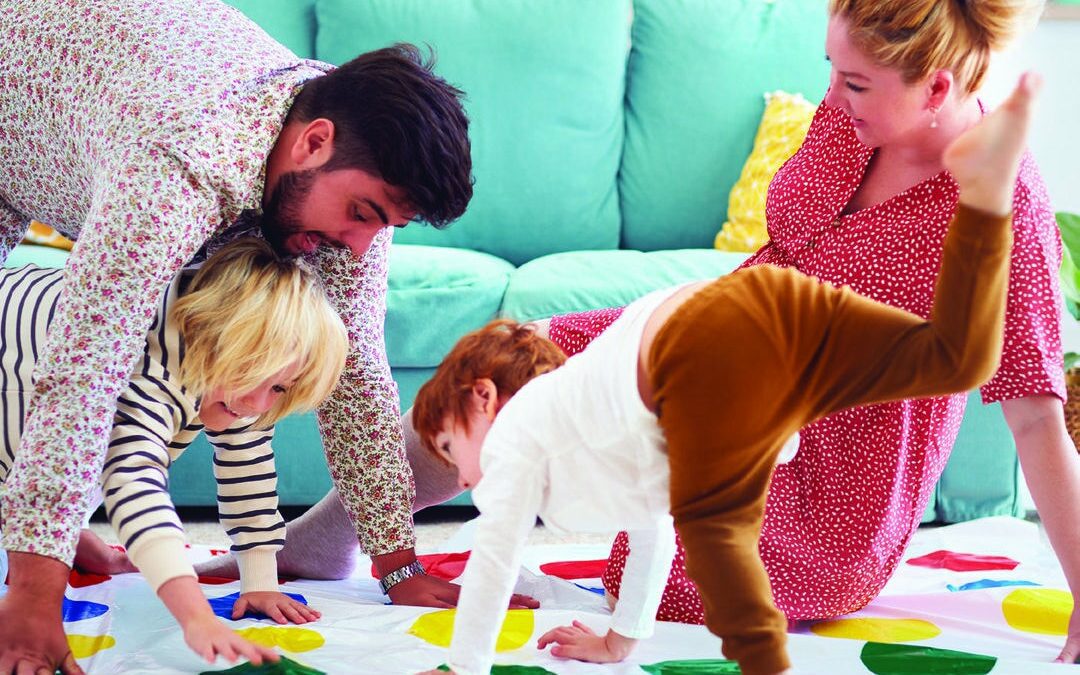
Family Fun is More Than Fluff
To continue reading, you will need to choose a subscription plan.
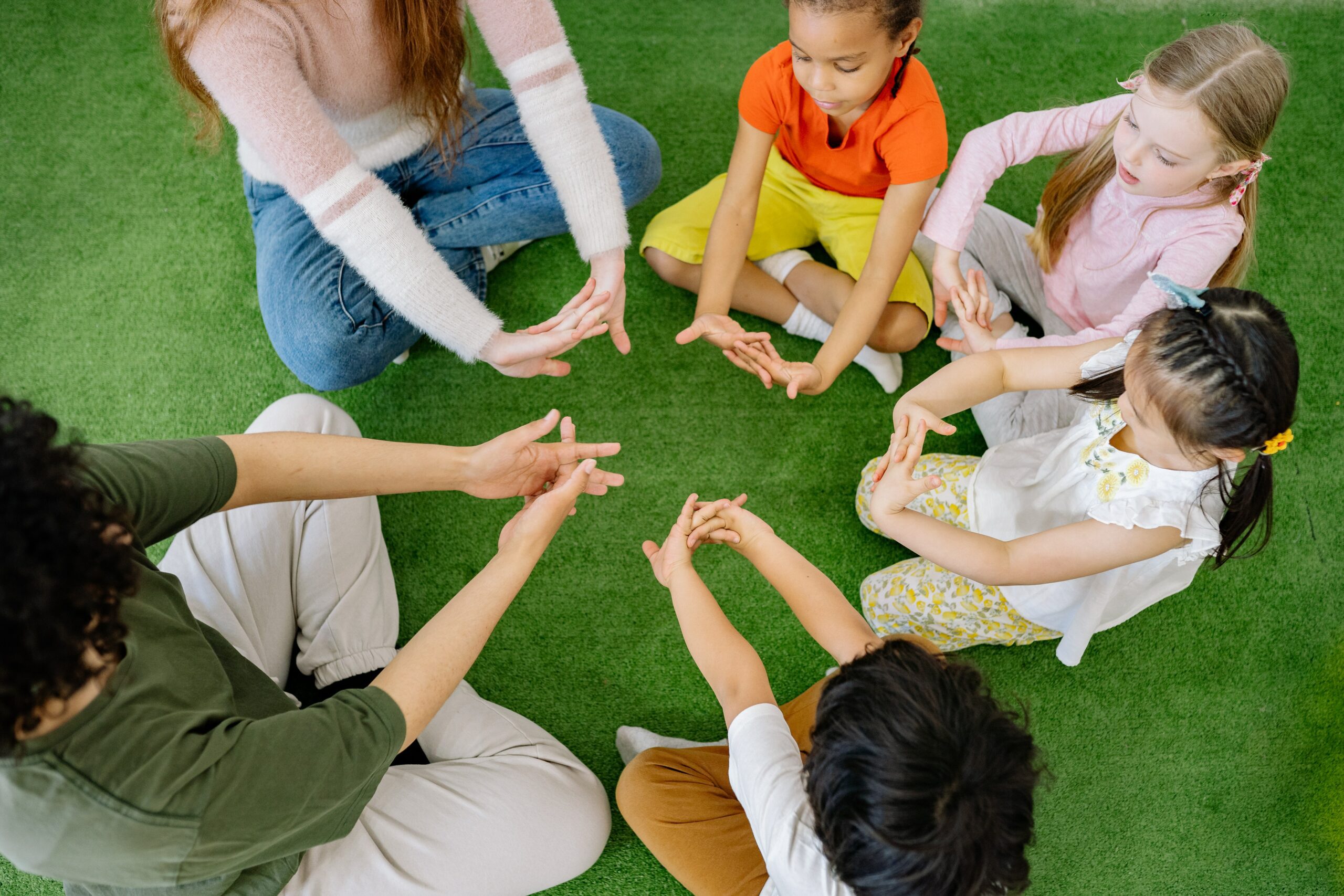
A Montessori School Is…
To continue reading, you will need to choose a subscription plan.
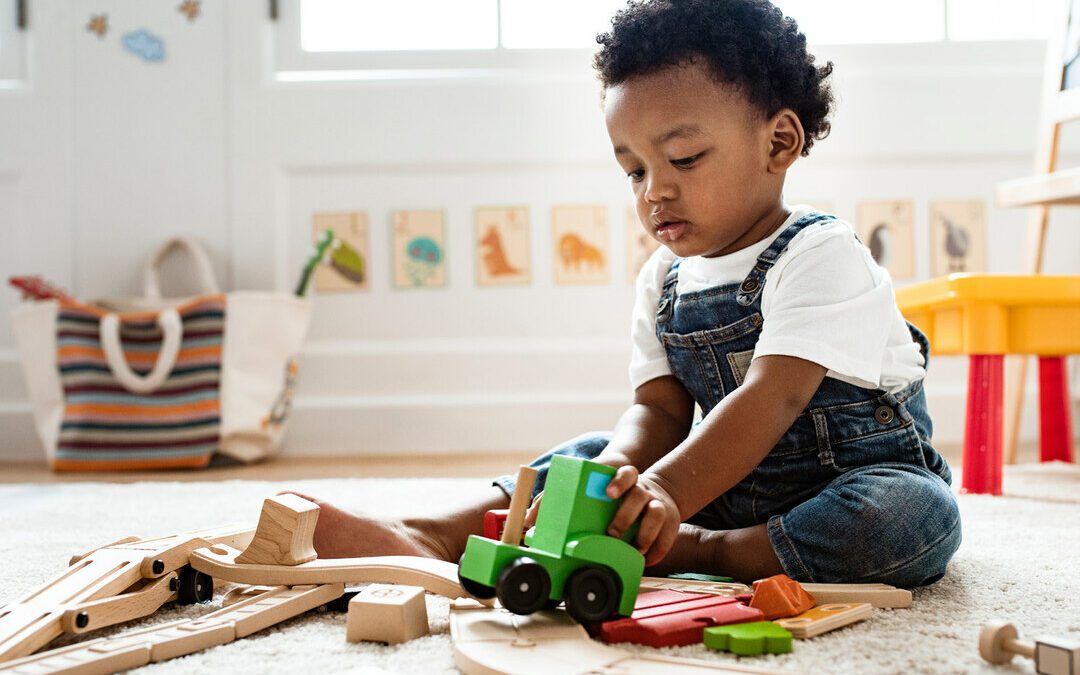
A Montessori Approach to Clean-Up Time
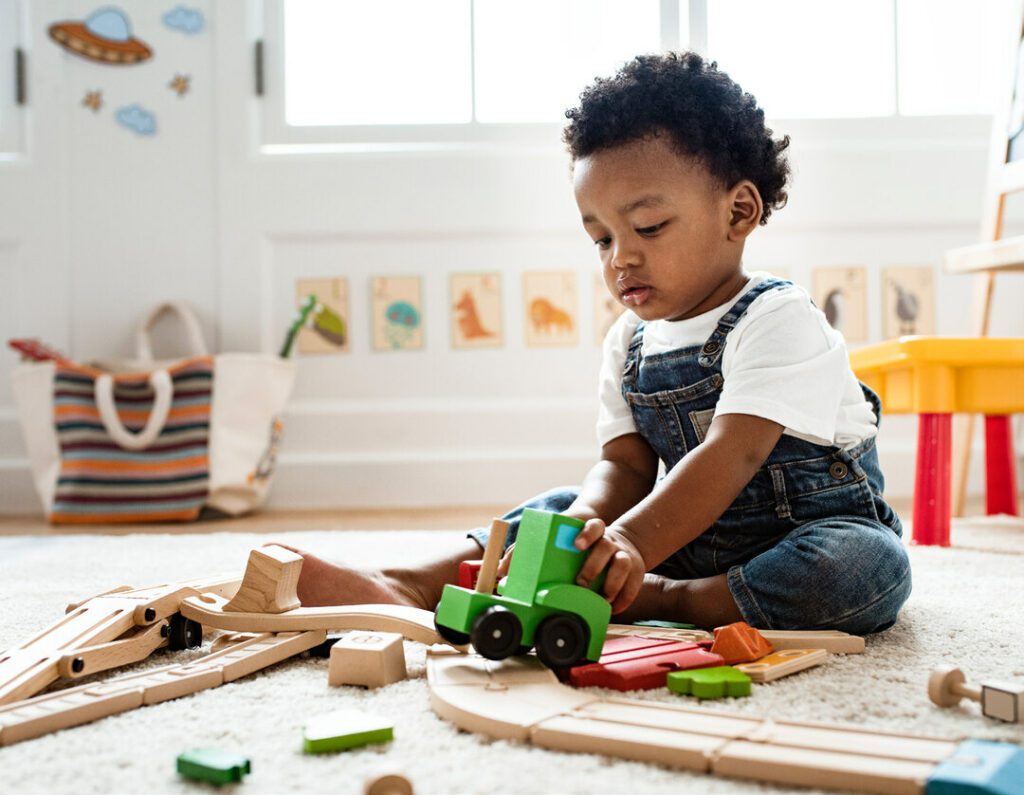
A Montessori Approach to Clean-Up Time
by Carine Robin
We know that Montessori is all about order.
We know that children have a sense of order. The Montessori classroom is an orderly environment where every activity has its place.
Montessori teachers encourage children to use one activity at a time and to tidy up each activity after they have finished with it.
As parents, we expect that the Montessori philosophy will help our children to be tidy! In my experience as a teacher, it’s easier for children to tidy up in the classroom. The Montessori school is designed for children and leads naturally to order. There are clear rules and expectations, and children are more willing to clean up after themselves in the classroom.
What if I tell you that, despite being a Montessori teacher, my children’s bedrooms are not orderly? They don’t tidy up spontaneously. There are several reasons for that, and I have learned over the years what helps children to tidy up and to stay organized.
Three reasons why children don’t tidy up?
1. You might have heard of the sense of order? This is one of the ‘’sensitive periods’ observed by Maria Montessori. It is now described more as a tendency that all human beings must make sense of their environment. It’s not so much about “tidying up after themselves” or keeping their bedroom clean” as about routine, rhythm, and knowing what comes next.
They will express that sense of order about what matters for them. For example: sorting their little people; being obsessed about their collection of pebbles; sleeping with their special teddy is all about that sense of order!
“It seems to him, at this stage, a particularly vital matter that everything in his environment should be kept in its accustomed place; and that the actions of the day should be carried out in their accustomed routine.” – E.M. Standing, Maria Montessori: Her Life and Work, p. 123
Sense of order doesn’t equal being tidy!
2. Are you a tidy person? I’m very honest on this blog and on my social media about the fact that I am not a naturally tidy person. I used to have lots of clutter in my life.
I did a big work on myself to understand my hoarding tendencies and to learn to be more organized. So, if like 50 percent of the parents I work with, you tend to be “messy and disorganized,” you cannot expect that your children will be able to tidy up spontaneously. Children need role models. The more you clean and tidy in front of them, the more they will see it as being part of the routine.
3. They don’t see you cleaning and tidying! I have said it already but even the tidiest parent tends to “clean” when the children are not around. Have you ever sent your co-parent to the park with the children, to allow you to do a good clean-up session?
Do you tend to do everything when they nap? Or do you tend to tidy up all their toys at the end of the day when they are in bed? Stop now and do as much as you can in front of them. Montessori is about teaching life skills and independence, so taking care of the environment is something that I would advise you to focus on. Teach your child to fold the laundry, to do the dishes, empty the dishwasher, setting up the table, and cleaning the windows!
How to help children to tidy up?
• Work on yourself: if you are not naturally tidy, start with you! Do a big decluttering session, and try to understand why it’s hard for you to be orderly. Seek support if needed. Your children will thank you!
• Equally, if you are a very tidy person, lower your expectations; having a spotless house when we have children is just not possible. Review your definition of what is a tidy home.
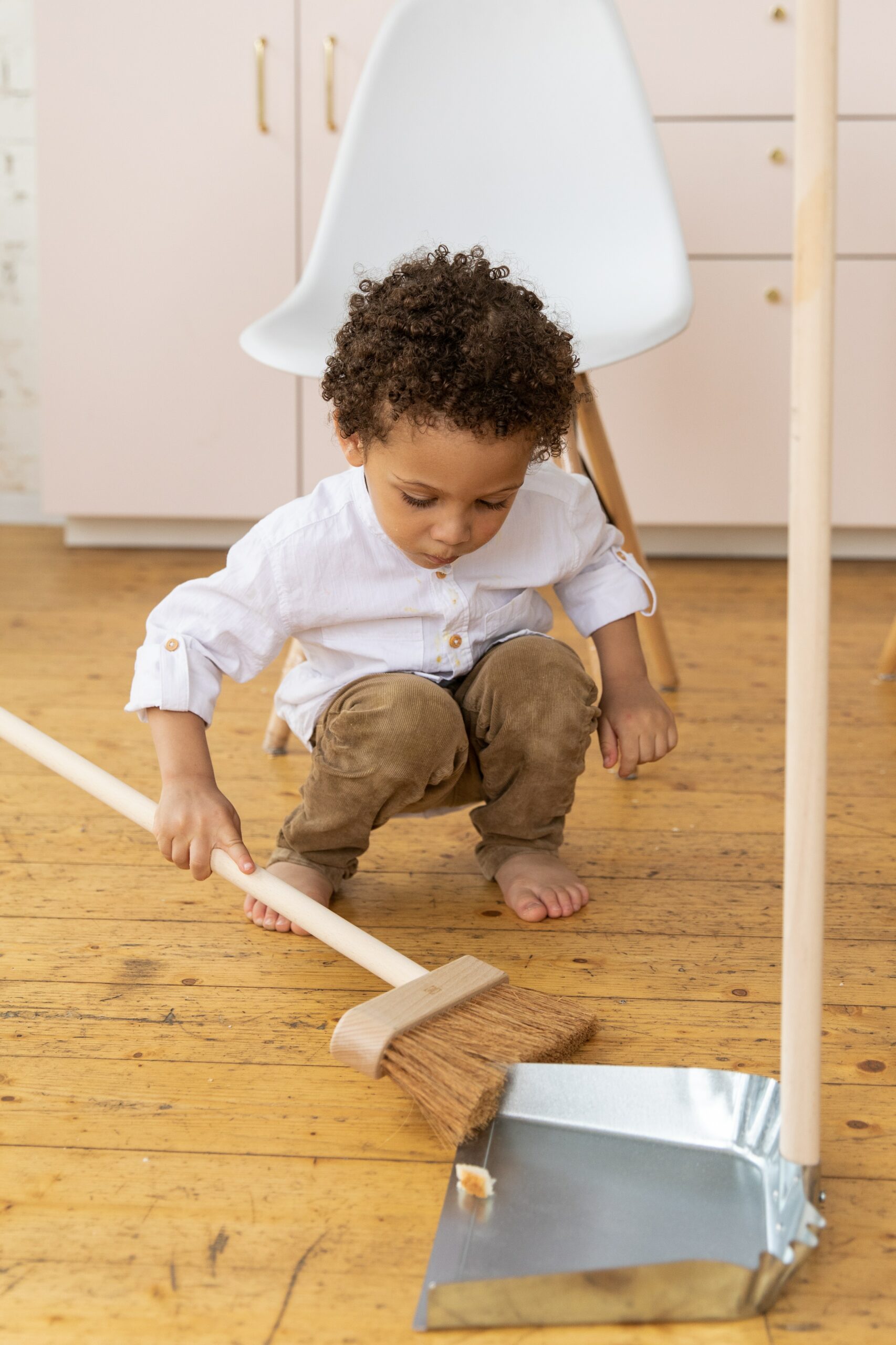
• Be a role model: clean in front of your children. Even if you have a cleaner, try to do a task with them as a way to teach them. Involve them in the cleaning tasks: young toddlers, generally, love to clean! Give them child-size tools and don’t expect a brilliant result. Let them enjoy the process.
• Have fewer activities and toys available. The less there is to tidy, the easier it will be. Halve the amount of Legos™, blocks, train parts… Those sets tend to be difficult to tidy, and children get discouraged and stop cleaning up after themselves if they are overwhelmed by the task.
• Have a place for everything. Make sure you know the spot for each toy/activity. At the beginning of your Montessori journey, you might still move things around but try to limit a big overhaul, as it disturbs their sense of order and will prevent them from putting back what they have used.
• Make it playful: have a tidy-up song! or a silly dance. Have the animals go back to their basket, making sounds. Find what works for your child.
• Wait for when they are ready. When children are in a flow, playing intensely, it’s hard to know when it’s time to tidy up. It might be dinner time, but they might not be ready to stop playing. Wait for the moment they naturally seem to move onto a new activity to encourage them to put the previous one back on the shelf.
• Help them! It’s a skill, don’t expect them to do it consistently even if they have done it a few times. Like us, they are allowed cheat days.
What about older children?
Children in the second plane of development are messier than younger children. They are less interested in organizing the environment. They are less interested in practical life. They tend to spread out when they explore a topic. It’s because it’s an age when they make connections between concepts.
Their play area and toys might be in their bedroom. Their bedroom is their private area, and you might be less around when they play. Children in the second plane have access to toys that have small parts (Legos™ beads, …).
You can still rotate toys for that age group. You can have a rule that the Legos™ are stored in the living room, or the crafts are only accessible at the dining table. I recommend that you limit what they have access to in their bedroom. Make it part of the daily routine to tidy up for half an hour before dinner.
The bottom line: Mess is part of life but being tidier, as a family, will help everyone.
Having said that, let’s close with this quote: “Excuse the mess, the children are making memories!” •
Carine Robin has a master’s degree in psychology, specializing in child psychology. She worked for various social services in her home country of Belgium, before moving to Ireland in 2006.
It was there that she started working in a nursery and discovered Montessori education. After having her first child, her passion for the philosophy grew. She qualified as a Montessori teacher and managed a Montessori preschool.
Carine has been running Montessori-based parents and toddler groups and coaching families for 9 years. She now also runs an online group for over 20,000 parents, sharing her knowledge and passion with people from around the world.
In 2018, Carine realized families needed more support and launched her popular online parenting courses and monthly subscription boxes, full of personally designed Montessori materials.
Carine has also trained with Sarah Ockwell-Smith in BabyCalm and Toddler Calm, with Dr. Laura Markham on Peaceful Parenting, and most recently, at the prestigious Maria Montessori school in London, as an AMI Elementary and 0-3 assistant. She writes on a popular blog “the Montessori Family”. www.themontessorifamily.com Instagram: @montessorifamilyuk
Beyond Bribes, Rewards, and Punishments

A Montessori Approach to Clean…
Beyond Rewards, Bribes, & Punishment
A Montessori Approach to Building Intrinsic Motivation
42 ways that the Montessori approach builds intrinsic discipline in our children.
by Simone Davies
In my last article on a Montessori approach to discipline, I mentioned that we don’t use rewards, bribes, or punishment in a Montessori classroom. And there is not a teacher at the front telling everyone what they need to do. Yet, if you observe in a Montessori classroom, there is a gentle hum of conversation and movement and a lot of concentrated children who are motivated to work.
So, not surprisingly, I received many questions about a Montessori approach to building intrinsic motivation in the child. Intrinsic motivation is doing something because you have the inner drive to do it, not because of some external reason like a reward or threat.
I love a good list so here are 42 ways that the Montessori approach builds intrinsic discipline in our children.
Note: It’s a holistic approach where each part is intrinsically linked. So, while it may seem overwhelming to do all these things, rest assured they also naturally build on one another.
42 Ways to Build Intrinsic Motivation
1. Build an environment where they can have success; knowing where they can find things and having things at their level.
2. Create opportunities for them to build independence – they see themselves as capable.
3. Cultivate opportunities to work together, cooperate and care for others – they see their input matters; a 0-3 child is observing and beginning their social development in their family. With a care giver, and/or nursery; the 3-6 child is part of their family and their class; and the 6-12 child wants to work and be a part of a group.
4. Value process over product; there is more learning in the doing than in the result.
5. Use encouragement rather than praise. When they hear, “You worked hard to get your shirt on all by yourself ” rather than “good job,” they learn to look to themselves to understand what worked, rather than looking to us for praise.
6. Give them freedom to work on things they are interested in – rather than what the teacher/adult tells them – or a timeline.
7. Provide safe limits. Offer security and show that someone cares about them.
8. Allow them the freedom to choose what, where, and with whom they’d like to work.
9. Provide a clear rhythm to their day so that they know what to expect.
10. Help them learn respect for themselves, each other, and the environment – they feel truly accepted and learn to accept others.
11. Encourage those agreements are made together – they feel like a valued member of the community.
12. Let them know that it’s a safe place to practice boundaries – we can support them with words if needed, “I’d like to work by myself right now. It will be available soon.”
13. Honor who they are; each member is unique and valued – builds their sense of self.
14. Help them learn to look after themselves, others, and the environment – it’s empowering to be able to do this for themselves.
15. Show trust in them – by removing external rewards and punishments.
16. Help them to make amends when needed – they know that when they get it wrong, they will take responsibility and learn from the experience.
17. Value curiosity – learning is about finding out rather than memorizing facts
18. Allow them to have choices – they have ‘agency’ in their days
19. Provide honest, instructive feedback – we see what’s going well and how they can do better; give them gentle guidance to keep improving.
20. Offer different ways to learn; we all learn in different ways and on different days; the materials appeal to kinesthetic, visual, and aural learners, and they can choose how they’d like to present their work, from a booklet to a survey to a poster etc.
21. Be their guide – not their boss or servant
22. Help children build ‘scaffold skills’ – where each activity builds on the next to allow mastery.
23. Support them to develop their own routines/ rhythms, such as taking an activity to a table or mat and returning it when it’s done.
24. Help children develop their thinking skills – they are learning to learn through hands-on learning and making discoveries for themselves; they help younger children and consolidate their own learning; they reflect on what they have learned.
25. Keep it real; children are not learning just for the sake of learning. They are learning how it applies in the real world giving meaning to their work.
26. The absence of tests or punishments allows a natural love of learning, while maintaining their creativity and interest in learning
27. Model intrinsic motivation ourselves as adults; our actions are more powerful than our words.
28. Provide control-of-error activities, which will allow children to discover their errors and try again.
29. Offer challenges at the appropriate level. Children do not feel unmotivated, because they know that they can do hard things, and they do not want to give up.
30. Encourage service in the community. This allows children to see and appreciate the impact of their work.
31. Children can have a healthy relationship with failure: the guide and classmates are supportive; children are able to stay with something until they master it and are ready to move onto the next activity; and they learn to ask for help if needed.
32. Remove competition for sticker charts or praise; children do not need rewards from others. Help them look to themselves instead of someone else.
33. Allow time to help children build skills, e.g., planning skills, learning to dress themselves, how to make a report, etc.
34. Children are in charge of their own learning: they learn uniquely, have their unique interests; and are on their own unique timeline.
35. Adults can trust the Montessori process, without forcing their own agenda.
36. Help children support themselves as they become members of their society.
37. Be patient; learning happens at its own pace and isn’t forced.
38. Plant seeds of curiosity, enough to get them interested, and not too much to allow them to discover the rest for themselves.
39. Encourage the possibility for big work and big ideas that looks at the interdisciplinary nature of the universe.
40. Allow space for all voices; we want everyone in our community to feel valued, accepted, and safe.
41. Avoid criticism or correction; instead, observe where children are in their process, and offer another opportunity to teach it again.
42. Learn from others. We can see others learning and be inspired to learn that too.
It’s never too late to start applying these principles. We can even scaffold the skills with a child in Upper Elementary (9-12 years), first helping them plan, then letting them take over more and more steps themselves. •
Simone Davies is the author of The Montessori Toddler and co-author of The MontessoriBaby, comprehensive guides to raising toddlers and infants in a Montessori way. The books are based on her 15+ years’ experience working as an AMI Montessori teacher in Sydney and in Amsterdam. She also has a popular blog, Instagram, and podcast “The Montessori Notebook”.She is also mother to two young adults.Simone currently runs parent-childMontessori classes in Amsterdam at her school, Jacaranda Tree Montessori, and is working on another book with Junnifa Uzodike, The Montessori Child for children from 3-12 years.
With hundreds of practical ideas for every aspect of living with a toddler, here are five principles for feeding your child’s natural curiosity, from “Trust in the child” to “Fostering a sense of wonder.” Step-by step ways to cultivate daily routines with ease, like brushing teeth, toilet-training, and dealing with siblings
Are We Really All Friends?
ARE WE REALLY ALL FRIENDS?
by Betsy Merena
In this article, we will discuss the appropriateness of the long-standing tradition of using the term “friends” as an all-encompassing definition of peer relationships in the early childhood classroom environment. Through a personal anecdote that spurred self-reflection and a pivot in my own teaching practices, we will discover informed alternatives that ease the pressure created by expectations of universal friendship.
“But what is a social life if not the solving of social problems, behaving properly, and pursing aims acceptable to all?”
Ubiquitous in almost all preschool classrooms across the country, both Montessori and mainstream, is the idea that we’re all friends. But are we really?
Receiving lessons in, and creating an environment rich in, Grace and Courtesy is a hallmark of a good Montessori education. But is universal friendship an equally essential ideal? As guides in the Montessori toddler and primary environments and beyond, we want pleasant interactions among our students. We want cooperative work and play efforts. We want classrooms full of children who enjoy being there and being together. And we guide, teach, and prepare the environment, with those goals in mind.
But do we need to enforce the idea that we’re all friends?
It wasn’t until I became the parent of a primary-aged Montessori student that I came face-to-face with the pitfalls of this concept. All my previous years of experience in the world of early childhood education were full of songs and encouragements, championing the same basic message: we’re all friends.
But what if that’s not true?
Here’s what happened to jumpstart this shift in my thinking. My daughter, four years old at the time and a second-year primary student, was having trouble with a boy in her class. As the toddlers’ guide in the same school, I had the benefit of hearing the teachers discuss various students and how to handle the challenging situations that crop up in any given year. Plus, we share a playground and recess time. So, I was able to observe my daughter and her class daily. I knew that this boy, new to the school, was having a harder time than most acclimating to the classroom environment and was targeting a few specific children with some of the worst of his behaviors. My daughter was one of them.
As parents, my husband and I fielded her frustrations and complaints at home with the standard responses: Talk to him and tell him “No.” Your friends should make you feel good pretty much all the time; if they’re not, and if they’re not respecting your body, then you don’t have to be friends with them.
It was at that point that my daughter broke down into crocodile-sized tears and said, “But my teacher says we’re all friends.”
It felt like the air was knocked from my lungs. In that moment, it felt like the entirety of my teaching career flashed before my eyes. How many times had I said those same exact words to my students? We’ve sung those words and sentiments at our morning circle countless times. Full of the best intentions, I’ve said them over and over to children who were struggling to get along.
But what if that phrase, that sentiment, is doing more harm than good?
What if it’s giving young children, and their developing social skills and social understandings, a skewed idea of what friendship is and what it means to exist in a cooperative environment with our peers?
As adults, we live and work in a society with each other. We navigate relationships of all kinds in many ways. But no one ever expects us to be friends with everyone with whom we regularly interact. Why do we ask that of children?
Instead of saying we’re all friends, let’s try, “We are a community” instead. In communities, people are expected to act with grace and courtesy toward each other, but they are not expected to be friends with everyone. We can set healthy boundaries and still be kind. We can recognize how other people make us feel and choose who we honor with the title of ‘friend’.
In a community, we can all work towards the same goals; we can share experiences. We can learn and grow together. We can do all these classroom basics without the pressure of being friends with every single person.
After I caught my breath, I looked my daughter in her tear-rimmed eyes and said, “You do not have to be friends with anyone who makes you feel this badly. You are classmates and part of the same community. You need to be kind to each other, but you do not have to be friends.”
The relief that realization had on my daughter was immediate and profound. And its magnitude hit me in the same way. Children, even young children, can be classmates without the pressure or expectation of being friends.
As guides, and as parents, we know that some children’s personalities are like oil and water. It is so much more empowering to say to them honestly, “You don’t have to be friends, but you must be respectful, kind, and courteous to each other.”
Perhaps then, as these children grow, they’ll have a healthier view of friendship. We can hope that they will have a more robust emotional and social tool kit for existing cooperatively with people who they just don’t click with well.
And, what a poignant lesson this could be for us as an American community right now. We might not all be friends, we might disagree, but we must be respectful, kind, and courteous to each other.
“The social rights of children must be recognized so that a world suited to their needs may be constructed for them.” – Maria Montessori
REFERENCES:
Montessori, M. (1967) The Absorbent Mind, p225
Montessori, M. (1966) The Secret of Childhood, p225
Betsy Merena is an AMS certified toddler guide at The Montessori School of Westminster inWestminster, Maryland with over a decade of teaching experience in early childhood classrooms. Along with her husband and daughter, now in her first year of lower elementary at the same school,Betsy loves to explore the world through travel and cooking. She also volunteers asa Girl Scout troop leader for her daughter’s troop and enjoys spending time camping.

10 Things to Whisper in Your Child’s Ear Every Day
Next Story

10 Things to Whisper in Your Child’s Ear Every Day
by Gavin McCormack, reprinted by permission
1. I believe in you 100 percent. Whatever you want to be, I’ll be right behind you.
2. Be yourself; that’s all you can do. You’re amazing just as you are, and I love you.
3. I trust you, and you can trust me. If you make a mistake or do something wrong, that’s ok! We all make mistakes!
4. I will always be by your side. No matter how far away you are from me, just call and I’ll be right there!
5. I’m your friend. I may be a lot older than you, but I love being with you just as much as you love being with me!
6. Try to be as kind as you can to everyone you meet. Smile, love, care, and laugh. That’s all I ask of you.
7. Try your best; that’s good enough for me. But whatever you do, don’t ever give up. Don’t ever let doubt get in your way. If you can imagine it, you can become it!
8. If you see someone crying on the playground, sitting on their own, or looking lonely, go over, hold their hand, and make sure they’re ok! Imagine what it would be like to be so sad!
9. Take care of plants, animals, and insects. They’re all part of the universe, and so are you. The world is your home, but it’s also theirs. Let’s share it together.
10. I love you, unconditionally!
Gavin McCormack is a trainedMontessori teacher, children’sauthor, teacher trainer,philanthropist and schoolprincipal. While working in the teachingprofession for over twenty years, hehas used his experience and training tounderstand what it means to truly educatewith true intention. Initially trained as amainstream primary school teacher, Gavinre-trained as a Montessori teacher wherehe found the understanding and experiencethat has inspired him to build severalschools and teacher training centres inthe Himalayan regions of Nepal. Gavin hastrained teachers, parents and educationalleaders across the world. In 2022 he joinedMontessori Australia as our Ambassador.
Featured
-
 The Montessori Way, Revised and Expanded: An Education for Life; A Comprehensive Guide for Parents and Teachers
$25.00
The Montessori Way, Revised and Expanded: An Education for Life; A Comprehensive Guide for Parents and Teachers
$25.00
-
The Montessori Child: A Parent's Guide to Raising Capable Children with Creative Minds and Compassionate Hearts (The Parents' Guide to Montessori)
$20.00
-
The Montessori Toddler: A Parent's Guide to Raising a Curious and Responsible Human Being (The Parents' Guide to Montessori)
$20.00
-
Montessori in Action: Building Resilient Montessori Schools 1st Edition
$29.95
-
Bulk Order, 30 Copies of Montessori for Every Family: A Practical Parenting Guide To Living, Loving, And Learning
Original price was: $600.00.$510.00Current price is: $510.00.



Products
-
The Montessori Way, Revised and Expanded: An Education for Life; A Comprehensive Guide for Parents and Teachers
$25.00
-
The Montessori Child: A Parent's Guide to Raising Capable Children with Creative Minds and Compassionate Hearts (The Parents' Guide to Montessori)
$20.00
-
The Montessori Toddler: A Parent's Guide to Raising a Curious and Responsible Human Being (The Parents' Guide to Montessori)
$20.00
-
Montessori in Action: Building Resilient Montessori Schools 1st Edition
$29.95
-
Bulk Order, 30 Copies of Montessori for Every Family: A Practical Parenting Guide To Living, Loving, And Learning
Original price was: $600.00.$510.00Current price is: $510.00.