Experiential Learning at the Secondary Level: NewGate School
by Amy Kremer-Treibly, NewGate Secondary Guide, Master of Experiential Education
”Only practical work and experience lead the young to maturity.”
– MARIA MONTESSORI, THE ABSORBENT MIND
In NewGate’s Montessori learning environment there are several key experiences that contribute to the whole development of all students enrolled in the program. According to Maria Montessori, “Experience is a key for the intensification of instruction given inside the school…it is self-evident that the possession of (and contact with) real things brings, above all, a real quantity of knowledge.” Key experiences for students in the NewGate Secondary Program include the following:
Secondary Orientation Program
Each school year begins with the Orientation Trip, where the search for individual identity intertwines with the onset of leadership, teamwork, and the positive social development of the secondary community. Students bond with their peers and their teachers in an environment outside the classroom. We work on low- and high-ropes course initiatives to build teamwork and communication skills. We also work as a team to develop the ground rules that will function as our common-good contract for the year. Finally, the structure, schedule, and topics of the year’s course of studies are presented. This is both an on- and off-campus experience.
Service Learning Course
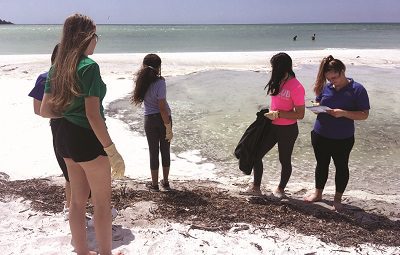
Students participate weekly in a service-learning course, a chance for adolescents to validate their own self-worth and share their talents and skills with the wider community. This course encourages students to make a decision to participate positively in society. Every week, students are involved in various service activities, ranging from community in-reach with primary and elementary students in their classrooms to maintenance and beautification of the campus and physical environment. Students also venture out into the Sarasota (FL) community every week to work with a service organization of their choice. Through their service-learning activities, students develop positive citizenship characteristics that will enable them to contribute to an improved sense of community in the world around them. The service-learning course is just one component of the secondary program that engages the students in authentic, hands-on learning environments.
”Success in life depends in every case on self confidence and the knowledge of one’s own capacity and many sided powers of adaptation. The consciousness of knowing how to make oneself useful, how to help mankind in many ways, fills the soul with noble confidence.”
—MARIA MONTESSORI
The Gardening and Culinary Project
Gardening and working in the kitchen is a fundamental component of the adolescent’s meaningful work in New Gate School’s secondary program. Students prepare plots, plant, observe, and maintain the gardens throughout the year. All secondary students also work in the kitchen, learning basic kitchen skills and preparing food, using ingredients from the gardens (as much as possible) to share with the community. Students prepare and serve a meal to the school community on a quarterly basis. Students also participate in discussions and field trips to explore their connection to the land and food.
Internships
Every year students plan and experience a one-week internship. The faculty works with students to find a meaningful internship that presents them with an opportunity to conduct themselves in a professional workplace and a chance to work with positive role models and community experts. Students enjoy the opportunity to engage in a learning experience that enhances classroom learning and extends beyond the traditional four walls of the classroom. In preparation for the internship experience, they spend time in workshops for resumé writing, business letters, interviewing, thank-you letters, and oral presentations. First cycle students (7th-8th grade) can choose a placement in the local Sarasota community, while second- (9th-10th grade) and third-cycle (11th-12th grade) students can choose national and international placements.
Drama Immersion Week
Students in the entire secondary program stop their regular class schedule for a week each year and immerse themselves in the work of the theater. Students work with a faculty director to stage performances for the school and local community. Students form several work crews involved in the final production: acting, scenery, costumes and/or publicity. Since all students participate in some way, this program serves as a great creative collaboration for the adolescents. The team building and confidence that develops throughout the week is valuable and enjoyable for everyone.

Research Trip
Each year, students augment their course of studies with a weeklong research trip. These trips are journeys that depend upon student leadership and community building. The purpose of the class trips is multifold. The positive social development of the adolescent is enhanced, and the ‘hands-on’ learning experience that is acquired while in the field engages students in several of the broader disciplines: natural history; creative arts; history; and physical education. Trip preparation occurs throughout the school year and is often linked with curriculum work, with a week of intensive prep closer to the trip dates. Each student is encouraged to earn at least half the cost for the end-of-year trips, through school, student, and parent-organized fundraisers and through their own savings. This experience is central to the participatory creation of community. •
Amy Kremer-Treibly has taught throughout the NewGate secondary program since 2002, primarily with English reading, writing and theater projects and has been teaching for 23 years. She is also an International Baccalaureate Diploma Program Instructor, Librarian and CAS Advisor. She has spent many years developing the secondary program’s experiential learning and looks for every opportunity to get students off campus and into the community for learning opportunities. She also leads the annual drama immersion weeks with students at each secondary level to build memorable theatrical productions in the space of a week. One of her great joys is helping every student find gateway books that lead to a life long love of reading, and she builds every opportunity possible to share books with students from toddler through high school levels.
Amy earned her Bachelor’s Degree in Anthropology at Loyola University. She began her teaching career in a refugee resettlement program teaching ESL to adult students from around the world, followed by teaching Spanish at the elementary level. While teaching at a Great Books Foundation high school in Arizona, she earned her Master’s Degree in Experiential Education at Prescott College with a focus on building schools and learning experiences to promote engagement, ecoliteracy, and stewardship.
TOMORROW’S CHILD © • NOVEMBER 2019 • WWW.MONTESSORI.ORG